Safety glass is a specialized type of glass designed to resist breaking or shatter in a controlled, harmless way to prevent injuries. Standard glass breakage in a commercial environment can lead to severe lacerations and devastating physical injuries.
When untreated glass shatters, it turns into razor-sharp daggers that fall unpredictably, creating an extreme safety liability and risking costly lawsuits. Upgrading to high-durability safety glass eliminates these structural risks entirely and keeps your building compliant.
Why Is Tempered Safety Glass Essential for Your Business?
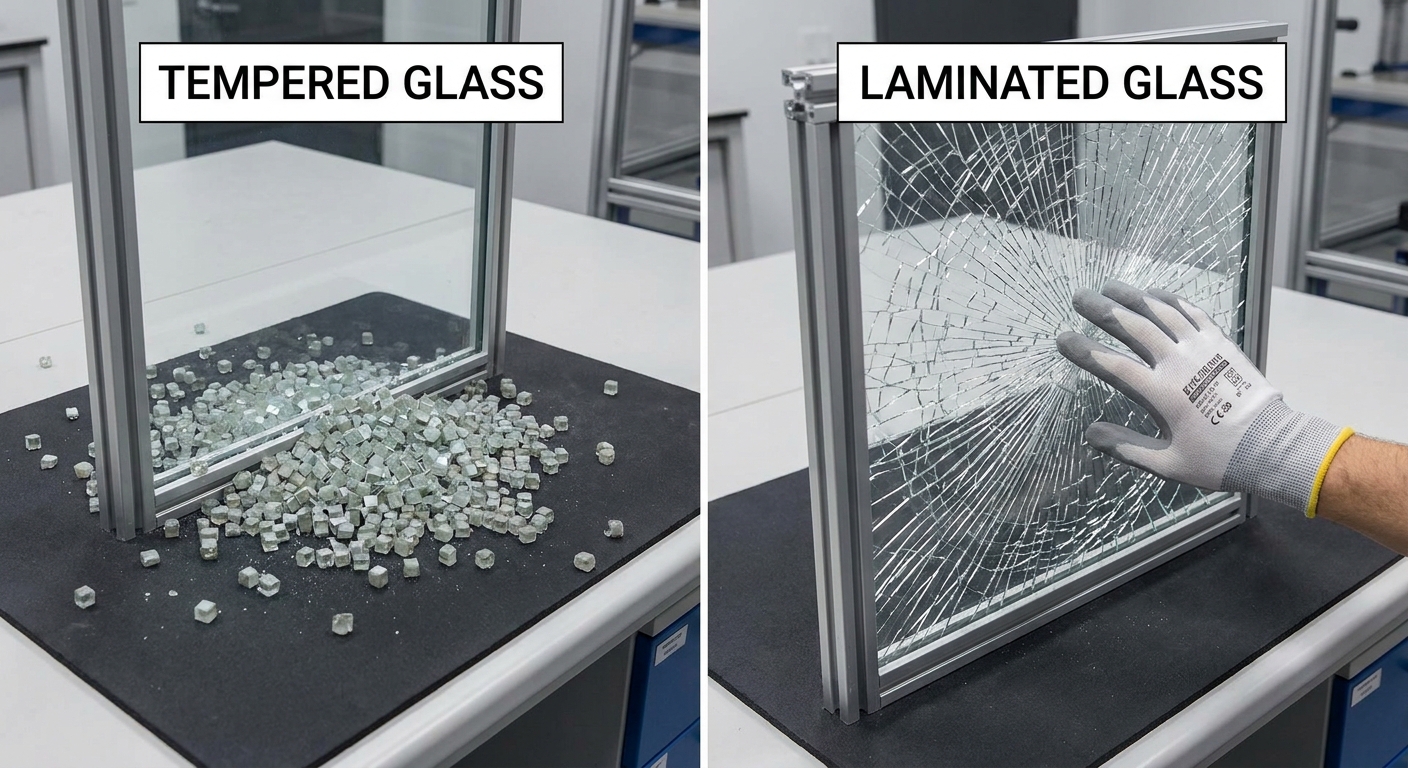
Tempered safety glass is crucial because it undergoes specialized heat treatment to minimize serious injury risks during structural failures. Standard glass can shatter into lethal daggers at any moment, creating massive business liabilities and safety hazards. By utilizing an intensive thermal strengthening process, this material ensures your building envelope remains incredibly resilient.
When a sudden impact occurs, the internal stress of the glass forces it to crumble safely. This predictable fragmentation pattern makes it perfect for high-traffic entry doors and side panels. Let us look at how this protective glazing secures your physical workspaces.
How Does Tempered Safety Glass Protect Your Workspace?
Think about it: how safe is your current glass under sudden physical pressure? In busy high-traffic office areas, doors and partitions are highly vulnerable to heavy daily impacts. Choosing tempered materials prevents dangerous structural failures before they can harm your employees.
Here is the thing:
- High Impact Resistance: It withstands blunt force up to five times better than regular glass.
- Safe Failure Mode: It crumbles into small, blunt cubes instead of sharp shards.
- Thermal Tolerance: It easily resists massive temperature fluctuations without cracking.
What Makes Tempered Safety Glass Cost-Effective?
Business owners often worry about high upfront installation and maintenance costs. But that is not all: investing in durable, heat-treated options actually saves your company thousands in potential replacement costs. It reduces the frequency of accidental breakage and significantly lowers insurance liabilities.
Key Takeaway: Implementing tempered options protects your commercial space from devastating lawsuits while dramatically lowering long-term maintenance costs.
| Glass Type | Relative Strength | Breakage Pattern | Main Benefit |
|---|---|---|---|
| Standard Annealed | 1x (Low) | Sharp, jagged daggers | Low initial cost |
| Tempered Safety | 4x – 5x (High) | Small, blunt pebbles | Extreme physical safety |
Analyzing this data reveals that tempered options provide a massive leap in physical safety compared to traditional annealed glass.
How Is Tempered Safety Glass Manufactured?
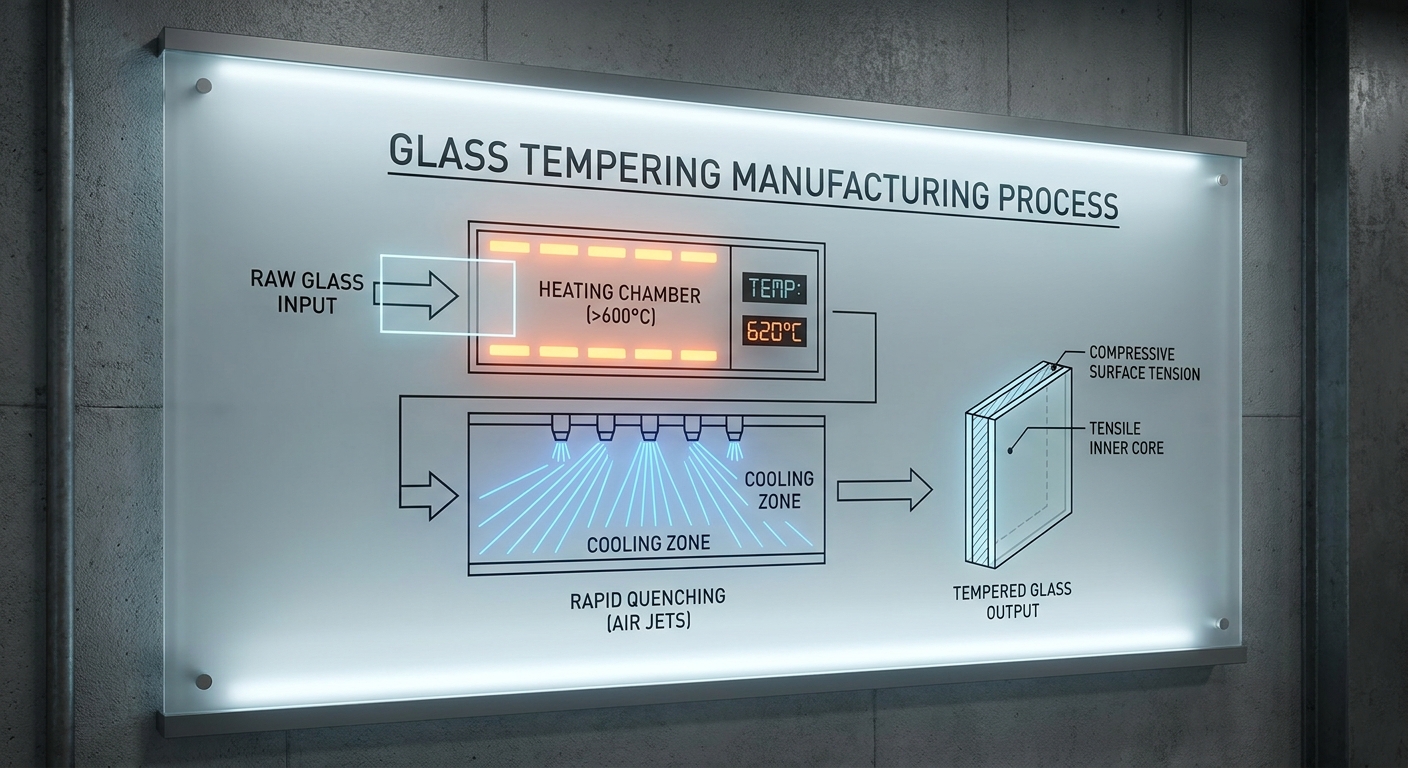
Tempered safety glass is manufactured by heating raw glass to extreme temperatures and cooling it rapidly. This intense thermal processing completely changes the internal stress properties of the panel. The result is a highly pressurized material that resists high mechanical impact loads.
We heat standard glass to over 600 degrees Celsius inside a specialized continuous industrial furnace. This prepares the structure for the rapid quenching phase that locks in high surface compression.
What Are the Thermal Stages of Safety Glass Production?
Here is the thing: the entire thermal cycle must be executed with absolute precision. Any slight variation in temperature will ruin the mechanical properties of the finished panel. That is why professional factories monitor every single stage of the heating process.
What does this mean for you?
- Uniform Heating: The panel reaches its softening point evenly.
- Rapid Quenching: High-pressure air jets cool the surfaces instantly.
- Core Tensioning: The slower-cooling core pulls the outer layer into deep compression.
Why Does Compression Make Safety Glass Stronger?
It gets better: the rapid cooling creates a permanent outer skin of high compressive stress. This acts like a protective shield that must be overcome before the glass can fracture. Any physical impact is evenly dispersed across this pressurized surface.
Key Takeaway: Understanding this heating process helps you appreciate why specialized thermal treatment is necessary to build high-performance, compliant materials.
| Manufacturing Phase | Target Temperature | Primary Structural Outcome |
|---|---|---|
| Thermal Heating | 600°C to 650°C | Softens material matrix |
| Air Quenching | Room temperature blast | Creates outer surface compression |
This comparison highlights the importance of the rapid air quenching stage in locking in the high surface tension.
Why Trust Laminated Safety Glass for Maximum Security?
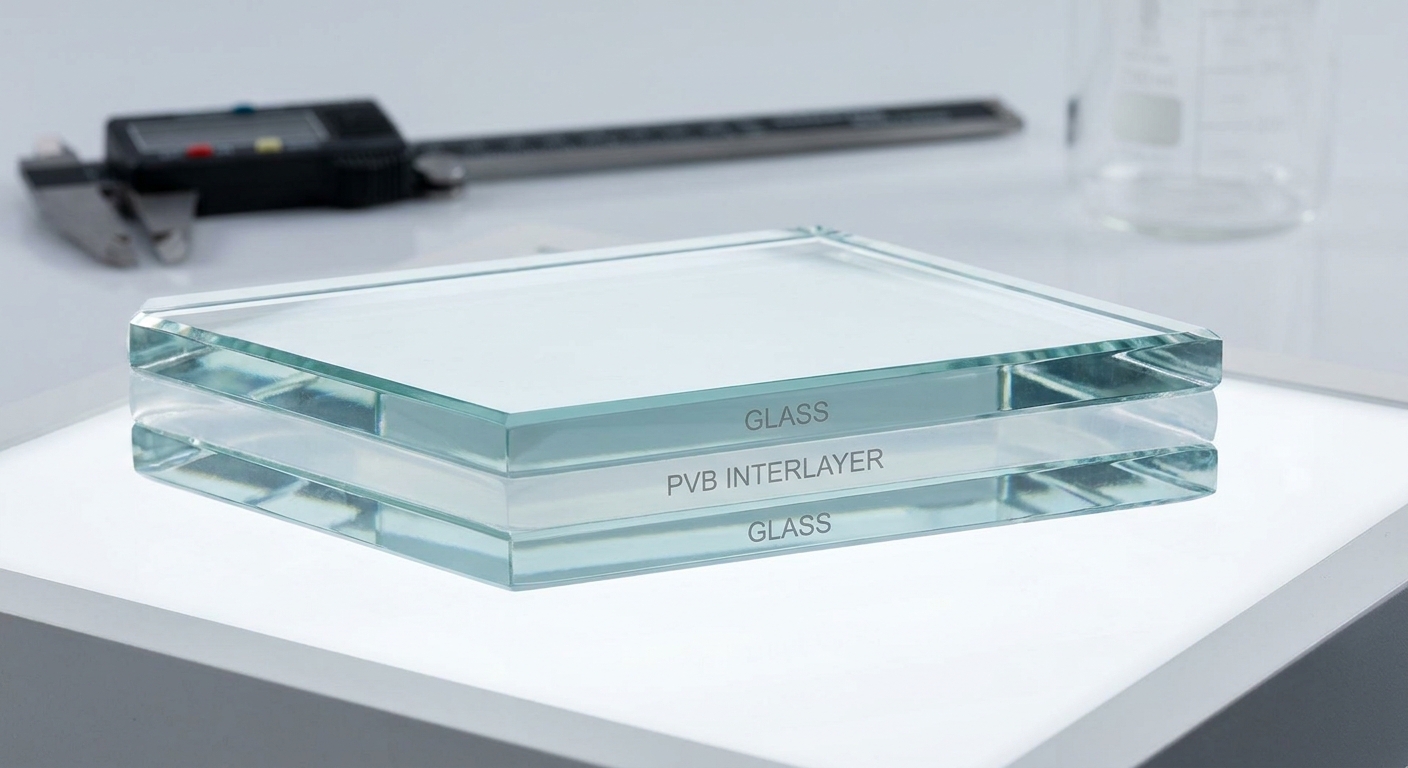
Laminated safety glass offers superior security by keeping broken glass shards bonded to a flexible plastic interlayer. If a burglar or a storm hits the window, the glass cracks but stays firmly in the frame. This makes it extremely difficult for anyone to force their way into your building.
The inner polymer layer acts as a resilient backbone that holds everything together during an impact. Let us explore the engineering behind this advanced multi-layer construction.
How Does Laminated Safety Glass Prevent Break-Ins?
What does this mean for you? It means your physical storefront remains fully protected even after a heavy impact event. Intruders cannot easily bypass the sticky polymer layer, giving your security team plenty of time to react.
Think about it:
- Delayed Penetration: Resists repeated heavy hammer and crowbar blows.
- Shrapnel Retention: Keeps dangerous glass splinters from flying inward.
- Continuous Barrier: Maintains a closed building envelope even when fractured.
Which Interlayer for Safety Glass Is Right for You?
Think about it: do you need basic office soundproofing or heavy hurricane protection? Standard Polyvinyl Butyral (PVB) is excellent for daily sound dampening and UV protection. However, high-performance SentryGlas (SGP) offers five times the tear strength for structural rails.
Key Takeaway: Choosing the right laminate interlayer allows you to customize your security levels while enjoying outstanding noise reduction benefits.
| Interlayer Material | Tear Strength | Best Use Case | Sound Insulation |
|---|---|---|---|
| Standard PVB | Moderate | Office partitions, storefronts | Excellent |
| SentryGlas (SGP) | Extremely High | Structural glass floors, facades | Moderate |
Analyzing this data reveals that SGP interlayers are best suited for high-stress structural security applications.
Where Should You Install Safety Glass in Commercial Hubs?
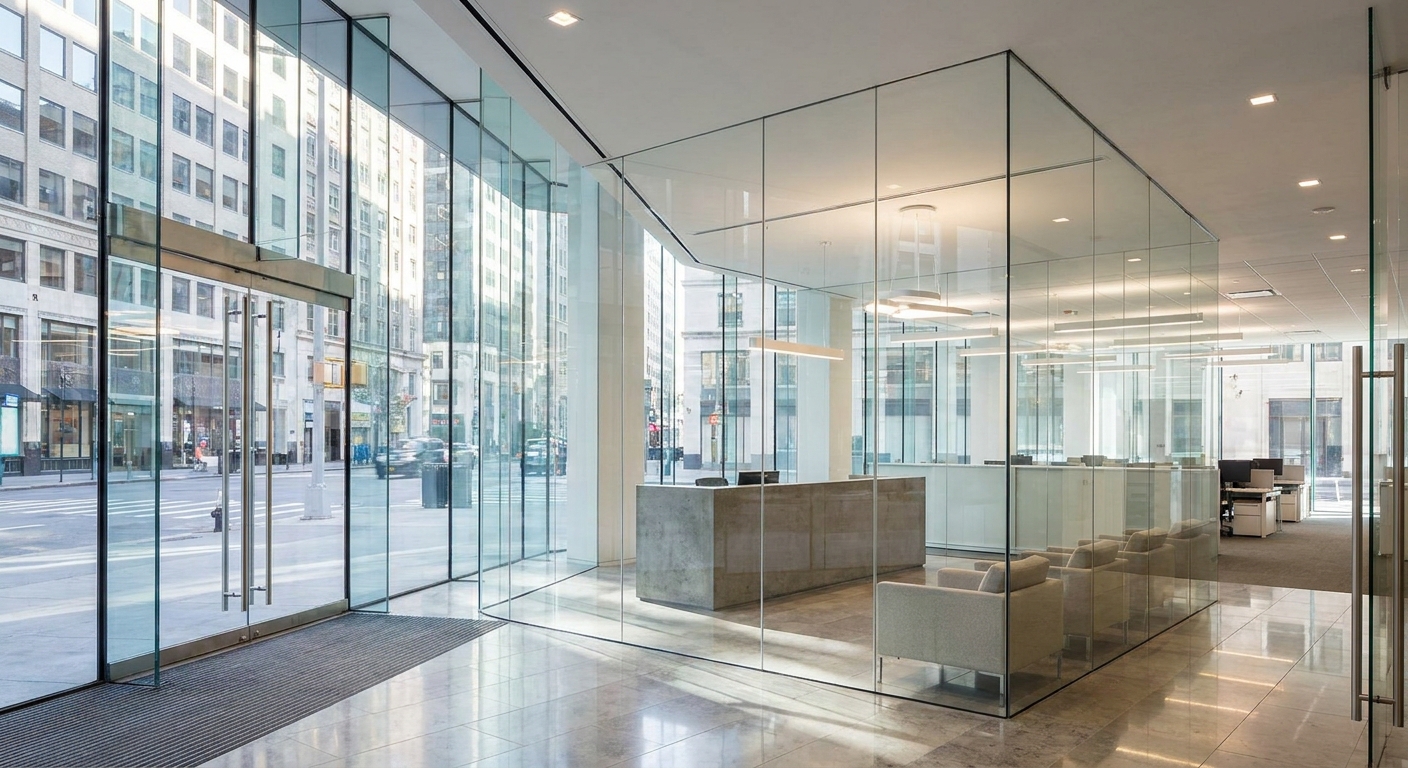
You must install safety glass in specific high-traffic areas defined as hazardous by modern building codes. Failing to meet these regulations can lead to costly project delays and massive liability risks. Let us examine the exact areas where these protective materials are required.
Any area where walking, sliding, or slipping occurs requires careful consideration when choosing glazing. Entry doors, sidelights, and wet environments are all heavily regulated.
Why Do Entryways Mandate Safety Glass Installation?
Here is the thing: swinging doors and narrow sidelights are prime zones for accidental human impact. If a visitor slips near an entry door, they could easily crash directly through the window pane. That is why building inspectors strictly require safety-rated glazing in these specific locations.
But that is not all:
- Active Doors: All swinging, sliding, and revolving door panels.
- Sidelight Zones: Windows located within 24 inches of any door edge.
- Low-Level Panes: Large glass sheets situated close to the walking surface.
Which Wet Areas Require Safety Glass Upgrades?
Slipping on a wet floor and hitting standard glass can result in lethal lacerations. Using certified safety products in these areas is a non-negotiable legal requirement.
Key Takeaway: Identifying these hazardous locations early in your design phase prevents expensive code violations and keeps your building occupants safe.
| Hazard Location | Code Standard | Minimum Glazing Height | Required Rating |
|---|---|---|---|
| Shower Doors | ANSI Z97.1 | Up to 60 inches | Safety Glazing |
| Entry Sidelights | CPSC Cat II | Within 24 inches of door | Safety Glazing |
This comparison highlights the strict height and distance thresholds that trigger mandatory safety glazing compliance.
How Does Fire-Rated Safety Glass Keep Buildings Secure?
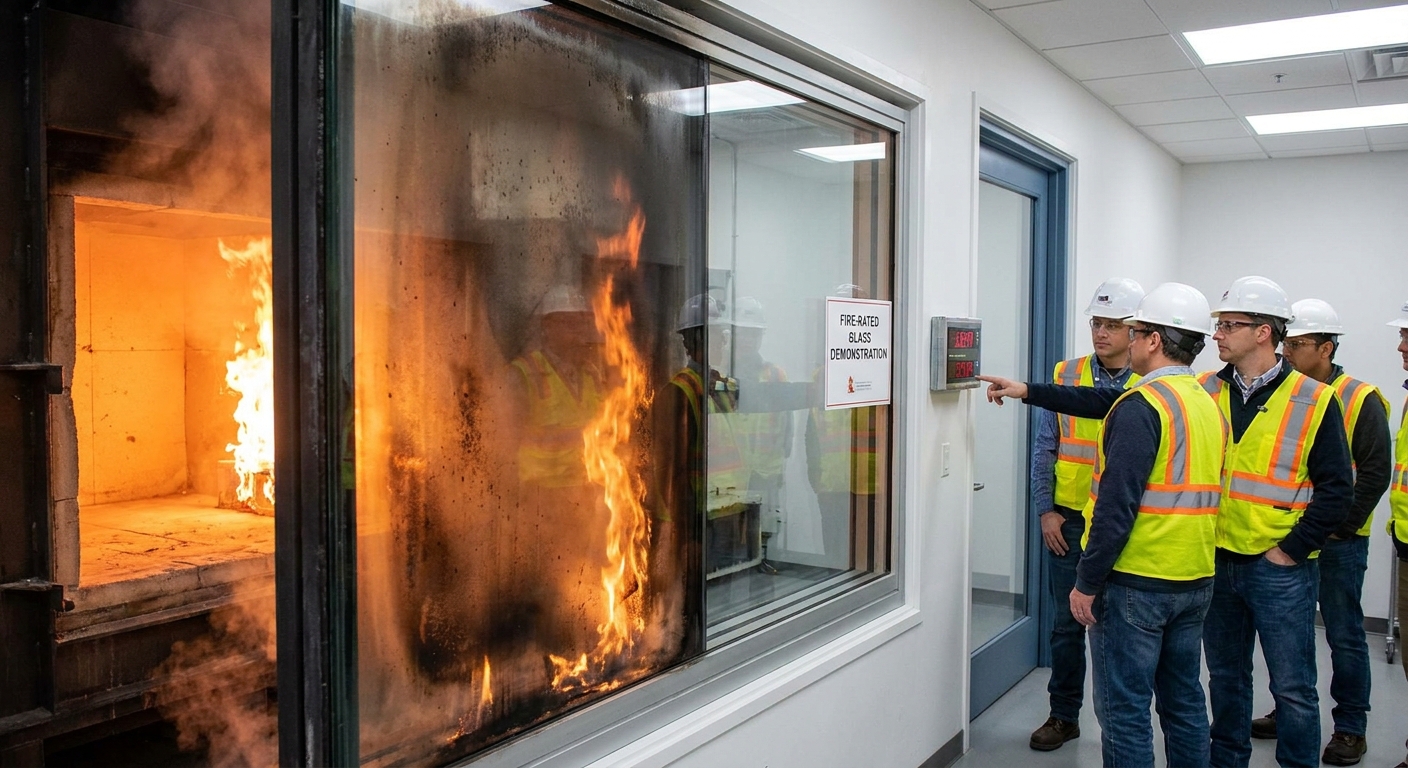
Fire-rated safety glass provides dual protection by resisting physical impacts and blocking dangerous smoke, flames, and heat. Regular glass breaks almost instantly when exposed to the intense thermal shock of a fire. This specialized material remains stable, helping to isolate the fire to a single room.
It is commonly installed in escape stairwells, fire doors, and elevator lobbies. Let us examine how this advanced technology can save lives in an emergency.
How Does Fire-Rated Safety Glass Prevent Heat Transfer?
Think about it: a standard fire door might block flames, but can it stop radiant heat? Extremely high heat radiating through a glass door can easily ignite materials on the safe side. Specialized ceramic and multi-layer barriers block this invisible energy transfer completely.
But that is not all:
- Flame Barrier: Prevents the spread of active fire and hot gases.
- Smoke Containment: Keeps toxic smoke from entering escape corridors.
- Heat Blocking: Absorbs and reflects intense radiant heat energy.
Where Is Fire-Rated Safety Glass Most Effective?
It gets better: combining impact safety with fire ratings gives you the ultimate commercial window. You get complete physical security during daily operations and robust containment if a fire breaks out. This makes it an ideal option for schools, hospitals, and busy corporate offices.
Key Takeaway: Installing fire-rated options in high-traffic corridors dramatically increases occupant evacuation times during a critical building emergency.
| Glass Class | Fire Resistance Duration | Radiant Heat Block | Impact Safety Rating |
|---|---|---|---|
| Fire-Protective | 20 to 90 minutes | No | Yes (If tempered/laminated) |
| Fire-Resistive | 60 to 180 minutes | Yes | Yes (Always fully rated) |
Analyzing this data reveals that fire-resistive options offer the highest level of radiant heat containment.
Why Is Acoustic Safety Glass Best for Modern Offices?

Acoustic safety glass is the best solution for modern offices because it dampens background noise while maintaining high physical security. Busy corporate spaces are often incredibly loud and distracting for employees trying to focus. This specialized glazing creates quiet, productive meeting rooms and private executive offices.
By using a specialized acoustic PVB interlayer, the window absorbs sound wave vibrations instead of passing them through. Let us look at how this acoustic barrier improves daily office life.
How Does Acoustic Safety Glass Reduce Noise Pollution?
Here is the thing: standard glass acts like a drum, vibrating and transferring noise from room to room. The elastic plastic core inside acoustic partitions dampens these vibrations, turning sound energy into heat. This creates a remarkably quiet interior workspace.
Think about it:
- Noise Dampening: Significantly lowers decibel levels from busy streets.
- Privacy Protection: Keeps confidential boardroom conversations private.
- UV Protection: Blocks up to 99% of fading solar rays automatically.
Is Acoustic Safety Glass Worth the Investment?
But that is not all: quiet workplaces experience significantly higher employee productivity and lower stress levels. You are not just buying a window; you are investing in a healthier, more focused corporate environment. It is a smart, high-value upgrade for any growing business.
Key Takeaway: Using acoustic laminates helps you design beautiful, light-filled office layouts without sacrificing employee privacy or physical safety.
| Glazing Setup | Sound Transmission Class (STC) | Noise Reduction Level | Primary Workspace Use |
|---|---|---|---|
| Single Annealed Pane | 28 – 30 (Low) | Minimal | Low-traffic interior doors |
| Acoustic Laminated | 38 – 42 (High) | Exceptional | Meeting rooms, exterior facades |
This comparison highlights the superior acoustic performance of laminated partitions over standard single-pane glass.
How Do Labs Test Safety Glass for Impact Resistance?
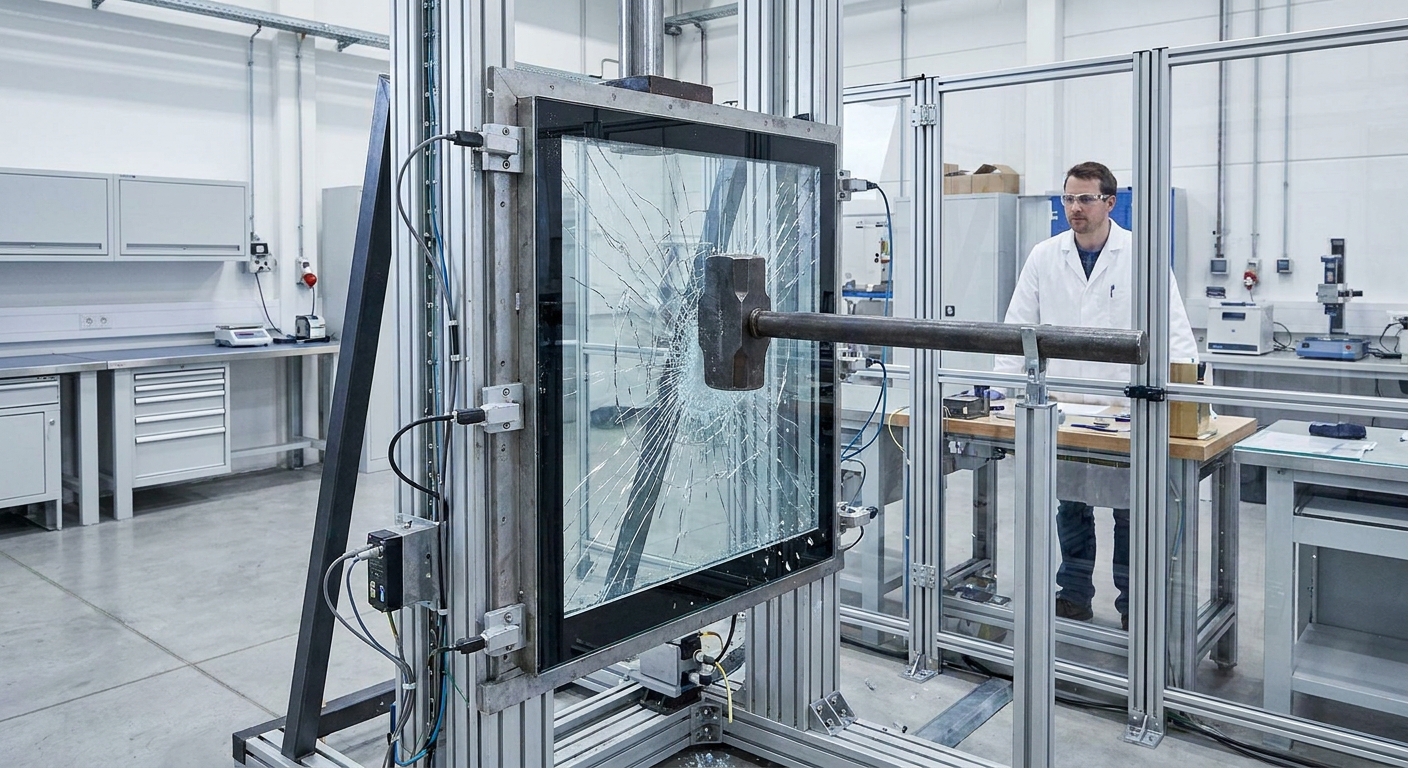
Testing labs verify safety glass by subjecting glass panels to standardized high-energy impact and weathering tests. These strict evaluations ensure that the finished architectural products can withstand actual workplace accidents. Without these third-party verifications, developers would have no way to prove compliance.
Specialized machinery drops heavy weights and projectiles directly onto the test panels to measure breakage limits. Let us explore the rigorous methods used to certify these vital materials.
What Is the Safety Glass Drop-Weight Test?
What does this mean for you? It means every certified panel has already survived simulated impacts far worse than standard daily wear. Testing rigs use a heavy leather bag filled with lead shot to mimic a human body collision. This ensures the glass breaks safely in real-world conditions.
Here is the thing:
- Pendulum Test: Mimics a human running directly into a door.
- Drop-Weight Test: Evaluates the structural integrity of glass floor panels.
- Ball Impact Test: Drops solid steel spheres to check localized penetration resistance.
Why Must Safety Glass Meet ANSI Z97.1 Standards?
Think about it: how do you know if your glazing supplier is actually delivering high-quality materials? ANSI Z97.1 compliance guarantees that the glass has passed rigorous impact safety and durability testing. It provides absolute peace of mind for architects, builders, and facility managers alike.
Key Takeaway: Buying certified materials protects your development projects from code inspection failures and future liability claims.
| Safety Test Type | Target Force | Evaluation Metric | Code Certification |
|---|---|---|---|
| Shot Bag Pendulum | 150 to 400 foot-pounds | Breakage pattern size | ANSI Z97.1 Class A |
| Steel Ball Drop | Multi-meter drop heights | Penetration resistance | CPSC 16 CFR 1201 |
Analyzing this data reveals that different testing methods focus on specific safety parameters like breakage size or penetration resistance.
Why Use Safety Glass for Modern Stairs and Railings?
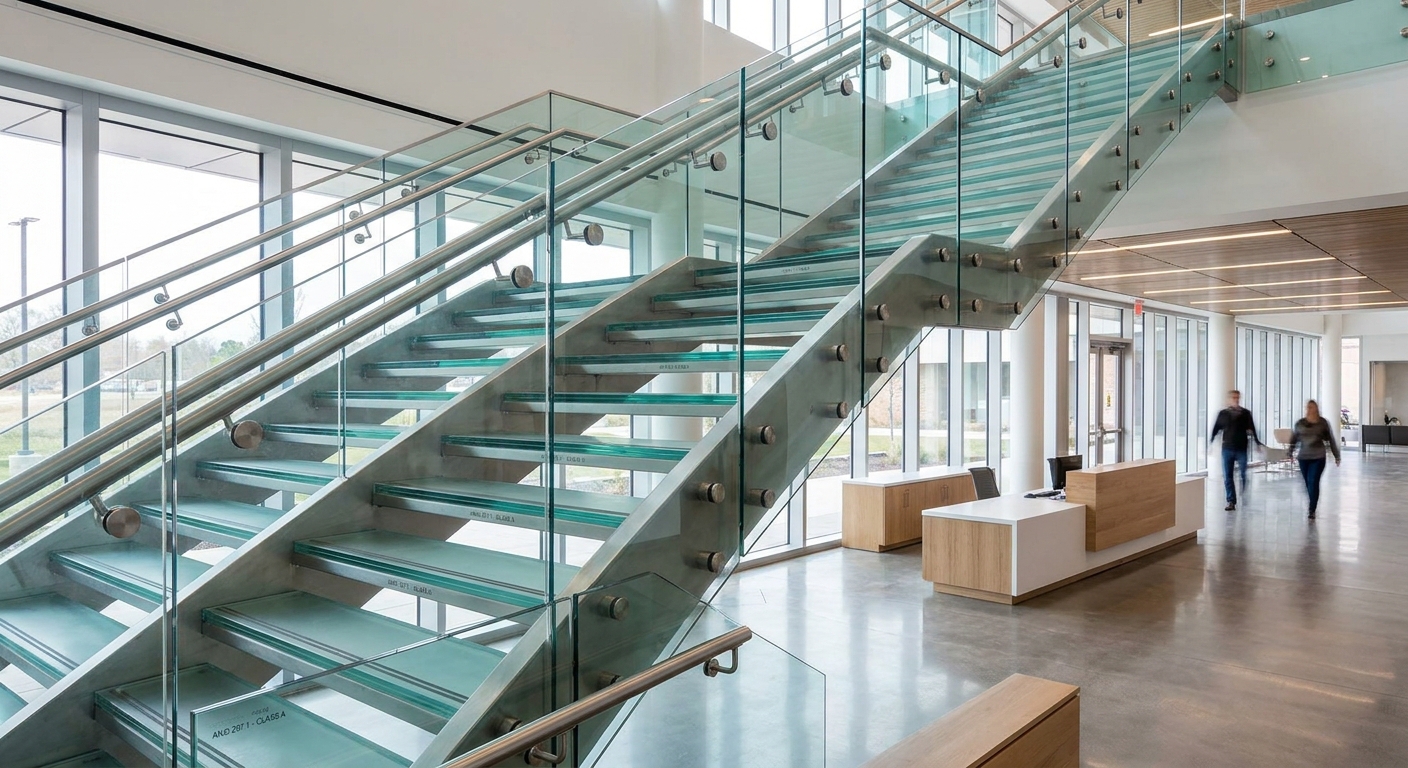
Using safety glass for stairs and railings is essential to prevent dangerous falls from heights while maintaining a clean, open aesthetic. If a standard glass railing breaks, occupants can plummet to the floor below, causing catastrophic injuries. Modern buildings must use high-strength materials to ensure structural security in elevated zones.
These installations require complex engineering to withstand wind loads and heavy crowd pressure. Let us look at why specialized structural glazing is necessary for balustrades.
Why Does Laminated Safety Glass Secure Elevated Zones?
Here is the thing: if a tempered monolithic railing breaks, the entire panel disappears instantly, leaving an open hazard. However, a laminated panel remains structurally intact and stands upright within its frame. This keeps the physical barrier active until maintenance teams arrive.
But that is not all:
- Post-Breakage Strength: Holds heavy loads even after fracturing.
- Edge Stability: Prevents delamination from outdoor rain and wind.
- Aesthetic Appeal: Provides uninterrupted views in luxury commercial spaces.
Which Railing Standard for Safety Glass applies?
It gets better: using high-performance ionoplast interlayers makes glass balustrades up to one hundred times stiffer than standard PVB. This extreme rigidity allows architects to design minimalist, frameless glass stairs and handrails. You achieve maximum visual clarity without compromising on building safety.
Key Takeaway: Specifying laminated options for elevated railings minimizes the risk of catastrophic falls even if the glass fractures.
| Railing Glazing Type | Structural Stiffness | Post-Break Safety | Best Visual Style |
|---|---|---|---|
| Monolithic Tempered | High | Low (Disintegrates) | Frameless |
| Laminated (SGP) | Extremely High | High (Remains standing) | Frameless & Minimal |
This comparison highlights the superior post-breakage reliability of SGP laminated glass over standard monolithic tempered options.
How Do You Maintain Commercial Safety Glass Properly?
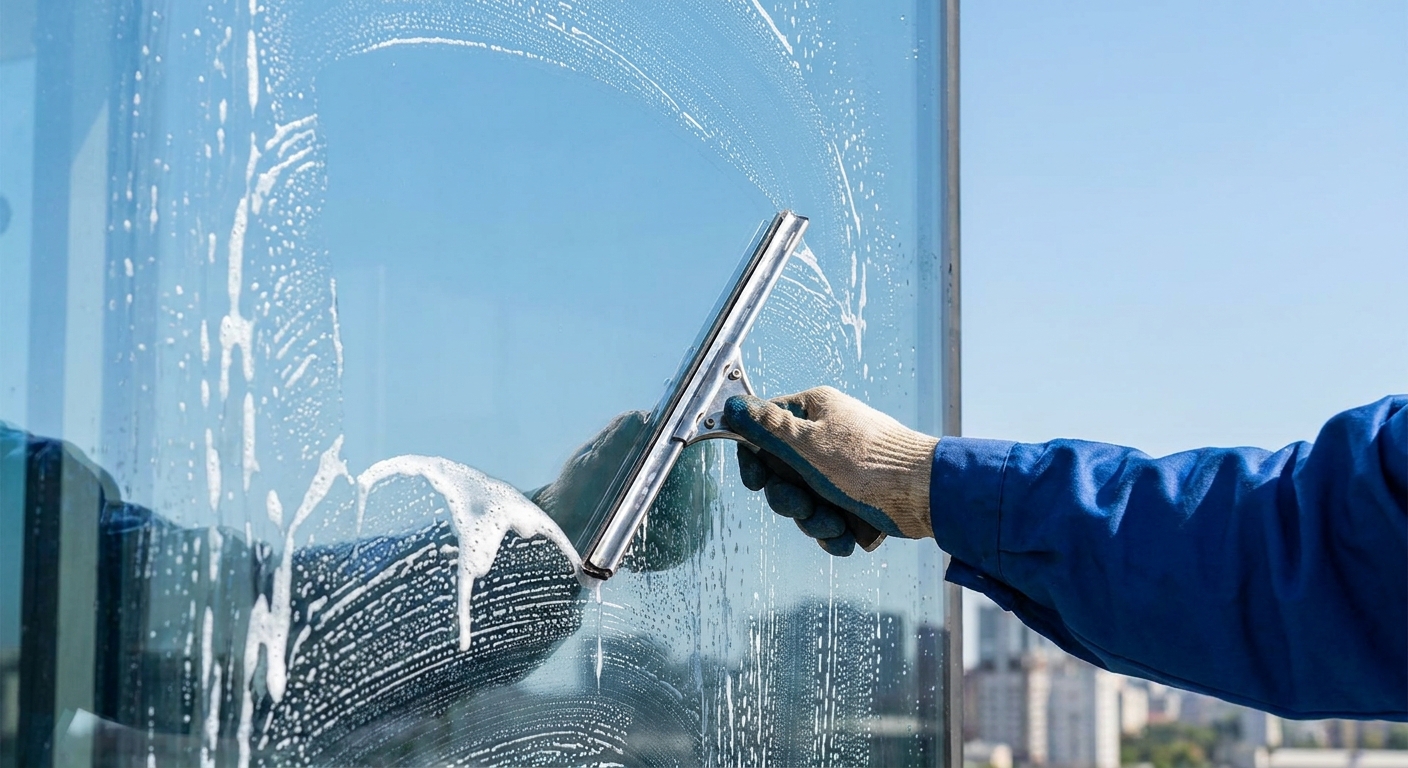
Properly maintaining commercial safety glass involves using non-abrasive cleaners and establishing routine structural inspections. Dirt and harsh environmental pollutants can degrade the glass surface if they are left uncleaned. Regular, gentle maintenance preserves the clear aesthetic and structural integrity of the installation.
Never use metal scrapers, steel wool, or harsh acid-based solvents on tempered surfaces. Let us review the best practices for keeping your architectural glazing in pristine condition.
How to Clean Safety Glass Without Causing Scratches?
Here is the thing: microscopic surface debris can be dragged across the glass face, creating permanent fine scratches. These tiny scratches scatter light, look highly unprofessional, and weaken the surface tension over time. Using soft microfiber towels and mild liquid soap prevents this damage completely.
What does this mean for you?
- Microfiber Towels: Traps dirt particles safely without scraping the glass.
- Squeegee Drying: Prevents mineral deposits and unsightly water spots.
- Neutral Soap: Dissolves greasy dirt without attacking the glass surface.
Why Inspect Safety Glass Edges Regularly?
It gets better: a simple annual inspection helps you spot chips, cracks, or signs of laminate delamination early. Identifying these minor issues before they worsen prevents unexpected, sudden shattering events. It ensures your facilities remain safe, attractive, and fully compliant with building regulations.
Key Takeaway: Implementing a simple, gentle maintenance schedule extends the operational lifespan of your architectural installations while keeping them perfectly clean.
| Cleaning Tool | Safe to Use? | Risk level | Key Preventive Action |
|---|---|---|---|
| Squeegee & Microfiber | Yes | Very Low | Use clean water to rinse first |
| Metal Blade / Scraper | No | Extremely High | Avoid scraping dry glass surfaces |
This comparison highlights the importance of choosing gentle cleaning tools to avoid scratching and compromising the glass.
How Do You Select the Right Safety Glass Supplier?

Selecting the right safety glass supplier requires verifying their manufacturing certifications, production capacity, and custom fabrication capabilities. A reliable B2B partner must deliver fully certified products that meet strict local and international building codes. Working with an unverified factory exposes your business to massive financial and project delay risks.
Make sure your manufacturer offers advanced custom cutting, drilling, and edging services before heat treatment. Let us examine what critical qualities you should look for in a professional supplier.
Why Look for Certified Safety Glass Manufacturers?
Think about it: a single delivery delay or failed code inspection can stall a multi-million-dollar project for weeks. Verified manufacturers carry recognized industry stamps like SGCC or IGCC on every single glass panel. This serves as instant proof of quality for structural building inspectors.
Here is the thing:
- Quality Stamps: Look for sandblasted monograms in the corners.
- Factory Audits: Partner with factories undergoing regular independent audits.
- Batch Testing: Ensure the manufacturer runs daily impact tests on their lines.
Can the Supplier Handle Custom Safety Glass Orders?
But that is not all: look for suppliers that operate state-of-the-art CNC machining and waterjet cutting equipment. Because tempered panels cannot be modified post-production, precision fabrication must occur before the glass enters the oven. A manufacturer with automated production lines ensures high accuracy across large batches.
Key Takeaway: Partnering with an experienced, fully certified manufacturer ensures your commercial glazing projects are completed on time and within budget.
| Supplier Metric | High-Quality Partner | Low-Quality Supplier | Impact on Your Project |
|---|---|---|---|
| Certifications | SGCC, ANSI Z97.1, EN 12150 | None / Self-certified | High risk of inspector rejection |
| Machining | Precision CNC, Waterjets | Manual cutting tools | Risk of dimensional errors |
Analyzing this data reveals that choosing a fully certified partner eliminates compliance risks and installation errors.
Selecting the perfect structural glazing for your commercial projects is essential for mitigating safety liabilities and meeting strict national building codes. Since the 1990s, Prime Pro Glass has been at the forefront of advanced architectural glass manufacturing, growing into an industry-leading force with over 500 skilled employees and world-class 30,000+ square meter production facilities. We deliver premium, certified, and fully customized B2B safety glazing solutions designed to protect lives, secure properties, and elevate modern architectural aesthetics.
Minimize your business liability and secure your commercial spaces with confidence by choosing our high-performance architectural glass products. To discuss your project specifications and receive a customized quotation, contact us today and partner with a global leader in high-performance structural glazing.
Can I cut tempered safety glass after it has been manufactured?
No, you cannot. Any attempt to cut, drill, or shape a finished tempered panel will instantly disrupt the permanent balance between its outer compressive layer and high-tension core, causing the entire panel to crumble into small, harmless cubes. All fabrications must be completed on raw annealed glass before the thermal tempering process begins.
What is the best safety glass option for outdoor railings?
Laminated safety glass is the best option for elevated railings and stairs. Unlike monolithic tempered glass, which completely disintegrates and leaves an open falling hazard if broken, a laminated glass panel with a PVB or SGP interlayer remains securely bound in the frame after fracture to prevent catastrophic falls.
How do I know if my safety glass is certified?
You can verify certification by looking for a permanent compliance monogram etched into one of the corners. This sandblasted or acid-etched mark contains the manufacturer’s license number and specifies which rigorous safety standards, such as ANSI Z97.1 or CPSC 16 CFR 1201, the glass panel meets.
Can I use standard glass in commercial entryway doors?
No, you cannot use standard glass in these active entry zones. Modern International Building Codes strictly mandate certified safety glazing in high-risk zones, such as doors and adjacent sidelights, to eliminate severe human impact laceration hazards and mitigate corporate liability risks.
How do I clean laminated safety glass without damaging the core?
You should use a clean microfiber cloth and a mild, ammonia-free liquid soap solution. Avoid flooding the edges of laminated panels with heavily acidic cleaners or water, as this can degrade the internal plastic interlayer over time and lead to edge delamination.