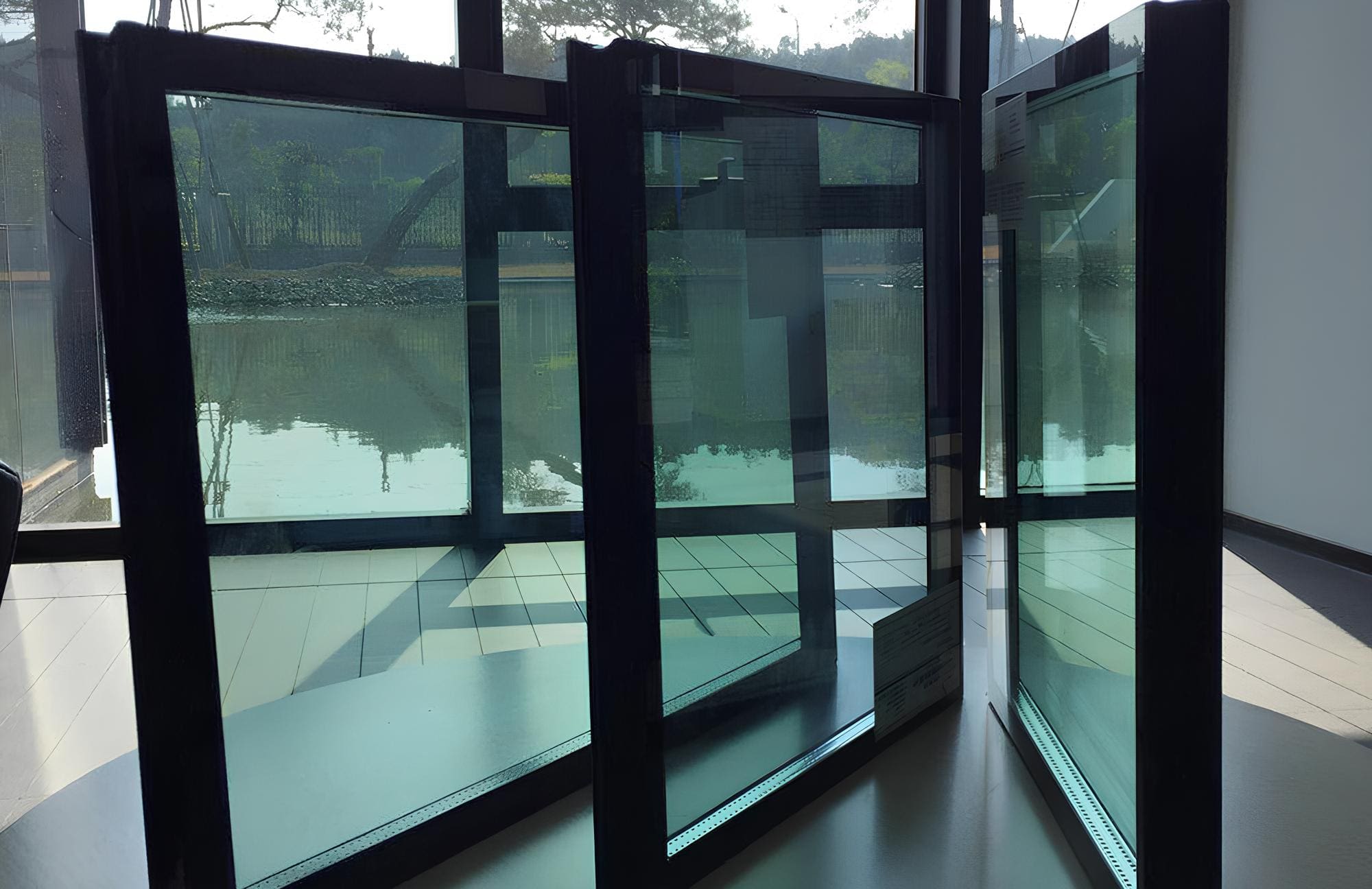


Hollow Glass That Delivers Real Energy Savings and Reliability
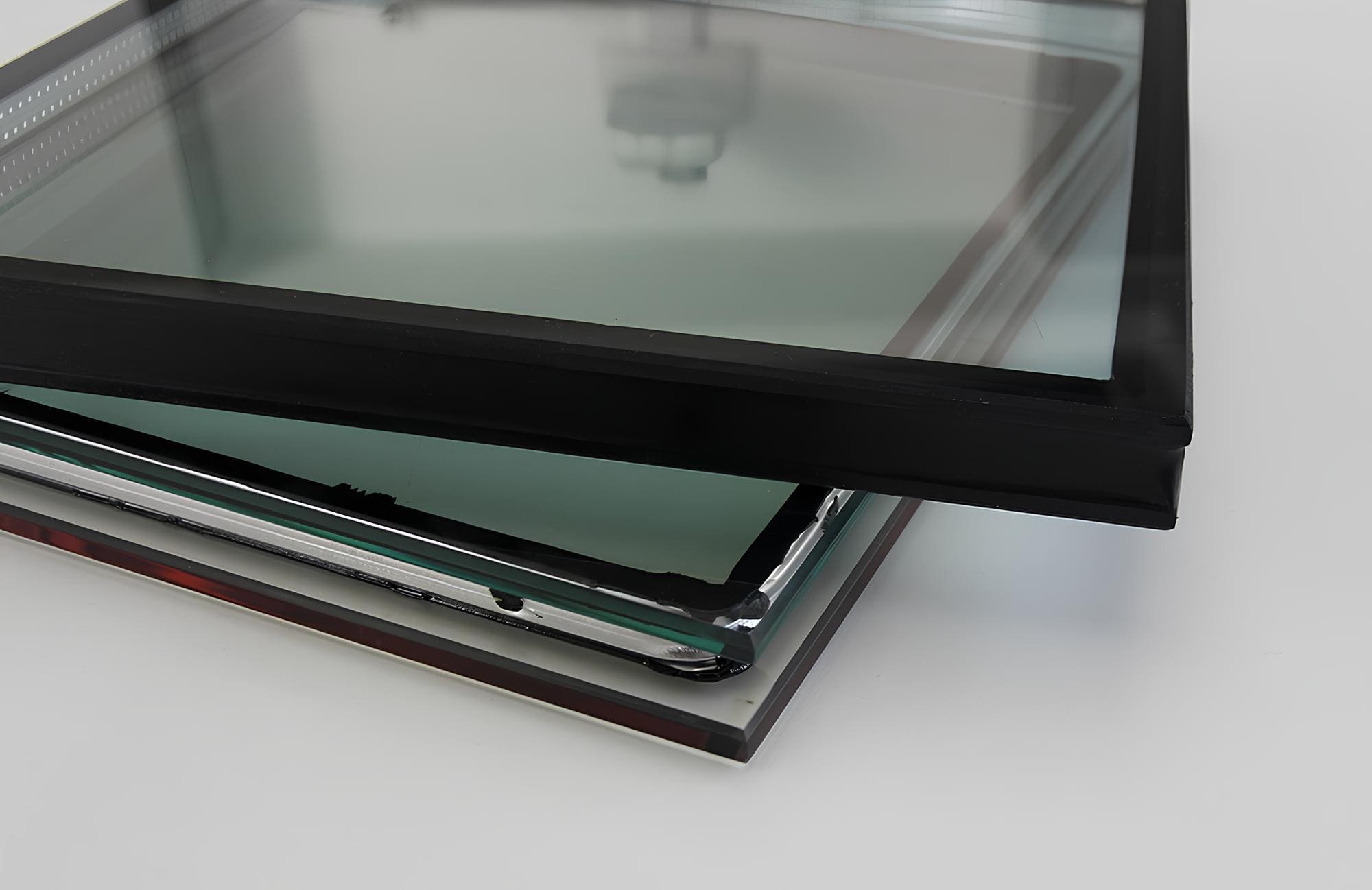
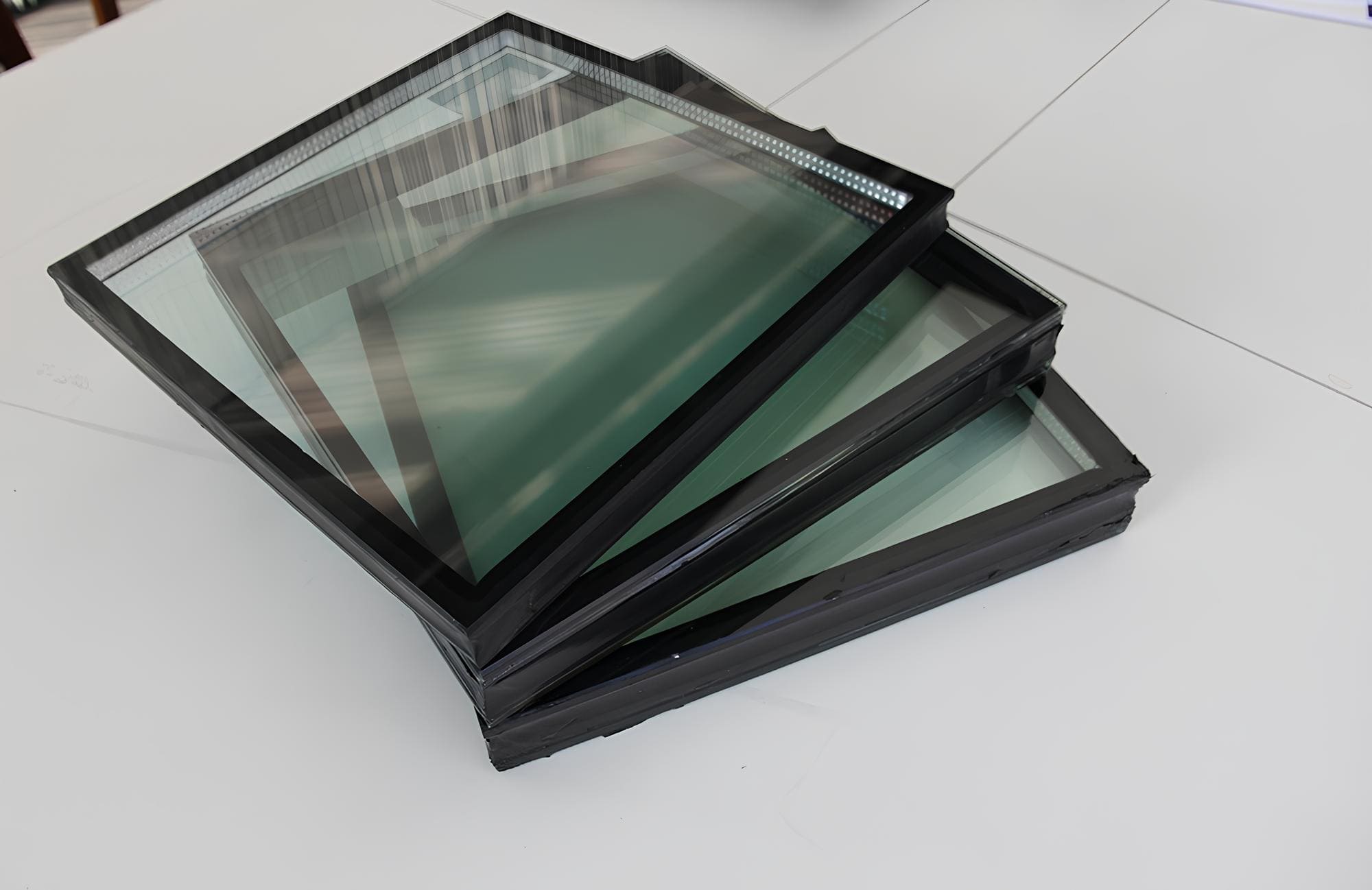
Each insulated glass unit is precision-assembled with aluminum spacers, molecular sieve desiccant, and dual-seal technology — giving you a product that outperforms single-pane alternatives in thermal insulation, acoustic control, and condensation prevention.
Multi-Layer Structure
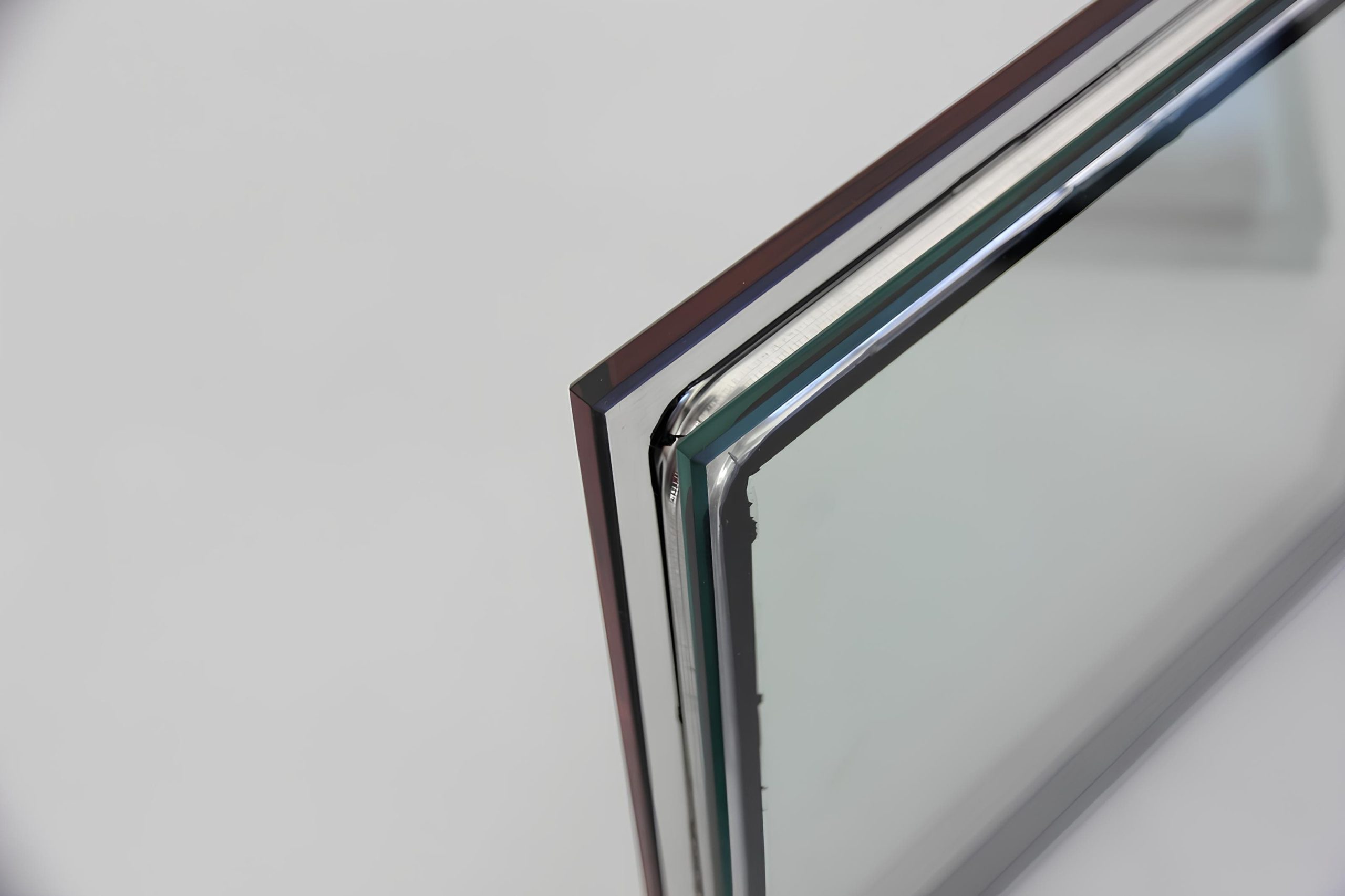
Two or more glass panes separated by aluminum spacer bars filled with molecular sieve desiccant, sealed with a primary butyl seal and a secondary polysulfide or silicone structural sealant. This dual-barrier design locks out moisture and locks in performance over the full service life of your building.
Superior Thermal Insulation
Hollow glass dramatically reduces U-values compared to monolithic panes. Filling the cavity with inert gases such as argon, krypton, or neon further cuts heat transfer — helping you meet the most demanding energy codes while lowering HVAC costs for building owners.
No Dewing in Low Temps
Molecular sieve desiccant inside the spacer absorbs residual moisture and any vapor that could permeate through the seal. The result: an absolutely dry cavity that stays fog-free even when exterior temperatures plunge well below freezing — eliminating tenant complaints and costly callbacks.
Flexible Combinations
Combine clear, tinted, tempered, coated, LOW-E, laminated, or ceramic-frit glass in flat or curved configurations. This modular flexibility means one supplier covers every specification on your project — from energy-focused curtain walls to decorative interior partitions.
Get technical specifications tailored to your project requirements
Are These Insulated Glass Problems Costing You Time and Money?
Hollow glass procurement carries unique risks that can derail timelines and budgets. Knowing what to watch for helps you choose the right manufacturing partner from the start.
Interior Fogging & Condensation
Moisture trapped inside the cavity turns glass panels opaque over time, forcing full-unit replacements that disrupt occupied buildings and multiply project costs far beyond the original material budget.
Seal Failure & Gas Leakage
Poor sealant adhesion or incorrect butyl application allows argon fill to escape within months, degrading thermal performance and voiding energy certifications your project depends on for code compliance.
Dimensional & Hole-Position Errors
Incorrect cavity spacing, misaligned drill holes, or out-of-tolerance dimensions mean units cannot be installed on site — triggering expensive remakes and schedule delays that ripple through the entire project.
Unpredictable Lead Times
Suppliers who cannot hold delivery schedules put your entire installation timeline at risk. Late IGU arrivals can idle glazing crews, trigger liquidated damages, and create cascading delays across dependent trades.
Gas Retention Below Specification
When argon or krypton fill rates fall below the rated percentage at delivery, the advertised U-value is never achieved. This invisible quality gap can cause energy audits to fail and warranty claims to pile up after occupancy.
Transit Damage & Breakage
Improper crating or insufficient edge protection during ocean freight leads to cracked panes and broken seals that are discovered only at the job site — turning a routine delivery into an emergency reorder with rush freight surcharges.
These setbacks lead directly to rework, penalties, and missed deadlines — partner with a manufacturer that prevents them
See How We Solve These IssuesEnd-to-End IGU Support That Keeps Your Project on Track
From initial glass selection to final delivery inspection, our engineering team handles every critical step so you receive units that fit the first time — on spec, on budget, on schedule.
Drawing Review & Build-Up Consulting
Our engineers review your architectural drawings and recommend the optimal IGU configuration — glass type, spacer width, gas fill, and sealant system — matched to your climate zone and performance targets.
- Catch specification errors before production
- Match LOW-E coatings to climate requirements
- Optimize cost vs. performance trade-offs
Rapid Prototyping & Sample Verification
Receive physical IGU samples within days to verify dimensions, appearance, and seal quality in real-world conditions — before committing to a full production run that could expose your budget to risk.
- Validate fit with actual framing systems
- Confirm visual consistency across glass types
- Reduce bulk-order risk by 90%+
High-Volume Production with Consistent Quality
Our automated insulating glass production line handles cutting, edge grinding, cleaning, spacer assembly, gas filling, and dual sealing in a continuous process — delivering batch-to-batch consistency even on large-scale orders.
- Annual capacity: 4,000,000 m² across all lines
- Oversize IGU up to 3300 × 6000 mm
- ERP-tracked production scheduling
In-Line Quality Inspection & Testing
Every batch undergoes gas-fill verification, seal integrity checks, dimensional measurement, and visual inspection at multiple production checkpoints — with full test reports shipped alongside your order.
- Argon fill rate verified per unit
- Dew point testing confirms seal quality
- Traceable batch records for every shipment
Engineered Packaging & Logistics
Custom crating with edge protection, interleaving paper, and reinforced strapping ensures IGU units survive ocean freight and arrive intact — keeping breakage rates under 0.3% even on long-haul shipments.
- Container load plans optimized per order
- Complete export documentation included
- FOB / CIF / DDP terms available
After-Sales Technical Support
A dedicated project manager stays with your order from quotation through installation, providing installation guidance, troubleshooting, and rapid response to any quality concern — no handoffs, no runaround.
- 24-hour response guarantee on all inquiries
- Installation best practices documentation
- Warranty coverage on all sealed units
Ready to work with a manufacturer that owns every step of the IGU process?
Discuss Your IGU RequirementsInsulated Glass Solutions for Every Building Envelope Challenge
Whether your project demands maximum thermal performance, acoustic isolation, or structural wind resistance, we deliver purpose-built IGU configurations that match each application precisely.

Curtain Wall Systems
- LOW-E + argon fill achieves U-values below 1.6 W/m²·K for code-compliant facades
- Oversize units up to 3300 × 6000 mm reduce mullion count and maximize views
- Silicone structural sealant option for concealed-frame curtain wall applications

Windows & Doors
- Double or triple IGU configurations cut heating and cooling costs by up to 40%
- Warm-edge spacer bars eliminate cold-frame condensation in residential applications
- Tempered or laminated inner panes meet safety glazing requirements for doors

Skylights & Overhead Glazing
- Solar control LOW-E coatings block excessive heat gain without sacrificing daylight
- Laminated inner pane provides overhead safety and UV protection above 90%
- Curved IGU options create architecturally distinctive roof profiles

Acoustic & Noise Control
- Asymmetric pane thickness disrupts sound wave transmission for up to 38 dB reduction
- PVB acoustic interlayer option adds damping without increasing unit weight significantly
- Ideal for hotels, hospitals, and roadside commercial properties requiring quiet interiors
Not sure which configuration fits your project? Our engineers will recommend the right build-up
Get a Custom IGU RecommendationProduction Capacity That Matches Your Project Scale
With 30,000 m² of factory floor, 500+ skilled workers, and fully automated insulating glass lines, PrimePro delivers consistent IGU quality from prototype runs to multi-container orders — on time and traceable at every stage.
IGU Production Equipment
- Automatic Insulated Glass Production Line
- Oversize Automatic Insulated Glass Production Line (up to 3300 × 6000 mm)
- Automatic Cutting Machines
- Automatic Edge Grinding Machines
- Oversize Dual-Chamber Tempered Furnace
- Heat Soak Oven (BS EN14179-1:2005)


See how our production capabilities match your project requirements
Schedule a Virtual Factory TourEvery IGU Configuration Your Project Demands — Built to Spec
Select from a comprehensive range of glass types, cavity widths, gas fills, and sealant systems. Each unit is fabricated to your exact drawings, so what you specify is exactly what arrives on site.
Project References

Commercial Tower Curtain Wall — Southeast Asia
- 6mm Double Silver LOW-E + 12A Argon + 6mm Tempered
- 12,000 m² total area across 38 floors
- Silicone structural secondary seal for concealed frame
Residential Window Supply — United States
- 5mm LOW-E + 9A Argon + 5mm Clear Float
- 4,200 units across 6 residential communities
- Warm-edge spacer to eliminate frame condensation

5-Star Hotel Acoustic Glazing — Malaysia
- 8mm Float + 16A Argon + 6.38mm Acoustic Laminated
- 360 oversize units including curved IGU for lobby
- Noise reduction target: 38 dB minimum
Have specific IGU requirements? Send us your specs for a detailed proposal
Submit Your IGU SpecificationsA Transparent Process from First Contact to Final Delivery
Whether you need custom-branded IGU units or turnkey glass solutions for your projects, our structured OEM/ODM workflow ensures clear timelines, accountable checkpoints, and zero surprises.
Start your OEM/ODM project with a clear timeline and dedicated engineering support
Start Your OEM/ODM Inquiry9-Stage IGU Manufacturing — Precision at Every Step
Each insulated glass unit moves through a controlled sequence of cutting, sealing, filling, and testing stages. Two critical steps — molecular sieve desiccant loading and dual-seal application — are highlighted below because they determine long-term unit performance.
Step 1: Precision Cutting
Automated CNC cutting machines score and break glass sheets to exact dimensions from your approved drawings, achieving tolerances within ±1mm to prevent fit issues during installation.
Step 2: Edge Grinding
Four-edge automatic grinding machines smooth and profile all edges, removing micro-fractures that could compromise tempered glass strength or cause seal adhesion failure.
Step 3: Washing & Drying
Multi-stage washing removes all contaminants, dust, and residues from glass surfaces. Clean surfaces are essential for proper sealant bonding — a dirty pane is the leading cause of premature seal failure.
Step 4: Spacer Bar & Molecular Sieve Loading
Aluminum spacer bars are precisely bent to size and filled with molecular sieve desiccant, which absorbs any residual moisture inside the cavity. This step is the first line of defense against internal fogging and condensation — under-filling desiccant is a root cause of premature unit failure.
Critical Quality StepStep 5: Primary Seal (Butyl Application)
Hot-melt butyl sealant is applied continuously along both sides of the spacer bar, forming the primary moisture and gas barrier. Uniform bead width and uninterrupted application prevent the micro-gaps that lead to argon loss and moisture ingress.
Dual-Seal System — Seal 1 of 2Step 6: Assembly & Gas Filling
Glass panes are aligned and pressed onto the spacer assembly under controlled pressure. Inert gas (argon, krypton, or neon) is injected through the spacer to the specified fill rate — typically 90%+ — before the cavity is sealed shut.
Step 7: Secondary Seal Application
The outer perimeter receives a secondary seal of polysulfide or silicone structural sealant, providing structural bonding and UV resistance. This second barrier is what gives the IGU its 20+ year service life — without it, the primary butyl seal degrades within a few years.
Dual-Seal System — Seal 2 of 2Step 8: Inspection & Testing
Every unit undergoes visual inspection, dimensional verification, dew-point testing, and gas-fill concentration checks. Batch test reports are compiled and shipped with your order to satisfy project documentation requirements.
Step 9: Packaging & Dispatch
Units are interleaved, edge-protected, and loaded into reinforced crates designed for ocean freight. Container load plans maximize space while preventing shifting — keeping breakage rates under 0.3% even on 30+ day voyages.
Want to see how each step applies to your specific IGU configuration?
Request a Process WalkthroughEvery Defect Has a Cause — We Intercept It Before It Reaches Your Site
Our quality system maps each common IGU defect to a specific prevention protocol. Instead of relying on final inspection alone, we embed checks at every production stage so problems are caught where they start — not after they ship.
Common Defects & Risks
Internal Fogging / Condensation
Moisture enters the cavity through incomplete primary seals or under-charged desiccant, forming visible fog that cannot be cleaned without replacing the entire unit.
Gas Leakage / Pressure Loss
Micro-gaps in the butyl seal or corner joints allow argon to escape over time, degrading the advertised U-value and causing the unit to fall below energy code requirements.
Sealant Cracking / Delamination
UV exposure and thermal cycling cause low-quality secondary sealants to crack, breaking the structural bond and opening pathways for moisture and air infiltration.
Spacer Bar Misalignment
Off-center or shifted spacers create uneven cavity widths that affect both visual alignment and thermal performance, often discovered only after framing installation.
Our Prevention Protocols
Desiccant Loading Verification
Every spacer bar is weighed before and after desiccant fill to confirm adequate molecular sieve loading. Random units undergo dew-point testing to validate moisture absorption capacity.
Butyl Bead Continuity Inspection
Primary seal application is inspected for unbroken continuity and consistent bead width at every corner and joint. Gas-fill concentration is measured per unit before secondary sealing.
Sealant Material & UV Resistance Testing
Secondary sealant batches are tested for adhesion, elasticity, and accelerated UV aging before production use. Silicone structural sealant is used for all curtain wall applications.
Dimensional & Alignment Audit
Automated measurement stations verify cavity width uniformity and spacer centering against drawing tolerances. Out-of-spec units are flagged and isolated before they reach the sealing line.
Require third-party inspection or specific QC protocols? We accommodate custom quality requirements
Discuss Your QC RequirementsInternationally Certified — So Your Project Passes Inspection the First Time
Every insulated glass unit we produce is backed by internationally recognized certifications and tested against rigorous quality standards, giving your engineering and procurement teams the documentation they need to satisfy code requirements and client audits.
Standards Our IGU Products Comply With
Need specific certification documents or test reports for your project submission?
Request Certification PackageTransparent IGU Lead Times — Plan Your Installation with Confidence
Our production scheduling system provides accurate lead time estimates for each project phase, so your glazing crew and general contractor can coordinate installation windows without guesswork.
Confirm exact lead times for your specific IGU order quantity and configuration
Request Production ScheduleInsulated Glass Questions — Answered by Our Engineering Team
Quick answers to the most common questions we receive from procurement managers and project engineers about our hollow glass products, processes, and capabilities.
Have a question not covered here? Our engineering team responds within 24 hours
Ask a Technical QuestionGet Your IGU Quote with Engineering Recommendations — Within 24 Hours
Share your project requirements and our engineering team will respond with a detailed proposal including pricing, recommended build-ups, lead times, and logistics options tailored to your specific needs.
Tell Us About Your IGU Requirements
The more detail you provide, the more accurate and useful our proposal will be. All inquiries receive a response within 24 business hours.
Our Commitment to You
-
24-Hour Response Guarantee
Every inquiry receives a substantive reply from our engineering team within one business day — not an auto-responder, a real response with actionable information.
-
Direct Engineer Contact
Speak directly with the technical team who will handle your production — no sales intermediaries, no information lost in translation.
-
NDA Available on Request
For proprietary designs or confidential project details, we provide mutual non-disclosure agreements before any technical information is shared.
-
Detailed Technical Proposals
Our quotes include itemized pricing, recommended IGU build-ups with performance data, production timelines, packaging specifications, and shipping terms — everything you need to make a decision.
Not ready to submit a full inquiry? Start with a quick question — we are happy to help
Send a Quick Question