The primary difference between thick glass and thin glass is their structural load-bearing capacity and weight, which determines if they are used for decorative interiors or architectural facades. You face a major risk when selecting the wrong material; choosing incorrectly can lead to catastrophic structural failure or fragile surfaces that crack under minimal pressure.
This leaves you facing costly replacements, potential injury to occupants, and severe energy loss when the glass cannot withstand environmental stressors. By understanding the specific applications of thick glass vs thin glass, you can ensure your project meets safety standards while optimizing your budget and design.
What defines thick glass vs thin glass?
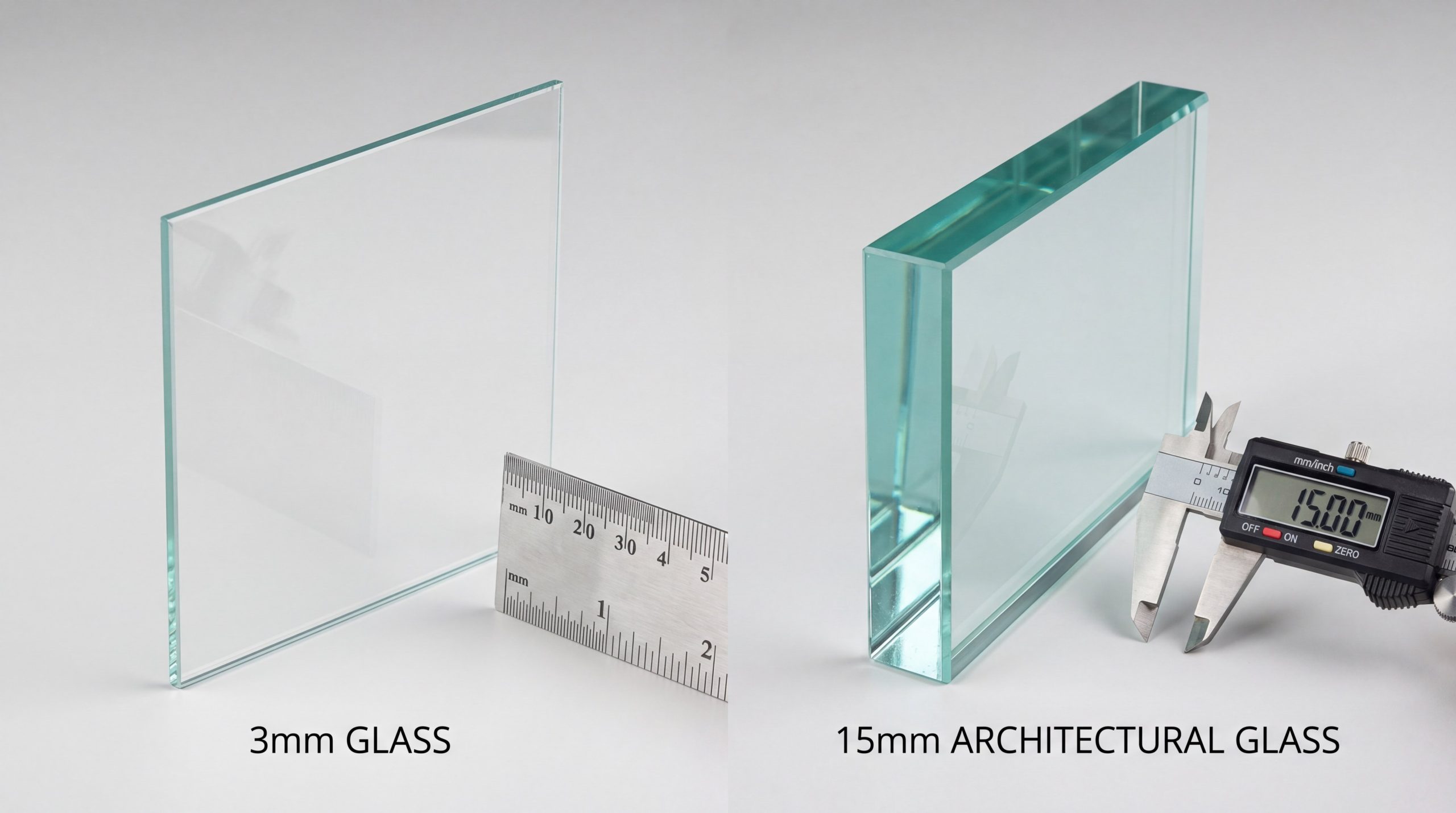
Industry standards typically classify glass between 2mm and 6mm as thin, while architectural thick glass ranges from 8mm to 19mm and beyond. Determining the right choice between thick glass vs thin glass is the first step in engineering a safe and durable building envelope.
What are the standard industry measurements?
Thin glass usually applies to lightweight decorative items while anything over 8mm is considered structural. You must recognize that thin glass is often easier to manufacture in bulk for smaller applications.
Look at this:
- Thin Glass (2mm – 6mm): Lightweight materials used for small frames.
- Thick Glass (8mm – 19mm+): Heavy-duty sheets for high-stress environments.
- Transition Point: Most experts consider 8mm the turning point for architectural use.
How does thickness affect total panel weight?
Panel weight increases exponentially as thickness grows, impacting your shipping costs and framing requirements. You must account for this massive difference to ensure your hardware can support the installation.
Think about this:
- A single millimeter of extra thickness can add hundreds of pounds to a large-scale installation.
- You will need specialized hardware to support the substantial mass of thicker panels.
- Increased weight often dictates the use of reinforced framing systems.
| Feature | Thin Glass (2–6mm) | Thick Glass (8–19mm+) |
|---|---|---|
| Common Use | Picture frames, small windows | Storefronts, glass floors |
| Weight | Low (easy to handle) | High (requires machinery) |
| Flexibility | Higher flexibility | High rigidity |
Key Takeaway: Thickness is the primary driver of weight and structural capability, dictating the type of support system required.
Analysis: Selecting the appropriate weight class ensures your framing system can safely support the load without warping over time.
How does strength vary in thick glass vs thin glass?
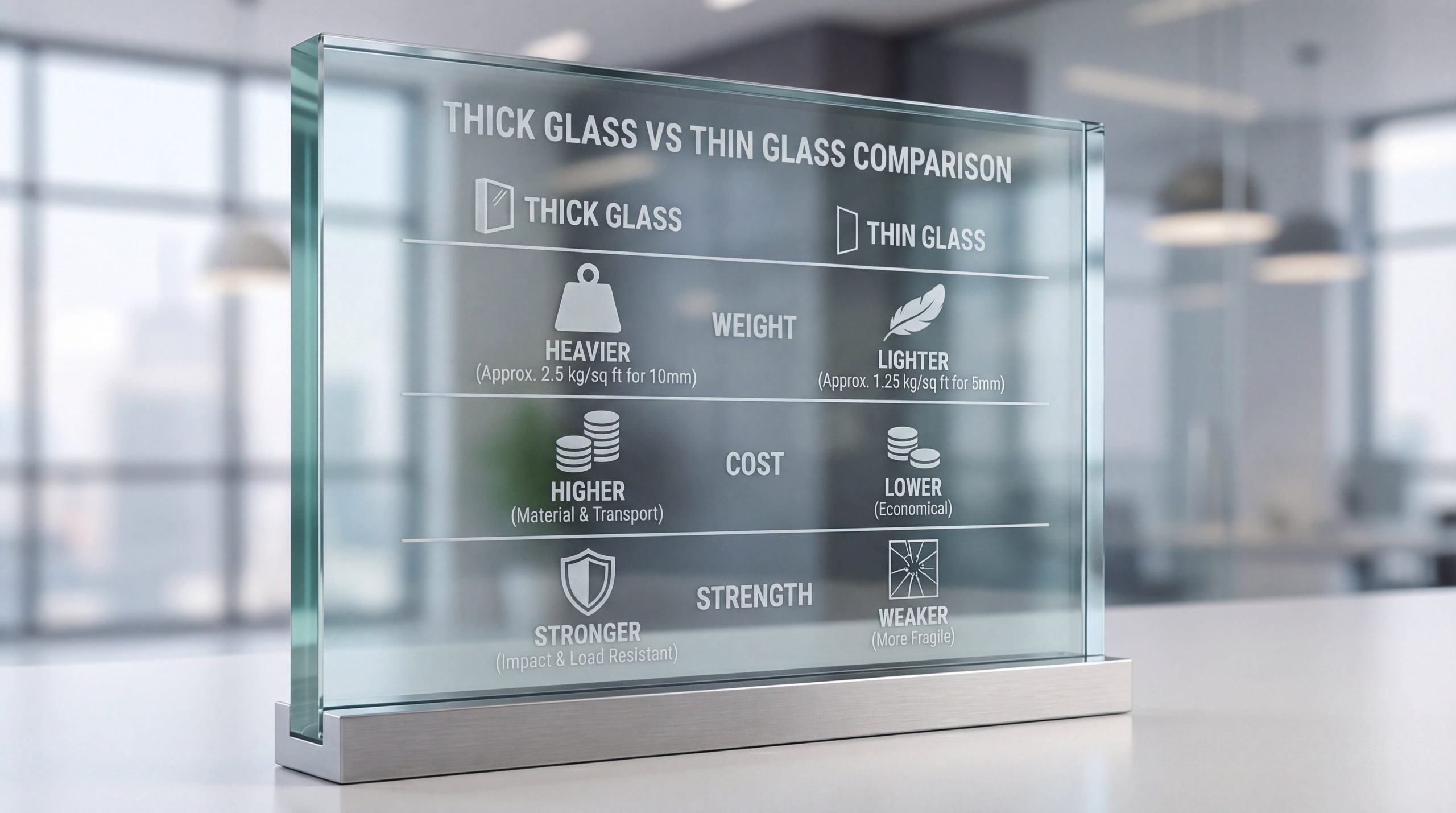
Strength increases significantly with thickness as the additional mass provides natural resistance to impact and bending forces. When evaluating thick glass vs thin glass, you must consider the specific traffic and environmental loads the panel will face.
Which type handles high-traffic stress better?
Thick glass is the clear winner for zones where physical contact or wind pressure is a daily occurrence. It offers the inherent rigidity needed to maintain its shape under heavy use without bowing.
Here is the kicker:
- Impact Resistance: Thick glass survives strikes that would shatter thin sheets.
- Deflection: Thicker panels resist “bowing” when pushed or under wind load.
- Durability: Thick glass is less prone to surface fatigue in commercial settings.
Is tempered glass required for thinner sheets?
Thin glass often requires specialized heat treatment to meet basic safety codes in residential or commercial settings. While this process makes the glass stronger, it does not change its fundamental thinness or mass.
But that’s not all:
- Tempering adds surface strength but doesn’t add structural mass.
- You still need the physical volume of thick glass for floors or stairs.
- Thin tempered glass is still susceptible to flexing under heavy weight.
| Property | Thin Glass | Thick Glass |
|---|---|---|
| Impact Resistance | Moderate (if tempered) | High (natural mass) |
| Wind Load Capacity | Low (needs small spans) | High (supports wide spans) |
| Fracture Risk | Higher under point pressure | Lower under standard loads |
Key Takeaway: While thin glass can be strengthened through tempering, thick glass provides the inherent structural mass needed for extreme environments.
Analysis: Evaluating the physical environment helps you decide if raw mass or thermal tempering is the priority for your strength requirements.
Is insulation better with thick glass vs thin glass?
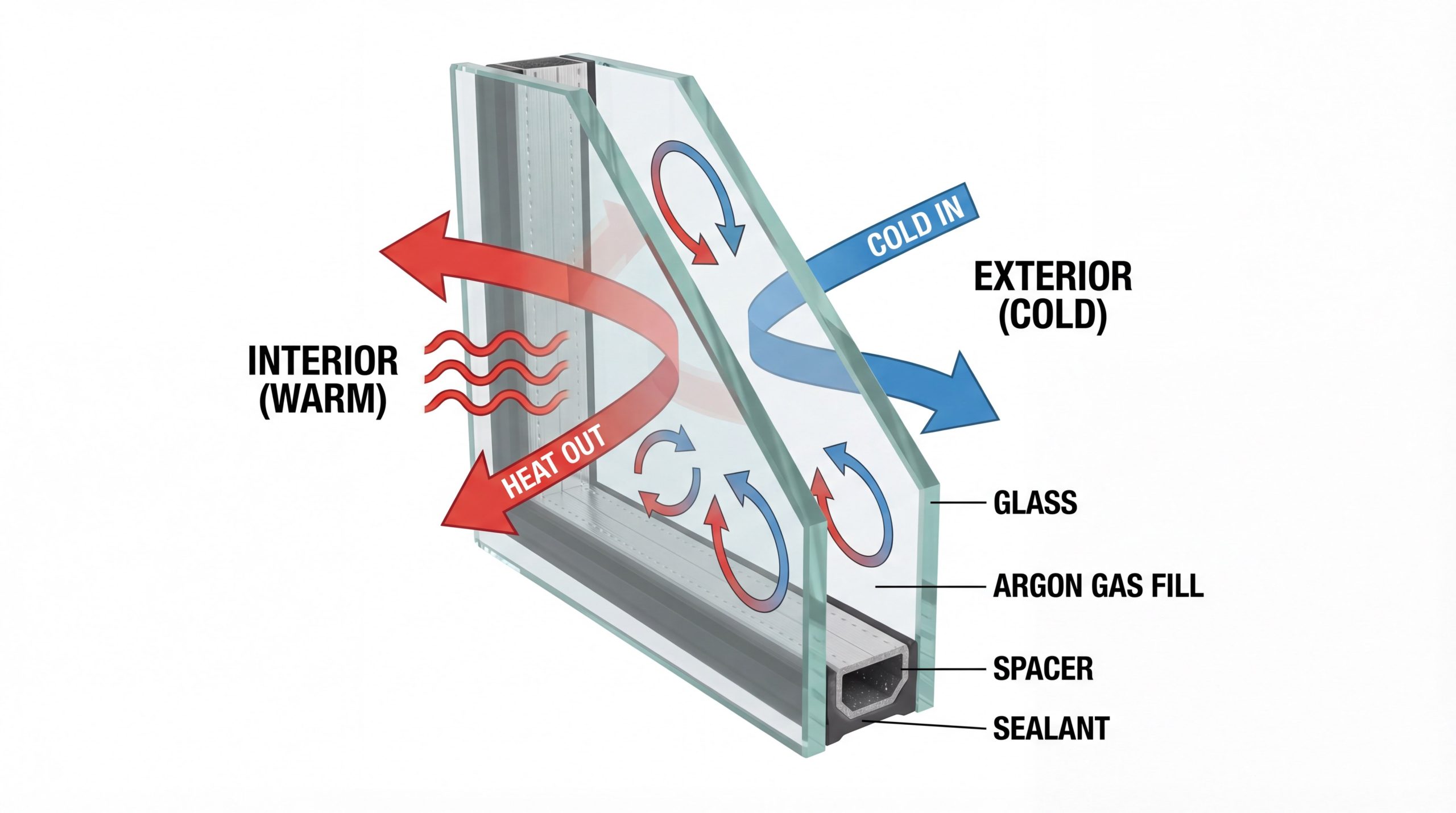
While thickness offers a slight improvement in thermal mass, the overall insulation performance depends more on the glazing system and coatings used. Comparing thick glass vs thin glass for energy efficiency requires looking beyond the raw width of a single pane.
Why does the glazing system matter more?
A thick single pane often performs worse than two thin panes joined together with an insulating air space. You might find that the air space between panes is what truly traps heat and prevents energy transfer.
Check this out:
- Single Pane: Thick or thin, single panes offer poor insulation performance.
- Hollow Units: These use a gas-filled gap to stop heat flow effectively.
- Spacer Tech: The frame and spacers matter as much as the glass thickness.
How do Low-E coatings impact performance?
Adding advanced Low-E coatings to thin glass can make it outperform a heavy, untreated thick sheet easily. You can achieve high efficiency without adding unnecessary weight to your building or framing.
You might be wondering:
- If coatings are so effective, why use thick glass at all?
- Thick glass is still necessary when those units are very large and must resist wind.
- Low-E coatings on thick glass provide the ultimate combination of strength and efficiency.
| Glazing Type | U-Value (Lower is better) | Solar Heat Gain |
|---|---|---|
| Single Thick (12mm) | High (Poor insulation) | High |
| Thin Double IGU (4mm) | Low (Good insulation) | Moderate |
| Thin Low-E IGU (4mm) | Very Low (Best) | Low |
Key Takeaway: Energy efficiency is achieved through glazing technology and coatings rather than raw thickness alone.
Analysis: Prioritize multi-pane units with coatings over simple thick glass if your primary goal is reducing heating and cooling costs.
What are the costs of thick glass vs thin glass?

Thick glass is considerably more expensive than thin glass due to the volume of raw materials required and manufacturing complexity. When budgeting for thick glass vs thin glass, you must account for both material premiums and logistics.
Why does material volume drive the price up?
The price of glass is often calculated by weight and the energy required to melt the raw materials in the kiln. Thick sheets stay in the kiln longer and require more precise cooling to avoid internal stress.
It boils down to this:
- Raw Materials: More sand and soda ash per square foot increase costs.
- Manufacturing Time: Thick glass requires a slower production line for safety.
- Waste Risk: Errors on thick sheets are far more expensive for the factory.
You should prepare for significantly higher shipping costs when you choose thicker materials for your project. Heavier glass requires heavy-duty crates and specialized transport vehicles to prevent breakage during transit.
Let’s be honest:
- The price gap between 6mm and 19mm panels can be staggering.
- You aren’t just paying for glass; you are paying for the labor to move it.
- Specialized cranes are often required at the job site for thick glass.
| Expense Category | Thin Glass | Thick Glass |
|---|---|---|
| Material Cost | Low | High |
| Shipping Cost | Standard | Premium (Heavy Load) |
| Installation Labor | Standard | High (Specialized Team) |
Key Takeaway: Thick glass projects require a higher budget for both the material itself and the specialized logistics needed to move it.
Analysis: Budgeting for thick glass requires an all-encompassing view of procurement, from the factory floor to the final installation site.
Is handling different for thick glass vs thin glass?
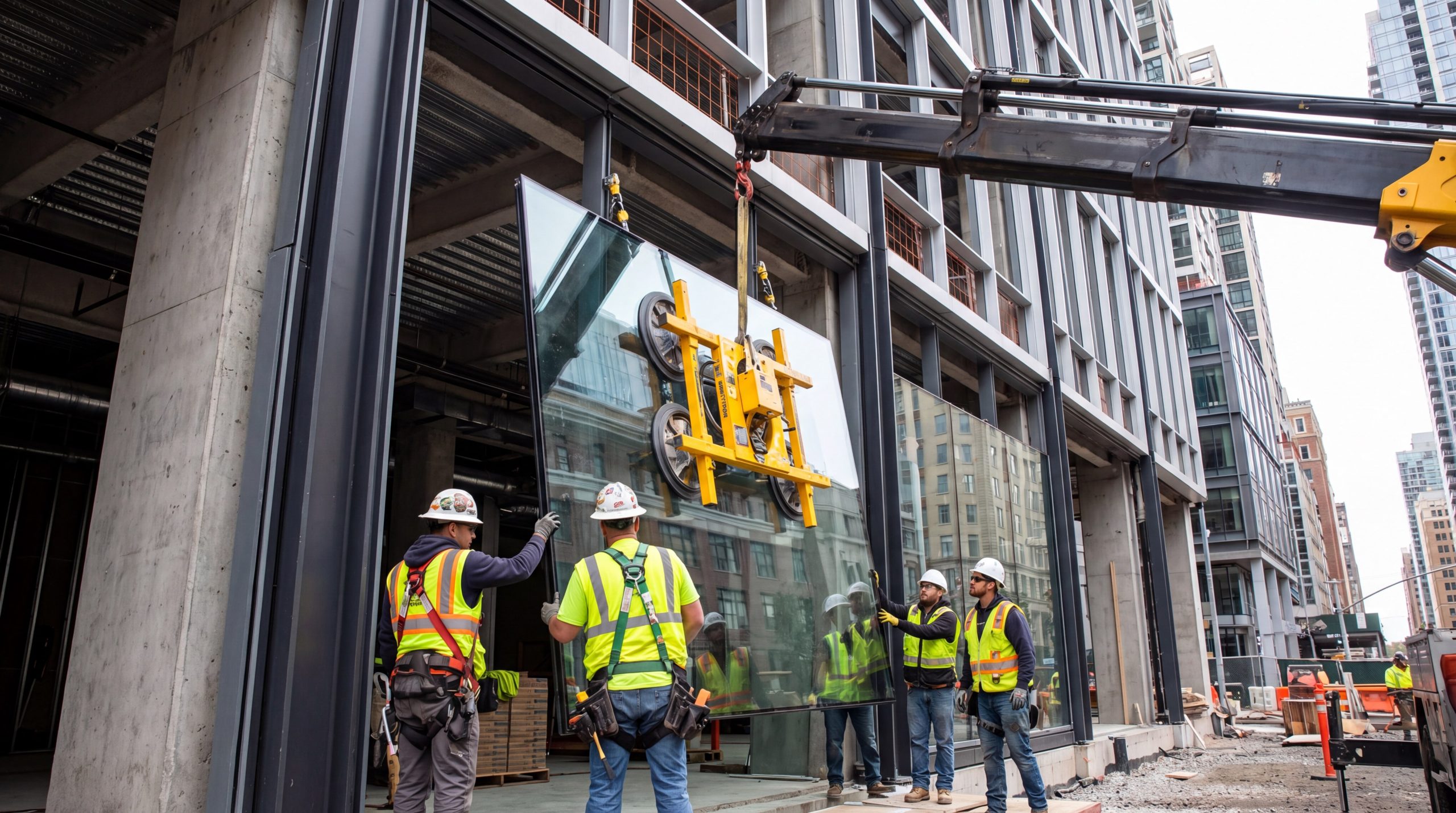
Handling procedures differ drastically because thick glass requires specialized mechanical lifting equipment, whereas thin glass can often be moved manually. The comparison of thick glass vs thin glass handling is a matter of workplace safety and equipment availability.
When is heavy lifting equipment necessary?
You should never attempt to manually lift panels over 10mm thickness without mechanical aid due to injury risks. Suction lifters and cranes are essential for moving heavy sheets safely during installation.
Keep this in mind:
- Suction Lifters: Essential for moving heavy, smooth sheets safely and securely.
- Cranes: Often required for high-rise installs where manual lifting is impossible.
- Edge Protection: Thick glass is heavy enough to crush its own edges if set down poorly.
Can thin glass be cut easily on-site?
Thin glass provides you with more flexibility if you need to make minor adjustments during the installation process. However, once glass is tempered, you cannot cut it regardless of its thickness.
Think about this:
- If you mismeasure a thick glass panel, you usually have to order an entirely new piece.
- On-site modifications for 15mm or 19mm glass are virtually impossible for contractors.
- Precision factory cutting is mandatory for thick structural glass panels.
| Factor | Thin Glass | Thick Glass |
|---|---|---|
| On-site Cutting | Possible (for non-tempered) | Almost impossible |
| Manpower | 1-2 installers | 4+ or mechanical aid |
| Breakage Risk | Surface scratches | Structural edge chips |
Key Takeaway: Thick glass requires a “measure twice, cut once” factory approach, as on-site modifications are rarely feasible.
Analysis: Planning your installation logistics early prevents project delays and ensures you have the right machinery on-site for heavy panels.
Where is safety best with thick glass vs thin glass?
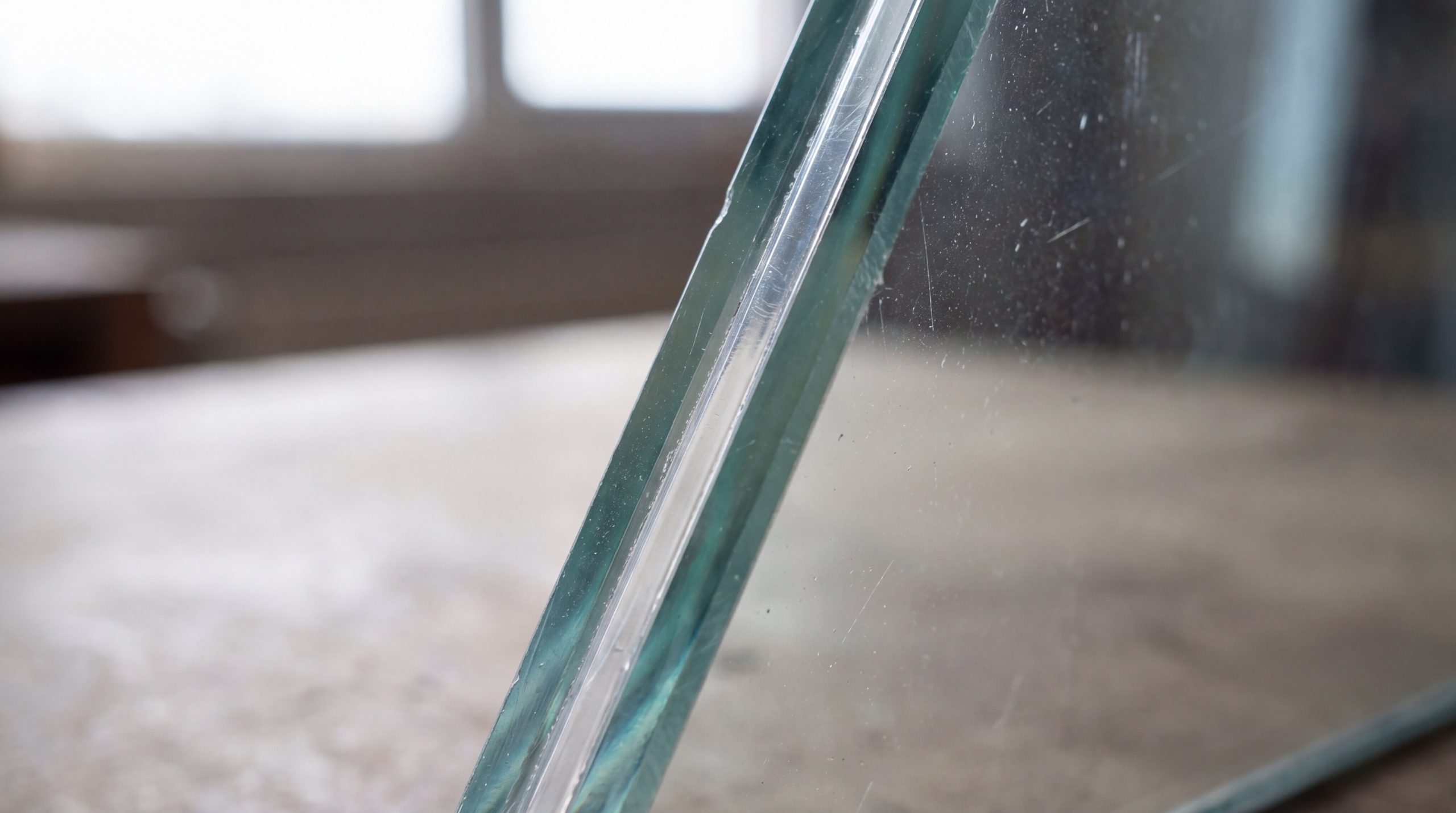
Safety is superior in thick glass configurations, particularly when combined with lamination processes for high-risk architectural applications. When selecting thick glass vs thin glass, your decision must be dictated by local building codes and the intended use of the space.
When should you opt for laminated layers?
For glass floors or overhead canopies, you must use laminated thick glass to ensure the unit stays in place if it breaks. This provides a safety net that single-pane thin glass simply cannot offer.
Take note:
- Interlayers: Plastic films keep glass shards together after an impact.
- Redundancy: If one layer breaks, the others hold the structural load.
- Security: Laminated thick glass is highly resistant to forced entry or heavy strikes.
Which thickness works for balustrades and floors?
You will need to use thick glass for frameless applications to provide the necessary structural stiffness and support. Thin glass lacks the rigidity to stand alone without a metal frame and poses a safety risk.
It boils down to this:
- Safety is not just about resisting a break; it is about behavior after failure.
- Thick laminated glass remains a barrier even after a major impact.
- Frameless systems require the raw thickness of 12mm to 15mm glass.
| Application | Recommended Thickness | Safety Feature |
|---|---|---|
| Shower Doors | 8mm – 12mm | Tempered Safety |
| Glass Balcony | 12mm – 15mm | Laminated/Tempered |
| Glass Floors | 25mm+ (Multi-layered) | Triple Laminated |
Key Takeaway: Safety isn’t just about thickness; it’s about the combination of thickness and specialty treatments like laminating.
Analysis: Always consult with a structural engineer to ensure your chosen glass thickness meets the safety requirements for your specific height and load.
Can acoustics depend on thick glass vs thin glass?
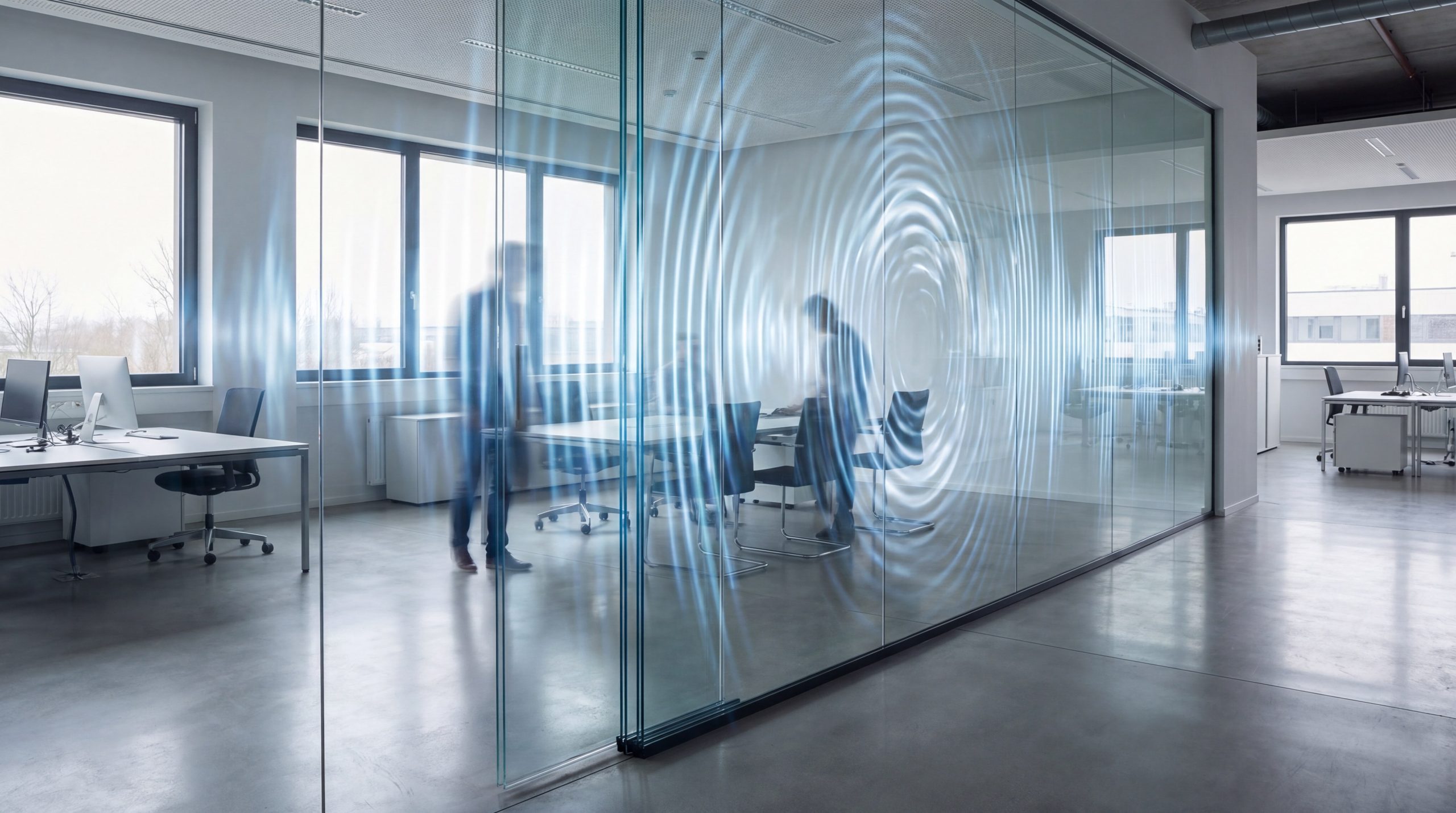
Acoustics depend heavily on thickness because increased mass is more effective at dampening and blocking external sound waves. Understanding the relationship between thick glass vs thin glass is essential for creating quiet commercial or residential environments.
Does mass help in blocking external noise?
The more mass a material has, the harder it is for sound vibrations to pass through it effectively. You will notice a significant drop in street noise when switching from thin window panes to thick storefront glass.
Here is the deal:
- Sound Dampening: Thick glass absorbs low-frequency rumbles better than thin glass.
- Density: Higher density prevents the glass from vibrating in sympathy with noise.
- Mass Law: Doubling the mass generally results in a 6dB noise reduction.
How do multi-pane units improve quietness?
You can achieve even better results by using panes of different thicknesses in a single unit to break resonance. This prevents sound from passing through both panes at the same frequency.
Here’s the best part:
- Using an asymmetric combination is one of the most cost-effective ways to soundproof.
- A 6mm and 10mm pane combination breaks sound waves more efficiently.
- Acoustic laminates can further enhance the performance of thick glass units.
| Configuration | STC Rating (Sound Class) | Effect |
|---|---|---|
| Single Thin (6mm) | ~31 | Audible street noise |
| Single Thick (12mm) | ~36 | Noticeable reduction |
| Acoustic Laminated | ~39+ | Quiet interior |
Key Takeaway: If noise reduction is the goal, thick glass or specialty acoustic laminates are the superior choice.
Analysis: Select thick glass or asymmetric insulated units if your project is located near high-traffic areas or airports.
Does aesthetics matter for thick glass vs thin glass?
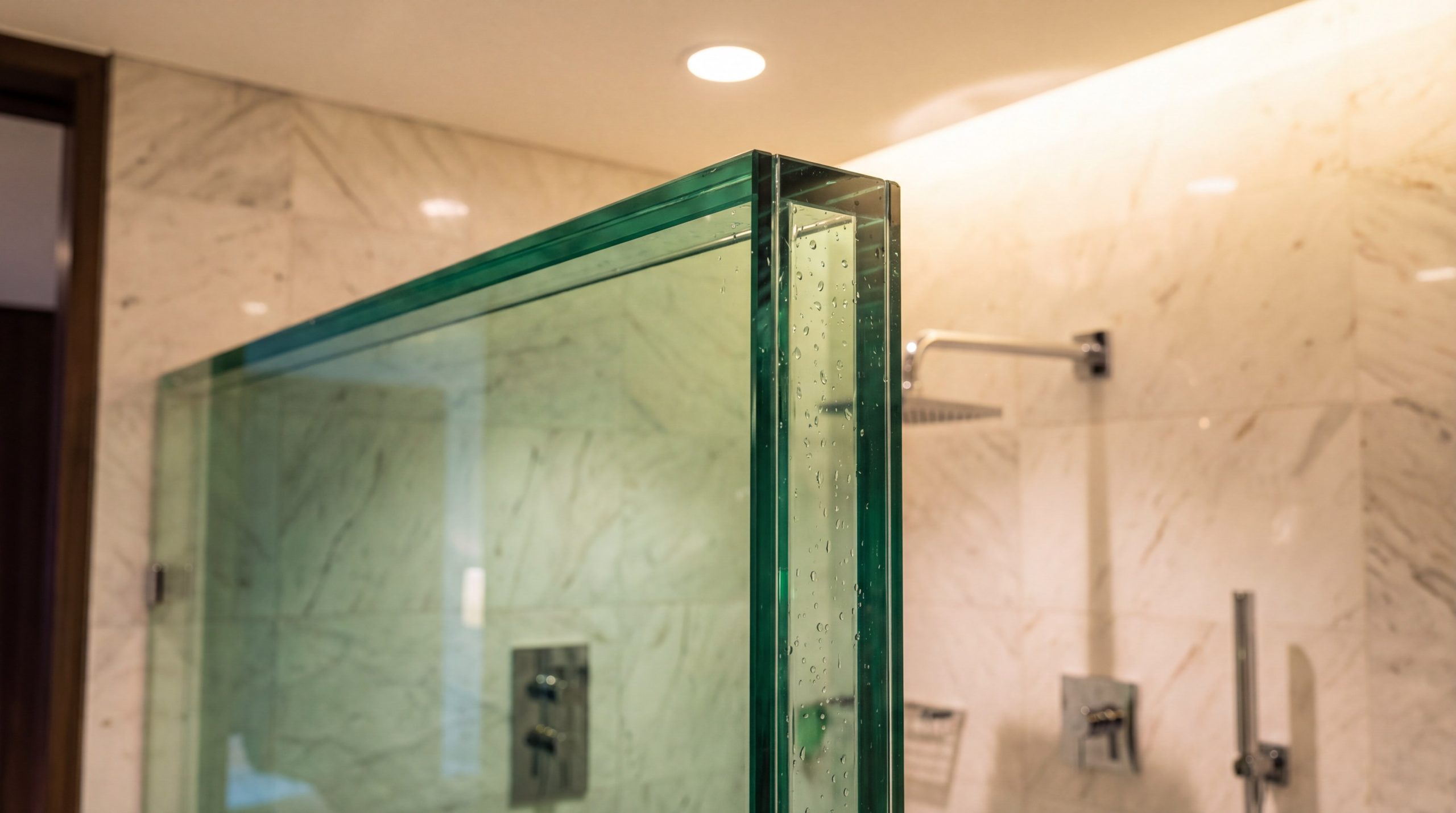
Aesthetics play a vital role as thickness determines the visual profile, with thicker glass offering a premium, substantial appearance. Your choice between thick glass vs thin glass will define the “feel” and luxury level of your interior or exterior space.
Thick glass communicates a sense of luxury and permanence that thin glass cannot match in high-end designs. This is why luxury hotels and office lobbies always opt for thick, frameless installations.
Look at this:
- Edge Quality: Thick glass allows for deep, brilliant polished edges that catch light.
- Visual Depth: Thicker panels have a characteristic crystalline green or extra clear look.
- Frameless Design: Thick glass stands alone, removing the need for bulky metal frames.
Can thin profiles create a minimalist look?
Thin glass is your best friend when you want the structure to disappear and maximize the view. It allows for ultra-slim frames that create a seamless transition between interior and exterior spaces.
Don’t forget:
- While thin glass looks sleek, it requires more framing support to stay stable.
- You have to balance the thinness of the glass with the visibility of the frame.
- Thin glass is ideal for retrofitting into existing historical frames.
| Aesthetic Goal | Preferred Type | Visual Result |
|---|---|---|
| Minimalist | Thin Glass | Nearly invisible frames |
| Luxury/Grandeur | Thick Glass | Substantial, premium edges |
| Modern Retrofit | Thin Glass | Fits into existing old frames |
Key Takeaway: The choice often dictates the “vibe” of the project—minimalist and light versus bold and substantial.
Analysis: Consider the architectural style of your building before deciding if the glass should be a bold feature or a subtle invisible barrier.
What are commercial uses for thick glass vs thin glass?

Commercial applications use thick glass for structural facades and storefronts, while thin glass is preferred for interior partitions. Mapping the use of thick glass vs thin glass helps you allocate your budget to the areas where performance is most critical.
Why do storefronts require structural depth?
You must use thick glass for storefronts because they act as a protective barrier against the elements and intruders. These panels often span from floor to ceiling without intermediate supports for better visibility.
Check the facts:
- Wind Loads: Thick glass resists the pressure of high winds on tall buildings.
- Security: Thicker glass is much harder to breach in a smash-and-grab scenario.
- Longevity: Commercial glass faces more wear and tear than residential windows.
Are interior partitions better with thin glass?
Inside a building, you can often save money by using thinner glass for office walls and partitions where loads are low. Since there is no wind pressure, the structural requirements for these panels are significantly lower.
Look at the facts:
- Using thin glass for interior work reduces the weight load on floor slabs.
- It makes the installation process faster and less disruptive to other trades.
- Thin glass partitions can still be tempered for safety and impact resistance.
| Sector | Thick Glass Uses | Thin Glass Uses |
|---|---|---|
| Commercial | Façades, Curtain Walls | Office Partitions |
| Residential | Shower Enclosures | Standard Windows |
| Specialty | Aquariums, Floors | Picture Framing |
Key Takeaway: Commercial applications prioritize thick glass for structural safety, while residential and interior projects leverage thin glass for cost and weight savings.
Analysis: Prioritize thick glass for the building exterior to ensure safety, and utilize thin glass internally to manage costs.
What is the verdict on thick glass vs thin glass?
The final verdict depends on your specific project needs, balancing structural requirements and safety against budget constraints and weight limits. The choice of thick glass vs thin glass is never about one being “better,” but about which is “correct” for the blueprint.
How do you balance performance and price?
Identify the primary load the glass must carry before making a final decision on the thickness. If the glass is decorative, thin is fine; if it is supporting weight or wind, you must go thick.
Keep this in mind:
- Evaluate Loads: Is the glass supporting people or just its own weight?
- Check Regulations: Does the local code require a specific thickness for safety?
- Review Budget: Can the project support the logistics of heavy structural glass?
What role does factory customization play?
Working with a factory allows you to get the exact thickness required for your engineering specs without compromise. Customization ensures you don’t overspend on thickness you don’t need or compromise on structural safety.
The bottom line:
- Engineering is about precision rather than just buying the thickest material.
- Selecting the right thickness ensures your building remains beautiful and safe.
- A professional consultation can save you thousands in material and labor costs.
| Decision Factor | Choose Thin If… | Choose Thick If… |
|---|---|---|
| Budget | Tight/Restricted | Flexible/Premium |
| Structural Need | Decorative only | Load-bearing |
| Installation | DIY / Light Crew | Professional / Crane |
Key Takeaway: There is no “superior” thickness—only the “correct” thickness for your specific engineering requirements and design vision.
Analysis: Finalize your glass selection by matching the physical properties of the material to the environmental demands of your site.
Frequently Asked Questions
Can I use thin glass for a frameless shower door?
No, because frameless doors lack a metal skeleton and rely entirely on the 10mm or 12mm glass thickness for structural stability.
What’s the best glass thickness for soundproofing?
Thicker glass is better, but the most effective solution is using an asymmetric insulated unit with two different thicknesses to break sound frequencies.
How do I know if I need tempered thick glass?
You must use tempered glass for any thick panel located in high-traffic areas or where human impact is likely, as required by safety codes.
Can thin glass be made as strong as thick glass?
While tempering makes thin glass more resistant to surface impact, it will never match the rigidity or structural load capacity of a thicker sheet.
What’s the maximum thickness for architectural glass?
Standard projects use up to 19mm, though you can order specialized laminated units that exceed 50mm for high-security or aquarium applications.
Solve Your Glass Dilemma Today
Choosing between thick and thin glass doesn’t have to be a guessing game that puts your project at risk. This guide has detailed how thickness influences everything from structural safety and acoustics to your final project budget. We solve the problem of uncertainty by providing clear engineering data and aesthetic comparisons for every architectural need. Our stance is simple: precision in material selection leads to a safer, more beautiful, and more cost-effective building environment.
Contact us today to consult with our experts and receive a tailored quote for your next project. We are committed to helping you achieve architectural excellence through superior glass technology and expert guidance.