Double glazed window glass thickness usually ranges between 14mm and 32mm for standard architectural applications at PrimePro Glass. Selecting the wrong specification often leads to immediate performance failures in high-stakes B2B projects. Many commercial buildings suffer from poor thermal insulation and excessive noise because the glass dimensions were misunderstood during procurement.
This error agitates your project timeline and inflates operational costs through energy wastage. You need a reliable standard that balances weight, safety, and efficiency without compromising structural integrity. By mastering these technical nuances, you ensure long-term durability and client satisfaction for every installation.
What is standard double glazed window glass thickness?
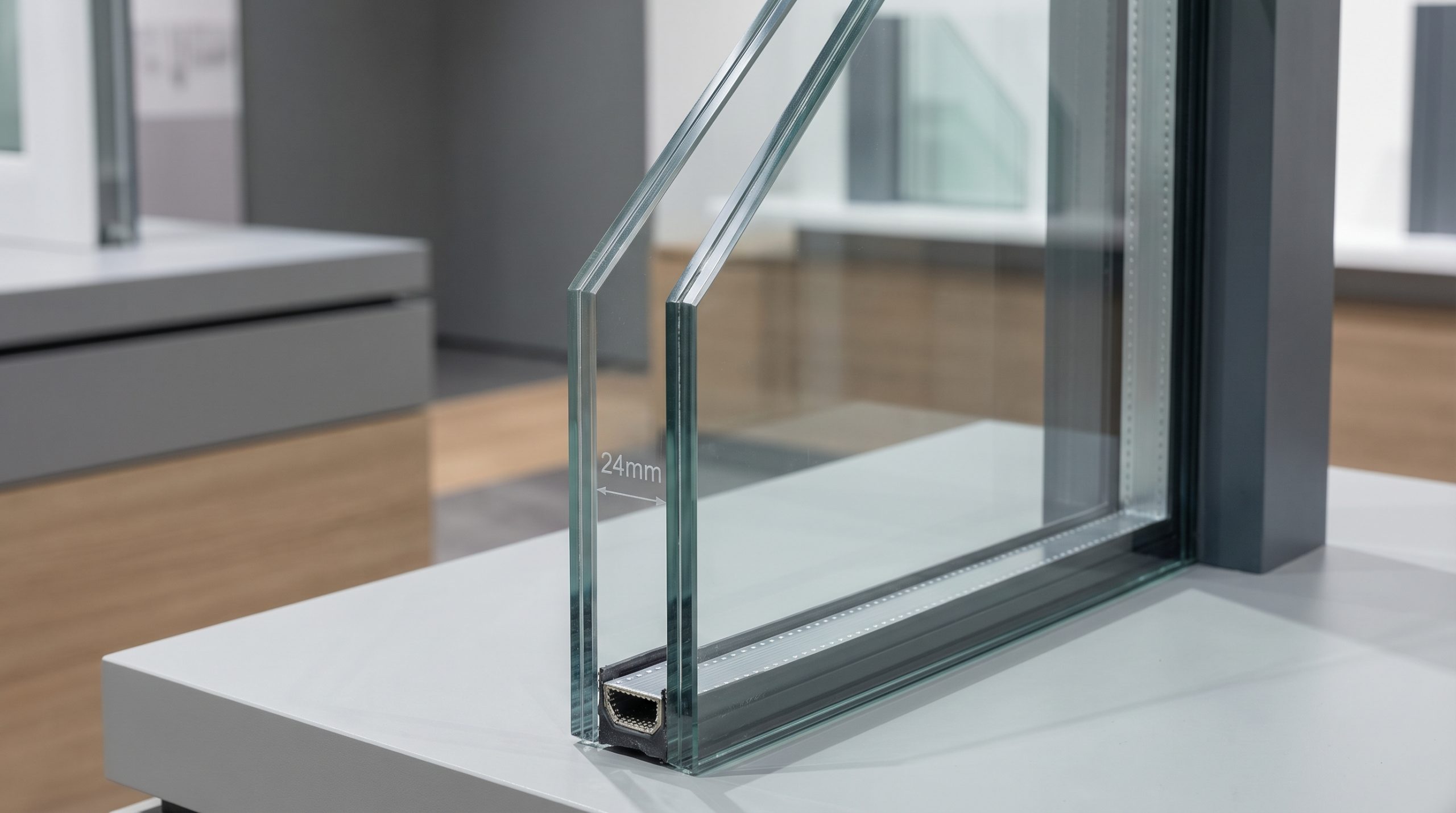
The standard double glazed window glass thickness for most modern units is 24mm, comprising two 4mm glass panes and a 16mm spacer. This configuration is widely adopted because it provides a baseline for structural integrity while remaining compatible with standard hardware.
Common Pane Thickness Ranges
In most commercial and residential applications, individual glass panes typically range from 3mm to 6mm.
- 3mm: Used in smaller, lightweight windows.
- 4mm: The industry standard for most residential openings.
- 6mm: Specified for larger panes requiring higher rigidity.
Total Unit Depth Explained
The total thickness of an Insulated Glass Unit (IGU) is the sum of both glass panes and the internal spacer bar.
- Sum the thickness of the outer pane.
- Add the width of the spacer (cavity).
- Add the thickness of the inner pane.
Why 24mm is the Industry Standard
The 24mm unit is often called the “sweet spot” for performance and cost.
- It fits the majority of modern uPVC and aluminum profiles.
- The 16mm gap allows for optimal gas filling.
- It provides the necessary weight balance for standard hinges.
Key Takeaway: For the majority of standard projects, a 24mm total thickness provides the best balance of availability and performance.
| Component | Standard Measurement | Purpose |
|---|---|---|
| Single Glass Pane | 4mm – 6mm | Structural barrier |
| Spacer/Gap | 12mm – 20mm | Thermal insulation |
| Total IGU Depth | 24mm – 28mm | Balanced performance |
This structural breakdown demonstrates why the 24mm configuration remains the dominant choice for general construction.
How does double glazed window glass thickness affect U-value?
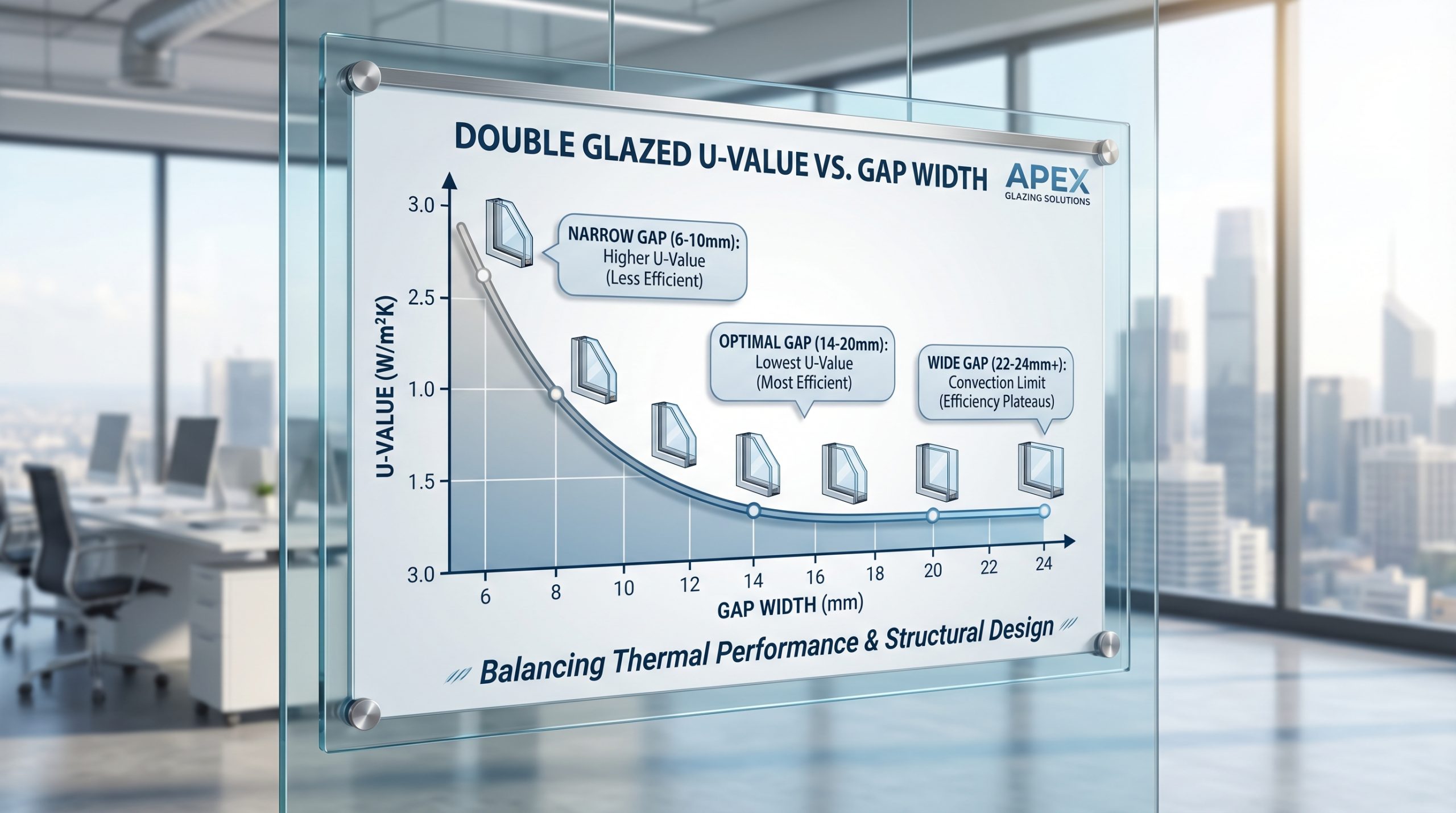
Optimal double glazed window glass thickness significantly lowers U-values by creating an ideal insulating gap that prevents heat transfer. The width of the cavity between the panes is the primary driver of thermal efficiency in any architectural project.
The Role of Gas Fills and Spacers
The gap width must be carefully calculated to prevent convection currents.
- Under 10mm: Heat transfers quickly via conduction.
- 12mm-16mm: Ideal range for Argon or Krypton gas.
- Over 20mm: Convection currents within the gas can actually increase heat loss.
Thermal Benefits of Low E Glass
To achieve superior ratings without adding bulk, engineers specify Low E Glass.
- Reflects long-wave infrared energy back into the room.
- Allows a thinner unit to outperform thicker standard glass.
- Reduces the need for triple glazing in moderate climates.
But there is more to consider.
Key Takeaway: Thermal efficiency peaks when the internal gap is maintained between 14mm and 20mm.
| Gap Width | Gas Fill | Typical U-Value (W/m²K) |
|---|---|---|
| 6mm | Air | 3.1 |
| 12mm | Argon | 1.5 |
| 16mm | Argon | 1.1 (with Low-E) |
As the table indicates, an Argon-filled 16mm gap combined with specialized coatings offers the most efficient thermal barrier.
Why vary double glazed window glass thickness for acoustics?

Varying the double glazed window glass thickness between the inner and outer panes disrupts sound waves to provide superior acoustic insulation. This “asymmetric” approach prevents both panes from vibrating at the same frequency, which effectively blocks noise.
Using Asymmetric Glass Configurations
Asymmetric glazing is the most cost-effective way to combat urban noise pollution.
- Uses two different pane thicknesses (e.g., 6mm and 4mm).
- Disrupts the “coincidence effect” of sound waves.
- Provides better decibel reduction than two panes of equal thickness.
Benefits of Laminated Glass for Sound
For extreme environments like airport zones, Laminated Glass is the preferred choice.
- The PVB interlayer acts as a sound-dampening core.
- Significantly reduces high-frequency noise transmission.
- Maintains a thinner profile while offering premium acoustic ratings.
Think about this for a moment.
Key Takeaway: Acoustic performance is improved by using different glass thicknesses for each pane rather than simply increasing overall depth.
| Configuration | Total Thickness | Sound Reduction (Rw) |
|---|---|---|
| 4mm / 12 / 4mm | 20mm | 29 – 31 dB |
| 6mm / 12 / 4mm | 22mm | 34 – 36 dB |
| 6.4mm Lam / 12 / 6mm | 24.4mm | 39 – 42 dB |
The data confirms that adding a laminated pane or varying thickness is far more effective for noise control than standard units.
Does double glazed window glass thickness impact durability?
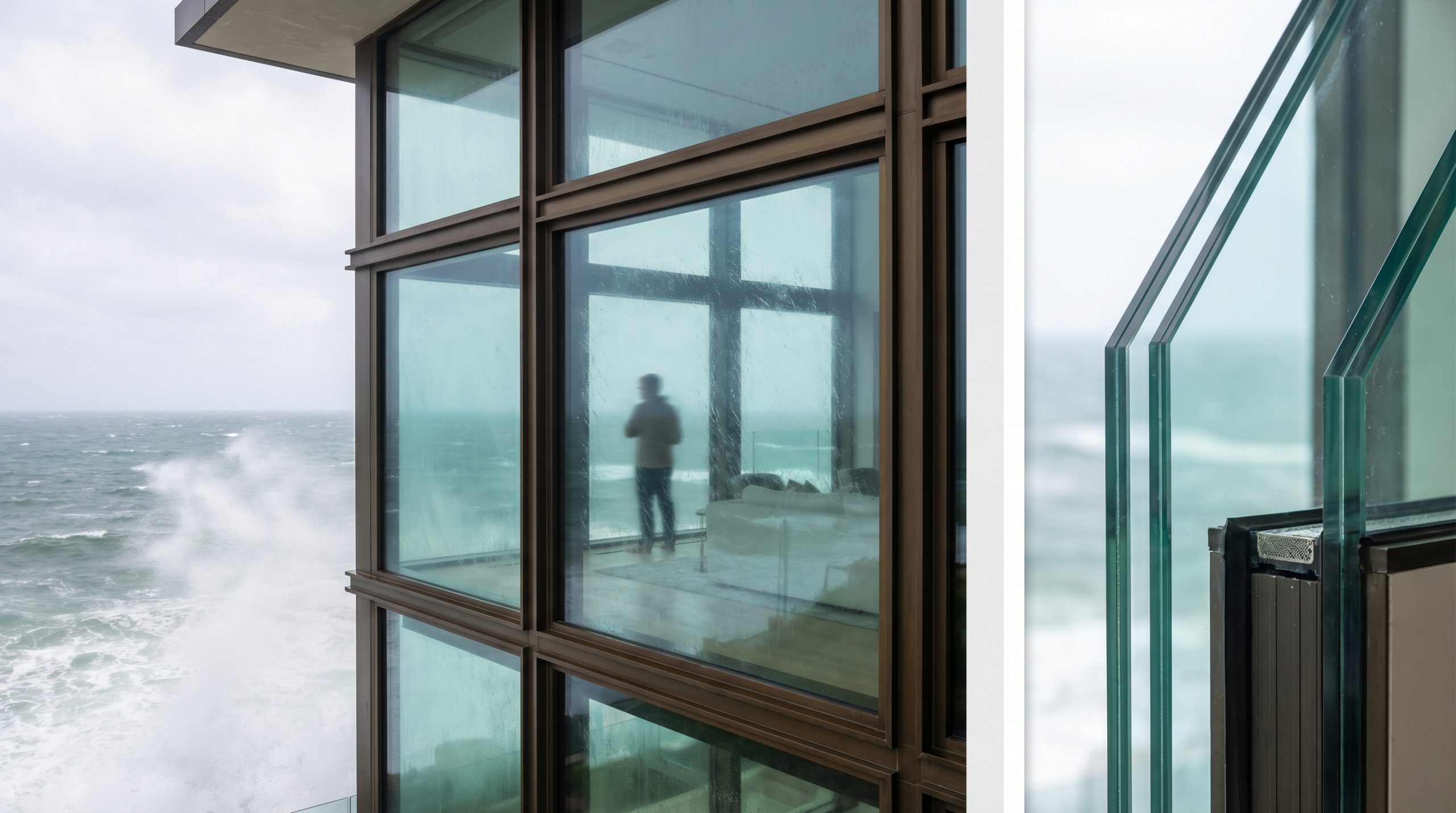
Yes, increasing the double glazed window glass thickness is essential for maintaining structural integrity and resisting high wind pressures. Larger window spans require thicker glass to prevent excessive deflection and potential seal failure.
Structural Integrity and Wind Loads
As the surface area of your window increases, the glass must be thicker to withstand environmental stress.
- Thin glass in large openings can flex and break the IGU seal.
- Thicker panes provide the necessary rigidity for high-rise facades.
- Prevents glass “pumping” during heavy storms.
Utilizing Tempered Glass for Strength
In high-traffic areas, Tempered Glass is utilized to ensure safety and longevity.
- Heat-treated to be four to five times stronger than annealed glass.
- Allows for a thinner profile that still meets load-bearing requirements.
- Shatters into small, blunt pieces if it ever fails.
You might be wondering about the specifics.
Key Takeaway: Durability depends on matching pane thickness to the total surface area and expected wind load of the building.
| Application | Recommended Pane Thickness | Safety Requirement |
|---|---|---|
| Standard Window | 4mm | Annealed or Tempered |
| Large Floor-to-Ceiling | 6mm – 8mm | Toughened / Safety |
| High-Wind Facades | 10mm+ | Fully Tempered |
Properly specifying glass thickness based on the application ensures the unit remains durable against environmental stressors for decades.
What is the best double glazed window glass thickness for homes?
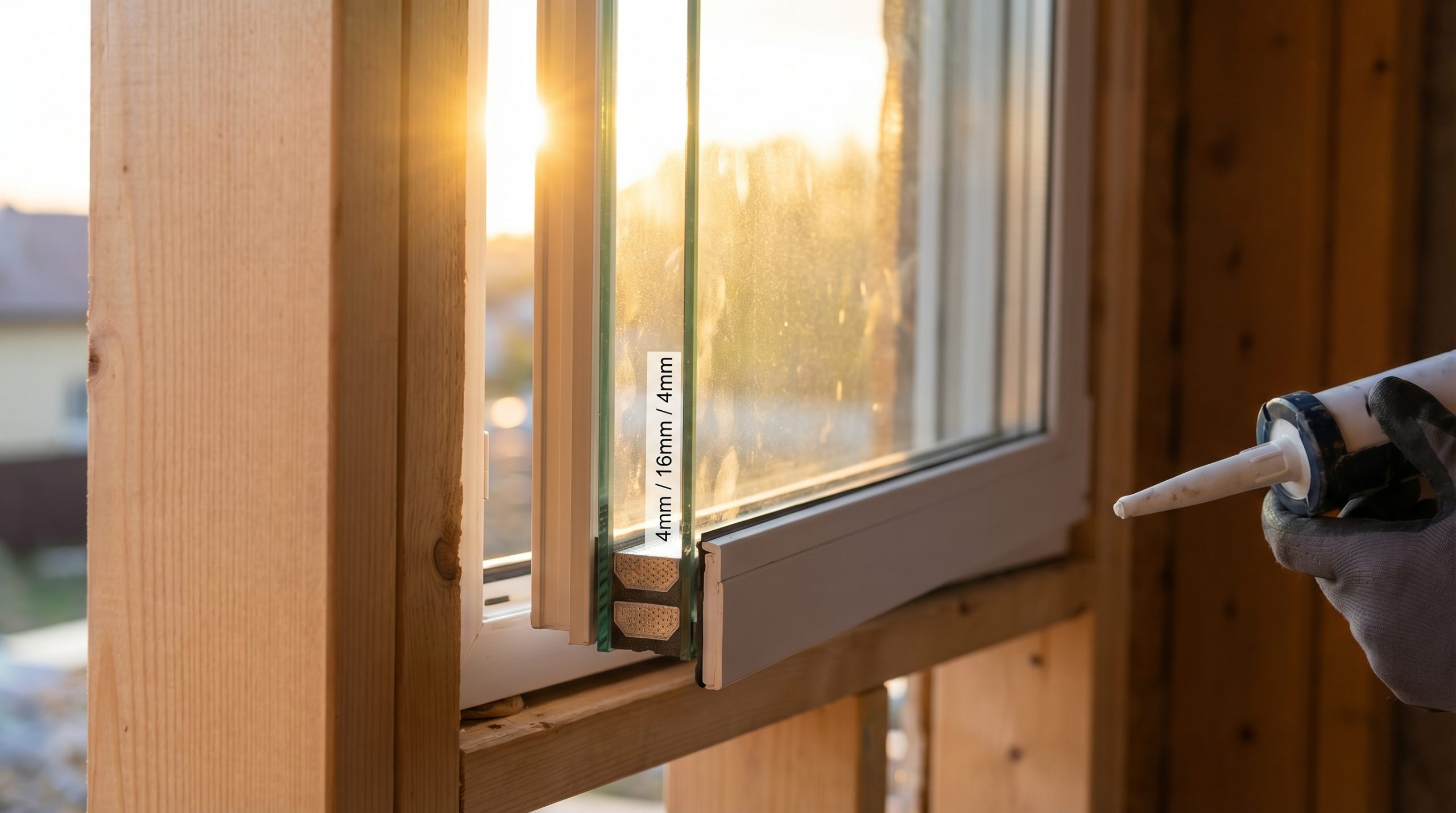
The best double glazed window glass thickness for residential properties is a 24mm unit featuring 4mm glass panes. This specific configuration offers the ideal balance of energy efficiency, sound reduction, and mechanical compatibility for standard home frames.
Residential Window Specifications
Residential projects prioritize ease of operation and thermal comfort at a reasonable price point.
- 4mm float or tempered glass is the residential standard.
- Provides sufficient rigidity for operable sashes and sliding doors.
- Compatible with most uPVC, timber, and aluminum residential frames.
Balancing Weight and Performance
Excessive weight can lead to the premature failure of window hinges and hardware.
- Glass weighs roughly 2.5kg per square meter for every 1mm of thickness.
- A 24mm unit is the maximum weight recommended for standard hinges.
- Thicker units often require expensive heavy-duty hardware upgrades.
Here is the bottom line.
Key Takeaway: Stick to the 24mm standard for residential projects to ensure longevity of the window’s moving parts.
| Feature | Standard Home Spec | Premium Home Spec |
|---|---|---|
| Glass Type | 4mm Float | 4mm Tempered |
| Cavity Size | 16mm | 16mm (Argon Filled) |
| Total Depth | 24mm | 24mm |
Standardizing on 24mm ensures that homeowners receive excellent insulation without taxing the structural limits of their window frames.
How to measure double glazed window glass thickness for retrofits?
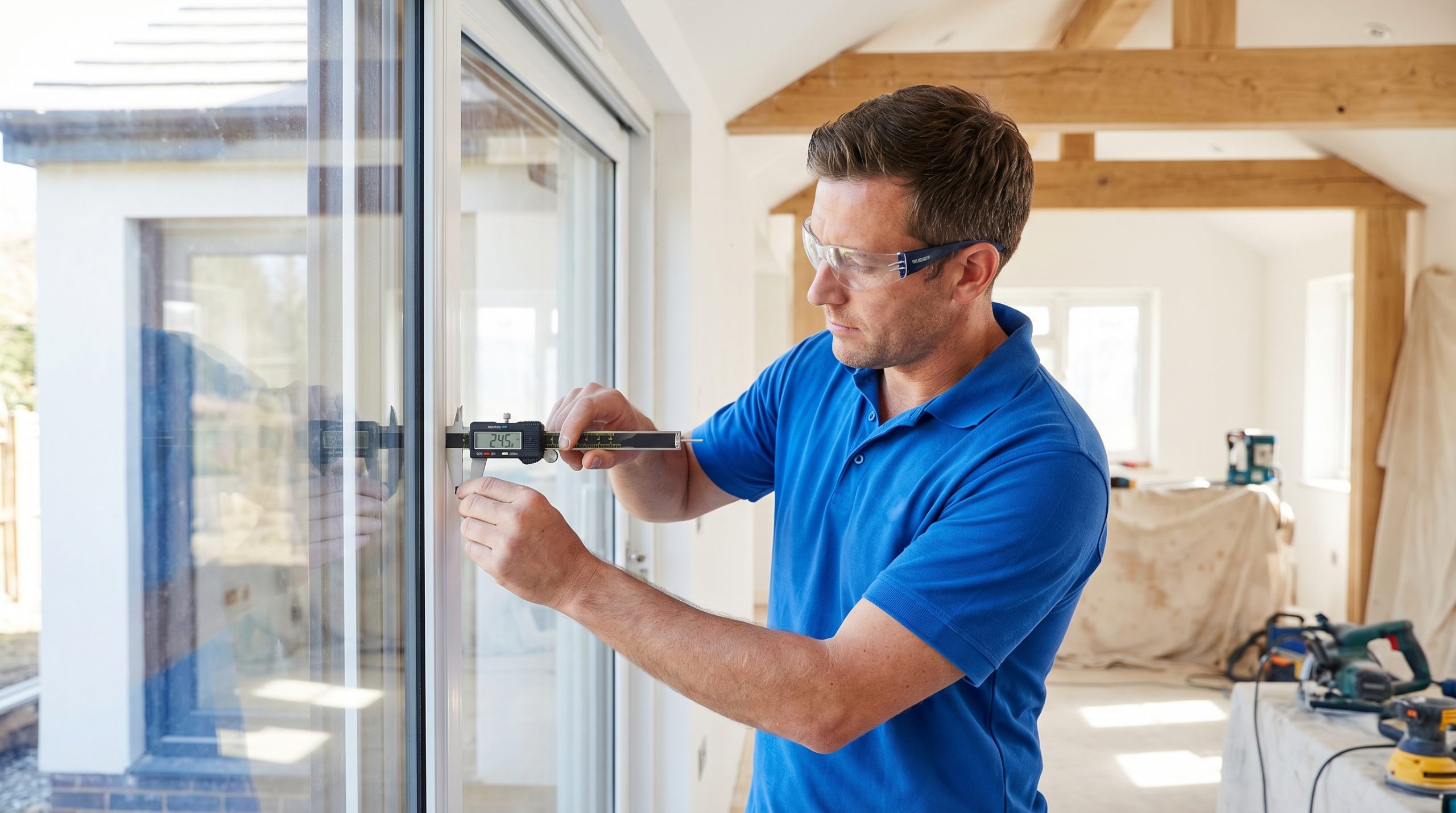
You must measure the double glazed window glass thickness by calculating the rebate depth of the existing frame to ensure a proper fit. For retrofits in older buildings, the frame’s internal channel is the primary limiting factor for IGU selection.
Assessing Existing Window Frames
Before ordering replacement glass, you must understand the limitations of the existing structural profile.
- Measure the distance from the back of the rebate to the bead.
- Ensure there is room for glazing tape or gaskets.
- Identify if the frame can support the added weight of double glazing.
Slimline Hollow Glass Options
Specialized Hollow Glass units are available for heritage buildings with narrow frames.
- Can be manufactured as thin as 12mm or 14mm.
- Uses Krypton gas to maintain thermal performance in small gaps.
- Allows double glazing benefits without altering historic frame aesthetics.
Precision is everything here.
Key Takeaway: Retrofit success depends on selecting a glass thickness that fits within the existing frame’s rebate without forcing the beads.
| Frame Type | Typical Rebate | Max IGU Thickness |
|---|---|---|
| Historic Timber | 15mm – 20mm | 12mm – 14mm |
| Modern Aluminium | 30mm – 40mm | 24mm – 28mm |
| uPVC Profile | 40mm+ | 28mm – 32mm |
The table illustrates that while modern frames are flexible, older timber systems require highly specialized slimline units.
Does frame material limit double glazed window glass thickness?
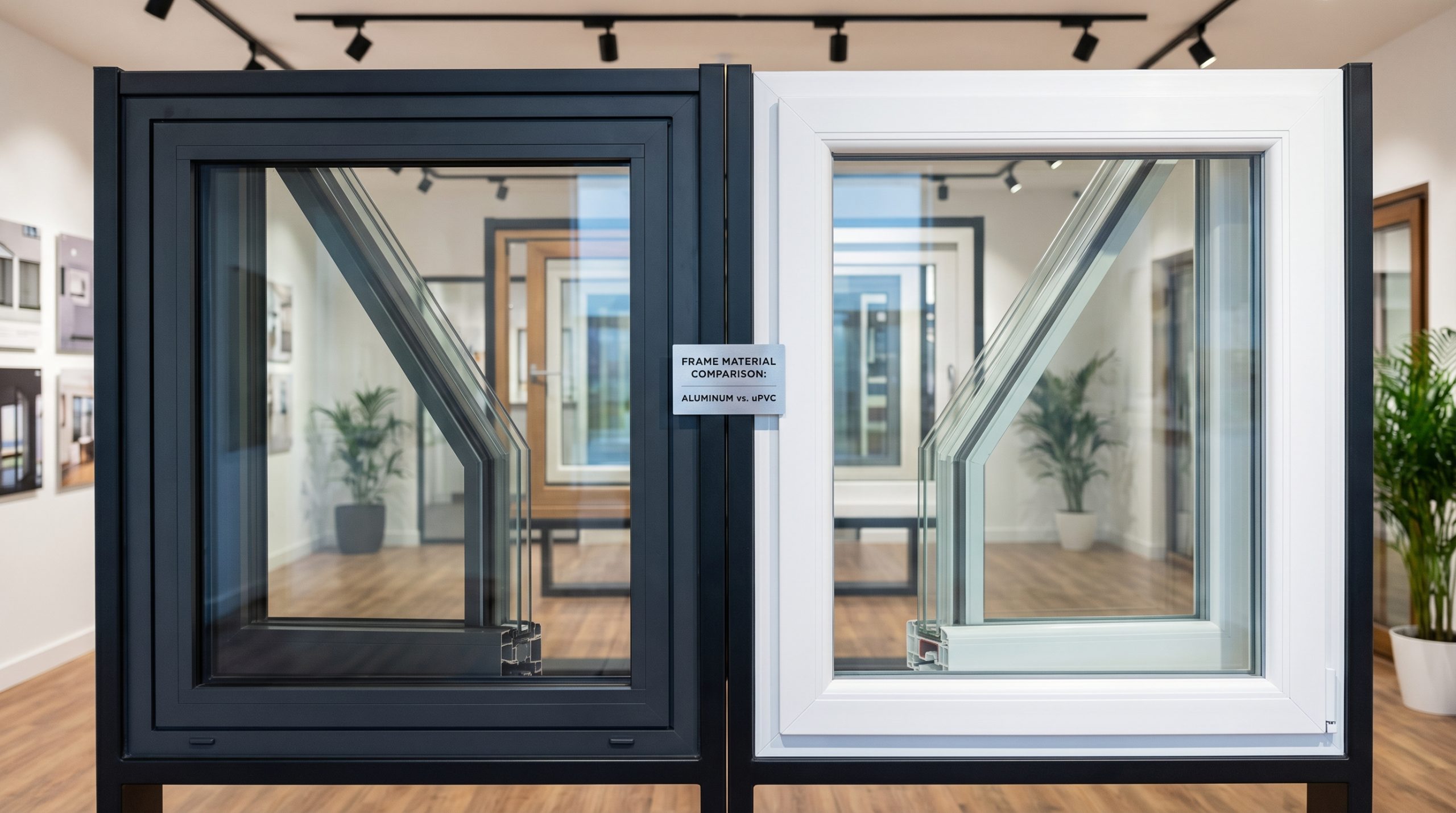
Yes, the frame material’s “glazing pocket” width is the physical boundary that determines the maximum double glazed window glass thickness allowed. Different materials like aluminum and uPVC have distinct structural properties that dictate how much glass weight they can support.
Aluminium vs. uPVC Requirements
Aluminum is preferred for its strength, while uPVC offers wider profiles that naturally accommodate thicker units.
- Aluminum: Slim profiles but very strong; can support heavy, thick IGUs.
- uPVC: Naturally accommodates 28mm-32mm units but may need steel reinforcement.
- Timber: Often limited to 24mm-28mm due to traditional joinery methods.
Curtain Wall System Constraints
In large-scale commercial curtain walls, thickness is dictated by the system’s “pocket” width.
- Engineers must leave room for gaskets and thermal breaks.
- Glass-to-metal contact must be avoided at all costs.
- The system must allow for the thermal expansion of the glass.
Consider the structural impact.
Key Takeaway: Always verify the frame manufacturer’s maximum glazing width before finalizing your glass specification.
| Frame Material | Max Glass Load | Max Unit Width |
|---|---|---|
| Aluminium | High | 50mm+ |
| uPVC | Moderate | 44mm |
| Timber | Moderate | 28mm |
By choosing the right frame material, you can install thicker glass units that provide superior thermal and acoustic ratings.
How is double glazed window glass thickness for high-rises?
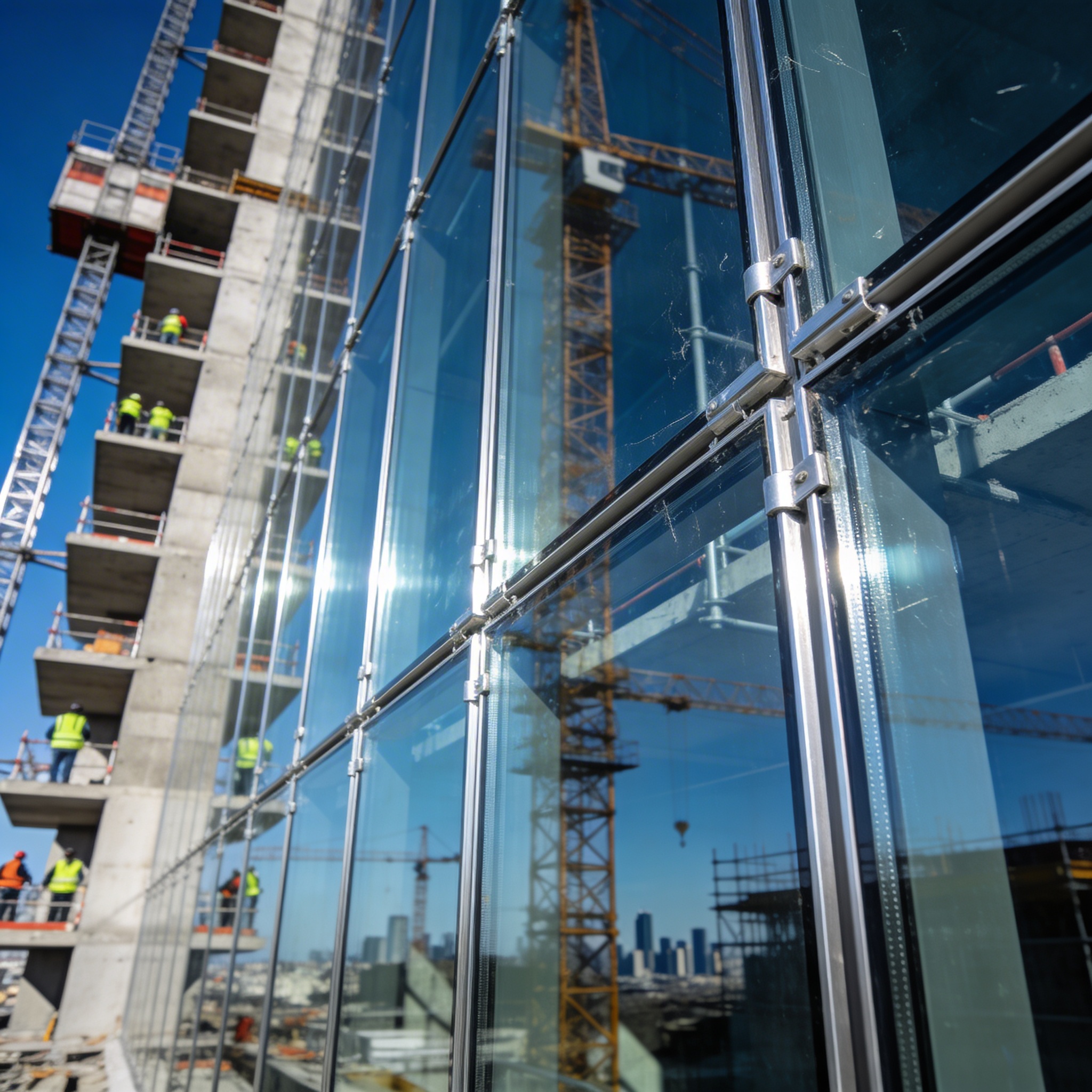
High-rise construction requires a double glazed window glass thickness that utilizes 8mm to 10mm+ outer panes to withstand extreme wind pressures at elevation. At great heights, wind loads increase exponentially, requiring much thicker materials than those used in standard housing.
Addressing High Wind Pressure
The outer pane of a high-rise unit must be thick enough to prevent excessive flexing during storms.
- Prevents the IGU seal from rupturing under pressure.
- Ensures the glass remains securely within the curtain wall pocket.
- Reduces the visual distortion often seen in thinner glass at height.
Safety Standards for Vertical Glazing
Vertical glazing in tall buildings must account for thermal stress and spontaneous breakage.
- Specifying heat-strengthened glass prevents failure from solar heat absorption.
- Consistent thickness across the unit helps manage expansion rates.
- Tempering is mandatory for safety in all high-rise applications.
This is a critical safety matter.
Key Takeaway: High-rise projects must use significantly thicker panes to ensure safety and prevent unit failure under extreme wind loads.
| Floor Level | Min. Outer Pane | Material Treatment |
|---|---|---|
| 1 – 5 | 6mm | Tempered |
| 6 – 20 | 8mm | Heat-Strengthened |
| 20+ | 10mm+ | Fully Tempered |
Safety remains the primary metric for high-rise glass, where thickness is non-negotiable for project approval.
What are the double glazed window glass thickness costs?
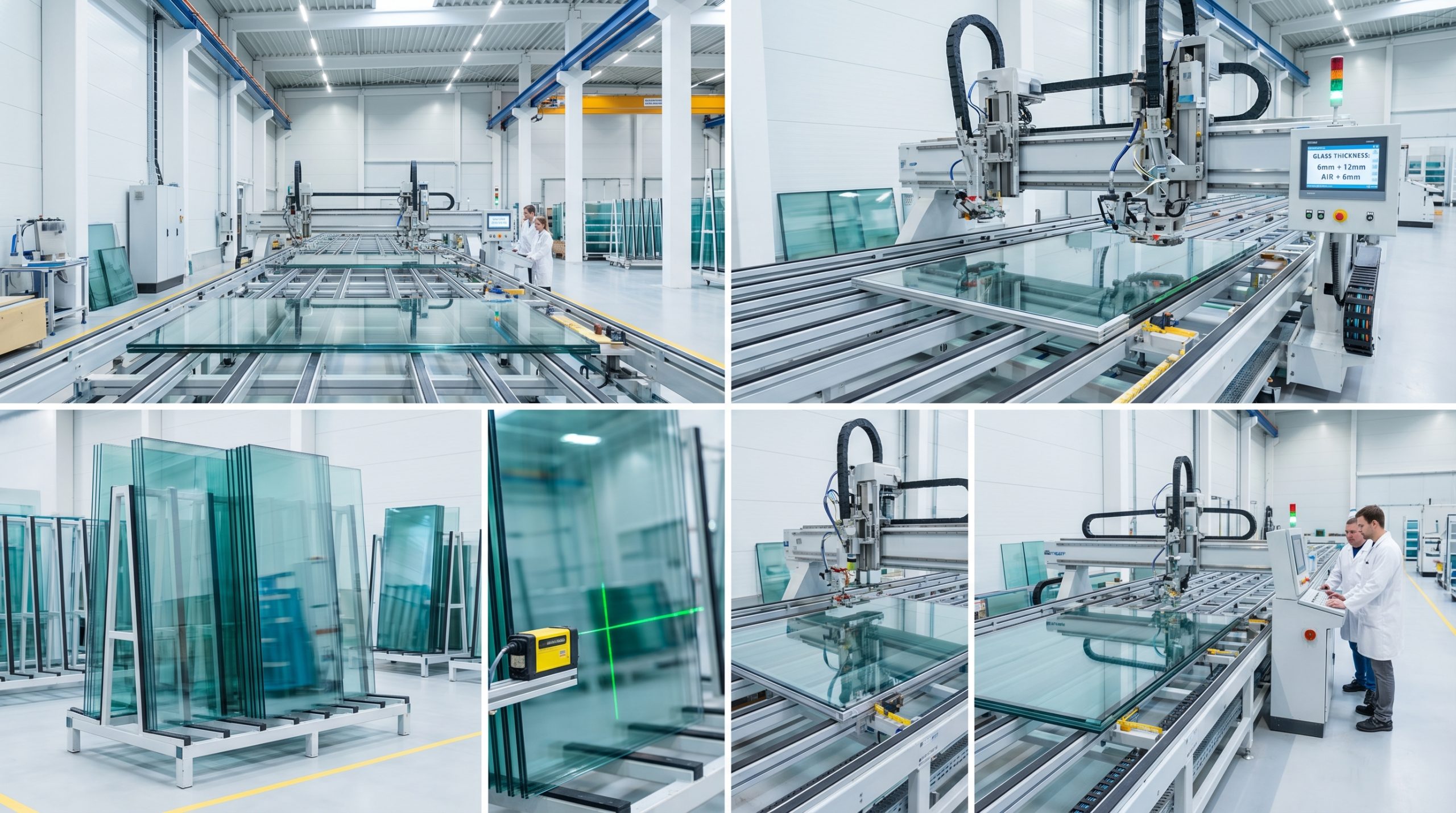
Costs for double glazed window glass thickness increase linearly with pane width and the complexity of additional treatments like tempering or laminating. Standard 4mm panes are the most affordable, while heavy-duty 8mm or 10mm options carry a significant price premium.
Factors Influencing Unit Pricing
Several variables beyond raw glass volume affect the final quote for your project.
- Thicker glass requires more raw material and energy to produce.
- Custom treatments (Low-E, tinting) add to the unit cost.
- Heavy units may require specialized shipping and installation cranes.
Long-term ROI of Thicker Units
While thicker glass has a higher upfront cost, the energy savings often justify the investment.
- Reduces monthly HVAC expenses through better insulation.
- Increases the property value and tenant comfort.
- High-performance units can pay for themselves within 5-7 years.
It pays to look at the big picture.
Key Takeaway: Standard 4mm units are best for budget-sensitive projects, but 6mm+ units offer better long-term value for commercial assets.
| Glass Thickness | Relative Cost | Performance Tier |
|---|---|---|
| 4mm (Standard) | Base | Economy |
| 6mm (Heavy Duty) | +25% | Commercial |
| 8mm+ (High Spec) | +50% | Premium/Industrial |
Investing in the correct thickness now prevents expensive retrofit and energy costs later in the building’s lifecycle.
Where to source custom double glazed window glass thickness?

You should source custom double glazed window glass thickness directly from a specialized factory to ensure ±0.5mm precision and predictable pricing. Partnering with a manufacturer allows for better oversight of the tempering process and eliminates middleman markups.
Direct Factory Manufacturing Benefits
Working directly with a source factory provides complete transparency for your procurement team.
- Ensures specific thickness requirements are met with high precision.
- Reduces lead times by cutting out the distributor.
- Provides direct access to technical support and material certifications.
Blueprint Validation and Sampling
A professional manufacturer will validate your drawings before starting mass production.
- CAD review ensures thickness is compatible with frames.
- Physical samples allow for fit verification on-site.
- Batch QC ensures consistency across thousands of units.
Key Takeaway: Direct factory partnerships are essential for large-scale projects requiring custom glass specifications and strict quality control.
| Service Step | Benefit | Success Metric |
|---|---|---|
| CAD Review | Dimensional Accuracy | Zero Rework |
| First Article Sample | Visual/Fit Verification | Client Approval |
| Batch QC | Consistency | <0.3% Breakage |
Direct sourcing eliminates the risks associated with third-party vendors and ensures your project specifications are met exactly.
Conclusion
Understanding double glazed window glass thickness is the key to solving performance issues related to insulation, acoustics, and durability. By selecting the right combination of pane width and cavity depth, you protect your project from thermal failure and noise complaints while ensuring structural safety.
At PrimePro Glass, we believe that precision in measurement is the foundation of architectural excellence. Our commitment to direct factory control and engineering-grade accuracy ensures that your project is built to last. For expert guidance on your next glass procurement, contact us today to discuss your custom specifications.
Frequently Asked Questions
Which glass thickness is better for soundproofing: 6mm or 10mm?
A 10mm pane is superior for blocking low-frequency noise. However, for the best results, you should use asymmetric thicknesses like 10mm and 6mm together to disrupt a wider range of sound frequencies.
Is 24mm double glazing always better than 14mm?
Yes, in terms of thermal insulation. A 24mm unit provides a 16mm argon-filled gap, which is the optimal width for reducing heat transfer, whereas a 14mm unit is usually a compromise for older frames.
Can I put 6mm glass in a frame designed for 4mm?
Generally, no. Window frames have specific “glazing pockets” and beads that only snap into place for a specific thickness range, and forcing a thicker unit will compromise the window’s weatherproofing.
Does increasing glass thickness make the window safer?
No, safety is more about the glass type than the thickness. A 4mm tempered pane is significantly safer than a 10mm annealed pane because it shatters into small, blunt pieces rather than sharp shards.
How does thickness affect the weight of the window?
Weight increases by 2.5kg per square meter for every additional 1mm of thickness. Upgrading from a 4mm/4mm unit to a 6mm/6mm unit adds 10kg per square meter, which might require heavy-duty hinges.