Annealed glass is a standard material that breaks into sharp, dangerous shards, while tempered glass is a safety-grade product that is 4-5 times stronger and shatters into small, blunt pebbles. Imagine the nightmare of a major commercial project being red-flagged or delayed because the glass panels installed in a high-traffic lobby fail to meet safety codes.
This mistake doesn’t just result in shattered glass; it brings massive liability risks and astronomical replacement costs that can destroy your project margins. By understanding the critical distinctions between annealed vs tempered glass, you can ensure your specifications meet stringent building regulations and provide the long-term durability your clients expect.
What defines the difference in annealed vs tempered glass?
The primary difference lies in the cooling process during manufacturing, which dictates how the glass handles stress and impact. Standard glass is cooled slowly to relieve internal tension, whereas the safety variety undergoes a rapid quenching process.
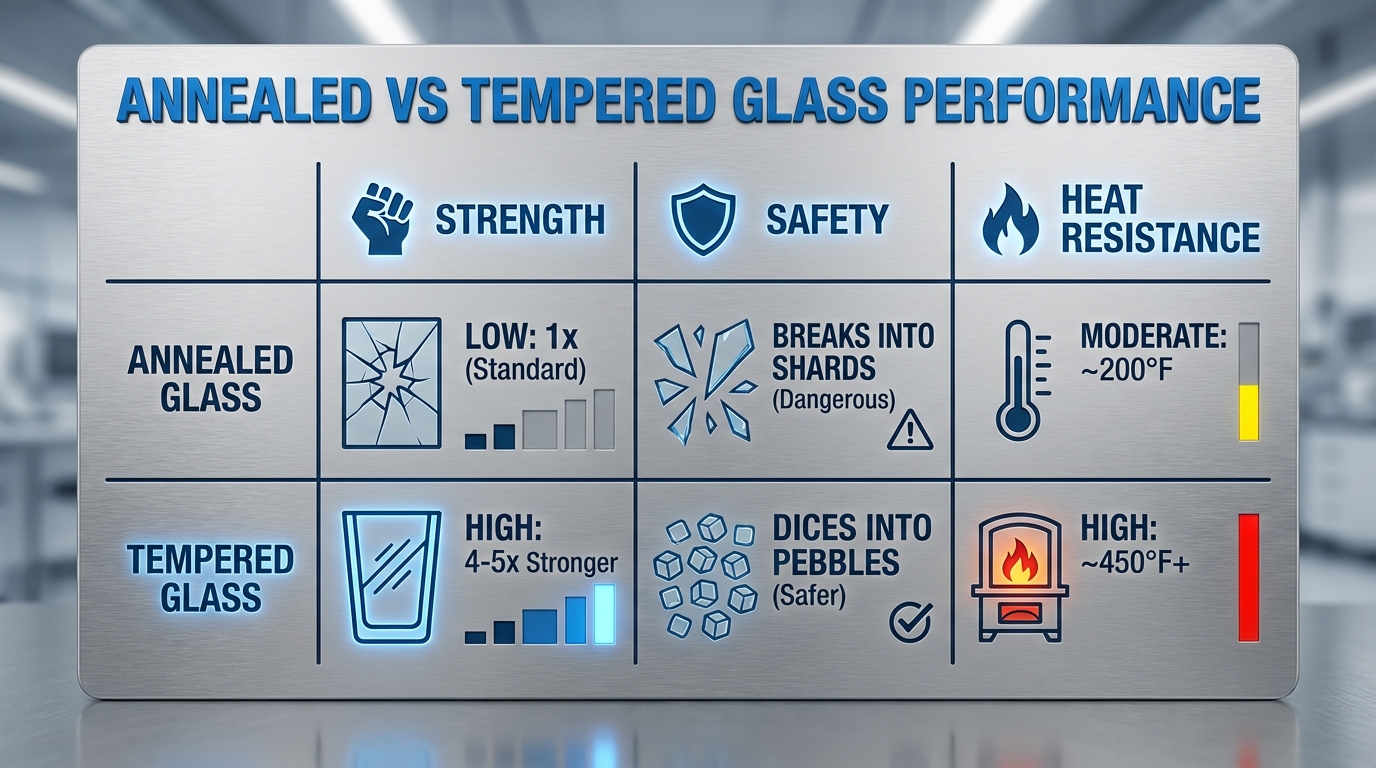
In professional commercial glass projects, knowing the DNA of your material is the first step toward a successful build. Choosing the right annealed vs tempered glass ensures you aren’t overspending on low-risk areas or under-specifying in hazardous zones.
The role of internal stress
When you examine how glass is made, you realize that internal stress isn’t always a bad thing. In tempered materials, this stress is intentionally engineered to provide a “shield” of surface compression.
Think about it:
- Annealed glass is “relaxed” and easy to handle.
- Tempered glass is “energized” and ready for impact.
- The cooling rate is the only thing that separates them.
Here is why: the rapid air-blasting of the outer surface causes it to shrink and harden while the core remains fluid for a few seconds longer. This creates a permanent tension-compression balance that you simply cannot find in standard panes.
Key Takeaway:
Annealed glass is the baseline float product, while tempering is a secondary thermal process that transforms it into a high-performance safety material.
| Feature | Annealed Glass | Tempered Glass |
|---|---|---|
| Cooling Method | Controlled slow cooling (Annealing) | Rapid air quenching |
| Physical State | Stress-relieved | High surface compression |
| Primary Goal | Workability and cost-efficiency | Safety and impact resistance |
This data confirms that the manufacturing method is the fundamental divider between standard and safety glass types.
Where should you apply annealed vs tempered glass?
You should use annealed glass for low-impact decorative applications and tempered glass for any area where human impact or high pressure is a risk. Building codes often mandate the latter in “hazardous” locations such as entryways and wet environments.
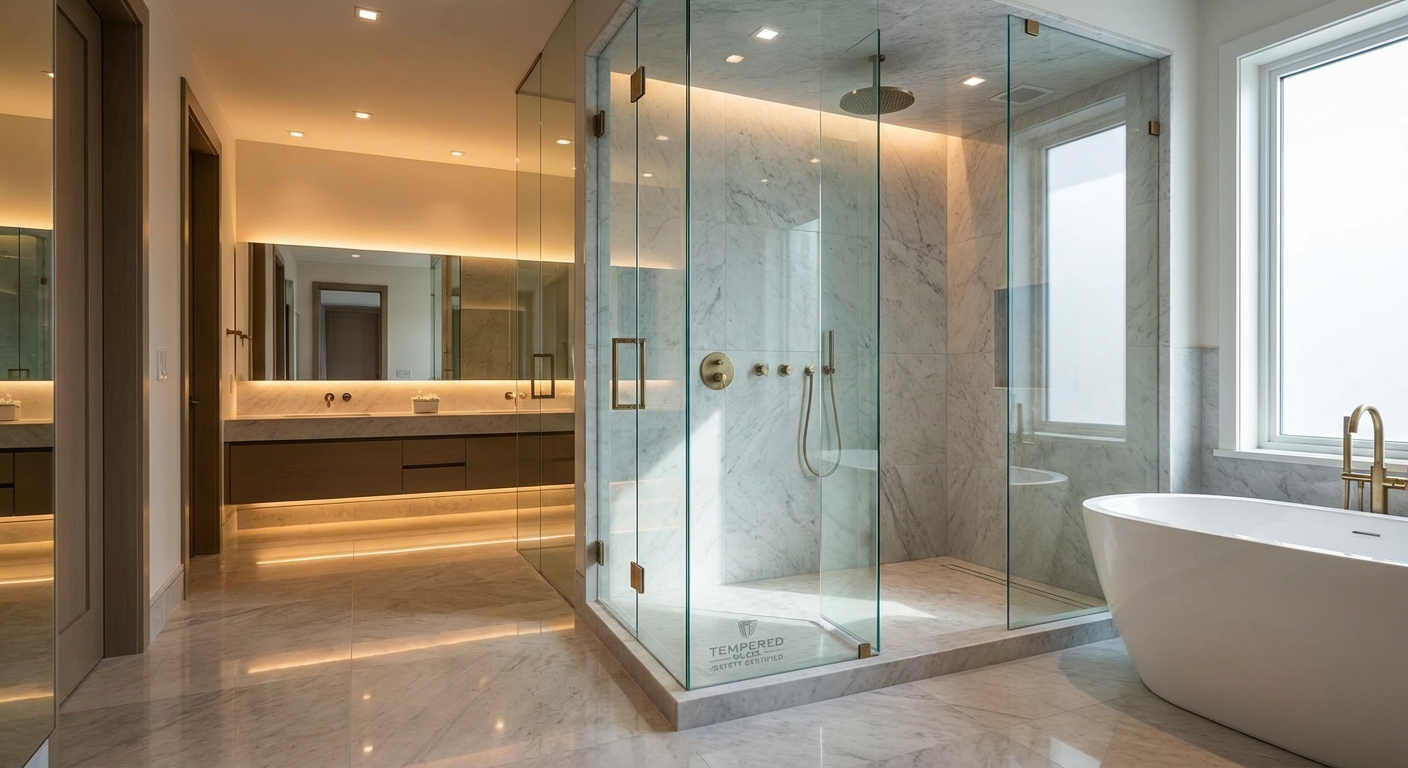
Residential builders often choose specific glass for shower enclosures because the risk of slipping into the pane is high. Using the wrong glass in these zones can lead to catastrophic injury and legal repercussions.
High-traffic vs. decorative zones
You have to look at the environment before you sign off on a procurement order. If the glass is going into a picture frame or a small cabinet door, standard float glass is usually sufficient.
But wait, there is more:
- Storefronts require the durability of tempered panes.
- Windows near floor level must meet safety standards.
- Tabletops should always favor the stronger option.
Here is why: you are protecting the end-user from accidental breakage. In modern residential glass design, the aesthetic remains identical, so you don’t have to sacrifice looks for the sake of structural integrity.
Key Takeaway:
Environment dictates the choice; use annealed for static, low-risk interiors and tempered for anything involving movement, heat, or high-traffic.
| Application | Recommended Type | Reason |
|---|---|---|
| Picture Frames | Annealed | Low risk, cost-effective |
| Shower Doors | Tempered | Safety code requirement |
| Office Partitions | Tempered | High-traffic impact risk |
Strategic placement ensures that you maximize your budget while maintaining a 100% safety compliance record.
Which is stronger: annealed vs tempered glass?
Tempered glass is significantly stronger, offering approximately four to five times the impact resistance of standard annealed float glass. This strength allows it to withstand heavy wind loads, accidental bumps, and even intentional strikes that would shatter normal glass.
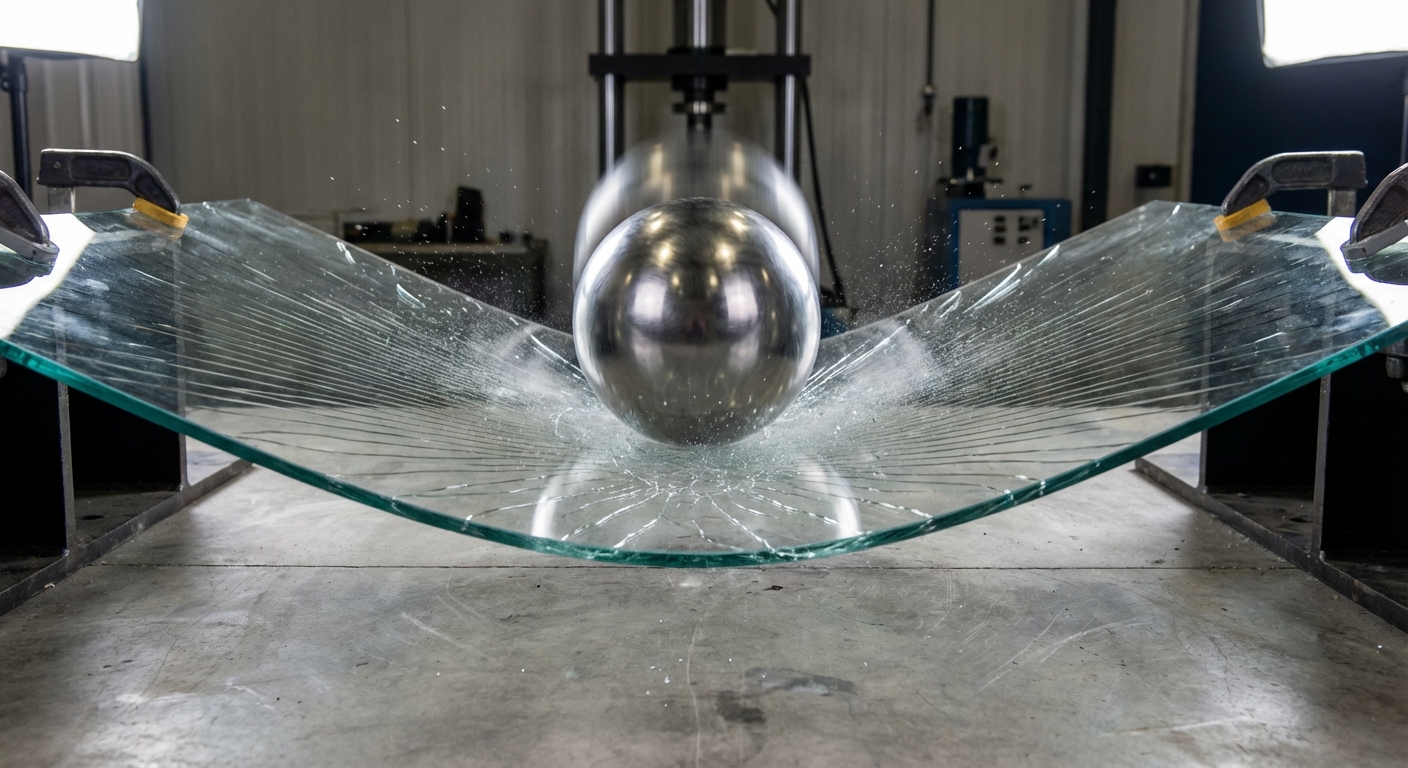
In many custom mirrors and structural applications, the load-bearing capacity of annealed vs tempered glass is the most scrutinized metric. Engineering teams rely on these standardized tests to guarantee that architectural facades will remain intact under environmental stress.
Impact and load resistance
You might be surprised by how much abuse a tempered pane can take before it finally gives way. While annealed glass is brittle and cracks under localized pressure, the compression layer on tempered glass distributes the force across the surface.
Think about it:
- A steel ball will bounce off tempered glass.
- The same ball will pierce annealed glass instantly.
- Tempered glass acts like a loaded spring.
Here is why: the internal tension creates a “toughness” that prevents cracks from propagating. When you choose the stronger option, you are essentially buying insurance against everyday accidents and environmental wear.
Key Takeaway:
Strength is the primary functional advantage of the tempering process, making it essential for any structural or protective barrier.
| Performance Metric | Annealed Glass | Tempered Glass |
|---|---|---|
| Impact Strength | 1x (Baseline) | 4x to 5x higher |
| Wind Load Capacity | Low to Moderate | High (Façade grade) |
| Surface Hardness | Standard | Significantly reinforced |
The massive gap in impact resistance is why tempered glass is the industry standard for exterior glazing.
How safe is breakage in annealed vs tempered glass?
Tempered glass is far safer during a breakage event because it shatters into thousands of small, dull pebbles rather than razor-sharp shards. These pebbles are designed to minimize the risk of deep lacerations, which is why it is legally defined as “safety glass.”
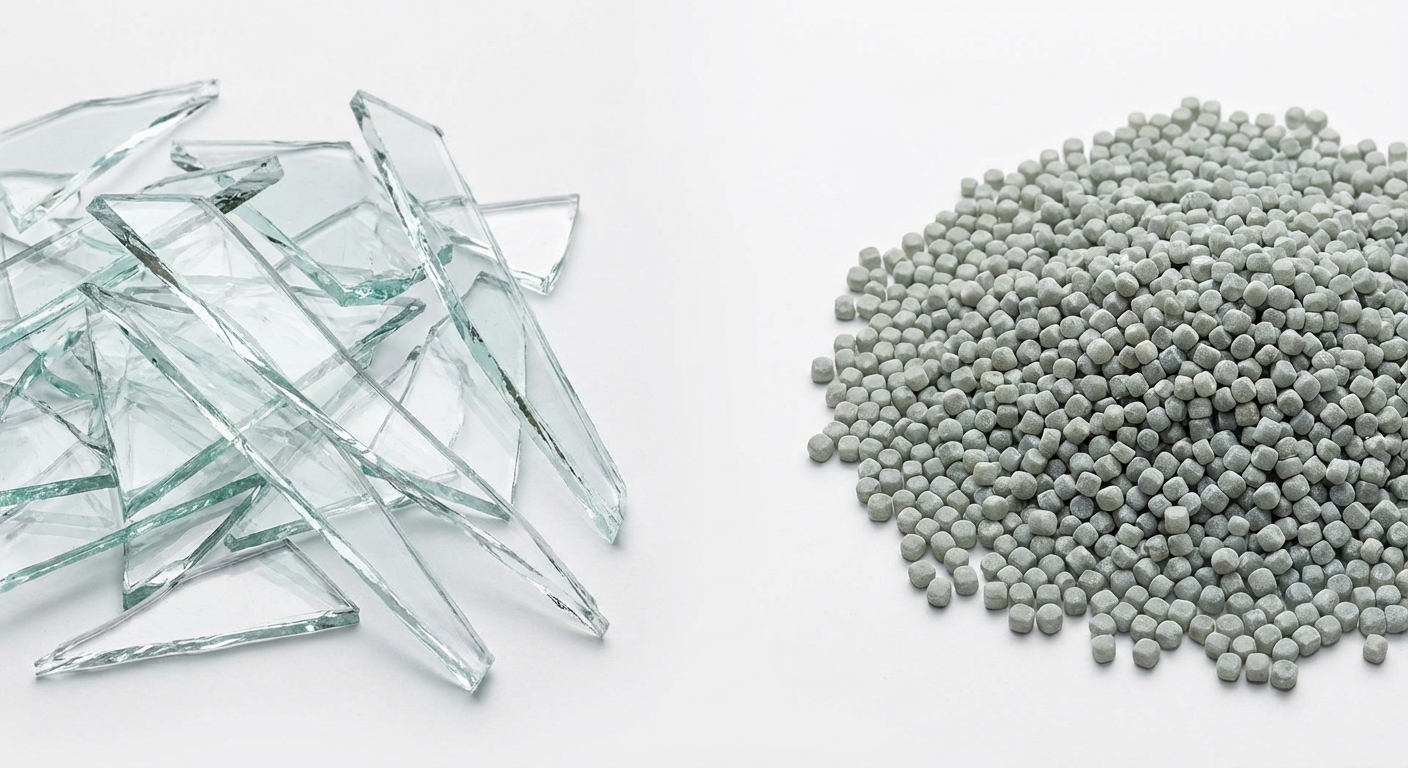
When you look at the aftermath of a broken window, the pattern tells you everything you need to know about the material. Large, jagged pieces of annealed glass can be life-threatening, making them a major liability in public spaces.
Analyzing fragmentation patterns
The way the glass fails is a direct result of the energy stored within the pane during manufacturing. In annealed glass, the crack follows the path of least resistance, creating long, sharp daggers that are extremely dangerous to clean up.
But wait, there is more:
- Tempered glass releases all its energy at once.
- The result is a “dicing” effect that creates granules.
- Cleanup is safer and significantly faster.
Here is why: the safety pebbles are usually less than 15mm in size and lack the weight or edge to cause serious harm. This is the single most important factor for procurement managers who prioritize risk management and occupant safety.
Key Takeaway:
The break pattern is the ultimate safety feature; tempered glass eliminates the “guillotine effect” found in standard annealed products.
| Break Character | Annealed Glass | Tempered Glass |
|---|---|---|
| Shard Type | Large, jagged daggers | Small, blunt granules |
| Injury Risk | High / Fatal | Low / Minor scratches |
| Clean-up Safety | Dangerous | Relatively safe |
Choosing safety glass is a proactive measure that protects your company from injury-related legal claims.
How does heat treat annealed vs tempered glass?
Heat treatment involves heating the glass to approximately 1,200°F (650°C) and then immediately subjecting it to high-pressure air cooling. This process doesn’t change the appearance of the glass but fundamentally alters its molecular structure to increase durability.
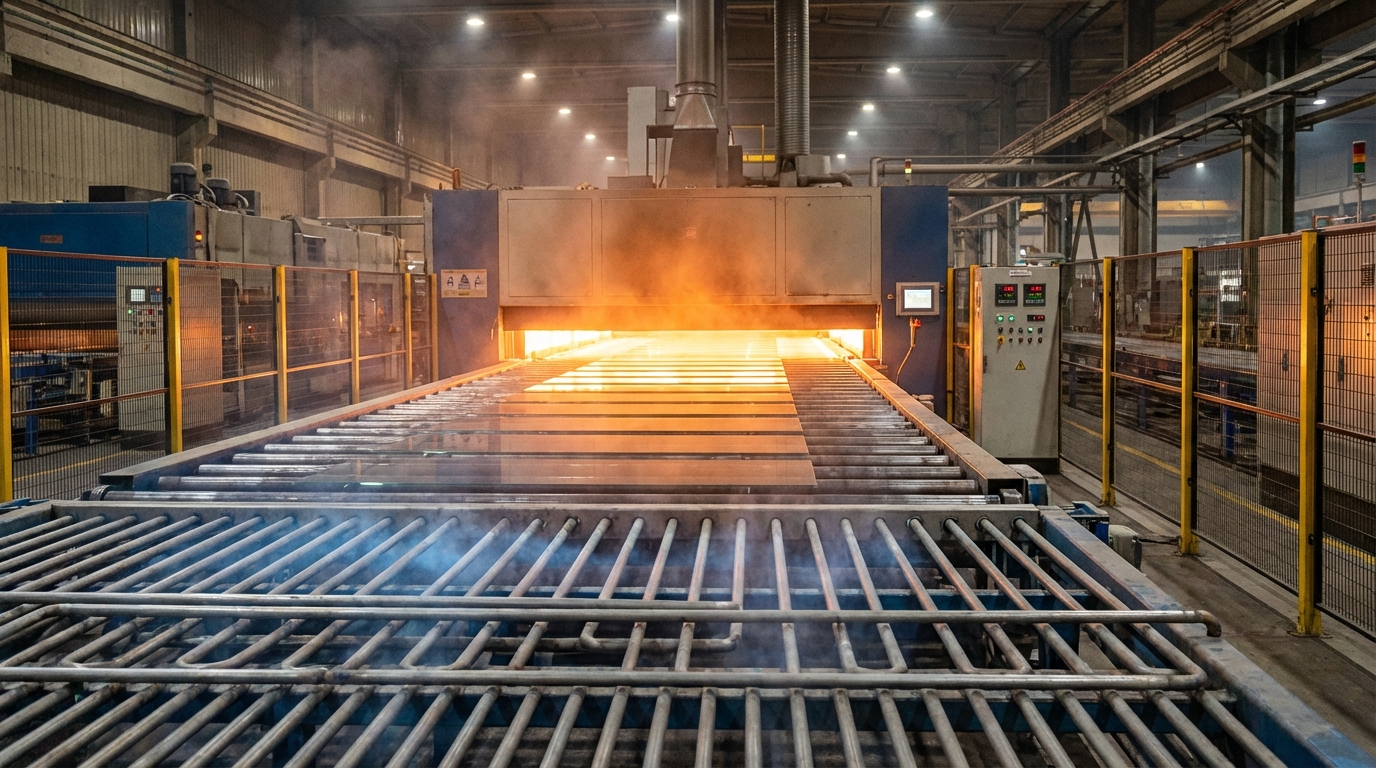
When comparing the production of annealed vs tempered glass, it is important to note that all fabrication must happen before this heating stage. Once the glass has been heat-treated, its internal stress makes any further cutting impossible.
The physics of quenching
You are essentially freezing the glass in a state of high tension when you use a tempering furnace. The outside of the glass cools and contracts quickly, while the inside tries to contract later, pulling the outer surfaces inward.
Think about it:
- The furnace is the heart of the safety glass factory.
- Precision timing is required for a perfect finish.
- Temperature control must be absolute.
Here is why: if the heat is uneven, the glass will bow or warp, ruining the optics. Professional manufacturers use advanced convection furnaces to ensure that every square inch of the pane receives uniform treatment.
Key Takeaway:
Tempering is a precise thermal “shock” that locks the glass into a high-strength state, creating a material that is superior to standard float glass.
| Process Variable | Annealing | Tempering |
|---|---|---|
| Peak Temperature | 1,100°F | 1,200°F+ |
| Cooling Rate | 1-2 degrees per hour | Seconds |
| Equipment Used | Lehr (Slow kiln) | Quenching Furnace |
This thermal transformation is the only way to achieve the safety ratings required for modern architectural projects.
Can technicians cut through annealed vs tempered glass?
You can cut, drill, or notch annealed glass at any point, but tempered glass will explode into pebbles if you attempt to modify it after treatment. This means that every hole for a hinge or notch for a handle must be precisely fabricated while the glass is still in its annealed state.
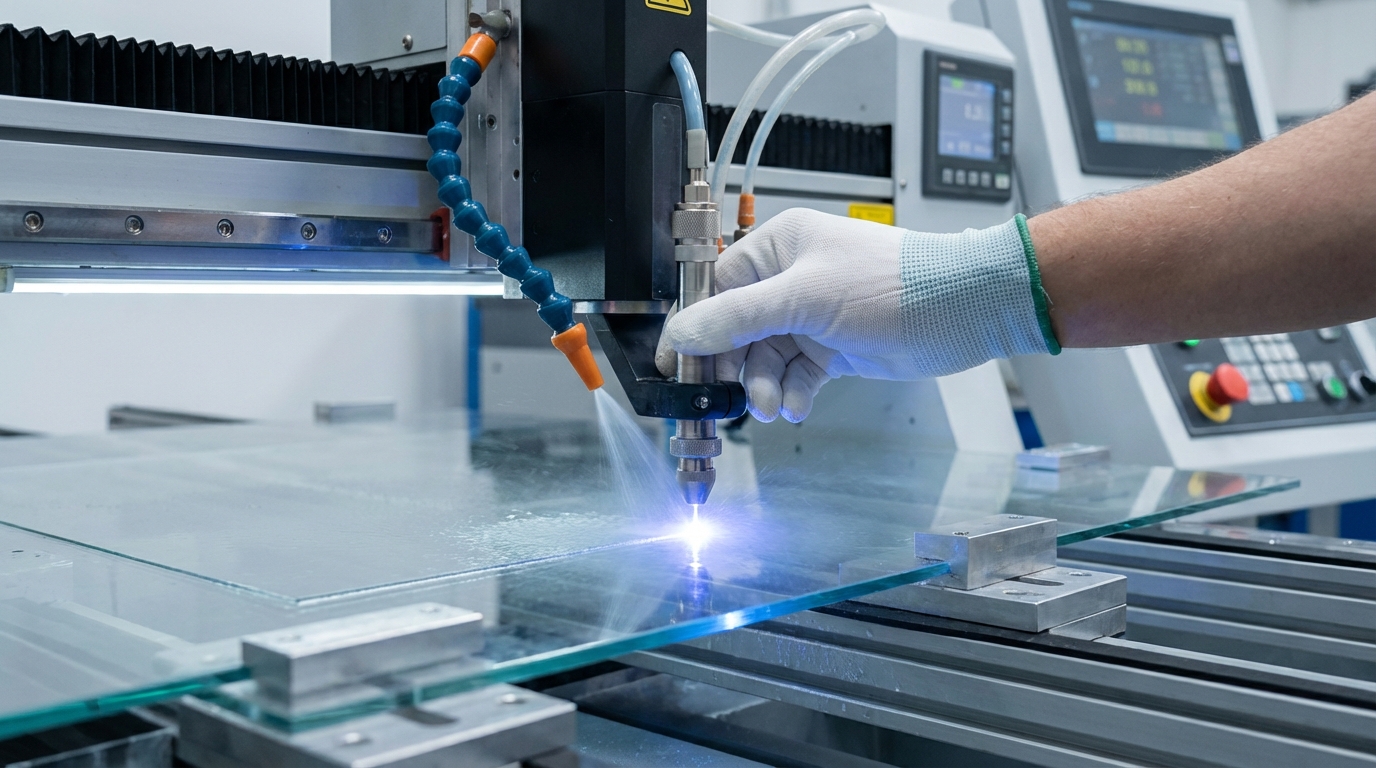
Fabricators must be meticulous with their initial measurements because there is no room for on-site adjustments. If you order the wrong size for a commercial glass installation, the entire tempered pane must be scrapped.
Fabrication timing and accuracy
You have total flexibility with standard float glass, which makes it popular for mirror backings and basic window repairs. Technicians can use a simple diamond-tipped tool to score and snap it to any dimension on the job site.
But wait, there is more:
- Tempered glass is a “finished” product.
- Any scratch deep enough can trigger a total fail.
- CNC precision is mandatory for custom orders.
Here is why: the surface compression acts like a tight skin; once you pierce that skin, the internal tension causes the whole structure to fail instantly. Always double-check your CAD drawings before sending them to the furnace.
Key Takeaway:
Annealed glass is the choice for on-site flexibility; tempered glass requires perfect pre-fabrication planning and zero-tolerance accuracy.
| Capability | Annealed Glass | Tempered Glass |
|---|---|---|
| Post-Factory Cutting | Supported | Prohibited (Explodes) |
| On-Site Drilling | Possible | Impossible |
| Custom Shaping | Flexible | Fixed after heat-treat |
The inability to modify tempered glass makes it a “measure twice, cut once” material in the architectural world.
What is the thermal limit of annealed vs tempered glass?
Tempered glass has a significantly higher thermal limit, comfortably withstanding temperature differentials of up to 470°F without cracking. In contrast, standard annealed glass can fail due to thermal shock at differences as low as 100°F.

For high-rise commercial glass applications, the thermal performance of annealed vs tempered glass is a critical safety factor. Windows that receive direct sunlight while the interior is air-conditioned are under constant thermal stress.
Resistance to thermal shock
You need a material that can expand and contract without fracturing when exposed to heat sources. Annealed glass is notorious for “spontaneous” cracking when one edge of the glass is shaded and the center is hot.
Think about it:
- Fireplace screens must be tempered.
- Kitchen splashbacks face constant heat.
- Industrial viewports require thermal stability.
Here is why: the same surface compression that gives the glass impact strength also allows it to resist the expansion forces of heat. If your project involves proximity to machinery, ovens, or extreme sun exposure, tempering is the only way to prevent stress fractures.
Key Takeaway:
Thermal durability is a major hidden benefit of tempered glass, making it the superior choice for environments with fluctuating temperatures.
| Thermal Property | Annealed Glass | Tempered Glass |
|---|---|---|
| Max Temp Diff. | ~100°F | ~470°F |
| Thermal Shock Risk | High | Very Low |
| Typical Heat Use | Not recommended | Cooktops / Fireplaces |
The superior heat resistance of tempered panes ensures long-term structural integrity in high-heat environments.
Why compare the lab data of annealed vs tempered glass?
Lab data provides the empirical evidence required for safety certification, proving that tempered glass meets the ANSI Z97.1 and 16 CFR 1201 standards. Comparing the two materials under controlled conditions allows engineers to calculate exact failure points and safety margins.
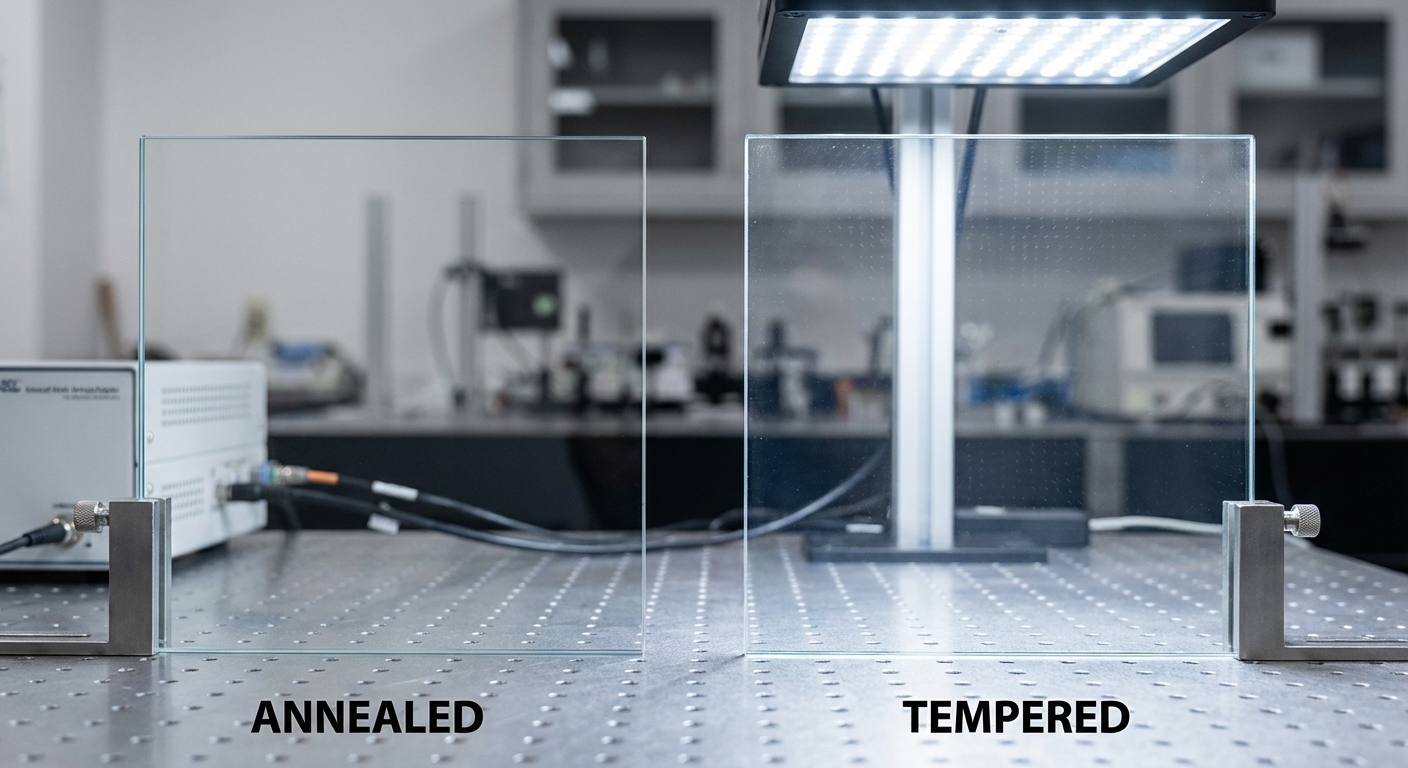
In professional laboratories, the difference between annealed vs tempered glass is verified through “break tests” and polarized light analysis. These tests ensure that the manufacturing batch has achieved the correct levels of surface compression.
Scientific verification of safety
You cannot always tell the difference with the naked eye, so laboratory verification is essential for quality control. Engineers use specialized tools to measure the “Mpa” (megapascals) of surface stress to ensure the tempering process was successful.
But wait, there is more:
- Labs test for fragmentation counts.
- They verify edge strength specifically.
- Stress patterns are visible under specialized filters.
Here is why: a failure in the tempering process could result in a pane that looks “safe” but breaks like standard glass. Relying on lab-certified materials is the only way to guarantee that your building will pass its final safety inspections.
Key Takeaway:
Laboratory testing is the bridge between manufacturing theory and real-world safety, ensuring every pane performs as promised.
| Lab Test Category | Annealed Results | Tempered Results |
|---|---|---|
| Surface Stress | Minimal (<3,500 psi) | High (>10,000 psi) |
| Bending Strength | 6,000 psi | 24,000 psi+ |
| Fragmentation | Large shards | >40 pieces per 2″ sq |
Consistent lab results prove that tempered glass is the objectively superior choice for safety-critical installations.
How do logos identify annealed vs tempered glass?
You can identify tempered glass by looking for a small, permanent etched logo (often called a “bug” or “stamp”) usually located in one of the corners. Annealed glass typically lacks any permanent markings, as it is not subject to the same safety certification requirements.
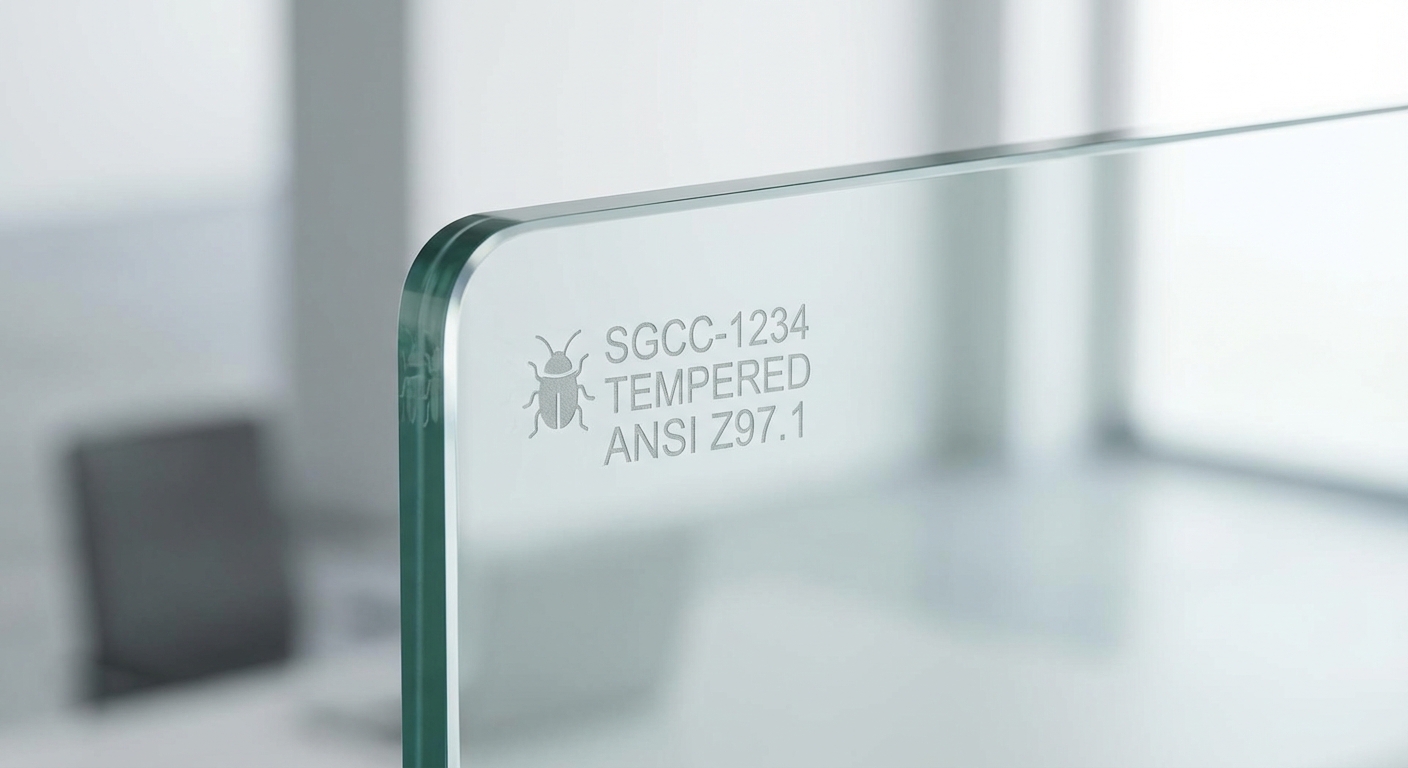
Identifying annealed vs tempered glass is a routine task for building inspectors. If a custom mirrors project or a glass door lacks this mark, it may be rejected during a code compliance audit.
Spotting the “bug” and edge finish
You should always verify the corners of your glass shipment as soon as it arrives on site. This etched mark contains the manufacturer’s name and the specific safety standards the glass was tested against.
Think about it:
- The logo is sandblasted or laser-etched.
- It cannot be removed without damaging the glass.
- It is your proof of safety compliance.
Here is why: since you can’t tell the difference by looking at the center of the pane, this mark is the only reliable way to confirm you’ve received safety glass. Additionally, tempered glass almost always has factory-polished edges, whereas annealed glass may have rougher, “seamed” edges.
Key Takeaway:
The etched safety mark is the industry’s “seal of approval,” providing an instant visual confirmation of the glass’s strength and safety rating.
| Identification Feature | Annealed Glass | Tempered Glass |
|---|---|---|
| Permanent Logo | Generally None | Mandatory “Bug” Stamp |
| Edge Finish | Often rough or seamed | Usually high-polish |
| Visual Defects | None | Slight “roller waves” possible |
Checking for the safety stamp is a simple yet critical step in maintaining project quality and regulatory standards.
What is the ROI of buying annealed vs tempered glass?
The ROI of buying tempered glass is higher over the long term because it significantly reduces replacement costs from breakage and protects your company from expensive personal injury lawsuits. While annealed glass has a lower initial purchase price, its fragility often makes it the more expensive option over the life of the installation.

In high-stakes projects, comparing the cost of annealed vs tempered glass requires looking beyond the invoice. A procurement manager must factor in the “total cost of ownership,” including the risk of failure in the field.
Balancing budget and liability
You need to weigh the upfront savings of standard glass against the potential for disaster. In commercial environments, a single broken window that causes an injury can cost ten times more than the entire glass order.
But wait, there is more:
- Tempered glass reduces shipping breakage.
- It lasts longer in high-wear environments.
- It increases the value of the property.
Here is why: professional clients value safety and durability above all else. By specifying the higher-grade material, you are positioning your firm as a quality-focused partner that prioritizes the long-term success of the project.
Key Takeaway:
Tempered glass is an investment in risk mitigation, providing superior durability that pays for itself through reduced breakage and liability protection.
| Financial Factor | Annealed Glass | Tempered Glass |
|---|---|---|
| Upfront Cost | Lower | Moderate (15-25% more) |
| Replacement Rate | Higher due to fragility | Very Low |
| Liability Rating | High Risk | Low Risk / Safety Compliant |
The data clearly shows why safety glass is the standard for high-traffic areas and professional commercial developments.
Choosing between annealed and tempered glass shouldn’t be a gamble. This guide has detailed exactly how to balance cost, safety, and durability to ensure your next project is a success. If you’re ready to secure high-quality, code-compliant materials for your build, contact us today to discuss your specific requirements.
At PrimePro Glass, our vision is to lead the industry through precision engineering and an unwavering commitment to architectural safety.
FAQ: Professional Glass Selection
- Can I use annealed glass for my home’s front door?
No. Building codes strictly require safety glass for any door to prevent severe injuries from accidental impact. - What’s the best way to tell if my windows are already tempered?
Look in the corners for a permanent etched safety stamp; if it’s missing, the glass is likely annealed. - How do I know if I can cut a piece of glass I found?
Try viewing it with polarized sunglasses; if you see faint dark patterns (strain lines), it’s tempered and cannot be cut. - Can I save money by choosing annealed glass for office partitions?
Generally no, because most building codes classify partitions as hazardous areas that require tempered safety glass. - How do I know if my project requires a specific glass thickness?
Concise judgment: Consult an engineer. Thickness depends on wind load, pane size, and the height of the installation.