The STC rating for glass is a logarithmic measurement that quantifies how effectively a glass partition reduces the transmission of airborne sound between spaces. You might find yourself in a high-density office or a luxury apartment where the relentless roar of traffic and urban chatter disrupts your focus and sleep.
This persistent noise pollution isn’t just a nuisance; it elevates stress levels and drastically reduces productivity for building occupants.Optimizing your architectural acoustics with the correct glass STC rating provides a definitive solution to transform chaotic environments into serene, high-performance sanctuaries.
What is the STC rating for glass anyway?

The Sound Transmission Class or glass STC rating is an integer value derived from laboratory testing that indicates the decibel reduction provided by a glass panel. This rating system focuses primarily on speech and mid-to-high frequency noises common in office and residential settings.
A higher number indicates better soundproofing, meaning more noise is blocked from passing through the material. Understanding this scale is the first step in specifying the right materials for any acoustic project.
Defining the Sound Transmission Class
STC is a single-number rating of a material’s ability to resist airborne sound transfer at frequencies from 125 Hz to 4,000 Hz. It is calculated by comparing measured transmission loss data to a standard reference contour.
But that’s not all…
- Quantifies sound blocking performance.
- Standardized across the construction industry.
- Measured in decibels (dB).
The importance of decibel reduction
Every increase of 10 in the STC scale represents a perceived halving of the noise level to the human ear. For instance, moving from an STC 25 to an STC 35 makes a dramatic difference in speech privacy.
You might be wondering…
- A rating of 30 allows loud speech to be heard.
- A rating of 40 makes loud speech barely audible.
- A rating of 50 makes loud sounds virtually faint.
Real-world acoustic comfort levels
Selecting the right rating depends on the ambient noise environment and the desired level of quiet inside the building. Typical office partitions aim for a range between 35 and 45 to ensure private conversations remain confidential.
Here is the kicker.
- Residential units near highways need higher ratings.
- Recording studios require ratings above 50.
- Standard windows often fall below STC 28.
| Perceived Noise Level | STC Rating | Common Glass Application |
|---|---|---|
| Normal Speech Audible | 25-28 | Standard 3mm Float Glass |
| Loud Speech Audible | 30-34 | 6mm Tempered Glass |
| Loud Speech Muffled | 35-39 | Basic Double Glazing |
| Loud Speech Faint | 40+ | Acoustic Laminated Glass |
This table serves as a baseline for correlating laboratory numbers with the actual auditory experience of occupants.
Key Takeaway: The STC rating is a vital metric for architects to ensure that building occupants enjoy privacy and a quiet environment, free from the distractions of external and internal noise.
How is the glass STC rating actually measured?
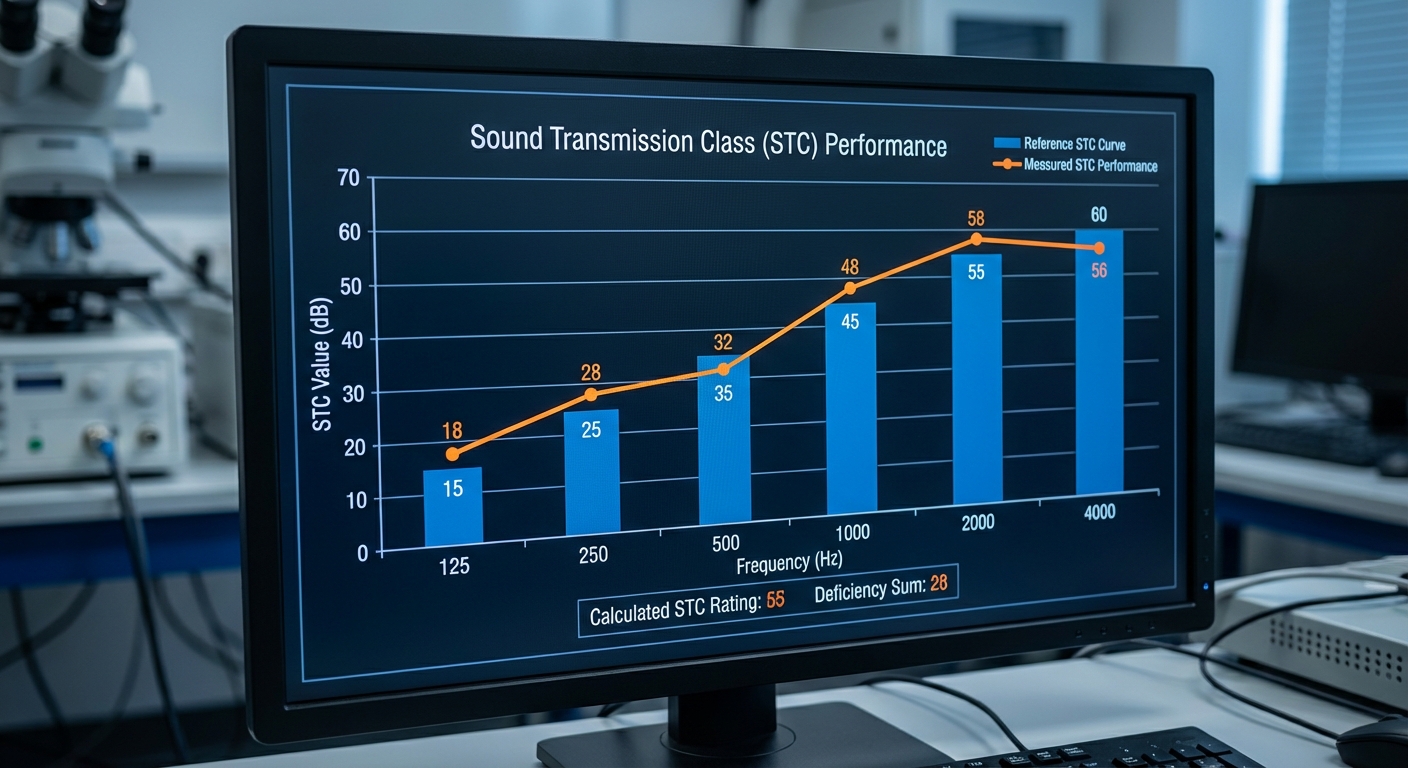
To determine a glass STC rating, manufacturers conduct tests in specialized acoustic chambers where sound is generated on one side and measured on the other. This process follows strict international protocols to ensure that data remains consistent and comparable across different suppliers.
The testing environment must be completely isolated to prevent flanking paths, where sound travels through walls or gaps rather than the glass itself. This ensures the resulting number reflects the true performance of the glazing material.
ASTM E90 and E413 lab protocols
Laboratory testing utilizes the ASTM E90 standard to measure transmission loss across sixteen standard frequencies. These raw data points are then fitted to the ASTM E413 curve to generate the final single-number rating.
Think about it.
- Ensures scientific accuracy.
- Eliminates environmental variables.
- Provides a standardized comparison tool.
Testing glass-only vs. full assemblies
It is crucial to distinguish between the performance of the glass panel itself and the entire window assembly including the frame and seals. Often, the frame’s performance can lower the overall unit’s effectiveness if not properly designed.
But wait, there’s more.
- Center-of-glass ratings are usually higher.
- Frame leakage can drop STC by 5 points.
- Full-assembly testing is more realistic.
| Test Parameter | Laboratory (STC) | Field (ASTC) |
|---|---|---|
| Environment | Controlled Sound Lab | Actual Building Site |
| Sound Leaks | Zero Flanking | Possible Seal Gaps |
| Reliability | Highly Reproducible | Project Dependent |
While lab ratings provide the baseline, the Apparent Sound Transmission Class (ASTC) measured on-site accounts for installation quality.
Key Takeaway: Professional acoustic planning relies on laboratory-certified ratings to predict how various glass configurations will behave once integrated into the building envelope.
Which glass types offer the best STC ratings?
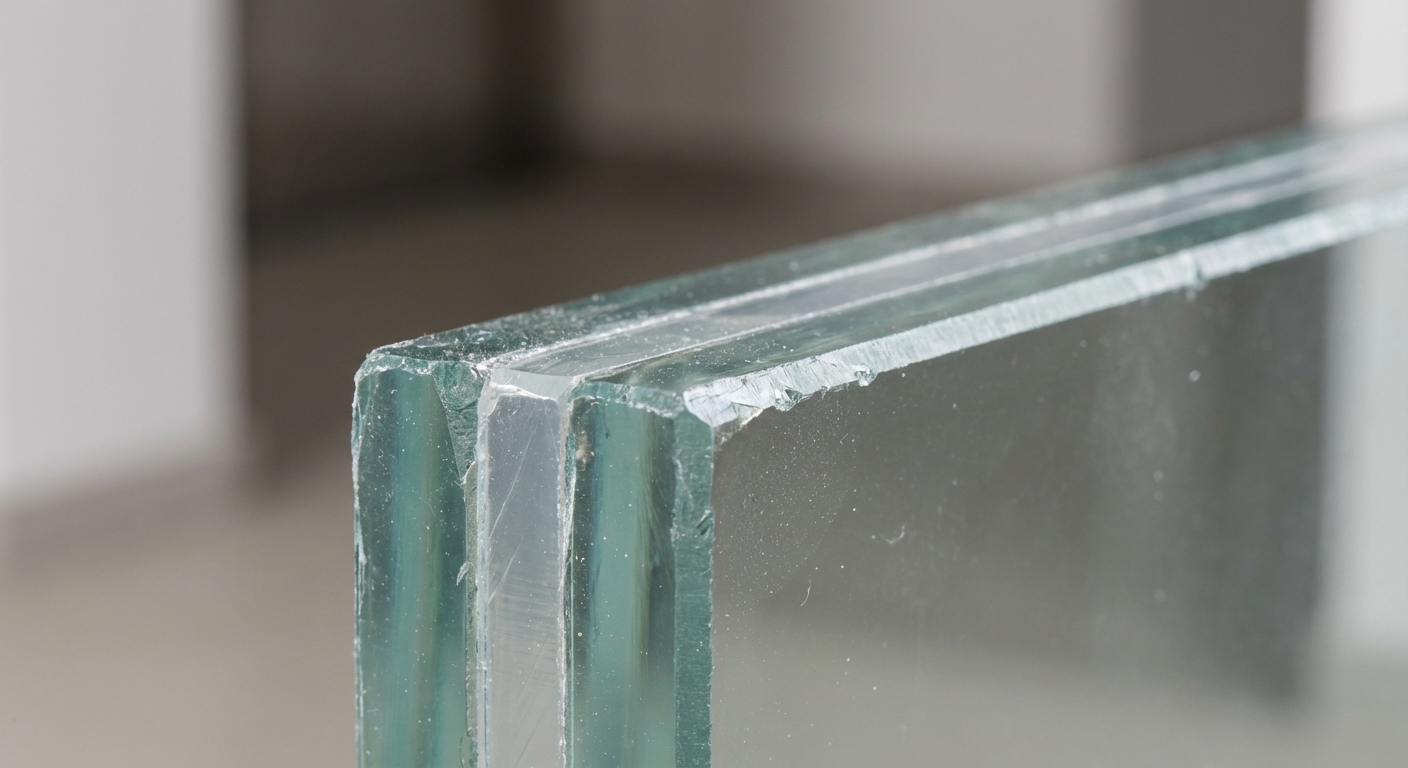
Engineered solutions like laminated glass provide the highest glass STC rating because they incorporate specialized interlayers that dampen vibrations. While standard monolithic glass relies solely on mass, these advanced materials use multi-layer technology to break sound waves.
Selecting the right glass type involves balancing acoustic needs with weight, thickness, and cost constraints. For maximum silence, a combination of different glass technologies is usually the most effective approach.
Performance of single-pane glass
Standard single-pane glass has a relatively low rating, typically ranging from 25 to 35 depending on its thickness. It is rarely sufficient for urban environments where traffic noise is a constant presence.
It gets better.
- 3mm glass offers only STC 26.
- 12mm glass improves this to STC 34.
- Mass alone has diminishing returns.
Superiority of laminated glass options
Laminated glass is the premier choice for sound insulation because the plastic interlayer acts as a shock absorber. This specialized layer converts sound energy into a tiny amount of heat, preventing the glass from vibrating in sync with external noise.
Here is the deal.
- Standard PVB adds significant damping.
- Acoustic-grade PVB is even more effective.
- Matches the performance of much thicker glass.
| Glass Configuration | Estimated STC Rating | Best Use Case |
|---|---|---|
| 6mm Monolithic | 31-32 | Interior partitions |
| 6mm/12mm Air/6mm IGU | 34-35 | Standard residential |
| 6.38mm Laminated | 35-37 | Noise-sensitive offices |
| 12.76mm Laminated | 39-42 | Near highways or airports |
This comparison highlights why laminated options are the gold standard for projects requiring high-level acoustic isolation.
Key Takeaway: For projects where sound control is a priority, switching from standard tempered glass to laminated glass is the most efficient way to boost the STC rating.
Why does glass thickness affect the STC rating?
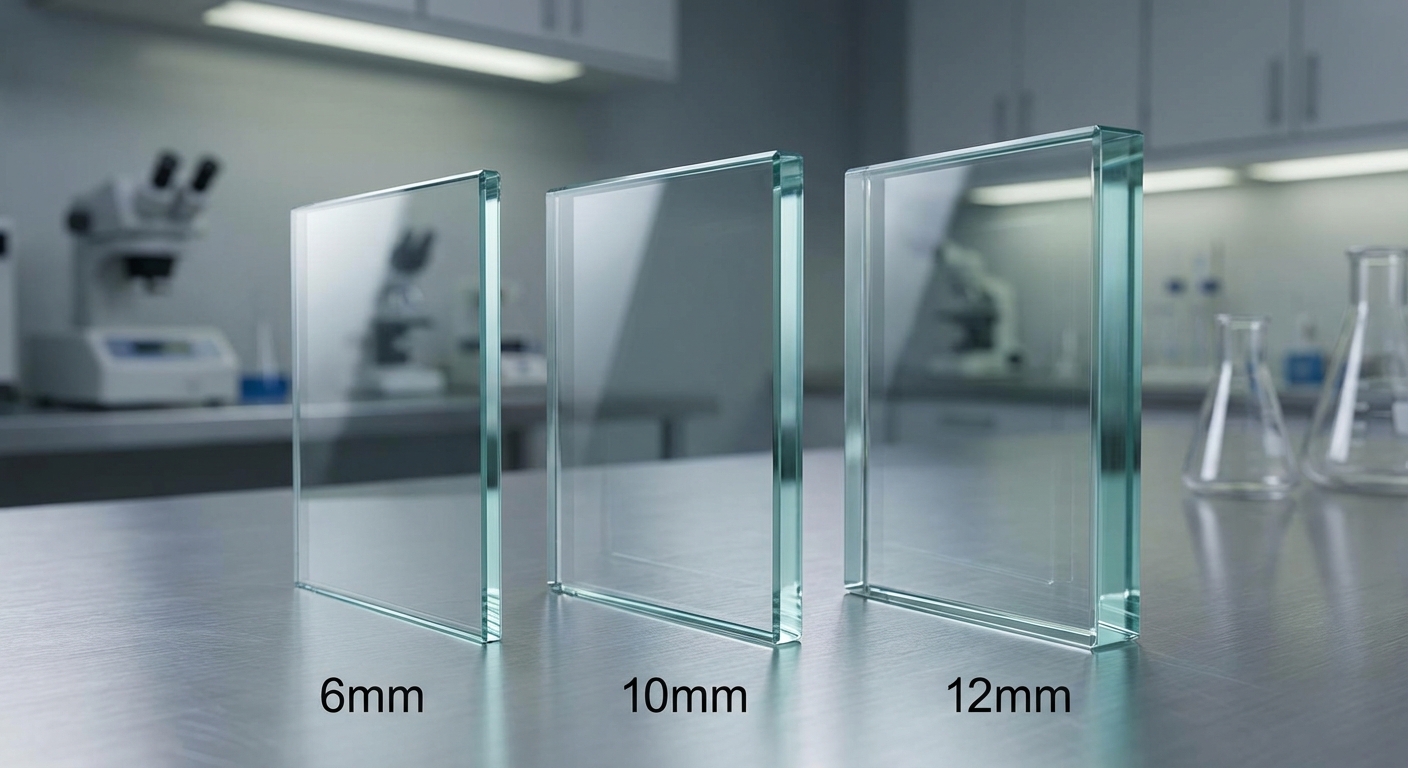
Increasing the physical mass is a fundamental strategy to improve the glass STC rating because heavier materials are harder for sound waves to vibrate. According to the “Mass Law,” doubling the weight of a partition can theoretically increase the sound insulation by approximately 6 decibels.
However, thickness alone isn’t a perfect solution due to the “coincidence effect,” where glass becomes transparent to sound at certain frequencies. Strategic thickness selection helps mitigate these acoustic weak points.
The role of mass in sound blocking
Massive glass panels provide more resistance to the pressure changes inherent in sound waves. This makes thick glass particularly effective at blocking lower frequency sounds, such as the rumble of heavy machinery or bass-heavy music.
You might be wondering…
- Heavier glass reflects more energy.
- Mass is vital for low-frequency control.
- Weight increases installation complexity.
Breaking the coincidence effect
Every thickness of glass has a specific frequency at which it vibrates easily, allowing sound to pass through with little resistance. By using asymmetrical glazing—panes of different thicknesses—you ensure that the “weak” frequencies of one pane are blocked by the other.
Check this out.
- Avoids “acoustic holes” in the spectrum.
- Combines 6mm and 10mm for better results.
- Crucial for high-performance IGUs.
| Glass Thickness | Weight (kg/m²) | Typical STC |
|---|---|---|
| 6mm (1/4″) | 15.0 | 31 |
| 10mm (3/8″) | 25.0 | 33 |
| 12mm (1/2″) | 30.0 | 34 |
| 19mm (3/4″) | 47.5 | 36 |
Note how the increase in STC slows down as thickness increases, demonstrating the need for other damping technologies beyond just mass.
Key Takeaway: While increasing mass improves sound insulation, the most effective acoustic designs use asymmetrical thickness to ensure no single frequency can easily penetrate the barrier.
Does lamination improve the glass STC rating?

Lamination provides a massive boost to the glass STC rating by introducing a mechanical decoupling layer that absorbs sound energy. Unlike a single solid sheet, a laminated unit consists of two glass layers bonded with a polymer interlayer that disrupts the path of noise.
This technology is especially effective for hollow glass units, where adding a laminated pane can significantly outperform standard double-pane configurations. It is the most space-efficient way to achieve professional-grade silence.
PVB and SGP interlayers as dampers
Polyvinyl Butyral (PVB) is the most common interlayer used for acoustic damping, though SentryGlas (SGP) is often used for structural strength. Specialized “Acoustic PVB” is engineered specifically to target the coincidence frequency dip, smoothing out the insulation curve.
Think about it.
- Dampens structural vibrations effectively.
- Prevents the glass from acting like a drum.
- Retains clarity while adding performance.
Acoustic vs. standard lamination
While any lamination improves sound control, acoustic-grade interlayers are softer and more flexible, allowing them to absorb more vibration. This can result in an STC improvement of 3 to 5 points over a standard laminated pane of the same thickness.
Here is the kicker.
- Specifically targets the human speech range.
- Reduces the impact of the coincidence dip.
- Ideal for hospitals and luxury hotels.
| Glass Type | Construction | STC Rating |
|---|---|---|
| Monolithic | 12mm Solid Glass | 34 |
| Standard Lami | 6mm + 0.76 PVB + 6mm | 38 |
| Acoustic Lami | 6mm + 0.76 Acoustic PVB + 6mm | 41 |
The transition from monolithic to acoustic laminated glass represents a transformative shift in the comfort of a room.
Key Takeaway: Lamination is the single most effective tool for increasing sound insulation without excessively increasing the thickness or weight of the glass assembly.
How do air gaps influence the glass STC rating?
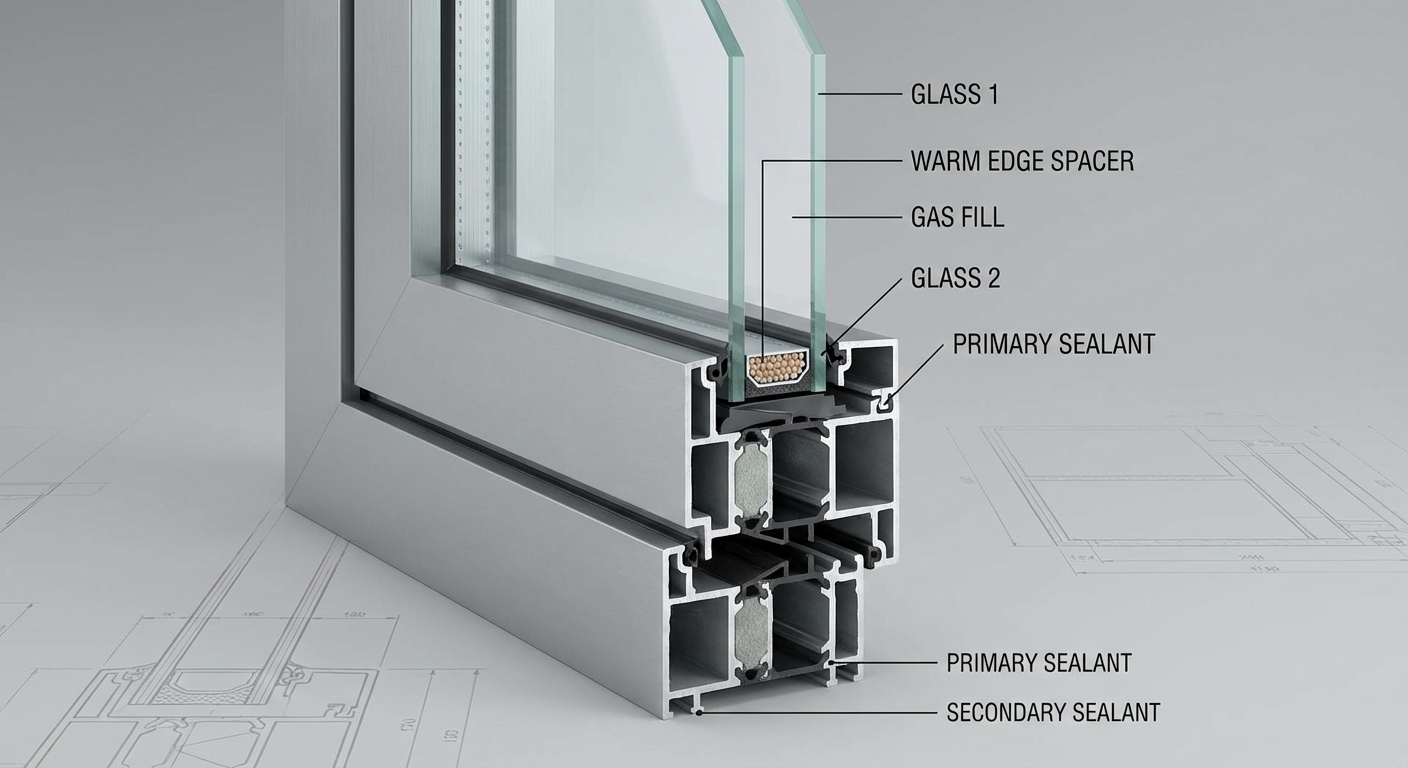
The width of the air or gas-filled space in an Insulated Glass Unit (IGU) significantly impacts the overall glass STC rating. Contrary to popular belief, a very narrow air gap (like 6mm) can actually decrease performance at certain frequencies due to a resonance effect between the two panes.
To maximize sound insulation, wider air gaps are generally better, as they create a more effective “buffer” for the sound waves to travel through. However, this must be balanced with thermal efficiency and frame thickness limits.
Optimized spacing for hollow glass
Increasing the gap from 12mm to 100mm can dramatically improve sound insulation, though such wide gaps are typically only found in secondary glazing systems. For standard commercial windows, a gap of 16mm to 20mm provides a good balance of thermal and acoustic performance.
But that’s not all…
- Narrow gaps can amplify some sounds.
- Wider gaps decouple the two glass panes.
- Gas fills like Argon have minimal acoustic impact.
Triple glazing vs. acoustic double glazing
Surprisingly, standard triple glazing often has a lower STC rating than a double-glazed unit with a single thick laminated pane. This is because the additional glass layers and narrow gaps can create complex resonance issues that actually let more sound through.
You might be wondering…
- More layers don’t always mean more quiet.
- Air gap volume is more important than pane count.
- Weight of triple glass complicates framing.
| Gap Width | Acoustic Effect | Primary Application |
|---|---|---|
| 6mm – 10mm | Poor (Resonance issues) | Cheap residential windows |
| 12mm – 20mm | Moderate (Good balance) | Standard commercial facades |
| 50mm – 100mm | Excellent (True decoupling) | Recording studios / Airports |
Maximizing the air gap is a powerful acoustic strategy, but it requires careful engineering to avoid compromising thermal properties.
Key Takeaway: For the best acoustic performance in double glazing, prioritize wider air gaps and asymmetrical glass thickness rather than simply adding a third layer of glass.
What is the difference between STC and OITC?

While the glass STC rating is the standard for indoor noise like speech, the Outdoor-Indoor Transmission Class (OITC) is used to measure low-frequency exterior noise. Projects located near airports, train tracks, or heavy traffic should always consider the OITC rating alongside STC for a complete acoustic profile.
OITC testing uses a different frequency spectrum that weights lower tones more heavily, reflecting the actual sound profile of urban environments. Understanding the distinction ensures you don’t over-specify for speech while leaving the building vulnerable to traffic rumble.
Interior vs. exterior noise focus
STC is designed to measure the attenuation of sounds like human voices, office equipment, and television. OITC, conversely, is the specialized metric for blocking the heavy, thumping sounds of buses, aircraft, and large-scale industrial activities.
Here’s the deal.
- STC covers 125 Hz to 4,000 Hz.
- OITC covers 80 Hz to 4,000 Hz.
- OITC is better for the “urban envelope.”
When to specify OITC over STC
If your building is on a quiet suburban street, STC is likely sufficient; however, for a hotel situated directly under a flight path, OITC is the critical metric. In many urban codes, both ratings must be provided to ensure compliance with local noise ordinances.
Don’t overlook this.
- OITC values are usually lower than STC.
- Reflects “real world” low-frequency noise.
- Critical for transit-oriented developments.
| Noise Source | Primary Rating to Check | Recommended Value |
|---|---|---|
| Neighbor’s TV / Speech | STC | 35 – 45 |
| Heavy Truck Traffic | OITC | 30 – 35 |
| Commercial Aircraft | OITC | 35+ |
| Office Privacy | STC | 40+ |
Using the correct metric prevents “specifier error” where a window looks good on paper for STC but fails to stop low-frequency traffic noise.
Key Takeaway: Always use OITC ratings for building envelopes in loud urban areas, as STC alone may not adequately account for the low-frequency rumble of traffic and planes.
How to choose the right glass STC rating?

The ideal glass STC rating for your project depends entirely on the surrounding environment and the intended use of the interior space. A quiet suburban library has vastly different acoustic requirements than a high-rise office building situated above a busy subway line.
Professional acoustic consultants typically begin by measuring the ambient dBA levels at the site. From there, they subtract the target interior noise level to determine the minimum required STC for the glazing assembly.
Assessing your environmental noise
Before selecting glass, you must understand the “noise floor” of your location. Urban areas typically have an ambient noise level between 65 and 80 decibels, meaning your glass needs to provide a significant reduction to reach comfortable interior levels of 35-40 dBA.
The best part?
- Phone apps provide basic dBA readings.
- Professional site audits are highly accurate.
- Helps avoid expensive over-engineering.
Performance requirements by industry
Different sectors have standardized expectations for sound control to ensure functionality. For example, the healthcare industry requires high STC ratings for patient rooms to promote healing, while the hospitality sector uses it to ensure guest satisfaction and repeat bookings.
Here is the kicker.
- Schools need STC 40+ for learning.
- Hotels target STC 35-42 for sleep.
- Executive offices require STC 45+ for privacy.
| Building Type | Location | Recommended STC |
|---|---|---|
| Suburban Home | Residential Street | 28 – 32 |
| Urban Apartment | City Center | 35 – 40 |
| Office Tower | Financial District | 40 – 45 |
| Recording Studio | Any Location | 55+ |
Matching the glass performance to the environment is the most cost-effective way to ensure a successful build.
Key Takeaway: Selecting the right glass rating requires a balance between the external noise environment and the internal comfort requirements of the specific building application.
What are the building codes for STC ratings?

National and local building codes often mandate a minimum glass STC rating to ensure the health and well-being of occupants. These regulations are particularly strict for multi-family dwellings, where privacy between neighbors is a legal requirement for habitability.
Compliance with these codes is not just about comfort; it is a critical part of the permitting and inspection process. Furthermore, achieving higher ratings can contribute significantly to LEED or WELL building certifications, increasing the property’s market value.
Multi-family housing requirements
The International Building Code (IBC) generally requires an STC of 50 for wall assemblies between dwelling units. While this often refers to the entire wall, the glass portions (like windows and balcony doors) must be high-performing enough not to compromise the overall rating.
Wait, there’s more.
- Prevents legal disputes between tenants.
- Ensures minimal privacy standards.
- Often requires third-party certification.
Compliance for schools and healthcare
In educational settings, the ANSI S12.60 standard provides guidelines for classroom acoustics to ensure that students can clearly hear instructors. Healthcare facilities follow FGI (Facility Guidelines Institute) standards to ensure patient rooms are quiet enough for recovery and rest.
Here is the deal.
- Acoustics linked to student performance.
- Quiet environments speed up healing.
- Mandatory for many government projects.
| Standard / Code | Focus Area | Requirement Type |
|---|---|---|
| IBC Section 1207 | Multi-Family | Mandatory (STC 50) |
| LEED Acoustic Credit | Sustainability | Voluntary (Points-based) |
| ANSI S12.60 | Schools | Guideline (Background Noise) |
| FGI Guidelines | Healthcare | Professional Standard |
Meeting these codes requires careful documentation from your glass manufacturer to prove that the supplied materials meet the design specifications.
Key Takeaway: Understanding and following local acoustic building codes is essential for legal compliance and can significantly enhance the long-term value of a commercial or residential property.
How to ensure your glass hits its STC rating?
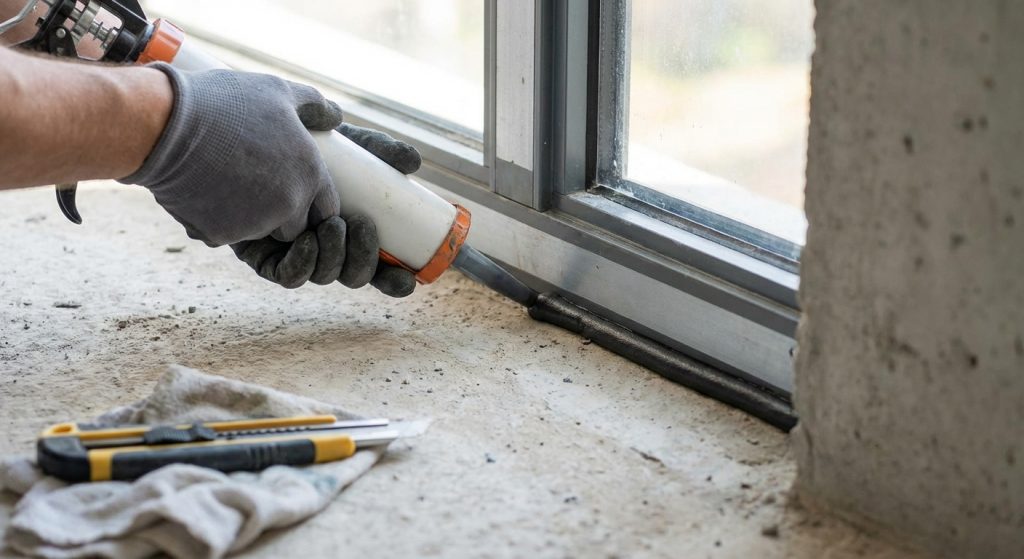
Even the most expensive glass STC rating can be completely neutralized if the installation is flawed or the frame seals are inadequate. Acoustic energy is like water; it will find even the smallest air gap or “leak” to bypass the glass and enter the room.
To achieve the laboratory-rated performance in the field, you must focus on the entire window system. This includes using high-quality tempered glass frames that are designed with airtight gaskets and professional-grade acoustic sealants.
The critical role of frame seals
The perimeter of the glass panel is where most sound leaks occur. Using multiple layers of EPDM gaskets or silicone seals ensures that the connection between the glass and the frame is airtight, which is the foundation of good soundproofing.
Don’t overlook this.
- Air leaks = Sound leaks.
- Compressed gaskets perform best.
- Avoid standard “sliding” window designs.
Choosing a certified manufacturer
Working with a manufacturer that provides full QC traceability and verified lab reports is essential for acoustic integrity. A reputable supplier will ensure that every piece of glass meets the exact specifications required to hit your target decibel reduction.
But wait, it gets better.
- Ensures the glass meets ASTM standards.
- Provides technical support for installers.
- Guarantees material consistency across batches.
| Installation Check | Goal | Impact on Noise |
|---|---|---|
| Perimeter Caulking | Zero Air Gaps | High |
| Gasket Compression | Airtight Seal | Very High |
| Frame Insulation | Block Flanking | Medium |
| Glass Centering | Even Pressure | Medium |
A rigorous installation checklist is the only way to ensure that the investment in high-STC glass actually pays off in real-world silence.
Key Takeaway: Sound insulation is a system-wide achievement; high-performance glass must be paired with airtight frames and expert installation to deliver its full acoustic potential.
Conclusion
Investing in a superior sound insulation strategy is more than just a technical requirement—it is a commitment to the quality of life for everyone who enters your building.
By prioritizing the correct glass STC rating, you are choosing to replace urban chaos with a controlled, productive, and peaceful environment. At PrimePro Glass, our vision is to provide the engineering-grade solutions that make these high-performance spaces possible through precision manufacturing and direct factory control.
Whether you are designing a high-rise facade or a private medical suite, our team is ready to verify your blueprints and ensure every panel meets the highest standards of acoustic excellence. To secure the serenity your project deserves, contact us today for a detailed quote and technical consultation from our experts.
FAQ
Can I improve my existing windows’ STC rating without replacing them?
Yes, adding a secondary “acoustic” glass insert inside your existing window frame can provide a significant boost. This creates a large air gap that decouples the two layers of glass, effectively mimicking the performance of a high-STC professional installation.
What’s the best glass type for a recording studio?
The best configuration is typically multiple layers of heavy, acoustic laminated glass separated by a very wide (100mm+) air gap. This “double-wall” glazing approach ensures that even extreme low-frequency vibrations are dampened before they reach the microphone.
Can I combine Low-E coatings with acoustic lamination?
Absolutely, and this is highly recommended for modern building envelopes. You can apply the Low-E coating on one surface for thermal control while using an acoustic PVB interlayer to handle the sound insulation, giving you the best of both worlds.
What’s the best way to measure my current room’s noise level?
The best method is to use a calibrated Class 1 or Class 2 sound level meter to take readings at different times of the day. For a general estimate, several professional-grade smartphone apps can provide dBA measurements that are accurate enough for initial planning.
Can I use triple glazing to achieve a higher STC than laminated double glazing?
No, in most cases, a double-glazed unit with a single thick laminated pane will outperform a standard triple-glazed unit of the same total thickness. Triple glazing often introduces resonance issues that can actually lower the STC rating unless very wide gaps and specialized glass are used.