The primary difference between heat strengthened vs tempered glass is the cooling speed during production, which determines the final strength and safety classification of the pane. Many procurement managers face the daunting challenge of selecting the wrong glass type, leading to failed safety inspections or unnecessary project expenses.
It is frustrating to realize mid-installation that your specifications don’t meet local building codes for impact resistance. By mastering the nuances of heat-strengthened vs tempered glass, you can optimize your material costs while ensuring every building is structurally sound and compliant.
What is heat-strengthened vs tempered glass exactly?
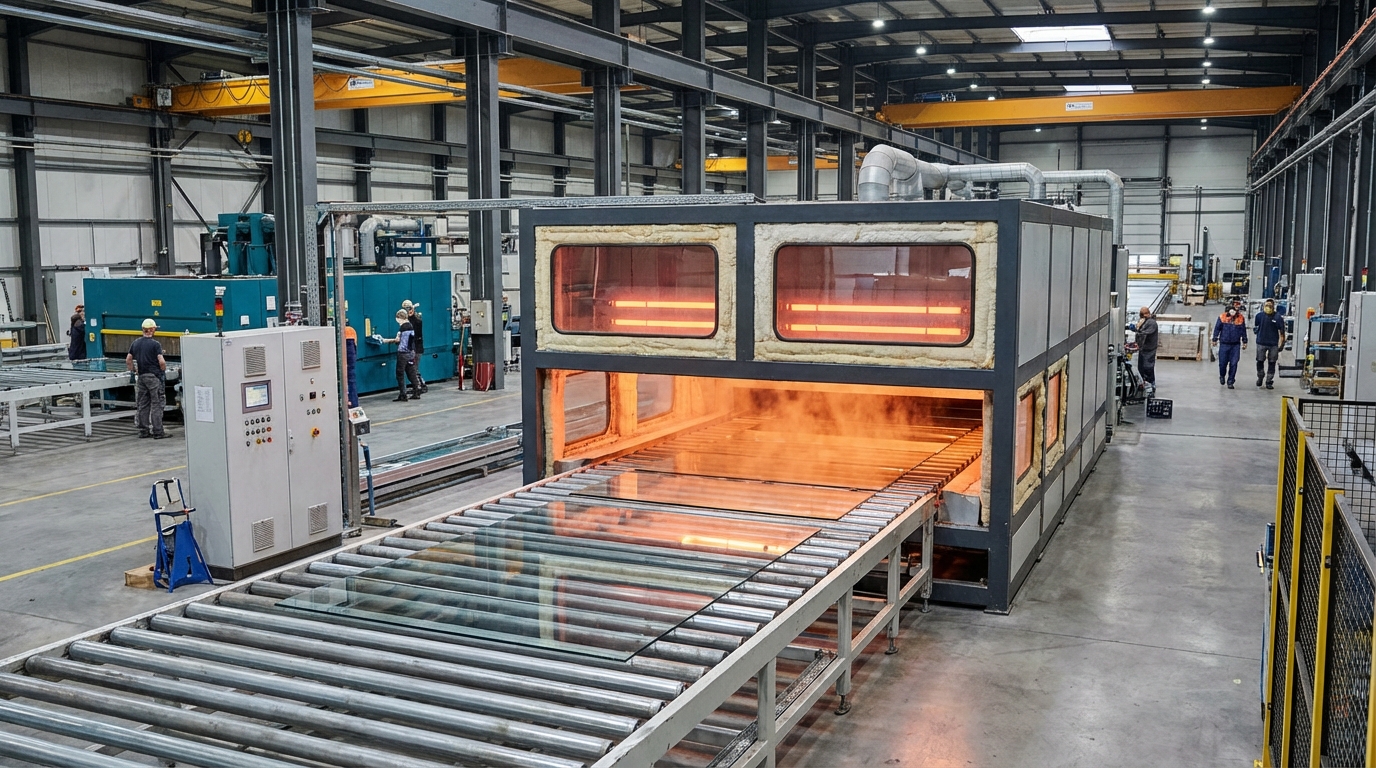
The fundamental definition of heat-strengthened vs tempered glass revolves around float glass that has undergone a thermal treatment process to increase its mechanical durability. Heat-treated glass is essential in modern architecture because standard annealed glass often lacks the strength required to withstand high wind loads or thermal stress.
This process involves reheating float glass to roughly 1100°F and then applying controlled cooling. While both types undergo this cycle, the intensity of the quench defines whether the product becomes a high-strength safety material or a reinforced structural panel often used in Hollow Glass units.
Why choose heat-treated over annealed glass?
Here is the deal: standard annealed glass is prone to thermal breakage and offers very little resistance to physical impacts. When you upgrade to heat-treated options, you are effectively doubling or quadrupling the reliability of your glazing.
- Improved resistance to temperature fluctuations.
- Higher tolerance for structural wind loads.
- Reduced risk of spontaneous failure compared to untreated panes.
How does it differ from standard hollow glass?
Heat treatment is a value-added process that can be applied to individual lites before they are assembled into more complex structures. Many high-performance buildings require these treated panes to be integrated into insulated assemblies for thermal efficiency.
Key Takeaway: Understanding the basic manufacturing intent of heat-treated glass is the first step in selecting the right material for architectural facades.
| Feature | Annealed Glass | Heat-Treated Glass |
|---|---|---|
| Strength | Low (Baseline) | High (2x to 4x) |
| Thermal Resistance | Poor | Excellent |
| Safety Rating | None | Varies by Type |
This comparison highlights why engineering-grade projects rarely rely on basic float glass for exterior applications.
How to make heat-strengthened vs tempered glass?
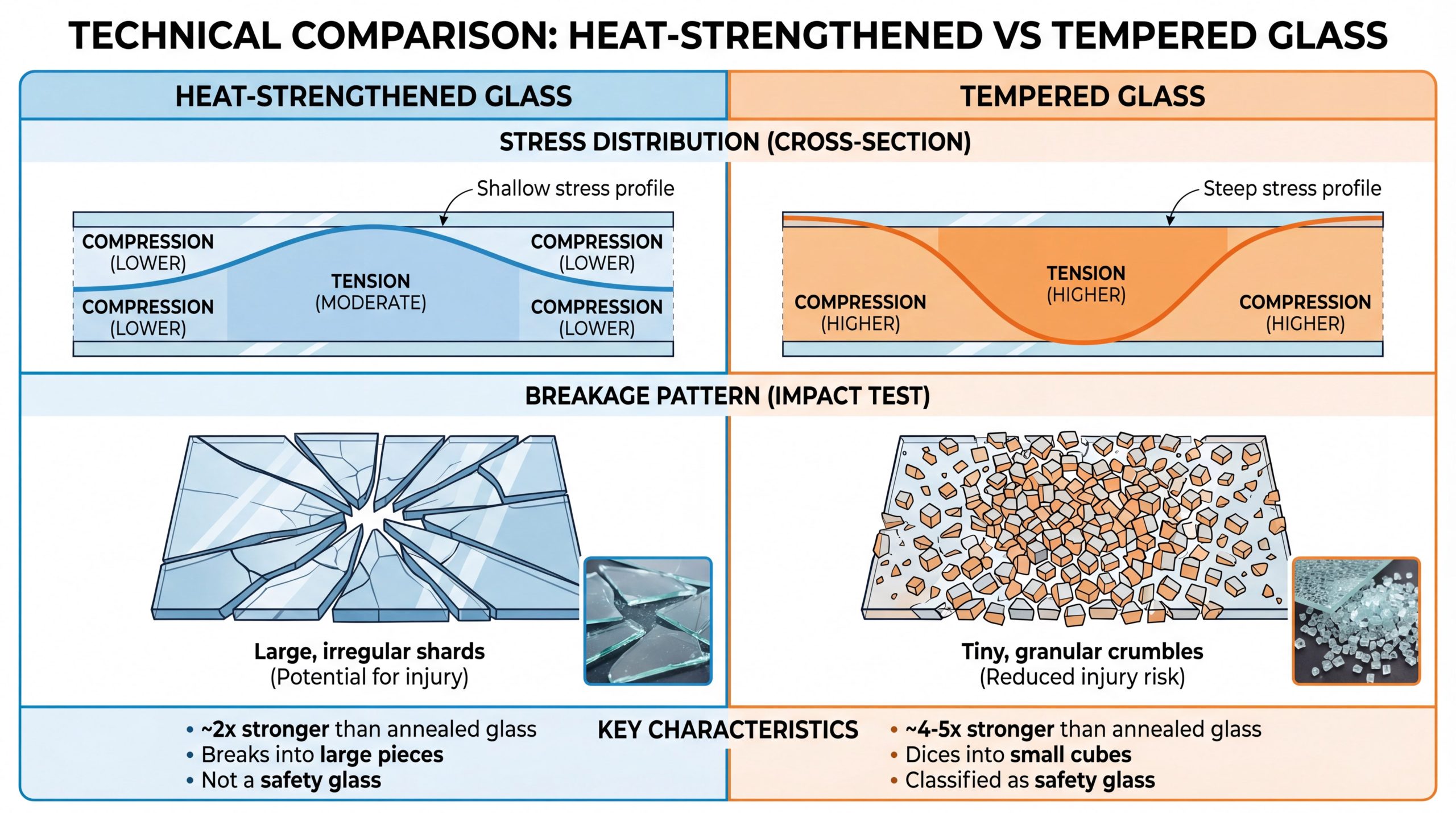
The manufacturing of heat-strengthened vs tempered glass starts in a specialized tempering furnace where glass sheets are heated uniformly to their softening point. This heating phase must be precise to prevent warping while preparing the molecular structure for the upcoming stress profile.
Once the glass reaches the target temperature, it is moved into a quenching station where air nozzles blow cold air onto the surfaces. This rapid cooling can also be applied to advanced Low E Glass to enhance the energy efficiency of the final structural product.
What happens during the quenching process?
Wait, there’s more to the cooling phase than just dropping the temperature of the glass. The air “quench” causes the outer surfaces to contract and solidify faster than the hot interior core.
- Surfaces enter a state of high compression.
- The core remains in a state of tension.
- The balance between these forces creates the added strength.
Can coatings be applied before heat treatment?
You might be wondering if high-performance coatings can survive the intense heat of the furnace. Most modern architectural coatings are specifically designed to be “heat-treatable,” allowing for tempering after the coating is applied.
Key Takeaway: The quenching speed is the “secret sauce” that dictates whether the glass becomes heat-strengthened or fully tempered.
| Process Step | Action | Impact on Glass |
|---|---|---|
| Heating | 1100°F+ Exposure | Softens molecular bonds |
| Quenching | Rapid Air Cooling | Creates surface compression |
| Balancing | Surface vs Core | Locks in mechanical strength |
The precision of the quenching system directly determines the final safety rating and durability of the glass.
What are the heat-strengthened vs tempered glass differences?
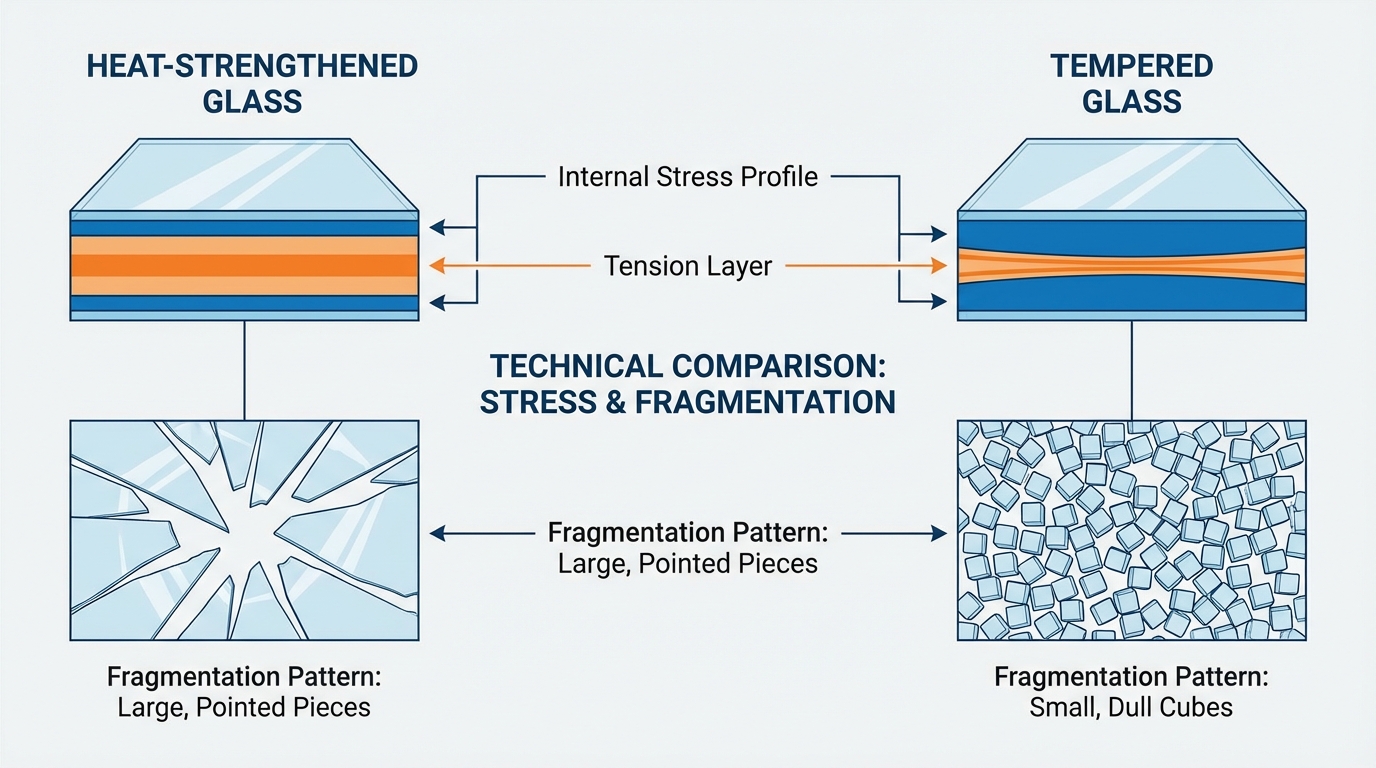
The primary distinction in heat-strengthened vs tempered glass is the level of surface compression achieved during the cooling stage. Higher cooling pressure leads to a steeper stress profile, which is why Tempered Glass is significantly stronger than its heat-strengthened counterpart.
Heat-strengthened glass is cooled slowly to achieve a surface compression between 3,500 and 7,500 psi. In contrast, fully tempered glass is quenched rapidly to reach a minimum surface compression of 10,000 psi, making it the superior choice for high-impact zones.
Which type offers higher mechanical strength?
Here is the kicker: fully tempered glass is roughly four times stronger than standard annealed glass. This massive jump in durability makes it the only choice for applications where human impact is a likely scenario.
- Tempered: 4x strength of annealed.
- Heat-Strengthened: 2x strength of annealed.
- Annealed: Baseline reference.
How does thermal shock resistance compare?
The ability to withstand temperature differentials across the pane is a critical factor in skyscraper design. While both types outperform standard glass, tempered glass can handle much higher temperature swings without cracking.
Key Takeaway: Always specify fully tempered glass when the project requires a certified safety material for high-traffic areas.
| Metric | Heat-Strengthened | Tempered |
|---|---|---|
| Surface Stress | 3,500 – 7,500 psi | >10,000 psi |
| Strength Multiplier | ~2x | ~4x |
| Safety Category | Not Safety Glass | Safety Glazing |
Choosing the correct strength profile ensures you don’t overpay for strength where a lower compression level would suffice.
Does strength change in heat-strengthened vs tempered glass?
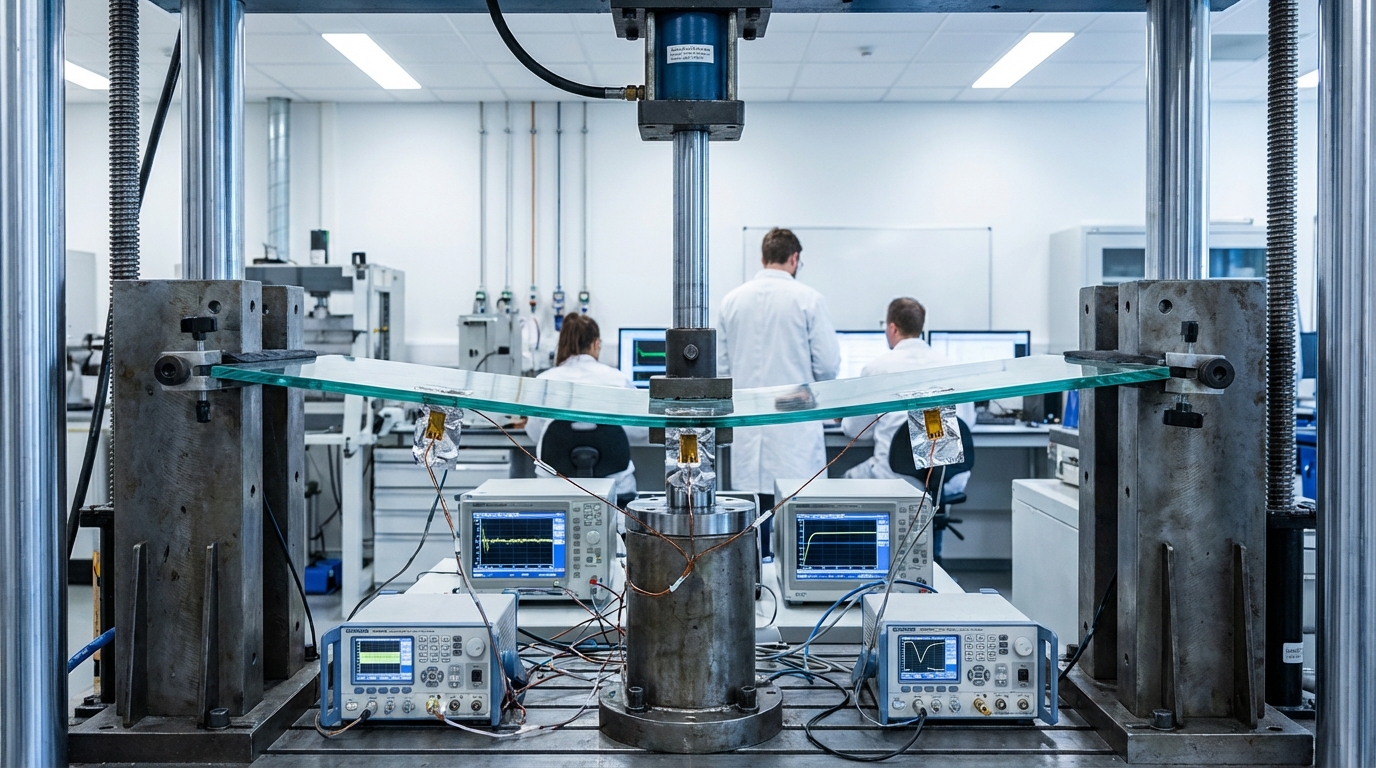
Yes, the mechanical strength of heat-strengthened vs tempered glass increases dramatically compared to the original annealed state. This added strength allows architects to use thinner glass panes for larger spans, reducing the overall weight of the building’s facade.
The permanent stress profile created during manufacturing acts as a “shield” against exterior loads. When a force hits the glass, it must first overcome the surface compression before it can put the glass into a state of tension that leads to failure.
Is tempered glass 4 times stronger than annealed?
Think about it: a material that is four times stronger allows for incredible design flexibility in commercial structures. This high resistance to bending and impact is why it is used in everything from glass railings to frameless doors.
- Superior wind load resistance.
- Enhanced protection against hail or debris.
- Higher capacity for heavy hardware attachments.
Why is heat-strengthened glass more stable?
While it is less strong than tempered glass, heat-strengthened glass offers excellent stability against thermal breakage. It is often used in situations where the extreme strength of tempered glass isn’t needed, but standard glass would likely crack from heat.
Key Takeaway: Strength is not just about resisting impacts; it is about maintaining structural integrity under diverse environmental loads.
| Strength Type | Heat-Strengthened | Tempered |
|---|---|---|
| Bending Strength | Moderate | Very High |
| Impact Resistance | Fair | Excellent |
| Thermal Load | High | Very High |
Using the right strength level prevents premature failure while maintaining a cost-effective procurement strategy.
How does breakage vary in heat-strengthened vs tempered glass?
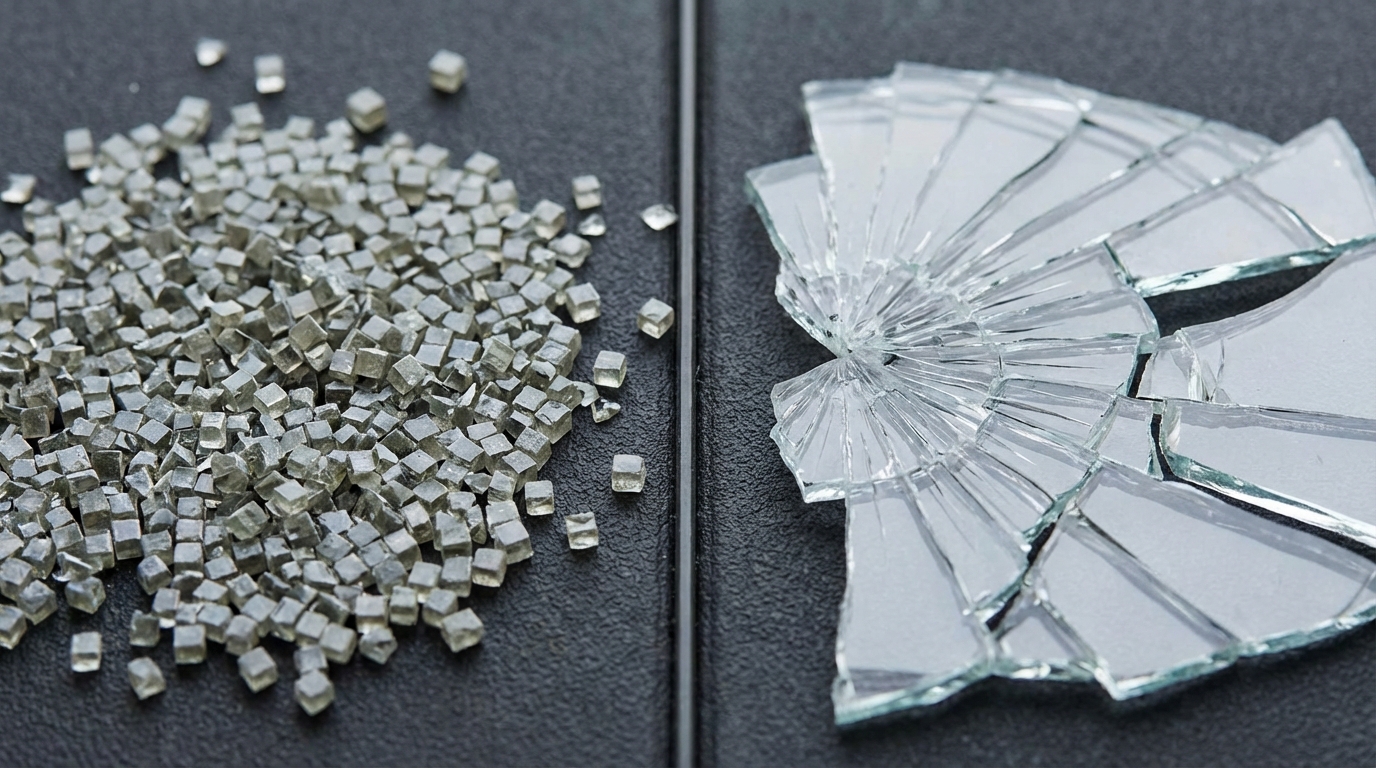
One of the most critical safety aspects of heat-strengthened vs tempered glass is how the material behaves at the point of failure. Because fully tempered glass has such high internal tension, it shatters into thousands of small, relatively dull cubes upon impact.
Heat-strengthened glass, however, breaks in a pattern more similar to annealed glass. It typically fractures into large, jagged pieces that tend to stay within the frame, which is a major benefit for overhead glazing where falling “glass rain” must be avoided.
Why is tempered glass considered safety glass?
The deal is simple: tempered glass minimizes the risk of severe injury. Because the resulting fragments are small and lack sharp edges, it is the industry standard for any area where people might come into contact with the glass.
- Dices into small, granular pieces.
- Reduces the likelihood of deep lacerations.
- Meets global safety glazing standards (ANSI Z97.1).
Does heat-strengthened glass stay in the frame?
Actually, the breakage pattern of heat-strengthened glass is a strategic advantage in curtain walls. Since the shards are large and interlocked, the pane is more likely to remain in place after breaking, providing time for a safe replacement.
Key Takeaway: Your choice should depend on whether you prioritize injury prevention (tempered) or fragment retention (heat-strengthened).
| Breakage Trait | Heat-Strengthened | Tempered |
|---|---|---|
| Fragment Size | Large, Jagged | Small, Cubical |
| Safety Rating | No | Yes |
| Frame Retention | High | Low |
Safety directors must weigh the risks of sharp edges against the danger of falling glass clusters when specifying materials.
What are the heat-strengthened vs tempered glass size limits?
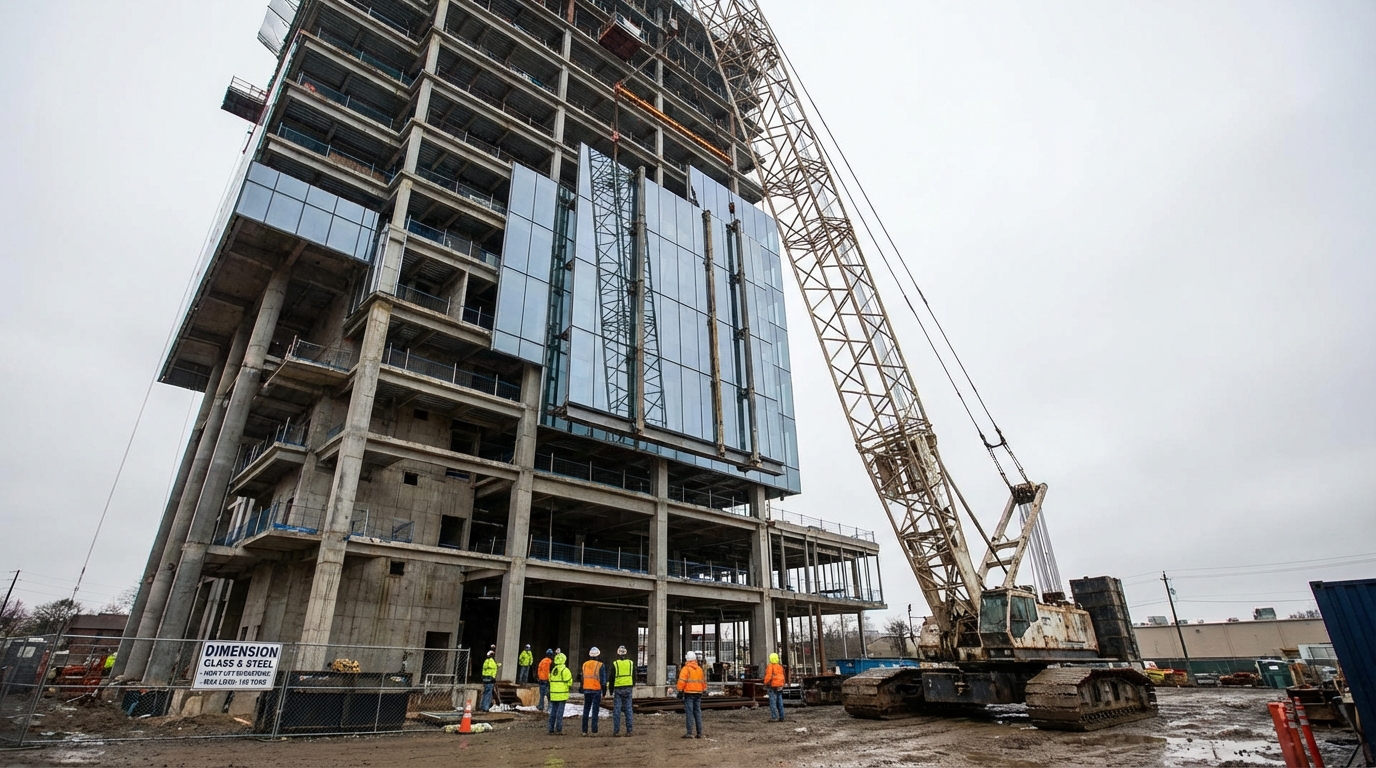
Dimensional constraints for heat-strengthened vs tempered glass are governed by the physical size of the tempering furnace. Most industrial processors have a “maximum bed size” that determines the largest single lite of glass that can be successfully heat-treated.
Beyond the machine limits, the thickness of the glass also plays a role in size stability. Thinner glass is more prone to warping during the heating cycle, which can limit the maximum dimensions for oversized architectural projects.
How do tempering facilities affect dimensions?
The bottom line is that not all factories are equipped for jumbo sizes. If your design requires massive 3-meter panes, you must partner with a facility that operates specialized extra-wide tempering lines.
- Standard limits: Typically up to 2.4m x 3.6m.
- Jumbo limits: Can exceed 3.3m x 6m.
- Thickness requirements: Usually 3mm to 19mm.
Why is glass orientation crucial for aesthetics?
Orientation matters because the glass moves across rollers during treatment. If you mix vertical and horizontal orientations in a single facade, the reflection patterns will look inconsistent to the naked eye.
Key Takeaway: Always verify the maximum equipment capacity of your manufacturer before finalizing large-format glass blueprints.
| Factor | Standard Facility | Jumbo Facility |
|---|---|---|
| Max Width | 2400 mm | 3300 mm+ |
| Max Height | 3600 mm | 6000 mm+ |
| Tolerance | ± 2.0 mm | ± 3.0 mm |
Precision in sizing is vital for ensuring that heavy glass panels fit perfectly into curtain wall systems without site adjustments.
Why does heat-strengthened vs tempered glass break suddenly?
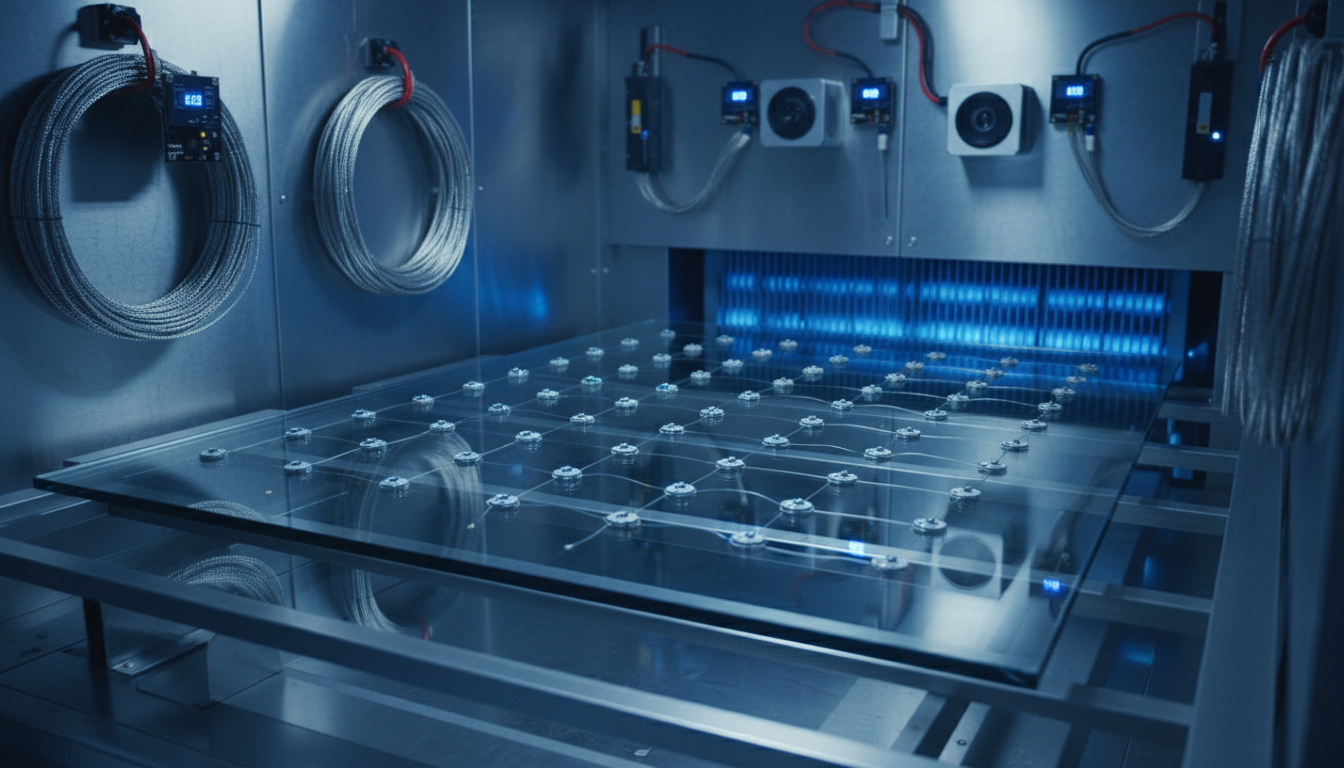
Spontaneous breakage in heat-strengthened vs tempered glass is a rare but frustrating occurrence often linked to nickel sulfide inclusions. These microscopic impurities can expand over years, eventually causing the internal tension of the glass to exceed its strength.
Tempered glass is significantly more susceptible to this phenomenon than heat-strengthened glass due to its much higher internal stress. To mitigate this risk, high-end projects often require a “heat-soak test” to identify and break problematic panes before they leave the factory.
What role do nickel sulfide inclusions play?
Believe it or not, these tiny stones are invisible to the naked eye. They enter the glass during the raw material melting process and remain dormant until triggered by thermal expansion or pressure changes.
- Stone expands within the tension layer.
- Cracks propagate instantly.
- The entire lite shatters without warning.
Can a heat-soak test prevent field breakage?
While no test is 100% foolproof, heat soaking significantly reduces the odds of a field failure. The glass is placed in a chamber and heated to roughly 550°F for several hours to force any unstable inclusions to expand and fail.
Key Takeaway: Investing in heat-soak testing is a form of insurance against the massive costs of replacing broken panes in high-rise buildings.
| Risk Factor | Heat-Strengthened | Tempered |
|---|---|---|
| Spontaneous Risk | Extremely Low | Moderate |
| Heat Soak Needed | Rare | Recommended |
| Field Failure Cost | High | Very High |
Eliminating potential failures during the production phase protects your project’s reputation and bottom line.
What are heat-strengthened vs tempered glass common uses?
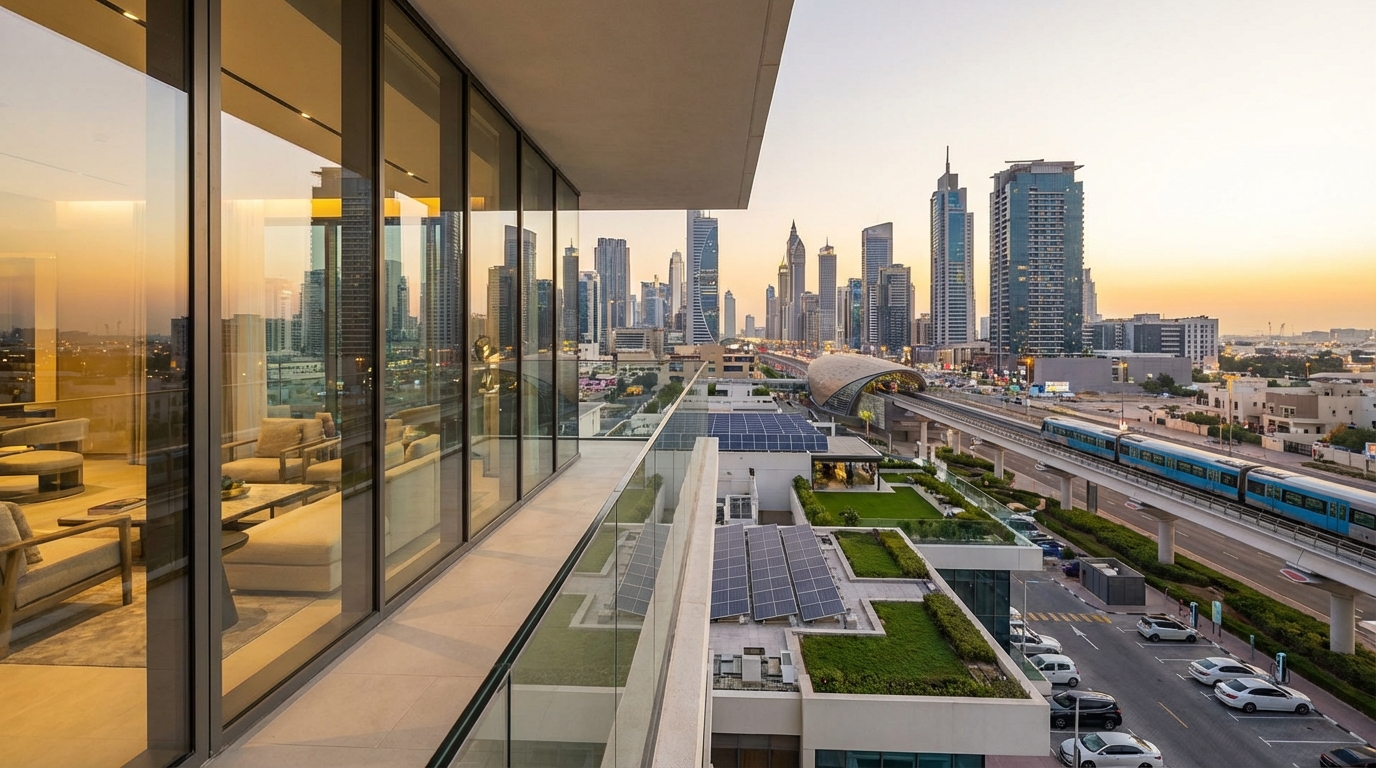
Standard applications for heat-strengthened vs tempered glass vary based on building codes and structural requirements. Tempered glass is the “go-to” for safety zones, while heat-strengthened glass is often used in laminates or for spandrel glass in curtain walls.
For superior safety, many architects choose to use Laminated Glass that incorporates heat-treated layers. This combination provides both the strength of heat treatment and the safety of a resin interlayer that holds glass fragments together if broken.
When should you use heat-strengthened glass?
The best part? Heat-strengthened glass is ideal for high-rise facades where thermal stress from sun exposure is high, but human impact is impossible. It prevents the “spontaneous breakage” headaches of tempered glass while providing the necessary wind resistance.
- Spandrel glass panels.
- Outer lites of high-rise laminates.
- Non-safety zones with high wind loads.
Is tempered glass required for public areas?
Absolutely. Building codes worldwide mandate tempered glass for doors, side-lites, and any glazing near the floor where someone might accidentally trip and fall into the pane.
Key Takeaway: Select tempered glass for safety compliance and heat-strengthened glass for structural stability in non-impact zones.
| Application | Best Glass Type | Reason |
|---|---|---|
| Shower Doors | Tempered | Safety/Impact |
| Curtain Walls | Heat-Strengthened | Thermal Stability |
| Glass Railings | Laminated Tempered | Max Strength & Safety |
Matching the glass type to the specific room or facade zone prevents over-engineering while meeting all safety laws.
How to check heat-strengthened vs tempered glass visual quality?
Visual assessment of heat-strengthened vs tempered glass focuses on detecting roller wave distortion and anisotropy marks. Because the glass is heated to near-melting, it can slightly “slump” between the conveyor rollers, creating subtle waves on the surface.
While some distortion is inherent to the process, high-quality fabricators minimize these effects through precise furnace control. Modern projects demand high optical clarity, especially for high-end luxury interiors or retail storefronts where reflections must be perfectly straight.
What causes roller wave distortion in glass?
Here is the deal: as the hot glass moves over the ceramic rollers, gravity causes it to dip slightly. When it hits the cooling quench, this wave becomes permanent, potentially affecting the aesthetic of the building’s exterior reflections.
- Measured in millimeters per 300mm.
- Visible in sharp angled reflections.
- Minimized by high-speed processing.
Are quench marks considered a glass defect?
Actually, quench marks (or anisotropy) are a natural physical property of heat-treated glass and are not considered defects. These iridescent patterns are only visible under certain polarized light conditions or specific sun angles.
Key Takeaway: Specify “low-distortion” glass and check zebra board tests to ensure your project meets the highest visual standards.
| Visual Issue | Cause | Remedy |
|---|---|---|
| Roller Wave | Slumping in Furnace | Modern Automation |
| Anisotropy | Stress Distribution | Sophisticated Quenching |
| Bow/Warp | Uneven Heating | Precise Temperature Logic |
Higher optical quality results in a more professional building appearance and increases the value of the property.
Which standards apply to heat-strengthened vs tempered glass?
Compliance for heat-strengthened vs tempered glass is tracked through a series of rigorous international certifications. In North America, ASTM C1048 is the benchmark for heat-treated flat glass, defining the exact surface compression levels required for each category.
To prove compliance, tempered glass must feature a permanent safety stamp (or “bug”) in the corner of the pane. This mark identifies the manufacturer and the safety standard the glass meets, ensuring it passes on-site inspections by building officials.
What are the primary global glass standards?
Think about it: without these standards, there would be no way to guarantee that a “tempered” pane actually offers safety protection. These regulations protect both the consumer and the installer from low-quality materials.
- ASTM C1048 (Heat-treated specifications).
- ANSI Z97.1 (Safety glazing tests).
- EN 12150 (European thermal toughening).
How do safety glazing requirements vary?
Safety requirements are usually based on the “risk of impact.” If the glass is located within 18 inches of the floor or in a moving door, it must be fully tempered or laminated to prevent injury.
Key Takeaway: Always check for the etched safety stamp to verify that your delivered glass matches your engineering specifications.
| Standard | Region | Focus |
|---|---|---|
| ASTM C1048 | USA/Global | Material Strength |
| EN 1863 | Europe | Heat-Strengthened Spec |
| AS/NZS 2208 | Australia | Safety Glazing |
Adhering to these standards ensures your project is legal, safe, and ready for occupancy without costly rework.
At PrimePro Glass, we believe that precision engineering is the foundation of every iconic skyline. Our vision is to empower global builders with direct factory access to the highest-quality structural glazing solutions available. Stop risking your project timeline with middlemen and inconsistent quality—contact us today for a detailed manufacturing proposal that meets your exact blueprints.

Frequently Asked Questions
Can I use heat-strengthened glass for my shower enclosure?
No, heat-strengthened glass is not a safety material. Shower enclosures require fully tempered glass because it shatters into dull fragments if a person falls against it, preventing serious injury.
What’s the best glass for a high-rise curtain wall exterior?
Heat-strengthened glass is often the ideal choice for these applications. It provides double the strength of standard glass to resist wind loads while avoiding the spontaneous breakage risks associated with fully tempered panes.
How do I know if my glass is tempered or heat-strengthened?
Check the corner of the pane for a permanent etched stamp or “bug.” Tempered safety glass will specifically state compliance with safety standards like ANSI Z97.1, whereas heat-strengthened glass may not have a stamp at all.
Can I cut or drill the glass after it has been heat-treated?
No, any attempt to cut, drill, or notch glass after the tempering process will cause the internal stress to release, resulting in the immediate shattering of the pane. All fabrication must be completed before the glass enters the furnace.
What’s the best way to prevent spontaneous breakage in large projects?
The most effective strategy is to order a heat-soak test for all fully tempered glass. This process forces unstable panes to fail in the factory, ensuring that only the most reliable units are shipped to your construction site.