The primary difference between float and tempered glass lies in their structural strength and the way they shatter upon impact. Imagine you are overseeing a high-stakes commercial construction project where a single glazing error could lead to building code violations or catastrophic safety failures. If you specify standard glass for a high-traffic entryway, one minor accident could create razor-sharp shards, leading to severe injuries and massive legal liability. This guide provides the technical clarity you need to navigate the float glass vs tempered glass decision and protect your project’s integrity.
What is the core difference between these glass types?

Float glass is the baseline material used in modern glazing, while tempered glass is a reinforced version designed for high-strength safety applications. When evaluating float glass vs tempered glass, you are essentially choosing between a “raw” material and a heat-treated safety product. The difference determines everything from the glass’s impact resistance to its legal suitability for specific architectural zones.
Why does the base material matter for your project?
Float glass provides the optical clarity and flat surface needed for standard windows and mirrors.
The reality is:
- It is manufactured by floating molten glass on a bed of molten tin.
- This creates a perfectly uniform thickness across the entire sheet.
- It remains in an “annealed” state, meaning it has low internal stress.
How does tempering transform the glass properties?
Tempering takes a finished piece of float glass and subjects it to extreme thermal processing.
Look:
- The glass is heated to approximately 620°C in a specialized furnace.
- It is then rapidly cooled using high-pressure air blasts.
- This creates a state of permanent compression on the surface.
Key Takeaway
Float glass is the industry standard for clarity, but tempering adds the physical resilience required for safety-critical installations.
| Feature | Float Glass | Tempered Glass |
|---|---|---|
| Material State | Annealed / Low Stress | Heat-Treated / High Compression |
| Optical Quality | High / Distorted-free | High / Slight Wave Possible |
| Common Use | Picture Frames, Cabinetry | Storefronts, Railings |
The technical choice between these materials depends entirely on the expected load and safety requirements of the installation site.
How does the manufacturing process affect structural stress?
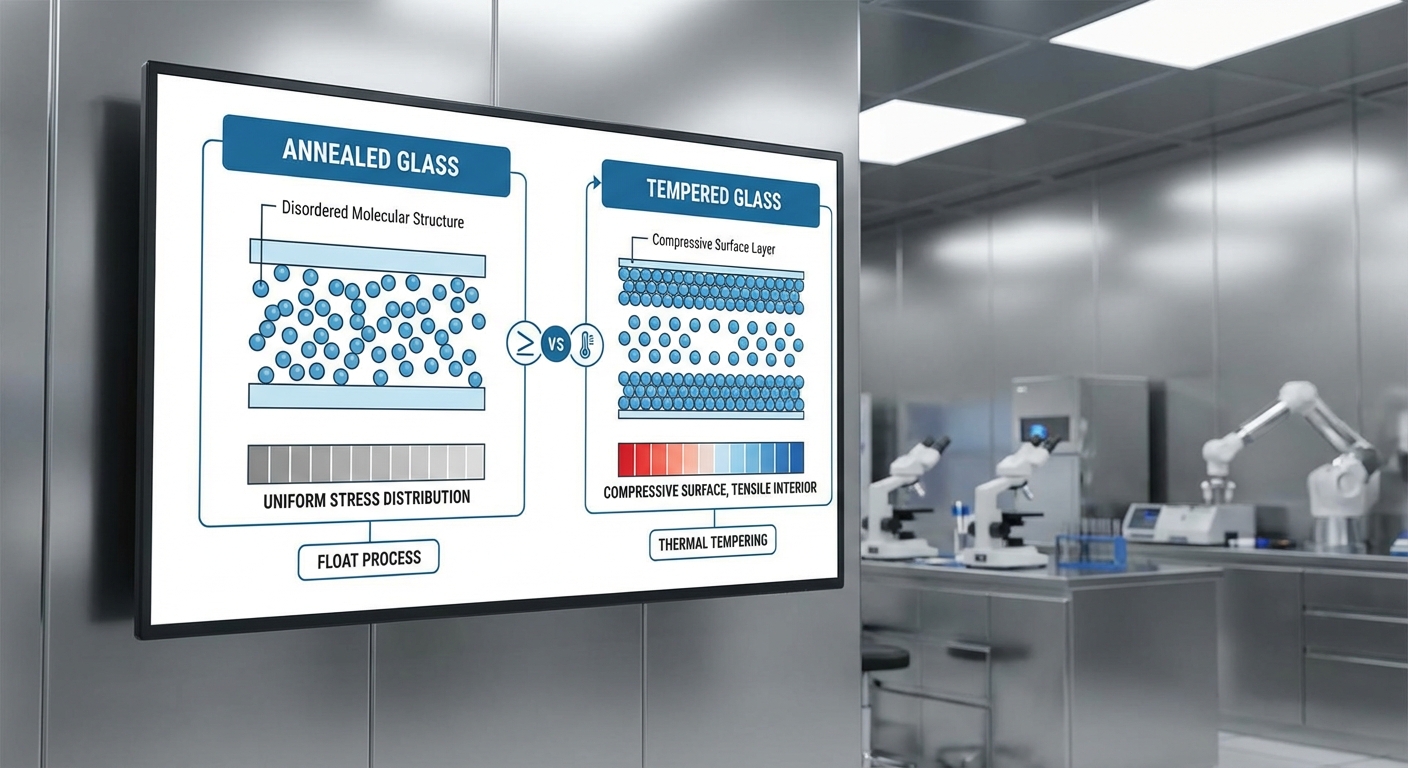
The manufacturing process creates a significant disparity in internal tension, making float glass vs tempered glass behave differently under physical pressure. While float glass is cooled slowly to eliminate stress, tempered glass is engineered to hold massive internal tension. This stored energy is exactly what gives tempered glass its legendary durability and unique breaking characteristics.
What happens during the annealing stage?
Annealing is a controlled cooling process that prevents the glass from becoming brittle or unstable.
Think about it:
- Slow cooling allows the molecular structure to settle uniformly.
- This results in a material that can be easily cut or drilled.
- It is the standard state for most residential window panes.
Why is rapid quenching the secret to safety?
Quenching is the process of blasting the hot glass with cold air to lock the surface molecules in place.
Here’s the deal:
- The outer surfaces cool and contract faster than the inner core.
- The core then pulls on the outer layers as it cools, creating compression.
- This “sandwich” of forces makes the glass incredibly hard to break.
Key Takeaway
Controlled cooling creates workable float glass, while rapid quenching produces the high-tension safety profile of tempered glass.
| Process Metric | Annealing (Float) | Quenching (Tempered) |
|---|---|---|
| Cooling Speed | Slow / Hours | Rapid / Seconds |
| Internal Stress | Minimal | High (Compressive) |
| Processing Goal | Stability & Workability | Impact Resistance |
The specific tension profile of tempered glass allows it to withstand environmental stresses that would easily shatter standard float glass.
Is float glass production the start of all glass?
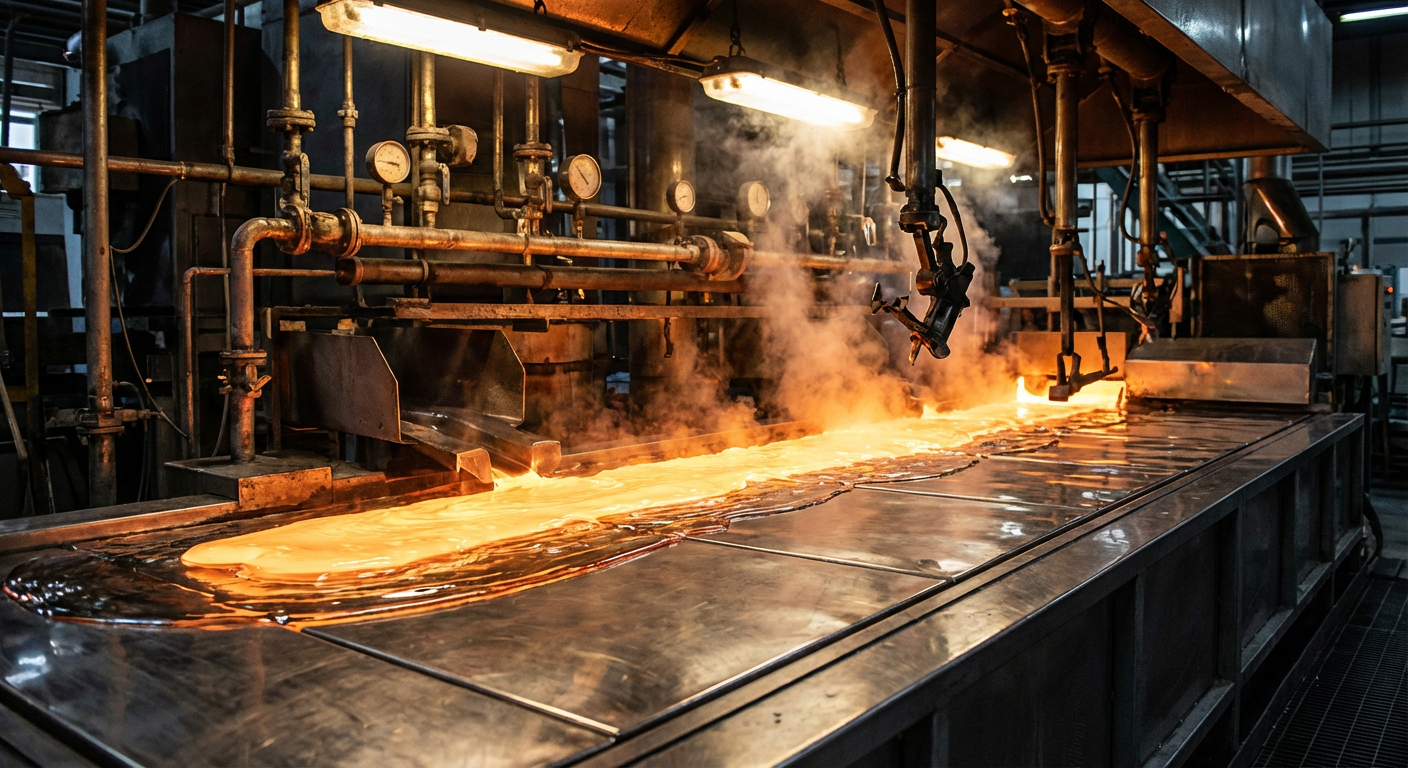
Yes, the float process is the universal foundation for both float glass vs tempered glass products found in the global market today. Before any glass can be tempered, it must first be manufactured as a high-quality float sheet. This ensures that the base material has the necessary chemical composition and surface flatness to undergo further heat treatment successfully.
How is molten glass turned into flat sheets?
Molten glass is poured onto a bath of liquid tin where it spreads out to find its own level.
Bottom line:
- The tin bath provides a perfectly flat substrate for the glass.
- Gravity and surface tension ensure the glass reaches a uniform thickness.
- The temperature is gradually lowered as the glass moves along the line.
Can float glass be used without further treatment?
Many B2B applications utilize float glass in its raw form where safety is not a primary concern.
But that’s not all:
- It is ideal for small decorative inserts or interior dividers.
- You can find it in standard mirrors and picture frame glazing.
- Its low cost makes it the go-to choice for budget-sensitive projects.
Key Takeaway
All tempered glass begins as float glass, making the float process the most critical stage in modern glass manufacturing.
| Manufacturing Step | Purpose | Outcome |
|---|---|---|
| Melting Furnace | Liquefy raw materials | Homogeneous glass mix |
| Tin Bath | Flatness control | Parallel surfaces |
| Lehr Cooling | Stress relief | Stable, cuttable sheets |
While float glass is versatile, it lacks the secondary reinforcement that transforms it into a high-performance safety material.
Which glass offers the best impact resistance?
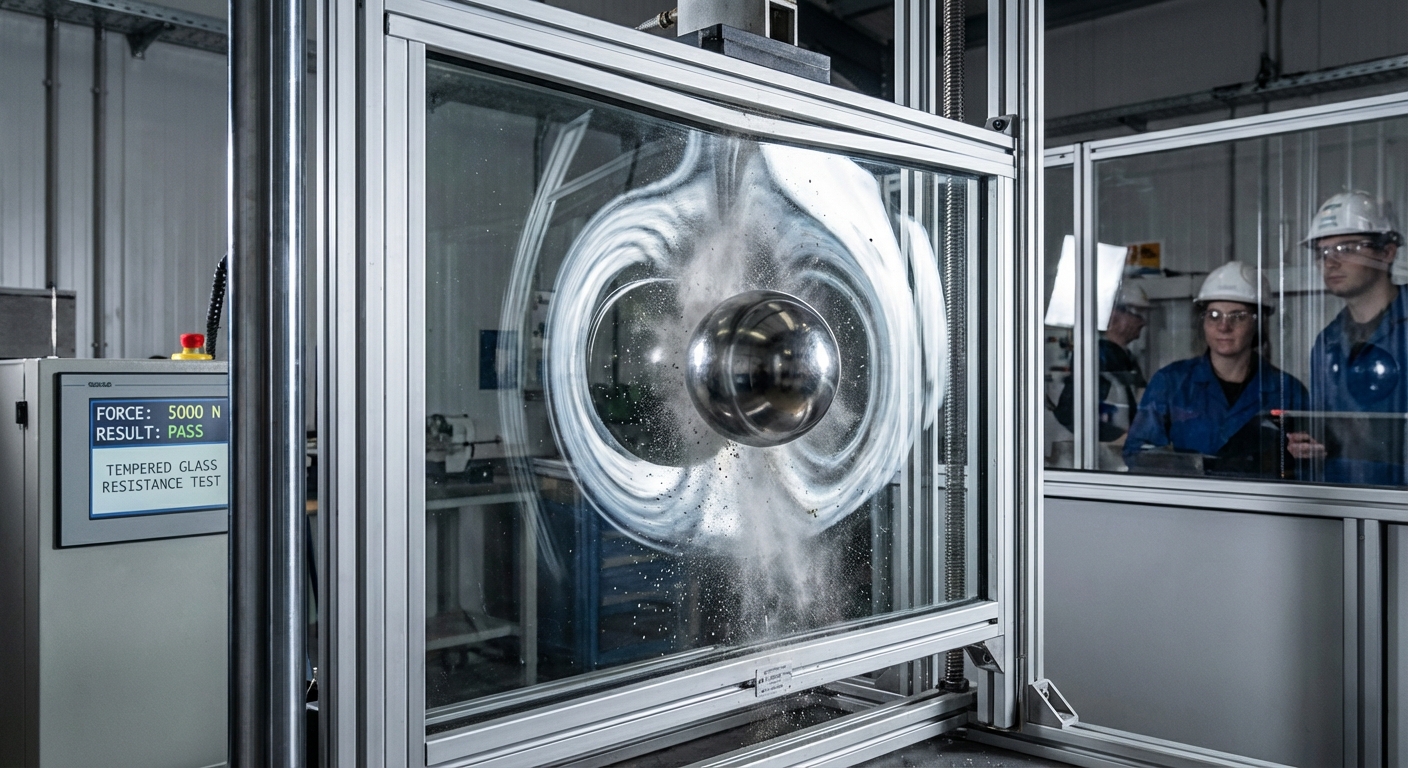
Tempered glass is significantly more resistant to impact than standard float glass, offering up to five times the physical strength. When comparing float glass vs tempered glass, strength is often the deciding factor for architects designing facades or railings. Tempered panes can absorb heavy blows and high wind loads that would cause standard float glass to fail instantly.
Why is tempered glass so much stronger?
The compressive surface layer of tempered glass acts as a shield against external forces.
The reality is:
- Any force must first overcome the surface compression before it can cause a crack.
- This allows the glass to flex slightly under load without breaking.
- It is specifically engineered to meet international safety standards for impact.
When does float glass reach its breaking point?
Float glass is relatively brittle and has very little tolerance for concentrated pressure or thermal shock.
Look:
- A small stone or a sharp object can easily initiate a fracture.
- Once a crack starts in float glass, it propagates across the entire pane.
- It cannot withstand the rapid temperature changes often found in exterior walls.
Key Takeaway
For any application subject to human contact or environmental pressure, tempered glass provides the necessary structural redundancy.
| Strength Category | Float Glass | Tempered Glass |
|---|---|---|
| Impact Rating | Low / Fragile | High / Robust |
| Flexibility | Rigid / Prone to snap | Resilient / Can flex |
| Wind Resistance | Poor | Excellent |
Choosing the wrong strength profile can lead to premature glass failure and expensive replacement cycles in commercial environments.
How do breakage patterns differ between types?

The most visual distinction in the float glass vs tempered glass debate is how each material behaves when it finally breaks. Float glass fails in a way that is inherently dangerous to anyone nearby, while tempered glass is designed to minimize injury. Understanding these patterns is essential for meeting building codes and ensuring occupant safety in your designs.
Why are float glass shards a major liability?
When float glass breaks, it shatters into large, razor-sharp shards that can cause deep lacerations.
Think about it:
- These “needles” are heavy and fall with significant force.
- They are often long enough to cause life-threatening injuries upon impact.
- Cleaning up these sharp fragments is a hazardous process for maintenance crews.
How does the “crumbled” pattern protect people?
Tempered glass is called safety glass because it shatters into thousands of small, relatively blunt pieces.
Here’s the deal:
- These small “cubes” are much less likely to cause serious cuts.
- The stored internal energy causes the entire pane to disintegrate at once.
- This prevents large, heavy pieces from falling on people below.
Key Takeaway
Float glass creates dangerous shards, whereas tempered glass breaks into harmless granules, making it the only choice for safety-critical areas.
| Breakage Aspect | Float Glass | Tempered Glass |
|---|---|---|
| Fragment Shape | Jagged Shards | Blunt Granules |
| Injury Potential | High / Fatal | Low / Minor |
| Cleanup Difficulty | Dangerous | Manageable |
Using tempered glass in zones where breakage is possible is not just a best practice; it is often a legal mandate.
How do you identify tempered glass on-site?
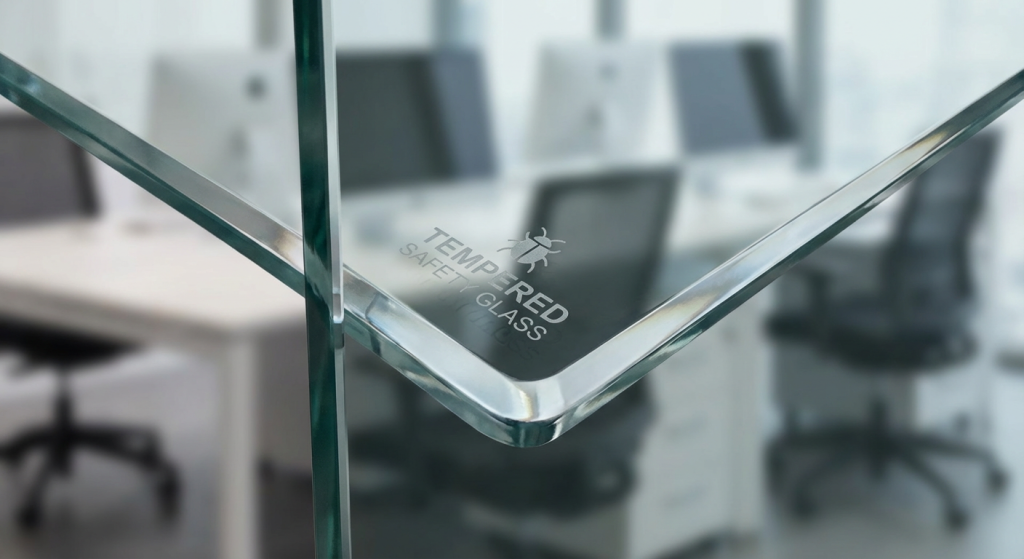
You can usually verify the difference in float glass vs tempered glass by looking for a permanent safety stamp in the corner of the pane. Because the two types can look identical to the naked eye, manufacturers use specific markers to ensure contractors install the correct material. Failing to identify the glass correctly can lead to failed inspections and costly rework.
What is the purpose of the safety “bug”?
The safety stamp, often called a “bug,” confirms that the glass has undergone the tempering process.
Bottom line:
- It usually contains the manufacturer’s name and the safety standard met.
- This etch is permanent and cannot be removed without damaging the glass.
- Inspectors look for this mark to certify that the building meets code.
Are there other visual clues to look for?
If a stamp is missing, you can check for subtle visual differences that indicate heat treatment.
Look:
- Tempered glass may show slight “tong marks” from the manufacturing tongs.
- Under polarized light, you might see a “leopard spot” strain pattern.
- The edges of tempered glass are always finished and smooth, never raw.
Key Takeaway
The safety stamp is your primary insurance that the glass you are installing is the high-strength tempered product you ordered.
| ID Method | Float Glass | Tempered Glass |
|---|---|---|
| Corner Markings | None | Safety Stamp (Bug) |
| Polarized View | Clear / Uniform | Visible Strain Patterns |
| Edge Quality | Can be raw or cut | Always ground or polished |
Verification is a critical step in B2B glass procurement to avoid the liability of installing non-safety glass in a safety zone.
Why is tempered glass required for shower doors?
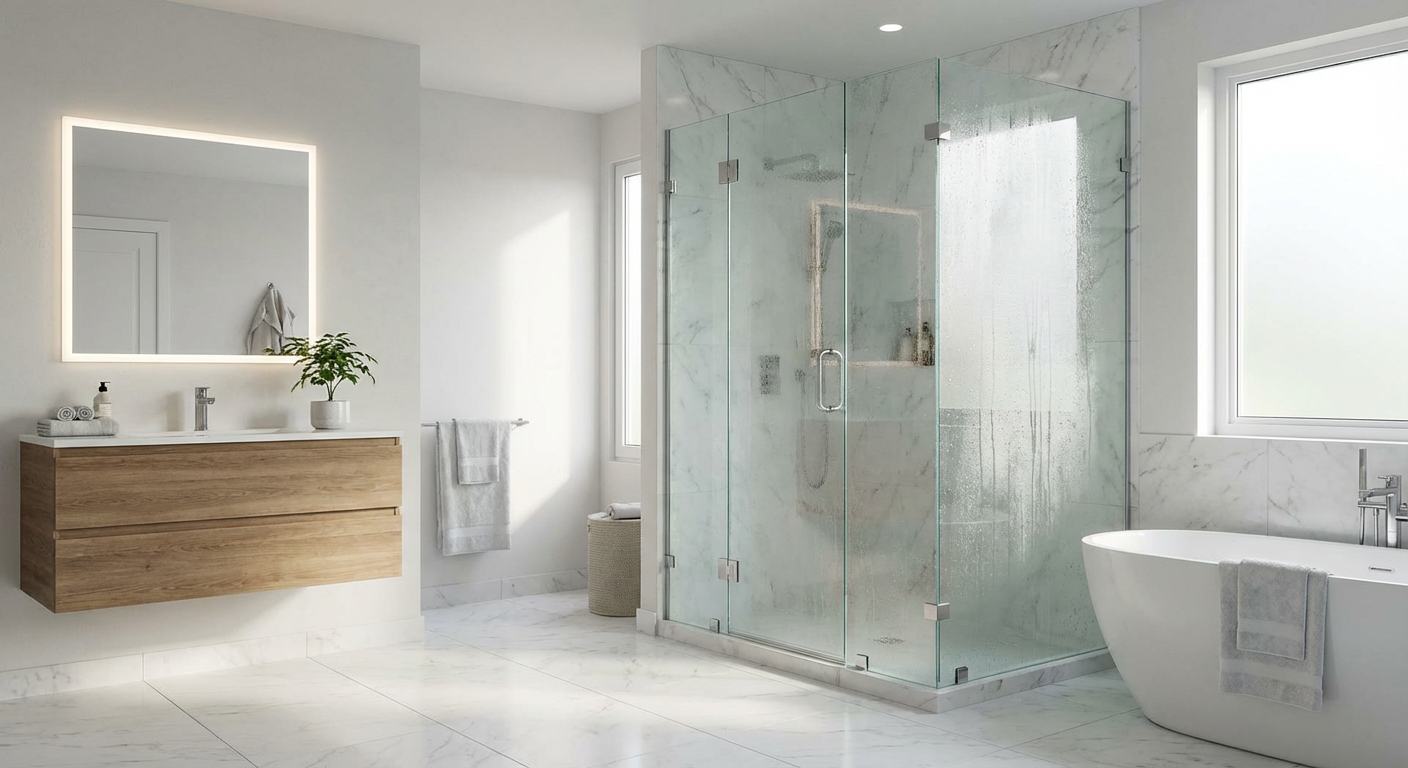
In high-moisture and high-traffic areas like bathrooms, the float glass vs tempered glass choice is dictated by strict safety regulations. Shower enclosures are one of the most dangerous locations for glass because of the risk of slips and falls. Using anything other than tempered safety glass in these environments is a violation of international building standards and puts users at extreme risk.
What makes bathrooms a high-risk glass zone?
Wet surfaces increase the likelihood of accidental impact against the glass panels.
Think about it:
- A person falling against a float glass door would be met with sharp shards.
- The thermal stress from hot water can cause standard glass to crack.
- Tempered glass handles both physical impact and temperature shifts with ease.
How do you choose the right thickness for showers?
The thickness of the glass contributes to the overall stability and feel of the enclosure.
Here’s the deal:
- Most frameless showers use 10mm or 12mm tempered glass for rigidity.
- Thinner glass (6mm-8mm) is common for framed or semi-framed units.
- You must ensure the hardware is rated for the specific weight of the glass.
Key Takeaway
Tempered glass is the only legal and safe material for shower enclosures due to its impact resistance and safe breakage pattern.
| Requirement | Float Glass | Tempered Glass |
|---|---|---|
| Code Compliance | Fails / Illegal | Passes / Required |
| Impact Safety | Dangerous | Safe |
| Thermal Durability | Low | High |
Installing tempered glass in bathrooms provides peace of mind for both the homeowner and the contractor.
Can you modify glass after it has been tempered?
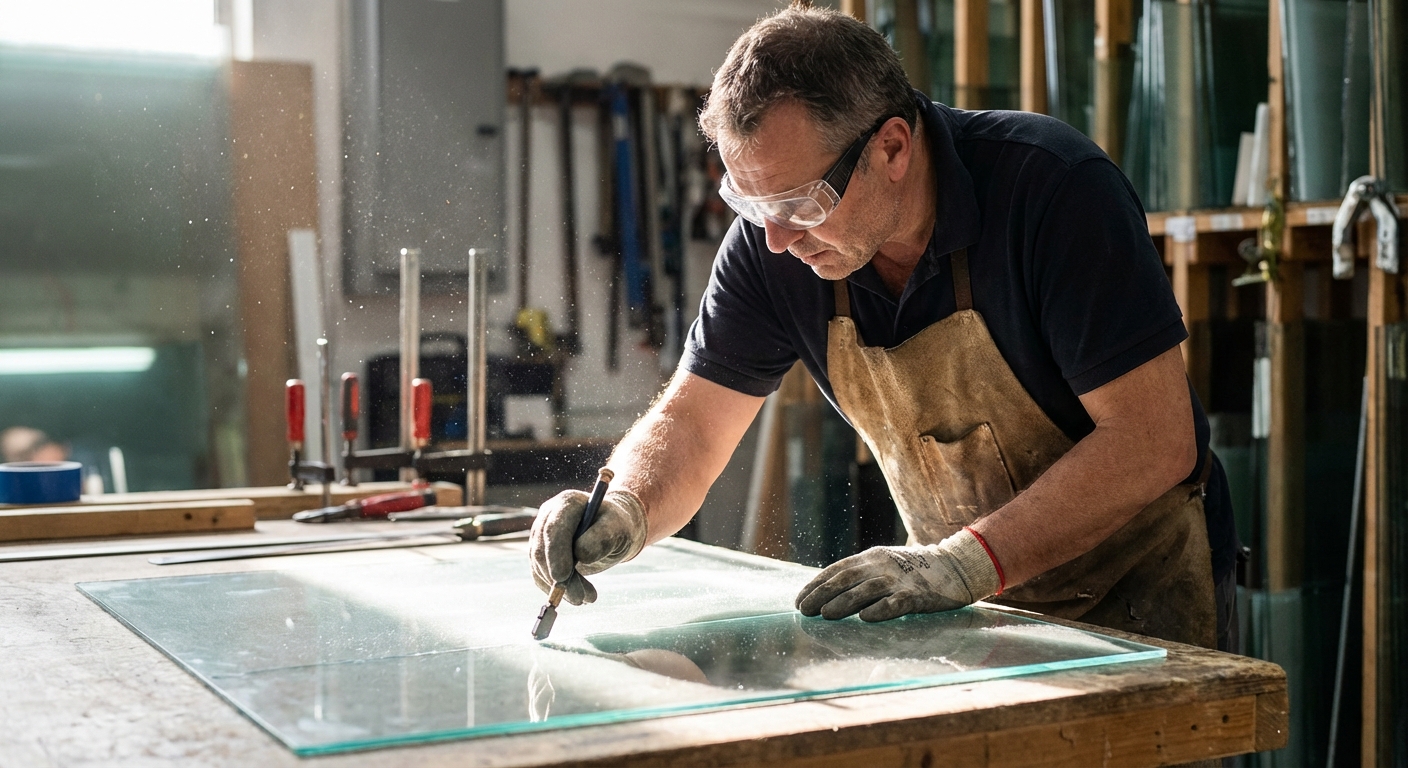
One of the most critical logistical differences in float glass vs tempered glass is that tempered glass cannot be cut or drilled after processing. Any attempt to modify a tempered sheet will cause the entire pane to explode due to the release of internal tension. This means that all fabrication must be finalized while the glass is still in its float or annealed state.
Why is float glass the preferred choice for on-site adjustments?
Float glass can be easily scored and snapped by a glazier to fit a specific opening.
The reality is:
- It allows for flexibility when site measurements are not perfectly accurate.
- You can drill holes or notch the edges using standard glass tools.
- This makes it ideal for quick repairs or custom interior mirrors.
How do you manage the “no-cut” rule for tempered glass?
Managing tempered glass requires precision in the blueprint and ordering phase.
Bottom line:
- Every hole, notch, and edge finish must be specified before production.
- If the measurements are off by even a millimeter, the pane is useless.
- You must double-check all dimensions before the glass enters the tempering furnace.
Key Takeaway
Float glass offers on-site flexibility, while tempered glass requires absolute dimensional accuracy before the manufacturing process begins.
| Modification | Float Glass | Tempered Glass |
|---|---|---|
| Cutting to Size | Yes / Simple | No / Impossible |
| Drilling Holes | Yes / Simple | No / Impossible |
| Edge Polishing | Yes / On-site | Pre-tempering only |
Understanding this limitation is vital for avoiding project delays and wasted material costs in commercial builds.
How do you choose between glass types for B2B?
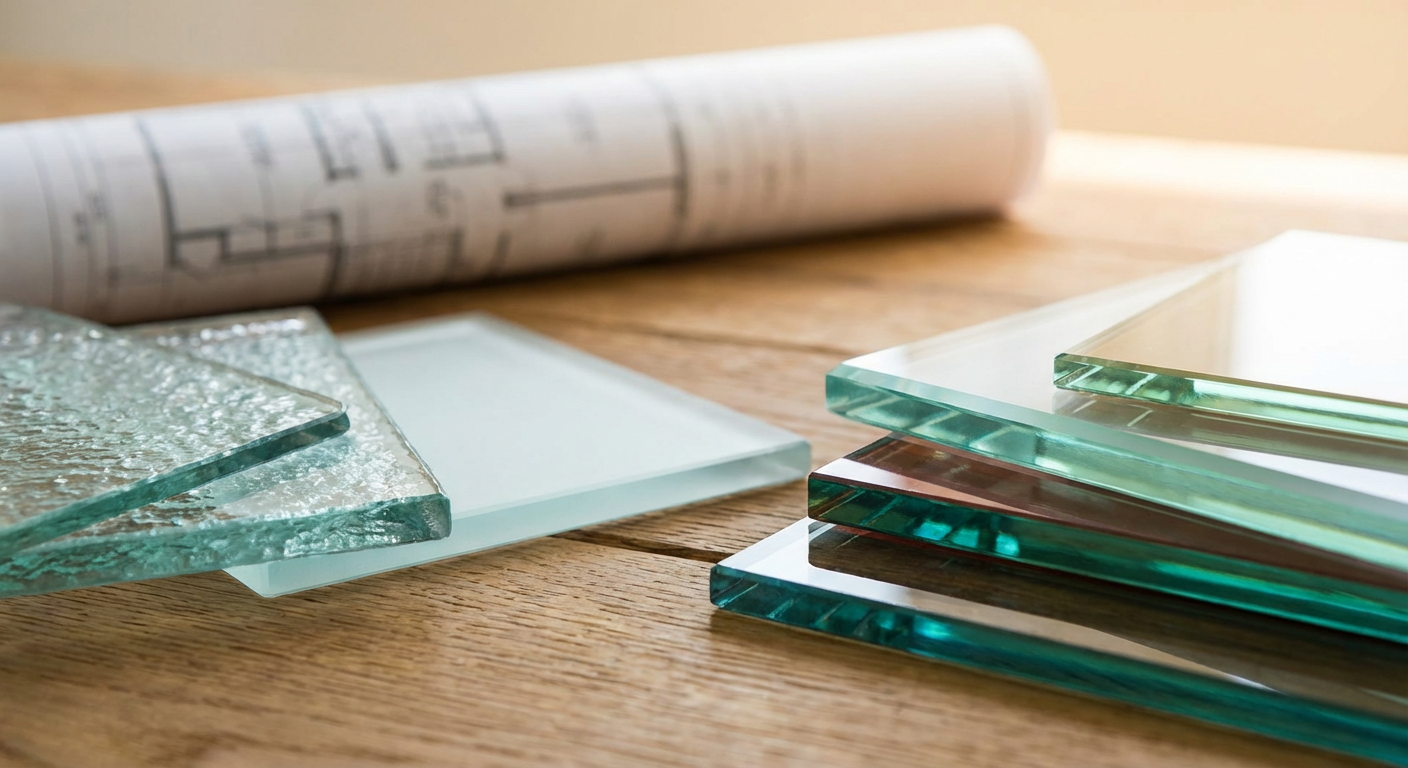
Professional procurement teams evaluate float glass vs tempered glass based on a combination of budget, safety requirements, and lead times. While float glass is cheaper and faster to source, tempered glass is often the required choice for high-end architectural projects. Making the right selection requires a deep understanding of the project’s long-term performance needs.
What are the cost implications of each glass type?
Float glass is the most budget-friendly option because it skips the secondary tempering stage.
Look:
- It is faster to manufacture and easier to transport in bulk.
- However, the risk of breakage during transit and installation is higher.
- Tempered glass has a higher initial cost but offers better durability.
Which glass type is better for bulk procurement?
In large-scale developments, the choice often depends on the specific application of each pane.
But that’s not all:
- Use float glass for interior decorative elements to save on costs.
- Prioritize tempered glass for all exterior glazing and safety-sensitive zones.
- Working with a direct factory can help bridge the price gap for tempered orders.
Key Takeaway
Balance your budget by using float glass where possible and tempered glass where safety and durability are mandatory.
| Procurement Factor | Float Glass | Tempered Glass |
|---|---|---|
| Unit Cost | Lower | Higher |
| Lead Time | Faster | Longer |
| Breakage Risk | High | Low |
Successful B2B glass sourcing relies on selecting the right material for the right application without overspending on unnecessary specs.
What are the strategic design considerations for glass?

In modern office design, the float glass vs tempered glass choice impacts both the aesthetics and the acoustic performance of the space. Large glass partitions and meeting rooms demand a material that is not only beautiful but also structurally sound. Designing these spaces requires a strategic approach to glass thickness and safety ratings to ensure a functional and safe environment.
How does glass type influence office acoustics?
The density and thickness of the glass play a major role in sound dampening between rooms.
Think about it:
- Thick tempered glass is often used to create quiet meeting environments.
- Laminated options can be added to tempered glass for even better sound control.
- Float glass is rarely used for large partitions due to its lack of strength.
What is the role of glass in modern branding?
Glass provides a sleek, professional look that can be enhanced with custom treatments.
Here’s the deal:
- Both types can be frosted, etched, or screen-printed with company logos.
- Tempered glass allows for frameless designs that offer a seamless appearance.
- This creates a high-end feel that attracts premium tenants and clients.
Key Takeaway
Use tempered glass to create safe, quiet, and aesthetically stunning commercial interiors that stand the test of time.
| Design Element | Float Glass | Tempered Glass |
|---|---|---|
| Partition Size | Limited | Extensive / Frameless |
| Sound Control | Average | High (with thickness) |
| Visual Appeal | Standard | Premium |
The final choice between these glass types will define the safety, durability, and overall success of your architectural vision.
FAQ: What else about float glass vs tempered glass?
Can I cut tempered glass with a special blade?
No. Any attempt to cut tempered glass, regardless of the tool used, will result in the entire sheet shattering into thousands of pieces.
What’s the best way to verify safety glass for an inspection?
Look for the acid-etched safety “bug” in the corner of the glass, which lists the manufacturer and the safety standards met.
How do I know if float glass is thick enough for my table?
Consult with a glass engineer, as float glass tabletops require significant thickness and full support to prevent dangerous breakage.
Can I use float glass for a balcony railing?
No. Balcony railings are high-risk zones that require the impact resistance of tempered or laminated safety glass to meet building codes.
What’s the best glass for energy efficiency?
While both types can be coated, tempered glass is typically used for energy-efficient Low-E units because it can handle the thermal stresses of exterior exposure.
Choosing the right material in the float glass vs tempered glass debate is the foundation of any successful architectural project. By understanding the manufacturing nuances, breakage patterns, and legal requirements of each, you can eliminate installation risks and protect your project’s bottom line.
At PrimePro Glass, our vision is to provide precision-engineered glass solutions that combine safety with uncompromising design. Resolve your procurement challenges and ensure your project meets the highest standards of quality. To discuss your specific manufacturing needs or to receive a custom quote, please contact us today.