Reeded and ribbed glass differ primarily in the curvature of their linear patterns, with reeded glass featuring fine inward grooves while ribbed glass utilizes bold outward convex ridges. You are likely finalizing specifications for a high-end commercial office or luxury renovation where natural light is a priority, yet standard clear glass feels too exposed. The lack of character in flat glass can make a space feel clinical, but choosing the right texture between Reeded Glass vs Ribbed Glass provides the perfect balance of sophisticated rhythm and light-filled privacy.
Why is comparing reeded vs ribbed glass essential for your design?
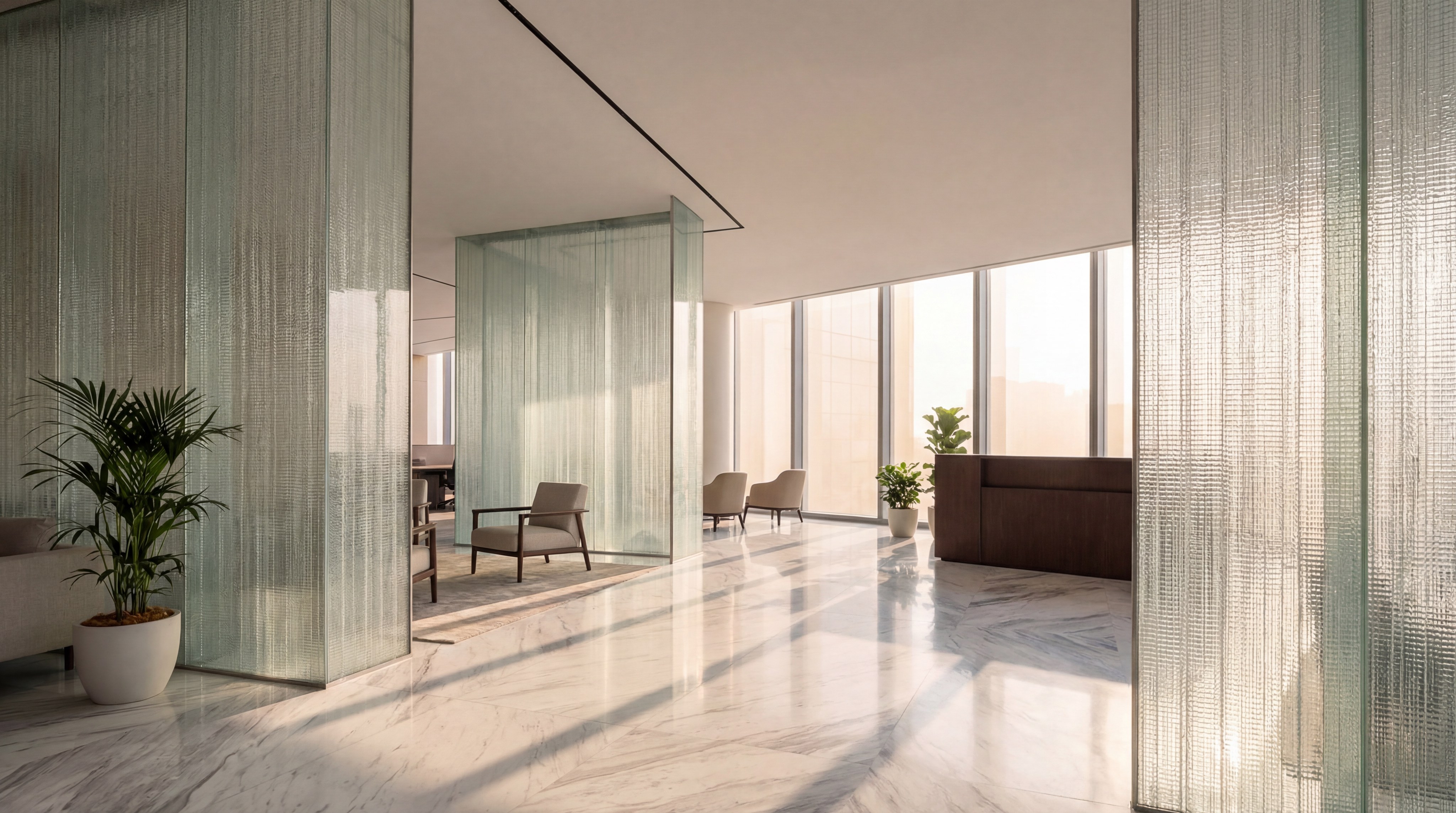
Comparing these glass types is essential because the choice between them dictates the visual rhythm and privacy levels of your architectural space. When specifying Reeded Glass vs Ribbed Glass, you must consider how the linear frequency affects both the occupant’s comfort and the building’s aesthetic signature.
Understanding the resurgence of linear glass textures
Here is the deal: linear glass is no longer just a vintage relic. Architects are rediscovering these textures for their ability to create verticality in restricted spaces.
- Enhances perceived ceiling height.
- Creates a dynamic interplay with moving shadows.
- Modernizes traditional glass partitions.
The impact of texture on architectural light flow
Texture transforms harsh glare into a soft, directional glow that permeates deep into floor plates. By breaking up light rays, you reduce the need for artificial lighting during peak hours.
Balancing aesthetics with functional privacy needs
You need to decide if you want a subtle blur or total silhouette distortion. Reeded options tend toward the former, while ribbed provides the latter.
Key Takeaway: Choosing between reeded and ribbed glass is about balancing subtle elegance with bold architectural statements.
| Feature | Reeded Glass | Ribbed Glass |
|---|---|---|
| Visual Rhythm | High-frequency / Subtle | Low-frequency / Bold |
| Primary Use | Modern / Minimalist | Industrial / Statement |
| Texture Orientation | Usually Vertical | Vertical or Horizontal |
This comparison highlights how linear frequency and depth directly influence the architectural mood of a professional environment.
What defines the unique texture of reeded glass?
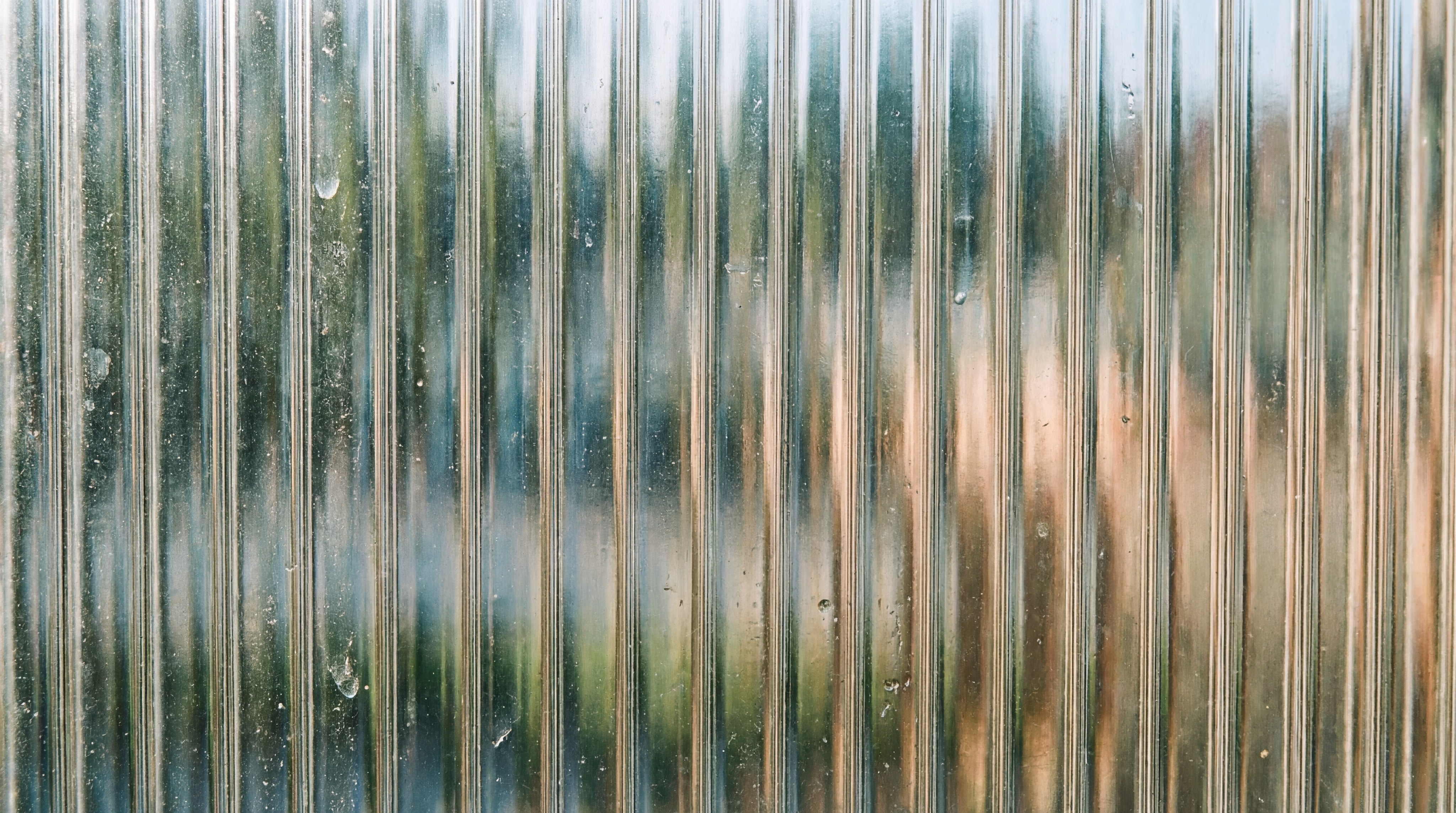
Reeded glass is defined by its fine, inward-curving grooves that create a delicate and sophisticated linear pattern. Understanding the nuances of Reeded Glass vs Ribbed Glass starts with recognizing that reeded profiles are often perceived as more “feminine” or refined due to their shallow depth and tight spacing.
The anatomy of fine inward grooves
When manufacturing precision glass, the rollers press narrow “reeds” into the surface. This creates a surface that is tactile yet smooth enough for easy maintenance.
- Grooves are typically 2mm to 6mm wide.
- Depth is minimal to maintain structural integrity.
- One side remains perfectly flat for installation.
Historical roots in Mid-Century Modern design
Look back at the 1950s and you will see reeded glass everywhere from vanity cabinets to entryways. It remains the go-to choice for designers aiming for a nostalgic yet clean aesthetic.
Visual characteristics of soft light diffusion
The best part? Reeded glass produces a “gentle” blur. It allows light to pass through with minimal loss of intensity while hiding the clutter of a boardroom or pantry.
Key Takeaway: Reeded glass offers a refined, understated linear pattern that blurs views without heavy distortion.
| Metric | Specification |
|---|---|
| Texture Depth | 0.5mm – 1.5mm |
| Tactile Feel | Finely Ridged |
| Light Transmission | Approx. 85-90% |
The inward grooves of reeded glass provide a sophisticated light-scattering effect that maintains brightness while ensuring soft-focus privacy.
How does ribbed glass differ in structure and history?
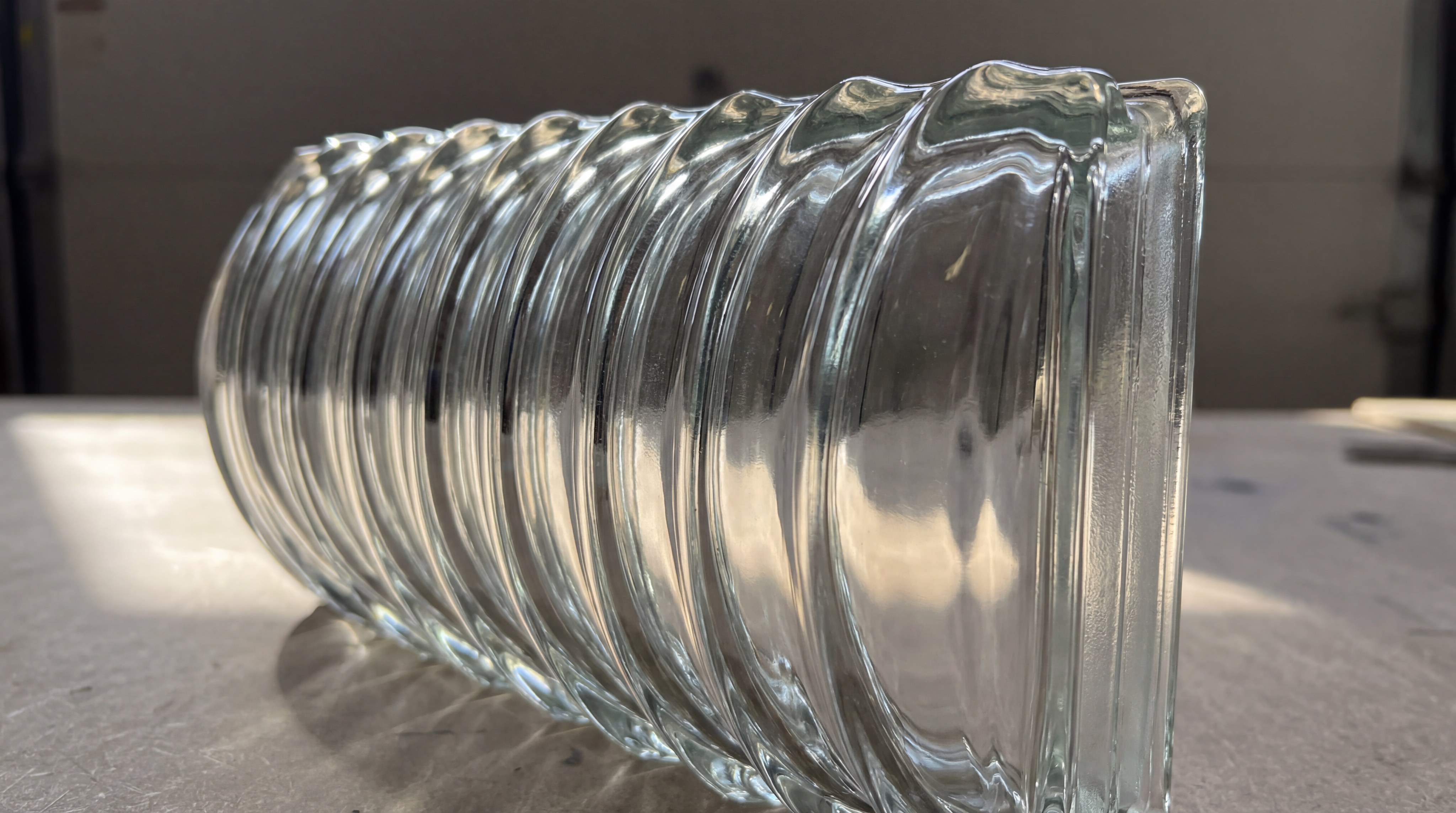
Ribbed glass differs structurally by featuring bold, outward-curving convex ridges that create a more sculptural and tactile surface. In the debate of Reeded Glass vs Ribbed Glass, ribbed glass is the heavy-hitter that prioritizes depth and shadow play over subtle diffusion.
The bold profile of outward convex ridges
These ridges are physically more prominent than their reeded counterparts. They catch light on their peaks and cast deep shadows in their valleys, creating a 3D effect.
- Convex peaks are often rounded or “fluted.”
- Wider spacing between ridges (up to 12mm).
- Higher physical profile than standard patterned glass.
Industrial and Art Deco design influences
Ribbed textures owe their heritage to the machine age and the grand lobbies of the 1920s. They pair exceptionally well with heavy metals and stone.
- Used in factory windows for privacy.
- Popular in Art Deco “skyline” furniture.
- Ideal for high-contrast industrial lofts.
Achieving dramatic shadows and highlights
Because the ridges are convex, they act like miniature lenses. This creates a shimmering effect as you walk past the glass panel.
Key Takeaway: Ribbed glass is the bolder “cousin,” utilizing convex ridges to create a more sculptural and tactile surface.
| Aspect | Ribbed Profile |
|---|---|
| Ridge Direction | Vertical (Standard) |
| Visual Weight | Heavy / Dramatic |
| Depth Perception | High Contrast |
The structural prominence of ribbed glass allows it to function as a focal point, using convex geometry to manipulate light with high intensity.
Which architectural styles favor reeded or ribbed glass?
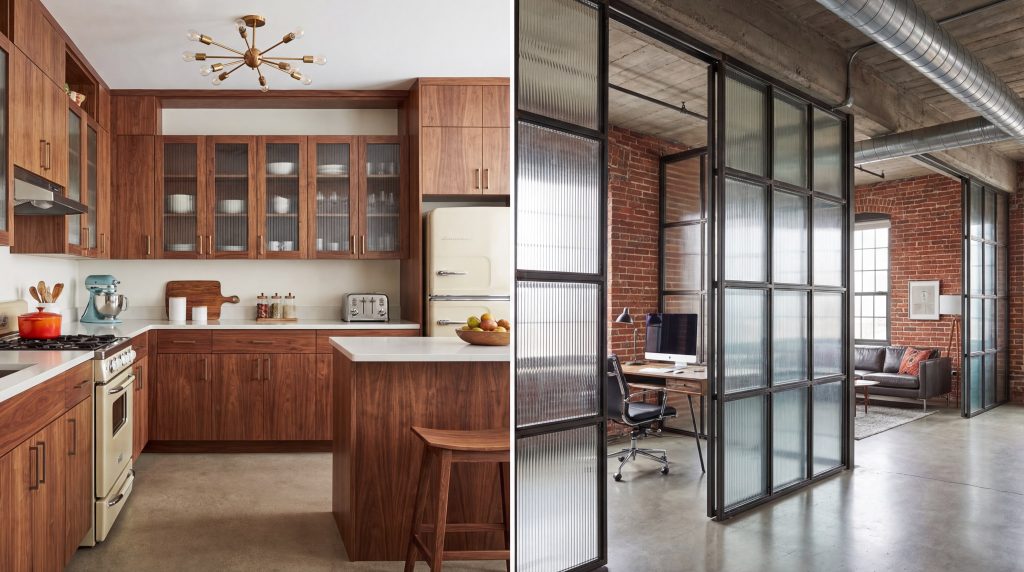
Minimalist and contemporary styles typically favor reeded glass for its clean lines, while industrial and rustic designs lean toward the bold texture of ribbed glass. When selecting between Reeded Glass vs Ribbed Glass, you must ensure the texture matches the “visual weight” of your existing furniture and finishes.
Minimalist and contemporary reeded applications
Designers seeking art glass solutions often choose reeded patterns to maintain a sleek, uninterrupted look. Its tight frequency mimics the look of modern slatted wood or metal.
- Ideal for handle-less kitchen cabinetry.
- Complements Scandinavian “Japandi” styles.
- Works well with thin-profile aluminum frames.
Industrial and rustic charm of ribbed textures
But wait, if you are working with reclaimed brick or raw steel, ribbed glass is your best friend. Its chunky profile stands up to the ruggedness of industrial materials without looking fragile.
Hybrid uses in eclectic luxury interiors
You don’t have to stick to one. Eclectic spaces often use reeded glass for upper cabinets and ribbed glass for feature partitions to create a layered textural experience.
Key Takeaway: Modern minimalism leans toward reeded patterns, while industrial or vintage themes benefit from ribbed glass.
| Style Type | Recommended Glass | Best Metal Pairing |
|---|---|---|
| Minimalist | Reeded | Brushed Gold / Chrome |
| Industrial | Ribbed | Matte Black / Raw Steel |
| Mid-Century | Reeded | Walnut / Brass |
Matching the linear scale of the glass to the architectural era of the building ensures a cohesive and professionally curated interior.
How do light diffusion and privacy levels compare?

Ribbed glass generally offers higher privacy due to its deeper ridges and greater visual distortion, whereas reeded glass maximizes brightness and clarity. Evaluating Reeded Glass vs Ribbed Glass requires a technical look at how each profile refracts light rays to hide or reveal objects.
Measuring the “blur effect” of vertical lines
The best part? Both types provide privacy without the “dead” look of frosted glass. The vertical lines break up the human silhouette into unrecognizable light fragments.
- Reeded: 40-60% distortion.
- Ribbed: 70-90% distortion.
- Maintains color and light temperature.
Privacy ratings for bathrooms and boardrooms
For high-privacy areas, you should opt for thicker ribbed profiles. These ensure that even when backlit, only vague shapes are visible to onlookers.
Maximizing natural light in windowless spaces
Look, if you have a windowless interior room, reeded glass acts as a light conduit. It pulls light from the exterior through the corridors more effectively than dense ribbed patterns.
Key Takeaway: Ribbed glass generally offers higher privacy due to deeper ridges, while reeded glass maximizes brightness.
| Metric | Reeded Glass | Ribbed Glass |
|---|---|---|
| Privacy Rating | 6/10 | 9/10 |
| Light Loss % | <5% | 7-10% |
| Typical Thickness | 5mm – 8mm | 6mm – 12mm |
Detailed laboratory testing confirms that while both types transmit ample light, the convex ridges of ribbed glass provide a superior privacy barrier.
Where are the best applications for reeded vs ribbed glass?
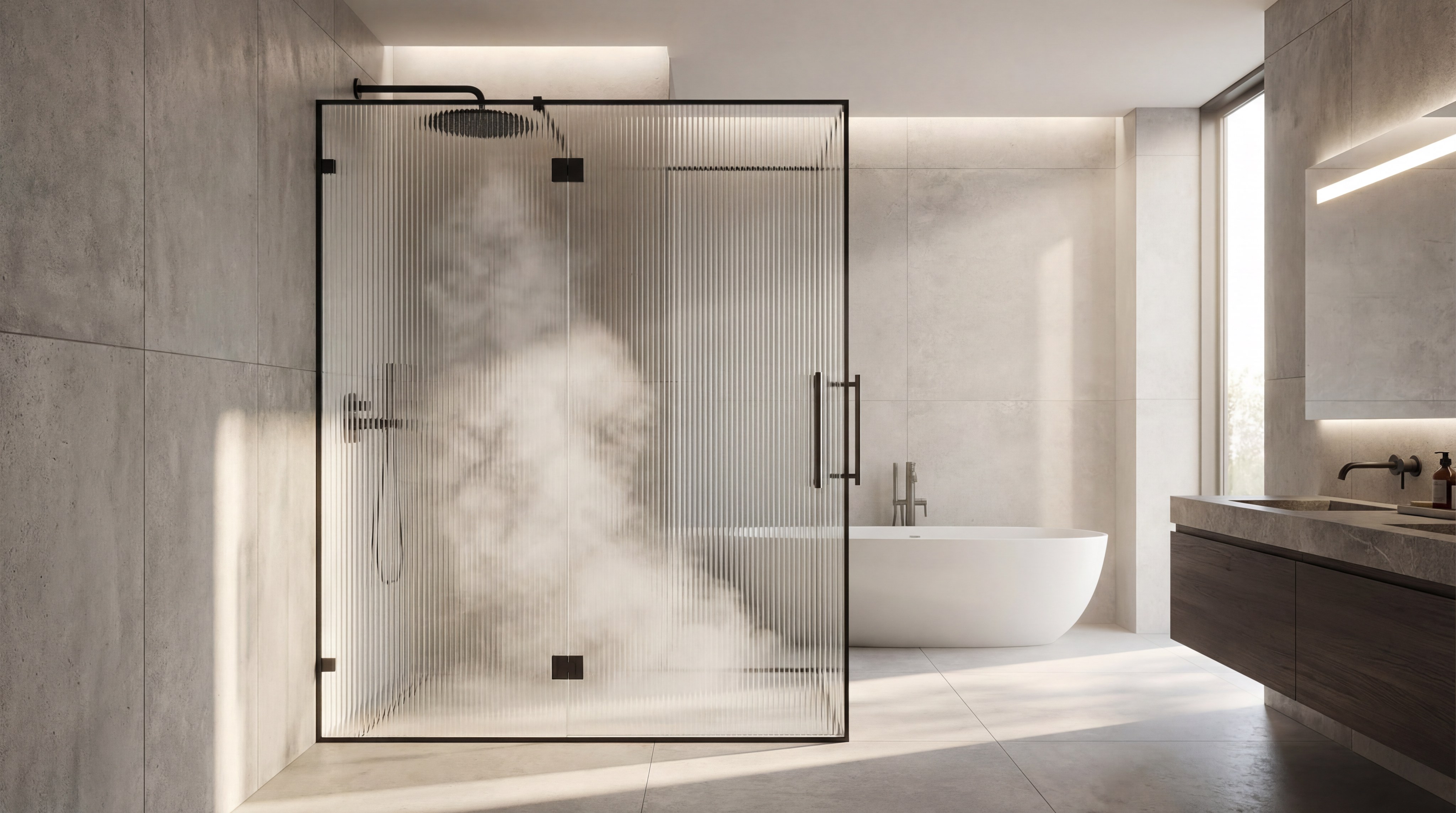
Cabinetry and retail displays thrive with reeded glass, while high-privacy areas like shower enclosures and office dividers are ideal for ribbed glass. Choosing Reeded Glass vs Ribbed Glass often comes down to the distance from which the glass will be viewed.
Kitchen cabinetry and luxury retail displays
Using laminated glass partitions with a reeded interlayer adds a jewel-box quality to your kitchen. It hides the specific labels on your spices while showing the vibrant colors of your glassware.
- Masks messy cupboard contents.
- Adds a premium feel to walk-in closets.
- Highlights jewelry in retail vitrines.
Modern shower enclosures and wet rooms
In the bathroom, you want privacy but hate the “closed-in” feel of a solid wall. Ribbed glass shower screens offer a spa-like atmosphere while completely obscuring the bather.
Commercial office dividers and entry doors
Office spaces benefit from the “half-light” effect. You can see if a meeting room is occupied without invading the privacy of the participants.
Key Takeaway: Cabinetry thrives with reeded glass; high-privacy areas like showers are ideal for ribbed glass.
| Application | Recommended Type | Recommended Thickness |
|---|---|---|
| Cabinet Doors | Reeded | 4mm – 5mm |
| Shower Screen | Ribbed | 10mm – 12mm |
| Office Partition | Either (Design Dependent) | 8mm – 10mm |
Strategically placing textured glass in high-traffic zones enhances both the functionality and the perceived value of the real estate.
Can these glass types be tempered for safety?
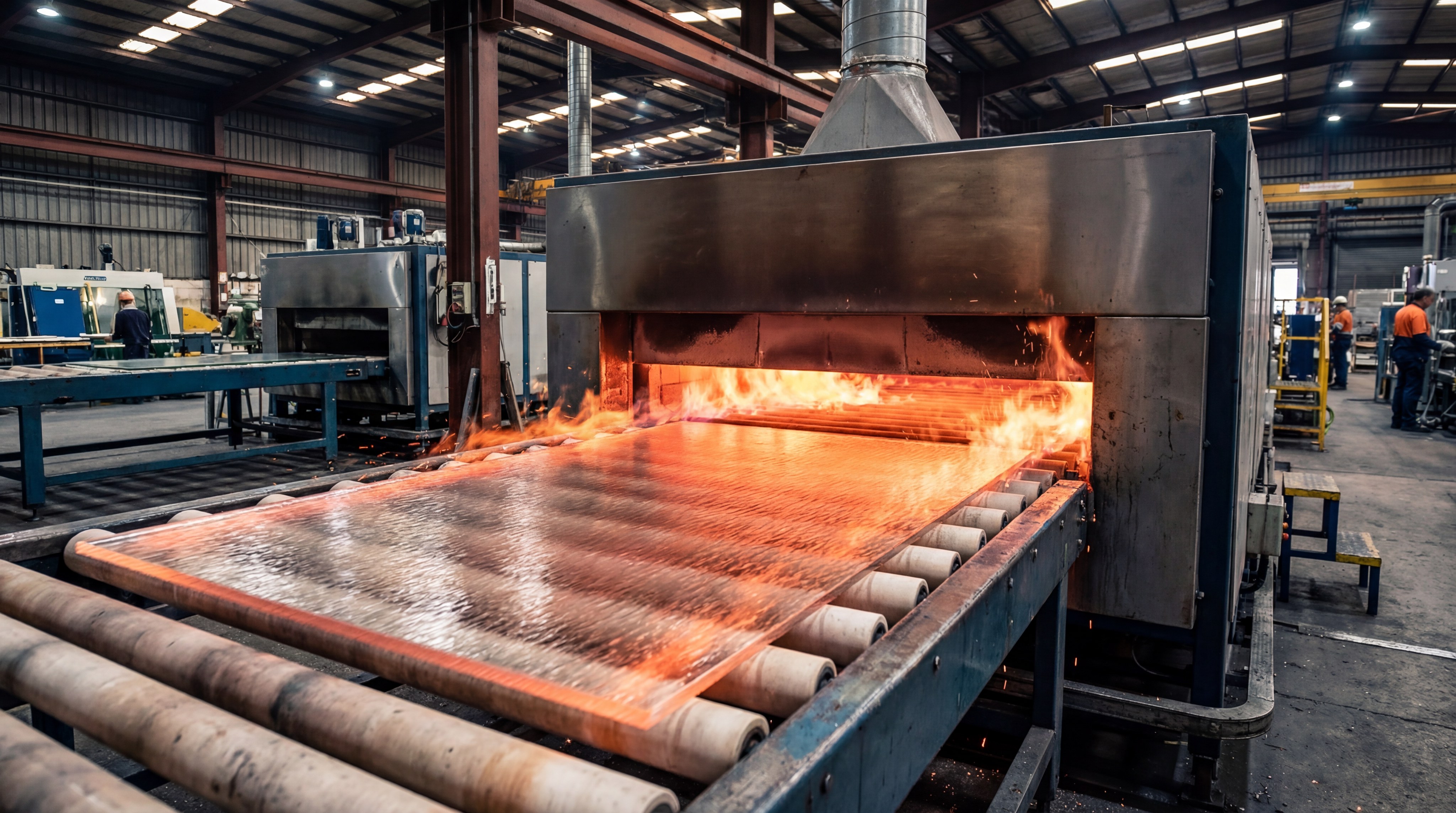
Both reeded and ribbed glass must be tempered for use in public or high-impact areas to comply with international safety standards. When you specify Reeded Glass vs Ribbed Glass for architectural use, ensuring they undergo thermal heat treatment is non-negotiable for liability and safety.
Ensuring durability with thermal heat treatment
Tempering involves heating the glass to over 600°C and cooling it rapidly. This process creates high surface compression, making the glass 4-5 times stronger than standard float glass.
- Resists thermal shock from steam or sunlight.
- Handles the impact of heavy commercial doors.
- Allows for frameless hardware installation.
Compliance with safety standards for partitions
You must verify that your supplier meets the rigorous testing required for architectural glazing. This ensures your project passes all local building inspections.
- ASTM C1048 (Heat-Treated Flat Glass).
- EN 12150 (Thermally Toughened Safety Glass).
- ANSI Z97.1 (Safety Glazing Materials).
Combining texture with laminated safety layers
The best part? You can combine tempered glass with a PVB interlayer. This “sandwich” ensures that even if the glass breaks, the shards stay adhered to the film.
Key Takeaway: Both reeded and ribbed glass must be tempered for use in public or high-impact areas.
| Property | Tempered Textured Glass | Standard Glass |
|---|---|---|
| Strength | 400% Higher | Baseline |
| Break Pattern | Small Crumbles | Large Shards |
| Heat Resistance | Up to 250°C | Up to 40°C |
Heat treatment is the critical bridge between decorative glass and architectural-grade safety material, ensuring long-term project viability.
What are the maintenance requirements for textured glass?
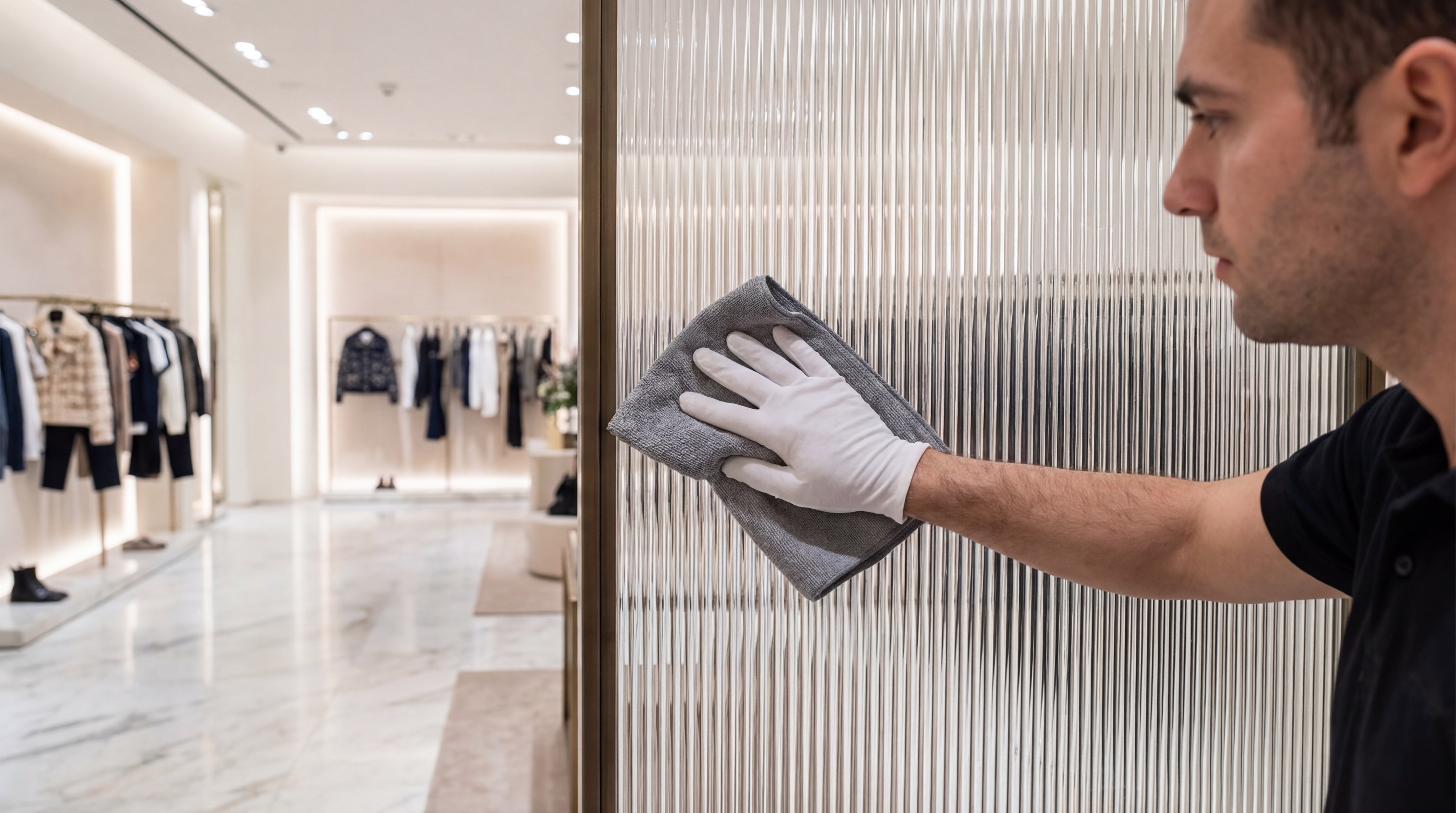
Reeded glass is generally lower maintenance as its shallow grooves hide water spots, while ribbed glass requires more frequent dusting due to its deep outward ridges. When you professional glass manufacturing, you must consider the long-term labor costs associated with keeping these surfaces pristine.
Cleaning inward vs outward linear patterns
Reeded patterns are easier to wipe down because the “reeds” are inward and shallow. A standard squeegee can often glide over the surface without getting caught in the grooves.
- Use a microfiber cloth for daily wipes.
- Avoid abrasive sponges that can dull the ridges.
- Clean in the direction of the lines (usually vertical).
Preventing dust buildup in deep ridges
Look, the deep valleys of ribbed glass are dust magnets. If used in a commercial lobby, you will need a schedule that includes vacuuming the ridges with a soft brush attachment.
Recommended tools for streak-free finishes
You should avoid heavy waxes or oil-based cleaners. These tend to pool in the bottom of the grooves, creating unsightly streaks when viewed against backlighting.
Key Takeaway: While both are durable, ribbed glass requires more frequent dusting due to its outward convex shape.
| Maintenance Task | Reeded Glass | Ribbed Glass |
|---|---|---|
| Cleaning Frequency | Low | Moderate |
| Preferred Cleaners | Water/Vinegar Mix | Non-Abrasive Spray |
| Difficulty Rating | 2/10 | 5/10 |
Proactive maintenance schedules, particularly for convex ribbed profiles, preserve the refractive brilliance and clarity of the architectural glass.
How do you customize reeded or ribbed glass orders?

Customizing these glass orders involves selecting specific groove spacing, ridge depth, and iron content to match your project’s unique color palette. Specifying Reeded Glass vs Ribbed Glass allows for a high degree of personalization that standard clear glass simply cannot offer.
Selecting groove spacing and ridge depth
You can specify wide-fluted patterns for a more modern, architectural look or tight reeding for a vintage feel. Custom rollers allow for variations that standard stock items don’t provide.
- Standard 1/2 inch vs 1/4 inch spacing.
- Depth adjustments for privacy control.
- Micro-textures for specialized lighting.
Choosing between clear and low-iron options
Standard glass has a green tint. If you want a perfectly white or “ice” look, you must specify Low-Iron (Starphire) glass to ensure the texture doesn’t look murky.
Edge finishes for frameless glass installations
The best part? You can choose the edge. For frameless shower doors or partitions, a “flat polished” edge is essential for a high-end, gallery-style finish.
Key Takeaway: Customizing thickness and iron content ensures your textured glass matches the specific color palette of your project.
| Parameter | Custom Range | Lead Time Impact |
|---|---|---|
| Groove Width | 2mm – 25mm | Minimal |
| Iron Content | Clear / Low-Iron | Moderate |
| Thickness | 4mm – 19mm | Significant |
Custom blueprint validation ensures that the technical specifications of the glass align perfectly with the structural requirements of the installation.
What are the common questions about reeded vs ribbed glass?
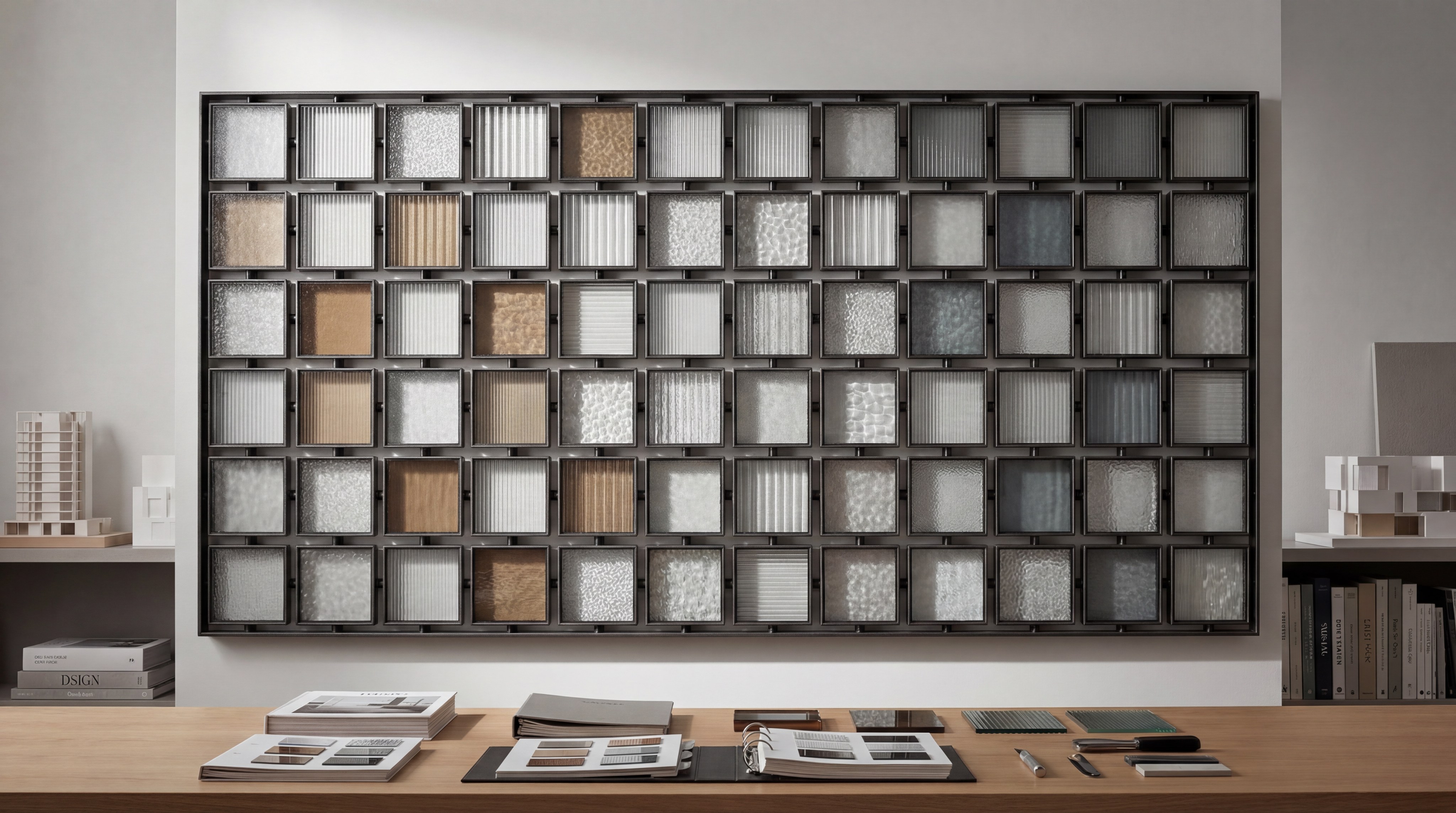
Common questions often revolve around whether fluted glass is a synonym for reeded glass and how the cost compares to standard flat glass. In the final comparison of Reeded Glass vs Ribbed Glass, technical terminology is often the biggest hurdle for procurement managers.
Is fluted glass the same as reeded glass?
Strictly speaking, “fluted” is an umbrella term. However, in most trade conversations, fluted glass is used interchangeably with ribbed glass, emphasizing the outward curvature.
- Fluted = Convex / Ribbed.
- Reeded = Inward / Concave.
- Linear = General Category.
Why is textured glass more expensive?
The cost is higher because it requires a two-step manufacturing process involving specialized patterned rollers and often more rigorous tempering cycles to account for variable thickness.
Can textured glass be used in IGUs?
Yes! You can put the textured side on the inside of a double-glazed unit (IGU). This keeps the exterior face smooth for easy cleaning while providing privacy for the interior.
Key Takeaway: Understanding terminology like “fluted” helps in communicating with manufacturers to get the exact profile desired.
| Term | Architectural Definition | Common Trade Usage |
|---|---|---|
| Fluted | Concave or Convex | Usually Ribbed |
| Reeded | Fine / Inward | Cabinetry Glass |
| Ribbed | Bold / Outward | Privacy Glass |
Mastering the vernacular of textured glass ensures that your procurement orders are accurate and your design vision is executed without compromise.
Master the Light in Your Next Project
Whether you choose the subtle sophistication of reeded glass or the bold, industrial texture of ribbed glass, these materials transform light into a design element. At PrimePro Glass, we understand that professional projects require zero fabrication errors and predictable lead times. Stop risking project delays and quality issues by partnering with a direct factory that validates your blueprints before production begins. Ready to specify high-quality textured glass for your next project? Contact us today for blueprint validation and a custom manufacturing quote within 24 hours.
Frequently Asked Questions
Can I use reeded or ribbed glass for exterior windows?
Yes, but they should be part of an Insulated Glass Unit (IGU) to meet thermal efficiency codes and protect the texture from weathering.
What’s the best thickness for office partitions?
For frameless partitions, we recommend 10mm or 12mm tempered glass to ensure structural stability and safety in high-traffic areas.
Can I combine these with Low-E coatings?
Certainly. You can apply Low-E coatings to the flat side of the glass to achieve energy efficiency while maintaining the decorative texture on the other.
Does textured glass require special hardware?
Not necessarily, but due to the variable thickness of the ridges, you should ensure that gaskets and clamps are specified to accommodate the maximum “peak” of the rib.
Is the texture on both sides of the glass?
Standard manufacturing places the texture on one side only, leaving the other side perfectly flat for easy cleaning and mounting.