A low-E glass rating is a standardized set of performance metrics that measure a window’s ability to reflect thermal radiation while maintaining transparency.
Many property owners struggle with skyrocketing energy bills because their windows allow too much heat to escape in winter or enter in summer. This thermal inefficiency forces your HVAC system to work overtime, leading to premature equipment failure and uncomfortable living spaces.
By understanding these ratings, you can select specialized residential glass that creates a permanent barrier against energy loss.
What defines a low-E glass rating?
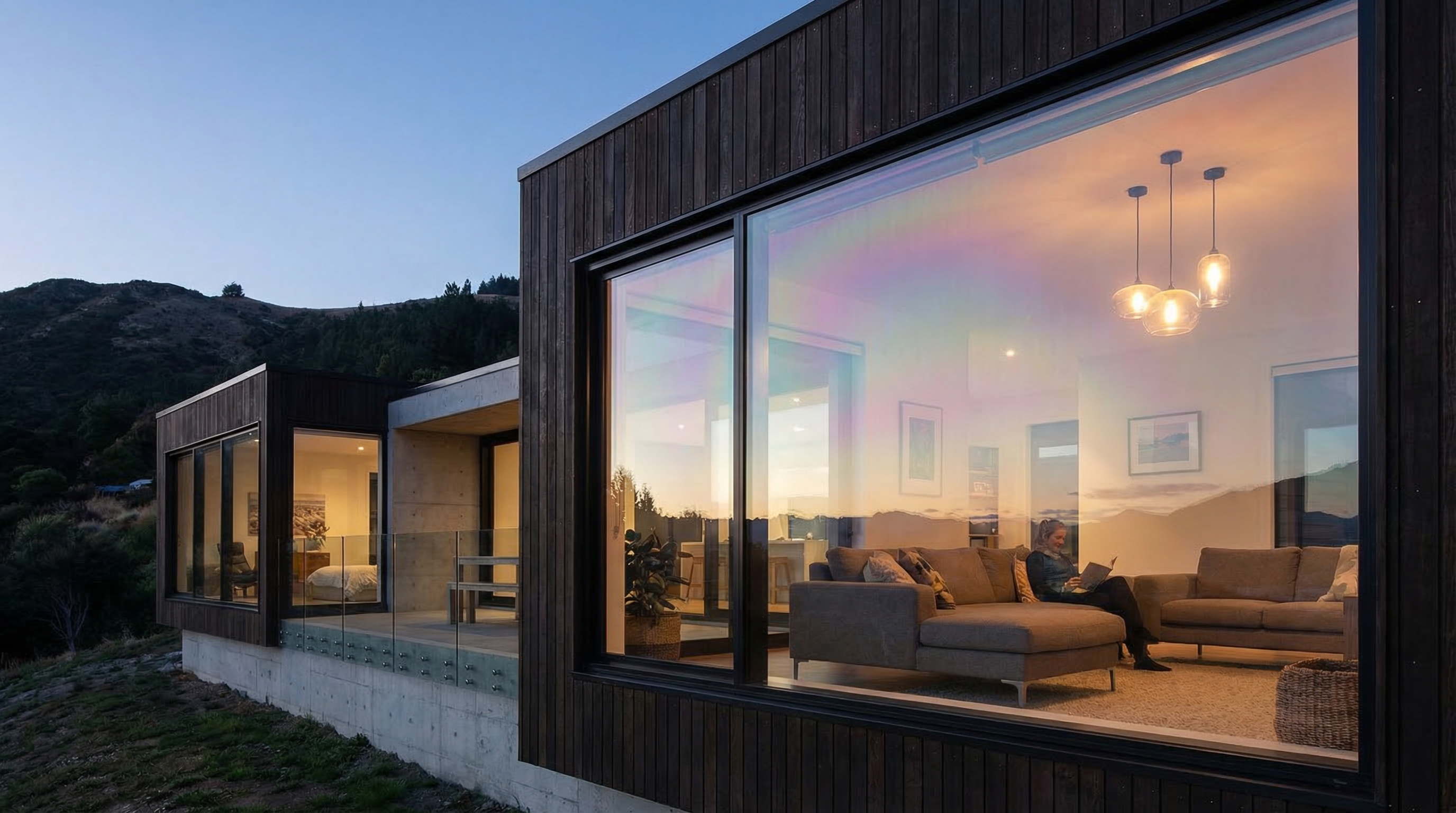
A low-E glass rating is defined by the emissivity levels of the metallic coatings applied to the glass surface, typically involving silver or metal oxides. These coatings are microscopically thin, often smaller than a human hair, yet they fundamentally change how the window interacts with the solar spectrum. You will find that these ratings help categorize windows based on their specific energy-saving capabilities and light-filtering properties.
What is emissivity in windows?
Here is the deal: emissivity measures how much thermal energy a surface radiates back into a room or reflects away from it. High-quality residential glass features low emissivity, meaning it keeps heat where you want it regardless of the season.
- Reflective Power: The glass bounces long-wave infrared energy back to its source.
- Thermal Barrier: It creates a shield that prevents heat from moving through the pane.
- Invisible Coating: The technology remains completely clear to the naked eye.
Why do performance numbers matter?
But that is not all; the specific numbers on a rating label tell you exactly how much money you will save on monthly utilities. Without these metrics, you are essentially guessing about the long-term efficiency of your building’s envelope.
- ROI Calculation: Higher ratings often lead to faster returns on your investment.
- Code Compliance: Many regions require specific ratings to meet modern building standards.
- Comfort Control: Better numbers mean fewer cold drafts near window frames.
Key Takeaway: Low-E ratings provide a scientific benchmark for window efficiency, ensuring you get the performance you pay for.
| Metric | Purpose | Ideal Range |
|---|---|---|
| Emissivity | Measures heat radiation | 0.02 to 0.20 |
| Coating | Reflective metallic layer | N/A |
| Performance | Overall energy utility | High |
The technical foundation of a low-E rating ensures that your glass acts as a selective filter for light and heat.
How does U-Factor impact low-E glass rating?
A low-E glass rating is heavily influenced by the U-Factor, which quantifies the rate of non-solar heat transfer through the window assembly. While you might focus on the glass alone, the U-Factor considers the entire unit, including the frame and spacers. A lower numerical value indicates that the window is a superior insulator, keeping your interior climate stable.
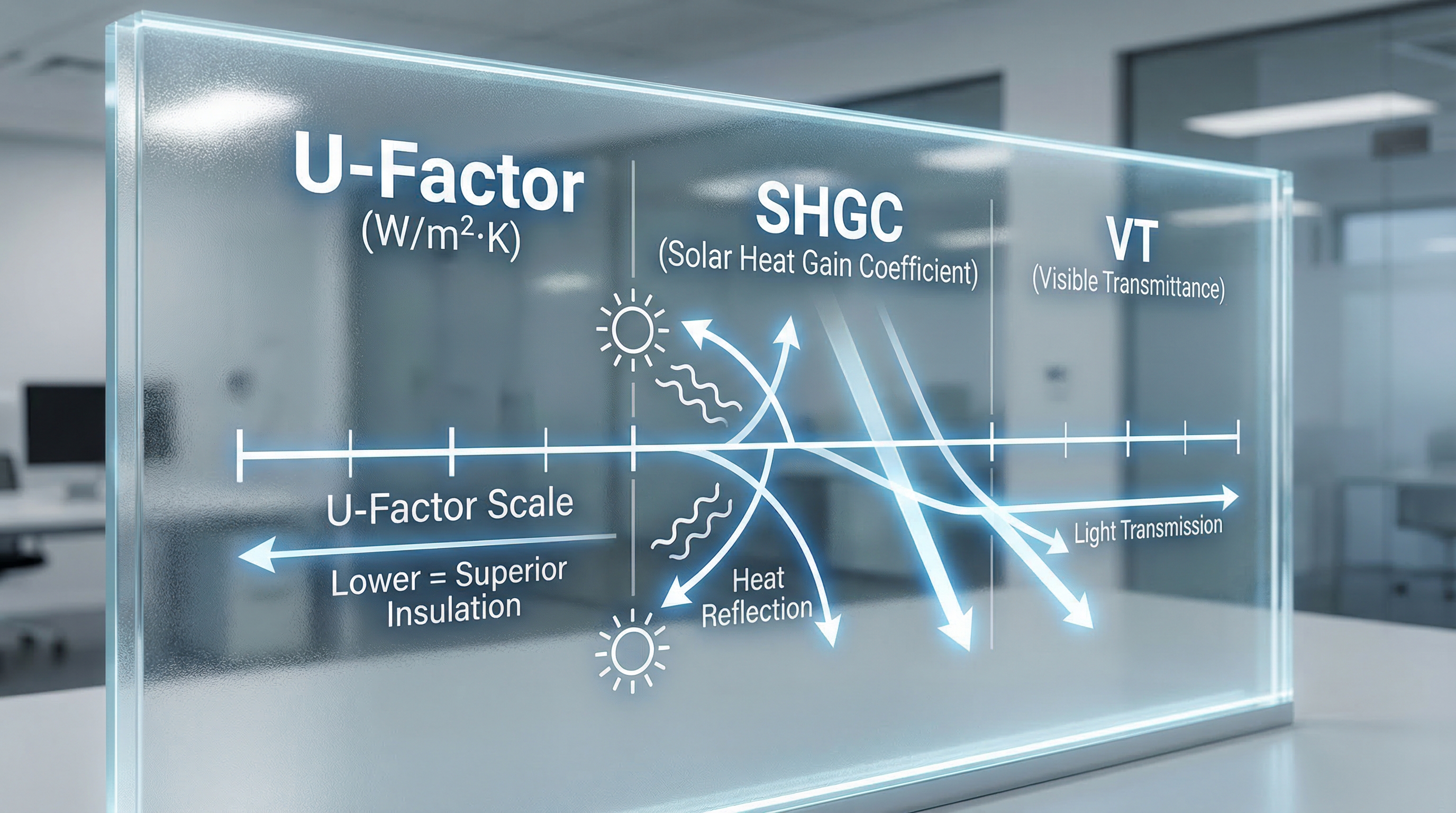
Measuring heat loss in winter
The truth is: U-Factor is your primary defense against the biting cold of winter months. It measures how effectively the glass keeps your expensive furnace heat from leaking out into the atmosphere.
- Insulation Value: Lower numbers mean less heat escapes your home.
- BTU Loss: The rating tracks British Thermal Units lost per hour.
- Energy Savings: Reducing heat loss directly lowers your gas or electric bills.
Why is a lower U-Factor better?
Believe it or not, even a small decimal difference in U-Factor can lead to hundreds of dollars in savings over the life of the window. You want the lowest number possible to maximize the “R-value” or thermal resistance of your openings.
- Draft Prevention: Tight U-factors eliminate that “chilled” feeling near windows.
- Condensation Control: Better insulation prevents moisture from forming on the glass.
- HVAC Longevity: Your heater won’t have to cycle as often to maintain temperature.
Key Takeaway: The U-Factor is the most critical rating for anyone living in a climate where heating is a primary concern.
| U-Factor Level | Rating Quality | Performance |
|---|---|---|
| 0.20 – 0.30 | Excellent | High Efficiency |
| 0.31 – 0.45 | Good | Standard Performance |
| 0.46+ | Poor | Minimal Insulation |
Selecting a low U-Factor window is the most effective way to “winter-proof” your property through its glazing.
Why is SHGC vital for low-E glass rating?
The Solar Heat Gain Coefficient (SHGC) is a vital part of a low-E glass rating because it measures how much solar radiation is admitted through the window. This rating is expressed as a number between 0 and 1, where lower values mean less heat enters your building. For those in warmer climates, this number is often more important than any other metric on the label.
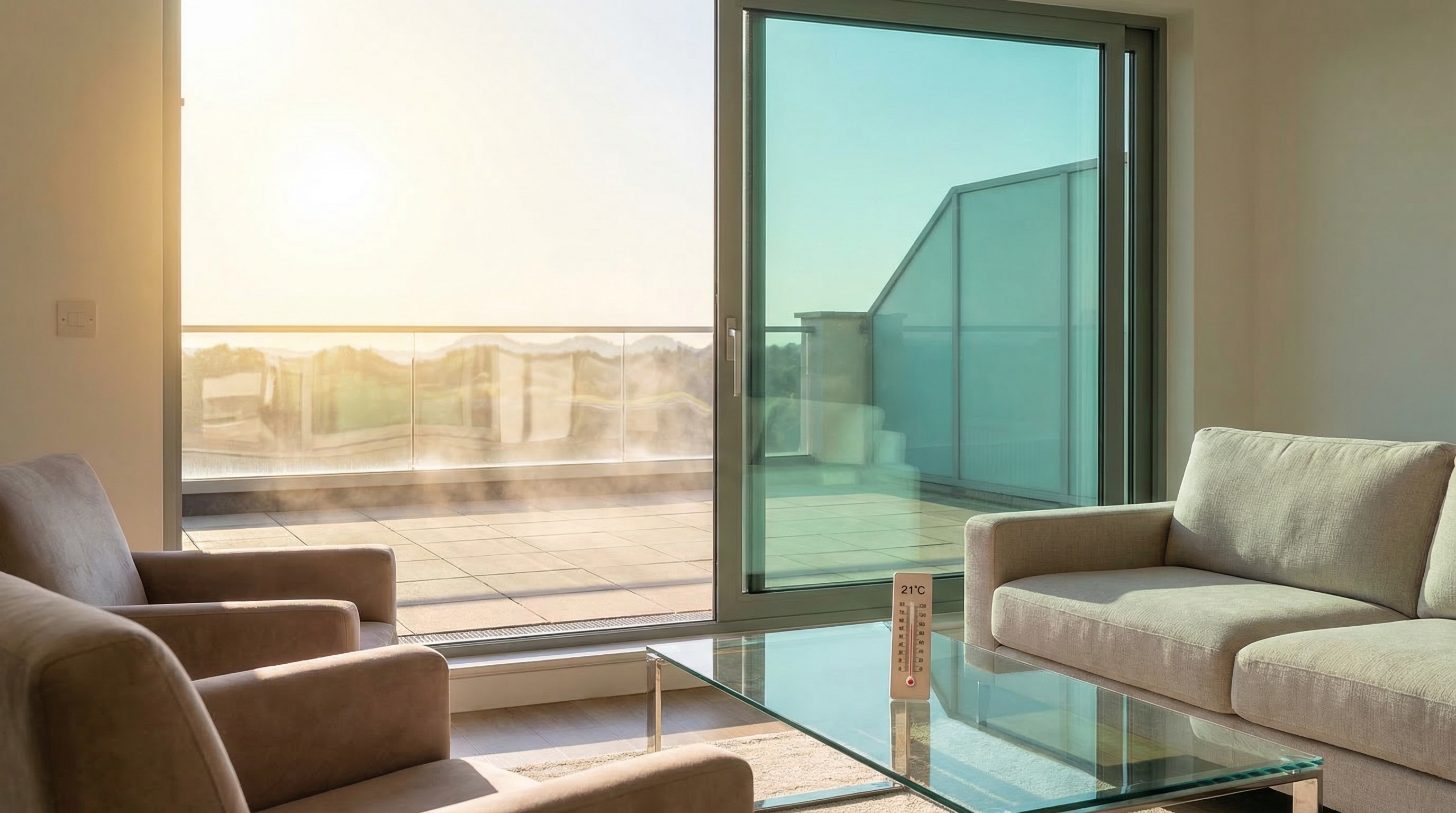
Controlling solar heat gain
Make no mistake: a high SHGC can turn your beautiful living room into a literal greenhouse during the summer. By choosing a low SHGC, you effectively “shade” your home without needing heavy curtains or blinds.
- Cooling Efficiency: Low SHGC reduces the load on your air conditioning.
- Solar Blocking: It filters out the “burning” heat felt from direct sunlight.
- Interior Stability: Temperatures stay consistent even during peak afternoon sun.
Blocking infrared vs UV light?
Here is the kicker: while SHGC focuses on heat (infrared), it also relates to how the low-E glass rating handles damaging UV rays. High-performance coatings can block up to 99% of UV light, which is the primary cause of fading for your floors and furniture.
- Furniture Protection: Prevent your expensive rugs and sofas from bleaching.
- Skin Safety: Reduce UV exposure while sitting near large window walls.
- Glazing Layers: Multiple coatings can specifically target different light wavelengths.
Key Takeaway: SHGC is the definitive metric for managing summer heat and protecting your interior assets from sun damage.
| SHGC Value | Sun Control | Best Climate |
|---|---|---|
| < 0.25 | Maximum Block | Hot/Sunny |
| 0.25 – 0.40 | Moderate Block | Mixed/Moderate |
| > 0.40 | High Gain | Cold/Northern |
Balancing your SHGC allows you to enjoy the view without the uncomfortable heat associated with large glass surfaces.
How does VT impact a low-E glass rating?
Visible Transmittance (VT) impacts a low-E glass rating by determining the percentage of the visible light spectrum that passes through the glass. You might assume that energy-efficient coatings always make glass look dark or tinted, but modern technology disagrees. VT allows you to balance the need for energy savings with the desire for bright, airy interiors filled with natural light.

Finding the natural light balance
Think about this: natural light is proven to improve mood and productivity in both homes and offices. A high VT rating ensures that you don’t have to turn on artificial lights during the day, further saving on energy.
- Daylighting: Maximize the use of free, natural illumination.
- Visual Clarity: Maintain true color perception through the window.
- Aesthetic Appeal: Keep your building looking bright and inviting from the outside.
Does high VT cause glares?
It is often asked: can you have too much light coming through your commercial glass? While a high VT is generally preferred, spaces with many screens might benefit from a slightly lower VT to manage screen glare and eye strain.
- Glare Reduction: Lower VT can act like sunglasses for your building.
- Privacy Levels: Highly reflective or lower VT glass can offer more daytime privacy.
- Workspace Comfort: Finding the “sweet spot” ensures monitors remain easy to read.
Key Takeaway: VT ratings help you customize the “brightness” of your rooms while maintaining high energy efficiency standards.
| VT Percentage | Light Level | Visual Effect |
|---|---|---|
| 60% – 80% | Very Bright | Transparent/Clear |
| 40% – 60% | Moderate | Lightly Tinted |
| < 40% | Dim/Dark | Heavily Tinted |
Managing VT ensures that your energy-efficient windows never feel like they are “closing in” your space.
How do coating types change the rating?
Coating types change a low-E glass rating by altering the physical application method and the number of silver layers involved. There are two primary categories: “soft-coat” (sputtered) and “hard-coat” (pyrolytic). You will find that soft-coat options generally offer significantly better energy ratings but require more careful handling during the manufacturing process.

Soft-coat vs. hard-coat performance
Here is the deal: soft-coat low-E is the industry gold standard for maximum energy efficiency and thermal performance. It utilizes multiple layers of silver applied in a vacuum chamber to achieve the lowest possible emissivity ratings.
- High Efficiency: Superior at reflecting heat compared to hard-coat.
- Triple Silver: Some ratings feature three layers for extreme climates.
- Protected Layer: The coating is always placed on the inside of a sealed unit.
Where is the coating applied?
But that is not all; the “surface” where the coating is applied—numbered 1 through 4 in a double-pane unit—changes the low-E glass rating performance. Typically, the coating is placed on surface #2 to block solar heat or surface #3 to retain interior warmth.
- Surface #2: Best for solar control and hot summer regions.
- Surface #3: Ideal for heat retention in cold winter climates.
- Dual Coatings: Some high-end units coat both surfaces for ultimate control.
Key Takeaway: The specific chemistry and placement of the coating determine whether the glass focuses on solar blocking or heat retention.
| Coating Type | Application | Rating Quality |
|---|---|---|
| Soft-Coat | Sputtered/Vacuum | Premium |
| Hard-Coat | Pyrolytic/Fired | Durable/Standard |
| Multi-Layer | Advanced Sputter | Ultra-Efficient |
Choosing the right coating technology is the first step in tailoring your windows to your specific environmental needs.
Where do you find a low-E glass rating?
You find a low-E glass rating on the National Fenestration Rating Council (NFRC) label affixed to the glass or frame of a new window. This label is essentially a “nutrition facts” sheet for window performance, providing verified data you can trust. If a window lacks this label, you have no way of verifying its actual energy-saving capabilities or quality.
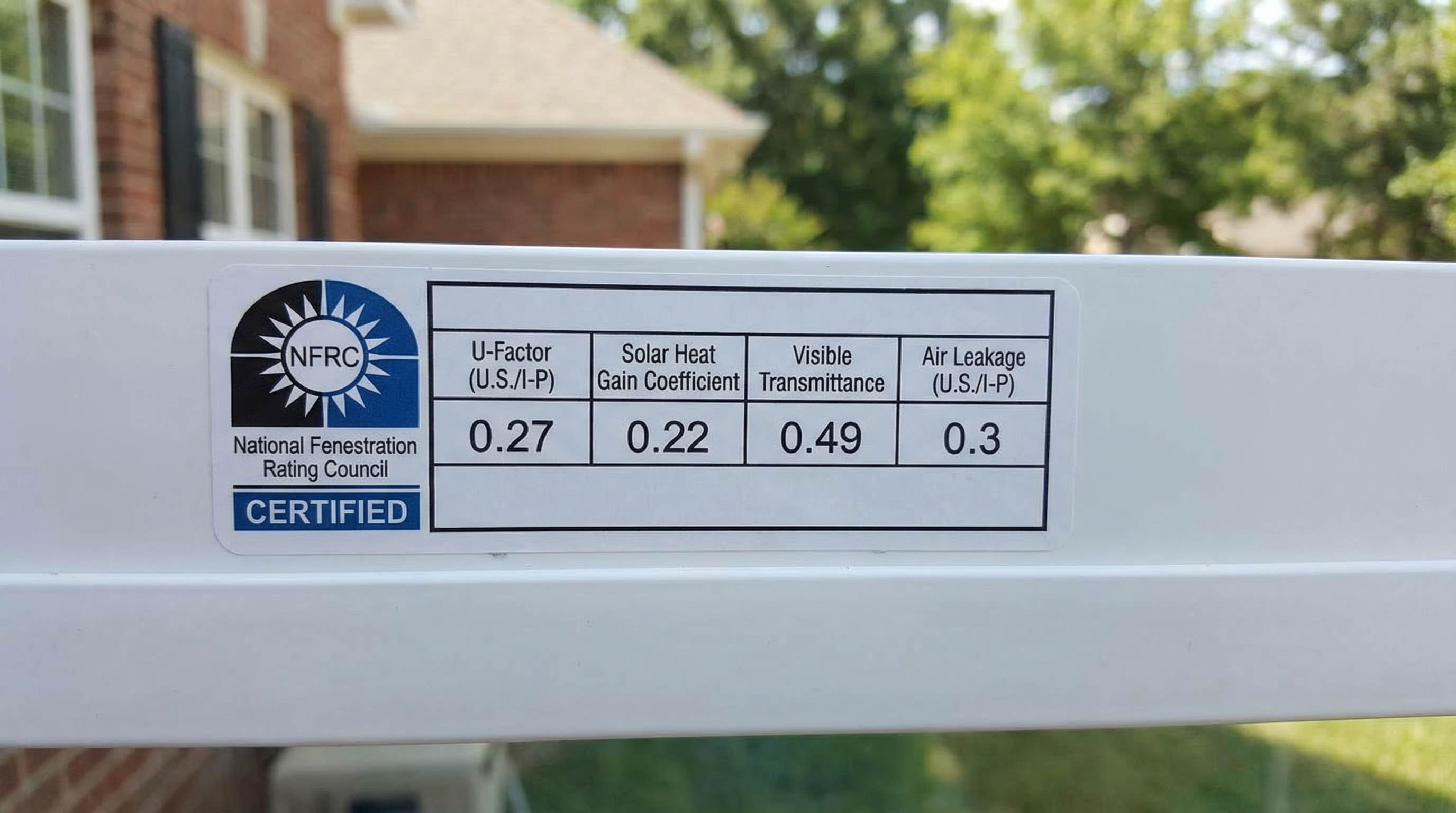
Decoding the NFRC label
The fact is: the NFRC label is the only way to compare different window brands fairly using the same scientific testing methods. You should look for the four main boxes: U-Factor, SHGC, VT, and Air Leakage to get the full picture.
- U-Factor Box: Located in the top left of the performance chart.
- SHGC Box: Located in the top right of the chart.
- Certified Mark: Ensures the data has been audited by a third party.
What is the Energy Star symbol?
To make things easier: look for the Energy Star logo, which indicates the low-E glass rating meets strict government efficiency guidelines for your specific region. You don’t have to be an expert to know a window is good if it carries this certification for your climate zone.
- Climate Zones: Energy Star maps out four distinct zones across the country.
- Simplified Choice: A blue logo means the window passed the efficiency test.
- Rebate Eligibility: Many utility companies offer cash back for Energy Star products.
Key Takeaway: Never purchase energy-efficient windows that do not display a valid NFRC label and Energy Star certification.
| Label Item | Importance | Verification |
|---|---|---|
| NFRC Data | Critical | Third-Party Tested |
| Energy Star | High | EPA Certified |
| Air Leakage | Moderate | Factory Tested |
Standardized labeling removes the guesswork, allowing you to invest in your property with absolute confidence.
Which rating is best for your climate?
The best low-E glass rating for your climate depends on whether your primary goal is to keep heat in or block the sun’s rays out. You cannot use a “one-size-fits-all” approach because a window that works perfectly in the snowy north could cause your home to overheat in the sunny south. Tailoring your selection to your local weather patterns is the secret to true long-term energy savings.

Optimal numbers for cold regions
Here is the situation: if you live in the North, your priority is the lowest possible U-Factor to stop heat from escaping. You might actually want a slightly higher SHGC to allow “passive solar heating” to warm your home for free during sunny winter days.
- Target U-Factor: Look for numbers below 0.27 or even lower.
- SHGC Preference: Moderate gain can help offset heating costs.
- Condensation Resistance: Vital for preventing frost buildup on cold nights.
Keeping cool in southern heat?
In the South, the deal is: you need the lowest SHGC possible to prevent the sun from baking your interior. You are less concerned with U-Factor since the temperature difference between inside and outside is often less extreme than in northern winters.
- Target SHGC: Aim for 0.25 or lower to block the summer sun.
- UV Protection: High UV blockage is a must for sun-drenched rooms.
- VT Balance: Ensure you still get light without the heat gain.
Key Takeaway: Your local weather should dictate your ratings, prioritizing U-Factor in the north and SHGC in the south.
| Climate Zone | Priority Rating | Target Value |
|---|---|---|
| Northern | U-Factor | < 0.27 |
| Southern | SHGC | < 0.25 |
| Central/Mixed | Balanced | 0.30 / 0.30 |
Matching your ratings to your zip code is the most effective way to optimize your building’s thermal envelope.
Does orientation affect glass performance?
Orientation significantly affects glass performance because windows on different sides of your building are exposed to varying levels of solar intensity. A low-E glass rating that is perfect for a shaded north wall might be completely inadequate for a south-facing window that receives direct sunlight all day. Professional installers often recommend different glass packages for different sides of the same house to optimize comfort and cost.

Managing south-facing solar gain
The reality is: south-facing windows receive the most consistent sun exposure throughout the year. You will need a very low SHGC here to prevent these rooms from becoming uncomfortably hot and to protect your flooring from fading.
- Extreme Exposure: South windows take the brunt of solar radiation.
- Low SHGC Need: Essential for keeping southern rooms usable.
- Furniture Care: Highest UV protection should be prioritized on this side.
Solving north-facing heat loss?
On the other hand: north-facing windows never see direct sunlight and are often the coldest spots in a building. For these openings, the low-E glass rating should focus almost entirely on U-Factor to prevent heat from leaking out into the shade.
- Shaded Areas: North walls are prone to “cold spots” and drafts.
- High VT Advantage: Use higher VT glass here to catch ambient light.
- Maximum Insulation: Double or triple panes are often best for north walls.
Key Takeaway: Customizing your glass by orientation ensures every room in your property stays comfortable regardless of the sun’s position.
| Wall Direction | Solar Impact | Priority Metric |
|---|---|---|
| South | Very High | Low SHGC |
| West | High (Afternoon) | Low SHGC |
| North | Very Low | Low U-Factor |
Strategy-based glass placement is a hallmark of high-end architectural design and energy management.
Will a low-E glass rating save you money?
A low-E glass rating will save you money by reducing your monthly utility costs by 15% to 30% and extending the lifespan of your HVAC equipment. While the initial cost of high-performance glass is higher than standard clear panes, the return on investment (ROI) is usually realized within a few years through energy savings alone. You are essentially pre-paying for your future energy bills at a discounted rate.
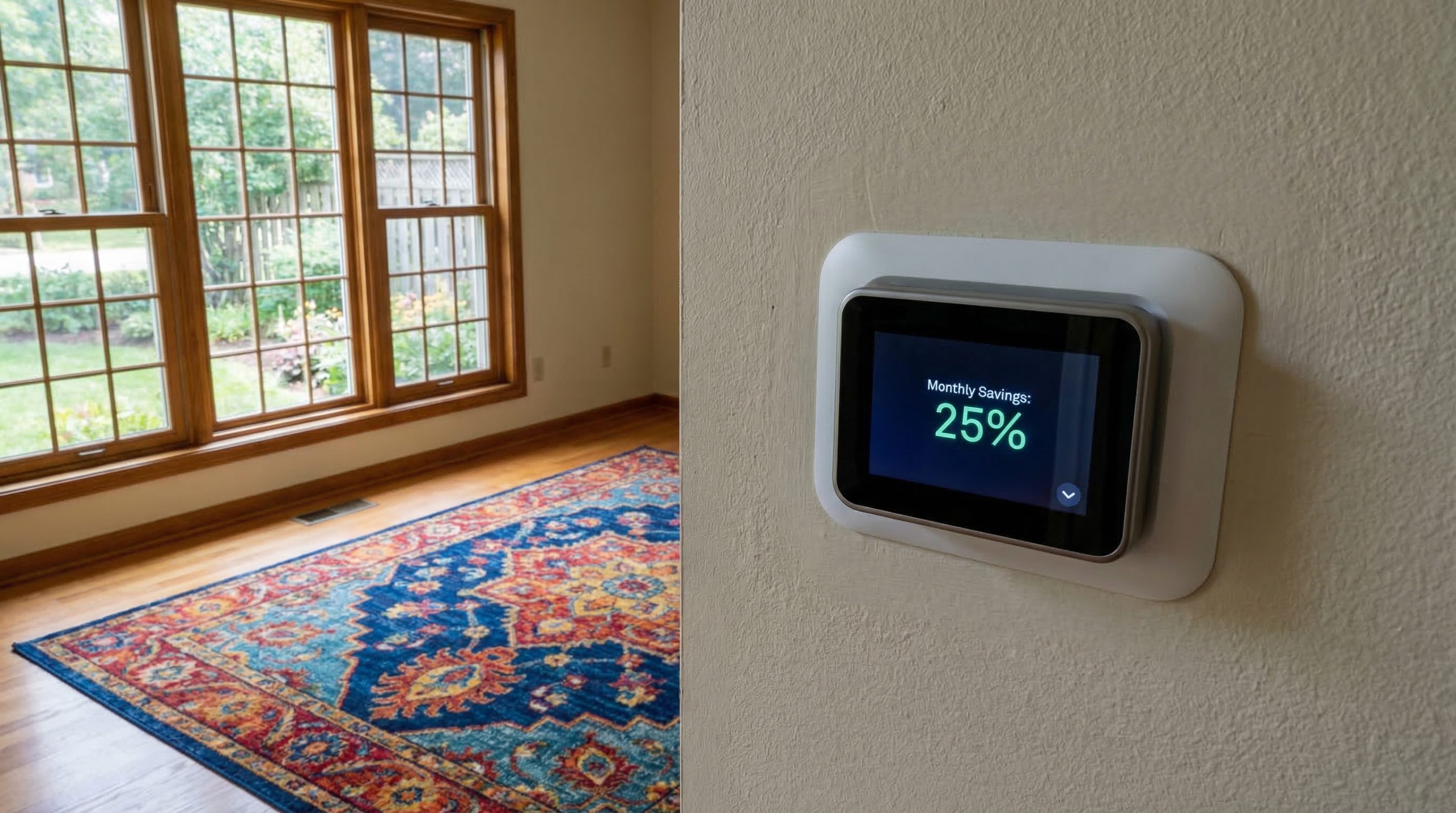
Long-term HVAC energy savings
Look at the numbers: your air conditioner and furnace are the most expensive appliances to run and replace. By improving your low-E glass rating, you reduce the “cycles” these machines must run to keep you comfortable.
- Lower Load: Your AC doesn’t have to fight constant solar heat.
- Fewer Repairs: Reduced usage leads to less wear and tear.
- Extended Life: Modern units can last years longer with efficient glass.
Protecting interior furnishings?
But wait, there’s more: the money you save isn’t just on your power bill; it’s also in the value of your home’s interior. Replacing faded hardwood floors or bleached designer furniture can cost tens of thousands of dollars—an expense you can avoid with the right glass.
- Floor Preservation: Keep your hardwoods looking rich and dark.
- Fabric Longevity: Curtains and upholstery retain their original colors.
- Art Protection: Safeguard paintings and photos from sun damage.
Key Takeaway: The financial benefits of low-E glass extend far beyond energy bills, protecting your entire interior investment.
| Savings Category | Estimated Impact | Duration |
|---|---|---|
| Monthly Utility | 15% – 30% Reduction | Permanent |
| HVAC Maint. | 20% Life Extension | Long-term |
| Asset Value | High (No Fading) | Ongoing |
Investing in high-quality ratings is a financially savvy move for any homeowner or commercial developer.
Why contact us for expert glass advice?
You should contact us for expert glass advice because selecting the wrong low-E glass rating can lead to years of unnecessary energy expenses and physical discomfort. Our team has decades of experience navigating the complex world of NFRC labels and climate-specific glazing requirements. We don’t just sell glass; we provide a comprehensive thermal strategy for your entire property.

Getting a professional consultation
The deal is: we take the guesswork out of the process by analyzing your building’s orientation, climate, and local building codes. You will receive a tailored recommendation that balances cost, aesthetics, and maximum energy performance.
- On-Site Analysis: We evaluate your specific window needs in person.
- Custom Glass Packages: Mix and match coatings for different walls.
- Verified Performance: We only install NFRC-certified, top-tier glass.
Ready to contact us today?
If you are tired of high bills and uncomfortable rooms, the next step is simple. Please contact us today to schedule your professional consultation and start your journey toward a more efficient property.
- Free Estimates: Know exactly what your investment will look like.
- Expert Installers: Our crew ensures the ratings perform as promised.
- Peace of Mind: Rest easy knowing your windows are working for you.
Key Takeaway: Professional guidance is the only way to ensure your low-E glass investment delivers the performance you expect.
| Service Feature | Benefit | Value |
|---|---|---|
| Expert Strategy | Optimal Selection | High |
| Certified Install | Guaranteed Performance | Essential |
| Support | Future Assistance | Ongoing |
Taking action today will secure your building’s comfort and efficiency for decades to come.
Summary of Solutions
This article has decoded the complexities of low-E glass rating systems, including U-Factor, SHGC, and VT. We have explored how climate, coating types, and window orientation all play crucial roles in your property’s thermal performance. By following these guidelines, you can eliminate high energy bills, protect your interior assets, and create a more comfortable environment.
For more personalized insights or to get a quote on high-performance windows, contact us today.
Our Brand Stance: We believe that every property deserves the highest standard of thermal protection through innovative glass technology and expert craftsmanship.
FAQs About Low-E Glass Ratings
Can I tell if my existing windows have a low-E coating?
Yes, you can often perform a “flame test” where you hold a lighter near the glass; if one of the four reflections is a different color (often pink or green), you have a low-E coating.
What’s the best low-E rating for a house in a snowy climate?
You should prioritize a very low U-Factor (below 0.25) to retain heat and a moderate to high SHGC to allow for passive solar warming.
How do I know if my glass ratings are officially certified?
Always check for the NFRC (National Fenestration Rating Council) sticker, which provides a third-party verified performance chart for the entire window unit.
Can I upgrade my current windows to a better low-E rating without replacing the frames?
It is possible through “Insulated Glass Unit” (IGU) replacement, where we swap out the glass panes themselves while keeping your existing frames intact.
What’s the best way to clean low-E glass to protect the rating?
Simply use a mild soap and water solution with a soft cloth, as harsh chemicals or abrasive tools can potentially damage the delicate metallic layers over time.