The primary difference between clear and low-iron glass lies in their iron oxide content, which dictates the level of greenish tint and optical light transmission. Selecting the wrong glass for high-end architectural or retail projects often leads to unexpected aesthetic failures where a noticeable greenish tint distorts the true colors of merchandise.
This visual inconsistency can undermine a brand’s premium image and necessitate costly replacements, causing significant friction during the specification phase of clear vs low-iron glass. By understanding the technical nuances of these materials, you can ensure your project maintains a high-end aesthetic while optimizing performance and budget.
What Is the Fundamental Difference in Composition?
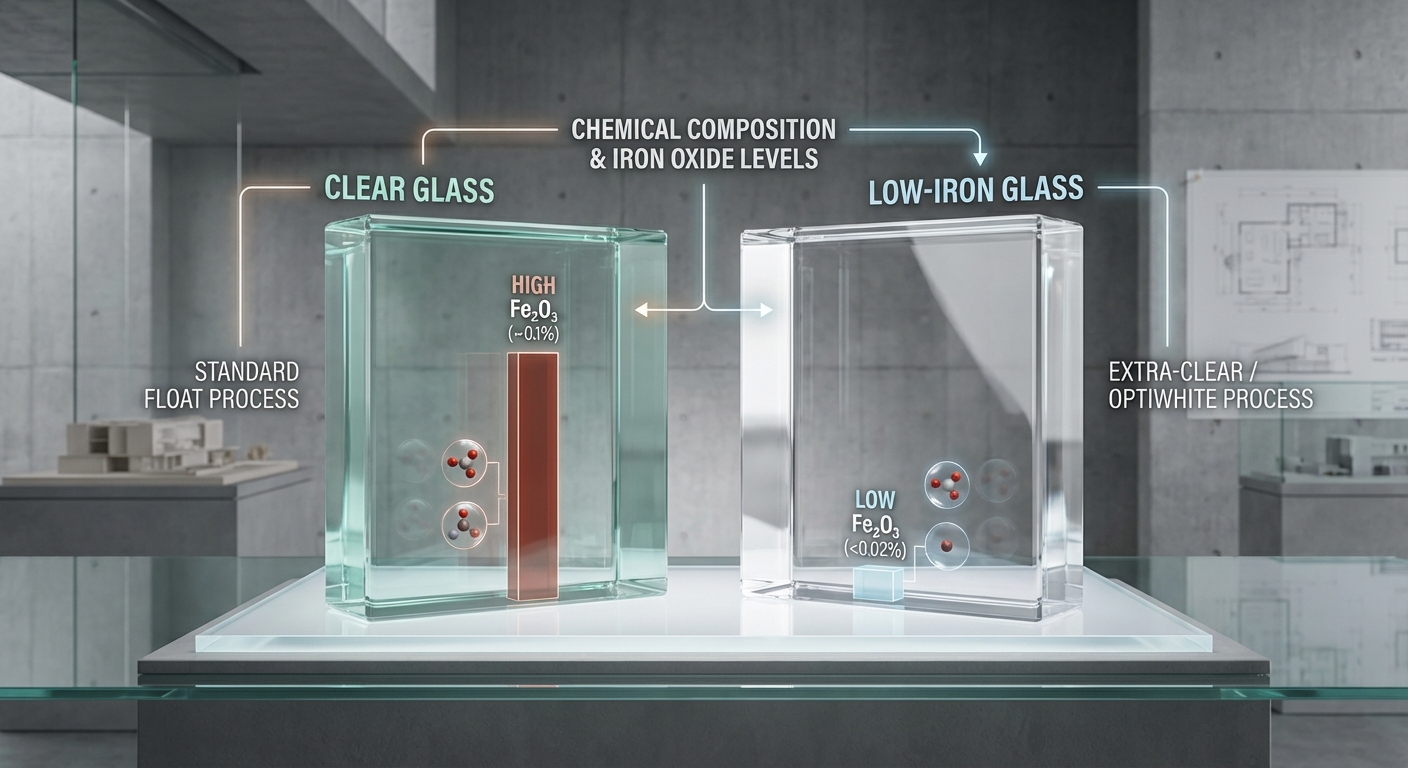
The main difference is the concentration of iron oxide in the silica sand used during the manufacturing process. Understanding the chemical makeup of clear vs low-iron glass is the first step in deciding which material suits your architectural goals.
The Role of Raw Materials in Glass Clarity
Standard float glass contains roughly 0.1% iron oxide, which is naturally present in the sand. Low-iron variants use highly refined silica sand with significantly lower iron contaminants.
Think about it:
The purity of the raw materials determines whether the final product will have a color-neutral state or a visible hue. This difference in mineral levels is what creates the distinct visual gap between the two types.
How Iron Levels Affect Final Production
Reducing the iron content by approximately 90% allows more light to pass through the glass without being absorbed. This refinement process ensures that the glass remains optically clear even when produced in thick panels.
Here is the kicker:
While standard glass is functional for many uses, the lack of iron in specialty glass provides a “crystal clear” look that is unmatched.
| Feature | Standard Clear Glass | Low-Iron Glass |
|---|---|---|
| Iron Oxide Content | Approx. 0.1% | Approx. 0.01% |
| Light Transmission | 88% – 90% | 91% – 95% |
| Visual Profile | Greenish Hue | Optically Neutral |
Key Takeaway: The fundamental difference is the iron oxide percentage, which dictates whether the glass will have a natural green tint or a color-neutral appearance.
Why Does Clear Glass Have a Greenish Tint?
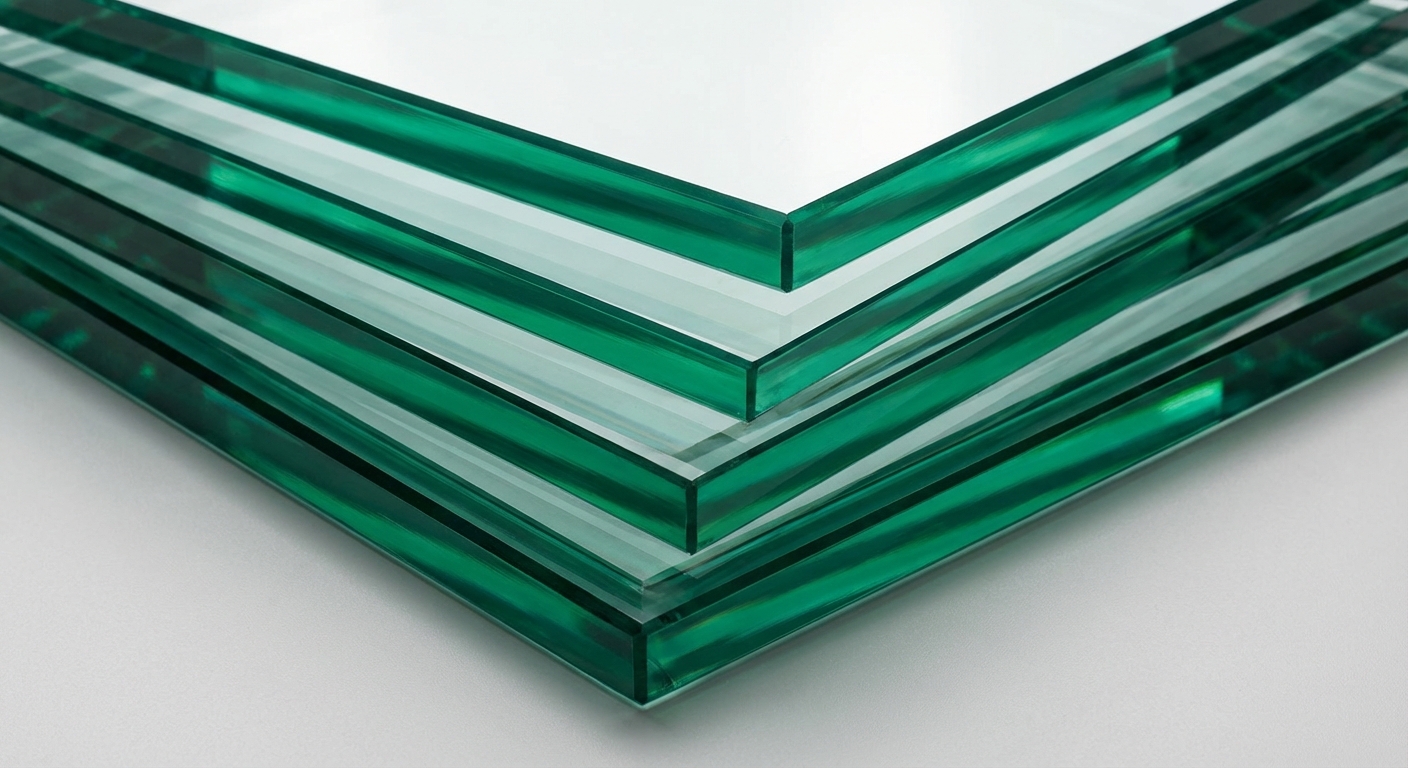
Clear glass appears green because the natural iron oxide present in the raw materials absorbs light in the red and blue spectrums. When you view clear vs low-iron glass side-by-side, the “clear” version will almost always show a distinct emerald hue.
The Natural Presence of Iron Oxide
Iron oxide is an inherent part of most silica sand sources and the containers used in melting furnaces. This oxide is what imparts the green color that characterizes standard glass products.
Thickness and the Accumulation of Color
As the glass gets thicker, the green tint becomes much more prominent and saturated. A thin 3mm pane might look transparent, but a 12mm structural lite will have very dark edges.
- Thin Panes: Minimal visible tint on the surface.
- Thick Panes: Deep green saturation on the edges.
- Surface View: Slight color shift in natural lighting.
| Thickness | Visible Effect on Clear Glass |
|---|---|
| 6mm | Visible green edge tint |
| 12mm | Deep emerald edge and slight surface hue |
| 19mm | Very dark green edge with noticeable surface distortion |
Key Takeaway: The greenish tint in clear glass is a natural byproduct of iron oxide that intensifies as the thickness of the glass increases.
How Is Low-Iron Glass Manufactured for Clarity?
Manufacturers produce low-iron glass by utilizing higher-purity silica sand that is naturally low in iron contaminants. The production of clear vs low-iron glass involves a rigorous refining stage to eliminate mineral impurities.

Refining the Molten Formula
The manufacturing process requires specialized equipment to ensure no additional iron is introduced during melting. This careful management results in a “color-neutral” substrate that maximizes light passage.
Maintaining Structural Integrity
Does the removal of iron make the glass weaker? Absolutely not. Low-iron glass maintains the same structural properties as standard glass while offering enhanced optical performance.
Think of it this way:
You are essentially paying for the extra steps required to clean the raw materials to their purest state.
| Manufacturing Step | Low-Iron Process | Benefit |
|---|---|---|
| Sourcing | High-purity sand | Removes source of color |
| Melting | Clean-burn furnaces | Prevents contamination |
| Inspection | Lite opacity checks | Ensures consistent clarity |
Key Takeaway: Low-iron glass is engineered through strict material selection and refined melting processes to eliminate color distortion and maximize transparency.
Where Should You Use Low-Iron Glass Instead of Clear?
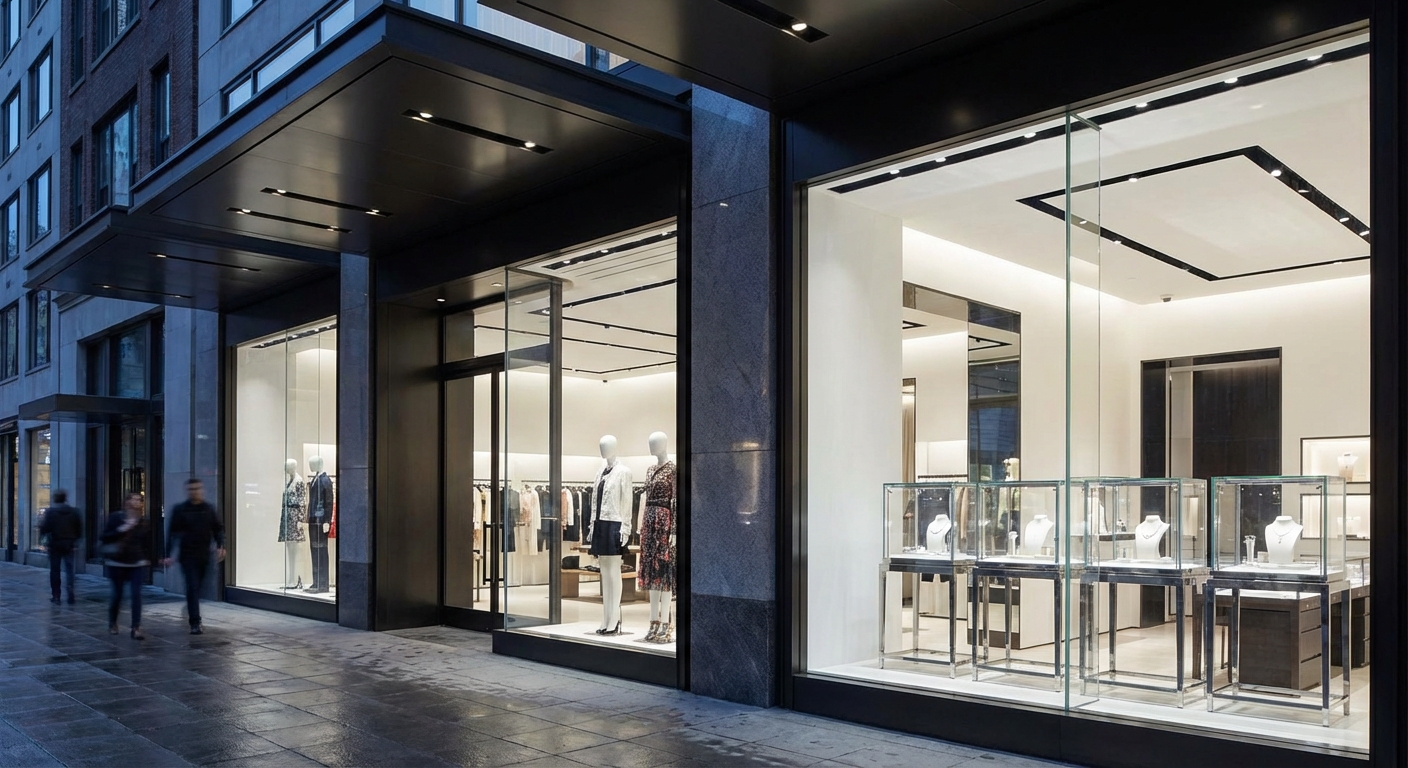
Low-iron glass is the superior choice for high-end retail displays, jewelry cases, and modern interior partitions where visual accuracy is paramount. When comparing clear vs low-iron glass for luxury applications, the latter provides the “invisible” look designers crave.
High-End Retail and Museum Displays
Luxury goods like diamonds or designer fabrics need to show their true colors to potential buyers. Low-iron glass ensures that nothing comes between the product and the customer’s eyes.
Frameless Walls and Modern Partitions
For corporate offices, using high-clarity glass creates an open feel that allows natural light to flow deeply into the floor plan. It provides a seamless transition between indoor spaces.
- Retail Vitrines: Enhances product visibility for higher sales.
- Art Galleries: Protects artifacts without altering their colors.
- Lobby Dividers: Provides a premium, sophisticated aesthetic.
| Application | Recommended Type | Reason |
|---|---|---|
| Storefronts | Low-Iron | Maximum curb appeal |
| Office Partitions | Low-Iron | Enhanced light flow |
| Utility Windows | Clear | Cost-effective functionality |
Key Takeaway: Low-iron glass should be used whenever visual precision, color neutrality, and a premium aesthetic are the primary goals of the project.
Does Iron Content Affect Glass Strength and Durability?
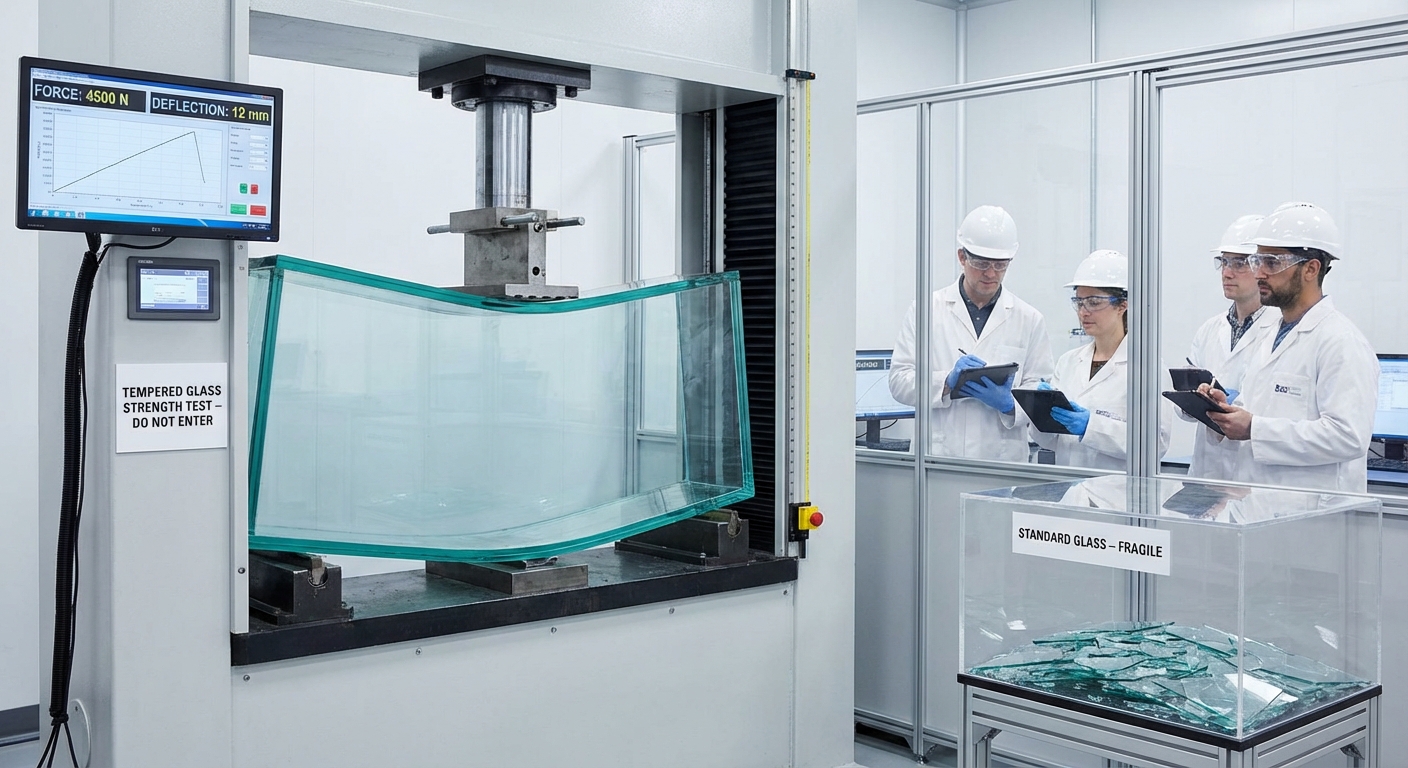
No, the iron content does not significantly impact the structural strength or the physical durability of the glass. Both types can be processed into high-strength clear vs low-iron glass options to meet global safety standards.
Safety Standards and Fabrication
Both clear and low-iron glass can be tempered, heat-strengthened, or laminated. The tempering process is what provides the impact resistance needed for commercial building codes.
Long-Term Performance in Commercial Settings
Low-iron glass is just as scratch-resistant and durable as standard float glass in high-traffic areas. You don’t have to sacrifice performance for beauty when choosing your materials.
Here is the deal:
The safety of your installation depends on the tempering quality, not the color of the glass edge.
| Property | Clear Glass | Low-Iron Glass |
|---|---|---|
| Impact Resistance | High (when tempered) | High (when tempered) |
| Scratch Resistance | Standard | Standard |
| Structural Load | Equal | Equal |
Key Takeaway: There is no significant difference in structural durability between clear and low-iron glass; both can reach high safety ratings through proper tempering.
How Do Color Matching and Back-Painting Vary Between Types?
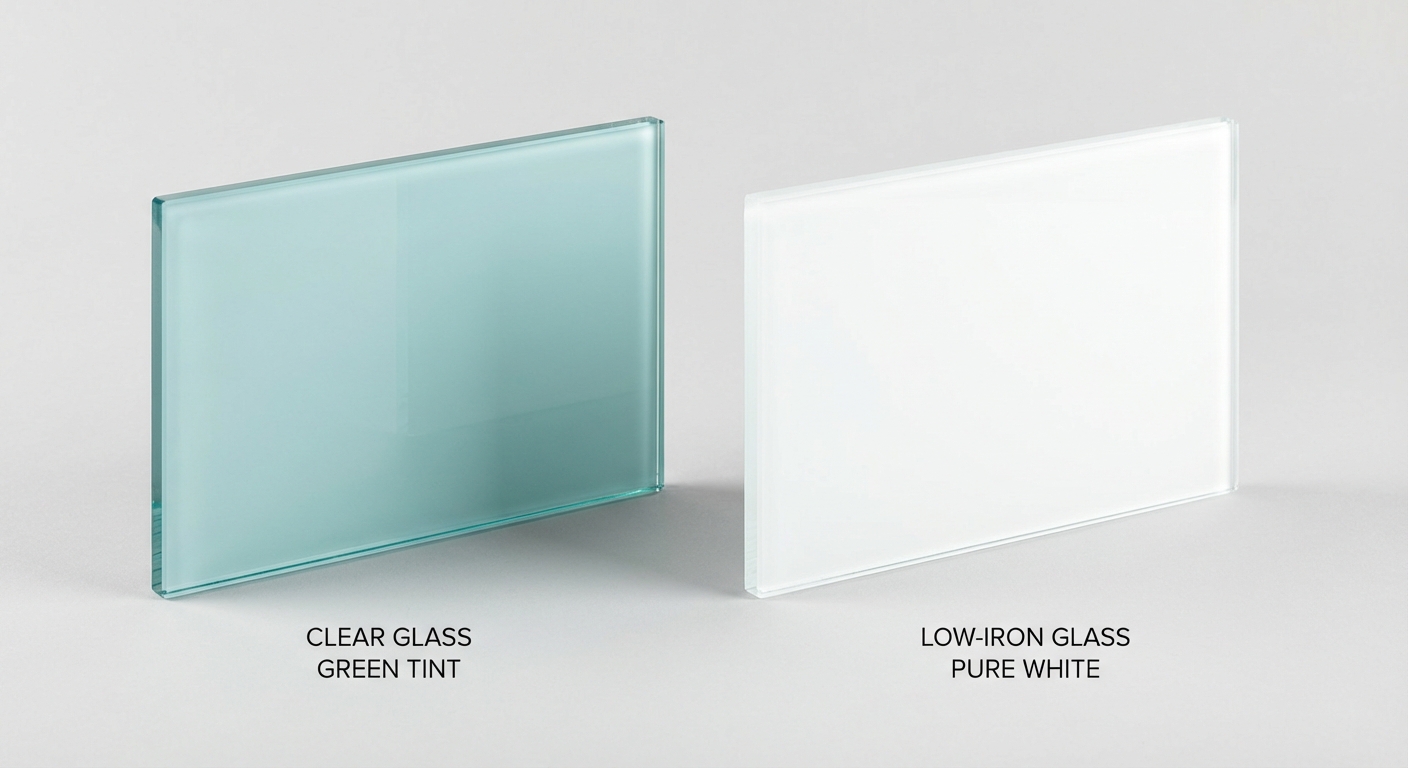
Low-iron glass is essential for back-painted projects because it provides a neutral canvas that doesn’t alter the paint color. When you use clear vs low-iron glass for back-painting white, the difference is immediately obvious to any observer.
Achieving Branding Consistency
If you paint a corporate logo’s specific white on clear glass, it will look mint green. Low-iron glass ensures that the brand’s colors remain crisp and accurate across all office installations.
The Advantage of a Clear Canvas
Using an optically neutral substrate allows the vibrancy of bright paints to shine through. This is particularly important for interior design elements like kitchen backsplashes or feature walls.
Think about it:
A designer spends hours picking the perfect shade, only to have standard glass ruin it with a green filter.
- White Paint: Stays pure white on low-iron.
- Bright Colors: Remain vibrant and true to the swatch.
- Ceramic Frit: Maintains exact color registration.
| Paint Color | Result on Clear Glass | Result on Low-Iron Glass |
|---|---|---|
| Pure White | Appears Mint Green | Appears Snow White |
| Light Blue | Looks Teal/Muddy | Stays Sky Blue |
| Bright Red | Looks Darker/Brownish | Remains Fire Engine Red |
Key Takeaway: Low-iron glass is mandatory for all back-painted and color-matched projects to prevent the green tint of clear glass from distorting the finish.
Can Low-Iron Glass Improve Energy Efficiency in Buildings?
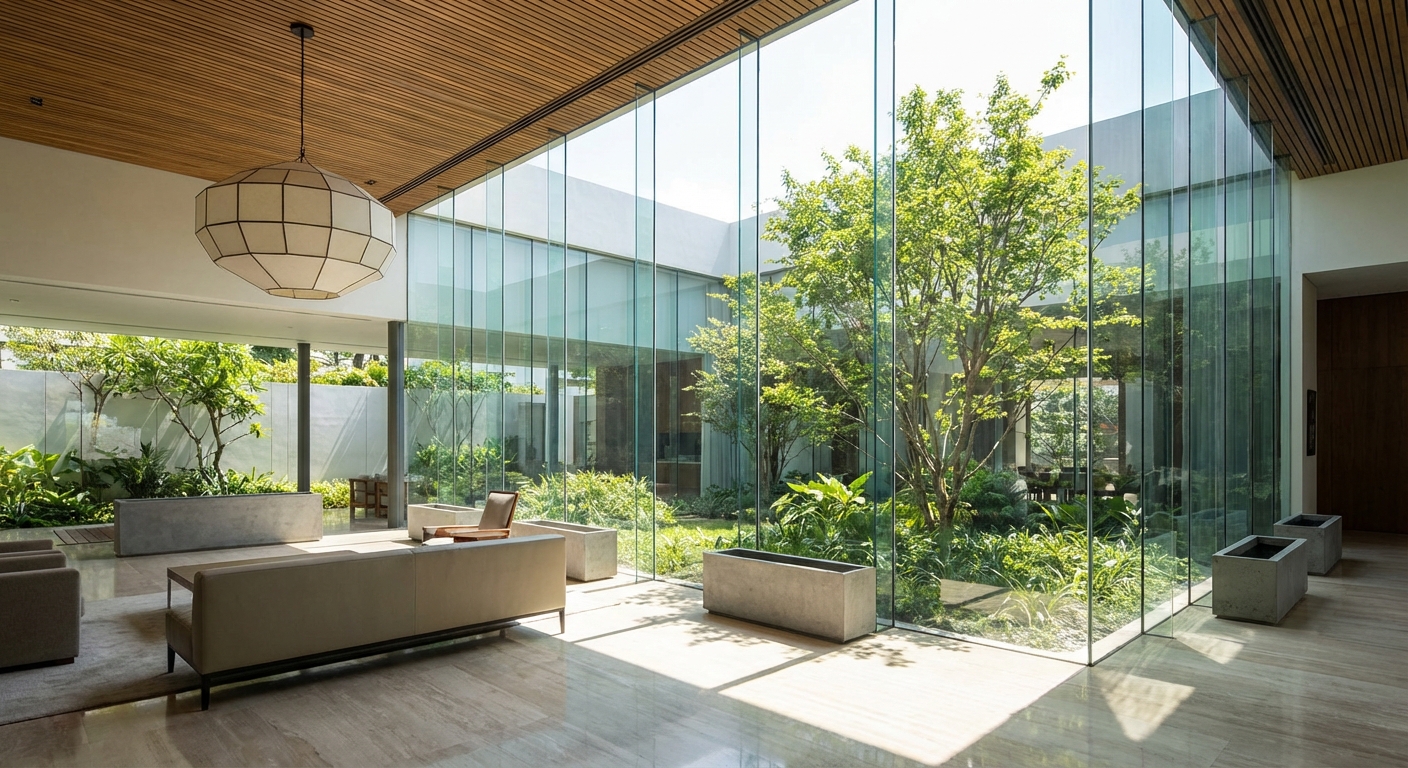
Low-iron glass can improve energy efficiency by allowing more natural light to penetrate the interior, reducing the need for artificial lighting. For B2B projects, evaluating clear vs low-iron glass often involves balancing solar heat gain with transparency.
Light Transmission and Passive Solar Gain
Because it allows roughly 5% more light than clear glass, low-iron glass makes interiors feel brighter and more inviting. This can contribute to LEED certification points for daylighting and views.
Enhancing Performance with Coatings
You can combine low-iron glass with high-performance coatings to achieve the best of both worlds. This results in a window that is both incredibly clear and thermally efficient.
The best part?
You get crystal-clear views while still meeting the most stringent energy codes for modern sustainable buildings.
| Metric | Clear Glass | Low-Iron Glass |
|---|---|---|
| Visual Light Trans. | ~89% | ~91.5%+ |
| Solar Heat Gain | Standard | Slightly Higher |
| Daylight Depth | Standard | Enhanced |
Key Takeaway: Low-iron glass primarily improves energy efficiency through increased natural light transmission, though it should be paired with coatings for thermal control.
How Can You Visually Distinguish Between These Two Glass Types?
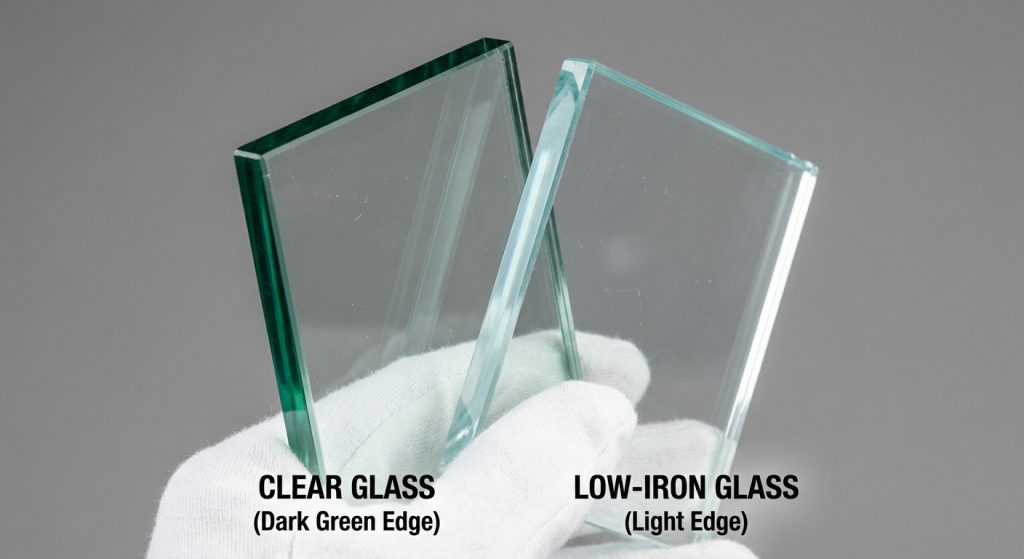
The easiest way to tell the difference is by looking directly at the edges of the glass. In a comparison of clear vs low-iron glass, the standard version will have a dark green edge, while the low-iron version will appear light grey.
The Edge Comparison Test
When you look at the cut edge of a glass pane, the iron content is concentrated. A dark green or almost black edge confirms standard clear glass, whereas a white or light blue-grey edge indicates low-iron.
Surface Clarity and Reflection
When looking through the face of the glass, low-iron looks more like an open window. Standard clear glass will have a very subtle “wash” of color over everything behind it.
You might think:
“Does the color really matter?” In professional environments, the answer is always a resounding yes.
- Standard Edge: Dark, saturated green hue.
- Low-Iron Edge: Nearly clear with a hint of light blue.
- Through-View: Low-iron has zero color shift.
| Visual Cue | Standard Glass | Low-Iron Glass |
|---|---|---|
| Edge Color | Deep Emerald | Light Grey / Clear |
| Face View | Subtle Tint | Virtually Invisible |
| Shadow Cast | Greenish Shadow | Neutral Shadow |
Key Takeaway: Checking the edge color is the fastest and most reliable method to distinguish low-iron glass from standard clear glass.
What Are the Structural Benefits of Laminated Variants?
Laminated glass provides critical safety and security benefits by holding the shards together if the pane is broken. Choosing clear vs low-iron glass for laminated structures depends on whether you want a neutral edge profile.
Safety and Acoustic Performance
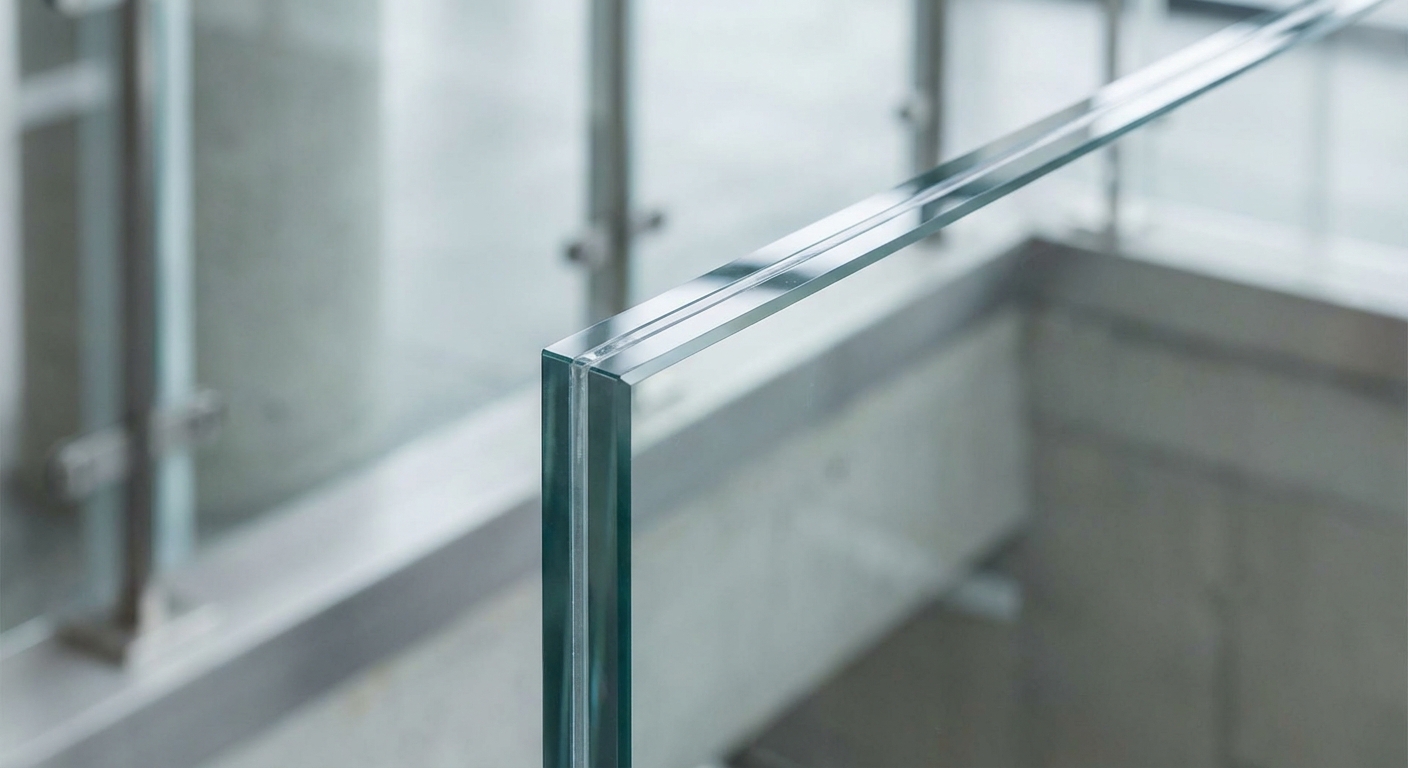
Laminating multiple plys of low-iron glass provides the highest level of clarity for safety railings and overhead glazing. It combines extreme transparency with the structural security required for public spaces.
The Impact of Interlayers on Clarity
The choice of interlayer can also affect the final look. Using a specialty “ultra-clear” interlayer with low-iron glass results in a panel that is almost indistinguishable from air.
Think about it:
For a frameless glass railing, the edge is the most visible part. Why settle for a green stripe when you can have a clear view?
Here is the kicker:
Laminated low-iron glass is the gold standard for high-security jewelry displays where protection and presentation must be flawless.
| Lamination Type | Clarity Profile | Security Level |
|---|---|---|
| Clear-Clear | Greenish Edge | High |
| Low-Iron + Low-Iron | Crystal Clear Edge | High |
| Hybrid | Moderate Tint | High |
Key Takeaway: Laminated low-iron glass is the ideal solution for safety applications where the edge of the glass is exposed and optical purity is non-negotiable.
Which Glass Type Is Best for Your Specific Project Requirements?
The decision ultimately depends on your project’s aesthetic priorities and budget constraints. While clear glass is standard for basic utility, low-iron glass is the benchmark for high-design clear vs low-iron glass applications.
Analyzing Project Design Goals
If your design features a lot of white or bright colors, you must use low-iron glass. If the budget is tight and the green tint matches the decor, clear glass is a perfectly valid and functional option.
Consulting with Your Fabricator
Don’t specify in a vacuum. Speak with an expert to review your blueprints and determine where the premium for low-iron glass provides the most value for the end user.
Think of it this way:
Use low-iron glass for the “hero” areas like the lobby and main storefront, then save costs by using clear glass for non-visible utility windows.
- Flagship Stores: Always use low-iron for clarity.
- Residential Balconies: Low-iron offers the best views.
- Back Offices: Clear glass is efficient and affordable.
| Industry | Primary Need | Best Choice |
|---|---|---|
| Hospitality | Luxury / View | Low-Iron |
| Industrial | Cost / Strength | Clear |
| Healthcare | Natural Light | Low-Iron |
Key Takeaway: Evaluate the visual requirements of each space individually, using low-iron glass where clarity is critical and clear glass for cost-sensitive areas.
FAQ
Can I mix clear and low-iron glass in the same room?
No, it is highly discouraged. The color difference will be extremely obvious when the two types are viewed near each other, creating a mismatched and unprofessional look.
What’s the best glass for back-painted white panels?
Low-iron glass is the only correct choice. Using standard clear glass will turn your white paint into a mint green color that ruins the design.
How do I know if the glass I received is actually low-iron?
Check the edges of the glass. If the edge has a dark green or emerald hue, it is clear glass; if it is light grey or clear, it is low-iron.
Can I use low-iron glass for exterior windows?
Yes, but it is usually combined with a Low-E coating. This provides maximum natural light while maintaining the thermal efficiency required for building exteriors.
What’s the best thickness for frameless low-iron railings?
Typically 12mm or 15mm is recommended for structural stability. Low-iron glass ensures that these thick edges don’t look like dark green bars.
Conclusion
Selecting the right material between clear and low-iron glass is a critical decision that impacts the visual success of any architectural project. This article solved the problem of aesthetic “green-tint” surprises by detailing how iron content affects color, manufacturing, and color-matching.
At PrimePro Glass, our vision is to provide engineering-grade glass solutions that eliminate procurement headaches and deliver flawless results. Whether you need structural safety or optical perfection, we are here to guide your specifications. To ensure your next installation meets the highest quality standards, contact us today for a professional consultation and custom quote tailored to your blueprints.