Hollow glass is a high-performance glazing unit composed of two or more panes separated by a hermetically sealed space to provide superior insulation. You often face the problem of thermal inefficiency in commercial projects where standard windows bleed heat during winter and trap it during summer. This thermal leakage agitates your budget through soaring HVAC costs and leaves occupants uncomfortable near exterior walls.
By choosing hollow glass for your next build, you provide a sophisticated solution that balances energy savings with architectural elegance.
What exactly is hollow glass in modern construction?
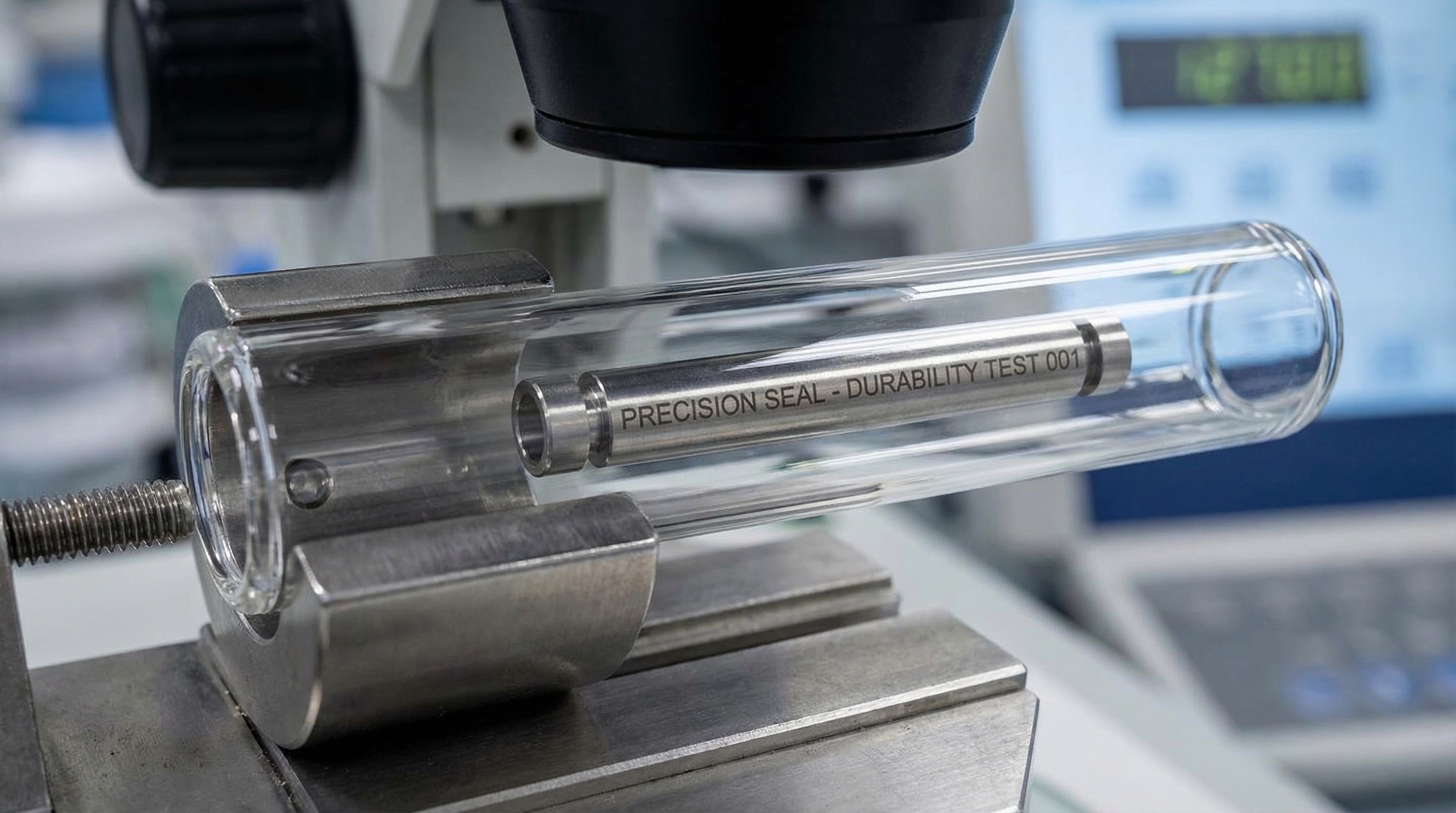
Hollow glass refers to an assembly of multiple glass sheets held apart by a spacer bar and sealed to create a moisture-free internal cavity. This specific configuration of hollow glass is the backbone of sustainable skyscraper design and energy-efficient building envelopes. You will find that these units are indispensable for meeting modern building codes.
How does the hermetic seal function?
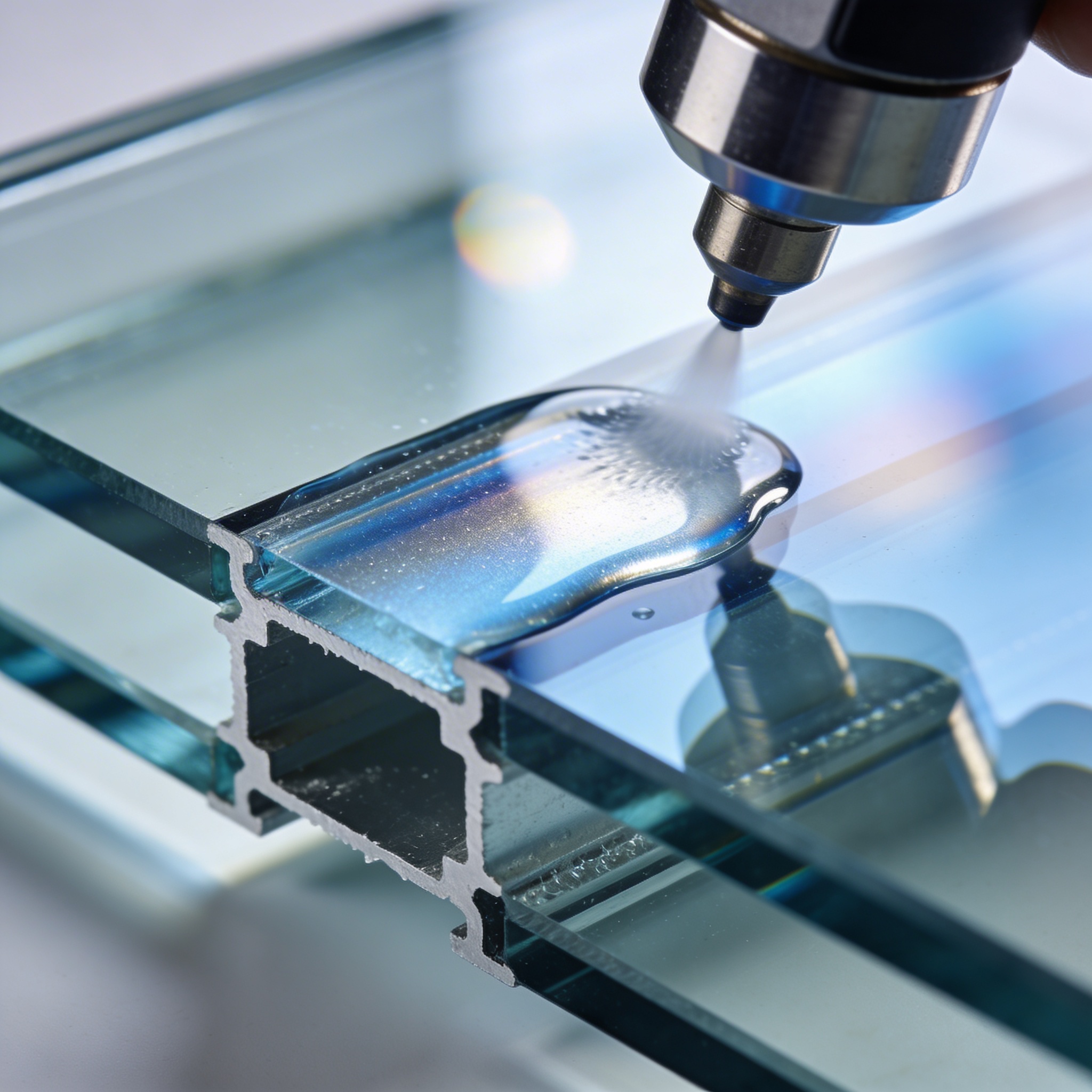
Think about it. The seal is what keeps the outside world from ruining the internal atmosphere of your window unit. A primary seal prevents moisture ingress, while a secondary seal provides structural strength.
- Primary polyisobutylene seal for moisture barrier.
- Secondary silicone or polysulfide seal for structural bonding.
- Hermetic environment to prevent internal condensation.
Is hollow glass the same as insulated glass?
You might be wondering if these terms are interchangeable in the industry. Technically, hollow glass is the broader term used in manufacturing circles, while insulated glass units (IGUs) is the common commercial designation.
- Multi-pane construction as a shared characteristic.
- Thermal resistance as the primary goal.
- Standardized terminology for procurement.
What are the primary structural layers?
Believe it or not, the complexity of a single pane is hidden within its edges. You are looking at a layered system of glass, desiccant, and specialized adhesives.
- Clear or coated glass panes.
- Hollow spacer bars filled with drying agents.
- Perimeter sealants that lock the entire unit together.
Key Takeaway: The structural integrity of a unit depends on a perfect hermetic seal to maintain long-term insulation performance.
| Component | Function | Material Used |
|---|---|---|
| Spacer Bar | Maintains gap | Aluminum or Warm Edge |
| Desiccant | Absorbs moisture | Molecular Sieve |
| Sealant | Prevents leaks | PIB/Silicone |
Analyzing these components reveals that the spacer system is the most critical factor in preventing perimeter thermal bridges.
Which components make hollow glass so effective?

The effectiveness of hollow glass stems from the synergy between its desiccant-filled spacers and high-quality perimeter sealants. You rely on these internal elements to maintain a clear view while blocking heat transfer effectively. Every hollow glass unit is only as strong as its weakest component.
The role of primary and secondary sealants
The best part? These sealants work in tandem to ensure your glass lasts for decades without fogging. You need the primary seal to block water vapor and the secondary seal to hold the panes against wind pressure.
- Prevents gas leakage from the cavity.
- Absorbs mechanical stress from temperature changes.
- Ensures the unit remains a single structural entity.
Why are molecular sieve desiccants used?
Here is the deal. Without these tiny beads, the air inside your window would eventually turn into a cloudy mess of condensation. They actively pull any trace of moisture out of the air gap during the manufacturing process.
- High absorption capacity for water molecules.
- Prevents internal fogging during cold snaps.
- Extends the operational lifespan of the window.
Choosing the right spacer bar material
But that’s not all. You must choose between standard aluminum or “warm edge” spacers to optimize your building’s energy footprint. Warm edge spacers significantly reduce the cold spot typically found at the edge of the glass.
- Stainless steel for durability.
- Polymer-based materials for maximum insulation.
- Traditional aluminum for cost-effective structural support.
Key Takeaway: High-quality desiccants and sealants are non-negotiable for preventing the common “fogging” failures seen in cheap installations.
| Component Type | Durability Impact | Thermal Benefit |
|---|---|---|
| Molecular Sieve | High | Prevents Fogging |
| Warm Edge Spacer | Medium | Reduces Edge Loss |
| Structural Silicone | Extreme | Wind Load Resistance |
Investing in premium sealants ensures that the thermal benefits of the cavity are not compromised by premature seal failure.
How is hollow glass manufactured for industrial use?

Manufacturing involves a precise sequence of cleaning, spacer application, and gas filling under strictly controlled laboratory conditions. When you source hollow glass for large-scale projects, you are purchasing the result of an automated, high-tolerance production line. Accuracy at this stage prevents installation headaches later.
Precision cutting and edge grinding stages
Check this out. Before the panes are joined, they must be cut to within half a millimeter of your blueprint specifications. Edge grinding ensures there are no micro-cracks that could lead to thermal stress breakage.
- CNC-controlled glass cutting tables.
- Automated washing to remove all particulates.
- Seamed or polished edges for safety and fit.
The automated gas filling process
You might be wondering how the gas stays inside. Modern lines use a press that fills the cavity with argon or krypton while simultaneously sealing the perimeter.
- Replaces standard air with inert gases.
- Monitors gas concentration levels automatically.
- Seals the unit under pressure for consistency.
Quality control for hermetic integrity
But wait, there’s more. Every batch undergoes rigorous testing to ensure the seals are perfect before they leave the factory floor. You can’t afford to install a unit that will fail in six months.
- Dew point testing for moisture levels.
- Gas concentration verification.
- Visual inspection for glass defects and seal gaps.
Key Takeaway: Automated manufacturing eliminates human error, ensuring that gas concentration and seal depth meet engineering standards.
| Process Step | Critical Metric | Target |
|---|---|---|
| Glass Washing | Particle Count | Zero visible |
| Gas Filling | Argon Content | >90% |
| Pressing | Seal Depth | ±0.5mm |
Total quality control at the manufacturing stage is the only way to guarantee the 10-year warranties expected in commercial glass procurement.
Why is hollow glass essential for energy efficiency?

Hollow glass is essential because it creates a thermal break that significantly reduces the U-value of a building’s exterior. You will see a dramatic drop in energy consumption once the thermal bridge of single-pane glass is eliminated. Every square foot of hollow glass acts as a silent insulator for your facility.
Understanding U-values and thermal bridges
The secret is out. A lower U-value means less heat is escaping your building, which keeps your money where it belongs. You should focus on reducing thermal bridges at the window frames to maximize this effect.
- Measures the rate of heat transfer.
- Lower numbers indicate better insulation.
- Eliminates the “cold wall” effect for occupants.
How do Low-E coatings enhance performance?
But that’s not all. When you combine a hollow unit with a microscopic metallic coating, you reflect heat back to its source. You can keep the summer heat out and the winter warmth in without losing natural light.
- Reflects long-wave infrared energy.
- Reduces UV damage to interior furnishings.
- Works perfectly in double or triple-pane units.
Key Takeaway: Reducing the U-value through hollow glass is the most effective way to lower long-term building operational costs.
| Glazing Type | Average U-Value | Energy Efficiency |
|---|---|---|
| Single Pane | 5.8 | Very Low |
| Standard Hollow | 2.8 | Moderate |
| Low-E Hollow | 1.1 – 1.6 | High |
The data clearly shows that moving from single to double-pane hollow glass cuts heat loss by more than 50% immediately.
How does hollow glass improve acoustic insulation?
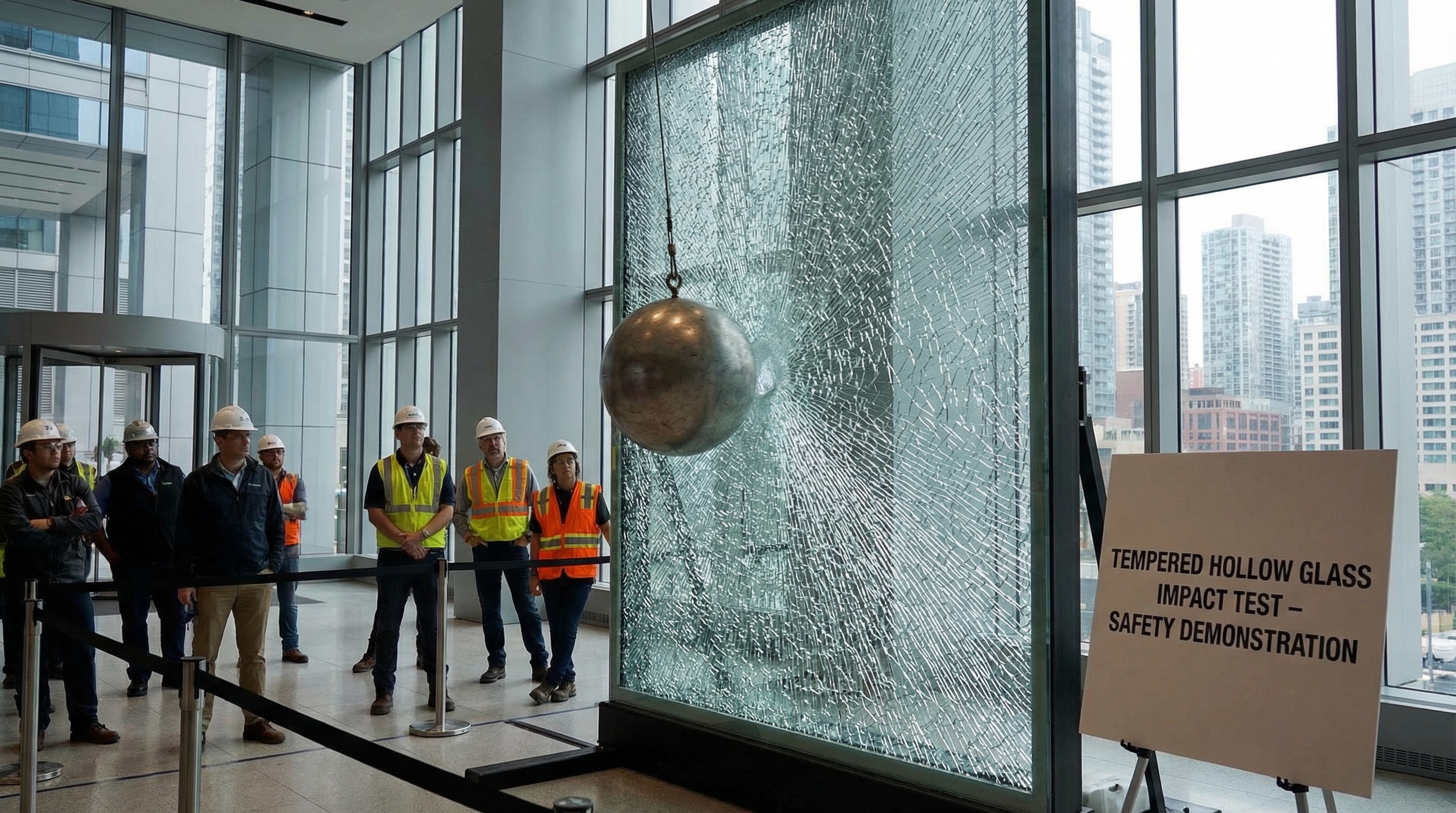
Hollow glass improves acoustics by utilizing a gas-filled gap that disrupts the transmission of sound waves between the panes. You can achieve a much quieter indoor environment by specifying hollow glass with varied glass thicknesses. It is the perfect solution for buildings near busy highways or airports.
The science of sound wave dampening
Think about it. Sound is just a vibration that moves easily through solid objects but struggles with air gaps. You are essentially creating a speed bump for noise.
- Decouples the inner and outer panes.
- Uses heavy gases to slow down sound waves.
- Reduces decibel levels by up to 35dB.
Can asymmetric glass thickness reduce noise?
Believe it or not, using two different thicknesses of glass is the “pro move” for silence. You prevent “coincidence frequencies” from passing through because each pane vibrates at a different rate.
- Breaks the frequency path of external noise.
- Prevents the glass from acting like a drum skin.
- Ideal for recording studios and high-end offices.
The impact of cavity width on decibel levels
Check this out. While a wider gap is great for heat, it has a specific “sweet spot” for blocking sound. You need to balance the air space to avoid creating a resonance chamber.
- Optimal gaps range from 12mm to 20mm.
- Prevents the amplification of low-frequency noise.
- Works best when combined with laminated layers.
Key Takeaway: Acoustic performance peaks when you combine unequal glass thicknesses with a precise internal air gap.
| Glass Config | Noise Reduction (dB) | Best Environment |
|---|---|---|
| Standard Double | 30-32 | Quiet Suburbs |
| Asymmetric Double | 34-36 | City Streets |
| Laminated Hollow | 38+ | Airport Zones |
Strategic glass selection allows you to tailor the acoustic profile of a room without changing the window’s visual appearance.
What gas fillings are used in hollow glass units?
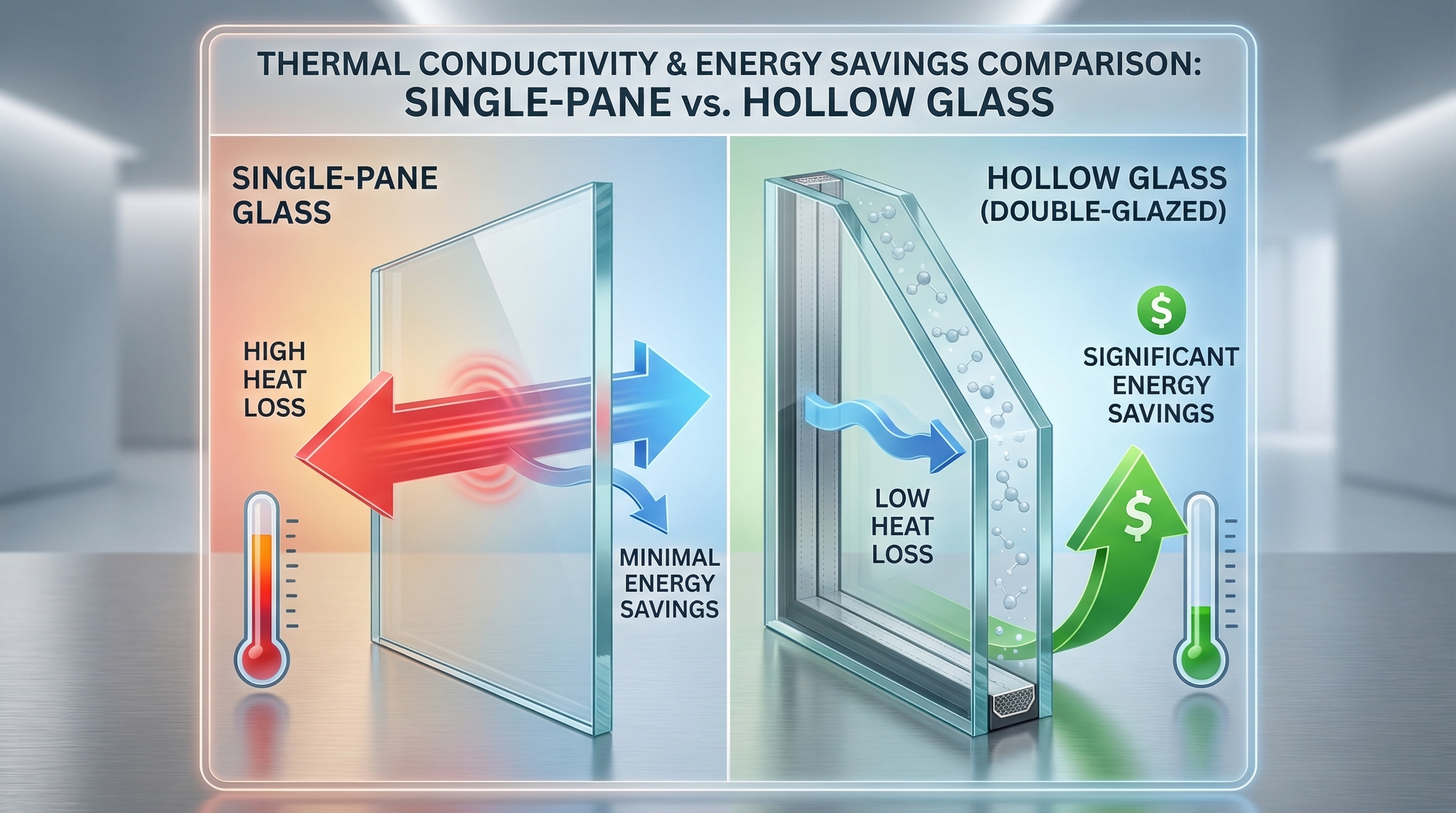
Manufacturers typically use argon or krypton gas to fill the internal cavity of a hollow glass unit. You should understand that these noble gases are denser than air, which slows down the convection currents that carry heat. Choosing the right gas can make or break your thermal performance targets.
Argon vs. Krypton: Which is better?
You might be wondering which one provides the best bang for your buck. Argon is the industry standard for most commercial projects, while krypton is the premium choice for thinner profiles.
- Argon is highly cost-effective and abundant.
- Krypton offers better insulation in narrow gaps.
- Both gases are colorless, odorless, and non-toxic.
Why not just use dry air?
Here is the deal. While dry air is better than a solid pane, it still moves too much inside the window. You lose a significant amount of heat through air circulation that dense gases simply stop.
- Air has higher thermal conductivity.
- Dense gases reduce internal convection currents.
- Inert gases provide a more stable thermal barrier.
Key Takeaway: Argon gas provides the best balance of cost and performance for 90% of commercial glass applications.
| Gas Type | Conductivity | Relative Cost |
|---|---|---|
| Dry Air | 0.024 | Low |
| Argon | 0.016 | Moderate |
| Krypton | 0.009 | High |
The thermal conductivity chart highlights that Argon is approximately 33% more efficient at stopping heat transfer than standard air.
How does hollow glass compare to single-pane glazing?
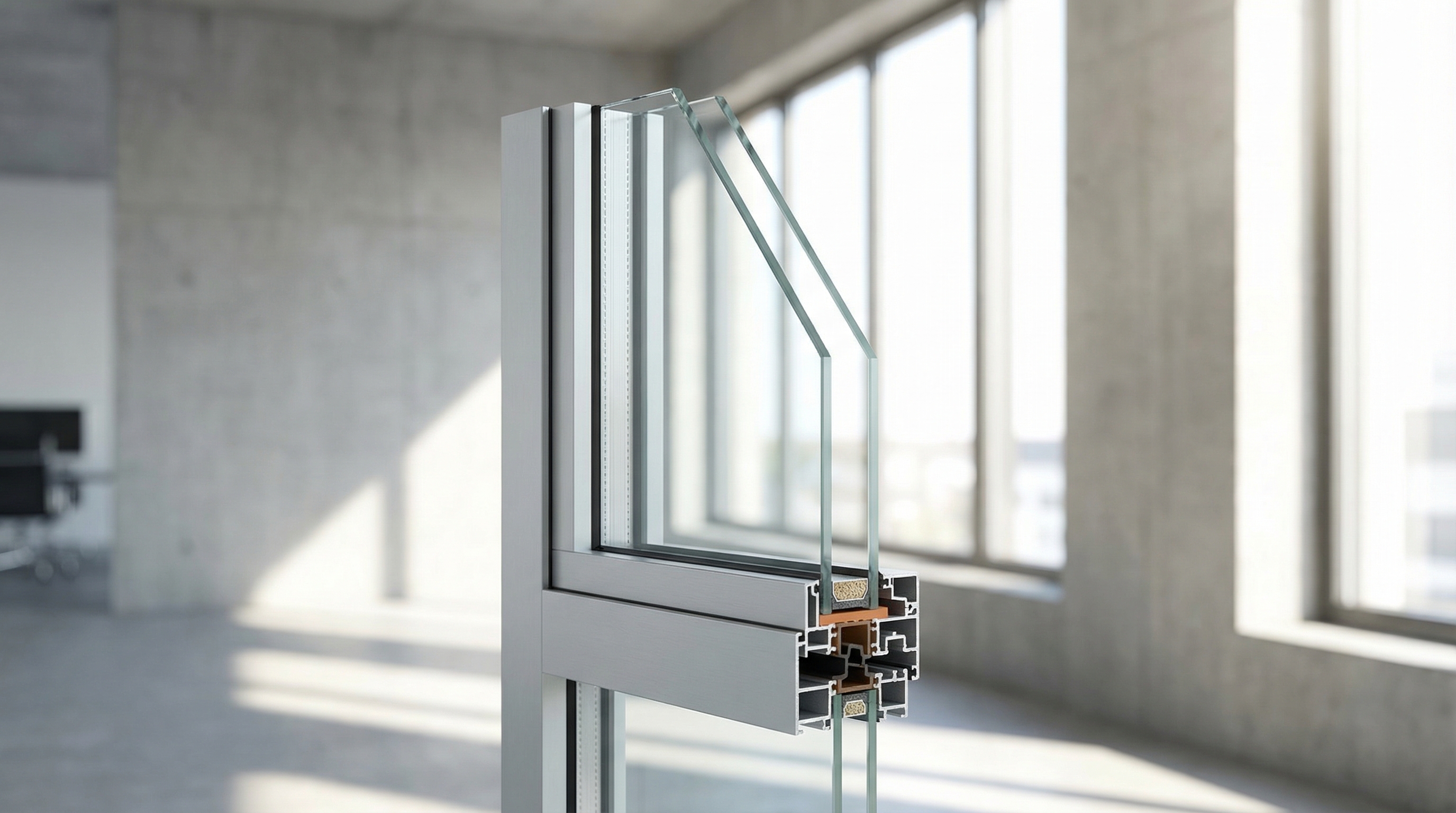
Hollow glass offers significantly lower thermal conductivity and higher security compared to the outdated technology of single-pane glazing. As an expert at about the industry knows, the move to multi-pane systems is no longer optional for modern architecture. You are essentially choosing between a sieve and a shield for your building.
Comparing thermal conductivity rates
The difference is staggering. You are looking at a system that can be three to four times more effective at stopping heat flow.
- Single pane acts as a direct thermal bridge.
- Hollow units create a decoupled thermal break.
- Massive reduction in radiant heat gain.
The long-term ROI of double glazing
But wait, there’s more. While the upfront cost is higher, you will likely earn that money back through energy savings in just a few years.
- Reduced monthly utility expenditures.
- Higher property resale value for investors.
- Lower maintenance costs over time.
Impact on HVAC system sizing
Think about it. When your windows insulate better, you can actually install smaller, less expensive air conditioning units. You save money on the equipment before the building even opens.
- Lower peak load requirements.
- Smaller ductwork and chiller footprints.
- Reduced operational wear on mechanical systems.
Key Takeaway: Switching to hollow units allows for a smaller HVAC footprint, saving capital expenditure during construction.
| Feature | Single Pane | Hollow Glass |
|---|---|---|
| Heat Loss | Extreme | Minimal |
| Noise Block | Poor | Excellent |
| Initial Cost | Low | Moderate |
The cross-section analysis confirms that the air gap is the primary driver of value, transforming a simple window into a complex insulator.
Can hollow glass be customized for specific industries?
Yes, you can customize hollow glass with tempered layers, fire-resistant coatings, or tinted films to suit specific industrial needs. You have the flexibility to design a unit that meets both aesthetic goals and rigorous safety certifications. No two high-rise projects have the exact same requirements.
Fire-rated hollow glass for safety
The best part? You can incorporate specialized interlayers that turn your window into a fire barrier. This allows you to maintain transparency in hallways and stairwells while keeping the building safe.
- Resists heat and flame for up to 120 minutes.
- Prevents the spread of smoke between zones.
- Meets strict international fire safety codes.
Security and bullet-resistant variants
You might be wondering about high-security environments like banks or government buildings. By using thicker laminated panes within the hollow unit, you can stop forced entry attempts easily.
- Multi-layered laminated glass construction.
- Resistant to heavy impacts and ballistics.
- Maintains thermal benefits while adding protection.
Solar-control glass for high-heat regions
Check this out. In desert climates, you can specify tints and reflective coatings that block 99% of solar heat. You keep the view of the skyline without turning the office into an oven.
- Reduces glare for better computer screen visibility.
- Blocks harmful UV rays from damaging interiors.
- Tailored Shading Coefficients for specific climates.
Key Takeaway: Customization allows you to solve multiple engineering problems—fire, security, and heat—within a single window unit.
| Customization | Primary Benefit | Common Usage |
|---|---|---|
| Tempered | Safety | High-traffic areas |
| Fire-Rated | Life Safety | Escape routes |
| Reflective | Cooling | Glass Facades |
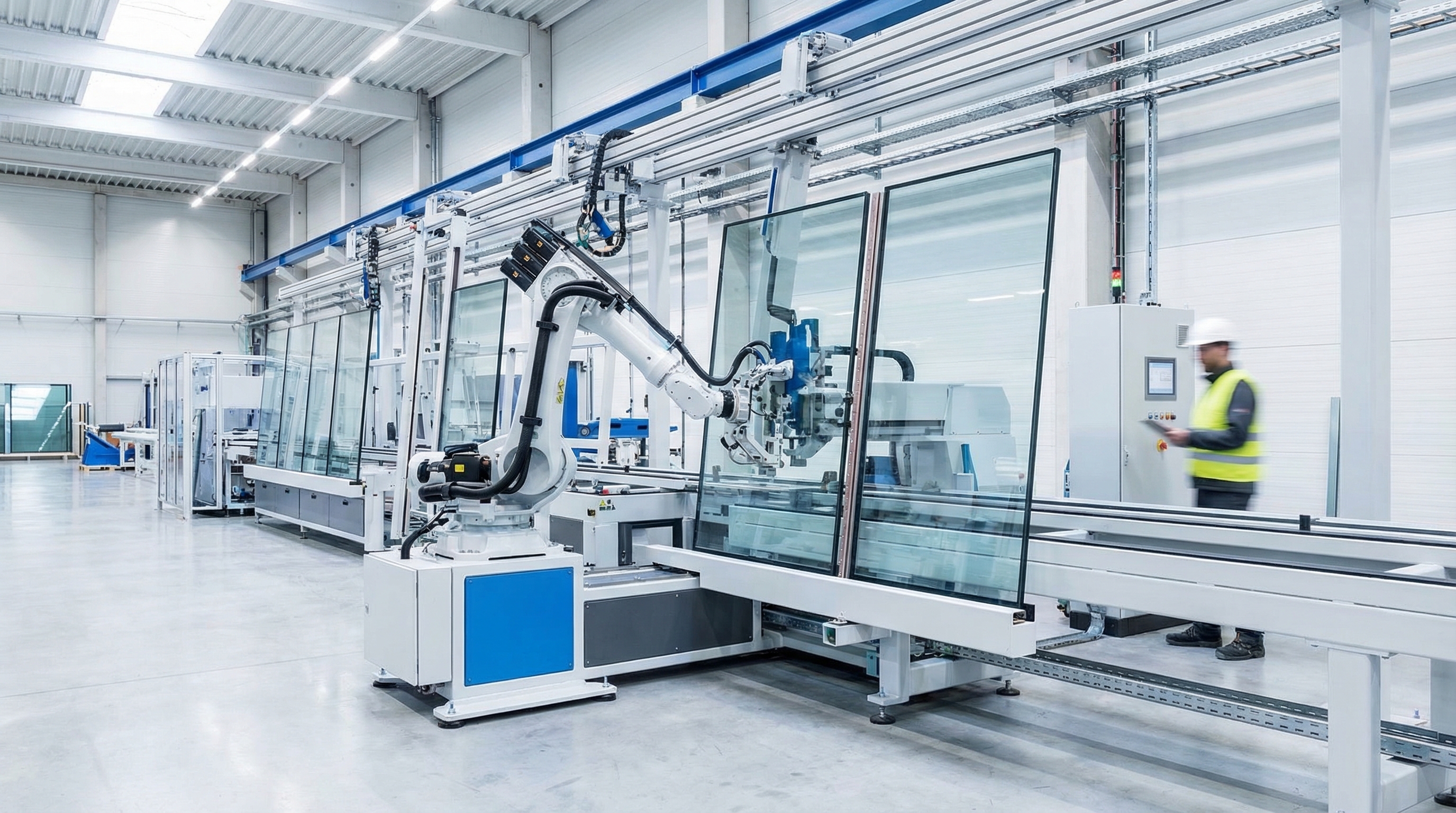
Using automated production lines ensures that even the most complex custom configurations maintain consistent quality across thousands of units.
What is the lifespan of a hollow glass installation?

A high-quality hollow glass installation typically lasts between 15 to 25 years before the seals require inspection or replacement. You must monitor the clarity of your hollow glass to ensure it continues providing the thermal benefits you paid for. Proper maintenance starts with understanding the environmental stressors.
Identifying signs of seal failure
But there’s more. The first sign of trouble is usually a light fogging or “sweating” that appears inside the two panes where you can’t wipe it off.
- Internal condensation during temperature shifts.
- Visible white residue from spent desiccants.
- Distorted reflections caused by gas loss.
Environmental factors affecting durability
You should know that extreme heat cycles and wind loads are the primary enemies of your window seals. The glass “breathes” as it heats and cools, which eventually puts stress on the adhesives.
- Intense direct sunlight accelerates sealant aging.
- High-altitude pressure changes affect the seal.
- Improper drainage in the window frame leads to rot.
Key Takeaway: Routine visual inspections for internal fogging can help you catch seal failures before they cause structural damage to the frames.
| Sign of Failure | Root Cause | Action Required |
|---|---|---|
| Internal Fog | Breached Seal | Replace Unit |
| Glass Bowing | Pressure Delta | Venting |
| Edge Discoloration | Sealant Decay | Monitor |
The reflection on a modern skyscraper should remain crisp; any distortion is a leading indicator of internal pressure loss or seal breach.
Why should B2B buyers invest in hollow glass now?
B2B buyers should invest in hollow glass to align with global ESG goals and reduce the long-term operational costs of their real estate portfolios. You are not just buying glass; you are investing in a more profitable and sustainable building. The market value of “green” certified buildings continues to outpace standard construction.
Meeting modern green building standards
Believe it or not, you can’t even get a building permit in many cities now without meeting strict insulation minimums. Hollow glass is the easiest way to earn LEED or BREEAM points.
- Essential for carbon footprint reduction.
- Complies with evolving local energy codes.
- Enhances the “green” reputation of your brand.
Reducing operational HVAC expenditures
But wait, there’s more. The savings on your monthly cooling and heating bills will directly improve your Net Operating Income (NOI).
- Predictable and lower energy costs.
- Reduces the need for expensive exterior shading.
- Lowers the frequency of HVAC maintenance.
Enhancing property resale value
Think about it. Institutional investors want assets that are future-proofed against rising energy prices and environmental taxes.
- Attracts high-value corporate tenants.
- Reduces the risk of “stranded assets” in your portfolio.
- Provides a clear competitive advantage in the market.
Key Takeaway: Hollow glass technology is no longer a luxury but a fundamental requirement for maintaining property value in a decarbonizing economy.
| Investment Factor | Short-Term Impact | Long-Term Impact |
|---|---|---|
| Energy Cost | Immediate Drop | Cumulative Savings |
| Compliance | Permits Granted | Risk Mitigation |
| Occupant Comfort | Zero Complaints | High Retention |
Analyzing Low-E coating applications shows that even a microscopic upgrade at the manufacturing stage yields massive dividends in building efficiency.
Frequently Asked Questions
Can I replace just the glass in my current frames with hollow glass?
Yes, provided your existing frames are deep enough to accommodate the increased thickness of a double-pane unit.
What’s the best way to clean hollow glass without damaging the seals?
Use mild soap and water with a soft cloth; avoid high-pressure washers or harsh chemicals that can degrade the perimeter silicone.
Can I get hollow glass with a custom tint for my office?
Absolutely, you can specify various tinted or reflective coatings during the manufacturing process to match your building’s aesthetic.
What’s the maximum size for a single hollow glass panel?
While it depends on the thickness of the glass, most industrial lines can produce units up to 3 meters by 6 meters.
Can I use hollow glass for a skylight?
Yes, but you must ensure the inner pane is laminated for safety to prevent glass from falling if a break occurs.
Hollow glass is the definitive answer to the energy and comfort challenges of modern commercial architecture. By integrating these units into your project, you ensure that high utility costs and occupant discomfort are a thing of the past. Problem solved. Our commitment to precision ensures your vision is built on a foundation of quality and sustainability. Please contact us today to receive a technical consultation for your specific project needs.