9H Tempered Glass is a specialized material that has reached the highest level of surface scratch resistance on the pencil hardness scale. Imagine sliding your brand-new industrial tablet into a toolbox, only for a stray screwdriver to leave a jagged permanent scar across the interface. This damage is more than a nuisance; it results in costly downtime, compromised data visibility, and expensive panel replacements that eat into your bottom line.
By integrating 9H Tempered Glass into your hardware design, you provide a sacrificial shield that absorbs environmental abuse while keeping the underlying display in pristine condition.
What exactly defines a 9H Tempered Glass rating?
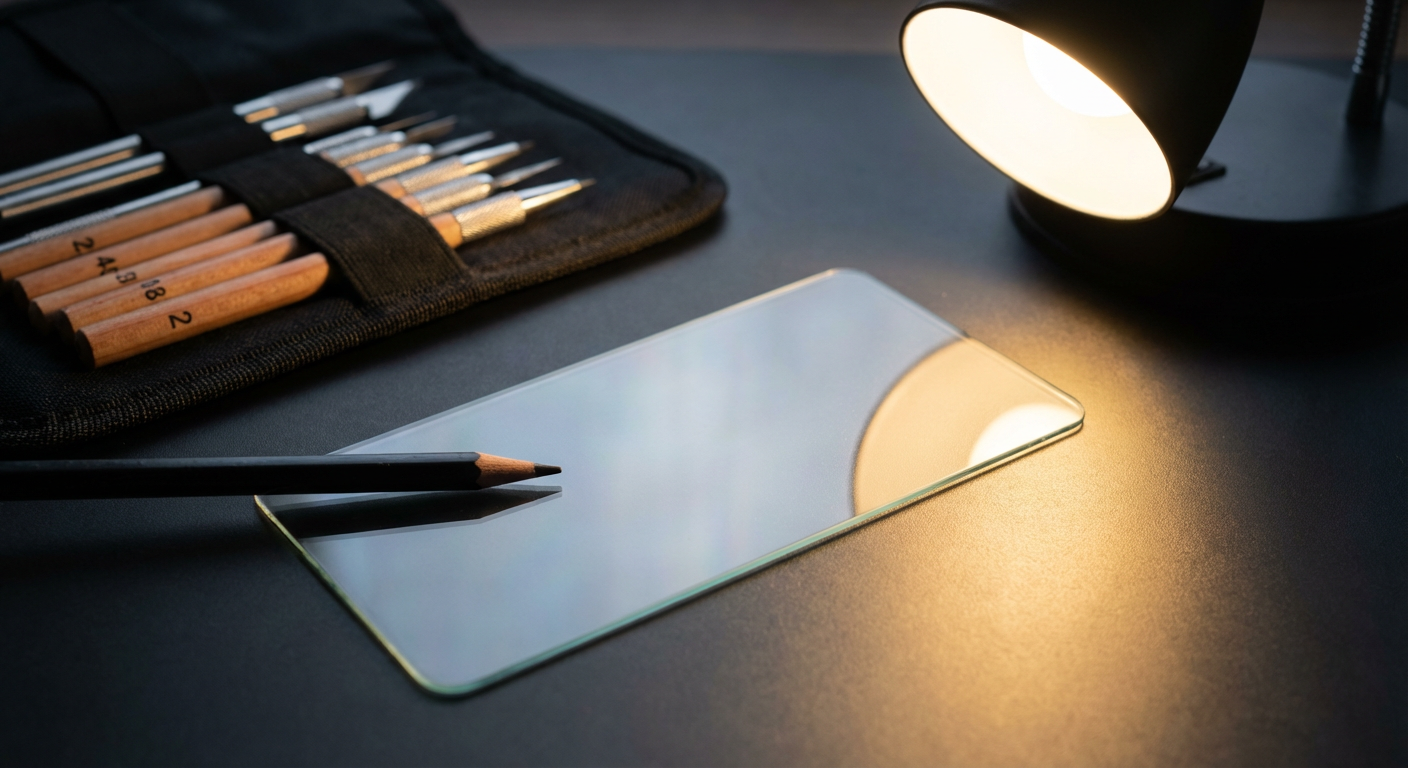
A 9H rating defines a glass surface that cannot be scratched by a 9H lead pencil, which is the hardest standard pencil available in the ASTM D3363 test. This 9H Tempered Glass classification is the industry benchmark for determining how well a screen can withstand contact with metal objects like keys, coins, or tools.
How is the pencil test conducted?
You might wonder how a simple pencil can determine professional-grade durability for a high-tech screen. The test involves a technician applying consistent pressure at a 45-degree angle using pencils ranging from soft (9B) to the hardest (9H).
Here is the kicker:
- Pencils are calibrated for specific graphite hardness.
- The glass must show zero permanent marks after the 9H pass.
- Pressure is standardized to ensure repeatable results.
Why is 9H the industry gold standard?
The 9H label serves as a universal language for buyers and engineers who need a quick, reliable metric for surface integrity. While it sounds simple, achieving this level of density requires advanced chemical treatments that modify the molecular structure of the glass.
But wait, there is more:
- It simplifies complex material science for B2B procurement.
- It guarantees protection against the most common pocket and workplace hazards.
- 9H serves as a baseline for premium consumer and industrial electronics.
Key Takeaway
9H hardness is a surface-level pencil rating that ensures the display remains clear of everyday scratches and abrasions.
| Metric | Testing Standard | Performance Value |
|---|---|---|
| Hardness | ASTM D3363 | 9H (Highest) |
| Tool Used | Calibrated Lead Pencil | No surface marring |
This standardized rating allows you to compare different cover glass options with technical certainty.
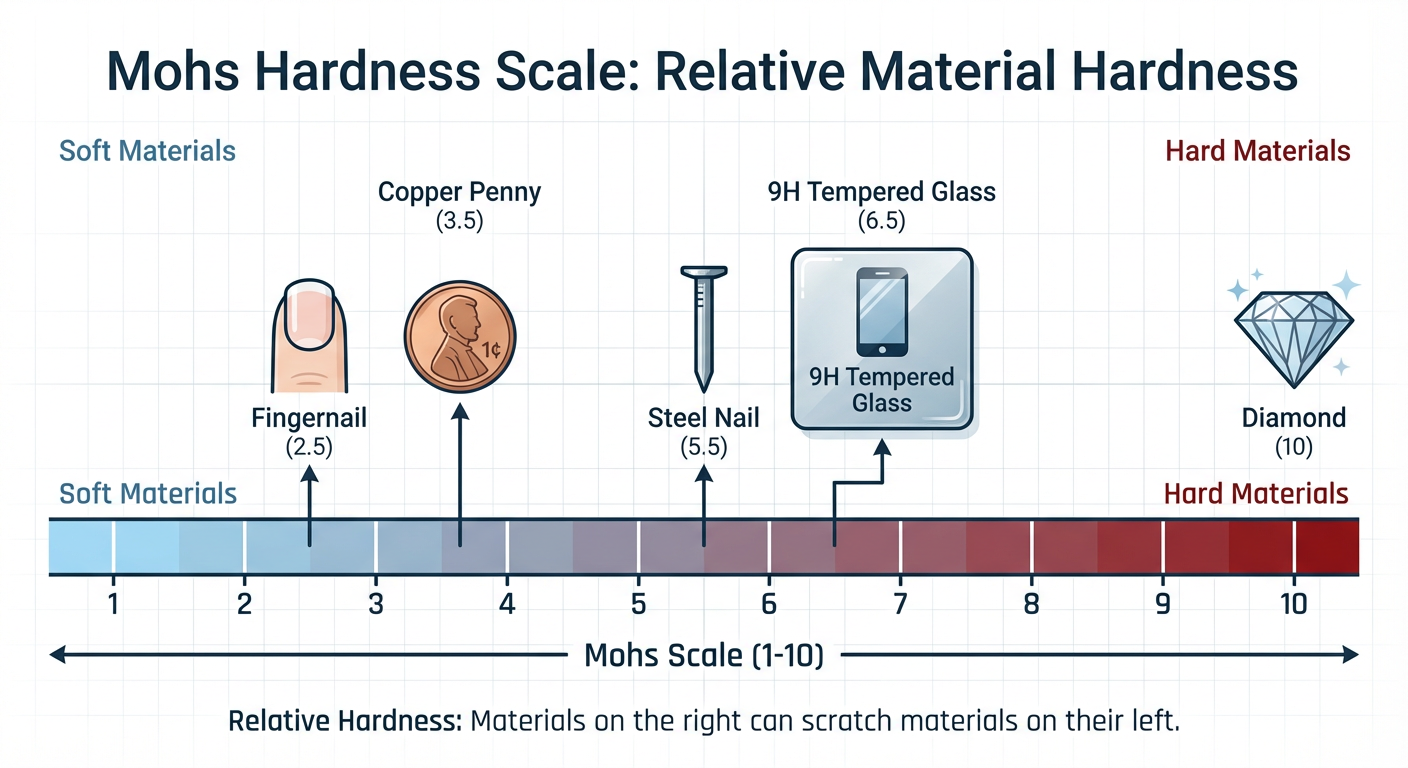
No, 9H Tempered Glass refers to the pencil scale, though it translates approximately to a 6 or 7 on the Mohs mineral hardness scale. While the terms are often used interchangeably in marketing, you must understand that pencil hardness measures surface resistance to graphite, whereas Mohs measures mineral-on-mineral scratching.
How does pencil hardness differ from Mohs?
The Mohs scale ranks minerals from 1 (talc) to 10 (diamond), and most 9H Tempered Glass sits comfortably between a steel nail and quartz. You should know that even though 9H is the “top” of the pencil scale, it can still be scratched by minerals like sand that rank higher on the Mohs scale.
The truth is:
- Pencil hardness (H) is used for coatings and films.
- Mohs hardness is used for solid minerals and raw glass.
- A 9H rating usually implies the glass is harder than common steel.
What are the limits of Mohs ratings?
You need to be aware that a high Mohs rating often comes at the cost of increased brittleness. While a diamond-hard screen would never scratch, it would likely shatter the moment it experienced a minor drop or thermal shock.
Here is the secret:
- Most display glass is optimized for a 6.5 Mohs rating.
- This balance prevents scratches from metal while maintaining impact toughness.
- Higher mineral hardness often requires exotic, expensive materials like sapphire.
Key Takeaway
Pencil 9H and Mohs 7 represent different ways to measure durability, but both ensure a display is harder than common metal tools.
| Scale Type | Rating for 9H Glass | Common Comparison |
|---|---|---|
| Pencil Scale | 9H | Harder than 9H lead |
| Mohs Scale | 6.0 – 7.0 | Equivalent to quartz/hard steel |
Understanding the distinction prevents you from overestimating the mineral resistance of your device.
How does 9H Tempered Glass resist deep scratches?
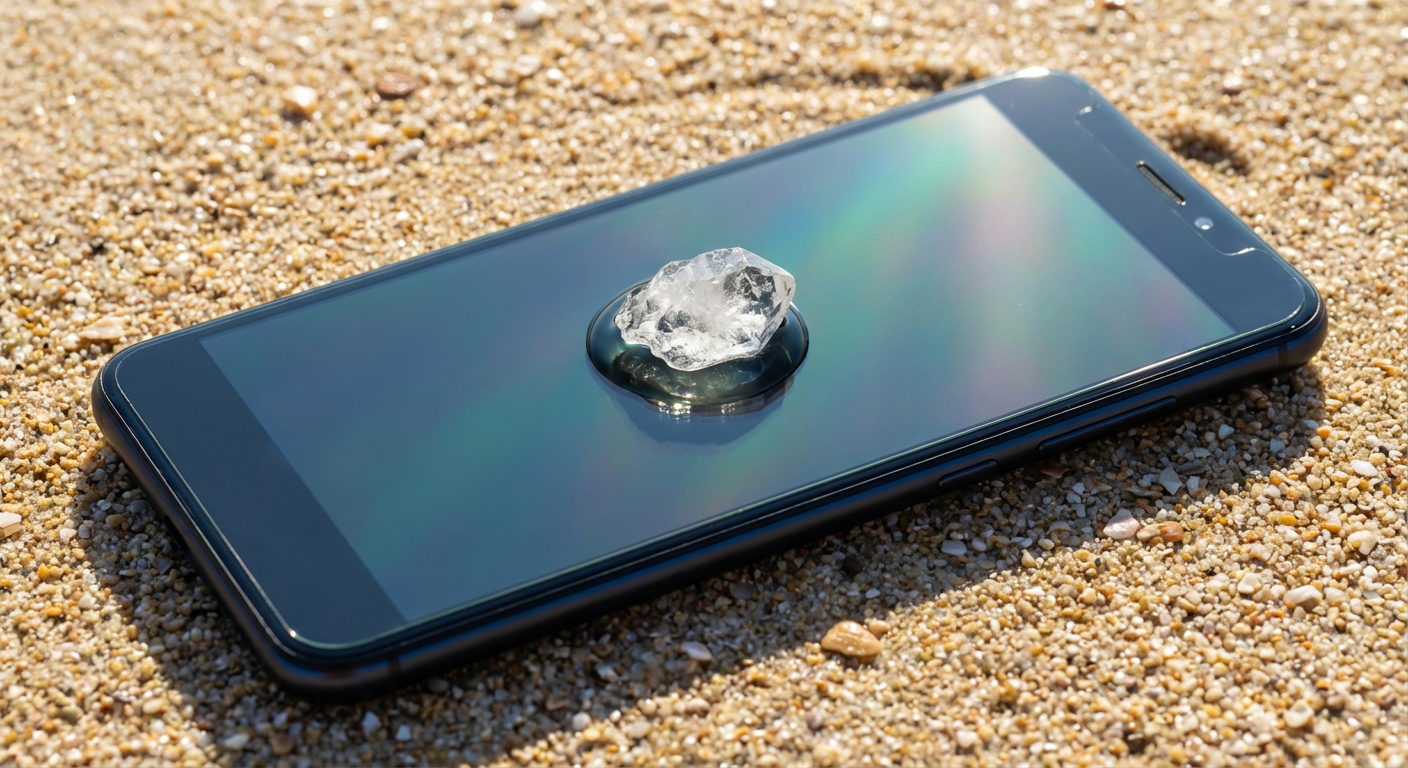
9H Tempered Glass resists deep scratches by utilizing a chemical ion-exchange process that creates a high-density compressive stress layer on the surface. When you choose a 9H Tempered Glass solution, you are essentially getting glass with a “tightened” molecular surface that prevents sharp objects from penetrating the material.
Can sand scratch 9H panels?
Sand contains silica and quartz, which are inherently harder than almost all types of 9H Tempered Glass. If you work in construction or outdoor environments, small sand particles can act like tiny glass cutters if they are rubbed against the display.
But that is only half the story:
- Quartz ranks 7 on the Mohs scale, which is the limit for 9H glass.
- Friction under pressure is what causes the visible scratch.
- Regular cleaning helps prevent abrasive particles from doing damage.
How does ion exchange prevent damage?
During manufacturing, larger potassium ions are forced into the space previously held by smaller sodium ions on the glass surface. This creates a “crowded” surface that is incredibly difficult for any foreign object to pierce or gouge.
But wait, there is more:
- This process creates a “compressed” shield several microns deep.
- It significantly increases the MPa (Megapascals) of the surface tension.
- Ion-exchange glass is far superior to standard heat-tempering for thin displays.
Key Takeaway
Deep scratch resistance is a result of surface density, though geological minerals like sand still pose a threat to any glass.
| Resistance Factor | Technical Cause | Effectiveness |
|---|---|---|
| Metal Scratches | High Surface Density | Excellent |
| Mineral/Sand | Mohs Overlap | Moderate |
By understanding these physical limits, you can better manage user expectations in rugged environments.
Why choose 9H Tempered Glass for impact resistance?
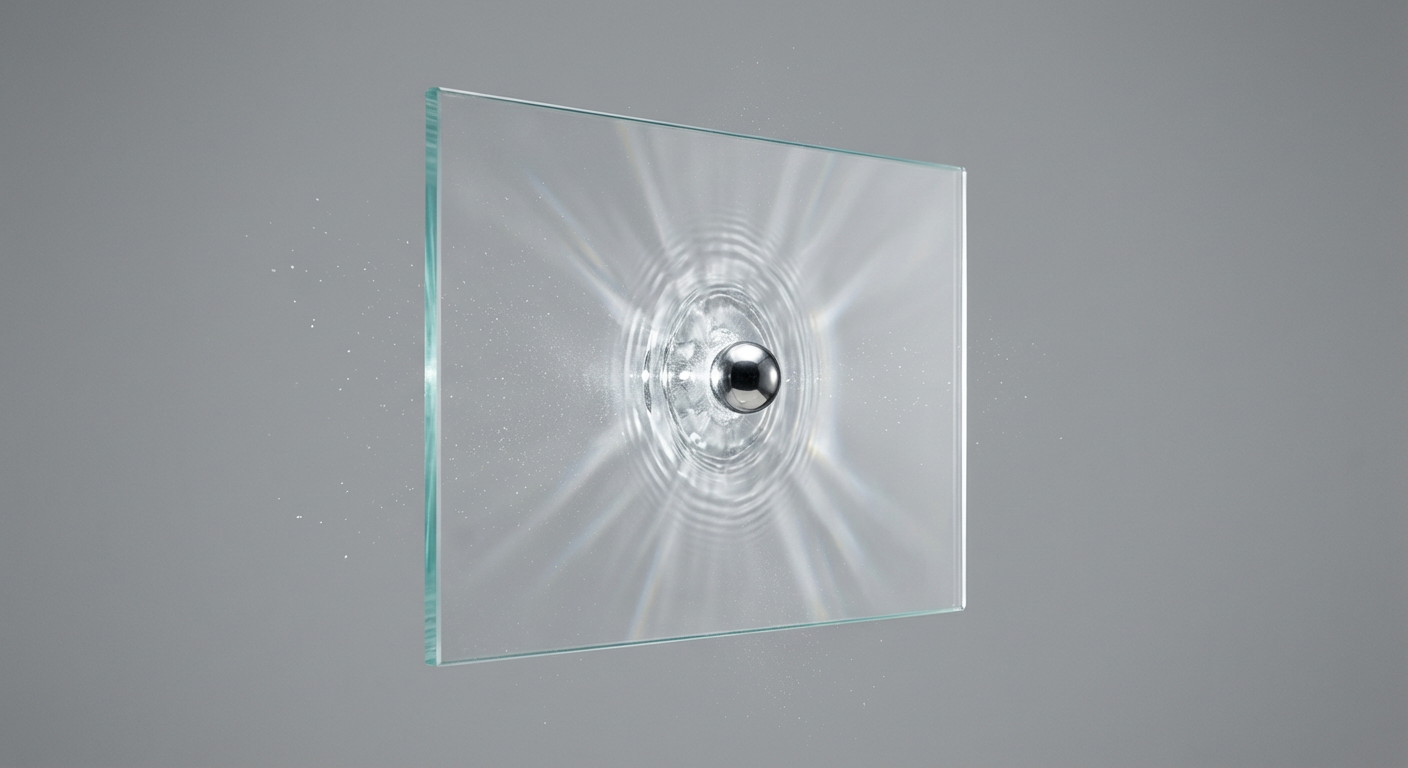
9H Tempered Glass is chosen for impact resistance because the tempering process allows the glass to distribute the energy of a strike across its entire surface area. Unlike standard glass that shatters at a single point of failure, 9H Tempered Glass is engineered to remain structurally sound even under significant localized pressure.
Does 9H prevent shattering?
While no glass is indestructible, the 9H Tempered Glass used in modern displays is designed to be “tough” rather than just “hard.” When hit, the internal tension of the glass works to keep the panel in one piece, preventing the dangerous sharp shards typical of annealed glass.
Think about it:
- Hardness (9H) stops the initial piercing of the impact.
- Toughness (Tempering) absorbs the kinetic energy.
- Lamination can further ensure that if a break occurs, fragments stay in place.
How much pressure can it handle?
You might be surprised to learn that a thin sheet of 9H Tempered Glass can often support hundreds of pounds of static weight. This makes it ideal for public kiosks or industrial interfaces where users might lean or apply heavy pressure to the screen.
Here is the kicker:
- Properly tempered glass is 4 to 5 times stronger than standard glass.
- It can withstand the “ball drop test” from significant heights.
- Surface tension prevents micro-cracks from turning into full-panel failures.
Key Takeaway
9H glass provides a dual layer of protection, combining surface hardness to prevent piercing with structural tempering to resist impact.
| Impact Type | Protection Level | Benefit |
|---|---|---|
| Sharp Puncture | High | Prevents piercing through to the LCD |
| Blunt Force | Exceptional | Spreads energy to prevent shattering |
This structural integrity is what makes it a must-have for any device used in high-traffic or industrial settings.
Is 9H Tempered Glass mandatory for smartwatches?
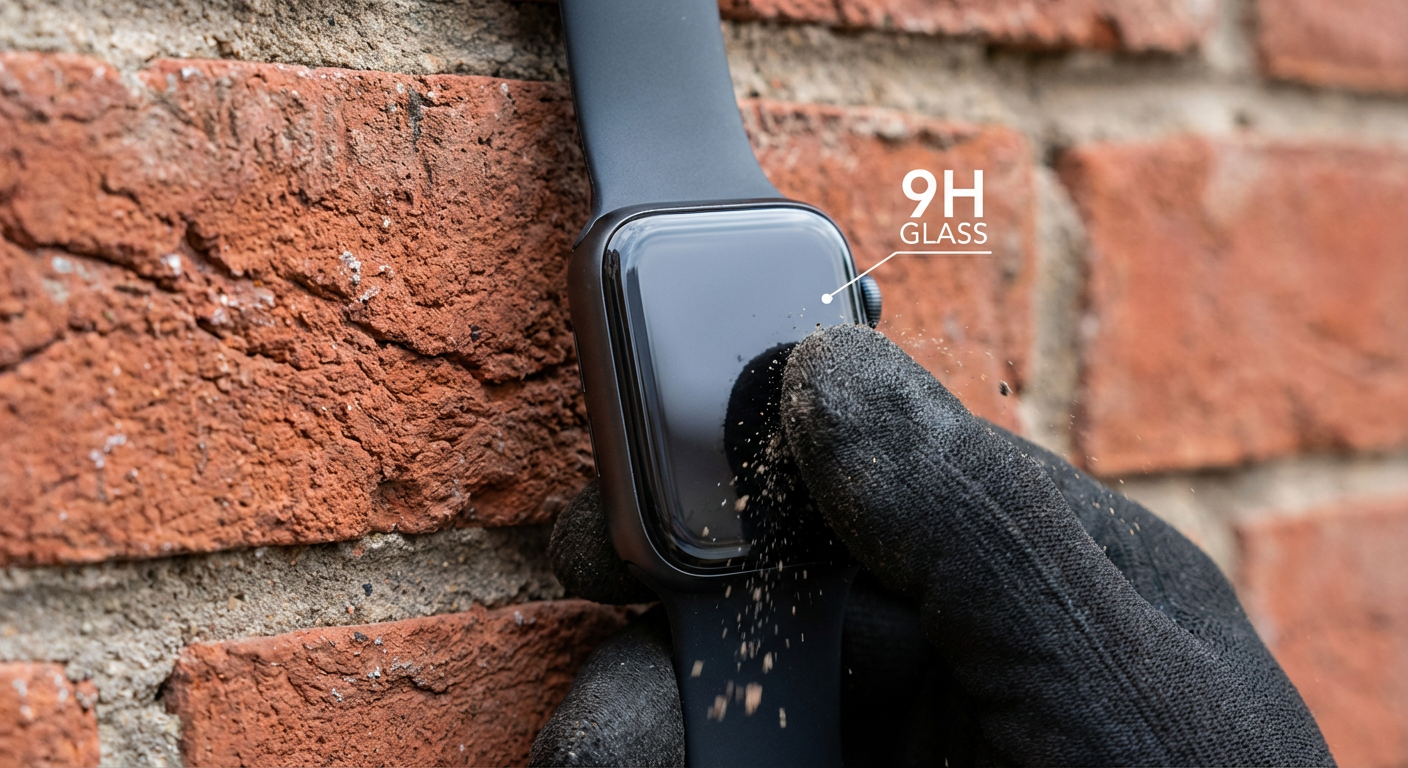
Yes, 9H Tempered Glass is considered mandatory for smartwatches due to the constant exposure and high frequency of accidental bumps against walls and furniture. Our 9H Tempered Glass case studies show that wearables experience significantly more abrasive contact than handheld smartphones.
Why are wearables higher risk?
Your wrist is always in motion, making the smartwatch face a primary target for door frames, zippers, and stone countertops. Without 9H Tempered Glass, the display would show signs of “haze” and micro-scratches within just a few weeks of daily wear.
The truth is:
- Hands are the most active part of the human body.
- Watch faces are often smaller, making scratches more distracting.
- Repairs for wearable screens are often more expensive than the device itself.
Does 9H affect screen clarity on watches?
You don’t have to worry about the display looking dim or washed out because 9H Tempered Glass maintains over 92% light transmission. This ensures that even in direct sunlight, the text and colors on your smartwatch remain crisp and legible.
But wait, there is more:
- High hardness does not compromise optical transparency.
- 9H glass can be paired with anti-reflective coatings.
- The smooth surface actually improves the responsiveness of touch gestures.
Key Takeaway
The high-exposure nature of wearable devices makes 9H protection an essential design requirement rather than an optional feature.
| Device Type | Risk Level | Protection Requirement |
|---|---|---|
| Smartwatch | Extreme | Mandatory 9H |
| Smartphone | High | Strongly Recommended |
Investing in 9H glass for wearables significantly extends the aesthetic and functional lifespan of the product.
Can 9H Tempered Glass be used in automotive displays?

9H Tempered Glass is increasingly being used in automotive displays to protect large, integrated cockpit screens from the abrasive dust and debris found in vehicle interiors. As car dashboards transition to all-glass interfaces, 9H Tempered Glass ensures that the critical navigation and safety information remains visible for the life of the vehicle.
Is it safe for head-impact tests?
You might worry that a hard glass panel could be a hazard during a collision, but automotive-grade 9H Tempered Glass is designed with specific safety benchmarks. Through advanced tempering and lamination, the glass is engineered to crumble into dull granules or stay adhered to a film during an accident.
Here is the secret:
- Laminated 9H glass meets rigorous automotive safety standards.
- It prevents the formation of “shards” that could injure passengers.
- Hardness ensures the screen isn’t ruined by cleaning chemicals or dust.
How does it handle extreme temperatures?
Automotive environments can fluctuate from freezing to sweltering, and 9H Tempered Glass is thermally stable enough to handle these shifts without warping. You can trust that the display will remain perfectly flat and touch-responsive regardless of the climate.
Believe it or not:
- Tempered glass has excellent thermal shock resistance.
- 9H hardness prevents the “softening” or scratching seen on plastic covers.
- It maintains optical clarity across a massive temperature range.
Key Takeaway
9H glass is the premier choice for modern automotive interiors, combining safety-certified shattering with long-term scratch resistance.
| Feature | Automotive Benefit | Priority |
|---|---|---|
| Scratch Resistance | Resists dust/sand abrasion | High |
| Safety Tempering | Prevents sharp shards | Critical |
As dashboards become larger, the need for a durable, glass-based protective layer becomes undeniable.
How does 9H Tempered Glass compare to sapphire?
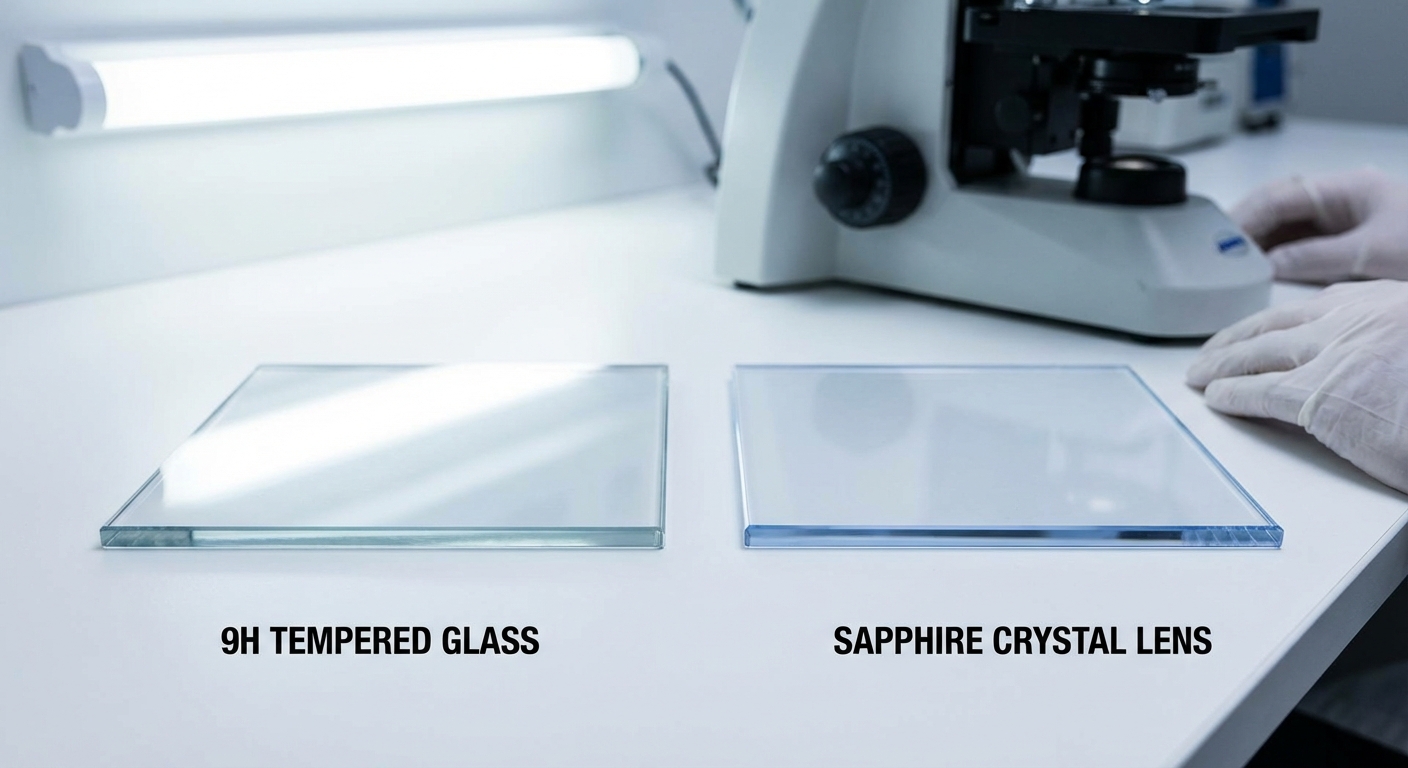
9H Tempered Glass offers a more cost-effective and impact-resistant alternative to sapphire, which is harder but far more brittle. While sapphire crystal can reach a Mohs 9, a 9H Tempered Glass panel provides a better balance of price and durability for large-scale B2B applications.
Is sapphire worth the extra cost?
For most industrial and consumer applications, the extreme cost of sapphire is difficult to justify when 9H Tempered Glass already resists nearly all common threats. You should consider sapphire only if your device will be used in environments with heavy exposure to industrial abrasives like diamond dust.
Here is the kicker:
- 9H glass is significantly cheaper to manufacture at scale.
- Sapphire is prone to catastrophic shattering upon impact.
- 9H glass offers better flexibility for large display panels.
Which provides better optical clarity?
You will find that high-quality 9H Tempered Glass actually has a lower refractive index than sapphire, meaning it often produces less glare. This makes it a superior choice for outdoor displays where readability is the primary concern for the end-user.
But wait, there is more:
- Glass can be easily treated with Anti-Glare (AG) coatings.
- Sapphire is much more difficult to coat and process.
- 9H glass provides a more “natural” look for high-resolution OLEDs.
Key Takeaway
9H glass is the practical winner for 99% of applications, offering nearly identical scratch protection with much better impact resilience.
| Feature | 9H Tempered Glass | Sapphire Crystal |
|---|---|---|
| Mohs Hardness | ~6.5 – 7.0 | 9.0 |
| Impact Toughness | High | Low (Brittle) |
| Cost | Economical | Very High |
Selecting 9H glass allows you to allocate your budget toward other critical hardware components.
Is 9H Tempered Glass superior to standard glass?
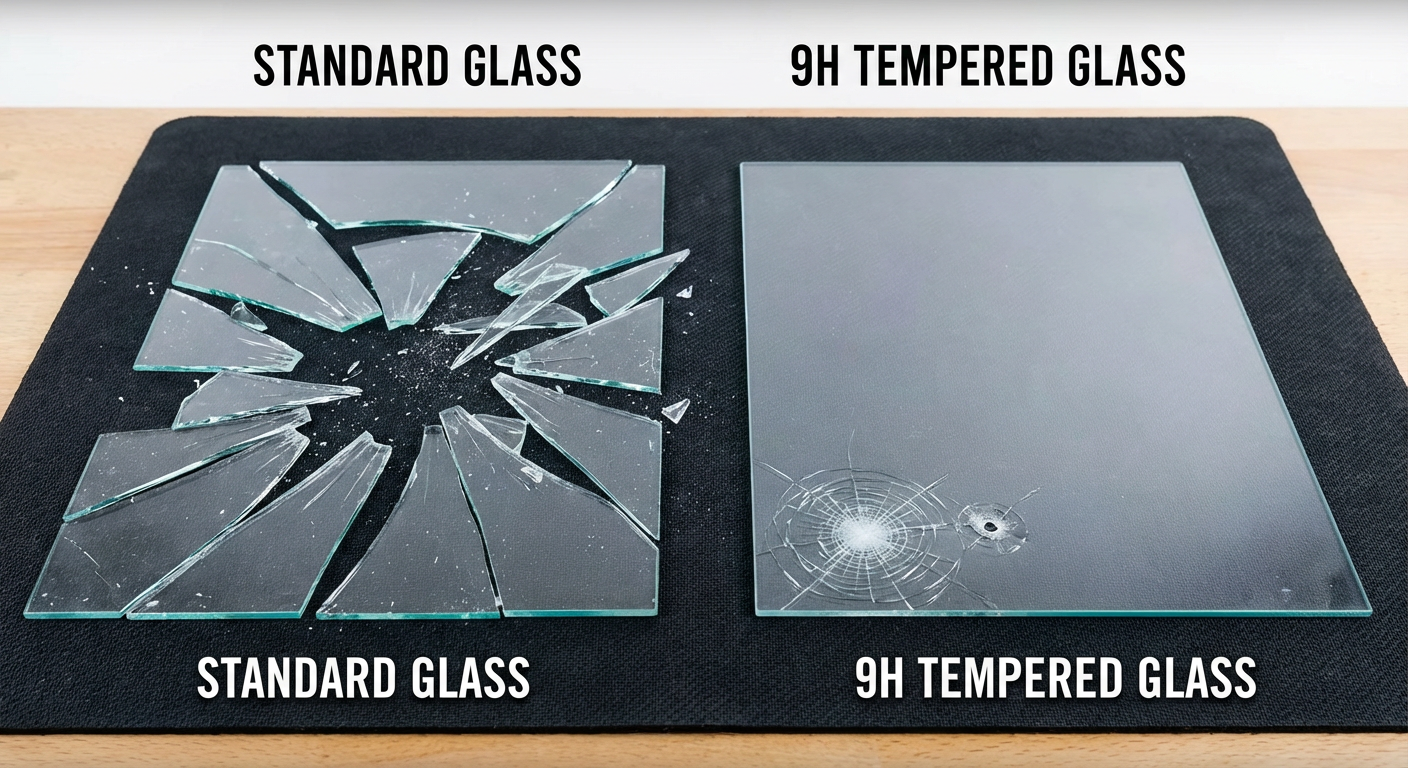
Yes, 9H Tempered Glass is vastly superior to standard glass, offering up to five times the strength and significantly higher scratch resistance. While standard annealed glass can be easily scratched by a common copper coin, 9H Tempered Glass remains flawlessly smooth even under heavy metal-on-glass friction.
Why is standard glass a liability?
If you use standard glass for a display cover, you are inviting failure; it is prone to deep scratches that can weaken the structure and eventually lead to spontaneous cracking. You also face a significant safety risk, as standard glass breaks into large, lethal daggers that can cause severe injury.
The truth is:
- Standard glass has no internal compressive stress.
- It is highly vulnerable to “micro-fractures” from daily use.
- The lack of surface hardness leads to a “cloudy” display over time.
How does tempering improve longevity?
The 9H Tempering process effectively seals the surface of the glass, making it virtually immune to the environmental aging that affects lower-quality materials. You are investing in a product that will look and function the same on day one thousand as it did on day one.
But that is not all:
- It resists chemical corrosion from oils and acids.
- The surface stays “slicker,” making it harder for dirt to bond.
- Longevity reduces the total cost of ownership for hardware fleets.
Key Takeaway
The shift from standard to 9H glass is a transition from a fragile commodity to a high-performance engineering component.
| Property | Standard Glass | 9H Tempered Glass |
|---|---|---|
| Break Pattern | Large, sharp shards | Small, dull granules |
| Scratch Resistance | Low (5H) | High (9H) |
Choosing 9H is the only way to guarantee both the safety of the user and the durability of the device.
Does 9H Tempered Glass affect touch sensitivity?
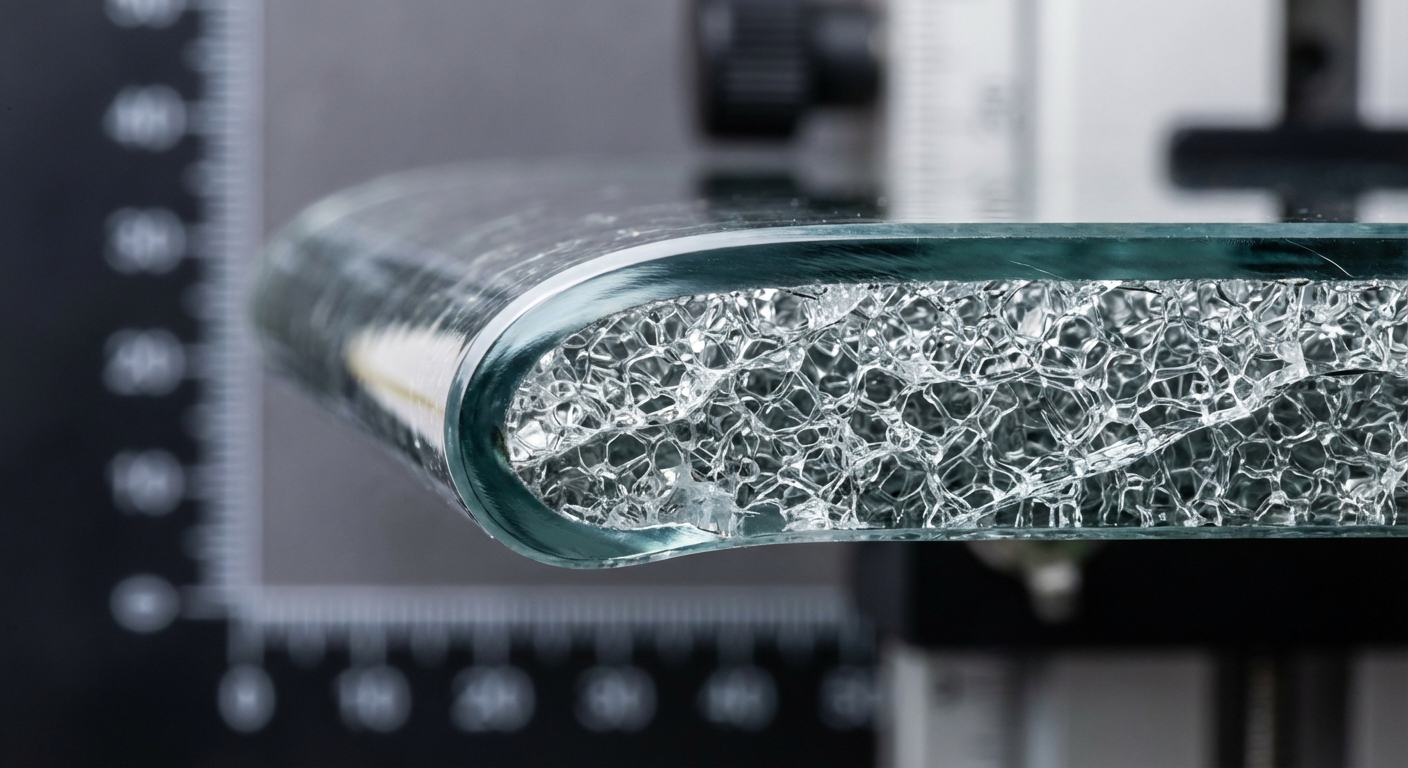
9H Tempered Glass does not negatively affect touch sensitivity when it is manufactured with precision thickness and high-quality adhesive bonding. In fact, many users find that the ultra-smooth surface of 9H Tempered Glass actually enhances the swiping experience by reducing finger friction.
Does thickness play a role?
You might worry that adding a protective layer will create a lag between your finger and the sensor, but modern 9H glass is often as thin as 0.33mm. This thickness is optimized to provide maximum protection while remaining completely invisible to the capacitive touch sensors.
Think about it:
- Sensors detect changes in electrical fields through the glass.
- High-quality glass has zero impact on these electrical signals.
- Precise edge finishing prevents the “halo” effect on curved screens.
How are the edges finished?
The edges of 9H Tempered Glass are usually polished into a 2.5D or 3D curve, ensuring that your finger doesn’t catch on a sharp corner when swiping from the side. You get a seamless, “liquid-like” feel that mimics the original design of the device.
But wait, there is more:
- CNC polishing removes micro-cracks along the edge.
- Smooth edges prevent the glass from chipping during side impacts.
- It creates a premium, integrated look for high-end electronics.
Key Takeaway
9H glass is engineered to be a transparent and “silent” protector that improves rather than hinders the user interface.
| UX Factor | Impact of 9H Glass | Result |
|---|---|---|
| Sensitivity | Neutral | Flawless response |
| Glide Feel | Positive | Reduced skin friction |
Precision manufacturing ensures that the protection is felt through durability, not through a loss of interface speed.
Where can you source high-quality 9H Tempered Glass?
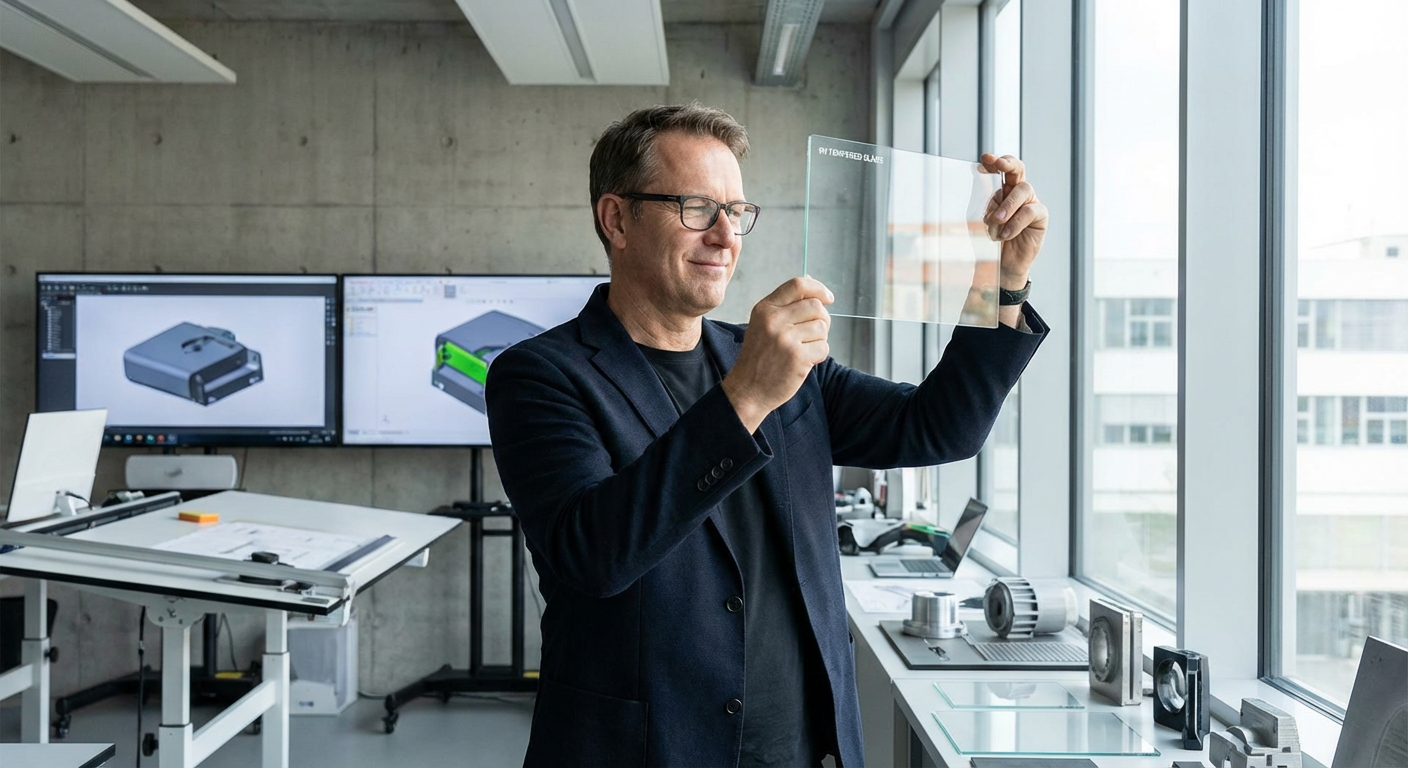
You should source high-quality 9H Tempered Glass from direct manufacturers who operate their own ISO-certified tempering and chemical strengthening lines. Sourcing from a factory with 100% inspection protocols ensures that every panel meets the strict 9H Tempered Glass benchmarks required for commercial and industrial success.
Why go direct to the factory?
When you work directly with the manufacturer, you eliminate the middleman and gain full control over the technical specifications of your glass. You can request custom CNC drilling, specialized screen printing, and even proprietary coatings that off-the-shelf suppliers simply cannot offer.
Here is the kicker:
- You receive full traceability for every batch of glass.
- Lead times are shorter for custom prototyping and OEM runs.
- You get factory-direct pricing for large-scale B2B orders.
What certifications should you look for?
You need to ensure your supplier complies with global standards like EN 12150 and ASTM C1048 to guarantee the glass performs as promised in the field. A reliable partner will provide test reports for ball drops, fragmentation, and of course, the 9H pencil hardness rating.
But wait, there is more:
- ISO 9001:2015 ensures consistent quality management.
- RoHS compliance is essential for electronics exports.
- Look for suppliers with a history of successful international projects.
Key Takeaway
The best source for 9H glass is a vertically integrated factory that can validate its hardness through documented laboratory testing.
| Sourcing Type | Customization | Reliability |
|---|---|---|
| Factory Direct | High | Maximum |
| Third-Party Vendor | Low | Variable |
Working with an expert manufacturer ensures your product is protected by the highest grade of safety glass available.
Conclusion
9H Tempered Glass has moved from a premium option to a fundamental requirement in the display industry. By solving the persistent problems of surface scratching and impact damage, it allows engineers to build thinner, more beautiful devices without sacrificing field reliability. At PrimePro Glass, we are dedicated to advancing the science of safety glass, providing our global partners with the precision-engineered panels they need to succeed in competitive markets. Our vision is to be the invisible shield behind every great interface, ensuring that technology remains clear, safe, and durable. To see how we can protect your next project, please contact us today for a comprehensive consultation and quote.
FAQ
Can I scratch 9H Tempered Glass with a knife?
No, a standard steel knife cannot scratch it. Standard stainless steel ranks lower on the hardness scale than chemically strengthened 9H glass.
How do I know if my glass is actually 9H?
You must check the technical data sheet provided by your manufacturer. Professional-grade glass will always be accompanied by a certified ASTM D3363 test report.
Will 9H glass make my screen more reflective?
No, hardness does not dictate reflectivity. While the glass itself is clear, you can add Anti-Reflective (AR) coatings to ensure maximum visibility in bright light.
Is 9H Tempered Glass the same as Gorilla Glass?
Not necessarily, although many brands use 9H as a descriptor for their durability. 9H is a hardness rating, while Gorilla Glass is a specific brand of aluminosilicate glass that typically exceeds the 9H benchmark.
Does 9H glass crack more easily than standard glass?
No, it is significantly more resistant to cracking. Because it is tempered, it requires much more force to initiate a fracture compared to standard annealed glass.