Tempered glass shatters on tile because the extreme hardness of ceramic or porcelain creates concentrated point-load stress that easily breaches the glass panel’s delicate compression layer. You might find yourself standing amidst a sea of crystal-like pebbles after a simple, accidental bump against your bathroom floor. This experience is not only startling but creates a significant safety hazard and project delay that demands immediate attention. By understanding the physics of tempered glass shatter on tile, you can implement specific preventative measures to protect your investments and ensuring long-term structural integrity.
Why is the edge of tempered glass so weak?
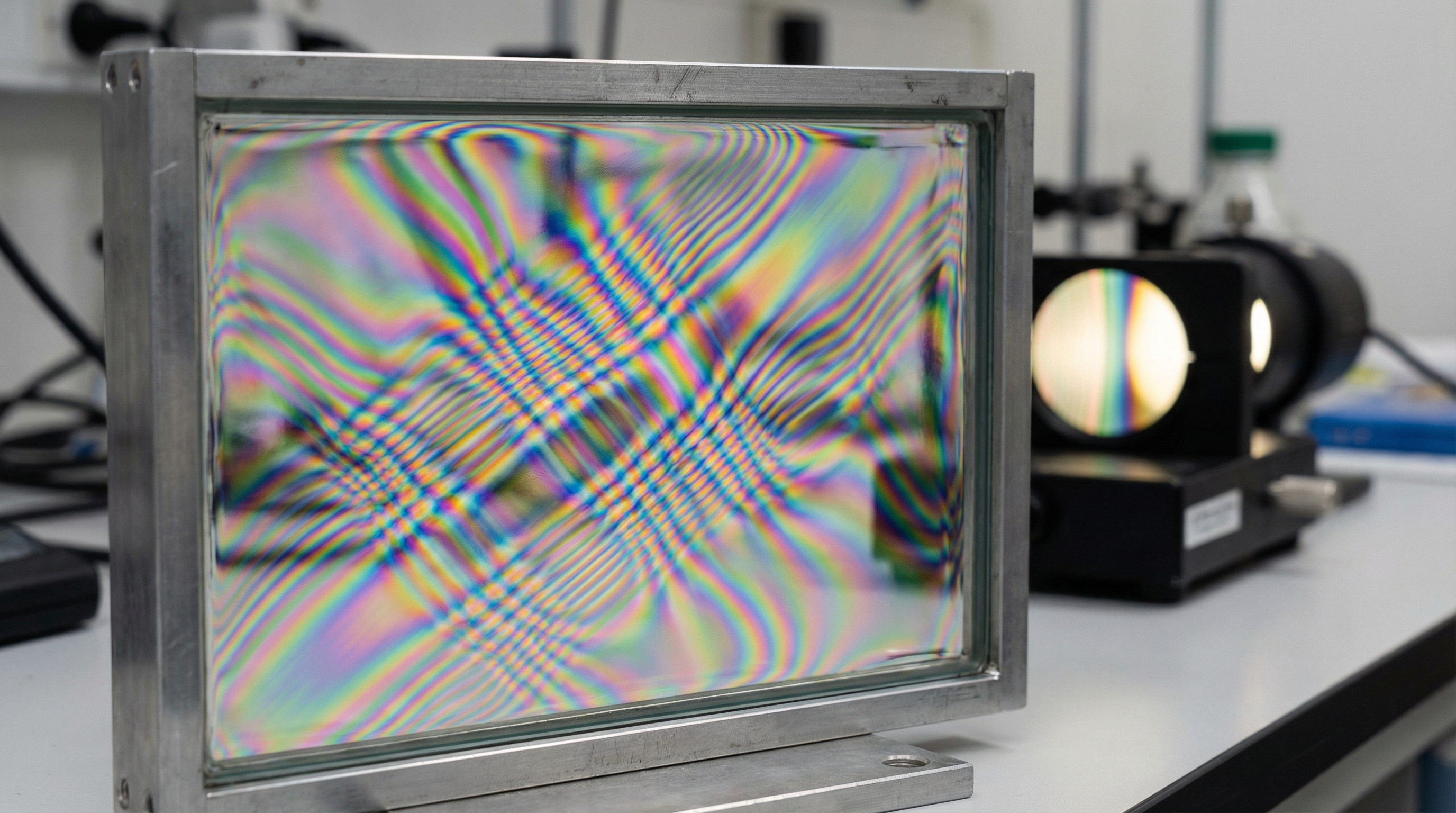
The edges are the most vulnerable part of a tempered panel because the protective compression layer is at its thinnest point compared to the center of the pane. Any direct impact in this zone can trigger a tempered glass shatter on tile event almost instantly. While the face of the glass is incredibly strong, the perimeter remains the “Achilles’ heel” of the entire system.
How does the compression layer function?
Tempering creates a state where the outer surfaces are pushed together while the core pulls inward. This stored energy provides the glass its remarkable strength against blunt force on its surface.
Think about it:
- The outer layer is in high compression.
- The inner core remains in high tension.
- Edges have less surface area to distribute impact force.
- Micro-cracks at the edge penetrate the tension zone faster.
Why do edges fail more frequently?
When the thin edge strikes a hard surface, the energy has nowhere to go but into the tension core. This immediate release of energy is what causes the characteristic “explosion” of glass fragments.
Key Takeaway: Protective handling of glass edges during transport and installation is the single most effective way to prevent catastrophic failure.
| Component | State of Stress | Vulnerability | Impact Resistance |
|---|---|---|---|
| Glass Face | High Compression | Low | Very High |
| Glass Edge | Low Compression | Extreme | Very Low |
| Glass Core | High Tension | Internal | N/A |
This table illustrates why protecting the perimeter is more critical than shielding the face of the panel.
How does tile hardness compare to glass?
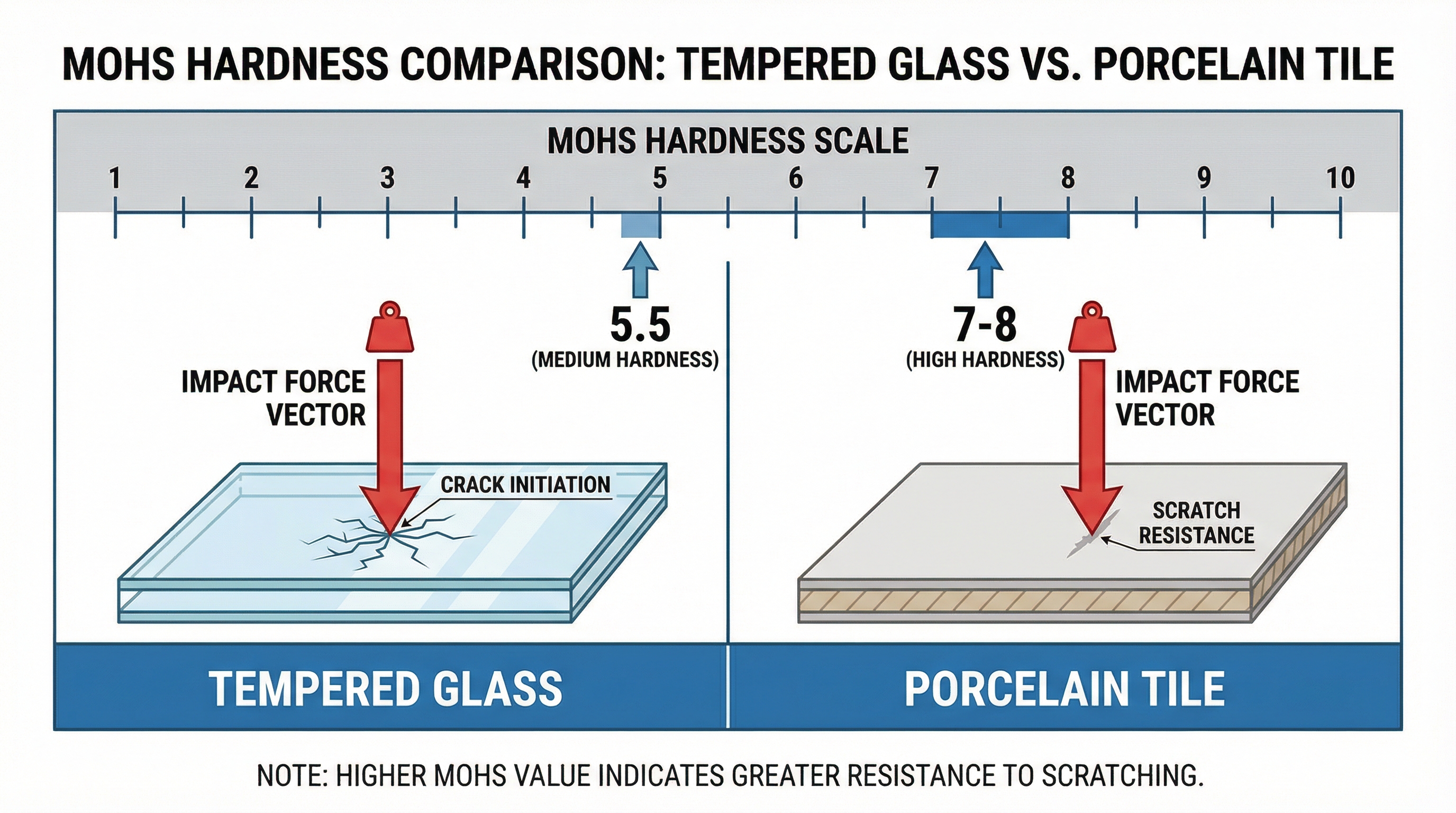
Tile is significantly harder than glass on the Mohs scale, meaning it acts as a permanent abrasive that can easily scratch or chip the glass surface. A tempered glass shatter on tile incident occurs because the tile does not “give” or deform during an impact. Instead, the tile reflects all the kinetic energy directly back into the glass panel’s internal structure.
What is the Mohs scale ranking?
Standard glass typically sits at a 5.5 on the Mohs scale, whereas porcelain tiles often reach a hardness of 7 or 8. This disparity ensures that in any physical conflict, the tile will remain undamaged while the glass suffers structural failure.
The reality is:
- Harder materials scratch softer materials with minimal pressure.
- Porcelain is engineered for extreme density and wear resistance.
- Glass is brittle and cannot absorb high-frequency vibrations from hard surfaces.
Why does zero “give” matter?
When glass hits wood, the wood fibers compress to absorb some of the shock. Tile offers no such luxury, creating a “point load” where the entire weight of the glass is concentrated on a microscopic area.
Key Takeaway: The physical hardness of tile makes it a lethal surface for unprotected tempered glass edges.
| Material | Mohs Hardness | Energy Absorption | Risk Level |
|---|---|---|---|
| Porcelain Tile | 7 – 8 | Near Zero | Critical |
| Standard Glass | 5.5 – 6 | Low | Moderate |
| Vinyl Flooring | 2 – 3 | High | Minimal |
Understanding the hardness ratio between these materials helps in selecting the right protective spacers.
What role does internal stress play in breakage?
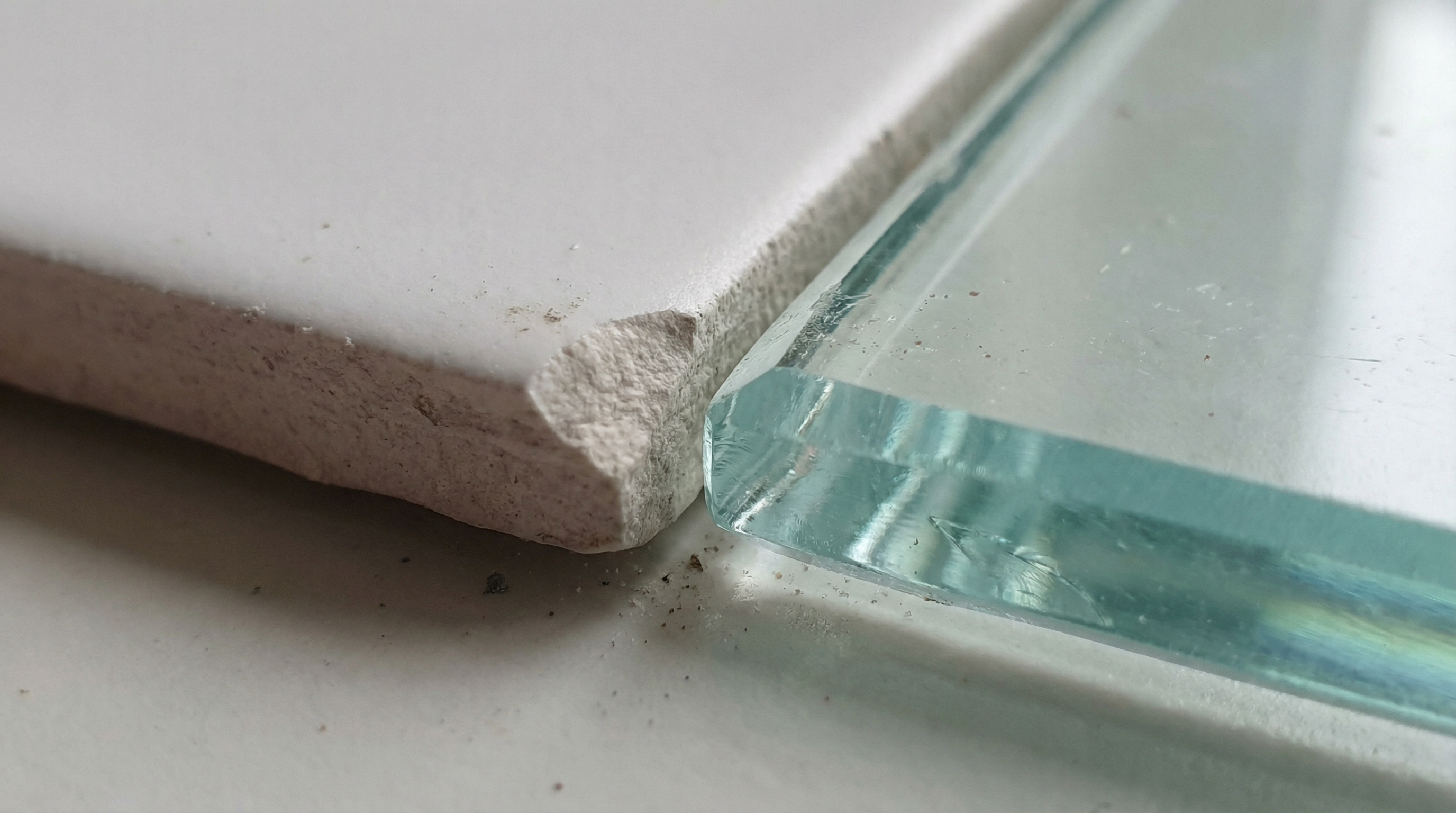
Internal stress acts as a “loaded spring” that provides strength but also ensures a total collapse once the outer compression layer is breached. The phenomenon of tempered glass shatter on tile is essentially a rapid release of this stored mechanical energy. If the surface tension is compromised even by a microscopic amount, the core tension takes over and pulls the panel apart.
Why does the glass break into pebbles?
The high level of internal tension is specifically designed to pull the glass into small, relatively harmless granules. This safety feature prevents the formation of large, dangerous shards that are typical of standard annealed glass.
Here is the kicker:
- Tension travels through the glass at the speed of sound.
- Every square inch of the panel is connected by this stress network.
- A break at the bottom corner affects the top corner instantly.
- The “explosion” sound is the actual release of mechanical energy.
Can stress be unevenly distributed?
Poor manufacturing can lead to “hot spots” where the tension is higher than intended. These areas are much more likely to fail when they come into contact with a hard tile surface.
Key Takeaway: The very stress that makes tempered glass strong is what causes its total destruction upon edge impact.
| Feature | Tempered Glass | Annealed Glass | Impact on Safety |
|---|---|---|---|
| Break Pattern | Small Pebbles | Large Shards | Reduces Lacerations |
| Stored Energy | Very High | Zero | Causes “Explosion” |
| Crack Speed | Supersonic | Moderate | Instant Failure |
This summary highlights how internal physics dictate the violent nature of tempered glass failures.
Does thermal shock increase the risk of shattering?
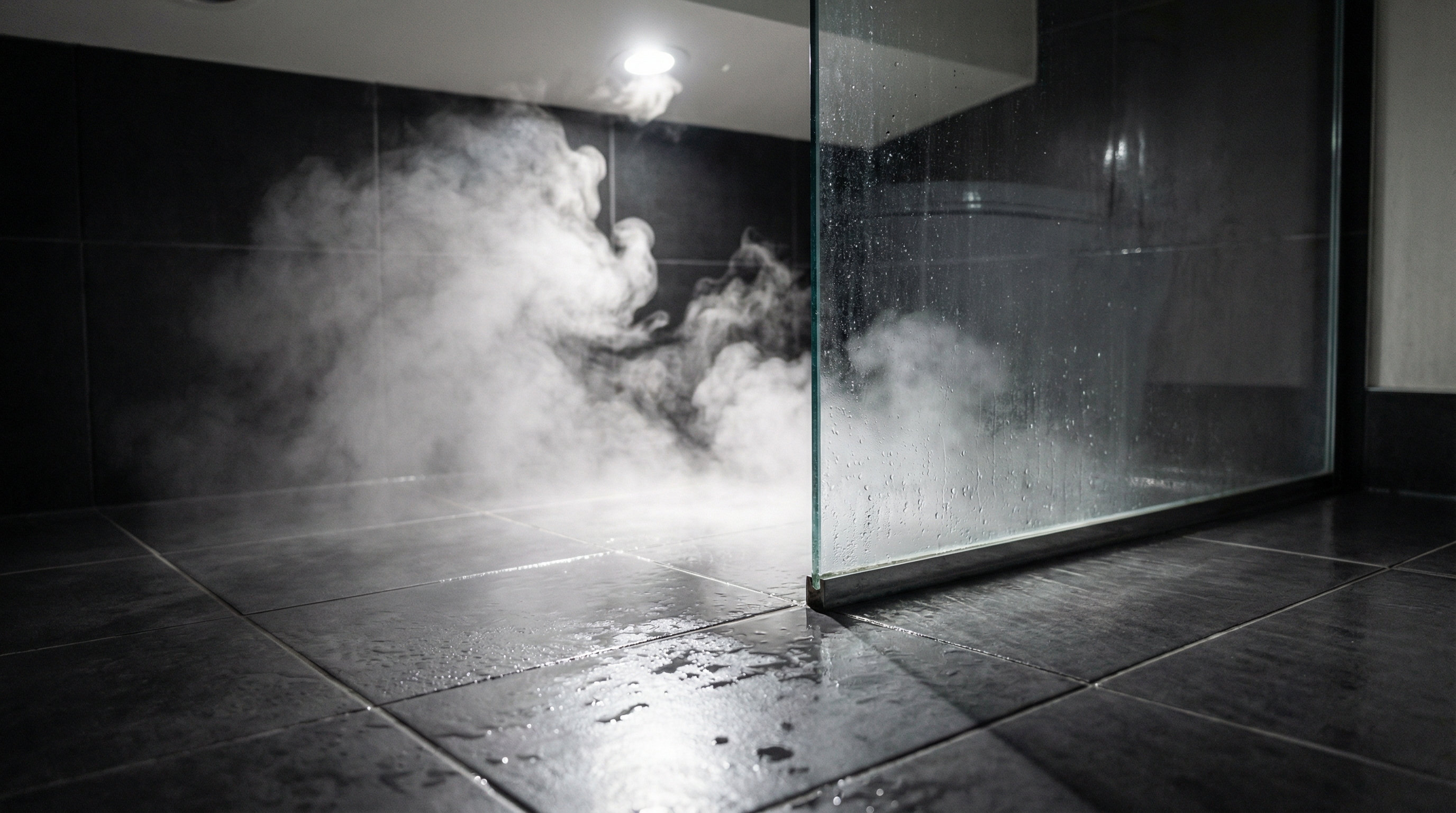
Thermal shock increases the risk of shattering by causing rapid expansion or contraction that puts additional strain on existing micro-cracks. A tempered glass shatter on tile event can be triggered by a hot shower if the glass is already under stress from improper installation. When the glass expands but is “trapped” by rigid hardware or tile, the internal pressure exceeds the material’s limits.
How does steam affect glass stability?
Steam creates a temperature gradient between the two sides of the glass panel. This causes the side facing the heat to expand faster than the cooler side, leading to a subtle but dangerous bowing effect.
Think about it:
- Glass and tile have different thermal expansion coefficients.
- Metal hinges expand at a third rate, creating “pinch points.”
- Rapid cooling from a cold breeze can be just as dangerous as heat.
Does humidity play a factor?
High humidity can lead to the slow degradation of protective rubber gaskets and silicone seals. Once these barriers fail, the glass makes direct contact with the tile, leading to a delayed break.
Key Takeaway: Maintaining a consistent temperature and ensuring hardware allows for thermal expansion is vital for glass longevity.
| Condition | Glass Reaction | Tile Reaction | Resulting Risk |
|---|---|---|---|
| High Heat | Expansion | Negligible | Compression Stress |
| Sudden Cold | Contraction | Negligible | Tensile Stress |
| High Humidity | Seal Decay | None | Direct Contact |
Comparing these reactions shows why bathroom environments are particularly hostile to glass installations.
Can manufacturing flaws cause spontaneous breaks?
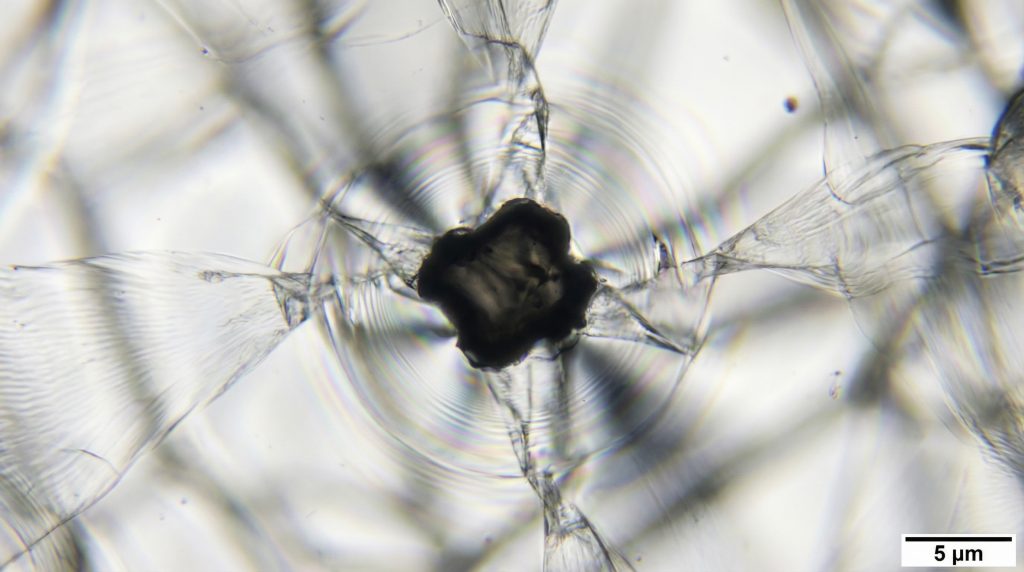
Manufacturing flaws like nickel sulfide inclusions can cause “spontaneous” breakage without any apparent external impact. While the tempered glass shatter on tile outcome looks the same, the cause is an internal microscopic stone that grows over time. These inclusions act as a ticking time bomb, slowly increasing internal pressure until the glass fails.
What are nickel sulfide inclusions?
During the raw glass melting process, tiny particles of nickel can react with sulfur to form small stones. When the glass is heated for tempering and then rapidly cooled, these stones are “frozen” in a state that wants to expand.
The reality is:
- These particles can take years to grow to a critical size.
- They are often invisible to the naked eye during inspection.
- Heat soak testing is the only way to force these failures in the factory.
- Quality control prevents these panels from ever reaching the consumer.
Why does quality control matter?
Strict manufacturing processes ensure that raw materials are pure and that the tempering process is perfectly uniform. High-grade facilities use advanced scanning to detect even the smallest internal defects.
Key Takeaway: Sourcing glass from manufacturers who perform rigorous heat soak testing is the best defense against spontaneous failure.
| Flaw Type | Origin | Detection | Prevention |
|---|---|---|---|
| Inclusion | Raw Material | Heat Soak Test | Batch Purifying |
| Bubbles | Melting Process | Visual Scan | Process Control |
| Uneven Temper | Cooling Phase | Polarized Light | Precision Airflow |
This guide sentence helps procurement managers understand which factory checks prevent field failures.
Why is professional installation crucial for safety?
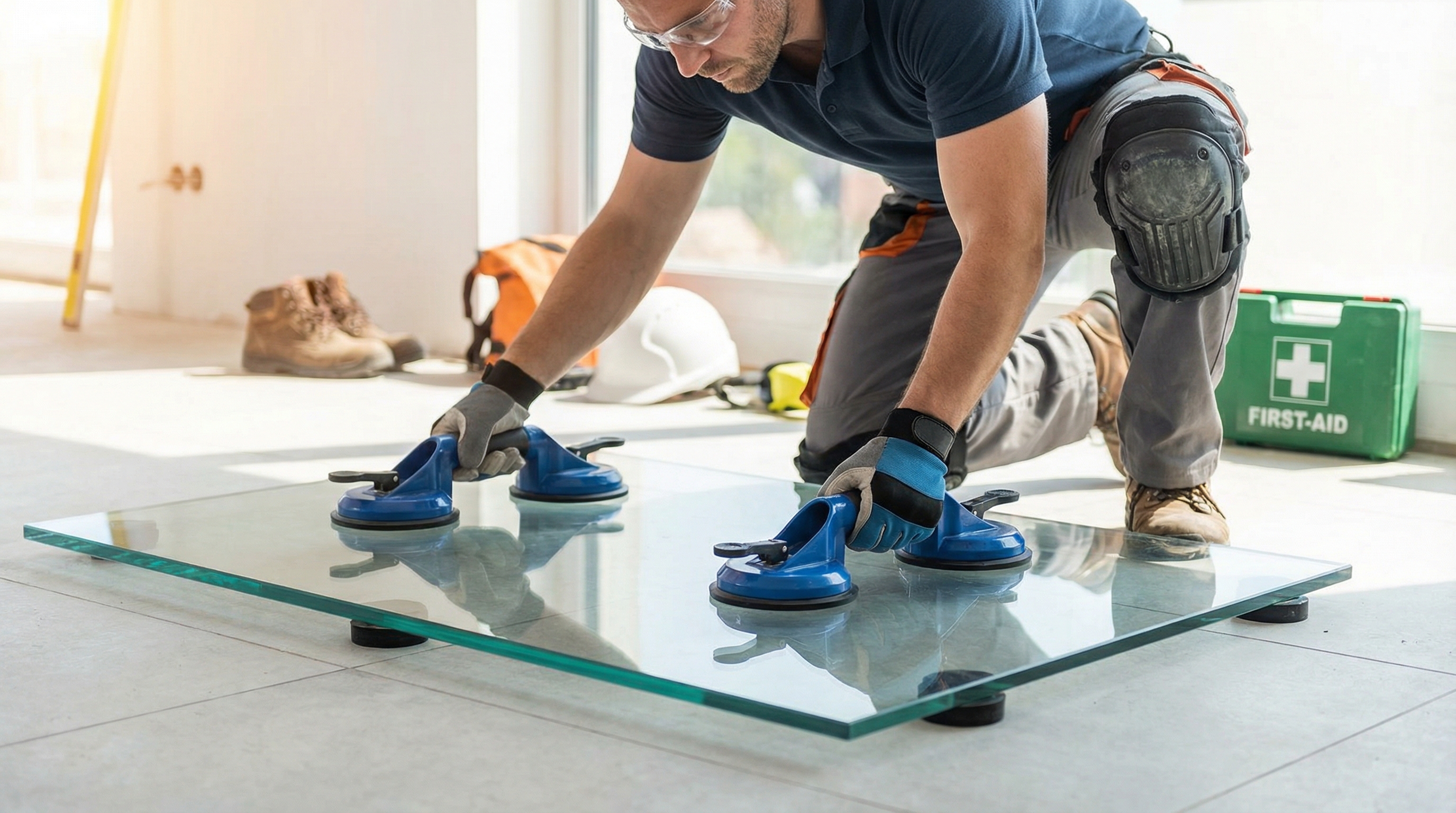
Professional installation is crucial because experts use specialized tools and techniques to ensure the glass never makes direct contact with hard surfaces. An amateur tempered glass shatter on tile incident often happens during the simple act of setting the glass down. Professionals use rubber blocks and suction lifters to maintain total control over the panel’s position at all times.
How do spacers prevent breakage?
Installers use neoprene or silicone “setting blocks” to elevate the glass above the tile. These blocks act as shock absorbers and allow the glass to expand and contract without touching the rigid floor.
Let’s be honest:
- A single “clink” on a tile corner can ruin a $1,000 panel.
- Heavy glass is difficult to maneuver without professional suction cups.
- Leveling a door incorrectly creates permanent torque on the hinges.
Why is leveling so important?
If a glass door is not perfectly level, its weight hangs unevenly on the hinges. This creates a constant “pulling” force that stresses the glass around the holes, eventually leading to a break.
Key Takeaway: The cost of professional installation is significantly lower than the cost of replacing a shattered custom panel.
| Tool | Purpose | Benefit | Risk if Omitted |
|---|---|---|---|
| Suction Cups | Controlled Lifting | Prevents Slippage | Edge Impact |
| Setting Blocks | Edge Isolation | Absorbs Vibration | Point Loading |
| Laser Level | Alignment | Eliminates Torque | Hardware Stress |
Using the right tools ensures that the glass remains in its intended stress state without external interference.
What safety standards regulate tempered glass?
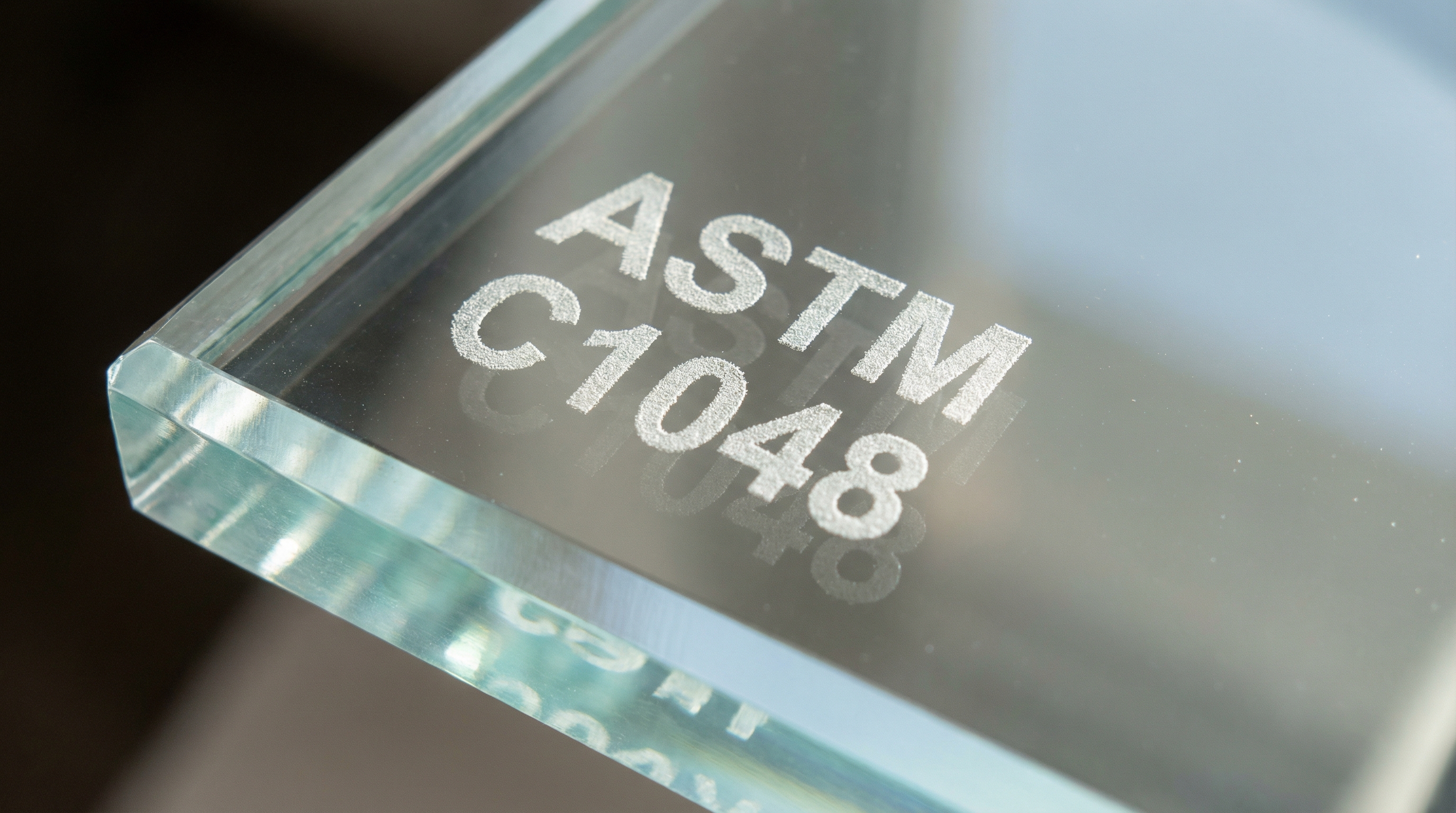
Safety standards like ASTM C1048 ensure that tempered glass meets specific strength and fragmentation requirements for commercial and residential use. When a tempered glass shatter on tile event occurs, these standards guarantee that the glass breaks safely into small pieces. Compliance with international codes is the only way to verify that a manufacturer is producing reliable, engineering-grade material.
What is the fragmentation test?
To pass certification, a technician must break a sample and count the number of fragments in a 50mm by 50mm area. A higher count indicates a more uniform and safer tempering process.
Think about it:
- ASTM C1048 regulates the heat-treating process.
- EN 12150 is the equivalent European safety standard.
- AS/NZS 2208 covers glass safety in the Oceania region.
- Safety stamps (bugs) must be permanent and legible on the corner.
Are all safety stamps the same?
The presence of a “tempered” logo is not enough; it must reference the specific standard it meets. This ensures the glass has been tested for surface compression levels and impact resistance.
Key Takeaway: Always verify that your glass panels carry a certified safety stamp from a recognized testing body.
| Standard | Region | Primary Focus | Industry Use |
|---|---|---|---|
| ASTM C1048 | North America | Heat-Treating Quality | General Construction |
| EN 12150 | Europe | Fragmentation Safety | Furniture & Facades |
| ISO 9001 | Global | Process Consistency | Manufacturing QC |
Certification provides the peace of mind that a glass panel will perform exactly as engineered under stress.
How can protective barriers prevent failures?
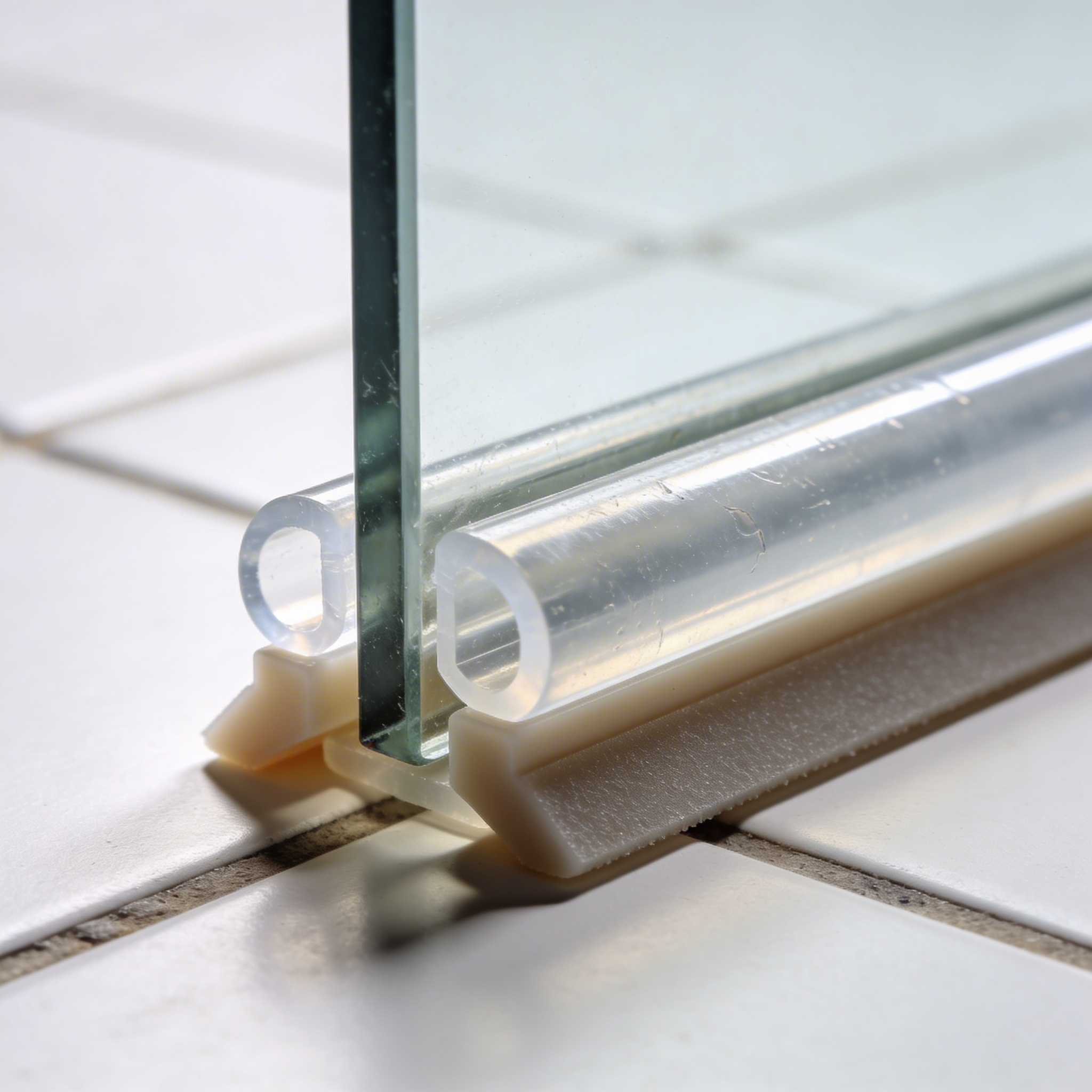
Protective barriers prevent failures by creating a physical buffer between the glass edge and the hard tile surface. Preventing a tempered glass shatter on tile situation is often as simple as installing a $20 PVC sweep or silicone bumper. These soft materials absorb energy from accidental bumps and prevent the high-frequency vibrations that lead to cracks.
Should you use plastic sweeps?
Every frameless shower door should have a clear plastic sweep at the bottom. This not only keeps water inside but ensures the glass can never “clink” against the tile if it sags over time.
It gets worse:
- Worn-out seals are the leading cause of “spontaneous” breaks.
- Metal-to-glass contact in hinges is equally dangerous.
- Dust and grit trapped under a glass edge can act like a glass cutter.
What are the best barrier materials?
Silicone, PVC, and EPDM rubber are the gold standards for glass protection. These materials are UV resistant, waterproof, and maintain their “bounce” for years.
Key Takeaway: Regularly inspecting and replacing worn protective seals is the cheapest insurance for your glass.
| Barrier Type | Material | Installation Location | Lifetime |
|---|---|---|---|
| Door Sweep | Clear PVC | Bottom Edge | 2 – 3 Years |
| Hinge Gasket | EPDM Rubber | Inside Hardware | 5 – 10 Years |
| Edge Guard | Silicone | Vertical Edges | Indefinite |
This list highlights the critical points where soft barriers must be maintained to avoid hard-surface contact.
Why invest in engineering-grade glass solutions?

Investing in engineering-grade glass ensures that your panels are manufactured with a uniform compression layer and zero internal contaminants. Low-quality glass is far more susceptible to a tempered glass shatter on tile event because of inconsistent cooling during the tempering phase. Premium manufacturers like PrimePro Glass utilize CNC precision and automated quality control to reduce breakage rates to under 0.3%.
How does CNC cutting improve safety?
Computer-controlled cutting ensures that edges are perfectly smooth with no micro-chips. A smooth, polished edge is significantly more resistant to impact than a rough, “seamed” edge found on budget glass.
Here is the kicker:
- Precision tolerances of ±0.5mm ensure a perfect fit in hardware.
- Automated tempering furnaces eliminate human error in heat timing.
- High-grade raw materials prevent the formation of inclusions.
- Polished edges reduce the risk of crack propagation by 50%.
Is factory-direct control better?
Working directly with a manufacturer allows for full QC traceability of every batch. This means if one panel has a flaw, the entire production run can be inspected before shipping.
Key Takeaway: Engineering-grade glass provides a level of reliability and durability that “builder-grade” alternatives cannot match.
| Feature | Engineering Grade | Builder Grade | Project Impact |
|---|---|---|---|
| Tolerance | ± 0.5mm | ± 2.0mm | Ease of Install |
| Breakage Rate | < 0.3% | 2.0% – 3.0% | Replacement Costs |
| Edge Finish | High Polish | Basic Seam | Structural Strength |
High-spec manufacturing reduces the long-term risk of catastrophic failure in commercial environments.
When should you replace a sagging glass door?
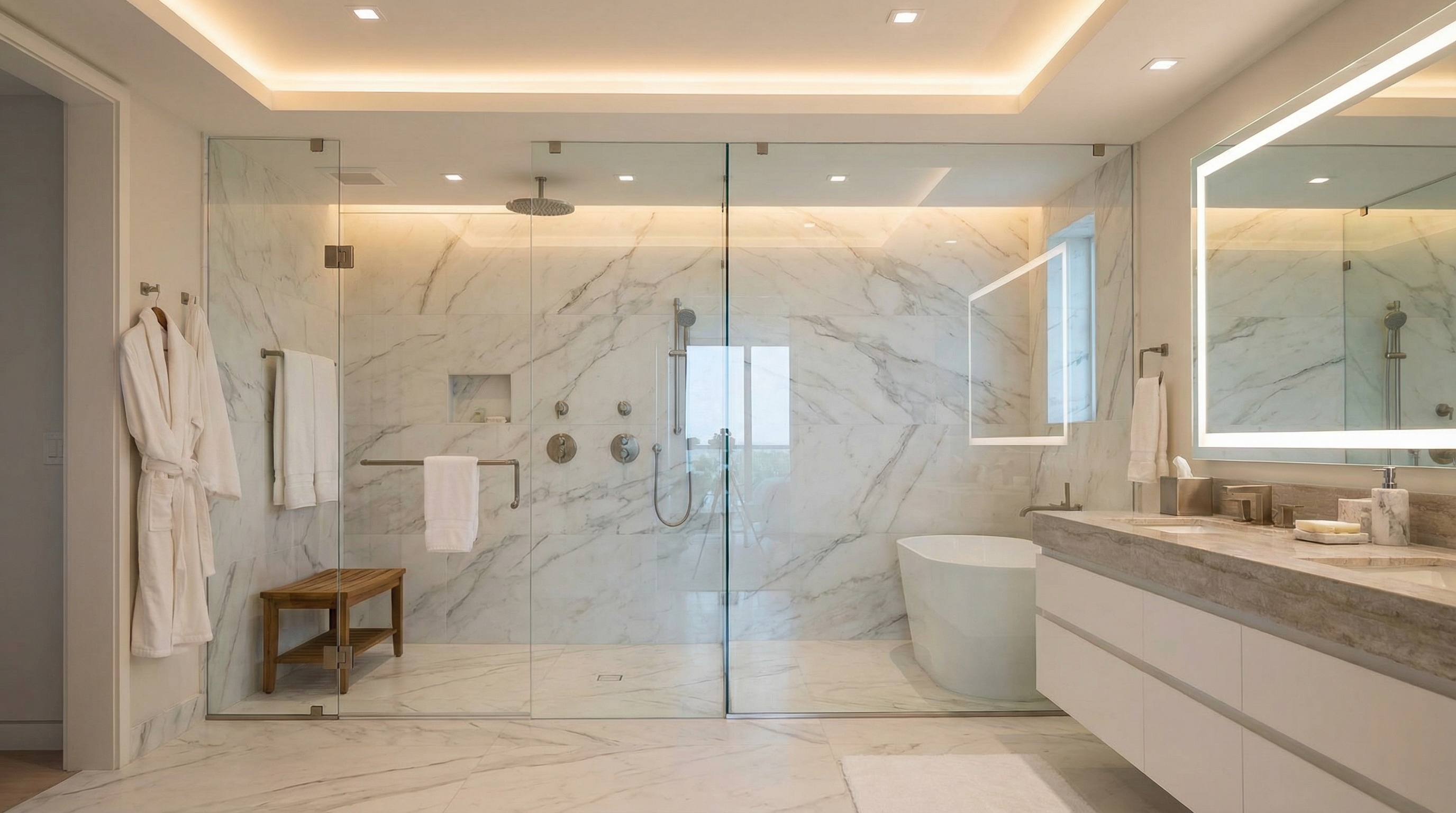
You should replace or adjust a sagging glass door immediately if the gap between the glass edge and the tile floor is less than 1/8 of an inch. A tempered glass shatter on tile incident is inevitable if the glass begins to “drag” or “click” against the floor. Addressing hardware fatigue early can save you from the expensive and messy task of cleaning up thousands of glass pebbles.
What are the warning signs of failure?
A door that makes a grinding sound or requires extra force to close is already failing. These symptoms indicate that the hinges have slipped or the structural integrity of the seal has been compromised.
Think about it:
- Visible chips on the corner are an “emergency” warning.
- Loose hinge screws create dangerous pivot points.
- Cracked plastic bushings allow metal-on-glass contact.
Can old hardware be saved?
In many cases, simply tightening the hinges and replacing the rubber gaskets can restore safety. However, if the glass has already been “notched” by metal contact, the entire panel must be replaced for safety.
Key Takeaway: Preventive maintenance is the only way to avoid the sudden, violent failure of a tempered glass installation.
FAQ
Can I stop a crack in tempered glass?
No, you cannot stop a crack in tempered glass because once the surface compression is breached, the internal tension causes the entire panel to fail instantly.
What’s the best way to clean glass without scratching?
The best way is to use a microfiber cloth and a non-abrasive, pH-neutral cleaner to avoid creating micro-scratches that can weaken the surface.
Can I cut tempered glass to a new size?
No, tempered glass cannot be cut or drilled after the tempering process because any attempt to penetrate the surface will cause the entire sheet to shatter.
How long does tempered glass last?
Tempered glass can last indefinitely as long as it is protected from edge impacts, deep scratches, and extreme thermal shock.
Is tempered glass stronger than laminated glass?
Yes, tempered glass is physically stronger in terms of impact resistance, but laminated glass is safer because it stays bonded to an interlayer after breaking.
Secure Your Project with PrimePro Glass
At PrimePro Glass, we understand that reliability isn’t just a goal—it’s a requirement for your business. Our 30,000㎡ facility and dedicated engineering team are focused on delivering precision-manufactured glass that eliminates the risks of “spontaneous” failure and installation rework. We are committed to setting the industry standard for safety and durability through rigorous QC traceability and 24-hour response guarantees.
Don’t let a supplier’s poor quality control derail your project timeline or compromise your client’s safety. Experience the peace of mind that comes with working directly with a source factory that prioritizes your specifications. Contact us today to receive a free technical review of your blueprints and a detailed quote within 24 hours.