Tempered glass is legally required in all doors, shower enclosures, glass railings, and specific windows located near walking surfaces or floor levels. Standard annealed glass creates a massive liability for developers and property managers because it breaks into lethal, jagged shards upon impact. This danger agitates safety concerns and regulatory risks that can halt construction projects or lead to severe injury lawsuits. The solution is the strategic integration of high-strength Tempered Glass to ensure structural compliance and human safety.
Why must shower enclosures use Tempered Glass?
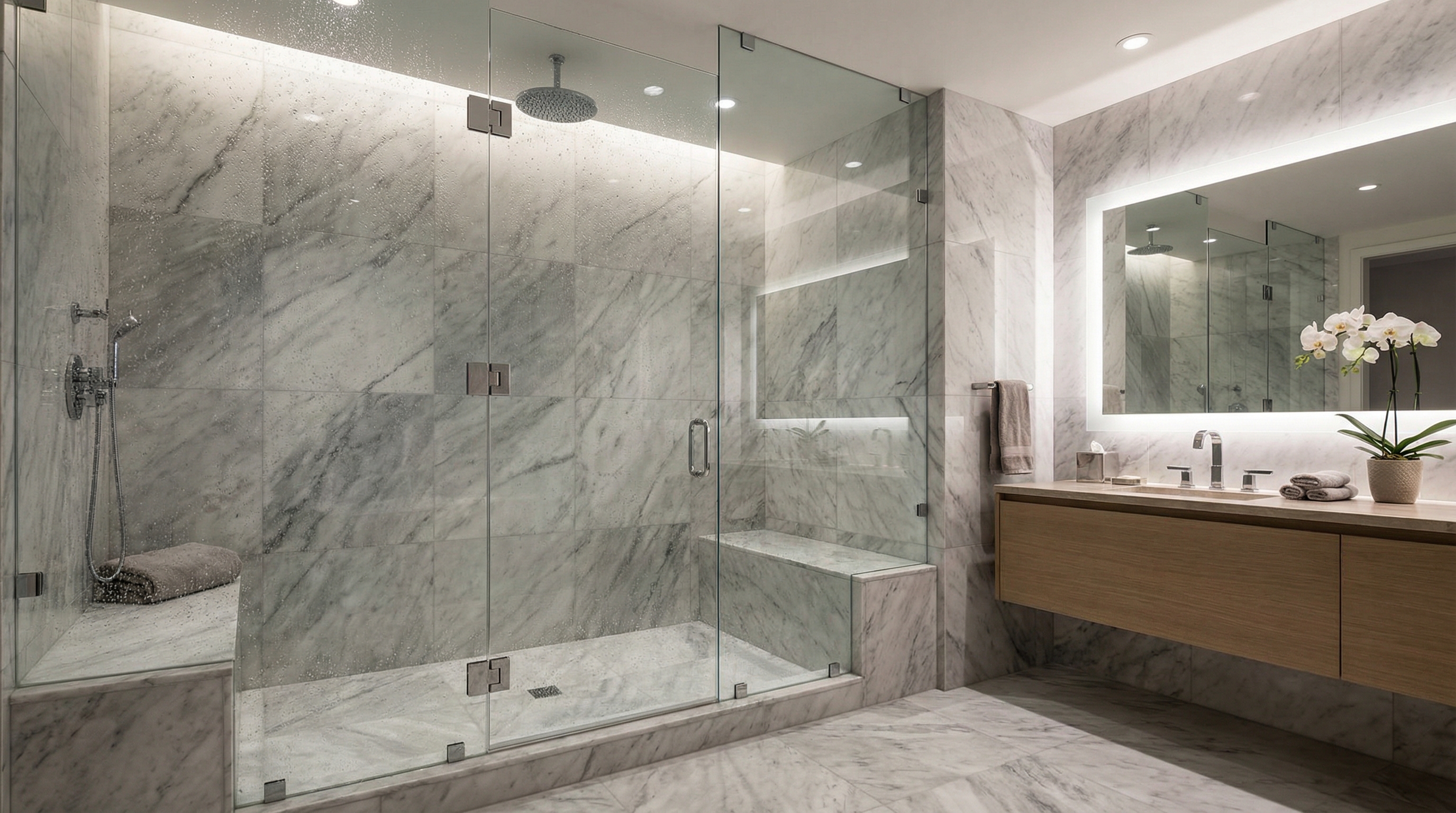
Shower enclosures require Tempered Glass because they are high-risk wet zones where the probability of slips and falls is significantly elevated. In these environments, moisture reduces traction, making any surrounding glass a potential hazard if it cannot withstand human impact.
Is moisture a primary risk factor?
The presence of water on tile and stone surfaces creates a slippery environment that necessitates safety glazing. If a person loses their balance, the glass must be able to absorb the force of a fall without shattering into dangerous pieces.
The reason is simple:
The thermal stress from hot water and steam also requires a material that can handle temperature fluctuations. Standard glass might crack under these conditions, whereas heat-treated alternatives maintain their integrity.
Mandatory wet area specifications
- All swinging or sliding shower doors must be safety-glazed.
- Fixed panels acting as walls in a tub or shower require tempering.
- Any glass within 60 inches of the water’s edge is legally restricted.
Key Takeaway: Shower and tub areas are strictly regulated to prevent fatal injuries during slips and falls on wet surfaces.
| Feature | Requirement | Height Limit |
|---|---|---|
| Shower Doors | Fully Tempered | All heights |
| Fixed Panels | Mandatory Tempered | Up to 60 inches |
| Adjacent Mirrors | Safety-backed | Floor level |
Architectural standards prioritize occupant safety in bathrooms by mandating fragmentation-resistant glass in every configuration.
How does Tempered Glass handle internal stress?
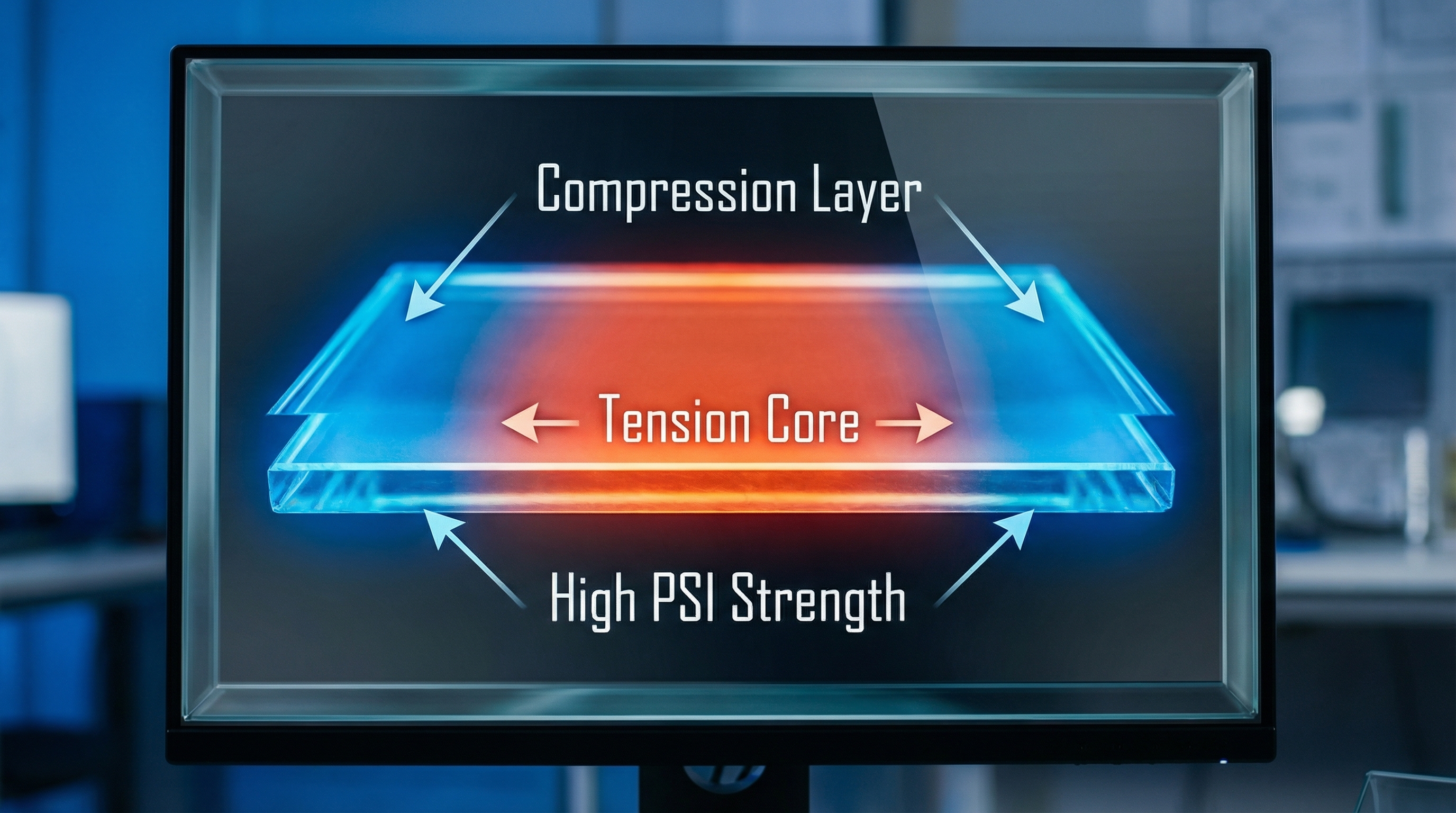
The manufacturing of Tempered Glass creates a specific balance of outer compression and inner tension that defines its safety characteristics. This internal equilibrium allows the pane to remain incredibly strong while ensuring a safe break pattern if the surface is breached.
Does heat treatment change strength?
Heat treatment involves heating the material to over 600 degrees Celsius and then rapidly cooling it with air. This process locks the outer surfaces in a state of high compression while the core remains in tension.
Here is the deal:
When the outer compression layer is penetrated, the internal energy is released instantly. This causes the entire pane to crumble into small, relatively harmless granules rather than sharp blades.
Engineering stress parameters
- Compression layers must exceed 10,000 PSI.
- Tension core provides the energy for safe fragmentation.
- Surface strength is 4 to 5 times greater than annealed glass.
Key Takeaway: Understanding the physics of safety glass helps engineers specify the correct thickness for structural loads.
| Stress Layer | State | Purpose |
|---|---|---|
| Surface Layer | Compression | Impact resistance |
| Interior Core | Tension | Controlled fragmentation |
| Edge Zones | Vulnerable | Structural support |
The precise calibration of internal forces is what transforms a fragile material into a robust safety component for modern buildings.
When is Tempered Glass needed for large windows?
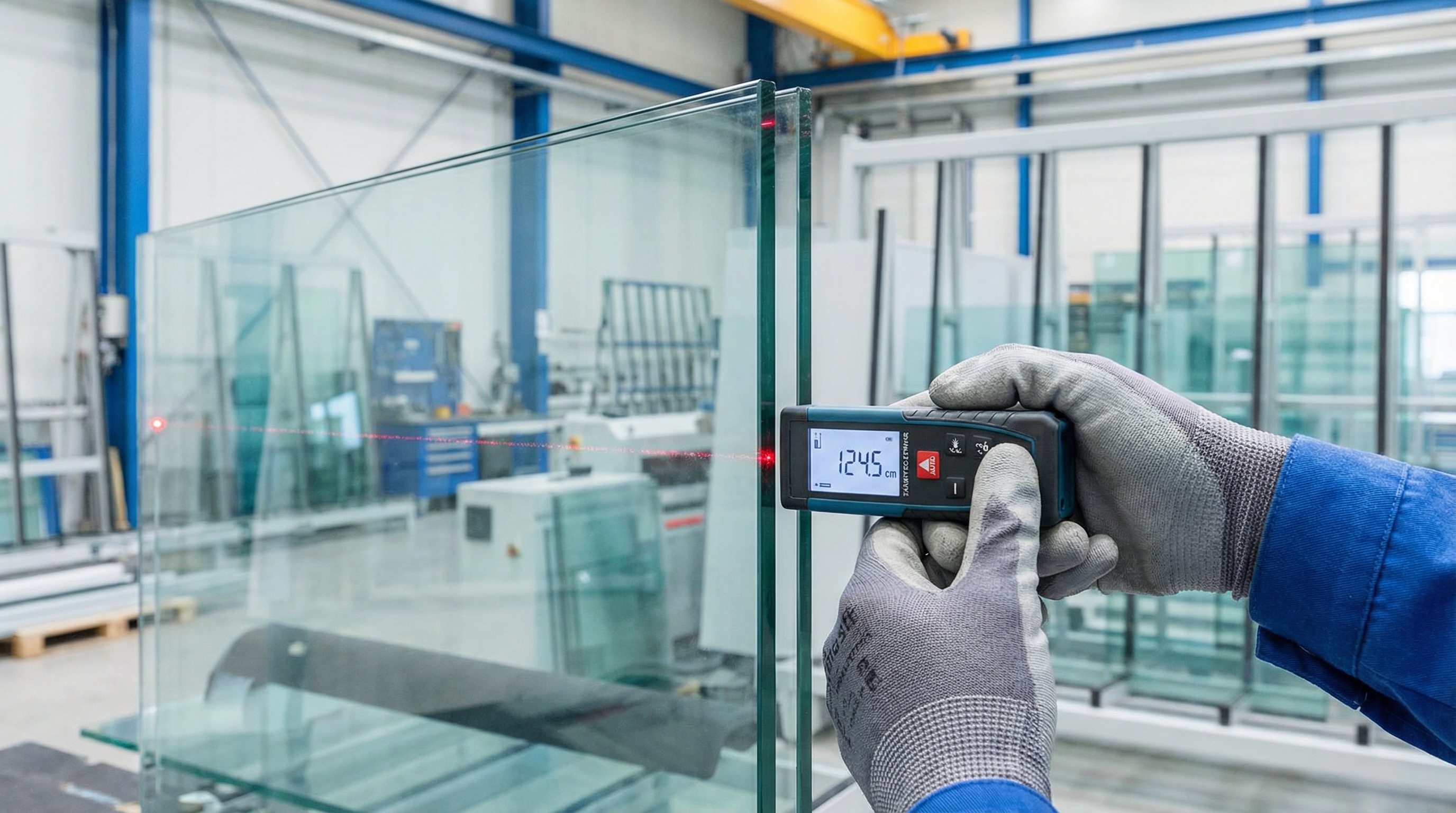
Large windows must be safety-rated if they meet the “four-pillar” criteria of size and floor proximity to prevent accidental breakthroughs. If a pane of hollow glass or an insulated unit is large enough to be mistaken for a walkway, it must be tempered.
Why measure the distance to the floor?
Windows that sit low to the ground are prone to impact from feet, vacuum cleaners, or falling objects. Regulatory codes specify that any glass within 18 inches of the floor must meet safety glazing standards.
Check this out:
The total surface area also dictates the risk level. Smaller windows are less likely to be walked into, but once a pane exceeds 9 square feet, it becomes a major safety concern.
The “Four Pillar” criteria for windows
- The pane is larger than 9 square feet in total area.
- The bottom edge is less than 18 inches above the floor.
- The top edge is greater than 36 inches above the floor.
- A walking surface is within 36 inches of the glass.
Key Takeaway: Windows only require tempering if all four criteria are met simultaneously, which protects large “reach” zones.
| Criterion | Threshold | Requirement |
|---|---|---|
| Area | > 9 sq. ft. | Mandatory Tempering |
| Bottom Edge | < 18 inches | Mandatory Tempering |
| Walking Proximity | < 36 inches | Mandatory Tempering |
Accurate laser measurements during the blueprint phase are essential to ensure every large window complies with international building codes.
Is Tempered Glass required for modern living rooms?

Floor-to-ceiling windows in residential living spaces almost always mandate Tempered Glass due to their accessibility and proximity to daily activities. These expansive views create a seamless transition between indoor and outdoor spaces, but they also represent a potential impact zone for occupants.
Can you avoid tempering in large panes?
There is no legal way to avoid safety glazing for large, low-sitting windows in living areas. If the glass reaches the floor level, it is classified as a hazardous location regardless of the aesthetic design.
It gets better:
Using high-performance safety materials allows for larger unobstructed views without compromising structural integrity. This ensures that a beautiful garden view doesn’t become a safety liability for the homeowner.
Living room glazing safety standards
- Full-height windows must resist human impact loads.
- Corner glazing often requires additional thickness.
- Low-sitting panels must be identified as safety glass by an etch.
Key Takeaway: Living rooms with floor-level glazing require tempered units to protect residents from accidental glass breakthroughs.
| Application | Safety Rule | Visual Requirement |
|---|---|---|
| Floor-to-Ceiling | Always Tempered | Permanent Safety Etch |
| Transom Windows | Standard Allowed | > 18″ From Floor |
| Corner Windows | Tempered | Structural Support |
Strategic placement of safety glass in living areas balances the desire for natural light with the necessity of occupant protection.
Why do office buildings use Tempered Glass facades?

Commercial facades utilize Tempered Glass to resist high wind loads and thermal stress in high-occupancy environments. In skyscrapers and office parks, laminated glass or tempered units are the only materials capable of withstanding the extreme pressures found at height.
Is thermal shock a concern for facades?
Uneven sun exposure on a large building facade creates significant thermal gradients across the glass surface. Tempering increases the glass’s ability to resist temperature differences that would shatter standard annealed panes.
Here is why:
Buildings in urban centers are subject to the “canyon effect,” where wind speeds increase between structures. Safety glazing provides the flexural strength needed to handle these dynamic environmental loads.
Commercial facade requirements
- High-velocity wind load resistance is mandatory.
- Outer skins must handle thermal expansion and contraction.
- Fragmentation must be controlled to prevent “glass rain” on streets.
Key Takeaway: Commercial facades utilize heat-strengthened materials to protect both the building’s occupants and the pedestrians below.
| Facade Type | Material Used | Primary Benefit |
|---|---|---|
| Curtain Wall | Tempered/Laminated | Wind & Heat Resistance |
| Ground Storefront | Tempered | Impact Protection |
| Skylights | Laminated Tempered | Fall-through Protection |
Modern architecture relies on the extreme strength of safety glazing to push the boundaries of transparent building envelopes.
How does Tempered Glass compare to standard glass?
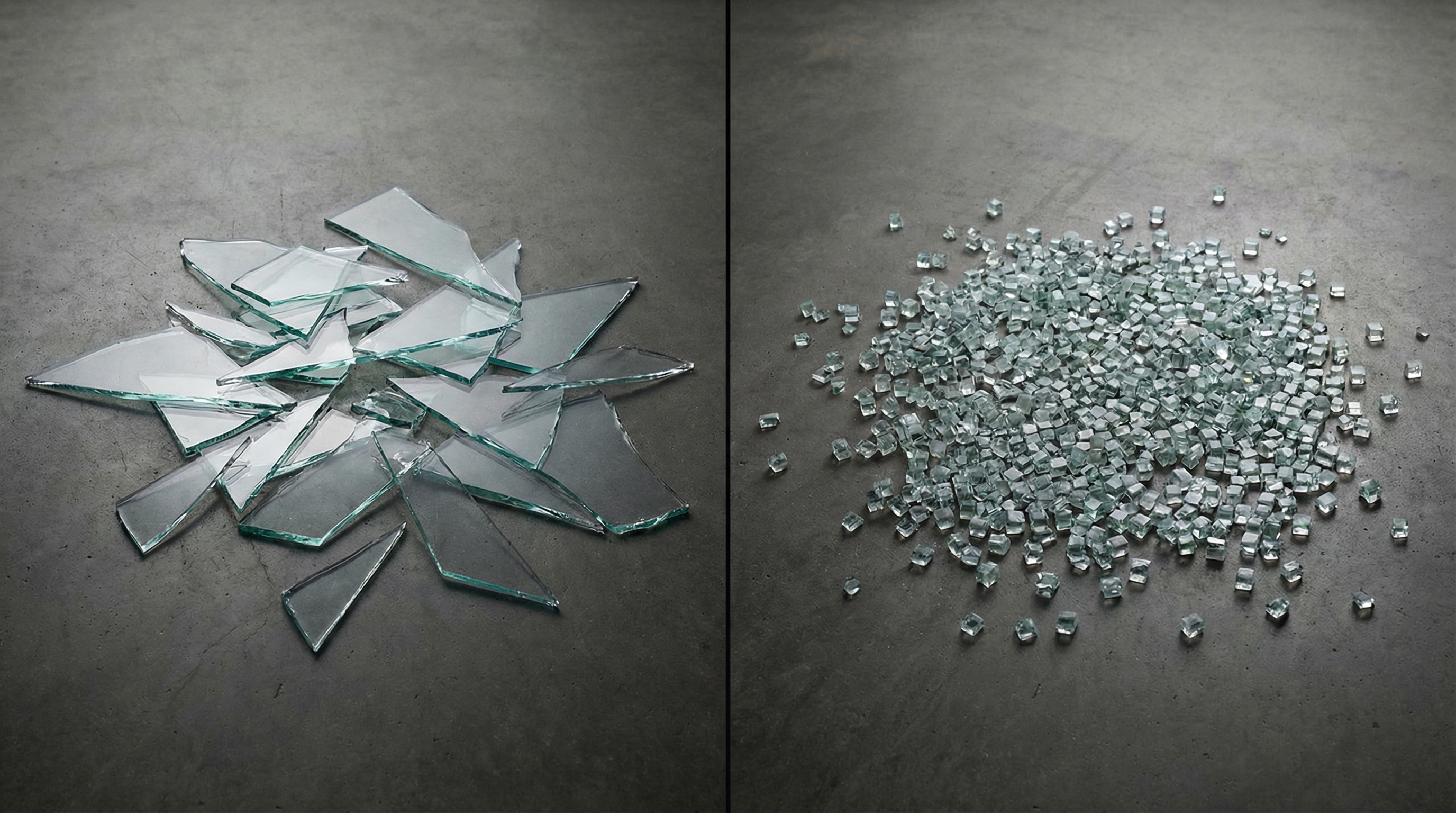
Safety glass is differentiated by its unique ability to crumble into dull granules rather than sharp, dangerous shards. When evaluating a project’s needs, specifying Tempered Glass is the most effective way to mitigate injury risks in the event of breakage.
Why does breakage pattern matter?
Standard annealed glass breaks into large, razor-sharp slivers that can cause deep lacerations or life-threatening injuries. Safety glass minimizes this risk by breaking into thousands of small, cube-like pieces that lack sharp edges.
Look closely:
The strength difference is equally critical, as tempered panels are much harder to break in the first place. This makes them ideal for any area where people are likely to interact with the glass surface.
Fragmentation and strength comparisons
- Tempered breaks into small granules.
- Standard breaks into sharp, jagged shards.
- Tempered is 4x stronger than standard annealed glass.
Key Takeaway: The primary purpose of safety glass is to change the failure mode from “lethal shards” to “safe granules.”
| Glass Type | Impact Resistance | Failure Mode |
|---|---|---|
| Standard Annealed | Low | Large Jagged Shards |
| Tempered Safety | Very High | Small Dull Granules |
| Laminated Safety | High | Remains in Frame |
Choosing the right glass type is a critical decision for procurement teams focused on long-term safety and liability reduction.
Is Tempered Glass necessary for floating stairs?
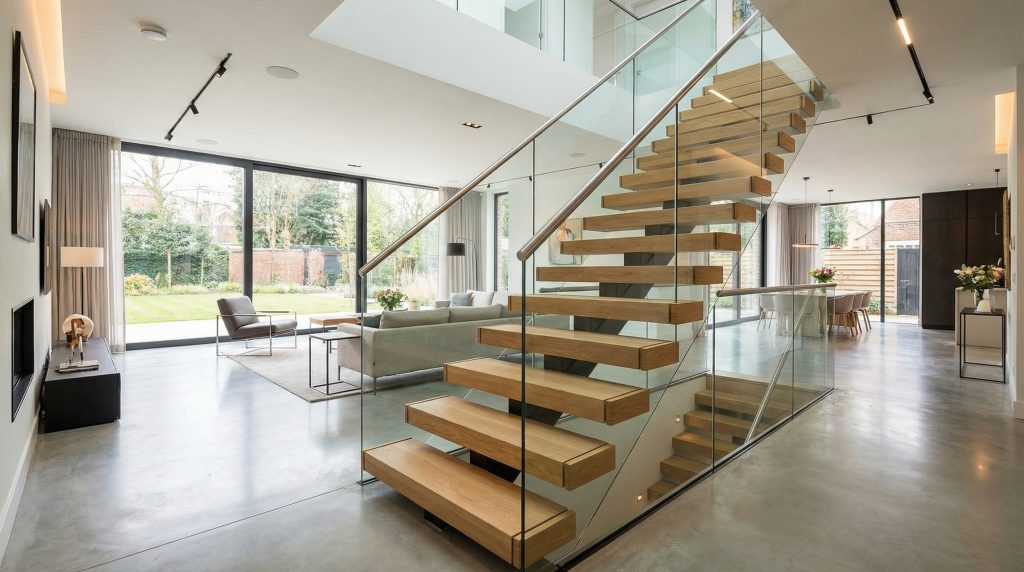
Glass used in or adjacent to stairways is strictly regulated as a hazardous location requiring high impact resistance and structural stability. Often integrated with low-e glass for energy efficiency, these panels must act as a protective barrier to prevent falls.
Where is the primary impact zone?
The most dangerous areas are the sides of the stairway and the landings. Any glass panel within 36 inches of the walking surface must be tempered to withstand a person falling against the railing.
Make no mistake:
Staircases involve downward momentum, which increases the force of any potential impact. Standard glass cannot handle the point-loads generated by a person tripping on a stair tread.
Staircase glazing regulations
- Side panels must be tempered if within 36 inches of the stair.
- Bottom landings require tempered glass within a 60-inch arc.
- Glass must be able to support a concentrated load of 200 lbs.
Key Takeaway: Stairs and landings are among the highest-risk zones in a building, mandating the use of thick, tempered panels.
| Stair Section | Zone Requirement | Impact Load |
|---|---|---|
| Stair Railing | Always Tempered | 200 lbs (Concentrated) |
| Landing Window | Tempered < 36″ High | Human Impact |
| Bottom Tread | Tempered < 60″ Arc | Slip & Fall |
The structural use of glass in stairs requires meticulous engineering to ensure it functions as both a design element and a safety guard.
Why are patio doors fitted with Tempered Glass?
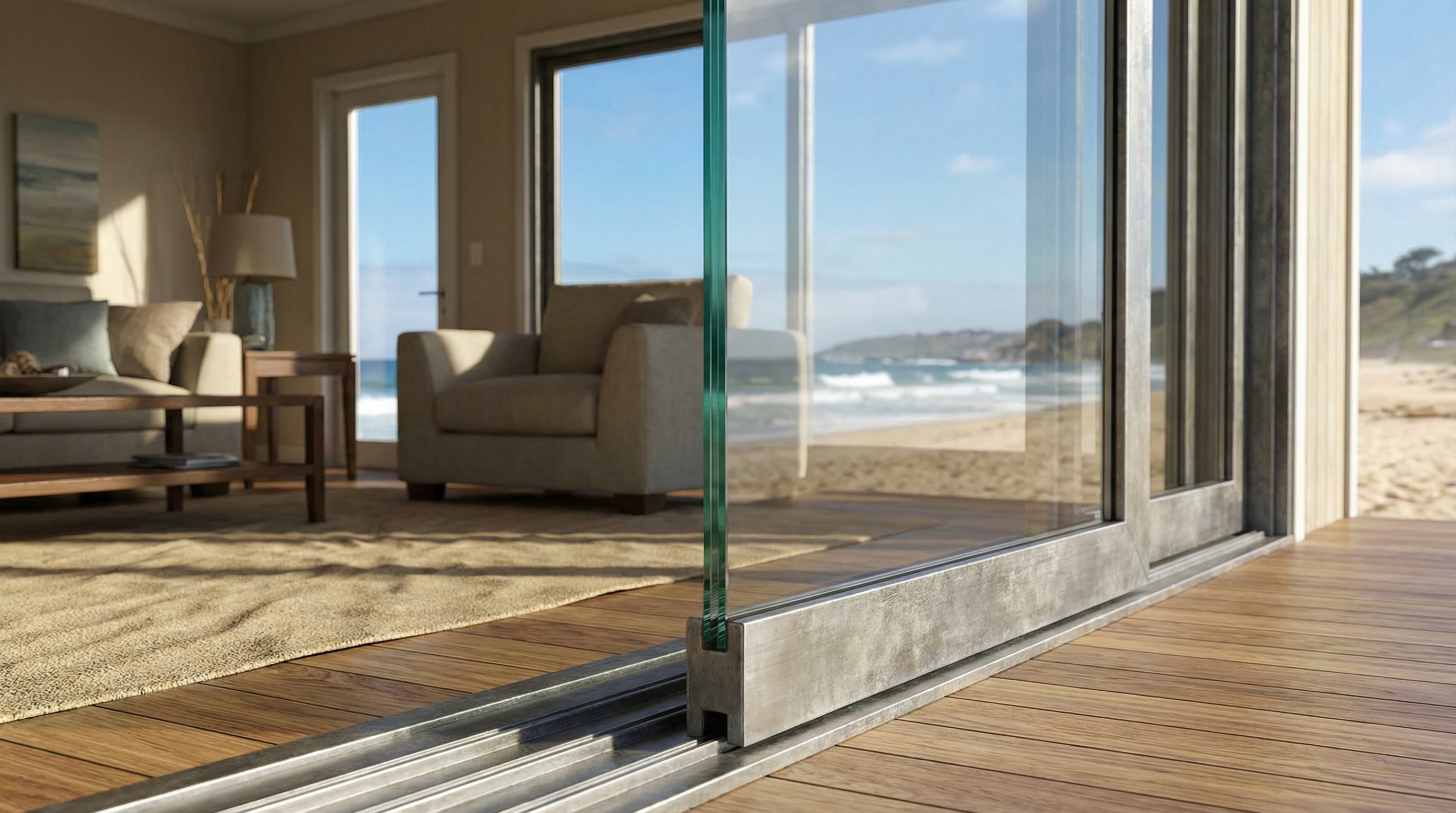
All sliding and bifold doors require Tempered Glass because they are subject to constant movement and high-frequency use. As dynamic elements of the home, these doors are frequently opened, closed, and subjected to vibrations that would fatigue standard glass.
What about the door frame?
Even if the glass is held securely within a frame, the rules for “doors” apply to the entire assembly. This includes sliding patio doors, swinging entry doors, and even the glass inserts found in decorative front doors.
Think about it:
Patio doors are often located in high-traffic transition areas between the kitchen and the deck. The risk of someone walking into a closed glass door is high, necessitating the strongest safety material available.
Patio door safety rules
- All sliding glass door panels must be tempered.
- Bifold and multi-slide systems require safety glazing.
- Fixed panels adjacent to the door (sidelites) are also regulated.
Key Takeaway: Any glass that moves or is located within an entryway must be tempered to prevent injury during usage.
| Door Type | Glazing Rule | Exception |
|---|---|---|
| Sliding Patio | Mandatory Tempered | None |
| Bifold System | Mandatory Tempered | None |
| Front Entry | Mandatory Tempered | < 3″ Decorative |
Ensuring patio doors are fitted with high-quality safety glass is a fundamental requirement for residential building compliance.
How is Tempered Glass quality verified in factories?
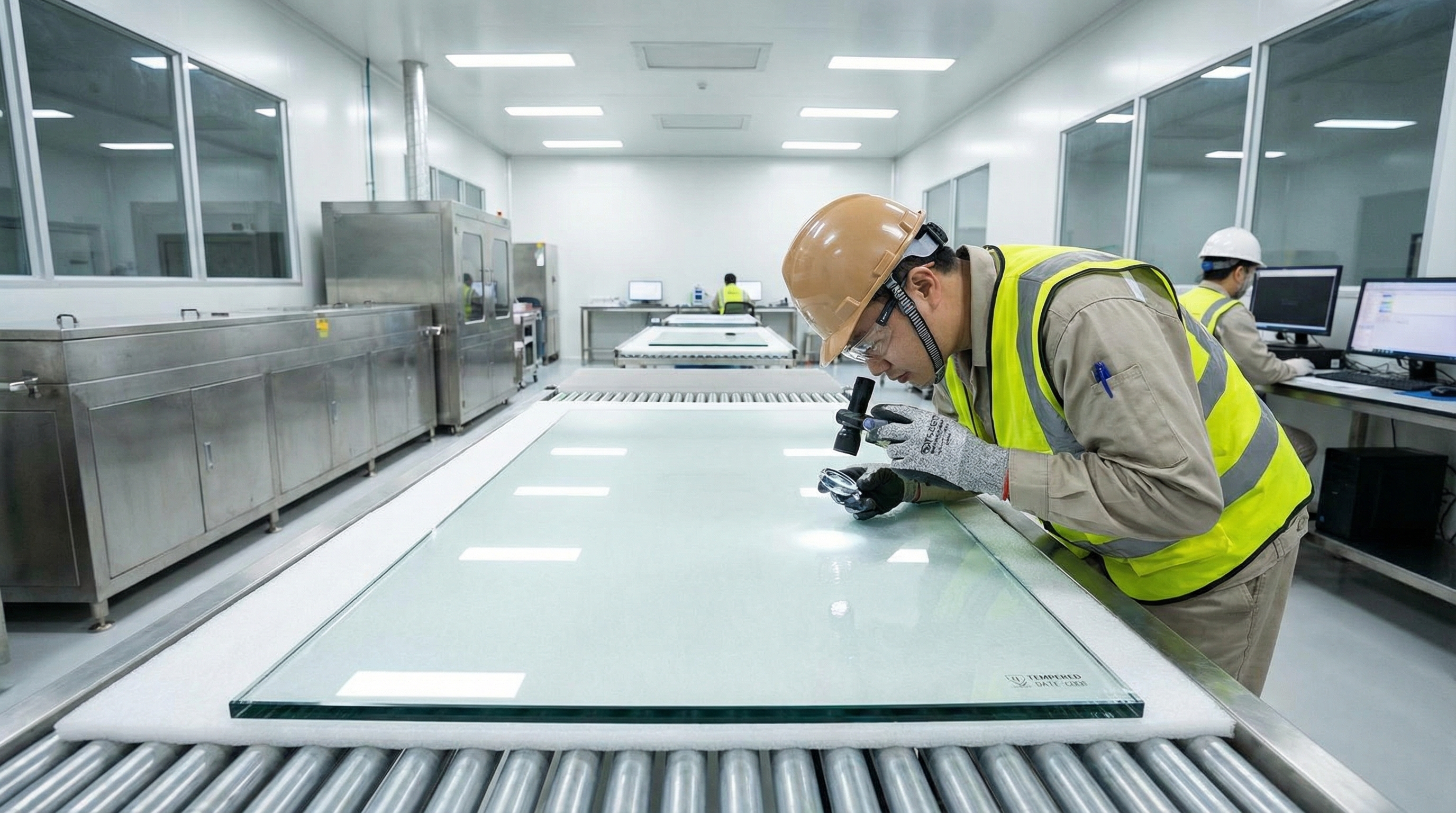
Rigorous quality control inspections ensure that every pane meets international safety standards for strength, clarity, and fragmentation. Using ceramic fritted glass or clear panels requires a source factory with full QC traceability to eliminate project delays.
Can defects be spotted during inspection?
Technicians use specialized lighting and magnifying tools to check for surface imperfections, edge chips, or “scallops.” Any defect in the glass before tempering can cause the entire pane to explode in the furnace.
Consider this:
A permanent etch or “bug” is applied to the corner of every compliant safety pane. This mark identifies the manufacturer and the safety standard (such as ASTM or EN) that the glass has passed.
Factory quality benchmarks
- Fragmentation tests ensure the piece counts meet safety codes.
- Polariscopes check for even stress distribution across the pane.
- Dimensional accuracy is verified against the original CAD drawings.
Key Takeaway: Quality verification at the factory level prevents the installation of non-compliant or structurally weak glass.
| Test Type | Metric | Goal |
|---|---|---|
| Fragmentation | Pieces per 50x50mm | > 40 Granules |
| Stress Level | Surface Compression | > 10,000 PSI |
| Tolerance | Dimensional Fit | ± 0.5mm |
A systematic approach to quality control ensures that every shipment of safety glass is ready for immediate installation without rework.
Can Tempered Glass be processed after treatment?

No, any cutting, drilling, or machining must be performed before the Tempered Glass process to prevent immediate shattering. Once the glass has been heat-treated, the internal tension makes it impossible to alter its shape or size.
Why is the order of operations critical?
Attempting to cut tempered panels disrupts the outer compression layer. This release of energy instantly travels through the tension core, causing the entire sheet to disintegrate into its safety granules.
The fact is:
Precision manufacturing requires that every hole for a handle or notch for a hinge is cut using CNC machines before the glass enters the tempering furnace. There are no “second chances” for modifications on-site.
Pre-tempering fabrication steps
- CNC cutting to exact project dimensions.
- Edge grinding and polishing for safety and fit.
- Drilling and slotting for hardware attachments.
Key Takeaway: All fabrication must be finalized prior to tempering, making accurate blueprints and measurements vital.
| Phase | Action Allowed | Result |
|---|---|---|
| Pre-Tempering | Cut, Drill, Grind | Custom Fabrication |
| Post-Tempering | None | Immediate Shattering |
| Installation | Fastening only | Finished System |
Working with a direct manufacturer ensures that all technical drawings are verified before production, eliminating costly sizing errors.
Frequently Asked Questions
Can I tell if my glass is tempered without breaking it?
Yes, look for the permanent safety etch in the corner of the glass, or use a polarized lens to check for the “leopard spot” stress patterns visible under specific lighting.
What’s the best way to clean tempered panels?
Avoid using razor blades or abrasive scrubbers which can catch on “fabrication debris” on the surface; instead, use a soft cloth with a mild soap solution.
Can I use tempered glass for a tabletop?
Absolutely, it is the preferred material for furniture as it is much more resistant to thermal shock from hot plates and heavy impact than standard glass.
What’s the difference between heat-strengthened and tempered glass?
Tempered glass is about twice as strong as heat-strengthened glass and is the only one of the two that is legally classified as “safety glazing.”
Can tempered glass handle extreme heat?
While it is much more heat-resistant than standard glass, it is not “fire-rated” unless it has undergone specific specialized treatments beyond standard tempering.
Conclusion
Navigating the requirements for safety glass is essential for ensuring your project meets local building codes and provides a safe environment for occupants. Whether you are designing a luxury residential shower or a high-rise commercial facade, selecting the right grade of glass is the most effective way to manage liability and risk. Don’t leave your project’s safety to chance—partner with a manufacturer that controls the entire production process from blueprint to final delivery. To get an expert review of your glass specifications or a detailed quote for your next project, contact us today and let our engineering team guide you toward the perfect safety solution.