The fundamental difference between tempered glass and regular glass lies in their structural integrity and safety profile, as tempered glass is specifically heat-treated to be up to five times stronger and break into blunt granules rather than sharp shards. Choosing the wrong material for a high-traffic commercial project can lead to frequent breakage and increased replacement costs. These failures agitate project timelines and can create significant liability risks if someone is injured by dangerous fragments. Understanding the difference between tempered glass and regular glass is the best way to ensure your project remains safe, durable, and compliant with modern building codes.
Why is there a difference between tempered glass and regular glass?
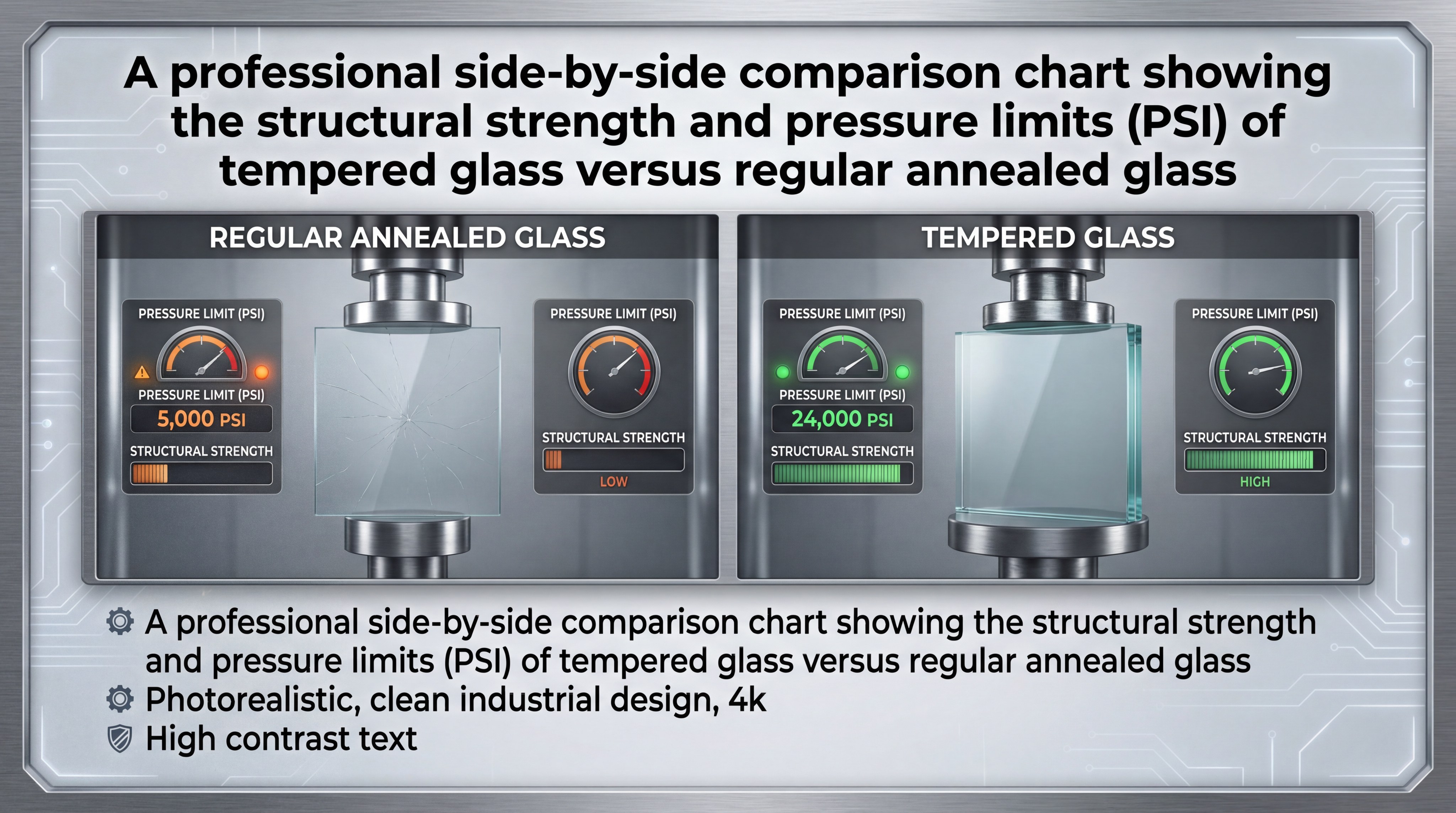
The primary difference between tempered glass and regular glass is the internal compressive stress that allows tempered units to withstand much higher mechanical loads. While regular glass is fragile and breaks under relatively low pressure, tempered variants are engineered to handle extreme force. This makes them ideal for structural applications where durability is non-negotiable.
What is the impact of surface compression?
Surface compression is the “secret sauce” that keeps your glass panels intact under heavy impact. When you utilize tempered materials, the outer surface is pushed together while the core is pulled apart.
Here is the kicker:
- Regular glass typically fails at 6,000 PSI.
- Tempered glass remains stable until 24,000 PSI.
- The high PSI rating prevents spontaneous breakage.
Key Takeaway: Tempered glass offers vastly superior resistance to mechanical pressure compared to annealed options.
| Attribute | Regular Glass | Tempered Glass |
|---|---|---|
| Breaking Point | ~6,000 PSI | ~24,000 PSI |
| Strength Factor | 1x (Baseline) | 4x to 5x stronger |
| Structural Reliability | Low | High |
Review these pressure limits to ensure your structural glass meets the load requirements for your specific site.
How does heat set the difference between tempered glass and regular glass?
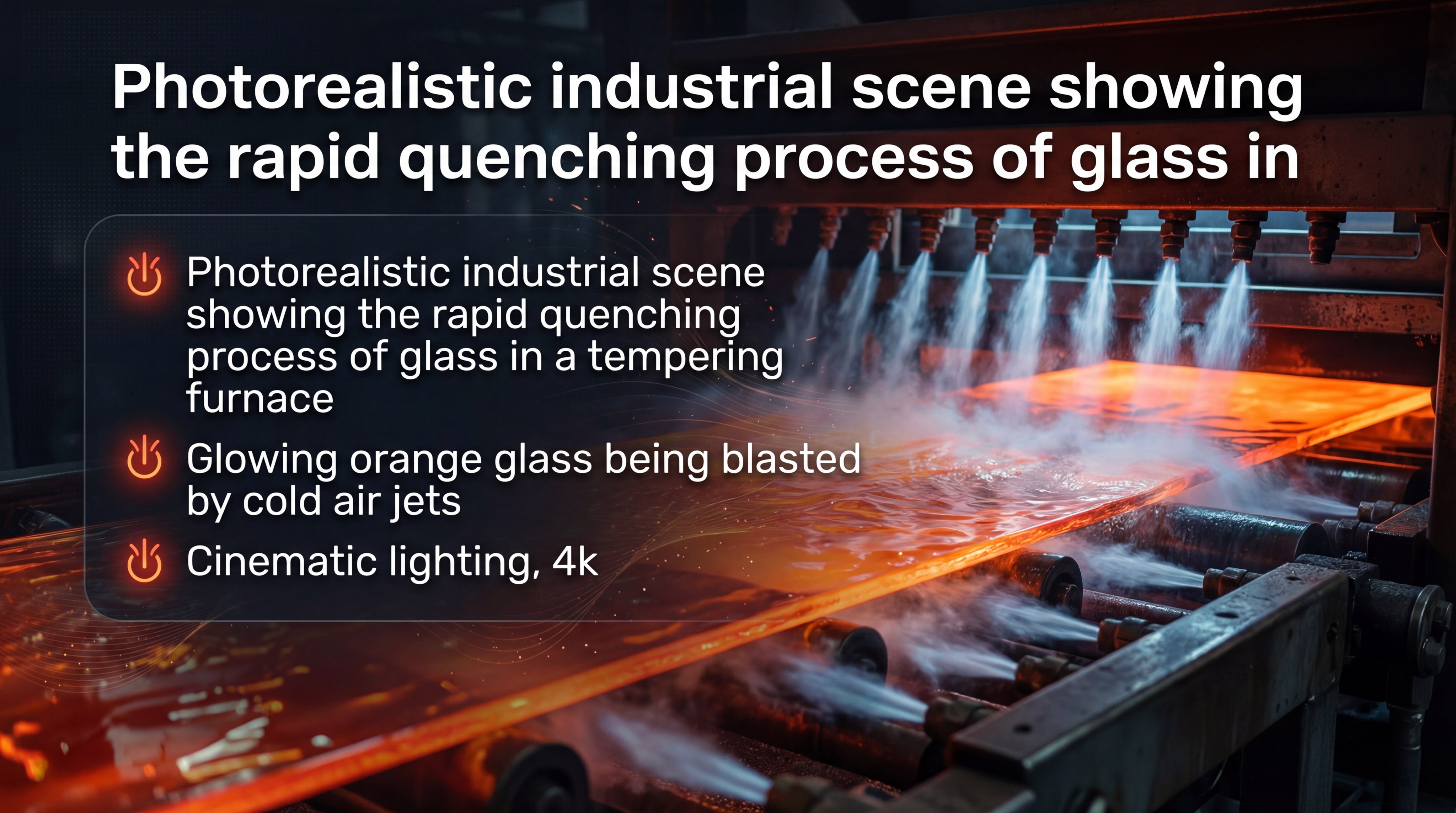
The manufacturing process creates the core difference between tempered glass and regular glass by subjecting the material to intense heat followed by rapid cooling. Regular glass is cooled slowly to relieve internal stress, but tempering does the opposite. This extreme temperature shift locks in the strength required for safety certifications.
How does the quenching process work?
The quenching process is where you truly see the science of glass transformation. The glass is heated to over 600 degrees Celsius before being blasted with high-pressure air jets.
Believe it or not:
- Rapid cooling solidifies the surface faster than the interior.
- This creates permanent tension in the center.
- You get a product that is significantly more resilient to thermal shock.
Key Takeaway: The rapid quenching stage is essential for turning standard glass into a high-performance safety product.
| Process Stage | Regular (Annealed) Glass | Tempered Glass |
|---|---|---|
| Heating Temp | Standard forming | >600°C |
| Cooling Method | Slow controlled cooling | Rapid air quenching |
| Internal Tension | Minimized | Maximized for strength |
Evaluate the quenching quality to determine if the glass can withstand the thermal stresses of your environment.
How does shattering show the difference between tempered glass and regular glass?
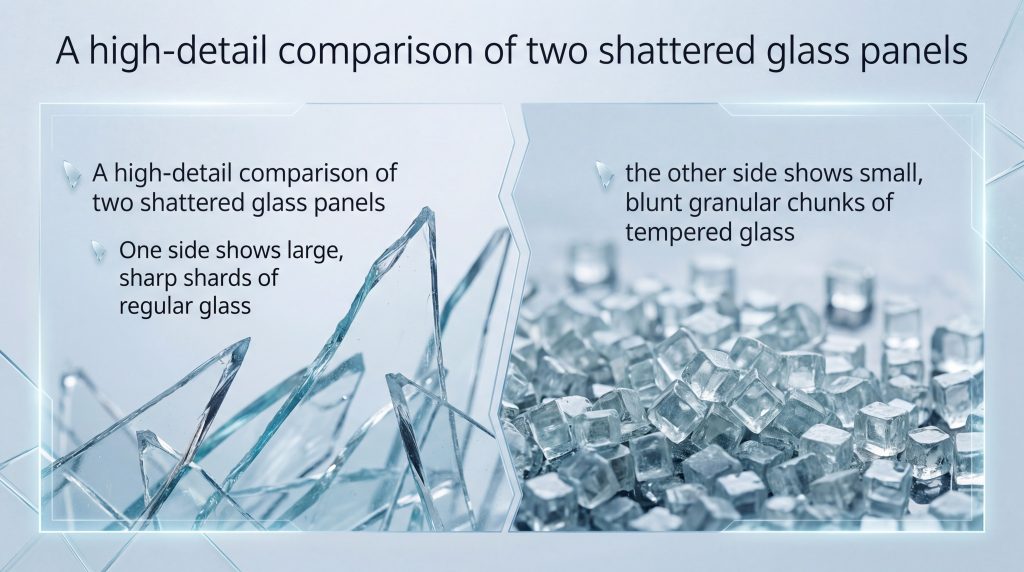
You can instantly see the difference between tempered glass and regular glass the moment a panel fails. Regular glass breaks into long, razor-sharp shards that can cause severe injury. In contrast, tempered glass is designed to crumble into small, blunt granules. Explore our products to find the right safety glass for your high-risk areas.
Are jagged shards a major safety risk?
Jagged shards from regular glass represent a significant hazard for you and your building occupants. These pieces are heavy and sharp enough to pierce through protective clothing or skin.
Simply put:
- Regular glass shards stay attached to the frame.
- Tempered granules fall safely to the floor.
- Granular breakage reduces the risk of deep lacerations.
Key Takeaway: The granular shatter pattern of tempered glass is its most important safety feature for commercial spaces.
| Failure Mode | Regular Glass | Tempered Glass |
|---|---|---|
| Breakage Pattern | Sharp, jagged shards | Small, blunt cubes |
| Injury Risk | High / Life-threatening | Low / Minimal |
| Post-Break Clean-up | Dangerous and difficult | Safer and faster |
Observe the fragment size after impact tests to verify that the glass meets safety glazing standards.
Can edges show the difference between tempered glass and regular glass?
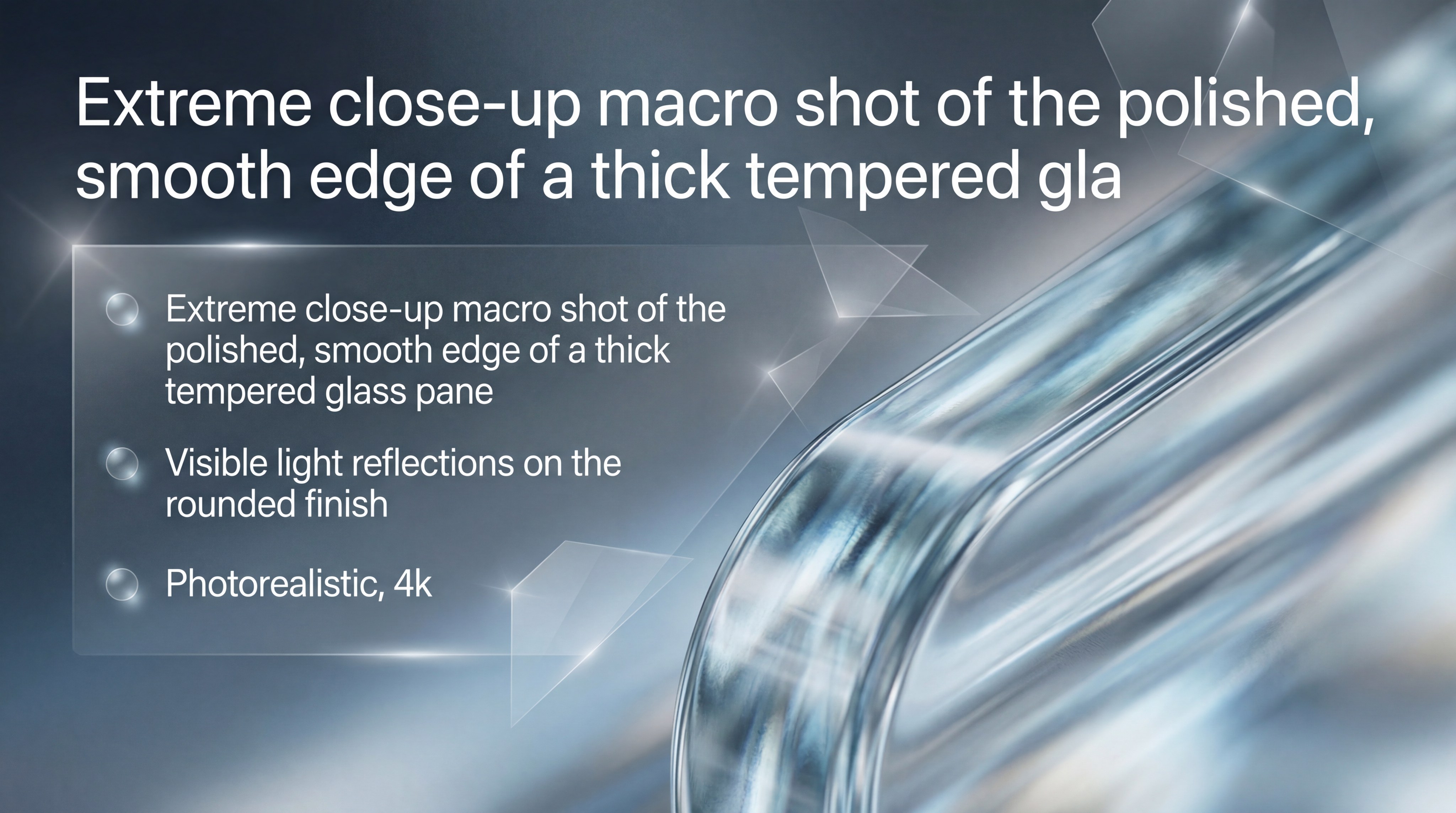
A physical inspection of the perimeter often reveals the difference between tempered glass and regular glass. Because tempered glass undergoes secondary processing, the edges are usually polished to a high sheen. Regular glass often has rough or “seamed” edges unless it has been specifically ordered with a finish. This aesthetic distinction is vital for frameless installations.
Does a polished finish indicate tempering?
A polished finish is often a byproduct of the safety treatment you expect in high-end projects. Manufacturers must finish the edges before the heating process to prevent stress fractures.
Look:
- Tempered edges feel smooth to the touch.
- Regular edges may have slight micro-chips.
- Polished edges improve the visual clarity of the pane.
Key Takeaway: Smooth, rounded, and polished edges are strong indicators that the glass has been tempered for safety.
| Edge Feature | Regular Glass | Tempered Glass |
|---|---|---|
| Texture | Gritty or sharp | Polished and smooth |
| Finish Type | Cut or seamed | Flat polished or pencil edge |
| Pre-treatment | Not required | Mandatory before tempering |
Inspect the edge quality to ensure the glass provides the necessary aesthetic finish for exposed-edge designs.
Does a bug mark prove the difference between tempered glass and regular glass?
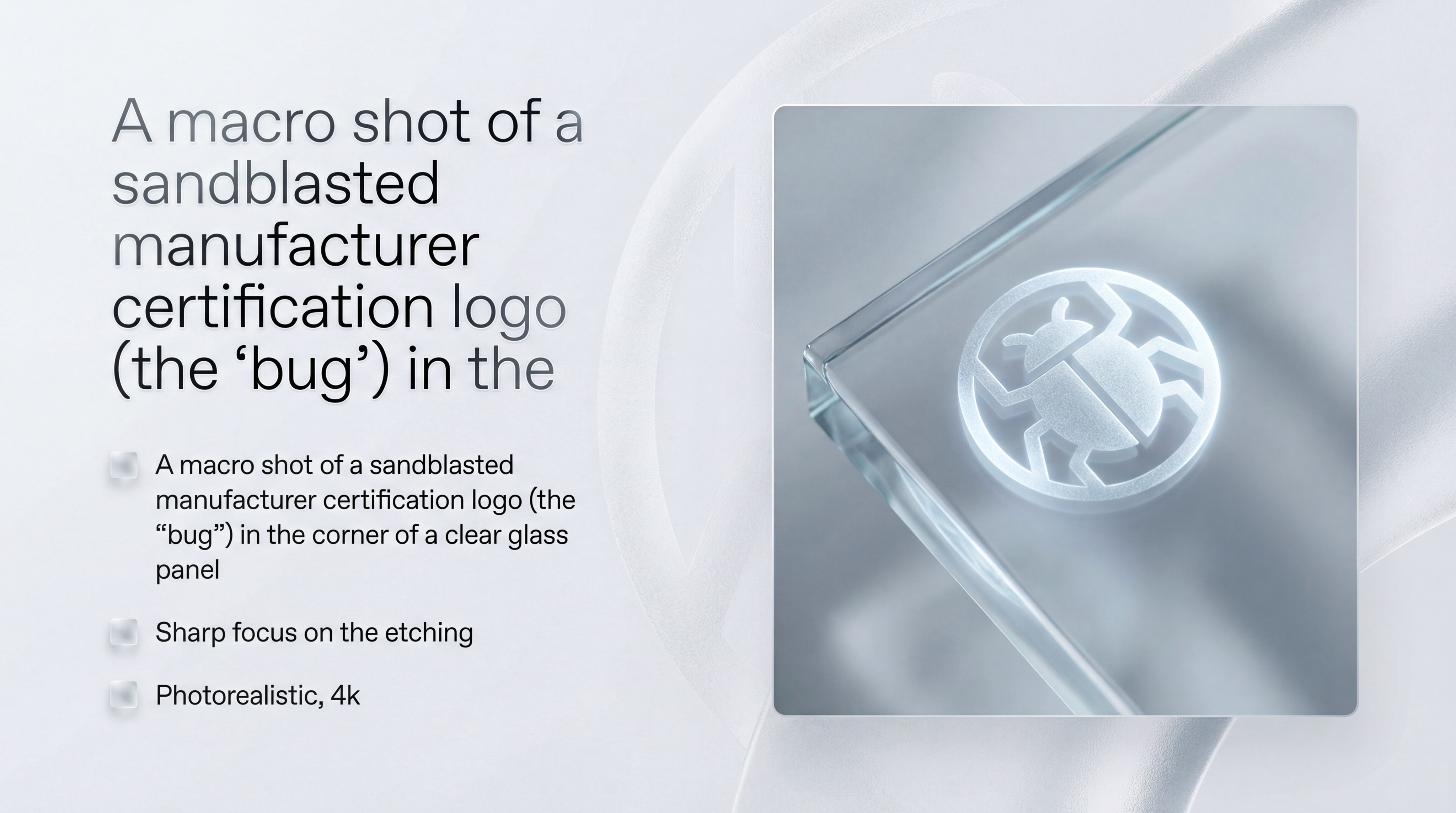
Searching for the “bug” is the most reliable way to confirm the difference between tempered glass and regular glass. This permanent mark is etched or sandblasted into the corner of the glass during production. It contains the manufacturer’s name and the safety standard codes. Regular glass rarely carries these markings because it is not regulated as a safety material.
Where should you look for certifications?
You should always look in the bottom corners of your installed glass panels for these stamps. These marks are your guarantee that the glass has passed rigorous impact tests.
But wait, there’s more:
- The stamp remains visible for the life of the glass.
- It verifies compliance with ANSI Z97.1 standards.
- Inspectors look for this mark to approve your project.
Key Takeaway: The presence of a certification “bug” is the ultimate proof of a tempered safety glass product.
| Certification Mark | Regular Glass | Tempered Glass |
|---|---|---|
| Stamp Presence | Absent | Mandatory |
| Standard Verified | None | ASTM / ANSI / EN |
| Legal Compliance | Low | High (Safety Glazing) |
Check the corner of every panel to confirm the material matches your architectural specifications.
Do sunglasses show the difference between tempered glass and regular glass?

You can use polarized lenses to visually detect the difference between tempered glass and regular glass in outdoor settings. When viewed through polarized sunglasses, tempered glass often reveals a series of faint spots or lines. These patterns are caused by the pressure of the cooling rollers. Regular glass will appear completely clear and uniform because it never touched the quenching rollers.
What are quench marks?
Quench marks are the faint patterns you see when the light is refracted through the stressed areas of the glass. They are not defects, but rather evidence of the heat-strengthening process.
Truth be told:
- These marks are only visible under certain lighting.
- They show the path of the cooling air.
- Regular glass lacks these optical stress indicators.
Key Takeaway: Polarized sunglasses act as a quick diagnostic tool to verify tempering without needing specialized equipment.
| Visual Indicator | Regular Glass | Tempered Glass |
|---|---|---|
| Stress Patterns | None | Visible spots/lines |
| Uniformity | High | Subject to quench marks |
| Lense Effect | Transparent | Dark “leopard” spots |
Use polarized light to non-destructively audit large glass shipments for consistent safety treatment.
Is safety the main difference between tempered glass and regular glass?
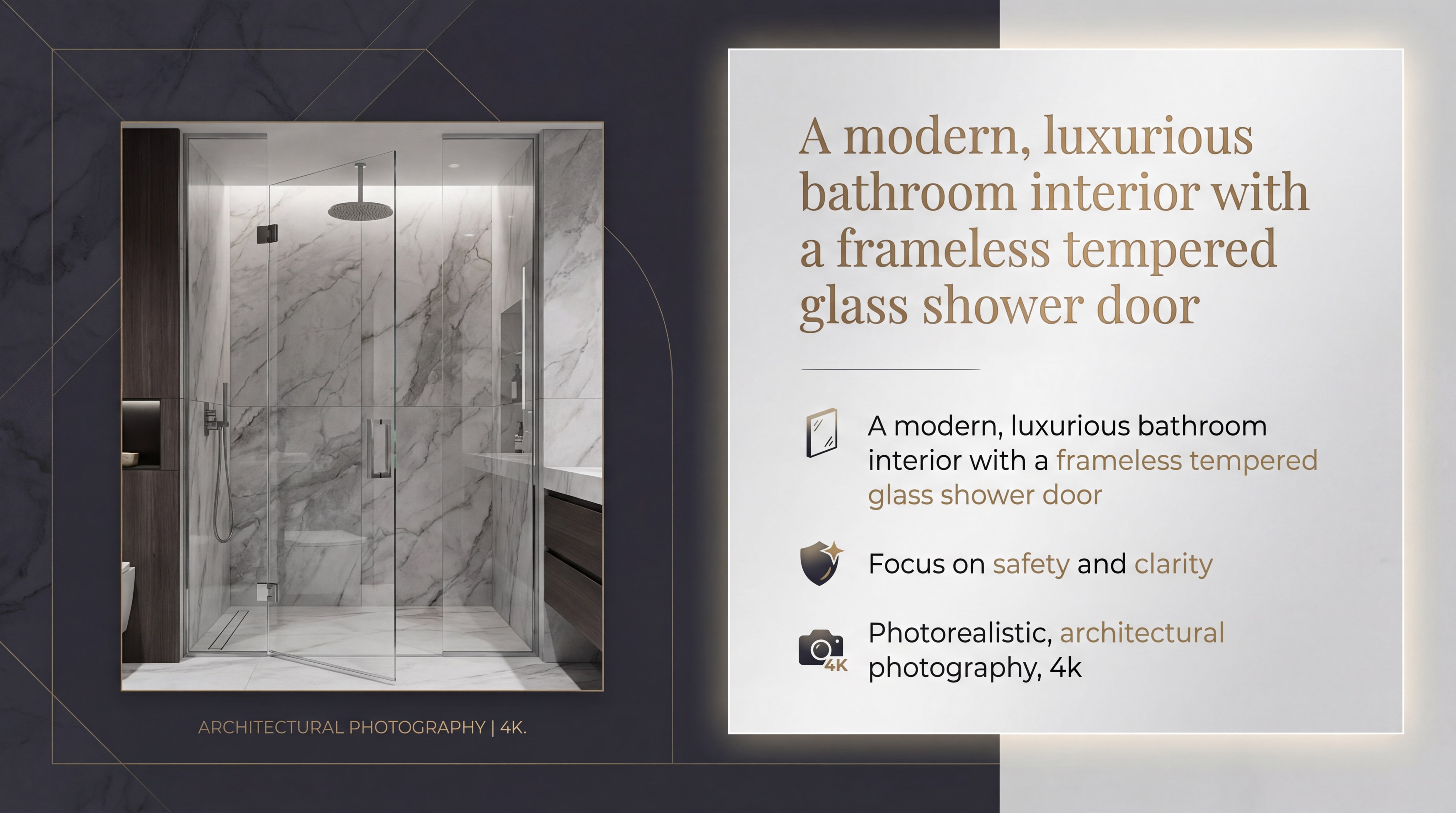
In many residential and commercial applications, the difference between tempered glass and regular glass is the difference between a safe environment and a hazard. Tempered glass is the industry standard for bathroom enclosures and high-traffic partitions. You can see many examples of these safe installations in our project gallery. Its ability to resist high heat and human impact makes it indispensable for modern interior design.
Why use tempered glass in shower doors?
You must prioritize tempered glass in shower doors because the humid, slippery environment increases the chance of slips and falls. If you collide with standard glass, the result can be catastrophic.
The result?
- Tempered glass handles the weight of leaning users.
- It resists thermal expansion from hot water.
- Broken pieces will not cause deep cuts in bare skin.
Key Takeaway: Tempered glass is the only appropriate material for areas where human contact is frequent and expected.
| Application Factor | Regular Glass | Tempered Glass |
|---|---|---|
| Impact Resistance | Poor | Excellent |
| Thermal Tolerance | Low | High |
| Recommended Use | Picture frames | Showers, Railings |
Analyze the traffic patterns of your space to decide where safety glass is legally and ethically required.
Can you cut to hide the difference between tempered glass and regular glass?
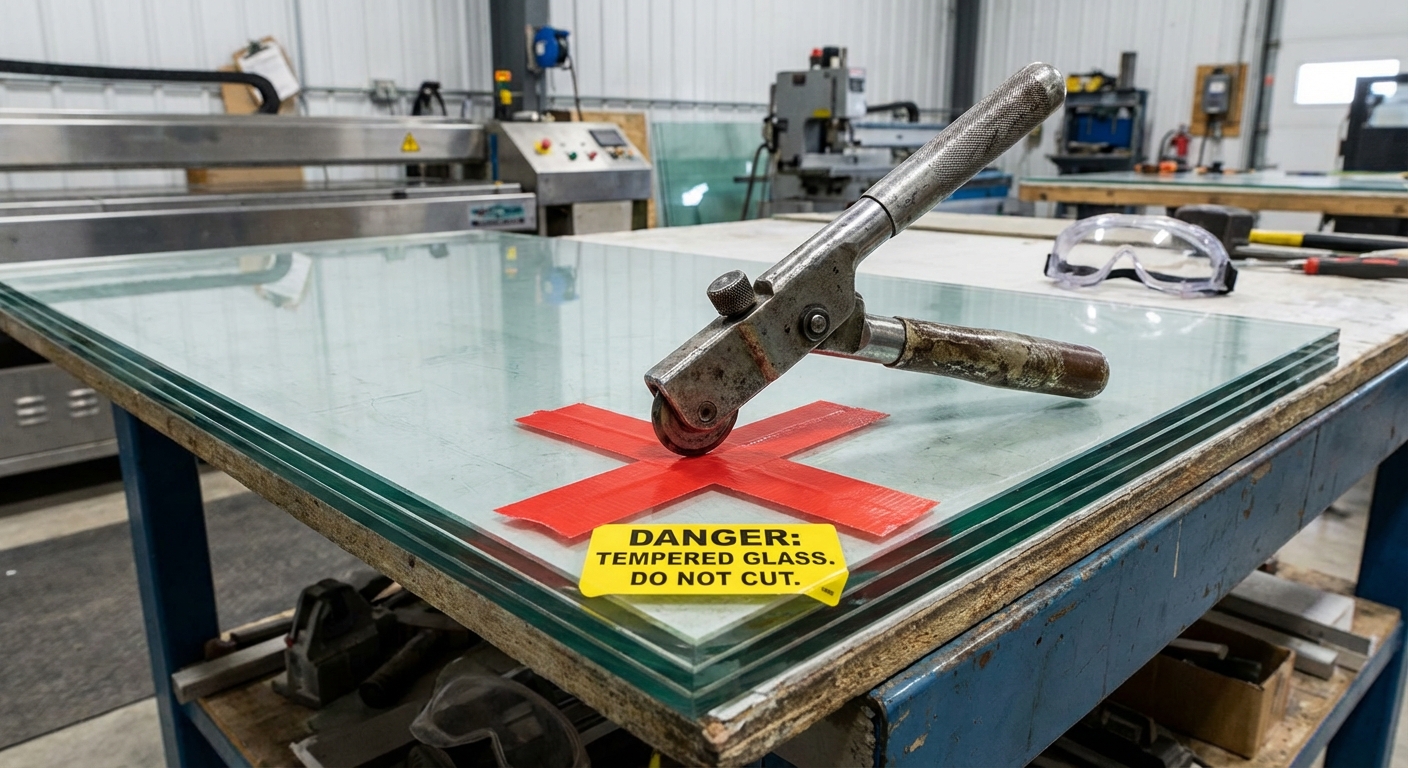
A major functional difference between tempered glass and regular glass is that tempered panes cannot be cut or drilled after the heating process. Any attempt to score the surface of a tempered pane will cause the entire sheet to explode into granules. Regular glass is highly versatile and can be modified on the job site. This means your measurements for tempered glass must be 100% accurate before production begins.
Why is post-production modification impossible?
You cannot modify tempered glass because the internal tension is perfectly balanced across the entire sheet. Once you break that surface tension, the energy is released instantly.
Bottom line:
- You must drill all holes before tempering.
- Dimensional errors cannot be fixed on-site.
- Precision manufacturing is mandatory.
Key Takeaway: Unlike regular glass, tempered units must be fabricated to exact final dimensions before the safety treatment.
| Workability | Regular Glass | Tempered Glass |
|---|---|---|
| On-site Cutting | Possible | Impossible |
| Drilling Holes | Easy | Must be done pre-temper |
| Error Tolerance | High (Can be trimmed) | Zero |
Verify your architectural blueprints twice to avoid costly mistakes with custom-tempered glass orders.
Do facades show the difference between tempered glass and regular glass?
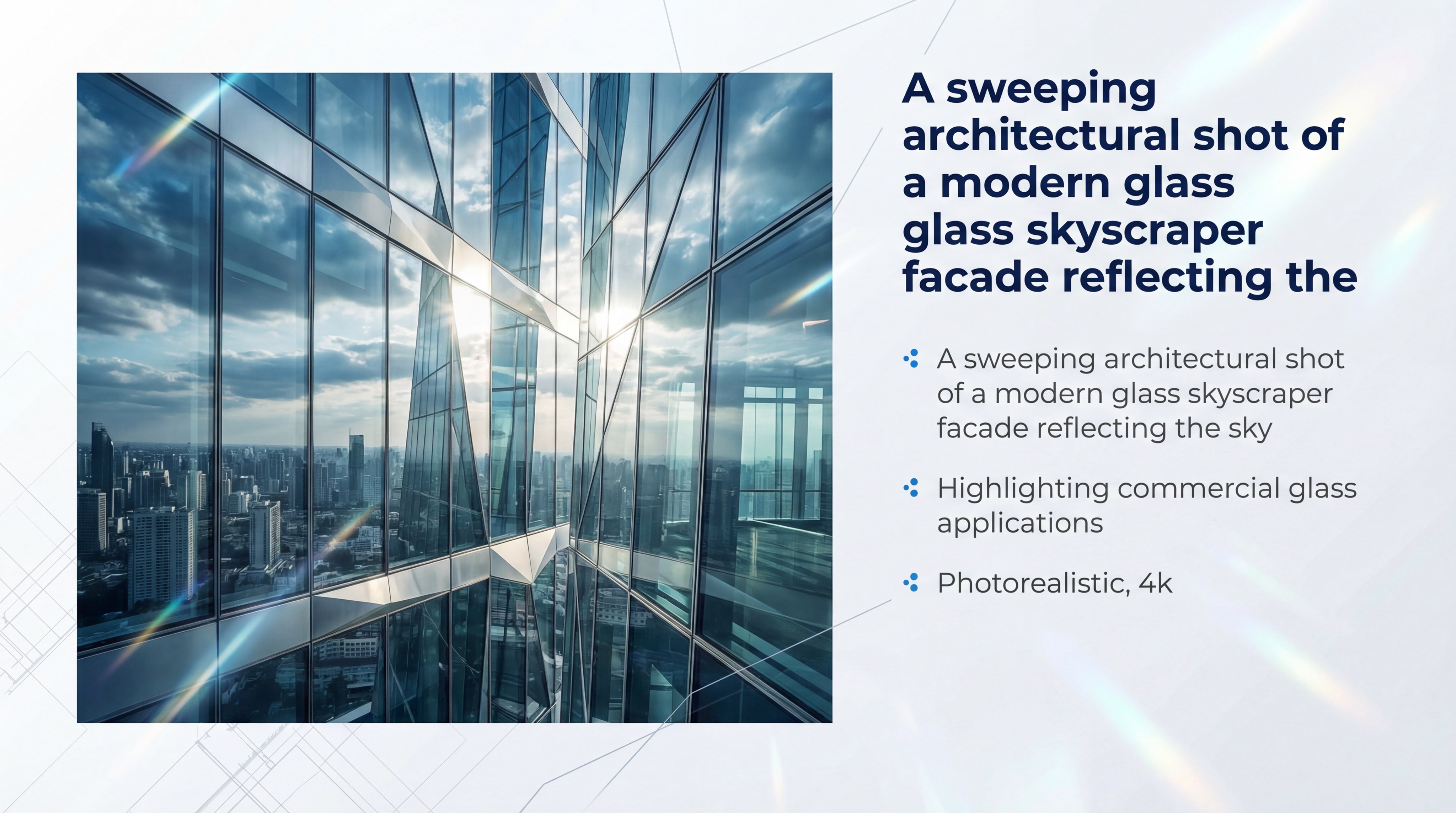
In architectural design, the difference between tempered glass and regular glass is critical for building stability. Modern skyscrapers rely on tempered or heat-strengthened glass to resist wind loads and environmental stressors. Our team has extensive experience in these large-scale applications, which you can learn about on our about us page. Without the added strength of tempering, exterior glass would crack under the pressure of high-altitude winds.
How does wind load affect your choice?
You need to consider wind load when designing high-rise structures because the pressure increases as you go higher. Regular glass would shatter under the flexing required for tall buildings.
Think about it:
- Tempered glass allows for larger window spans.
- It resists the vibration of passing vehicles or wind.
- Thinner tempered panes can replace thicker regular glass.
Key Takeaway: Tempered glass provides the structural flexibility and strength required for modern commercial facades.
| Performance Metric | Regular Glass | Tempered Glass |
|---|---|---|
| Wind Resistance | Poor | High |
| Max Panel Size | Limited | Large spans |
| Flexibility | Low | Moderate |
Examine the local wind-load ratings for your region to ensure your facade glass exceeds safety requirements.
How to choose based on the difference between tempered glass and regular glass?
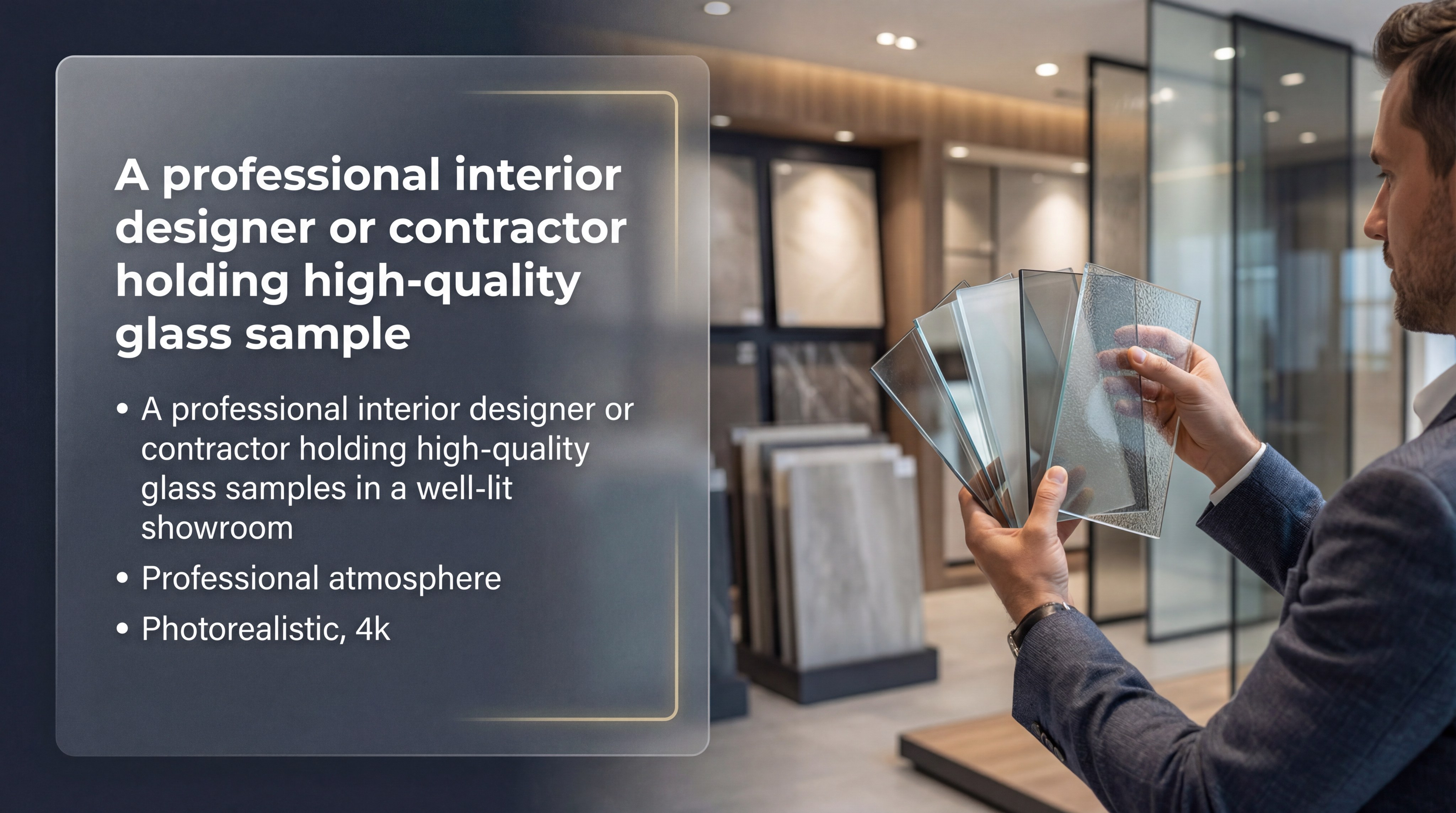
Making the final choice depends on understanding the technical difference between tempered glass and regular glass for your specific use case. While regular glass is more affordable, it is often prohibited by code for safety-critical areas. You must weigh the upfront savings against the long-term safety and durability of your installation. For most professional projects, the peace of mind provided by tempered safety glass far outweighs the cost difference.
Should you prioritize cost or durability?
You should always prioritize durability in any area where breakage could lead to injury or operational downtime. Saving money on standard glass now could lead to expensive litigation or repairs later.
The best part?
- Tempered glass lasts longer in harsh environments.
- It requires less frequent replacement.
- It enhances the value of your commercial property.
Key Takeaway: Investing in tempered glass is a strategic decision that protects your assets and the people using them.
| Selection Criteria | Regular Glass | Tempered Glass |
|---|---|---|
| Primary Driver | Budget / Aesthetics | Safety / Durability |
| Longevity | Low (Breaks easily) | High |
| Code Compliance | Decorative only | Structural and Safety |
Balance your project’s budget with its safety requirements to choose the most responsible glass solution.
Frequently Asked Questions
Can I tell the difference just by looking at the surface?
Usually, you cannot distinguish them by surface alone as both are equally transparent. You must check for the sandblasted certification “bug” or use polarized lenses to identify the stress patterns.
What’s the best glass for a commercial tabletop?
Tempered glass is the superior choice for tabletops because it handles heavy loads and hot objects better than regular glass. It also prevents dangerous shards if the table is accidentally overturned or struck.
Can I cut a piece of tempered glass that is slightly too big?
No, you cannot cut tempered glass after it has been manufactured. The internal tension will cause the entire pane to shatter instantly if you attempt to score the surface with a cutting tool.
Is tempered glass heavier than regular glass?
No, the weight of the glass remains the same for both types given equal thickness. The tempering process changes the internal structure and strength, but it does not add mass to the material.
What happens if I hit the edge of a tempered glass pane?
The edge is the most vulnerable part of a tempered glass panel. If you strike the edge with enough force, the release of tension will cause the entire sheet to fail immediately.
Conclusion
Mastering the difference between tempered glass and regular glass is the hallmark of a professional contractor or architect. By selecting the right material, you ensure that your buildings are not only beautiful but also structurally sound and safe for every occupant. We are dedicated to providing the highest quality manufacturing solutions for all your architectural needs. To get a precise quote for your next project, contact us today and let our engineering team help you make the safest choice.