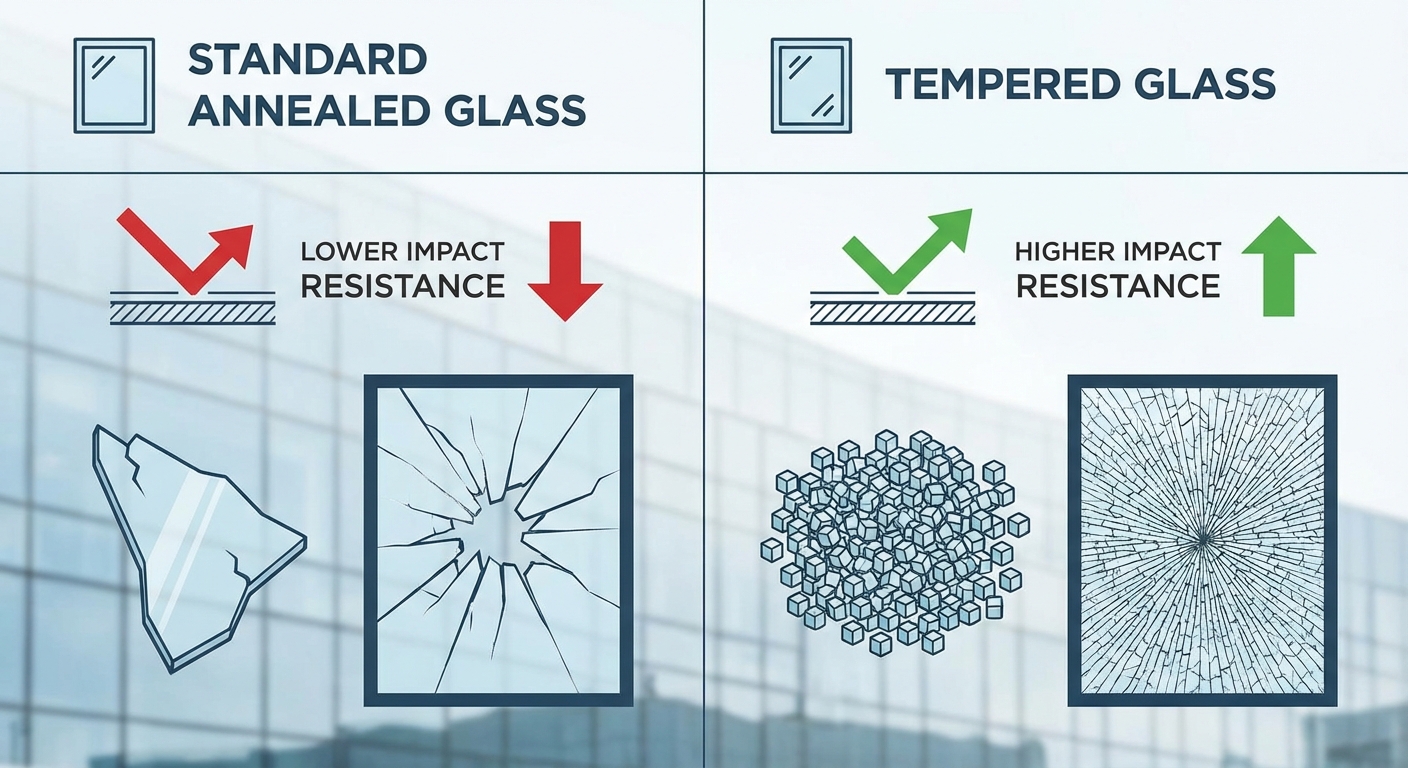
In professional construction and manufacturing, using standard annealed glass is a significant liability that puts your projects at risk. When standard glass fails, it shatters into large, jagged shards that can cause severe injury, property damage, and costly legal disputes. By integrating tempered glass uses into your specifications, you transition to a safety-first material that is four to five times stronger and engineered to crumble into small, blunt granules if broken.
What are the primary architectural tempered glass uses today?
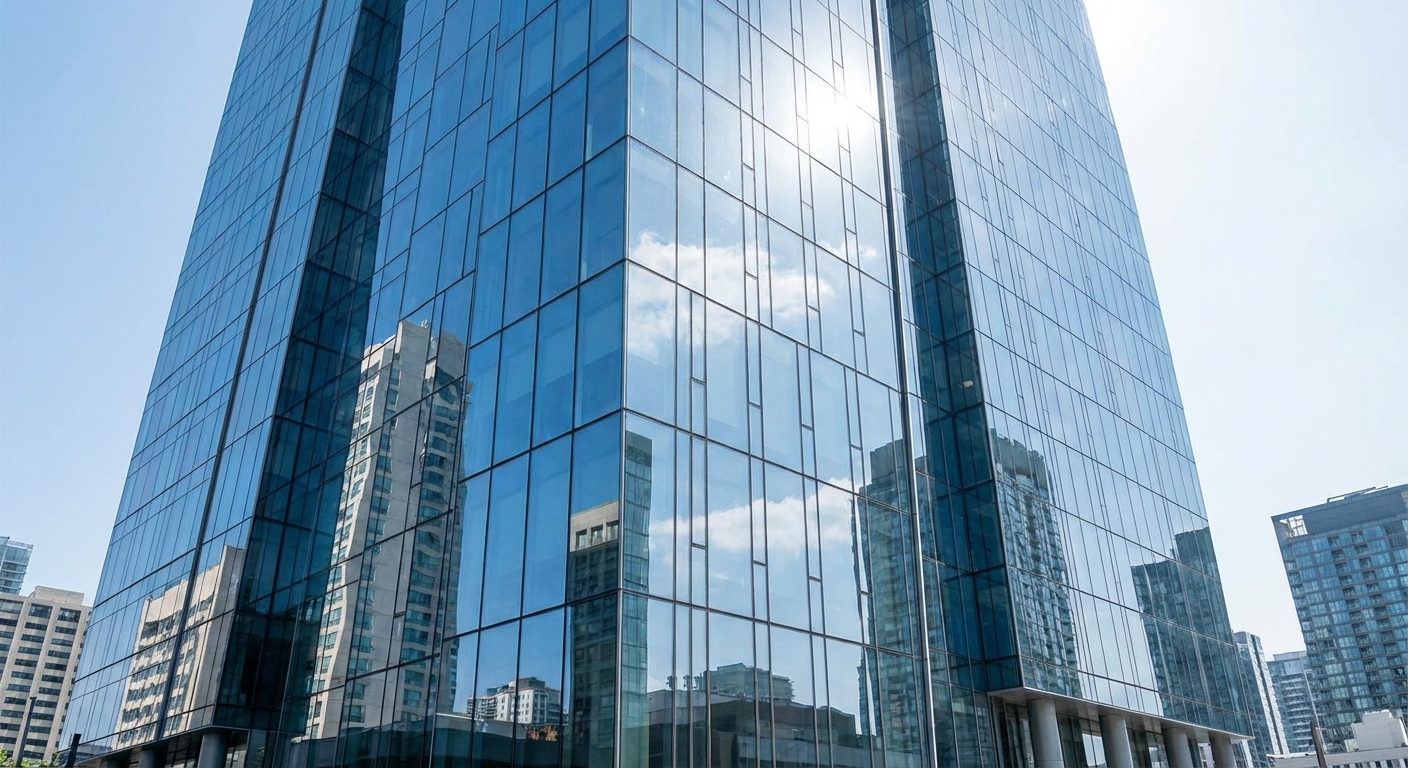
Architectural applications represent the largest volume of tempered glass uses in the modern built environment. This high-strength material is essential for windows, doors, and building envelopes where structural integrity is a priority. Because it withstands higher wind loads than standard glass, it is the industry standard for high-rise developments.
How does it improve high-rise building safety?
Think about it:
The wind pressure at fifty stories high is immense, requiring a substrate that can flex without failing. Tempered glass provides the necessary compression strength to resist these forces while ensuring that any accidental breakage results in harmless “glass rain” rather than dangerous shards.
- High resistance to wind and thermal loads.
- Compliance with international safety glazing codes.
- Lower maintenance costs due to increased durability.
Why use it in energy-efficient curtain walls?
The best part?
You can combine strength with sustainability by applying Low-E coatings to tempered panels. This allow developers to maintain beautiful, transparent facades while meeting strict energy efficiency targets and protecting interiors from UV damage.
- Compatibility with advanced thermal coatings.
- High resistance to thermal breakage from sun exposure.
- Support for heavy double-glazed units.
Key Takeaways
- Architectural glass must be tempered to handle the mechanical and thermal stresses of modern skyscrapers.
- It acts as the primary defense against environmental elements while supporting energy goals.
| Architectural Element | Primary Benefit | Standard Thickness |
|---|---|---|
| Exterior Facades | Wind & Impact Resistance | 10mm – 12mm |
| High-Rise Windows | Thermal Control & Safety | 6mm – 10mm |
The data indicates that architectural safety is inextricably linked to the mechanical properties provided by the tempering process.
Why is safety critical for bathroom tempered glass uses?
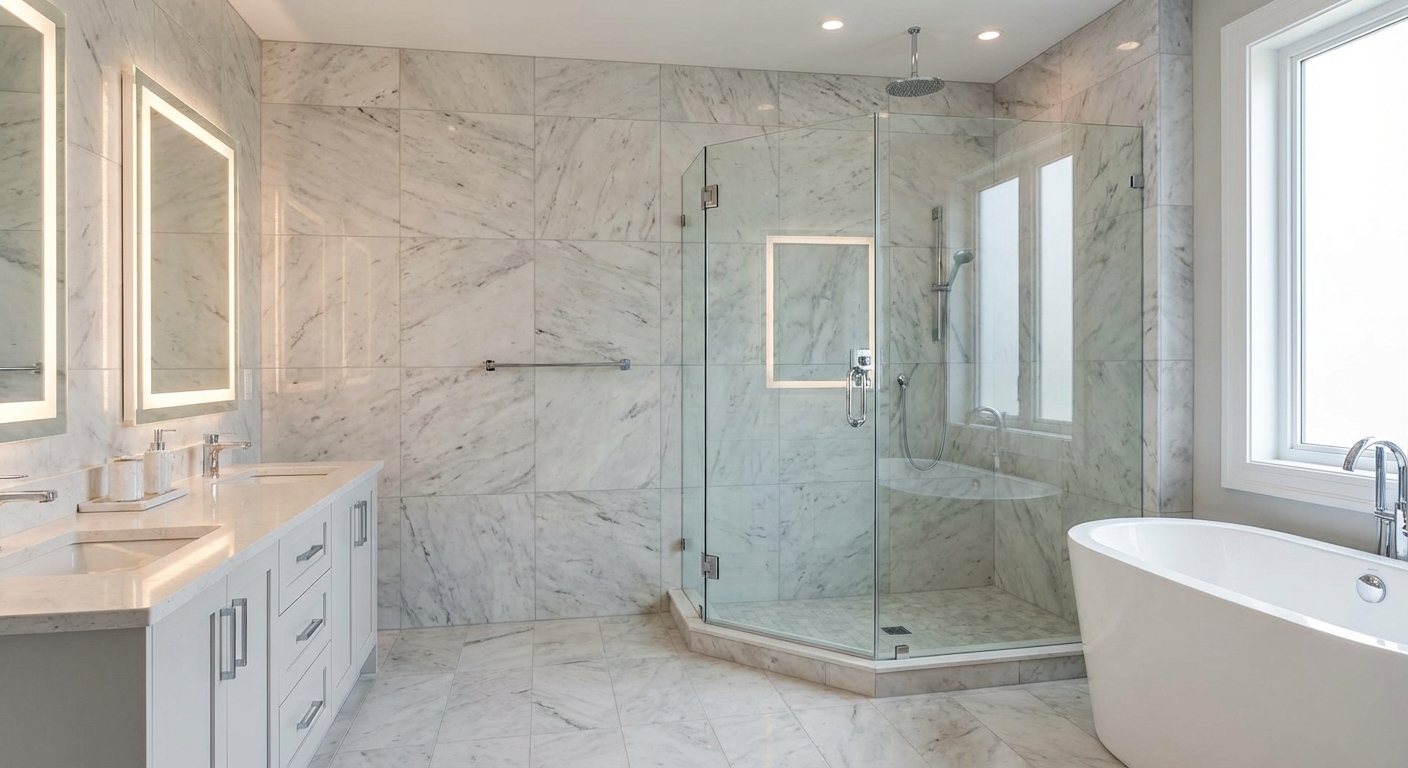
Safety is the non-negotiable driver for bathroom tempered glass uses in both residential and hospitality sectors. Humidity and temperature fluctuations in bathrooms create a volatile environment where standard glass is prone to spontaneous thermal breakage. Utilizing heat-treated glass ensures that the enclosure remains stable even when subjected to the rapid cooling and heating of daily shower cycles.
Can it withstand high thermal stress in bathrooms?
Here is the deal:
Steam and hot water create significant temperature gradients across a glass surface. Tempered glass is specifically engineered to absorb this thermal shock, preventing the stress cracks that plague inferior materials in luxury bathroom designs.
- Protection against rapid temperature fluctuations.
- Smooth, polished edges for safe daily handling.
- Increased surface hardness to resist scratches.
Is 10mm thickness ideal for frameless designs?
But wait, there’s more:
Modern aesthetic trends favor “frameless” looks that require the glass to act as its own structural support. Thicker tempered panels provide the rigidity needed to hold heavy hardware and hinges without the need for bulky aluminum frames.
- Support for minimalist architectural hardware.
- Easy-to-clean surfaces when paired with nano-coatings.
- Enhanced stability for heavy-duty daily use.
Key Takeaways
- Tempering is a legal requirement for bathroom glass to mitigate the risk of life-threatening lacerations in wet areas.
- Frameless designs rely entirely on the internal tension of tempered glass for structural stability.
| Bathroom Application | Key Requirement | Typical Specification |
|---|---|---|
| Shower Doors | Impact Safety | 8mm or 10mm Tempered |
| Frameless Enclosures | Structural Rigidity | 10mm or 12mm Tempered |
Standardizing on 10mm tempered glass for shower enclosures balances visual transparency with the mechanical strength required for longevity.
How do modern railings incorporate tempered glass uses?
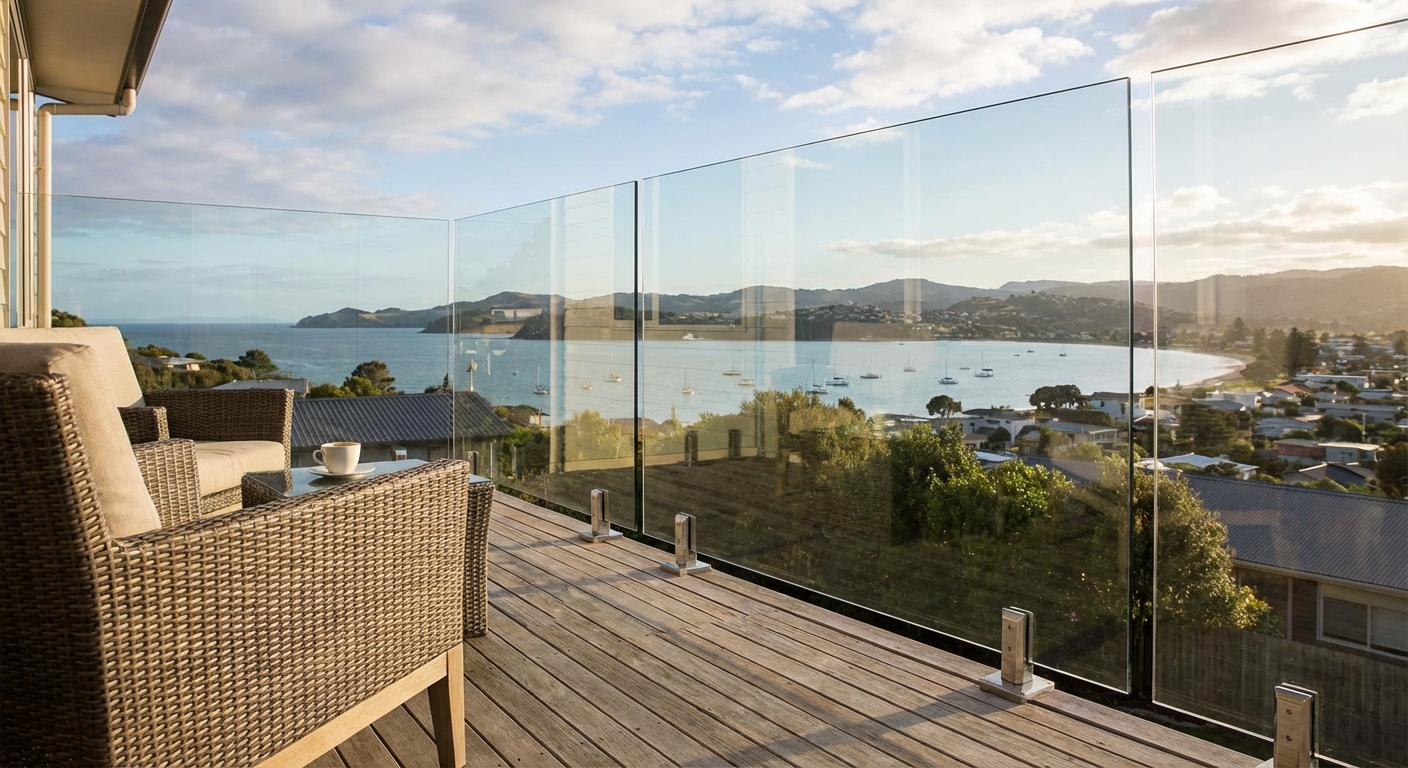
Modern railings and balustrades utilize tempered glass uses to create safe, unobstructed views for balconies and staircases. In these applications, the glass often serves as a structural barrier that must withstand the weight of individuals leaning against it. Its high load-bearing capacity makes it the only viable transparent material for high-traffic public and residential spaces.
Does it provide structural integrity for balustrades?
Believe it or not:
A single sheet of tempered glass can support significant lateral pressure, making it an ideal choice for balconies. It provides a contemporary aesthetic that traditional wood or metal pickets cannot match, without sacrificing the safety of the inhabitants.
- High load-bearing capacity for public safety.
- Resistance to edge impacts in high-traffic areas.
- Modern, transparent aesthetic for stairs and balconies.
Should you combine it with laminated glass?
It gets even better:
For high-rise balconies, professionals often specify tempered-laminated glass. This combination ensures that if a panel does break, the interlayer holds the fragments in place, preventing a hole from forming in the safety barrier.
- Double protection: Strength + Fragment retention.
- Ideal for high-altitude balconies and overhead glazing.
- Sound dampening properties for busy environments.
Key Takeaways
- Tempered glass is the backbone of modern railing systems, providing both the barrier and the view.
- Combining tempering with lamination provides the ultimate safety tier for high-altitude applications.
| Railing Type | Glass Combination | Safety Level |
|---|---|---|
| Interior Stairs | Single Tempered | High |
| High-Rise Balcony | Tempered Laminated | Maximum |
Structural glass railings offer a unique engineering solution where the material serves as both the finish and the safety structure.
What are the best office partition tempered glass uses?

Corporate environments prioritize tempered glass uses to balance collaborative open-plan designs with the need for acoustic privacy. These partitions are subjected to constant movement and occasional impacts from office furniture or foot traffic. Tempered glass provides the necessary durability to survive the rigors of a bustling workspace while maintaining professional clarity.
How do partitions enhance open workspace design?
Let’s face it:
Natural light is a key factor in employee productivity and well-being. Glass walls allow sunlight to penetrate deep into the office floor, creating an inviting atmosphere that still provides the physical separation required for meeting rooms and executive suites.
- Creation of private zones without losing natural light.
- Significant reduction in ambient noise levels.
- Professional appearance that boosts brand image.
Can custom logos be screen-printed on the surface?
You might be surprised:
You can integrate branding directly into the glass through ceramic frit printing before the tempering process. This bakes the design into the surface, ensuring that your corporate identity is permanent and resistant to cleaning chemicals or scratches.
- Permanent branding that won’t scratch or fade.
- Privacy patterns (frosted or etched) for meeting rooms.
- Custom colors to match corporate identity.
Key Takeaways
- Office glass must be tempered to endure the mechanical stress of sliding doors and high-traffic interactions.
- Decorative options allow partitions to serve as functional branding elements within the corporate interior.
| Office Element | Design Option | Practical Benefit |
|---|---|---|
| Wall Partitions | Clear or Frosted | Visual Privacy |
| Entry Doors | Screen Printed Logos | Branding & Durability |
Integrating tempered glass into office design optimizes both the aesthetic appeal and the long-term safety of the commercial environment.
Which kitchen appliances utilize tempered glass uses?
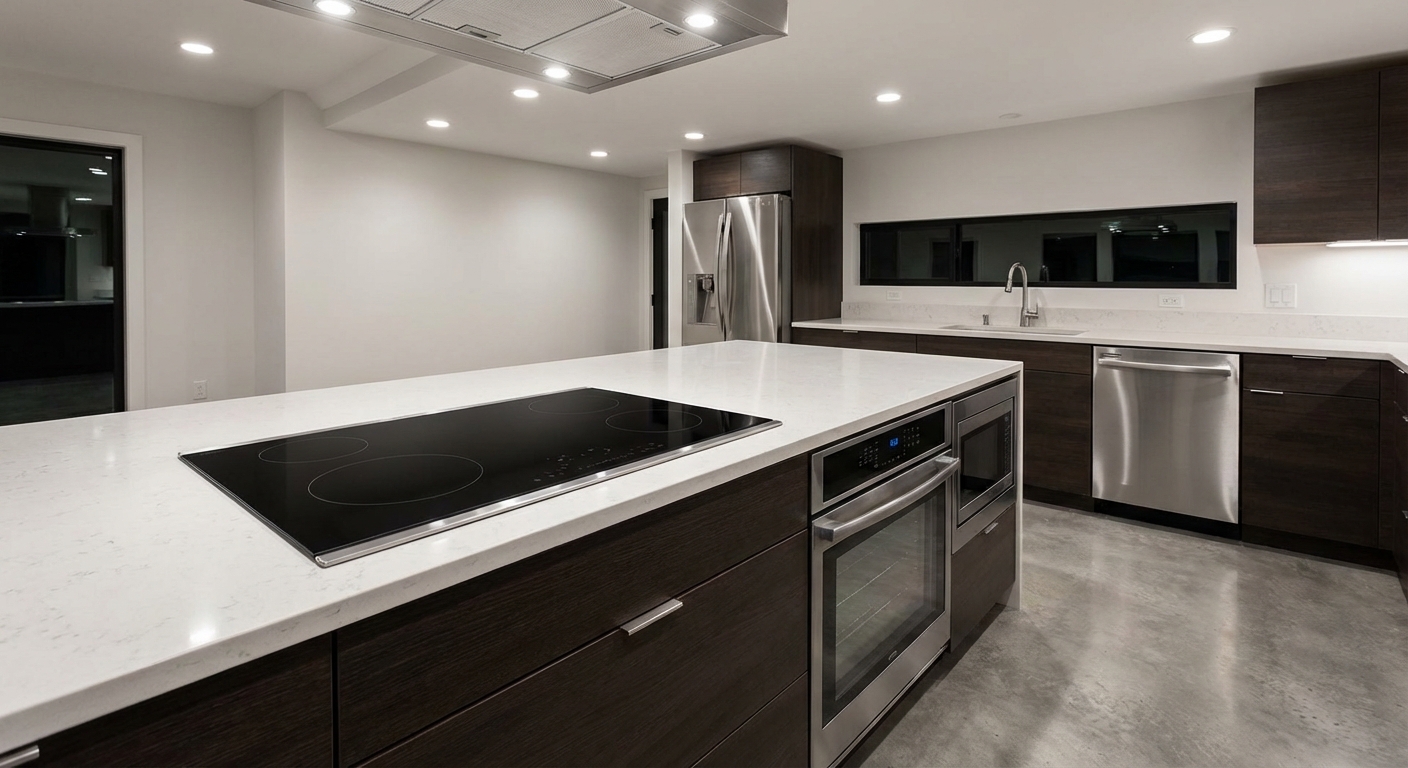
Kitchen environments demand extreme thermal endurance, which is why tempered glass uses are standard for oven doors and stovetops. Standard glass would fail instantly under the intense heat of professional-grade cooking appliances. The tempering process allows the glass to expand and contract without fracturing, even when exposed to temperatures exceeding 250°C.
Why is it used in oven doors and stovetops?
Look at it this way:
Your kitchen appliances face a brutal combination of high heat and heavy mechanical impact. Only tempered glass can withstand the weight of cast-iron pans while providing a clear view of the cooking process inside an active oven.
- Tolerance for extreme heat without warping.
- Ability to withstand rapid cooling (thermal shock).
- Smooth surface for easy grease and carbon removal.
Is it durable enough for refrigerator shelving?
Want to know the secret?
Refrigerator shelves need to support heavy loads of food and beverages while resisting the cold. Tempered glass is chosen because it is non-porous, incredibly strong, and won’t shatter if a heavy glass jar is accidentally dropped on it.
- High weight-bearing capacity for food storage.
- Resistance to chipping and scratching from containers.
- Easy sterilization and hygienic surface properties.
Key Takeaways
- The thermal stability of tempered glass prevents appliance failure and user injury in high-heat zones.
- Impact resistance makes it the most reliable material for heavy-duty kitchen shelving and surfaces.
| Appliance Part | Performance Factor | User Benefit |
|---|---|---|
| Oven Door | Heat Resistance | View of Cooking & Safety |
| Fridge Shelf | Load Capacity | Durable Organization |
Kitchen safety standards rely heavily on the specialized mechanical properties of heat-strengthened glass substrates.
How does the auto industry benefit from tempered glass uses?
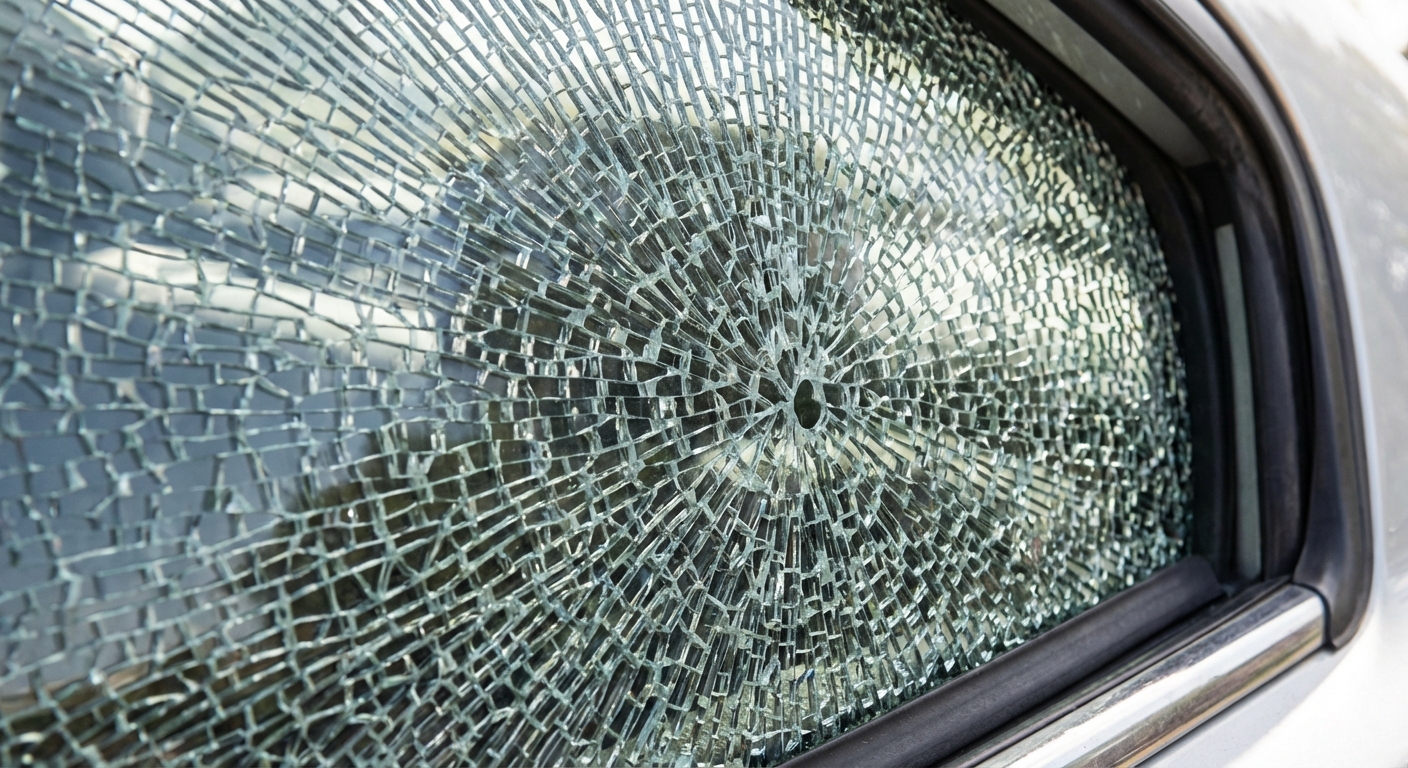
In the automotive sector, tempered glass uses are critical for the safety of passengers in the event of a collision. While windshields are typically laminated, the side and rear windows are almost exclusively tempered. This allows the glass to break into small, non-lethal pieces that prevent the deep lacerations associated with traditional glass shards.
Why is it the standard for side and rear windows?
Check this out:
During an emergency, first responders must be able to break vehicle windows to gain access. Tempered glass is engineered to shatter completely upon a concentrated impact, allowing for rapid evacuation while protecting the occupants from sharp edges during the crash itself.
- Engineered to shatter into non-lethal fragments.
- High resistance to road vibrations and small impacts.
- Lightweight compared to thick laminated alternatives.
How does its fragmentation pattern protect passengers?
But wait, there’s more:
The specific fragmentation pattern—often called “dicing”—is a deliberate safety feature of the tempering process. Instead of creating knife-like slivers, the glass becomes a pile of blunt granules that are much safer to handle during a rescue.
- Crumbling effect upon high-energy impact.
- Quick evacuation capability for first responders.
- Consistency in break patterns for predictable safety.
Key Takeaways
- Tempered glass balances the need for structural strength with the requirement for safe emergency egress in vehicles.
- Its unique breaking characteristics are a fundamental pillar of modern automotive safety engineering.
| Vehicle Glass | Glass Type | Emergency Role |
|---|---|---|
| Side Windows | Tempered | Easy Break-out Exit |
| Rear Window | Tempered | Safety Shatter |
The automotive industry’s reliance on tempered glass highlights its role as a life-saving component in high-risk environments.
What are the most durable furniture tempered glass uses?
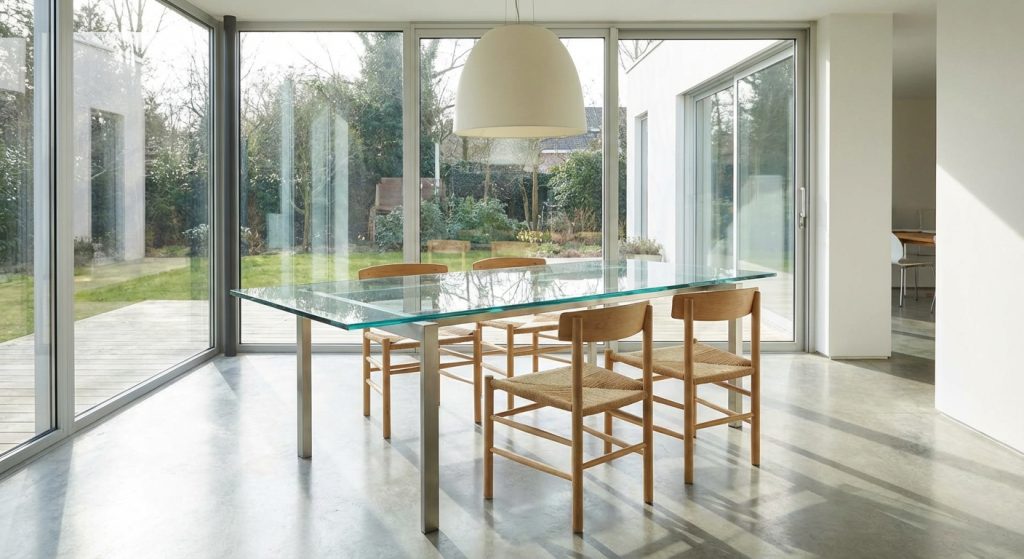
High-end furniture design relies heavily on tempered glass uses to achieve a blend of luxury and longevity. Dining tables, coffee tables, and desks are high-impact areas where standard glass would be a hazard. Tempered glass provides a scratch-resistant, heavy-duty surface that can withstand the weight of decor and the daily activity of a busy household or office.
Is it suitable for heavy-duty dining table tops?
The truth is:
A dining table often supports heavy centerpieces and hot serving dishes. Tempered glass is resistant to both the physical weight and the heat of plates, ensuring the surface remains pristine and safe for decades of use.
- Supports heavy centerpieces and dinnerware.
- Resists heat marks from hot serving dishes.
- Maintains clarity and shine over years of use.
How do coffee tables benefit from high impact resistance?
But there is a catch:
Low furniture is often bumped by vacuums or stepped on by pets and children. Using tempered glass ensures that these everyday accidents don’t turn into dangerous emergencies, as the glass is significantly harder to break than standard varieties.
- Enhanced safety for homes with children and pets.
- Resistance to edge-impact damage from cleaning tools.
- Versatile design for modern, airy interiors.
Key Takeaways
- Furniture glass must be tempered to protect users from the risks of accidental breakage in the home.
- High load capacity allows for larger, more impressive furniture designs without the need for additional supports.
| Furniture Item | Recommended Thickness | Edge Treatment |
|---|---|---|
| Dining Table | 10mm – 15mm | Flat Polished |
| Coffee Table | 6mm – 10mm | Beveled or C-Edge |
Furniture designers prioritize tempered glass to ensure that their products are as safe as they are visually striking.
Why are electronic screens specialized tempered glass uses?
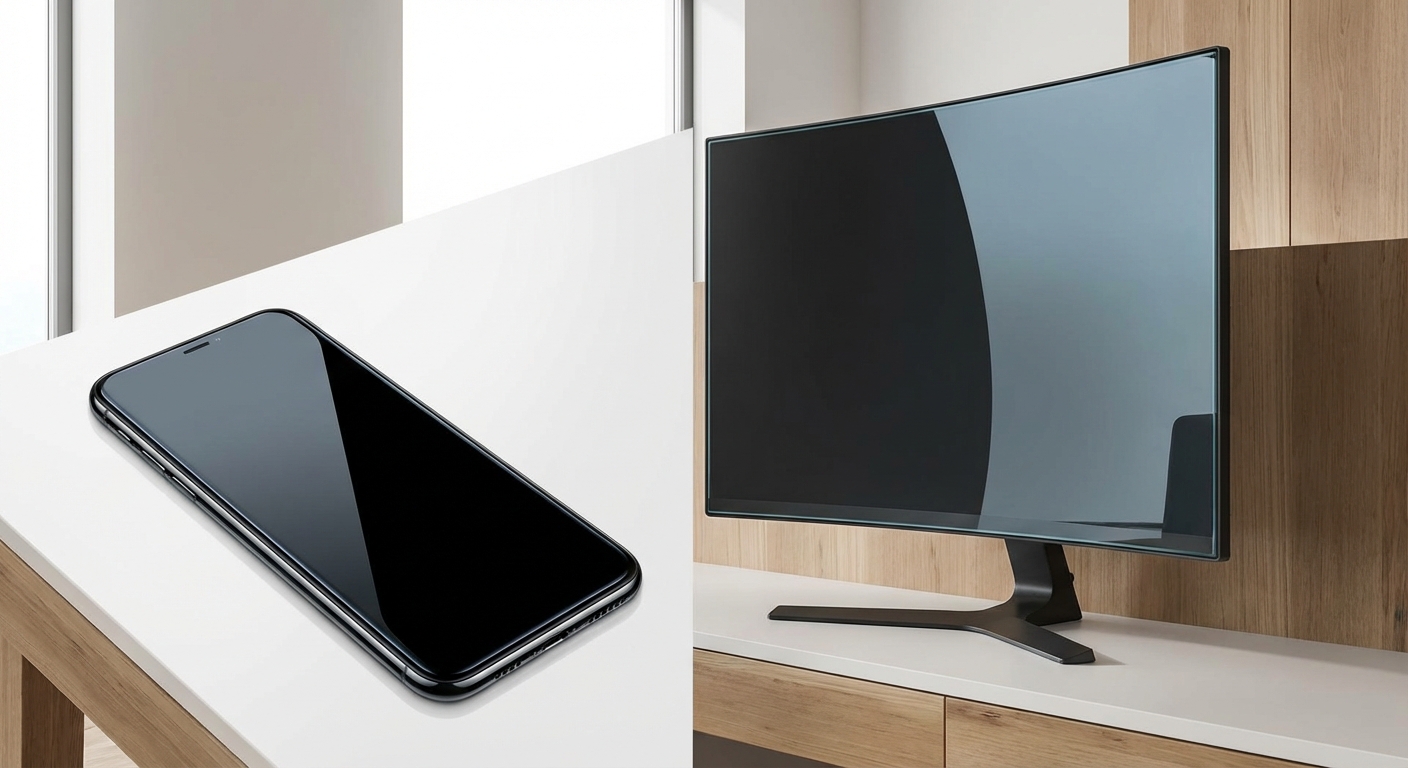
In the digital age, electronic displays represent some of the most sophisticated tempered glass uses available. From the smartphone in your pocket to the monitor on your desk, tempered glass provides a hard, transparent shield that protects delicate LCD and OLED panels. This glass is often chemically tempered to achieve a high degree of scratch resistance while remaining incredibly thin.
Why do touchscreens require chemically treated glass?
Now, consider this:
Touchscreens are touched thousands of times a day and often come into contact with keys or coins. Chemical tempering creates an ultra-hard surface layer that prevents the micro-scratches that would otherwise dull the display and interfere with touch sensitivity.
- Superior touch sensitivity and optical clarity.
- Extreme resistance to surface scratches and oils.
- Thin profile for sleek, modern device integration.
Can it protect ATMs and public kiosks from vandalism?
Here is the kicker:
Public-facing electronics like ATMs and information kiosks are often targets for abuse. Thick, heat-tempered glass acts as a vandal-resistant barrier that can withstand blunt force, protecting the expensive electronic components inside.
- Shielding for expensive LCD/OLED panels.
- Weatherproofing for outdoor electronic displays.
- Vandal-resistant barriers for banking and transit.
Key Takeaways
- Tempered glass is essential for the durability of touch interfaces in both personal and public electronics.
- It provides a necessary layer of security for infrastructure that is exposed to the elements and potential tampering.
| Electronic Device | Glass Type | Key Feature |
|---|---|---|
| Smartphone | Chemical Tempered | Scratch Resistance |
| Public Kiosk | Heat Tempered | Impact Protection |
The longevity of modern display technology is directly dependent on the protective qualities of tempered glass substrates.
What are the heavy-duty industrial tempered glass uses?
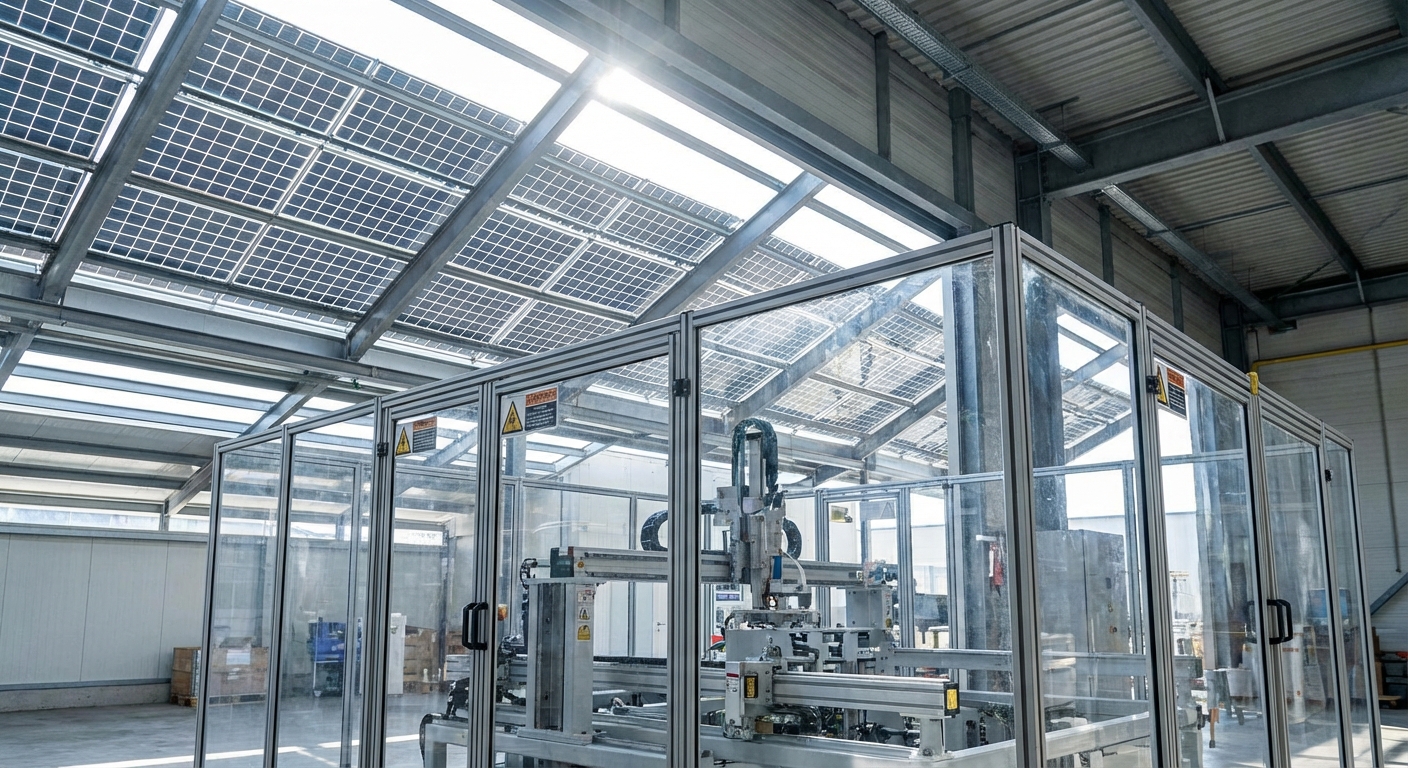
Industrial sectors utilize tempered glass uses for environments where materials are pushed to their mechanical limits. This includes protective machine guards, laboratory partitions, and solar energy infrastructure. In these settings, the glass must provide a barrier against flying debris, chemical splashes, or high-pressure environments while remaining transparent for monitoring.
Is it necessary for fire-rated laboratory partitions?
Make no mistake:
In a lab, a glass failure can be catastrophic if it occurs during a chemical reaction. Tempered glass offers the mechanical strength and thermal resistance required to contain hazards, giving technicians a safe window into dangerous processes.
- Containment of hazardous chemical materials.
- Visual monitoring of high-risk industrial processes.
- High pressure and temperature tolerances.
How does it function in lighting and solar panels?
What’s the bottom line?
Solar panels are exposed to hail, wind, and debris for decades. Tempered glass is the industry standard for the top layer of photovoltaic modules because it protects the fragile solar cells from impact while allowing maximum light transmission.
- Protection against large hailstone impacts.
- UV stability to prevent yellowing over time.
- Low-iron options for maximum energy efficiency.
Key Takeaways
- Industrial glass must be tempered to provide safety in environments with high mechanical and thermal stress.
- It is a foundational material for the renewable energy sector, ensuring the durability of global power systems.
| Industrial Use | Environmental Stress | Glass Property |
|---|---|---|
| Solar Modules | Hail & Wind | High Impact Strength |
| Machine Guards | Flying Debris | Shatter Resistance |
The reliability of industrial operations often hinges on the failure-resistant nature of tempered safety glass.
How can retail displays maximize tempered glass uses?
Retailers rely on tempered glass uses to create inviting storefronts that double as secure barriers. High-end display cases and massive mall windows must balance the need for crystal-clear visibility with the requirement for security against “smash and grab” theft. Tempered glass provides a formidable obstacle that is difficult to penetrate quickly.
How do display cases protect valuable inventory?
Imagine this:
A jewelry store using standard glass is an easy target for theft. Tempered glass cases are significantly harder to break, and if they are attacked, the resulting noise and resistance buy valuable time for security response and deter opportunistic criminals.
- Crystal clear visibility for high-end merchandise.
- Secure housing for expensive electronics or jewelry.
- Ability to be UV-bonded for seamless, elegant display boxes.
Can it improve the safety of glass mall storefronts?
Finally:
Large storefronts in shopping malls are subject to constant pressure from crowds and accidental bumps from shoppers. Using tempered glass ensures that even if a catastrophic impact occurs, the glass will break safely, protecting the public from the dangers of falling shards.
- Safe interaction in high-pedestrian traffic areas.
- Support for large, oversized glass panes.
- Compliance with commercial building safety codes.
Key Takeaways
- Retailers use tempered glass to mitigate loss prevention risks while maintaining an open, attractive storefront.
- Safety glazing is a fundamental requirement for commercial spaces to protect the millions of people who visit them daily.
| Retail Element | Functional Goal | Glass Type |
|---|---|---|
| Showcases | Security & Clarity | 6mm – 8mm Tempered |
| Mall Fronts | Safety & Scale | 12mm+ Tempered |
The retail sector’s adoption of tempered glass reflects a strategic balance between aesthetic presentation and robust physical security.
*
Frequently Asked Questions
Can I cut tempered glass after it has been heat-treated?
Absolutely not. Any attempt to cut, drill, or notch glass after it has undergone the tempering process will cause the entire panel to shatter instantly. All fabrication must be completed by the manufacturer prior to the heating cycle.
What’s the best way to clean tempered glass surfaces?
The best approach involves using a soft microfiber cloth with a solution of mild soap and warm water. You should never use abrasive cleaners or metal scrapers, as they can damage the surface tension or any applied coatings.
How do I know if the glass I bought is tempered?
Look for a permanent laser-etched “bug” or stamp in the corner of the glass, which typically includes the manufacturer’s name and the safety standard (like CPSC or ANSI). Additionally, under polarized light, you can sometimes see the “strain pattern” or “leopard spots” created during cooling.
Can I use tempered glass for fire-rated doors?
No, tempered glass is not fire-rated. While it has higher thermal resistance than standard glass, it does not stop the spread of fire or smoke. You must use specialized ceramic or intumescent glass for fire-rated applications.
What’s the best thickness for a large conference table?
For large, unsupported spans in a conference room, 12mm or 15mm tempered glass is recommended. This provides the necessary structural weight and rigidity to prevent bowing and ensure the safety of everyone in the meeting.
Conclusion
By exploring the diverse range of tempered glass uses, it becomes clear that this material is the cornerstone of safety and durability in modern architecture and manufacturing. This article has detailed how tempering solves the critical problems of impact failure, thermal shock, and safety liability across industries—from the heights of skyscrapers to the screens of our smartphones.
At PrimePro Glass, our vision is to lead the industry through precision engineering and direct factory control, ensuring your projects never suffer from supplier errors or material failure. We provide the technical expertise and manufacturing reliability required for high-stakes B2B partnerships. To ensure your next project meets the highest standards of safety and quality, contact us today for a comprehensive consultation and quote.