Standard annealed glass is notoriously fragile and dangerous in commercial settings. When it fails, it shatters into large, razor-sharp shards that pose a significant risk of severe injury and property damage. For architects and project managers, a single glass failure can lead to massive liability and safety violations. Tempered Glass provides a high-strength, engineering-grade solution that is four to five times stronger than regular glass. You can source high-quality Tempered Glass directly from PrimePro Glass to meet the most rigorous safety standards.
1. What exactly is tempered glass?
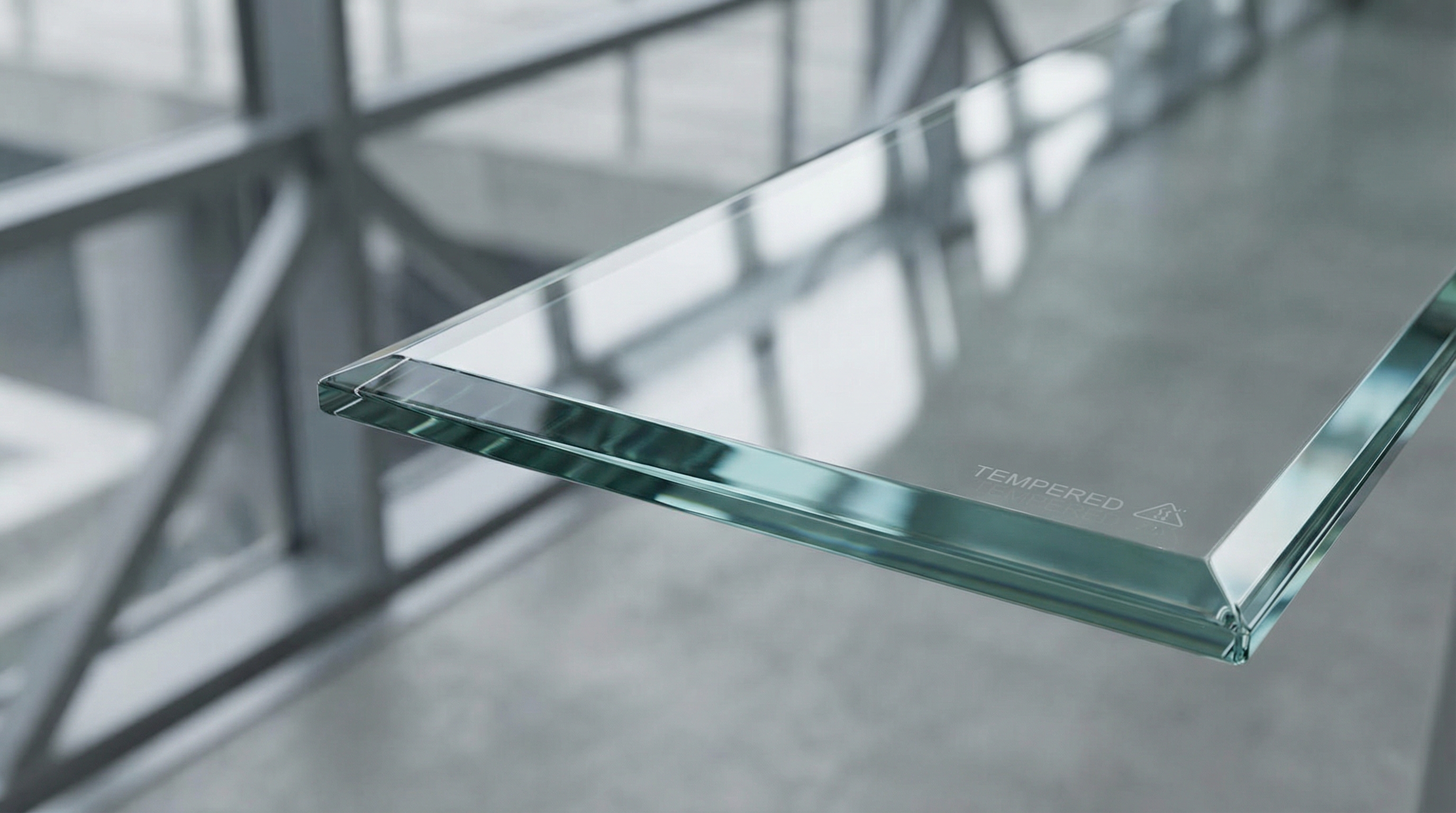
Defining a Critical Safety Material
Tempered glass is a specialized safety material treated with heat to increase its structural integrity. It is specifically designed to crumble into small, granular pieces if it ever breaks. This unique fragmentation pattern minimizes the risk of deep lacerations during an accident.
But that’s not all. Here is why:
- It offers superior mechanical strength.
- It provides excellent thermal stability.
- It meets international safety glazing codes.
Summary Table: Defining Tempered Glass
| Feature | Description |
|---|---|
| Material Class | Safety Glazing |
| Strength Level | 4-5x Annealed Glass |
| Failure Mode | Granular Fragmentation |
Use this data to distinguish between basic decorative glass and engineered safety materials.
Key Takeaway: Tempered glass is defined by its ability to fail safely and withstand significant physical force.
2. How is tempered glass manufactured?
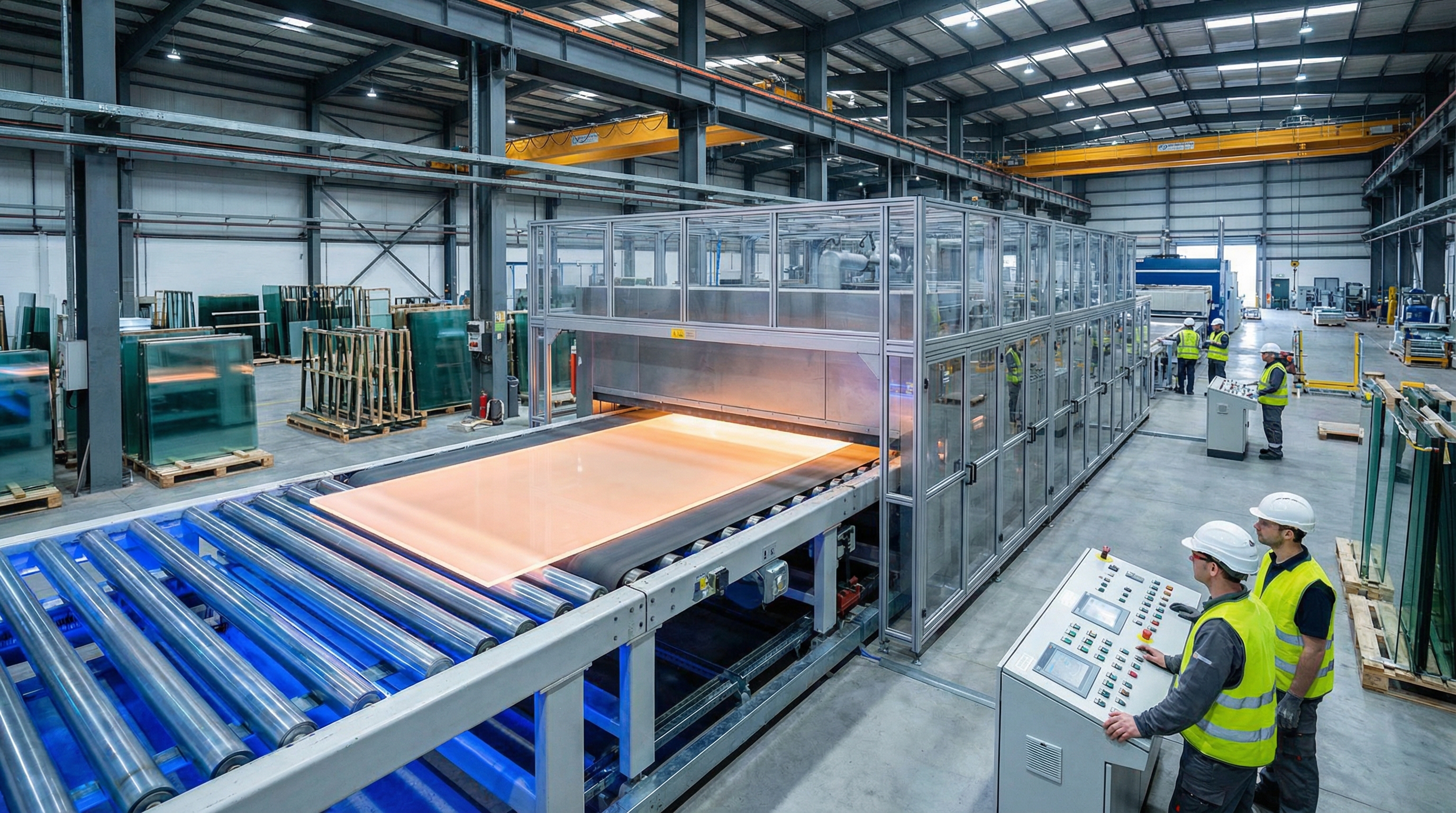
The Thermal Tempering Process
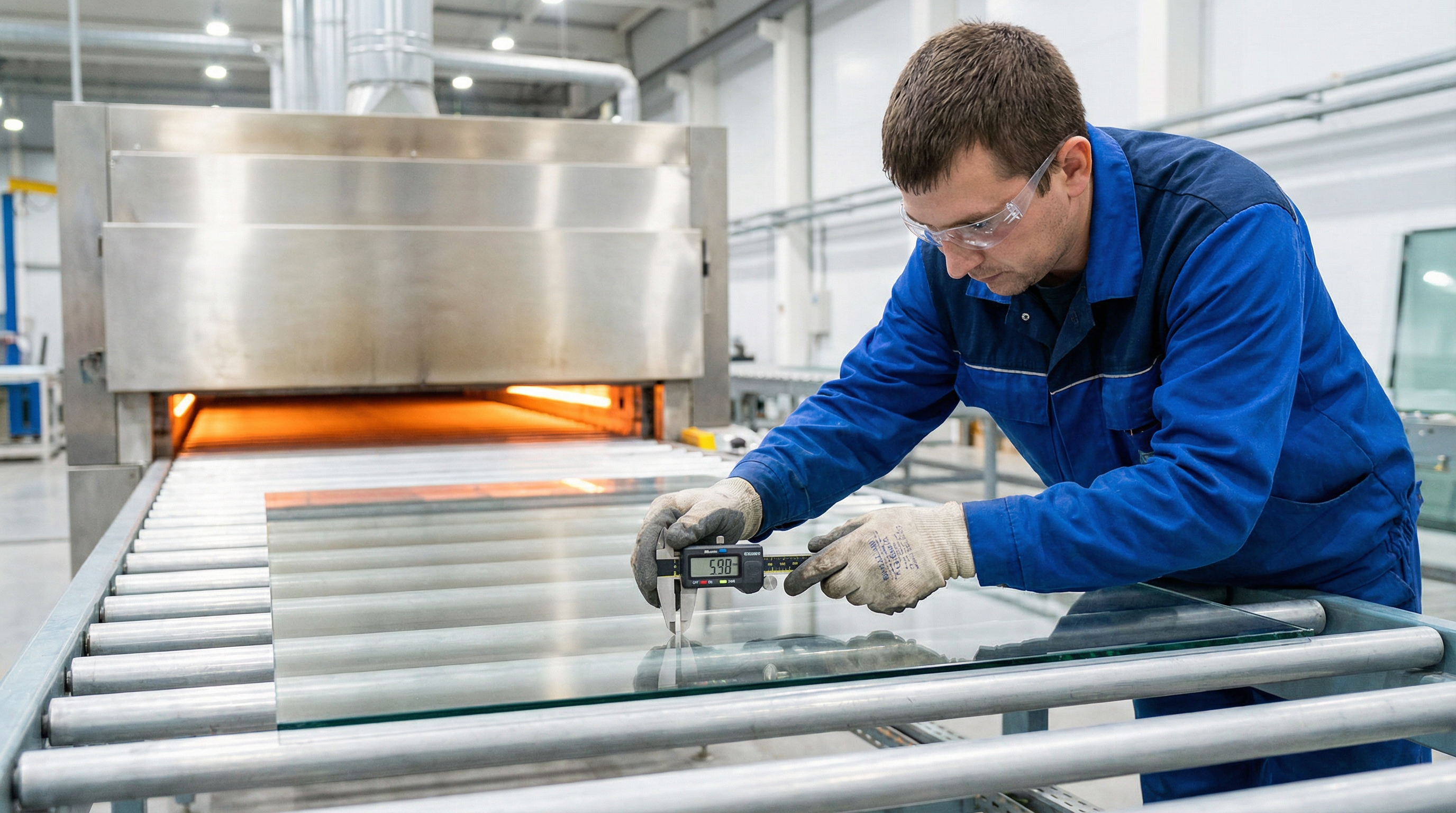
It is manufactured by heating finished sheets to over 1,000°F and then rapidly cooling them. This process involves high-pressure air blasts that “quench” the outer surfaces of the material. You can integrate these panels into complex Architectural Glass systems for modern facades.
Internal Stress: Compression vs. Tension
Rapid cooling causes the outer layers to shrink and compress while the interior remains in tension. This opposing force creates a “locked-in” strength that resists impacts better than standard alternatives.
- Heating to 600°C+ levels.
- Immediate high-pressure air quenching.
- Permanent surface compression state.
Summary Table: Manufacturing Stages
| Stage | Action |
|---|---|
| Heating | Furnace heating to >1000°F |
| Quenching | High-pressure air cooling |
| Result | Surface compression / Center tension |
The precision of the quenching stage dictates the final strength and safety performance of the pane.
Key Takeaway: The manufacturing process uses extreme temperature shifts to create a permanent state of high-strength compression.
3. Why is tempered glass so strong?
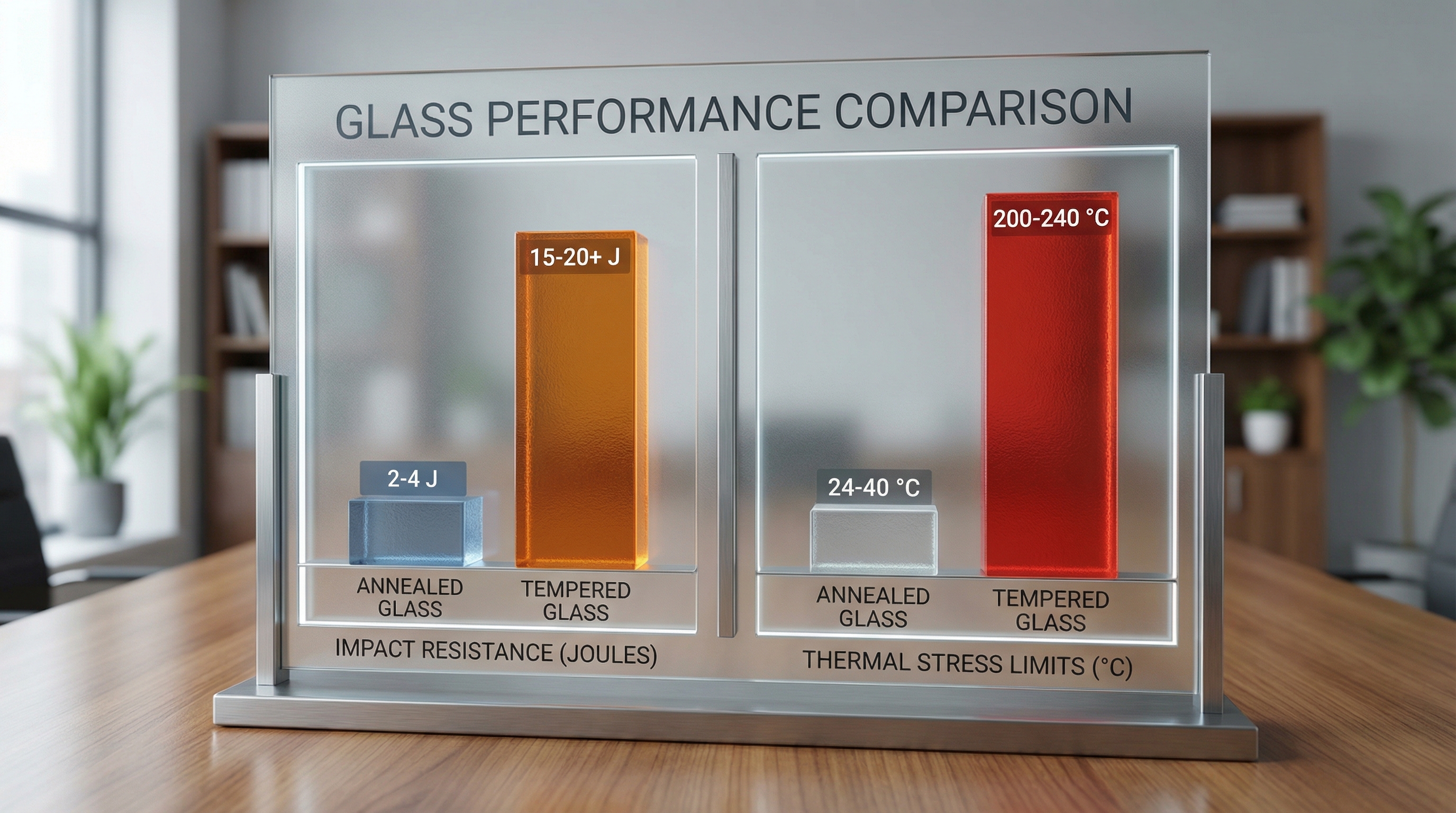
Comparing Strength to Annealed Glass
It is strong because the compression on its surface prevents cracks from propagating through the material easily. Standard glass lacks this internal pressure and shatters under minimal load. Think about this for a moment.
Impact Resistance and Thermal Stress
It can withstand extreme temperature fluctuations up to 250°C without cracking or failing. This makes it ideal for environments subject to intense sun or proximity to heat sources.
- High PSI impact tolerance.
- Resistance to blunt force.
- High thermal shock resistance.
Summary Table: Performance Metrics
| Metric | Standard Glass | Tempered Glass |
|---|---|---|
| Impact Resistance | Low | High |
| Thermal Shock | 40°C change | Up to 250°C change |
Refer to these metrics when planning facades in regions with high temperature volatility.
Key Takeaway: Surface compression gives this glass the ability to resist both physical impacts and thermal shocks.
4. Where is tempered glass commonly found?
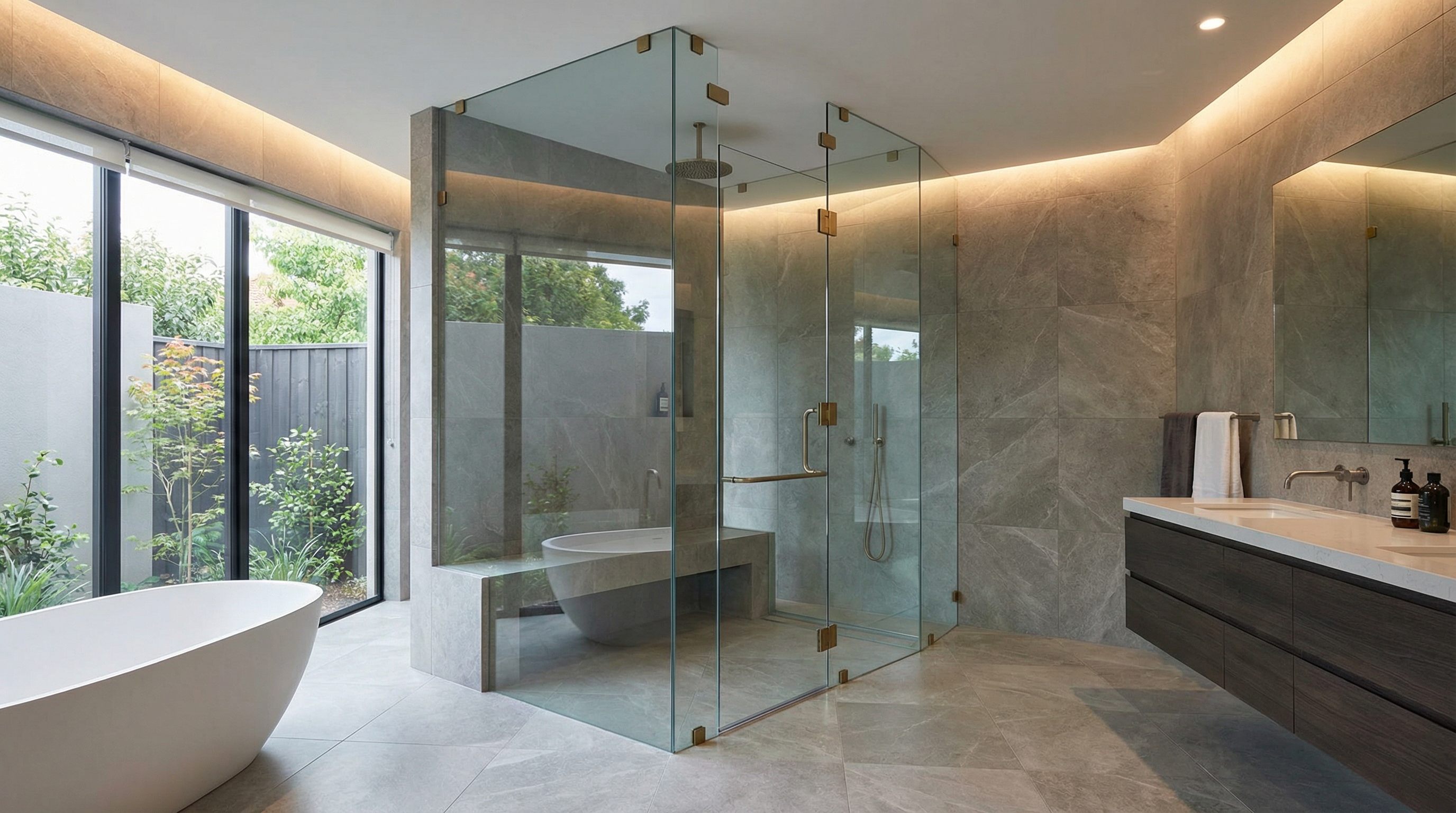
Residential Safety Standards
You will commonly find it in residential bathrooms where moisture and slippery surfaces increase the risk of falls. Most building codes mandate this safety material for any Shower Enclosure Glass to protect inhabitants.
Here is why it is used at home:
- Frameless shower doors.
- Large patio sliding doors.
- Windows near floor levels.
Commercial Building Requirements
Commercial codes require it in high-traffic entryways and any glass located near staircases. This ensures that a collision in a public space does not result in a life-threatening injury.
Summary Table: Common Locations
| Environment | Key Applications |
|---|---|
| Residential | Shower doors, furniture, skylights |
| Commercial | Balustrades, escalators, entryways |
This location guide helps you identify areas where safety glazing is legally required for compliance.
Key Takeaway: Safety standards dictate its use in any area where human impact is statistically likely.
5. What are the best commercial uses?

Storefronts and Entrance Systems
The best commercial uses include storefronts where high foot traffic demands both visibility and extreme durability. These systems must resist the constant opening and closing of heavy doors daily.
Office Partitions and Conference Rooms
It is excellent for creating open-concept offices while maintaining acoustic privacy between different departments. Here is the best part:
- Maximizes natural light flow.
- Enhances modern aesthetic appeal.
- Supports modular office designs.
Summary Table: Commercial Benefits
| Application | Primary Benefit |
|---|---|
| Storefronts | Public safety & visibility |
| Partitions | Natural light & modularity |
Select these applications to combine structural safety with a premium architectural look.
Key Takeaway: Storefronts and partitions leverage both the safety and aesthetic transparency of this material.
6. Does it offer design flexibility?
Custom Fabrication and Finish Options
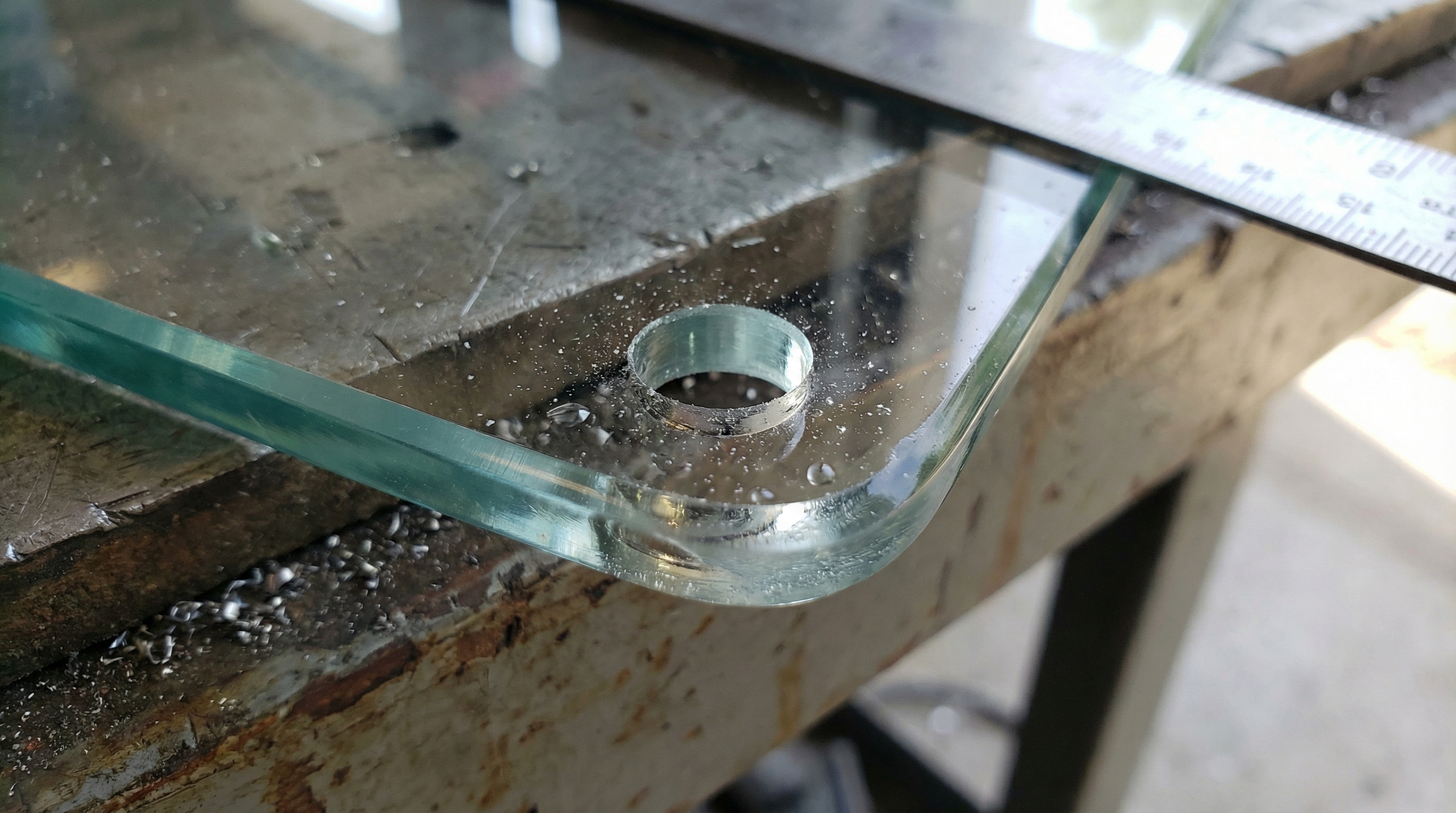
Yes, it offers significant design flexibility through various edge treatments and specialized Ceramic Fritted Glass patterns. You can customize the transparency or add branding directly onto the surface during the treatment phase.
But that’s not all. You can also request:
- Precision CNC hole drilling.
- Polished pencil or beveled edges.
- Acid-etched frosted finishes.
Maximizing Natural Light
Large-span panels allow architects to design massive windows without bulky frames. This creates a seamless transition between indoor and outdoor spaces in modern buildings.
Summary Table: Customization Options
| Feature | Available Treatments |
|---|---|
| Edge Work | Polished, beveled, or mitered |
| Visuals | Screen-printed, acid-etched |
The availability of custom finishes ensures the glass matches your specific branding and design intent.
Key Takeaway: High flexibility in finishes allows for tailored aesthetic solutions without compromising safety.
7. What happens when it breaks?
The ‘Safety Shatter’ Paradox
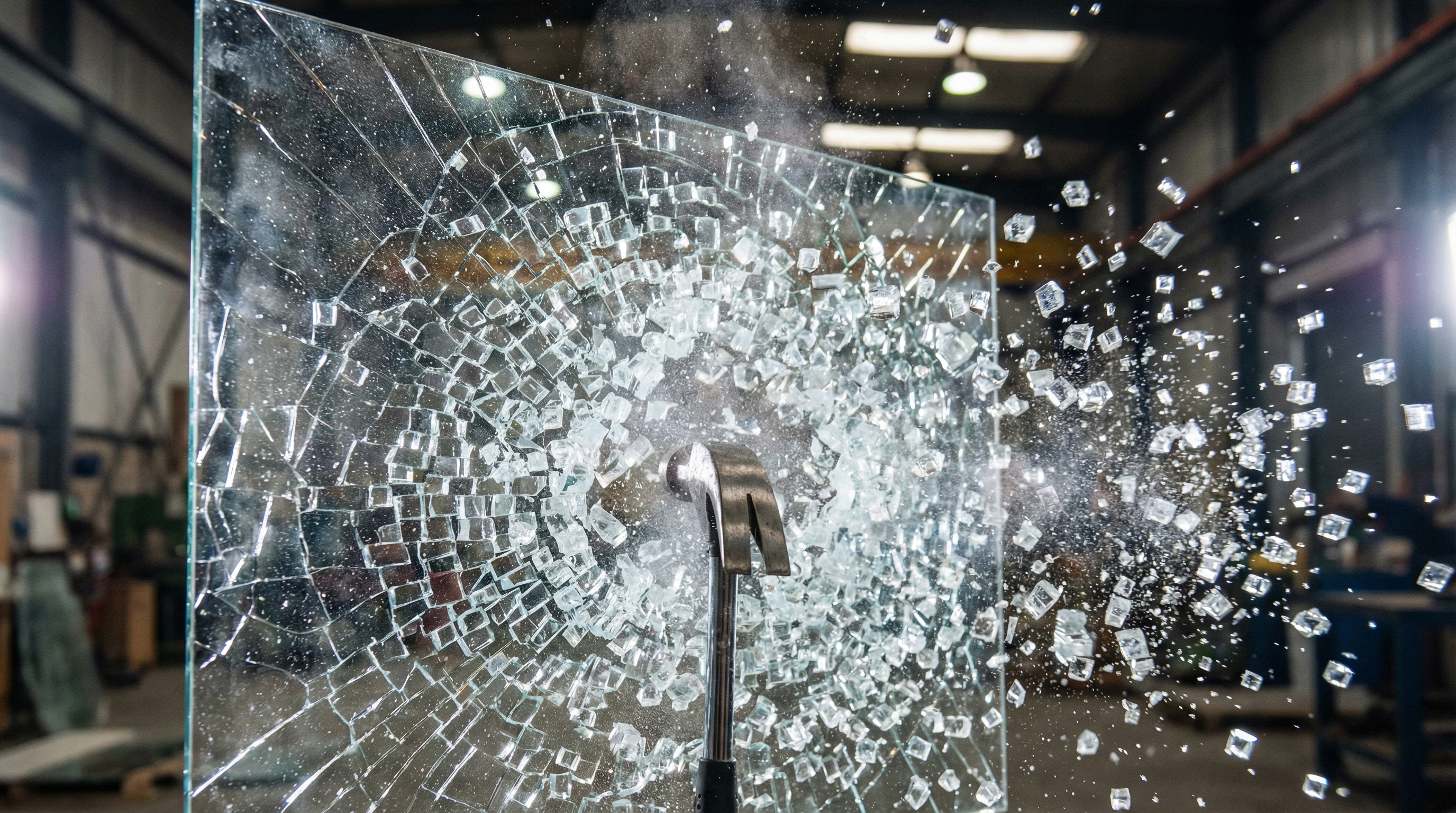
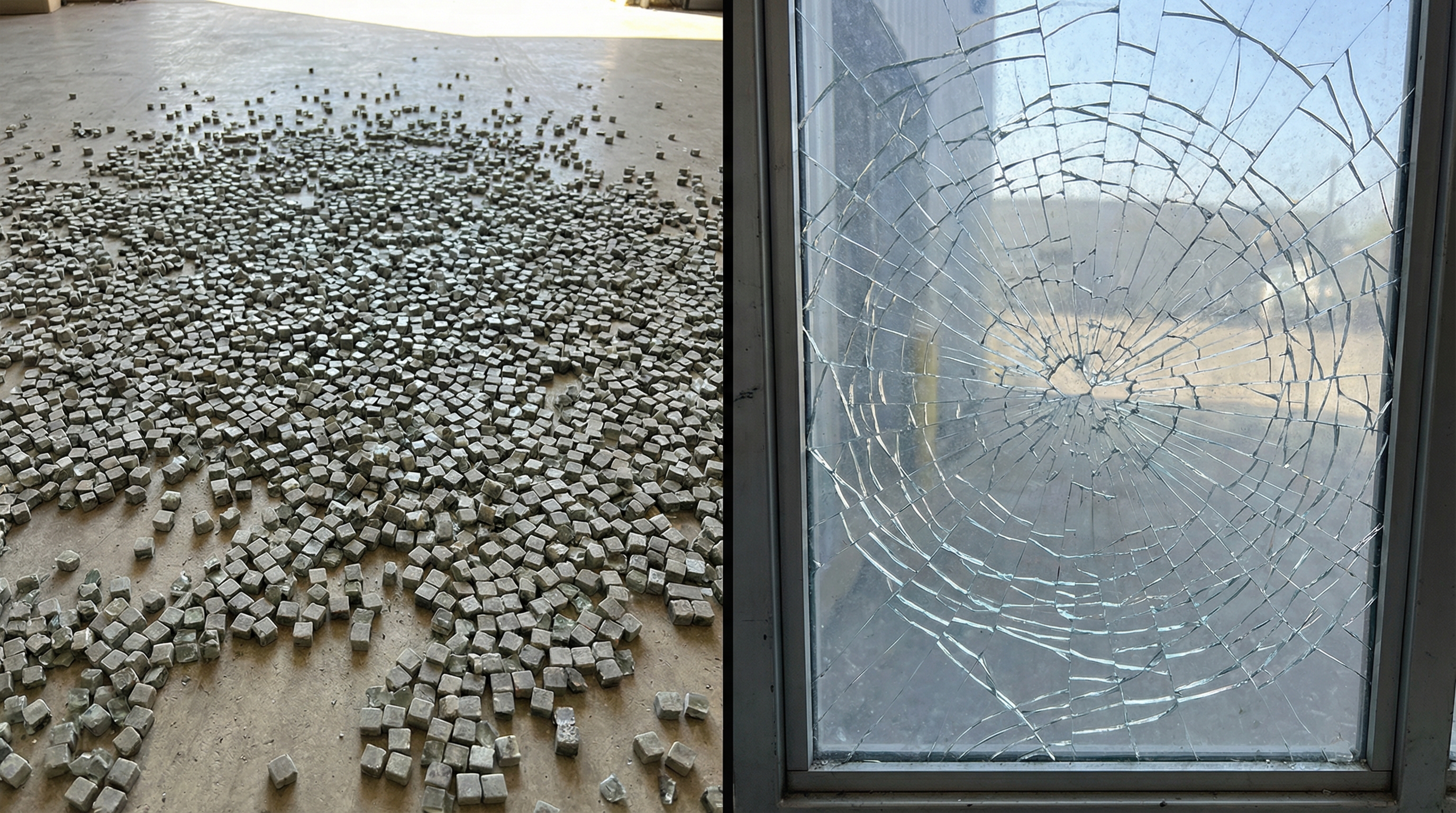
It shatters into thousands of small, relatively blunt cubes rather than long, sharp daggers. This specific behavior is known as the “safety shatter” pattern. It prevents the type of deep, life-threatening lacerations caused by untreated glass failure.
Why Safety Performance Matters
Adhering to standards like ASTM C1048 ensures the glass breaks predictably every time. This reliability is why it is the default choice for public infrastructure.
- Immediate total pane failure.
- Low-energy fragmentation.
- Reduced cleanup danger levels.
Summary Table: Breakage Characteristics
| Feature | Standard Glass | Tempered Glass |
|---|---|---|
| Shard Shape | Jagged/Sharp | Rounded/Blunt |
| Danger Level | Extreme | Minimal |
Understanding the failure mode is critical for assessing the long-term safety of your building project.
Key Takeaway: The “safe” failure mode is the primary reason this material is mandated for public safety.
8. How does it differ from laminated glass?
Safety Performance vs. Security Performance
The main difference is that tempered glass falls out of the frame while Laminated Glass stays in place. Tempered glass is designed for safety, but it is not a high-level security material.
Here is why:
- Tempered glass resists impact well.
- Laminated glass prevents forced entry.
- Tempered shards fall to the floor.
Fragment Retention
Laminated glass uses a plastic interlayer to hold fragments together after an impact occurs. Tempered glass lacks this interlayer and relies solely on its internal stress to manage the break.
Summary Table: Tempered vs. Laminated
| Feature | Tempered | Laminated |
|---|---|---|
| Strength | Very High | Moderate |
| After Break | Falls out | Stays in place |
Choose between these two based on whether your priority is human safety or building security.
Key Takeaway: Tempered glass is for impact safety, whereas laminated glass is intended for security and retention.
9. What are the main disadvantages?
Brittle Failure and Fragmentation
The main disadvantage is that it cannot be resized or modified once the tempering process is complete. Any attempt to cut or drill it after treatment will cause the entire sheet to explode. Believe it or not.
Sensitivity of Glass Edges
The edges of a tempered pane are its most vulnerable points. A small chip on the edge can trigger a spontaneous failure of the entire unit.
- Precision sizing is mandatory.
- Edge protection during transit.
- No field adjustments possible.
Summary Table: Limitations
| Constraint | Impact |
|---|---|
| Re-sizing | Impossible after tempering |
| Edge Impact | High risk of spontaneous break |
Planning for zero field adjustments is vital to avoid expensive waste during the installation phase.
Key Takeaway: You must finalize all dimensions and fabrication steps before the glass enters the tempering furnace.
10. How to select the right glass?
Moving Beyond Basic Code Compliance
You should select the right glass by evaluating both safety requirements and thermal efficiency needs. Integrating Low-E Glass coatings with tempered units provides the best balance of safety and energy savings.
Working with a Direct Source Factory
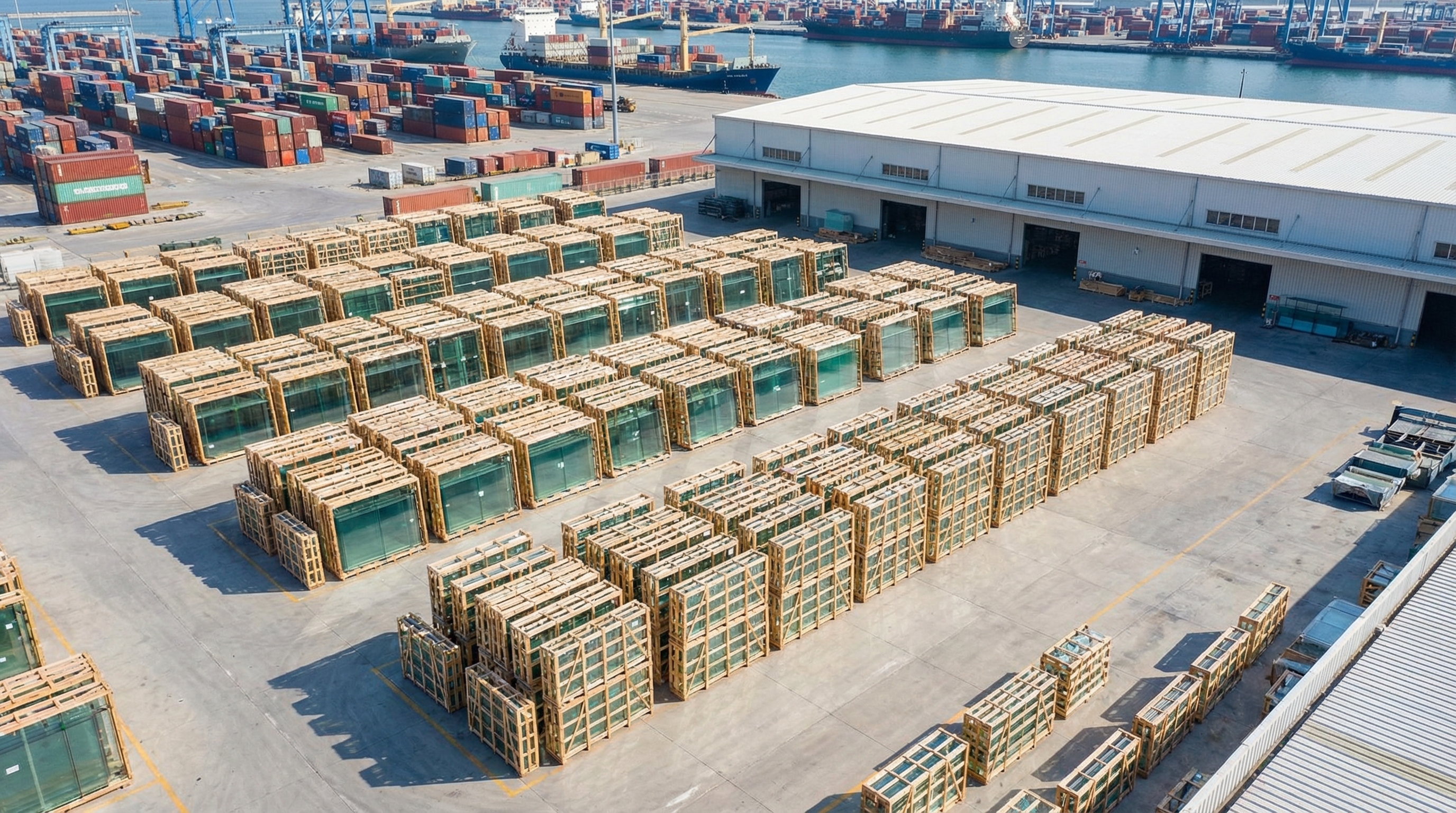
Partnering with a factory-direct source ensures you have full QC traceability for every batch produced. This reduces the risk of project delays caused by mismatched colors or fabrication errors.
- Verify blueprint dimensions early.
- Check for safety standard stamps.
- Optimize for regional energy codes.
Summary Table: Selection Checklist
| Criteria | Requirement |
|---|---|
| Safety | Tempered for impact areas |
| Energy | Low-E coatings for facades |
| Budget | Factory-direct sourcing |
Consulting with an engineering team early ensures your glass selection meets all technical and budgetary goals.
Key Takeaway: Successful selection requires balancing safety codes with energy performance and factory-direct quality control.
FAQ Section
- Can I cut tempered glass after it is made? No, any attempt to cut or drill the glass after the tempering process will cause the entire pane to shatter instantly.
- What’s the best way to identify tempered glass? Look for a permanent sandblasted logo or “bug” in the corner that lists the manufacturer and the safety standard.
- How do I know if I need tempered glass for my project? Generally, building codes require it for any glass in “hazardous locations” like doors, stairs, and windows near the floor.
- Can I use tempered glass for security purposes? While it is very strong, it is not ideal for high-security areas because it falls out of the frame when broken.
- What’s the best thickness for architectural projects? This depends on the specific wind load requirements, but common thicknesses for partitions range from 6mm to 12mm.
Conclusion
Choosing the right glazing is critical for the safety, durability, and compliance of your building project. Tempered Glass remains the industry standard for combining high impact resistance with essential safety fragmentation patterns. For professional engineering support and guaranteed lead times on your next project, contact us today to receive a free technical review and quote.