The history of tempered glass is a 150-year progression of thermal engineering that transformed fragile sheets into high-strength safety materials through controlled cooling. Standard annealed glass remains a significant liability for commercial developers, as it shatters into dangerous shards upon the slightest failure. You cannot afford the safety risks or the legal exposure that comes with installing outdated, fragile glazing in high-traffic zones. Understanding the History of Tempered Glass provides the technical context needed to select the most resilient materials for your next project.
Who invented the first commercial tempering process?
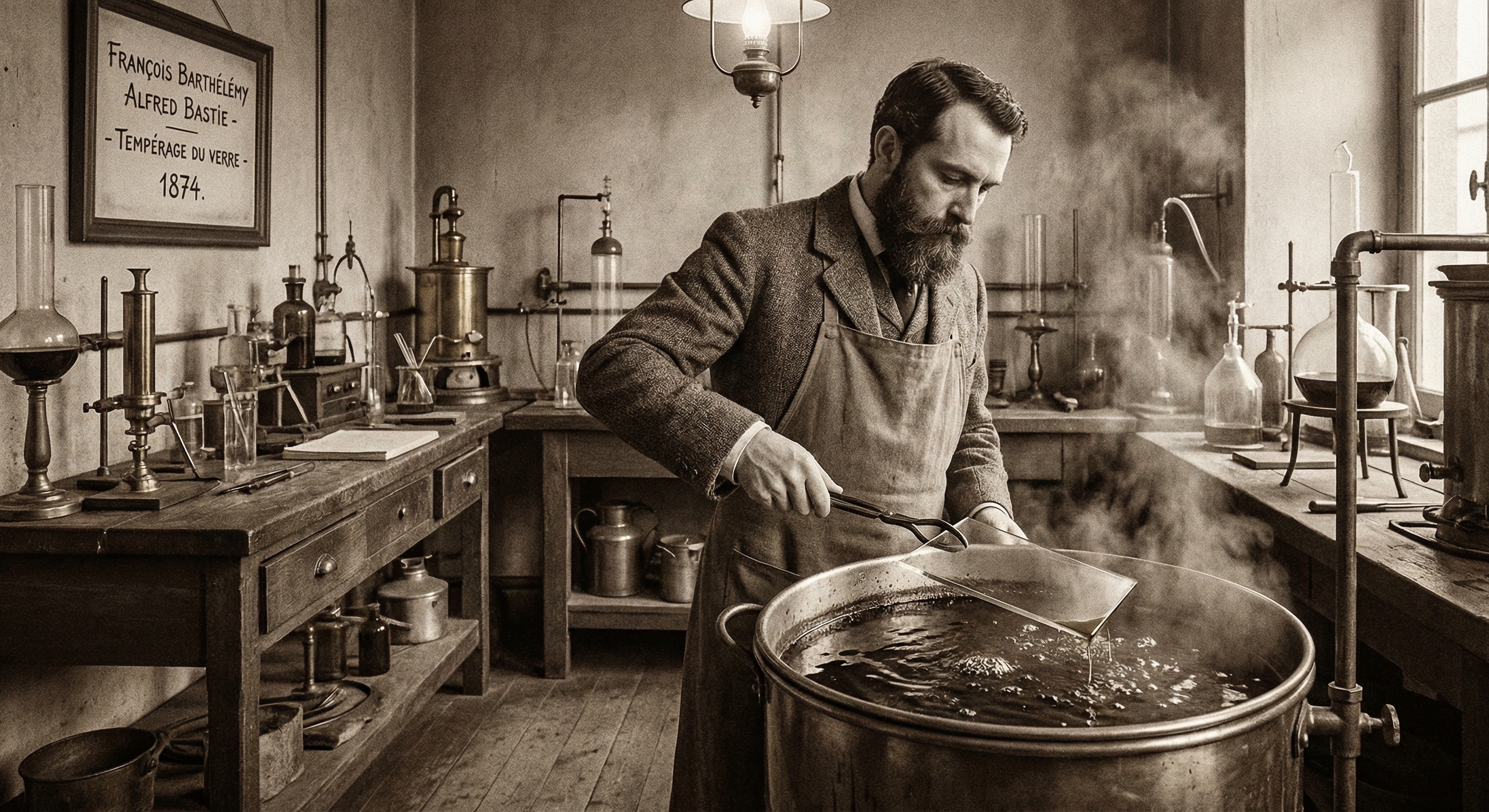
François Barthélémy Alfred Royer de la Bastie is credited with patenting the first commercial tempering method in 1874. This milestone in the History of Tempered Glass involved heating the material to a nearly molten state before quenching it in a chemical bath of oil or grease. This process created a surface compression that made the glass significantly more resistant to impact than previous iterations.
How did the Bastie process work?
The method relied on the differential cooling between the outer surface and the inner core of the glass. By using a heated oil bath instead of water, de la Bastie was able to control the thermal shock to prevent the glass from immediate breakage.
But that’s not all. This innovation allowed for the creation of “Bastie Glass,” which served as the primitive ancestor to modern architectural safety solutions.
- Immersion in heated oil baths.
- Controlled thermal shock reduction.
- Creation of permanent surface tension.
Key Takeaway: The 1874 Bastie patent established the fundamental principle that rapid, controlled cooling creates the internal stresses necessary for glass strengthening.
| Innovation | Year | Medium | Result |
|---|---|---|---|
| Bastie Patent | 1874 | Oil/Grease Bath | Impact Resistance |
Early oil-quenching methods paved the way for the high-performance tempered glass used in modern structural applications.
Why did Friedrich Siemens change the quenching method?
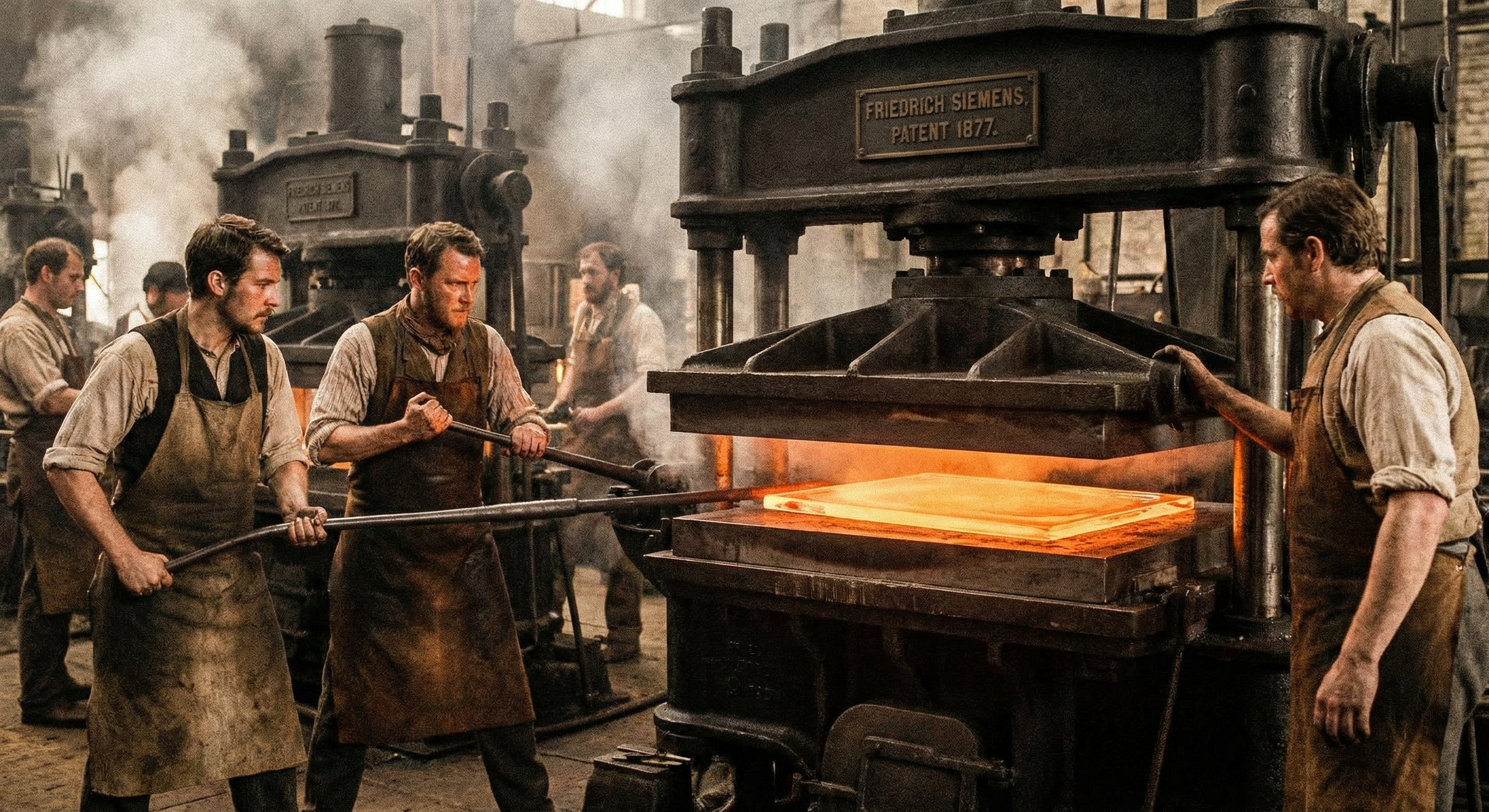
Friedrich Siemens introduced a “compressed glass” method in 1877 that utilized cool molds rather than liquid baths to strengthen the material. This was a pivotal moment in the History of Tempered Glass because it provided a more uniform distribution of strength across the pane. By pressing the glass into cooled molds, Siemens avoided the uneven thermal gradients often found in the earlier Bastie oil-quenching process.
Was mold pressing better than oil baths?
Mold pressing allowed for better dimensional stability and higher surface hardness compared to liquid quenching. This technique was particularly useful for mass-producing glass components that required consistent tolerances for industrial use.
Here is the kicker: Siemens’ work proved that mechanical pressure could enhance the effects of thermal cooling.
- Use of chilled metal molds.
- Uniform compression across surfaces.
- Reduction in chemical residue.
Key Takeaway: Friedrich Siemens advanced the industry by proving that air and contact-based cooling could produce stronger, cleaner glass than liquid chemicals.
| Method | Year | Cooling Agent | Industry Impact |
|---|---|---|---|
| Compressed Glass | 1877 | Chilled Molds | Higher Consistency |
The transition to dry cooling methods was a critical step toward the precision engineering seen in low-e glass production today.
How did Prince Rupert’s Drops reveal glass tension?
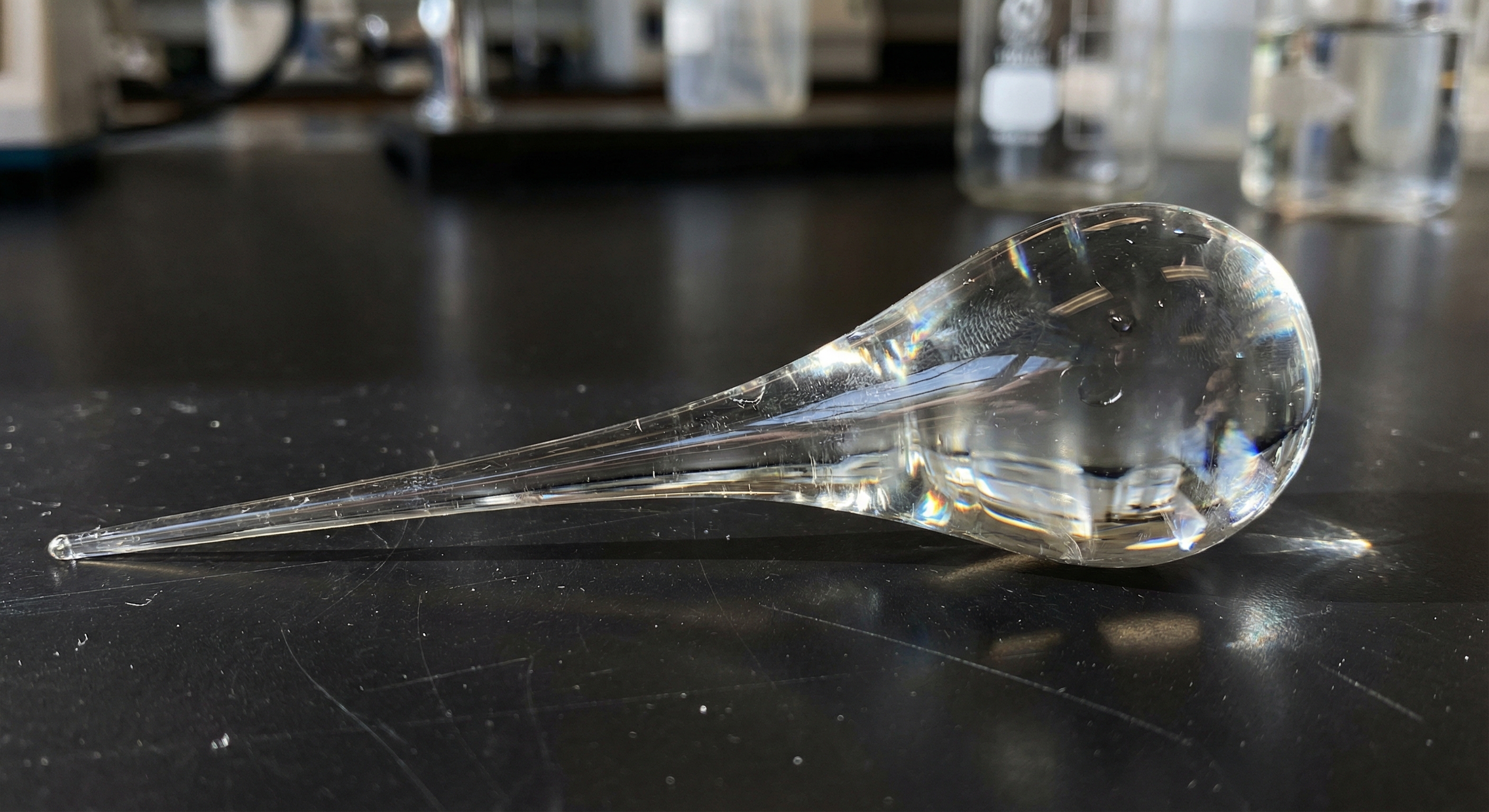
Prince Rupert’s Drops demonstrated the incredible internal stresses created by quenching long before the formal History of Tempered Glass began in laboratories. Created by dropping molten glass into cold water, these tadpole-shaped curiosities can withstand hammer blows on their bulbous heads. However, snapping the thin tail causes the entire structure to disintegrate into fine powder instantly due to the release of stored energy.
Why does the tail cause a total explosion?
The tail remains the structural Achilles’ heel where the internal tension and external compression are not perfectly balanced. When the tail is damaged, a crack propagates through the glass at speeds exceeding 3,000 miles per hour, shattering the drop.
Believe it or not, this 17th-century party trick is the scientific foundation for modern safety glass fragmentation.
- Rapid water quenching.
- Immense surface compression.
- Safe fragmentation patterns.
Key Takeaway: Prince Rupert’s Drops provided the first empirical evidence that internal stress could make glass virtually indestructible under certain conditions while ensuring safe failure under others.
| Component | Physical State | Durability | Failure Mode |
|---|---|---|---|
| Bulb Head | High Compression | Hammer-Resistant | Explosive Dust |
| Thin Tail | High Tension | Extremely Fragile | Trigger for Failure |
This early observation of tension and compression remains central to the design of laminated glass and safety glazing.
Who perfected tempering for the American market?
Rudolph Seiden was the chemist who filed the most comprehensive patents for manufacturing tempered glass in the United States starting in 1935. His contributions to the History of Tempered Glass transitioned the technology from European experimentation to American industrial scale. Seiden’s work refined the timing and temperature controls necessary to produce safety glass at the volumes required by the growing automotive and construction sectors.

What made Seiden’s patents so revolutionary?
Seiden focused on the scalability of the tempering furnace and the precision of the cooling nozzles used in air-quenching. His patents allowed for a more controlled “chill” that minimized the breakage rate during the manufacturing process itself.
But that’s not all. By standardizing the process, he made safety glass an affordable commodity for the average consumer.
- Refined air-nozzle positioning.
- Precision temperature monitoring.
- Scalable industrial furnace designs.
Key Takeaway: Rudolph Seiden’s engineering expertise was the bridge that brought tempering technology into the modern era of mass production and safety regulation.
| Milestone | Decade | Focus | Result |
|---|---|---|---|
| Seiden Patents | 1930s | Process Scalability | Global Standardization |
Seiden’s legacy lives on in every hollow glass unit and safety pane manufactured in high-capacity facilities today.
When did cars first adopt safety glass windows?
Safety glass became an automotive standard during the 1940s to prevent the “guillotine” effect of shattering annealed glass in accidents. This era in the History of Tempered Glass saw a major shift in consumer safety expectations as manufacturers began replacing standard windows with tempered panes. By ensuring that broken windows crumbled into small, blunt cubes, automakers significantly reduced the severity of injuries during collisions.

Did safety glass prevent guillotine injuries?
Before the 1940s, a minor fender-bender could result in lethal lacerations from sharp, dagger-like shards of standard glass. Tempered glass solved this by altering the fracture mechanics of the material, making it a prerequisite for road-legal vehicles.
Think about it: the glass you touch every day in your vehicle is a direct descendant of these early safety mandates.
- Crumbling into blunt fragments.
- High resistance to road debris.
- Structural support for vehicle roofs.
Key Takeaway: The automotive industry’s adoption of tempered glass in the 1940s established the material as the primary defense against glass-related injuries in transport.
| Application | Benefit | Shard Shape | Safety Level |
|---|---|---|---|
| Standard Glass | None | Sharp/Lethal | Low |
| Safety Glass | Impact Resistance | Blunt/Cubic | High |
This historical shift toward safety mirrors the current demand for laminated glass in modern windshields and building facades.
How does tempered glass compare to annealed glass?
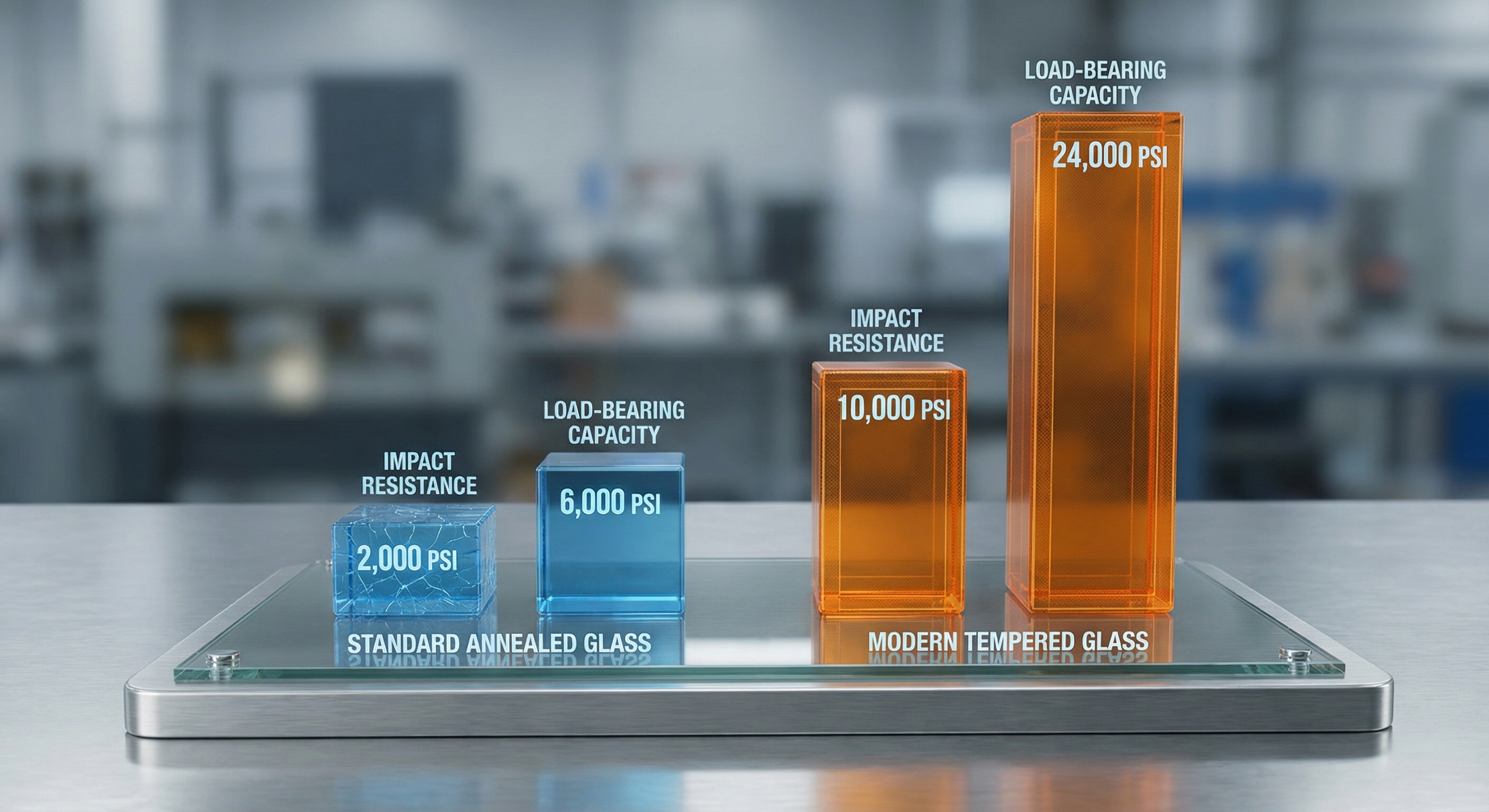
Tempered glass is roughly four to five times stronger than standard annealed glass due to its unique manufacturing process. In the History of Tempered Glass, this strength gap has been the primary driver for its adoption in structural and architectural engineering. While annealed glass breaks under relatively low pressure, tempered glass can withstand significant loads and thermal stresses that would otherwise cause catastrophic failure.
What is the load-bearing capacity of safety glass?
Modern tempered glass can often withstand pressures up to 24,000 PSI, whereas standard glass may fail at just 6,000 PSI. This makes it ideal for frameless applications where the glass must support its own weight and environmental loads.
Here is the kicker: the strength is purely a result of internal physics, not added chemicals or weight.
- 400% increase in impact resistance.
- Superior thermal shock endurance.
- High load-bearing capacity for facades.
Key Takeaway: The extreme strength of tempered glass allows architects to use it as a structural component, rather than just a transparent infill.
| Metric | Annealed Glass | Tempered Glass | Factor |
|---|---|---|---|
| Surface Compression | Low | >10,000 PSI | 5x |
| Fragmentation | Sharp Shards | Small Cubes | Safety |
Choosing the right strength rating is essential when you contact our engineering team for project specifications.
Is chemical tempering a modern innovation?
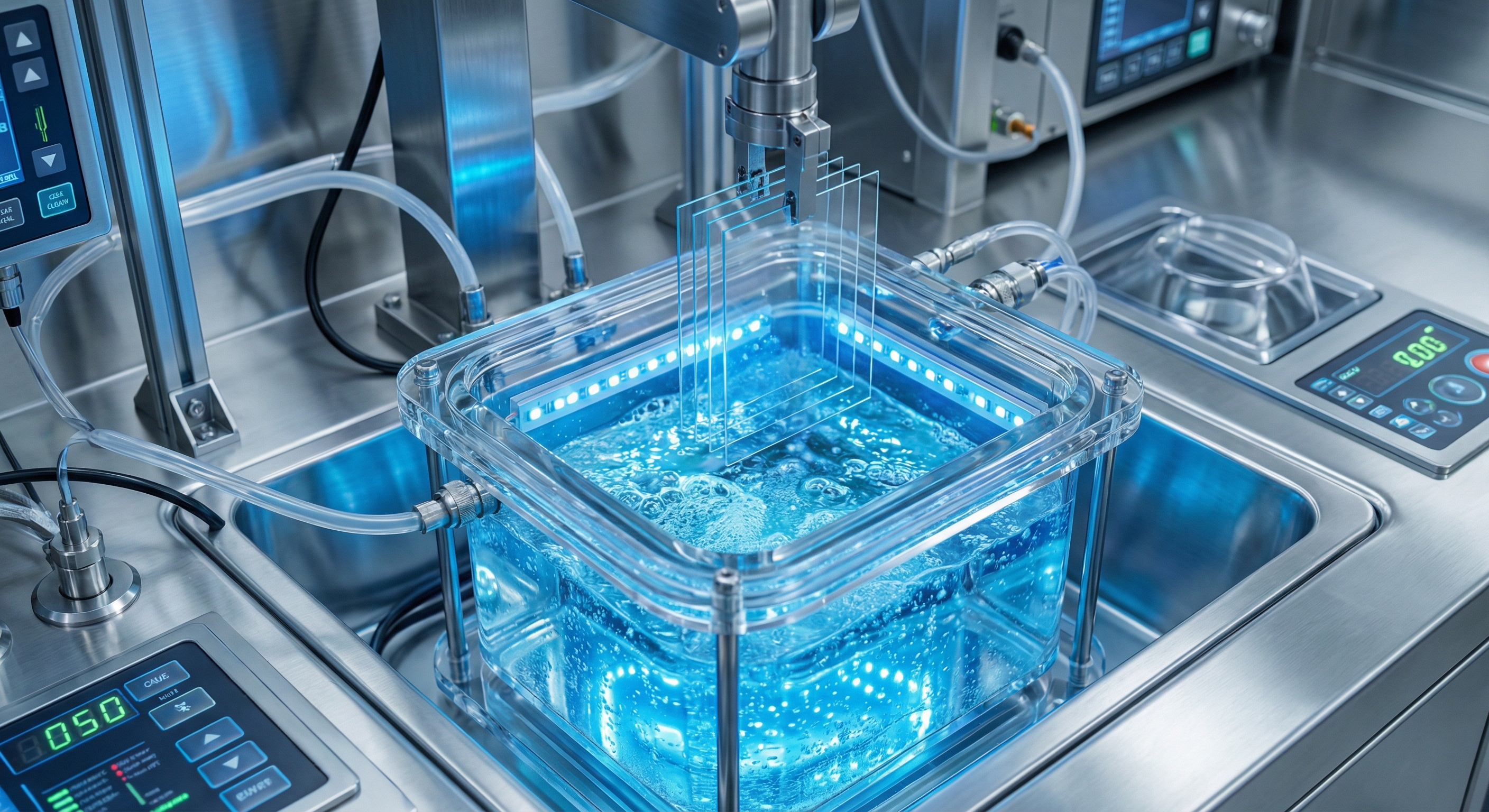
Chemical tempering, also known as ion exchange, is a sophisticated method used for strengthening ultra-thin glass where thermal quenching is not feasible. This advancement in the History of Tempered Glass involves submerging glass in a potassium salt bath to replace smaller sodium ions with larger potassium ions. This creates a high-density surface layer that is incredibly resistant to scratches and impacts, even at thicknesses of less than one millimeter.
How does ion exchange strengthen thin glass?
By forcing larger ions into the surface structure, the glass becomes “pre-stressed” without the need for rapid temperature changes. This is essential for the screens of smartphones and specialized aerospace components.
But that’s not all. Chemical tempering allows for complex shapes that would warp in a traditional furnace.
- Potassium ion replacement.
- Zero visual distortion.
- Ideal for thin smartphone screens.
Key Takeaway: Chemical tempering has expanded the application of safety glass into the tech and aerospace sectors, where thermal tempering is physically impossible.
| Method | Best For | Distortion | Thickness |
|---|---|---|---|
| Thermal | Thick Panes | Minimal | >3mm |
| Chemical | Thin Displays | Zero | <2mm |
This technology is now frequently integrated into hollow glass units for high-tech commercial displays.
How have tempering furnaces evolved over time?
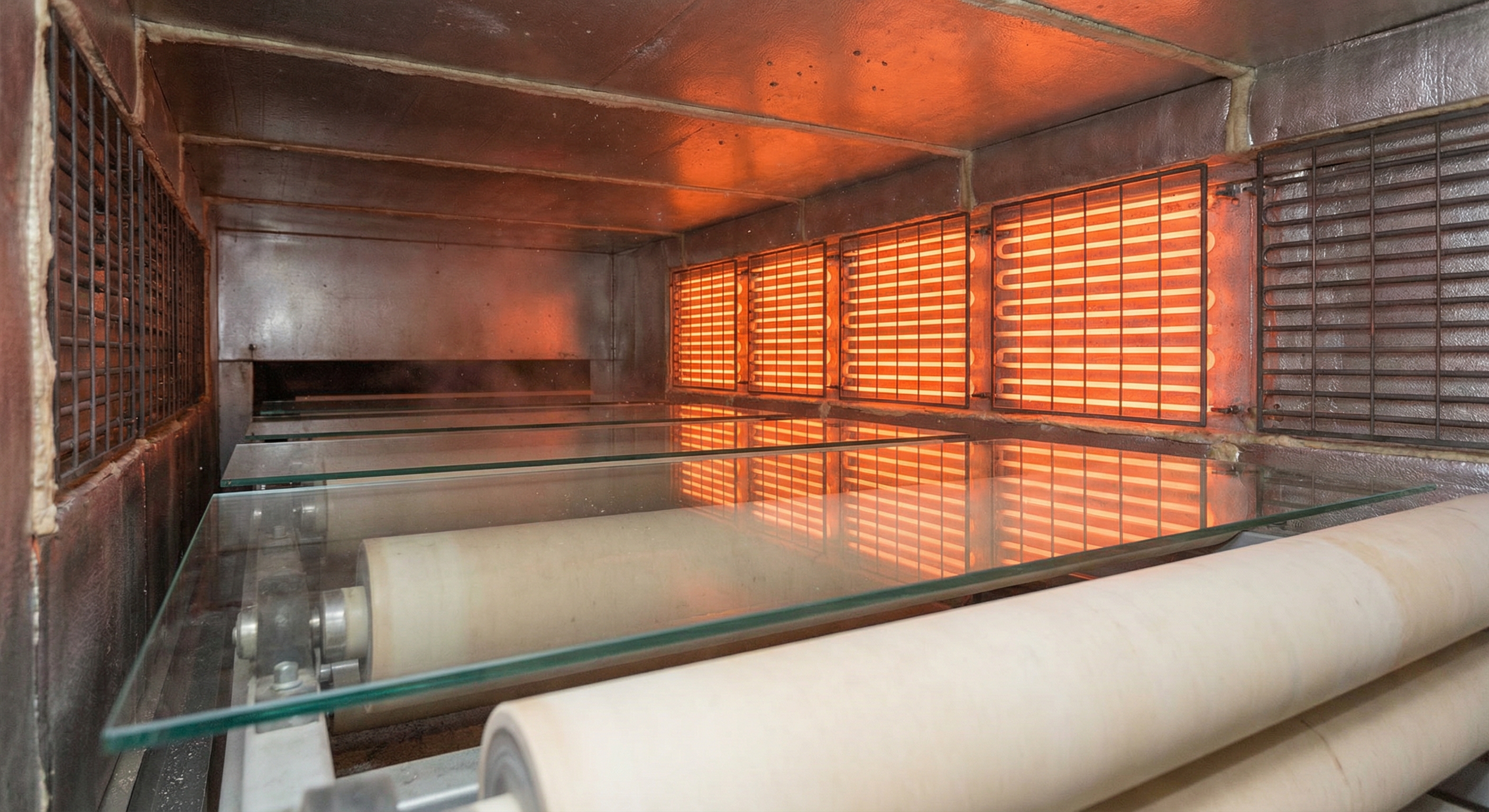
The transition from vertical tong-held tempering to horizontal roller furnaces corrected the most significant visual defects in glass production. In the History of Tempered Glass, early vertical methods left “tong marks” at the top of every pane, which was unacceptable for high-end architectural aesthetics. Modern horizontal furnaces use ceramic rollers to move the glass through the heating and quenching zones, ensuring a perfectly flat and distortion-free finish.
Why did horizontal rollers fix visual distortion?
Horizontal tempering eliminates the gravity-induced stretching that occurred when glass was hung vertically. The rollers support the pane uniformly, allowing for the massive production of the oversized glass units seen in contemporary skyscrapers.
Here is the kicker: modern furnaces use computer-controlled air pressure to ensure the quench is perfectly even.
- Elimination of tong marks.
- Support for oversized glass units.
- Automated temperature profiling.
Key Takeaway: Horizontal roller technology transformed tempered glass into a premium architectural material capable of meeting the highest aesthetic standards.
| Furnace Type | Support Method | Markings | Max Size |
|---|---|---|---|
| Vertical | Tongs | Tong Marks | Limited |
| Horizontal | Ceramic Rollers | None | Very Large |
Refined furnace tech allows for the creation of beautiful ceramic fritted glass with precise patterns.
Why is tempered glass vital for skyscrapers?
Modern skyscrapers rely on tempered glass curtain walls to withstand the immense wind pressures and temperature fluctuations found at high altitudes. The History of Tempered Glass is inseparable from the history of modern architecture, as the “all-glass” building would be structurally impossible without safety glazing. Tempered panes provide the necessary safety factor to ensure that even if a window fails, it does not pose a threat to pedestrians on the street below.

Can glass facades withstand high wind loads?
Tempered glass is engineered to flex slightly under wind load without breaking, returning to its original shape once the pressure is removed. This elasticity, combined with its high breaking point, makes it the only viable choice for high-rise skins.
Think about it: every glass skyscraper you see is a monument to the evolution of tempering technology.
- High-altitude wind resistance.
- Thermal stress management.
- Pedestrian safety via fragmentation.
Key Takeaway: Without the strength and safety profile of tempered glass, the vertical expansion of modern cities would have been limited by the weight of masonry.
| Benefit | Skyscraper Impact | Safety Context |
|---|---|---|
| Wind Resistance | Allows 100+ Stories | High-Altitude Safety |
| Light Weight | Reduces Foundation Load | Architectural Freedom |
Advanced tempered glass remains the backbone of the most iconic skylines worldwide.
What is the future of interactive smart glass?
The next phase in the History of Tempered Glass involves the integration of electronic films that allow for instant opacity changes and interactive displays. “Smart” glass combines the physical durability of a tempered pane with the functionality of a digital screen, providing privacy and energy efficiency at the touch of a button. This innovation is currently transforming commercial office spaces and luxury residential properties by eliminating the need for traditional blinds or curtains.

Will smart glass replace traditional partitions?
Smart glass offers a cleaner, more hygienic alternative to fabric partitions in medical and corporate environments. Because the technology is embedded within or on a tempered pane, it maintains all the safety benefits developed over the last century.
Believe it or not, your windows may soon double as your primary computer interface.
- Switchable privacy films.
- Integrated LED displays.
- Solar energy harvesting.
Key Takeaway: The future of tempering is no longer just about strength; it is about the integration of technology into the transparent fabric of our buildings.
| Future Tech | Industry Benefit | Readiness |
|---|---|---|
| Electrochromic | Energy Savings | Available |
| Interactive | Branding/Wayfinding | Developing |
As we look forward, we remain committed to providing the most advanced solutions; please contact our engineering team to discuss how these innovations can fit your vision.
Frequently Asked Questions
- Can I cut tempered glass after the strengthening process?
No. Once the glass has been tempered, the internal stresses are permanently set, and any attempt to cut, drill, or notch the pane will result in it shattering into thousands of small pieces. - What’s the best way to tell if a piece of glass is tempered?
Look for the “bug” or permanent stamp in the corner, which is required for safety compliance. Alternatively, using polarized sunglasses will often reveal a faint pattern of “leopard spots” caused by the quenching air. - Can I use tempered glass for high-heat kitchen applications?
Yes. Tempered glass has exceptional thermal shock resistance, allowing it to withstand temperature differentials that would crack standard glass. - What’s the best thickness for a frameless shower door?
For structural rigidity and a premium feel, 10mm or 12mm tempered glass is the industry standard for frameless installations. - Can I recycle tempered glass with standard bottles?
No. Tempered glass has a different melting point and chemical composition than container glass, meaning it must be processed through specialized recycling streams to avoid contaminating the melt.