Determining the correct tempered glass thickness depends entirely on the specific application’s safety requirements and load-bearing needs. When architectural visions call for expansive transparency, selecting an insufficient gauge can lead to structural bowing or catastrophic failure.
Property developers and contractors often face the gamble of under-specifying materials to save costs, only to be met with code violations or severe safety liabilities. By matching the precise tempered glass thickness to your project’s environmental stressors, you create an environment that is both aesthetically striking and structurally sound.
Why does tempered glass thickness matter for safety?
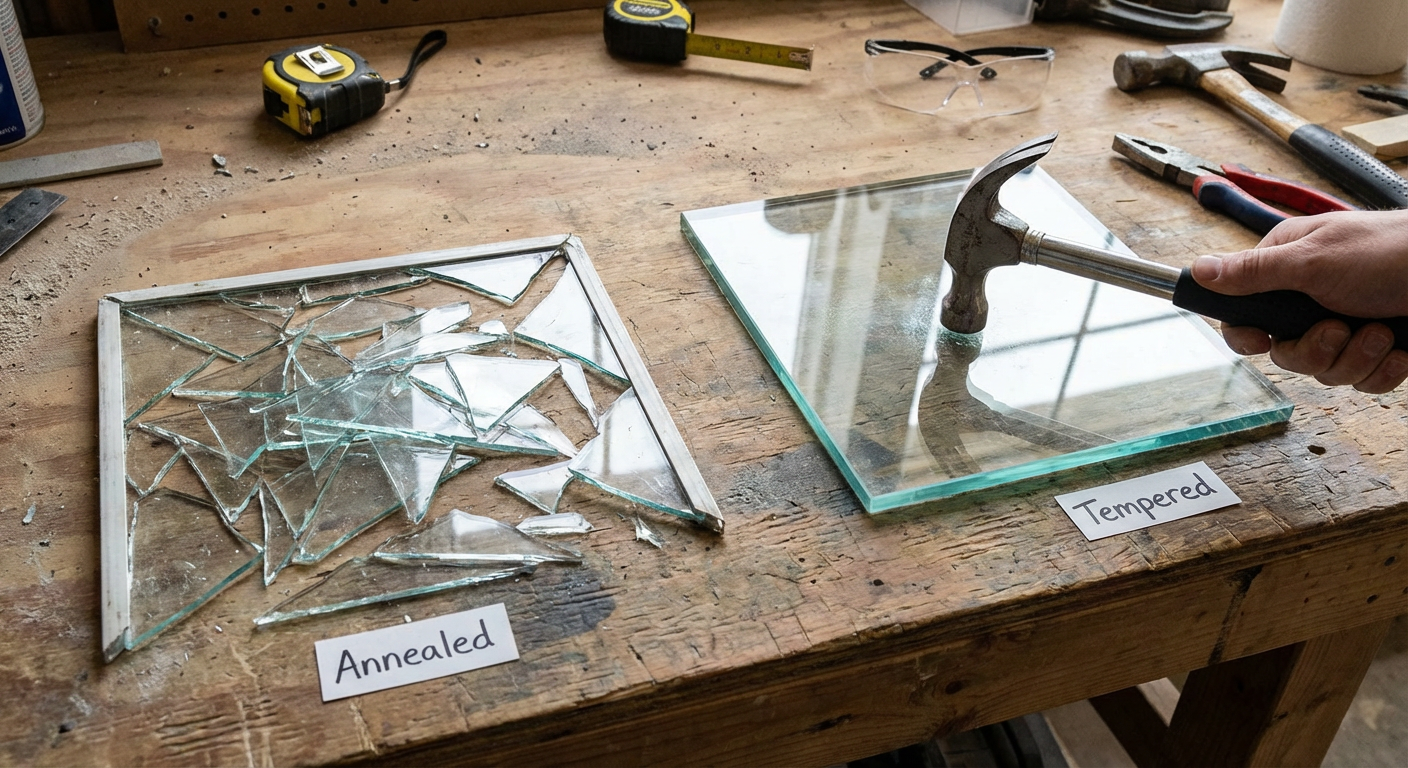
The tempered glass thickness directly determines a panel’s ability to absorb energy and resist penetration during a sudden impact. While the tempering process increases surface strength, the physical mass of the glass provides the necessary rigidity to prevent the panel from “oil-canning” or deforming under pressure.
How does thickness prevent injury?
Thicker glass requires significantly more foot-pounds of energy to reach its breaking point, providing a vital buffer in high-traffic commercial zones. You can rest assured that even if failure occurs, the mass contributes to a stable fragmentation pattern.
The best part?
- Higher thickness levels reduce the risk of accidental breakage from leaning or pushing.
- Heavy-duty panels offer superior resistance to thermal stress and temperature fluctuations.
- Increased material density provides a safer “feel” that builds user confidence in frameless installations.
Can thickness stop deflection?
Thicker cross-sections are essential for maintaining the structural form of large vertical partitions without the need for intrusive framing. You will notice that a 12mm panel remains perfectly vertical even when subjected to minor vibrations that would cause a 6mm sheet to wobble.
Key Takeaway: Safety is a dual-factor equation where the heat-treatment process provides the strength, but the physical thickness provides the stability and impact resistance.
Safety Performance Metrics
| Metric | 6mm Tempered | 12mm Tempered | Structural Impact |
|---|---|---|---|
| Break Strength | High | Extreme | Prevents penetration |
| Flexibility | Moderate | Low | Maintains structural form |
| Fragmentation | Small Crumbs | Small Crumbs | Uniform safety break |
The increased thickness of architectural glass serves as a physical barrier that successfully distributes kinetic energy across a wider surface area.
What is the standard tempered glass thickness?
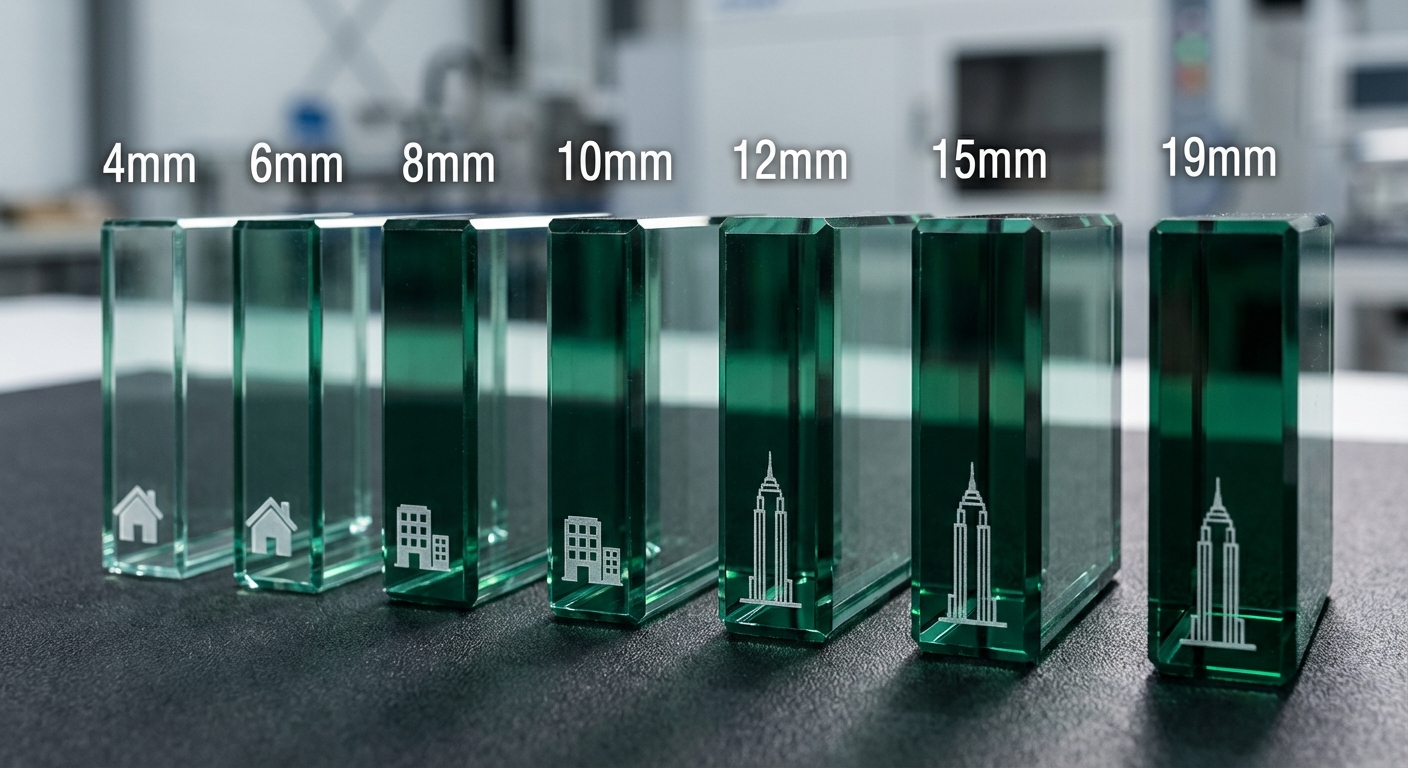
The standard tempered glass thickness varies across industrial and residential sectors, typically ranging from a slender 4mm to a structural 19mm. Manufacturers categorize these gauges based on their ability to integrate with specific hardware systems and mounting tracks.
What are the most common gauges?
For most interior residential projects, technicians favor the 6mm to 10mm range due to its manageability and light weight. However, commercial sectors often treat 12mm as the baseline for frameless storefronts to ensure long-term durability.
Here is the deal:
- 4mm – 6mm: Perfectly suited for standard windows and decorative cabinet inserts.
- 8mm – 12mm: The industry “sweet spot” for office partitions and shower enclosures.
- 15mm – 19mm: Heavy-duty structural fins and mall frontage requirements.
Does millimeter precision matter?
When you order glass, you must account for manufacturing tolerances which are often within ±0.2mm to ensure a “snug” fit in U-channels. You will find that even a slight deviation can prevent a panel from sliding into a pre-installed gasket.
Key Takeaway: Standard thickness is defined by the hardware it must fit; always verify your track or hinge capacity before selecting your glass gauge.
Standard Thickness Comparison
| Application | Standard Thickness | Primary Project Benefit |
|---|---|---|
| Window Glazing | 4mm – 5mm | Lightweight & Cost-Effective |
| Interior Shelving | 6mm – 8mm | High Clarity & Load Support |
| Glass Partitions | 10mm – 12mm | Premium Feel & Rigidity |
Standardized thicknesses allow for modularity in construction, ensuring that glass from different batches fits universal mounting hardware.
How to choose tempered glass thickness for homes?
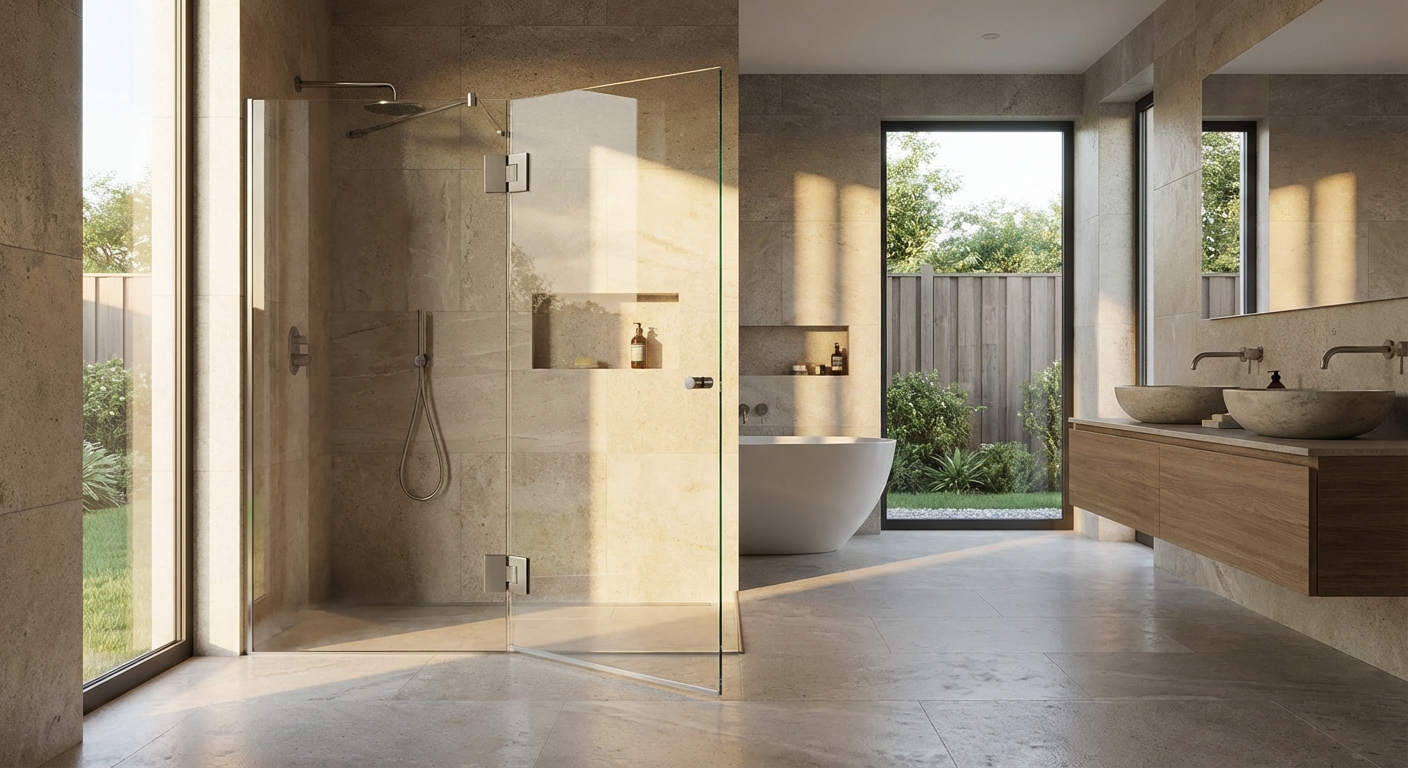
Selecting the right tempered glass thickness for residential use involves balancing the desired “high-end” feel against the weight limits of household hinges and wall structures. Homeowners must prioritize safety in “wet” areas like bathrooms and high-heat zones like kitchen backsplashes.
What is best for bathrooms?
For a modern frameless shower, 10mm is the professional standard as it eliminates the need for bulky metal supports. You can upgrade to 12mm for a truly ultra-premium look, though this requires specialty reinforced hardware.
Think about it:
- 10mm glass provides a luxury “heavy” feel without being impossible to install.
- Thinner 6mm or 8mm options are better suited for fully framed units or sliders.
- Smooth, polished edges are non-negotiable for safety in tight residential spaces.
Can tabletops use thinner glass?
Tabletops generally require 8mm to 10mm thickness to support the weight of daily objects and occasional leaning pressure. If the glass is simply a protective cover for wood, you can safely drop down to 6mm to maintain a low profile.
Key Takeaway: For vertical residential installations that aren’t supported by a frame, never go below 8mm for safety and stability.
Residential Thickness Guidelines
| Home Application | Recommended Thickness | Preferred Mounting |
|---|---|---|
| Kitchen Backsplash | 6mm | Adhered to Wall |
| Frameless Shower | 10mm | Heavy-Duty Hinges |
| Dining Tabletop | 10mm | Resting on Base |
Using the correct thickness in a residential setting prevents the “fragile” feel often associated with low-quality glass products.
What is the best tempered glass thickness for offices?
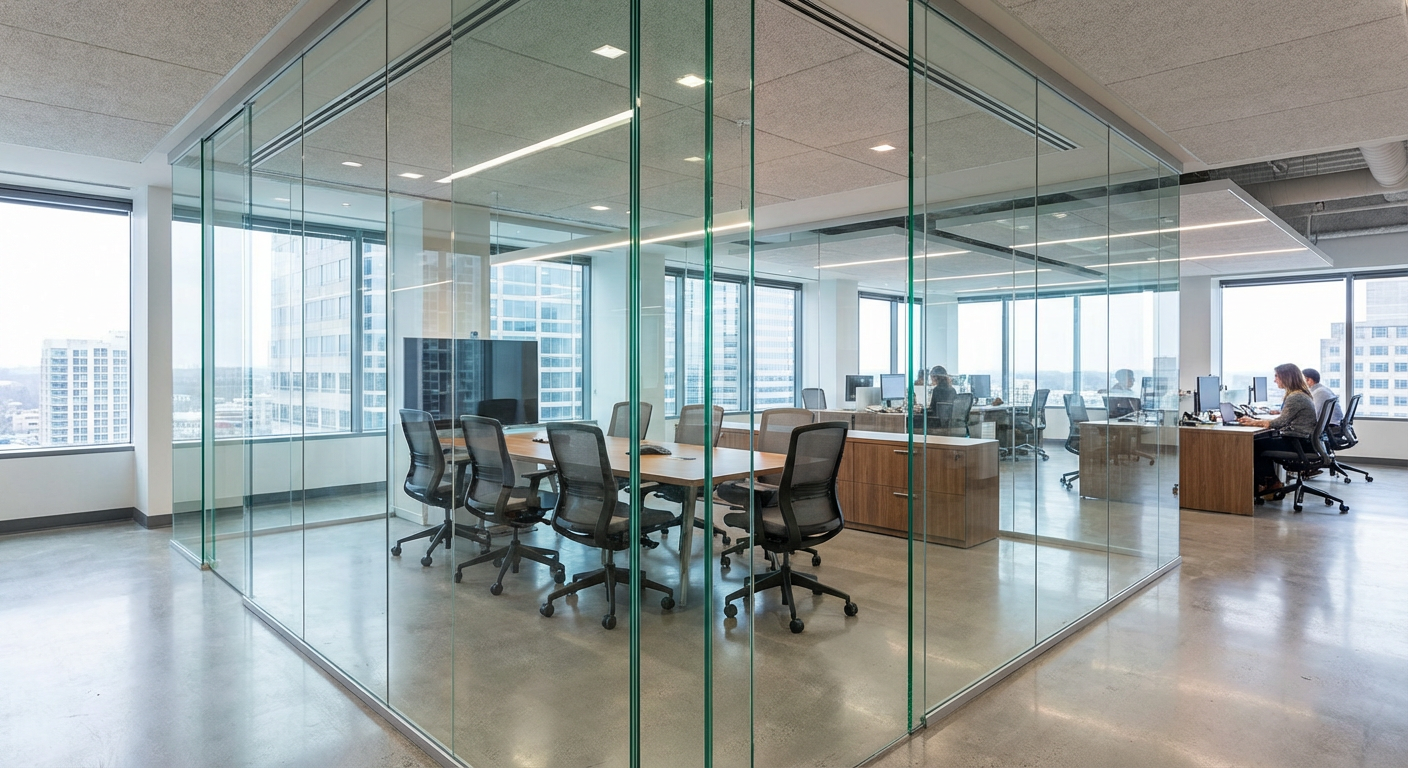
In high-traffic corporate environments, tempered glass thickness is the primary driver of both acoustic privacy and structural vibration control. Large office floorplates require panels that can span heights of 9 feet or more without compromising the safety of the workforce.
How do height and thickness correlate?
For standard 8-to-9-foot partitions, 10mm is often sufficient; however, 12mm is mandatory for taller spans to prevent bowing. You will notice that thicker glass significantly reduces the “clatter” heard when doors are opened and closed elsewhere in the suite.
The best part?
- Thicker office glass has a higher STC (Sound Transmission Class) rating for better privacy.
- 12mm doors can support larger, more ergonomic pull handles without cracking the glass.
- Increased rigidity prevents the partitions from rattling during building movement.
What about heavy-duty doors?
Office entry doors are subject to hundreds of cycles per day, making 12mm tempering a standard specification. This thickness allows for deep-drilling the glass for patch fittings and hydraulic closers while maintaining high tensile strength.
Key Takeaway: Corporate environments should default to 12mm for doors and high partitions to satisfy both acoustic and structural standards.
Office Application Summary
| Partition Height | Recommended Thickness | Acoustic Rating (STC) |
|---|---|---|
| Up to 2500mm | 10mm | Standard |
| 2500mm to 3000mm | 12mm | Improved |
| Over 3000mm | 15mm+ | Maximum Privacy |
Strategic thickness selection in office design ensures that glass remains a silent, stable, and transparent divider of space.
Does tempered glass thickness affect wind resistance?
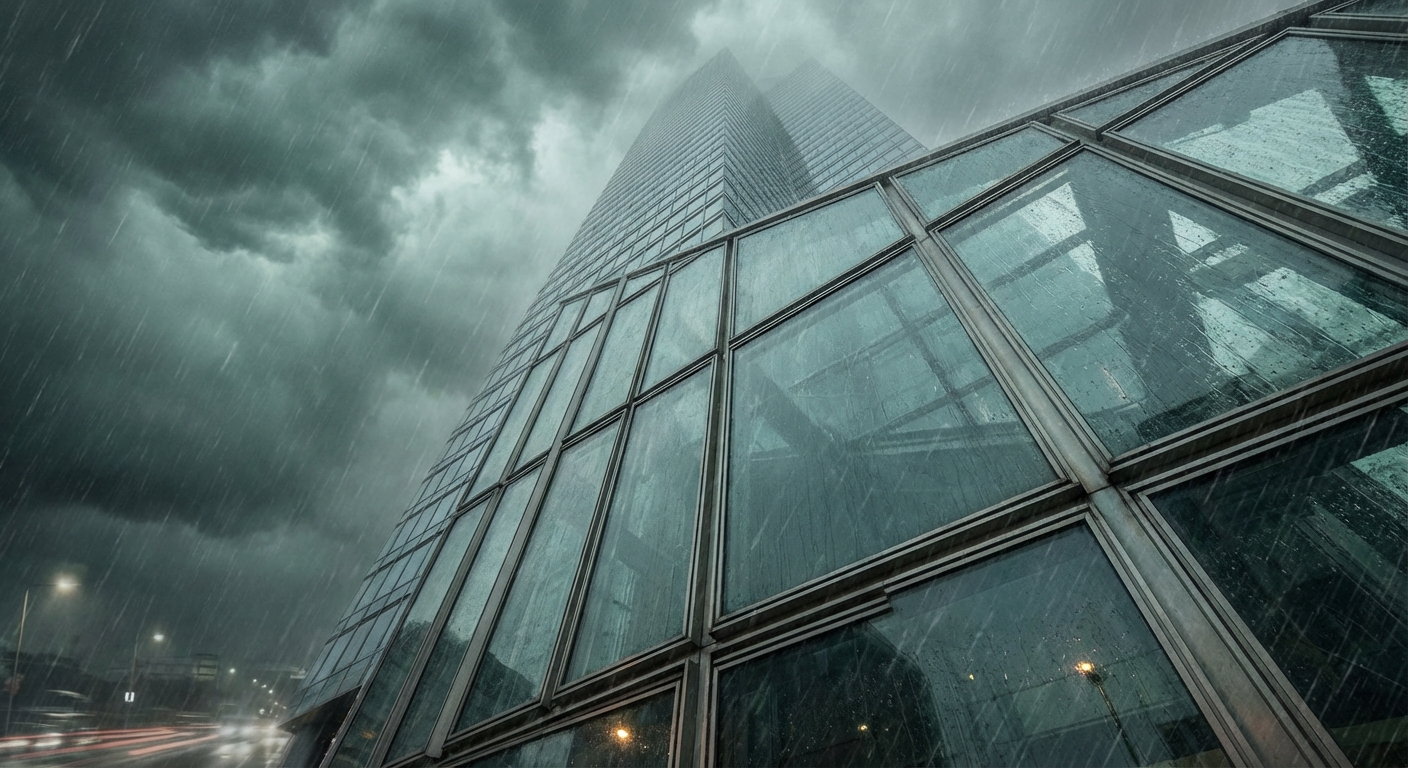
For exterior building envelopes, tempered glass thickness is a strictly calculated value based on local wind velocity and building altitude. As wind pressure increases, the glass acts as a structural sail, transferring dynamic loads directly into the building’s skeleton.
Can thickness withstand hurricanes?
Thicker glass possesses a higher modulus of rupture, allowing it to flex under extreme wind gusts without reaching the point of structural failure. You must ensure that coastal projects utilize a minimum of 12mm monolithic glass or high-performance laminated units.
The bottom line is:
- Wind load increases exponentially with the height of the installation.
- Over-specifying thickness is often cheaper than replacing a blown-out window.
- Thicker panels are necessary to resist the “stack effect” in high-rise stairwells.
Is deflection a major concern?
Excessive deflection can cause the glass to pop out of its framing or damage weather seals, leading to leaks. By increasing the thickness, you decrease the center-of-glass deflection to manageable millimetric levels.
Key Takeaway: Exterior glass thickness is never a design choice; it is a calculated engineering requirement mandated by local building codes.
Exterior Wind Load Support
| Environment | Typical Thickness | Glass Configuration |
|---|---|---|
| Low-Rise Retail | 10mm – 12mm | Monolithic |
| Coastal High-Rise | 12mm+ | Laminated/Insulated |
| Glass Balustrades | 15mm – 19mm | Frameless/Cantilevered |
Precision engineering ensures that thick tempered panels can survive the most extreme atmospheric pressure changes without compromising the building envelope.
How do you measure tempered glass thickness accurately?
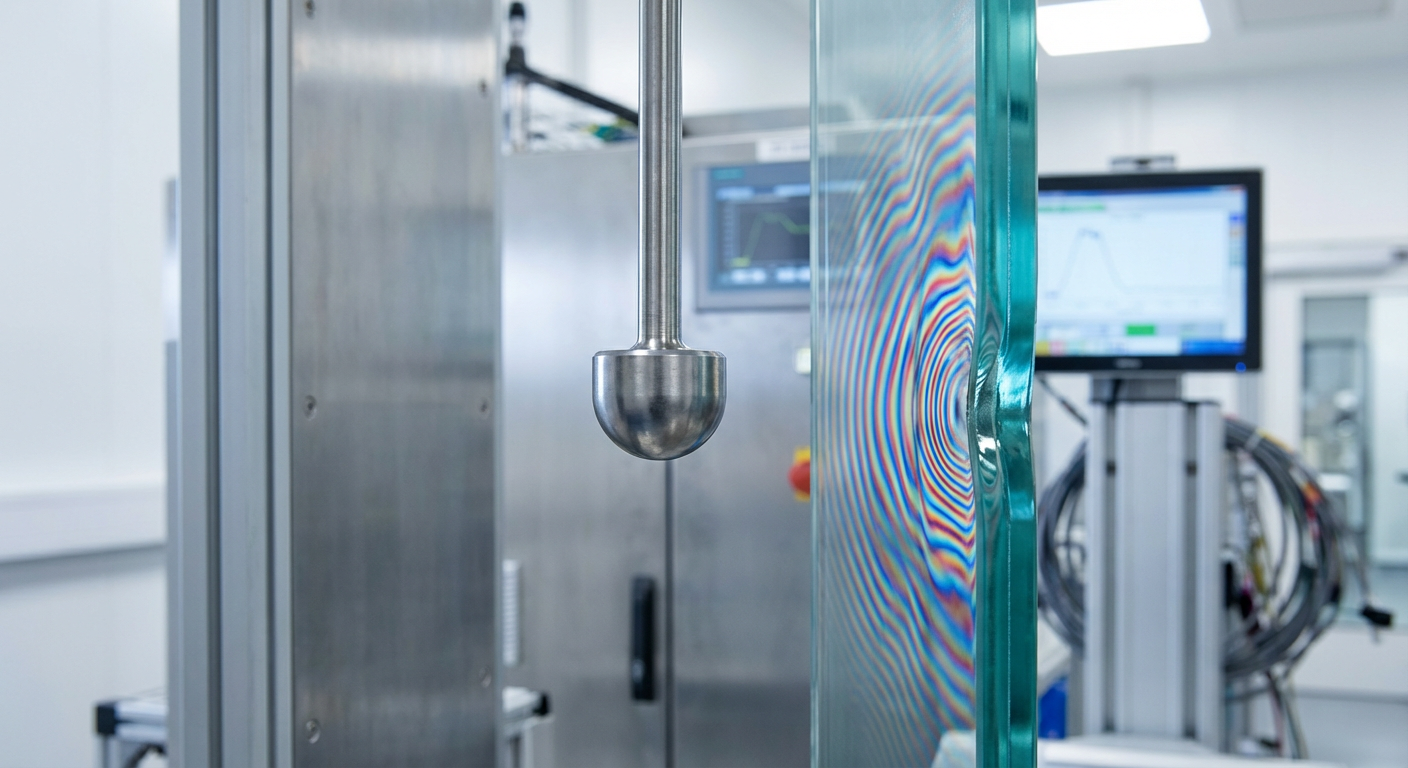
Accurate measurement is critical because orders for tempered glass cannot be modified once the heat-treatment process is complete. A discrepancy of even 1mm can result in glass that will not fit into pre-purchased hardware or weather-stripping.
Which tools are mandatory?
Standard tape measures are notoriously inaccurate for edge measurements; professional installers always use digital calipers. You should take measurements at multiple points along the edge to account for any slight manufacturing variances.
Here is the deal:
- Digital calipers provide micron-level accuracy for edge verification.
- Laser gauges can measure the thickness of glass already installed in a frame.
- Always measure the “as-built” opening before ordering custom-sized sheets.
Can you measure installed units?
If you are retrofitting a space, you can use a laser thickness gauge that detects reflections to tell you exactly how thick the existing glass is. This ensures you buy matching replacements without having to dismantle the current assembly.
Key Takeaway: Never rely on visual estimation; always use digital or laser-based tools to verify thickness to the decimal point.
Measurement Tool Efficacy
| Tool | Accuracy Level | Best Professional Use |
|---|---|---|
| Tape Measure | Low | Rough Opening Estimates |
| Digital Calipers | High | Edge & Hardware Fit |
| Laser Gauge | Extreme | Installed Glass Units |
Accurate on-site verification prevents the costly logistical nightmare of shipping back glass that doesn’t fit its intended tracks.
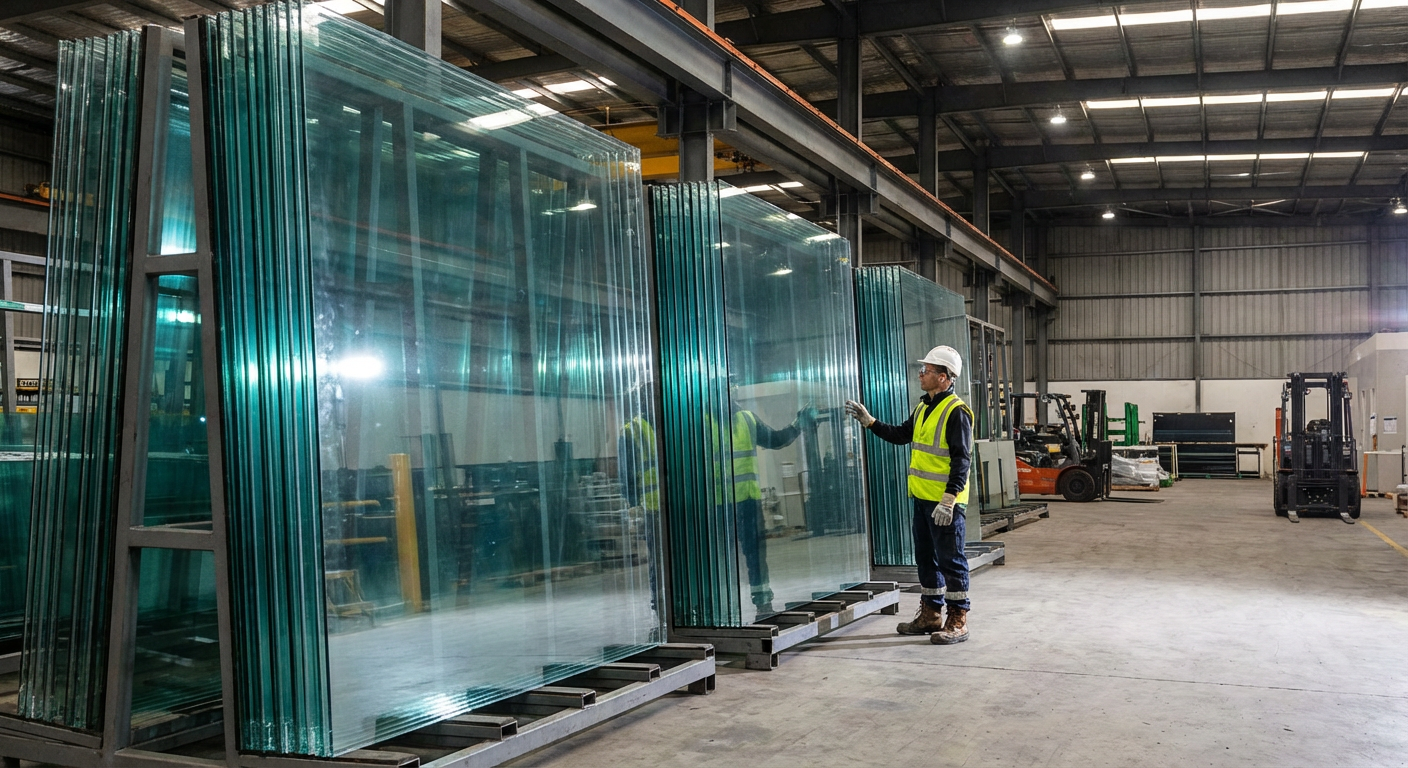
Increasing tempered glass thickness has a linear impact on weight and a cascading effect on your total project budget. Glass is a dense material, and doubling the thickness effectively doubles the dead load on your building’s structure.
How does weight affect logistics?
A 12mm glass sheet weighs approximately 30kg per square meter, requiring specialized suction lifts and extra labor for safe handling. You will find that shipping costs rise significantly as crate weights exceed standard forklift capacities.
Keep in mind:
- Thicker glass requires longer “soak times” in the tempering furnace, consuming more energy.
- Reinforced hardware for heavier glass carries a higher price tag than standard clips.
- Installation time increases as panels become too heavy for two-person manual lifting.
Can you save money with lamination?
In some specific cases, using two thinner sheets of laminated glass can provide the same structural strength as one very thick tempered sheet at a lower production cost. This is a common strategy for high-rise commercial windows.
Key Takeaway: Always evaluate the “total cost of installation,” including labor and hardware, rather than just the price of the glass itself.
Weight and Cost Correlation
| Thickness | Weight (approx.) | Relative Cost Index |
|---|---|---|
| 6mm | 15 kg/m² | Base Price |
| 10mm | 25 kg/m² | +60% |
| 19mm | 47 kg/m² | +180% |
Understanding the weight-to-thickness ratio is essential for preventing structural overloads and unexpected shipping surcharges.
How do you ensure quality during the thickness heat-treatment?
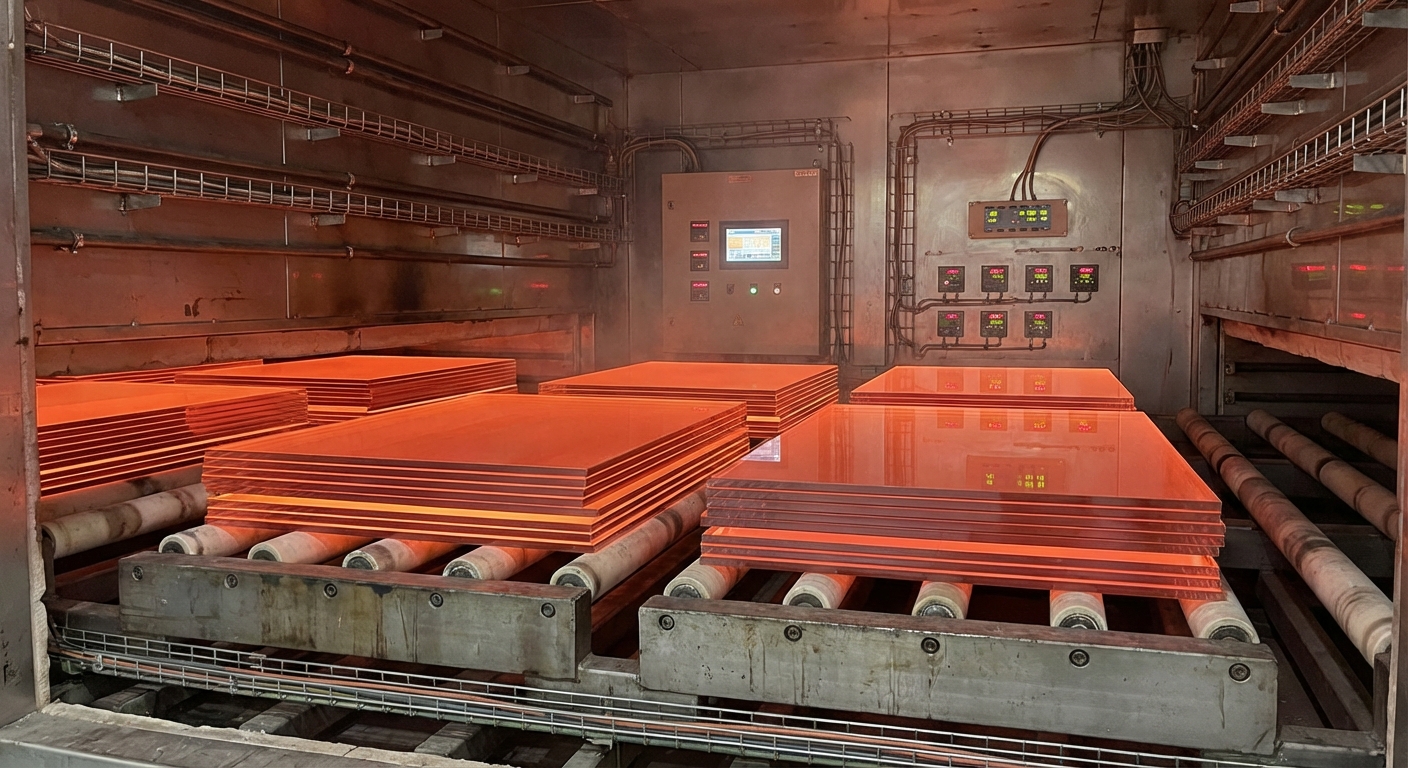
Thicker glass requires specialized heat-soak testing to ensure that internal stresses are equalized and that no spontaneously exploding inclusions remain. The deeper the glass, the more difficult it is to achieve a perfectly uniform temperature across the core.
What is the heat-soak process?
For panels over 12mm, a secondary heat-soak test is often specified to accelerate the potential failure of nickel sulfide inclusions. You will find this process is the best insurance policy against spontaneous breakage after installation.
The best part?
- Uniform heating prevents the “bow and warp” commonly seen in low-quality thick glass.
- Advanced furnaces use digital sensors to monitor the core temperature of thick panels.
- Quality control ensures that the edges remain perfectly perpendicular even after tempering.
Is distortion an issue?
Thicker glass can sometimes show more optical distortion (quench marks) when viewed through polarized lenses. You can minimize this by working with manufacturers who use high-convection furnaces specifically tuned for architectural gauges.
Key Takeaway: Always request a heat-soak test for structural glass over 12mm to guarantee long-term safety and eliminate manufacturing defects.
Heat-Treatment Quality Checklist
| Test | Purpose | Requirement |
|---|---|---|
| Tempering | Surface Strength | 4-5x Annealed Strength |
| Heat-Soaking | Eliminates Inclusions | Mandatory for 12mm+ |
| Polarized Scan | Checks Stress Patterns | Low Optical Distortion |
Secondary testing protocols are the hallmark of high-end glass manufacturing, ensuring that thick panels perform reliably for decades.
What are the limits of tempered glass thickness?
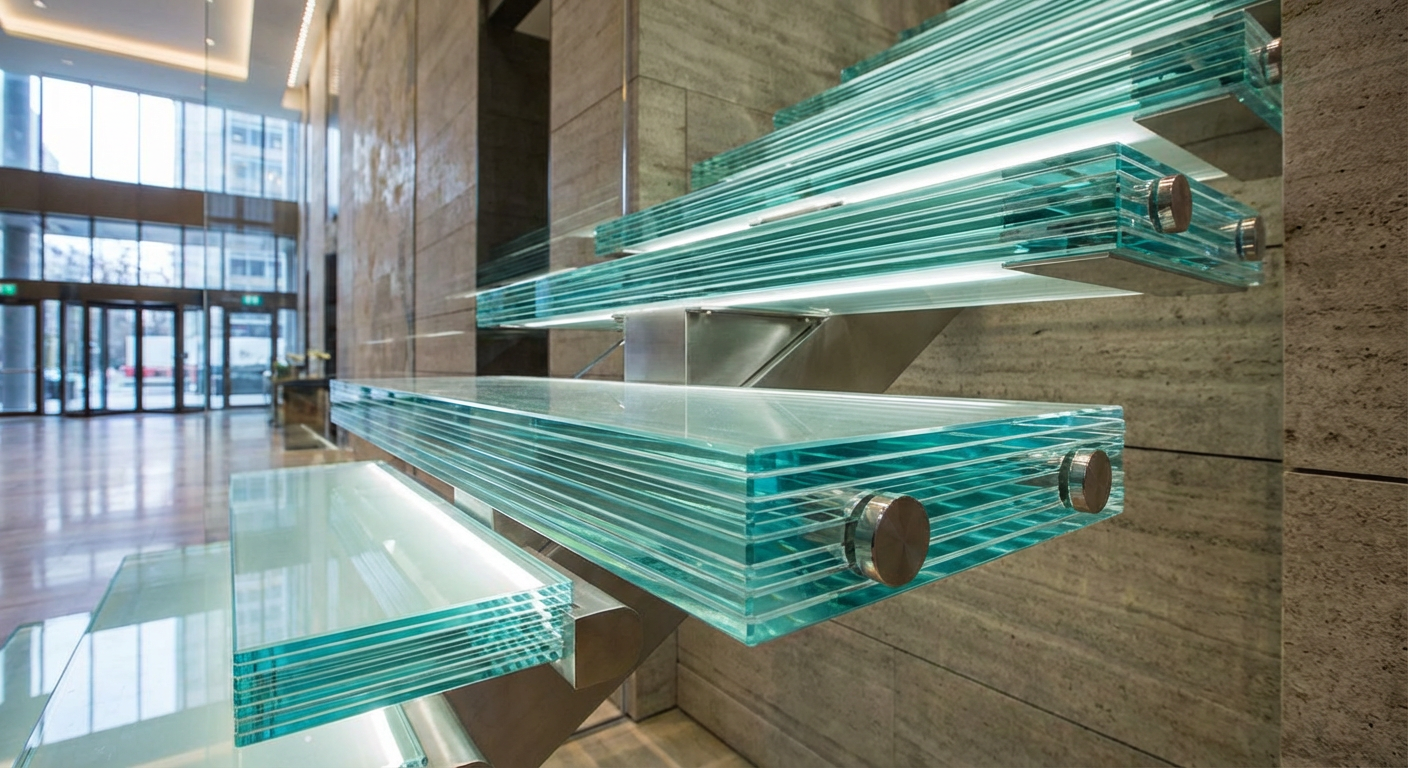
While tempered glass thickness can reach 19mm to 25mm, there is an engineering point where monolithic glass becomes less efficient than laminated alternatives. For extreme structural loads—like glass stairs or floors—multilaminate configurations are the global choice.
When is glass too thick?
Beyond 19mm, tempered glass becomes extremely heavy and difficult to produce without visual imperfections. For glass floor treads, you will usually see three layers of 10mm glass bonded together rather than one massive 30mm sheet.
The reality is:
- Lamination provides “fail-safe” redundancy that monolithic glass cannot offer.
- Thicker panels show a much stronger green tint unless you specify low-iron glass.
- Most architectural furnaces are optimized for a maximum thickness of 19mm.
Are there minimum limits?
Most commercial temperers cannot process glass thinner than 3mm or 4mm because the rapid cooling process would cause the glass to warp or shatter instantly. For ultra-thin applications, chemical strengthening is used instead of thermal tempering.
Key Takeaway: For projects requiring extreme strength (like stairs), use multiple laminated layers of medium thickness rather than one oversized monolithic panel.
Maximum Specification Limits
| Method | Max Monolithic | Best Application |
|---|---|---|
| Thermal Temper | 19mm | Heavy Doors / Fins |
| Laminated Temper | 50mm+ | Structural Floors / Stairs |
| Heat-Strengthening | 12mm | Spandrel Panels |
Strategic layering in structural design allows architects to push the boundaries of transparency without compromising on massive load requirements.
How to specify tempered glass thickness for projects?

Specifying the correct thickness is the culmination of the design process, requiring a deep understanding of the project’s physical and aesthetic goals. Clear communication with the manufacturer ensures that fabrication details—like hole placement and edge polishing—are perfectly executed.
How do you communicate with shops?
When you contact a factory, you must provide exact millimeter specifications and the “end-use” context. This allows the engineering team to verify if your chosen thickness is appropriate for the intended span and hardware.
You should always:
- Provide high-resolution CAD drawings for every custom-cut panel.
- Specify the exact edge profile (Polished, Beveled, or Ground).
- Request physical samples to verify the color tint of thicker panels.
Is professional validation needed?
For commercial builds, having a glass engineer sign off on your thickness choices can prevent future legal and insurance headaches. You will find that reputable manufacturers provide this validation as part of their standard procurement service.
Key Takeaway: Trust the manufacturer’s technical review; their production expertise can often catch design flaws that would lead to installation failure.
Project Specification Checklist
| Required Data | Example Value | Impact on Fabrication |
|---|---|---|
| Exact Thickness | 12.0 mm | Hardware compatibility |
| Quality Standard | ASTM C1048 | Safety Certification |
| Fabrication Detail | CNC Hole Drills | Hardware Mounting |
A comprehensive specification document serves as the final blueprint that bridges the gap between architectural vision and factory reality.
FAQs
Can I use 6mm tempered glass for a frameless shower?
Certainly not. 6mm is far too flexible for a frameless door and will rattle or potentially pop out of its hinges. 10mm is the professional standard for a stable, safe, and premium frameless shower experience.
What’s the best thickness for a glass tabletop?
It depends on the support. If the glass sits on a continuous solid surface, 6mm is enough; however, if it is only supported at the four corners, you must use at least 10mm to 12mm to prevent it from snapping under point loads.
Can I cut tempered glass to a different thickness later?
No. Once glass is tempered, it can never be cut, drilled, or thinned. Any attempt to modify the physical dimensions of the glass will cause it to explode into thousands of small, safe pieces instantly.
What’s the best thickness for a glass railing?
For framed railings, 10mm or 12mm is standard. For frameless, cantilevered systems that must act as a structural balustrade, 15mm to 19mm (often laminated) is required to meet most international building codes.
Does increasing thickness change the glass color?
Yes. Clear glass has iron oxide that creates a green tint, which becomes much more prominent as thickness increases. If you want a perfectly clear look with 12mm or 19mm glass, you must specify “Low-Iron” (extra clear) glass.
At PrimePro Glass, we believe that structural integrity should never be a guessing game. Our mission is to provide the engineering-grade precision that your architectural visions demand, backed by direct factory control and two decades of manufacturing excellence. From slender residential glazing to the massive structural requirements of metropolitan towers, we deliver custom-to-blueprint solutions that secure your project’s success.
Contact us today for a detailed technical quote on your project.