The safety and longevity of your furniture depend on the structural integrity of its surface. While standard glass can be used for very thick, decorative slabs, a glass table top should generally be tempered if it is less than 1/2 inch thick to ensure maximum impact resistance and user safety. By opting for a tempered glass table top, you effectively shield your investment from accidental breakage and eliminate the risk of dangerous, sharp shards in your living space.
What defines a tempered glass table top?
A tempered glass table top is a piece of safety glass that has been processed through controlled thermal or chemical treatments to increase its strength compared with normal glass. This specialized manufacturing creates a surface that is approximately four to five times stronger than its non-tempered counterparts.
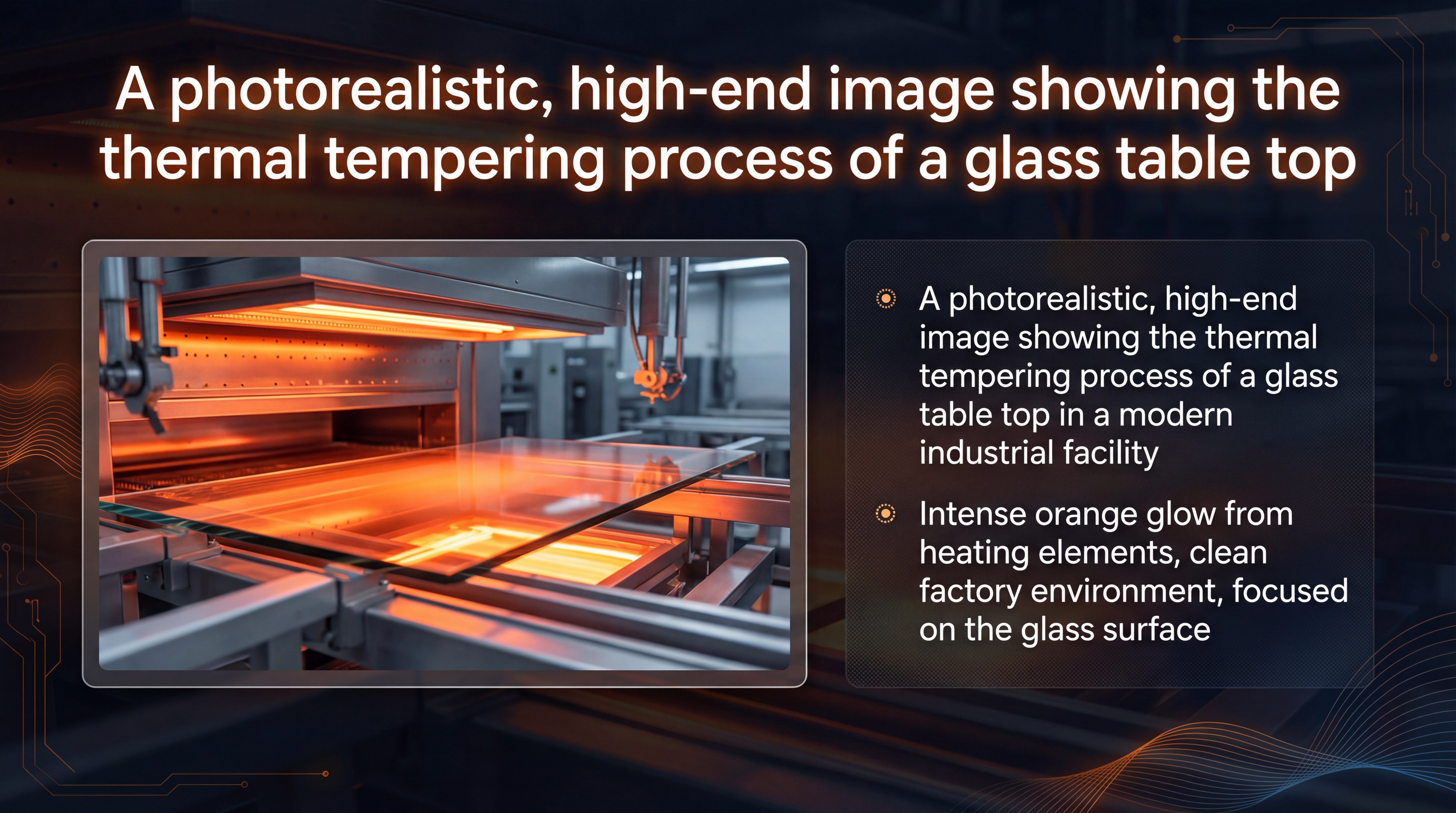
The Thermal Strengthening Process
To achieve its high-performance characteristics, the glass is heated to nearly 1,112°F in a tempering furnace.
- The outer surfaces are then rapidly cooled with high-pressure air.
- The core remains hot for longer, creating internal tension.
- This “locked-in” stress gives the glass its legendary durability.
Identifying the Product
Look: how can you be sure your glass has been properly treated?
- Check the corners for a permanent etched “bug” or logo.
- Examine the edges for the subtle smoothness characteristic of pre-furnace polishing.
- Use polarized lenses to spot the faint “leopard spots” of the stress pattern.
Key Takeaway: Tempering is a permanent structural change that converts standard glass into a high-load-bearing safety material.
| Feature | Standard Glass | Tempered Glass |
|---|---|---|
| Manufacturing | Slow Cooling | Rapid Quenching |
| Strength | Baseline | 4-5x Higher |
| Internal Stress | None/Low | High Compression |
Evaluating these production differences reveals why tempered surfaces are the industry standard for modern furniture.
Is a tempered glass table top more durable?
A tempered glass table top offers vastly superior durability because the tempering process compresses the outer layers, making the surface resistant to scratches and heavy impacts. In a busy household, this resilience is the difference between a lifetime of use and a sudden, expensive accident.
Resistance to Mechanical Stress
Your table handles more weight than you might realize, from heavy stacks of books to leaning guests.
- Tempered surfaces resist bending and flexing.
- They withstand localized pressure from pointed objects.
- Surface tension prevents micro-cracks from spreading.
Long-Term Clarity
The best part? Because the surface is harder, it maintains its aesthetic appeal for decades.
- It resists the “fogging” effect of tiny surface scratches.
- The glass remains crystal clear even with heavy cleaning.
- It handles the friction of sliding ceramic plates without dulling.
Key Takeaway: High physical durability makes tempered glass the most cost-effective long-term choice for high-traffic furniture.
| Durability Metric | Standard Glass | Tempered Glass |
|---|---|---|
| Impact Limit | Low | High |
| Flexibility | Brittle | Resilient |
| Scratch Resistance | Moderate | Superior |
The comparative data underscores the physical superiority of the tempering process in daily residential applications.
How does a tempered glass table top handle heat?
A tempered glass table top is engineered to withstand significant thermal fluctuations, allowing it to host hot coffee mugs and serving platters without the risk of thermal shock. This makes it an essential component for any dining room or kitchen environment where temperature changes are frequent.
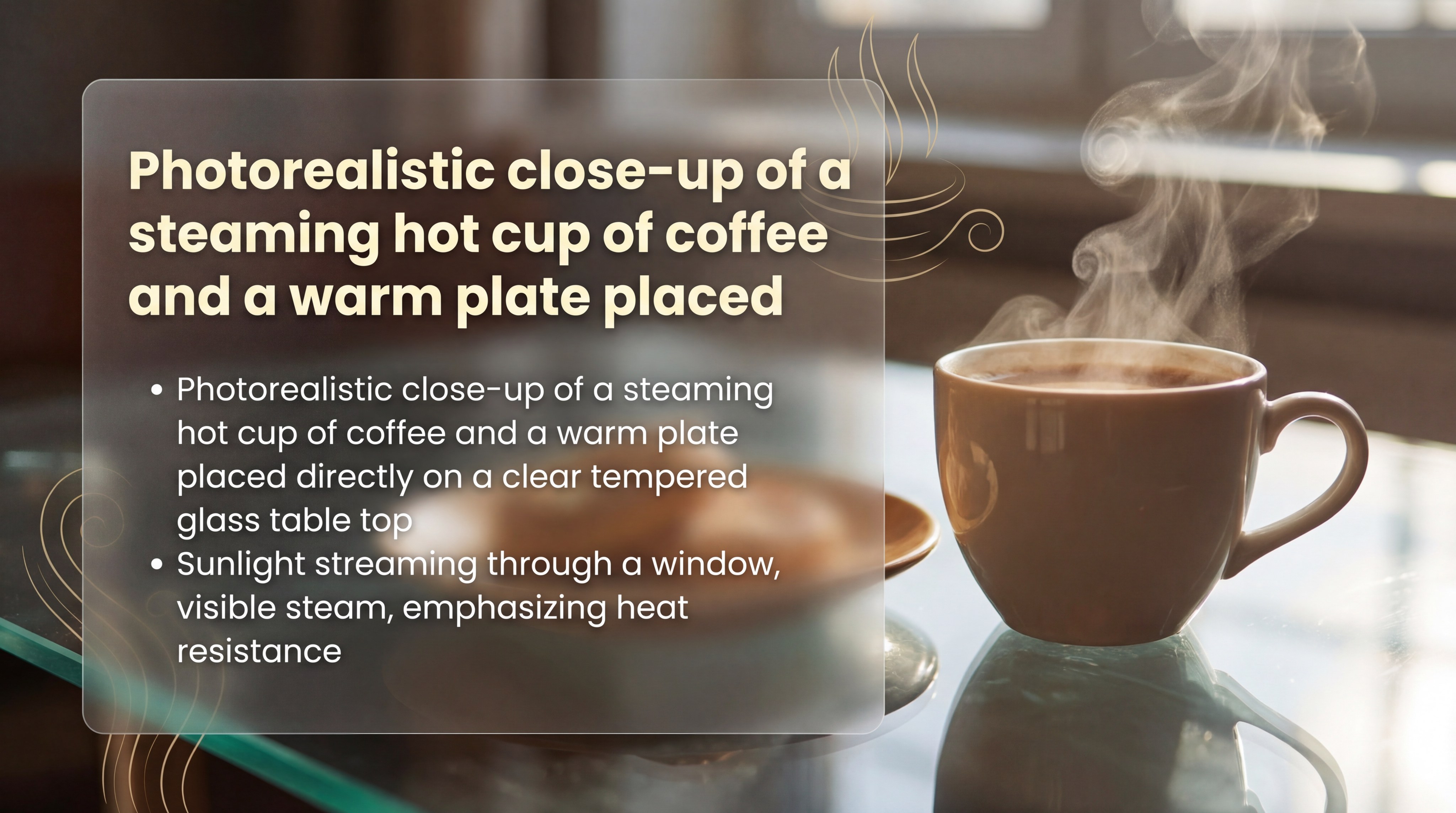
Thermal Shock Resistance
Standard glass often cracks when a hot object causes a localized area to expand faster than the surrounding cold glass.
- Tempered glass can handle temperature differentials up to 470°F.
- It is perfect for tables located in direct, hot sunlight.
- It resists cracking when ice-cold drinks are placed on a warm surface.
Safety in the Dining Room
Here is why you need it. Placing a boiling teapot on standard glass is a recipe for an immediate “heat crack” that ruins the piece.
- Tempering allows the glass to expand and contract uniformly.
- It protects the underlying furniture from radiant heat damage.
- It provides a sterile, heat-safe surface for food preparation.
Key Takeaway: Unlike annealed glass, tempered surfaces are virtually immune to the stresses of daily thermal changes in a domestic setting.
| Thermal Property | Standard Glass | Tempered Glass |
|---|---|---|
| Max Safe Temp | ~150°F | ~470°F |
| Thermal Expansion | High Tension | High Tolerance |
| Sunlight Resilience | Prone to localized stress | Excellent |
As the table indicates, the thermal window for tempered glass is wide enough to accommodate almost any household culinary scenario.
Why is safety higher with a tempered glass table top?
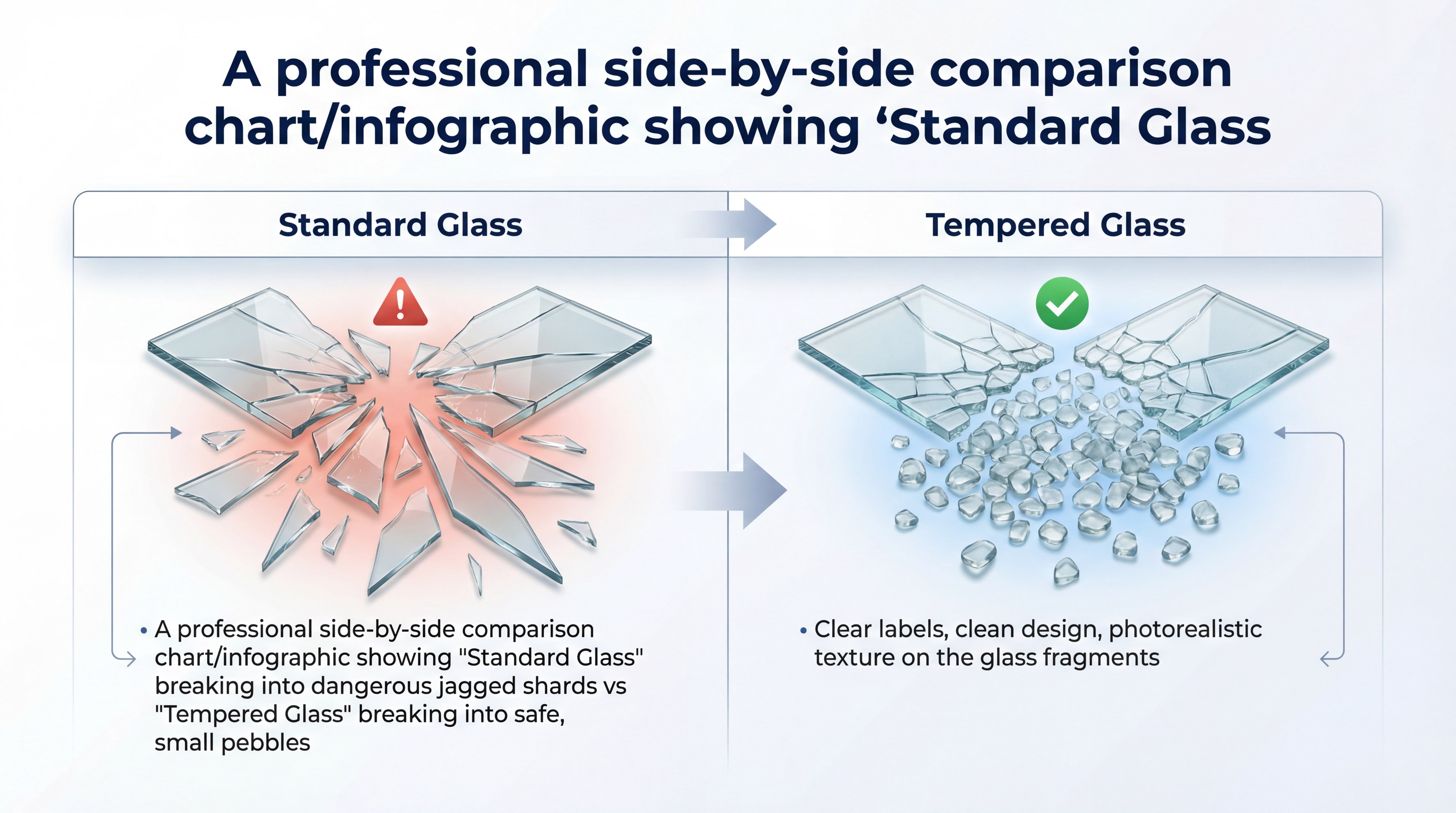
A tempered glass table top is officially classified as safety glass because of its unique “pebble-like” breakage pattern which prevents serious lacerations. If the glass ever fails, it disintegrates into thousands of small, blunt cubes rather than long, jagged knives.

The Shatter Pattern
In the rare event of a break, you are shielded from the primary cause of glass-related injuries.
- Pieces are roughly the size of a fingernail.
- Edges are generally dull rather than razor-sharp.
- Cleanup can be done safely with a vacuum and broom.
Family-Centric Protection
Look: if you have toddlers or pets, this is a non-negotiable feature.
- It eliminates the danger of “falling” shards if a table collapses.
- It provides a robust barrier that won’t shatter if a child trips into it.
- It offers peace of mind when hosting large, crowded gatherings.
Our high-capacity production facility ensures that every safety glass sheet undergoes rigorous QC to guarantee this specific breakage behavior.
Key Takeaway: The “safety” in safety glass refers to the blunt fragmentation that characterizes tempered material during failure.
| Safety Factor | Standard Glass | Tempered Glass |
|---|---|---|
| Failure State | Sharp Shards | Blunt Pebbles |
| Laceration Risk | Severe | Minimal |
| Energy Absorption | Brittle Failure | Explosive Dispersion |
The difference in failure modes is the single most important reason for choosing tempered glass for home furniture.
Can a tempered glass table top be used outdoors?
A tempered glass table top is the only suitable choice for outdoor environments because it can withstand the intense UV rays, heavy rain, and rapid temperature shifts of the changing seasons. Standard glass would likely succumb to “edge stress” or thermal cracking if left on a patio year-round.
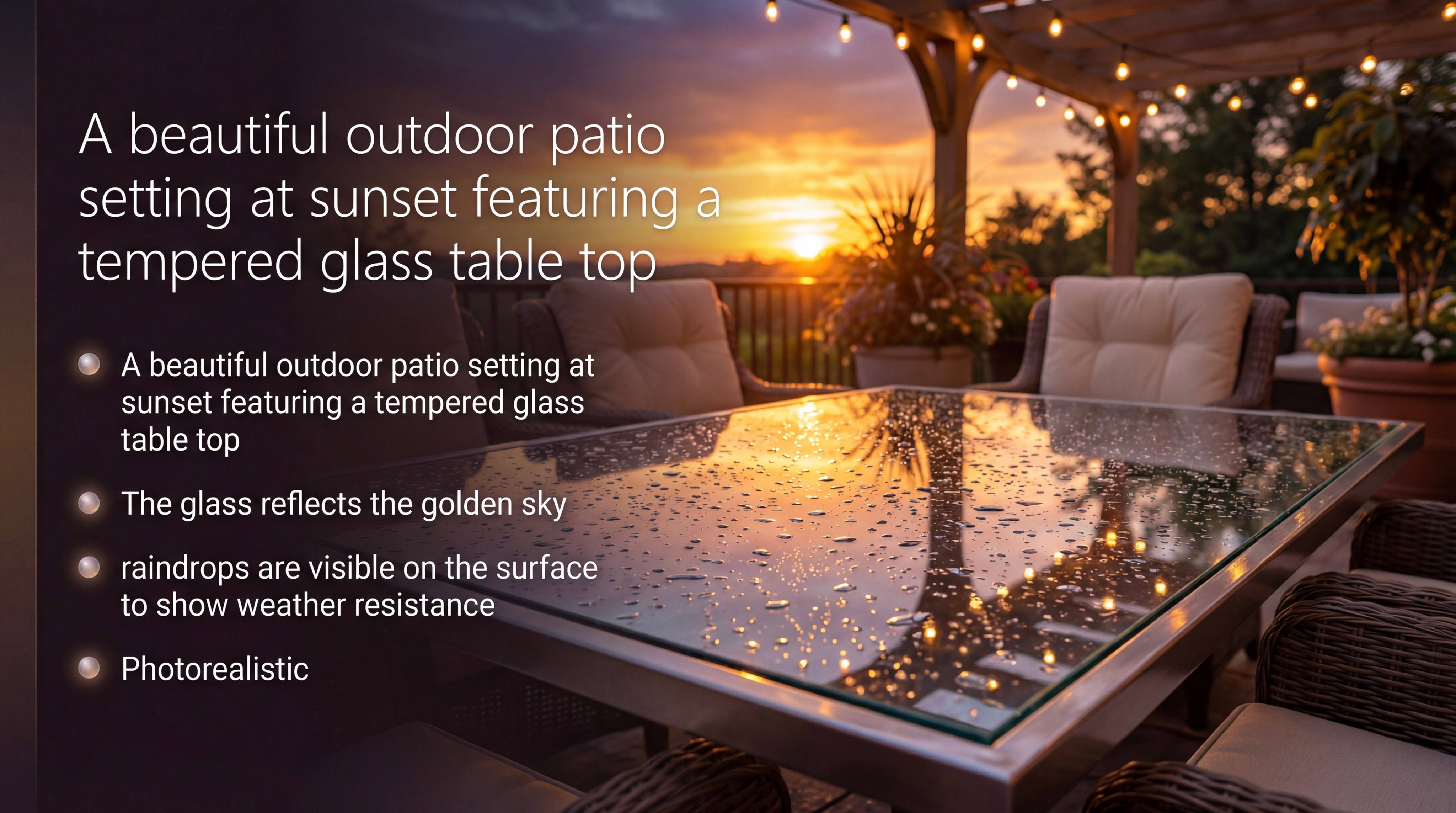
Weather Resistance
Outdoor furniture must contend with the elements every single day.
- Tempering protects against “freeze-thaw” cycles in winter.
- It handles the expansion caused by 100°F summer days.
- It is heavy enough to resist being flipped by moderate wind.
UV Stability
Does the sun damage the glass? Not at all.
- High-quality tempered glass maintains its structural bond under UV light.
- It won’t yellow or become brittle like some plastics.
- It stays easy to clean after exposure to pollen and rain.
Key Takeaway: For any exterior application, tempering provides the necessary resilience to survive environmental stressors that destroy standard materials.
| Environment | Standard Glass | Tempered Glass |
|---|---|---|
| Outdoor Patio | Unsafe / High Risk | Industry Standard |
| Direct Sunlight | Prone to Cracking | Fully Resistant |
| Winter Storage | Must move indoors | Can stay outdoors |
The comparison shows that tempered glass is the only viable long-term solution for seasonal outdoor living spaces.
Is a tempered glass table top scratch-resistant?
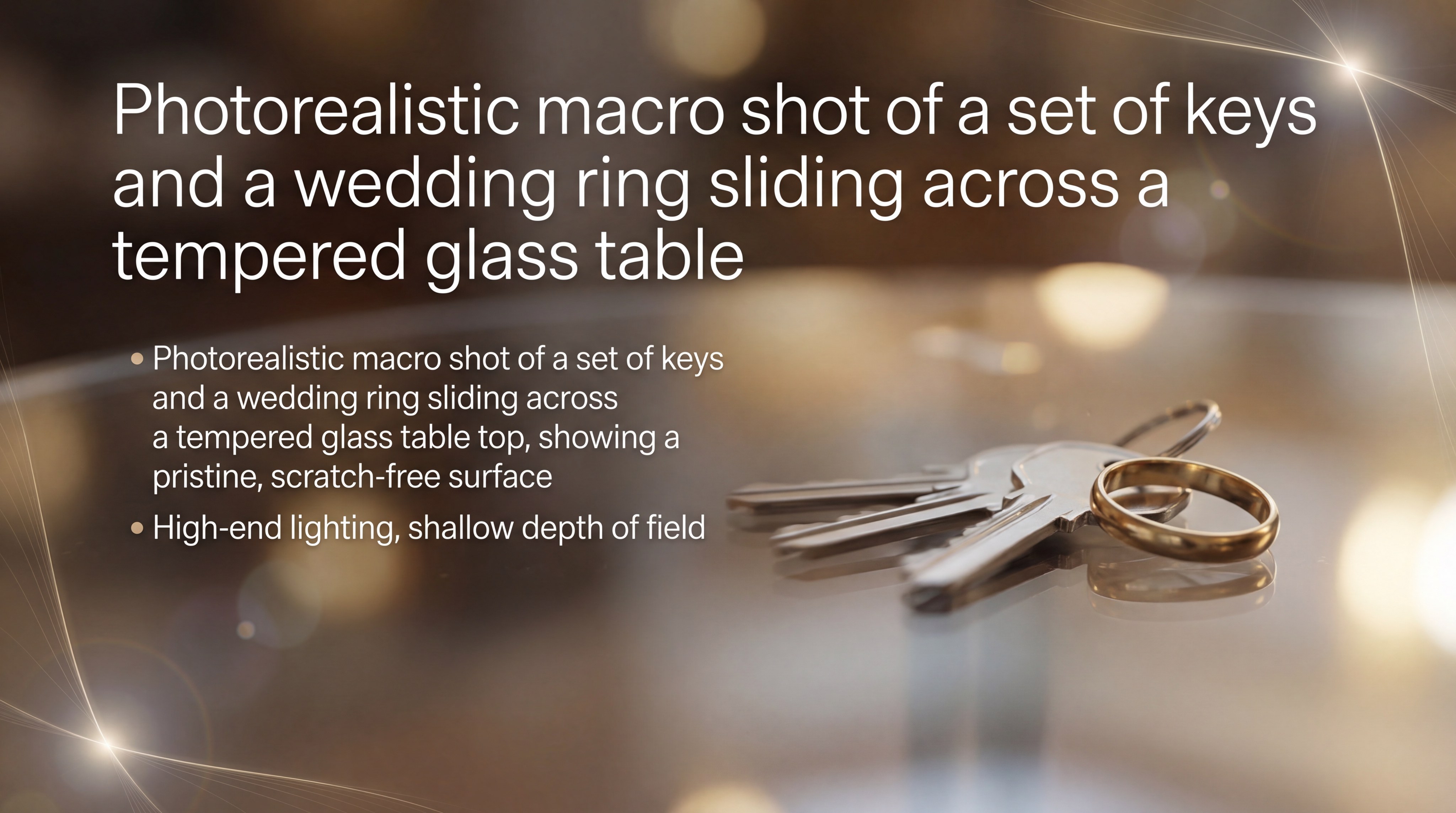
While no glass is entirely “scratch-proof,” a tempered glass table top is significantly harder and more resistant to surface abrasions than wood, acrylic, or non-tempered glass. This hardness ensures your table maintains a high-end, reflective finish even after years of sliding keys, laptops, and decor across its surface.
Surface Hardness
The tempering process creates a high-compression outer layer that acts like a suit of armor.
- It resists micro-scratches from dust and grit.
- It is difficult for metal silverware to graze or gouge.
- It stands up to the heavy friction of daily paperwork and laptops.
Protecting Your Finish
The best part? You don’t need to treat it with the “white glove” care that soft wood requires.
- Use microfiber cloths to maintain the shine.
- Avoid abrasive scouring pads.
- Simple soap and water restore the “like-new” look instantly.
Key Takeaway: The surface tension of tempered glass creates a barrier that prevents the majority of common accidental scratches.
| Material | Mohs Hardness (Approx) | Scratch Liability |
|---|---|---|
| Hardwood | 2 – 4 | Very High |
| Standard Glass | 5.5 | Moderate |
| Tempered Glass | 6 – 7 | Lowest |
Understanding the hardness scale confirms why tempered glass remains the preferred “topper” for protecting expensive wooden furniture.
What is the ideal thickness for a tempered glass table top?
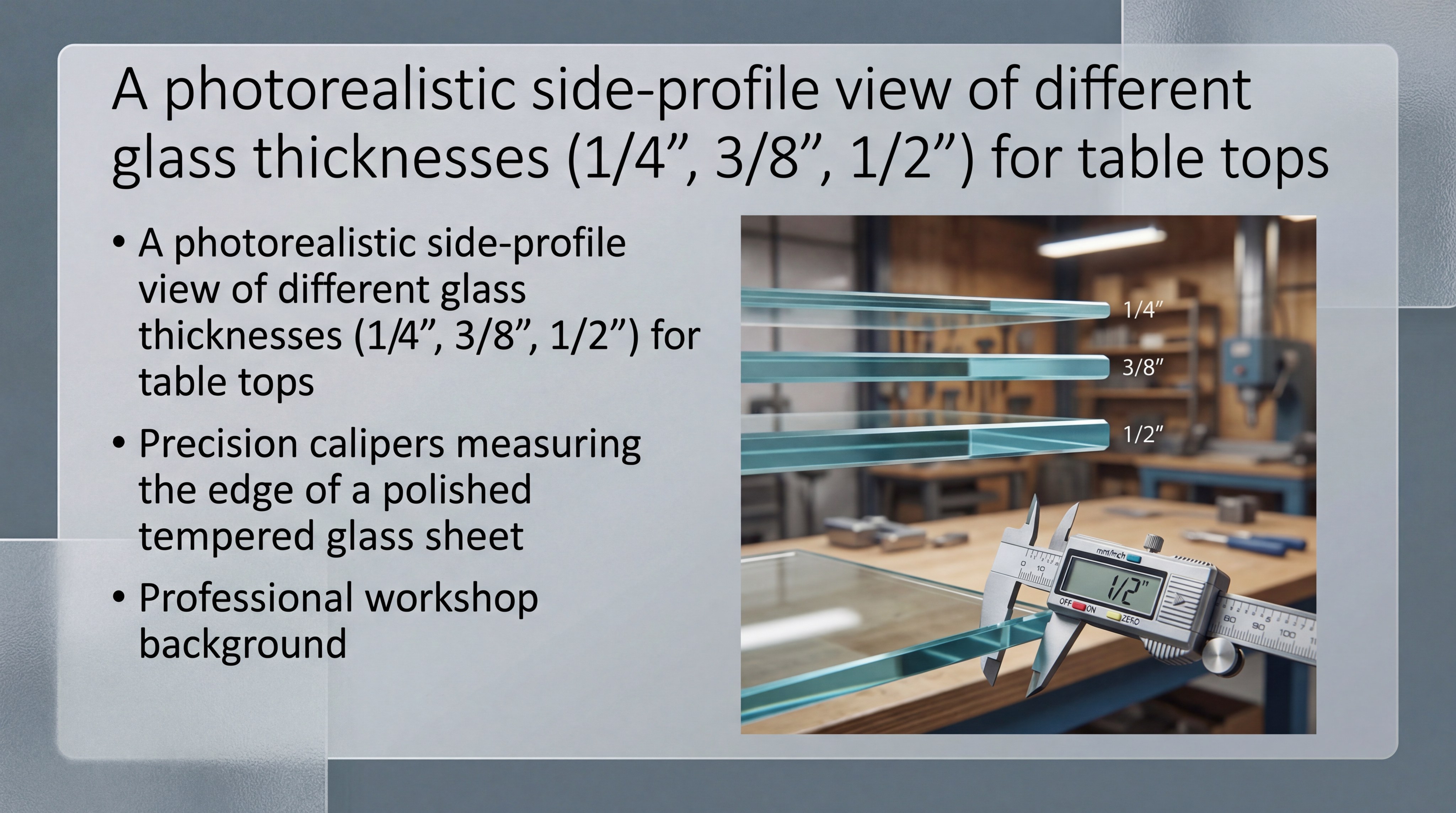
The ideal thickness for a tempered glass table top varies between 1/4 inch for protective toppers and 1/2 inch for heavy-duty standalone dining surfaces. Choosing the correct thickness ensures the glass can support its own weight and any objects placed upon it without unnecessary bowing.
Thickness Guidelines
Your choice depends entirely on how the glass is supported.
- 1/4″ (6mm): Perfect for covers that sit directly on top of wood.
- 3/8″ (10mm): The sweet spot for side tables and coffee tables.
- 1/2″ (12mm): Necessary for large dining tables with minimal support.
Structural Integrity
But wait, why not always go as thick as possible?
- Extra thickness adds significant weight to your base.
- Lighter glass is easier to remove for cleaning.
- Cost increases linearly with glass volume.
For specialized industrial or architectural needs, we offer precision fabrication to meet tight tolerance requirements regardless of thickness.
Key Takeaway: Select your thickness based on the support structure; tempering provides the safety, but thickness provides the rigidity.
| Application | Recommended Thickness | Support Mode |
|---|---|---|
| Wood Table Topper | 1/4 inch (6mm) | Fully Supported |
| Pedestal Coffee Table | 3/8 inch (10mm) | Center Supported |
| Large Dining Table | 1/2 inch (12mm) | Leg/Frame supported |
Aligning the thickness with the application prevents structural failure and optimizes the aesthetic weight of the furniture.
How can you tell if yours is a tempered glass table top?
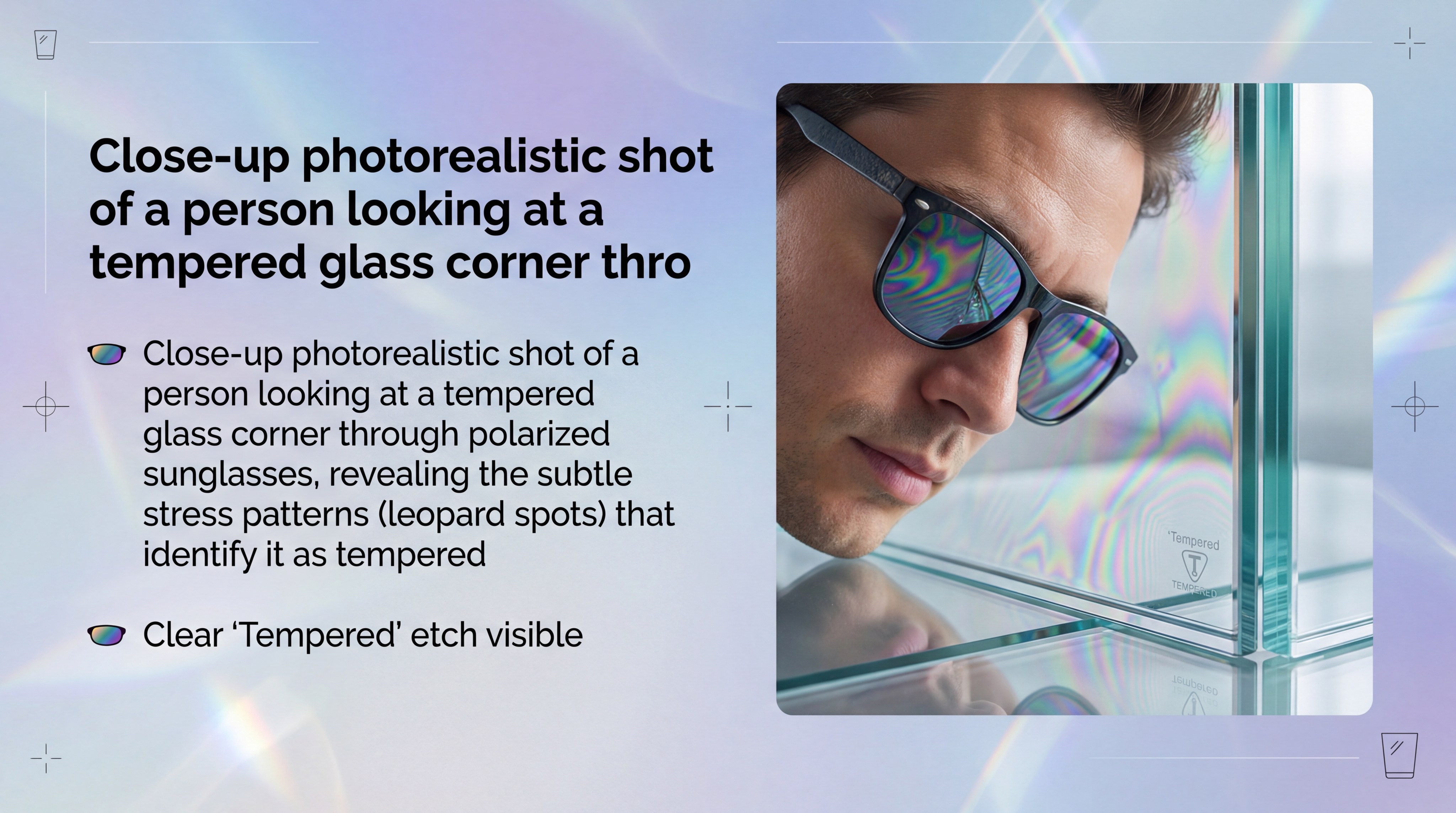
You can identify a tempered glass table top through a physical inspection of the hallmark “bug” or by viewing the surface through a polarized filter. Because tempering happens after the glass is cut, there are distinct visual cues that differentiate it from raw, annealed glass.
The Tempered Stamp
Most manufacturers etch a permanent mark into a corner of the glass.
- It may say “Tempered” or “T-Glass.”
- It includes the safety standard code (e.g., ANSI Z97.1).
- It is usually white or sandblasted for visibility.
Visual Clues and Filters
Here is a secret: if you don’t see a stamp, you can still test it yourself.
- Look at the glass through polarized sunglasses in daylight.
- You will see a dark, grid-like pattern or “leopard spots.”
- Standard glass will appear perfectly clear with no pattern.
Key Takeaway: The “bug” is the official confirmation, while the polarized pattern provides a scientific way to verify safety material.
| Test Method | Indication for Tempered | Reliability |
|---|---|---|
| Visual Stamp | Logo/Bug in corner | High |
| Polarized Test | Dark interference spots | High |
| Edge Inspection | Smooth, rounded finish | Moderate |
Consistency in labeling is part of our commitment to guaranteed quality for all safety glass shipments.
Which edge profiles suit a tempered glass table top?
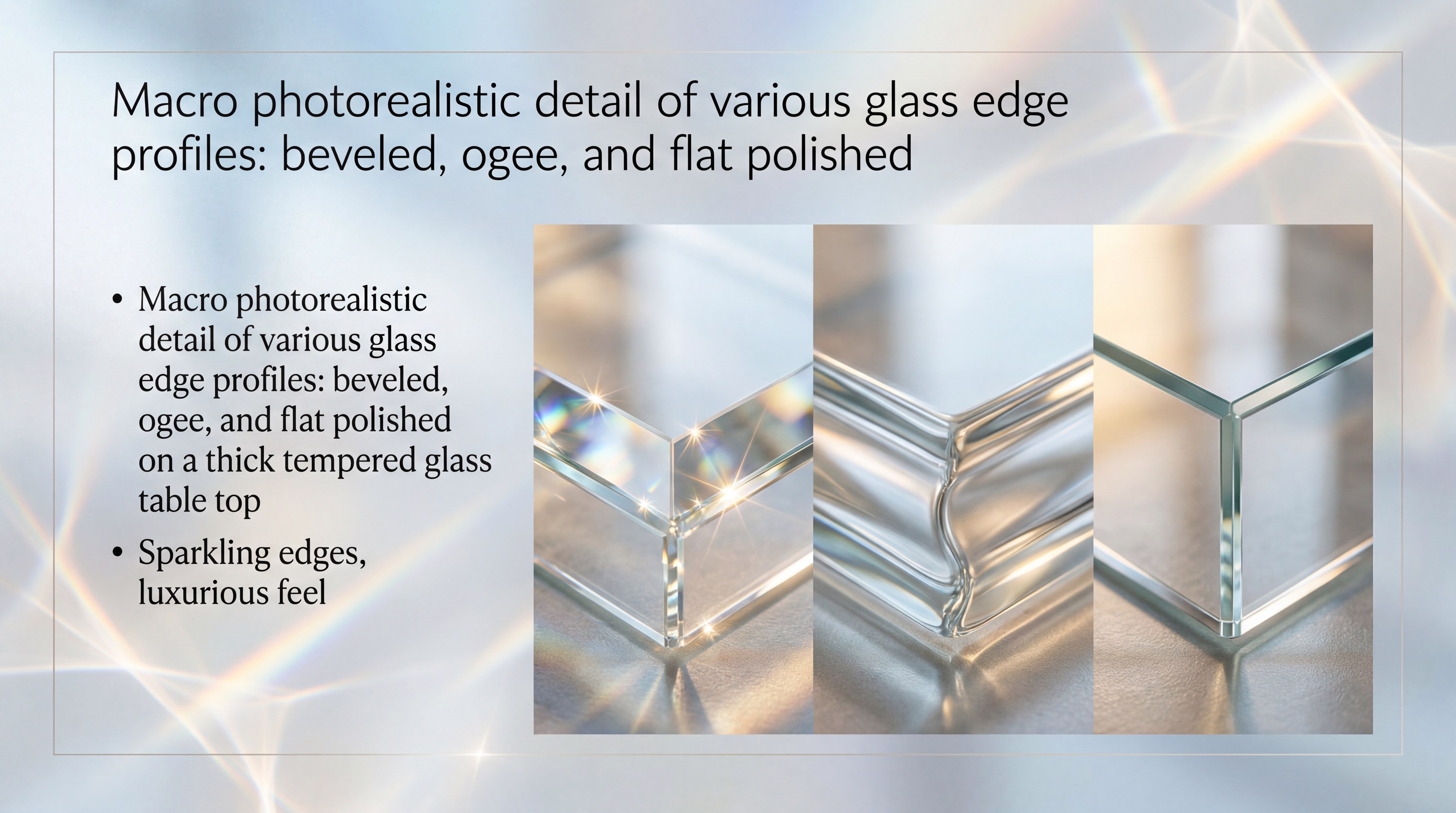
The edge of a tempered glass table top must be permanently finished before the tempering process, with “flat polish” and “pencil grind” being the most popular for modern interiors. Because the glass cannot be cut or sanded after it is hardened, the edge choice you make during ordering is final.
Popular Edge Styles
The “feel” of your table is determined by how the edges are ground.
- Flat Polish: Square and sleek, perfect for minimalist designs.
- Pencil Polish: Rounded and soft, ideal for homes with children.
- Beveled Edge: Decorative slope that catches and refracts light.
Safety Considerations
Why is edge work so important?
- It removes sharp “burrs” from the original cutting.
- Polished edges prevent “nick” fractures during transport.
- Smooth edges are easier to sanitize and wipe clean.
Key Takeaway: Edge finishing is both an aesthetic and functional requirement that must be finalized prior to the thermal treatment phase.
| Edge Type | Visual Style | Best For |
|---|---|---|
| Flat Polish | Modern/Industrial | Offices & Modern Lofts |
| Pencil Polish | Soft/Safe | Family Dining Tables |
| Beveled | Luxury/Traditional | Formal Dining Rooms |
As shown, matching the edge profile to your room’s decor style is a key step in the custom ordering process.
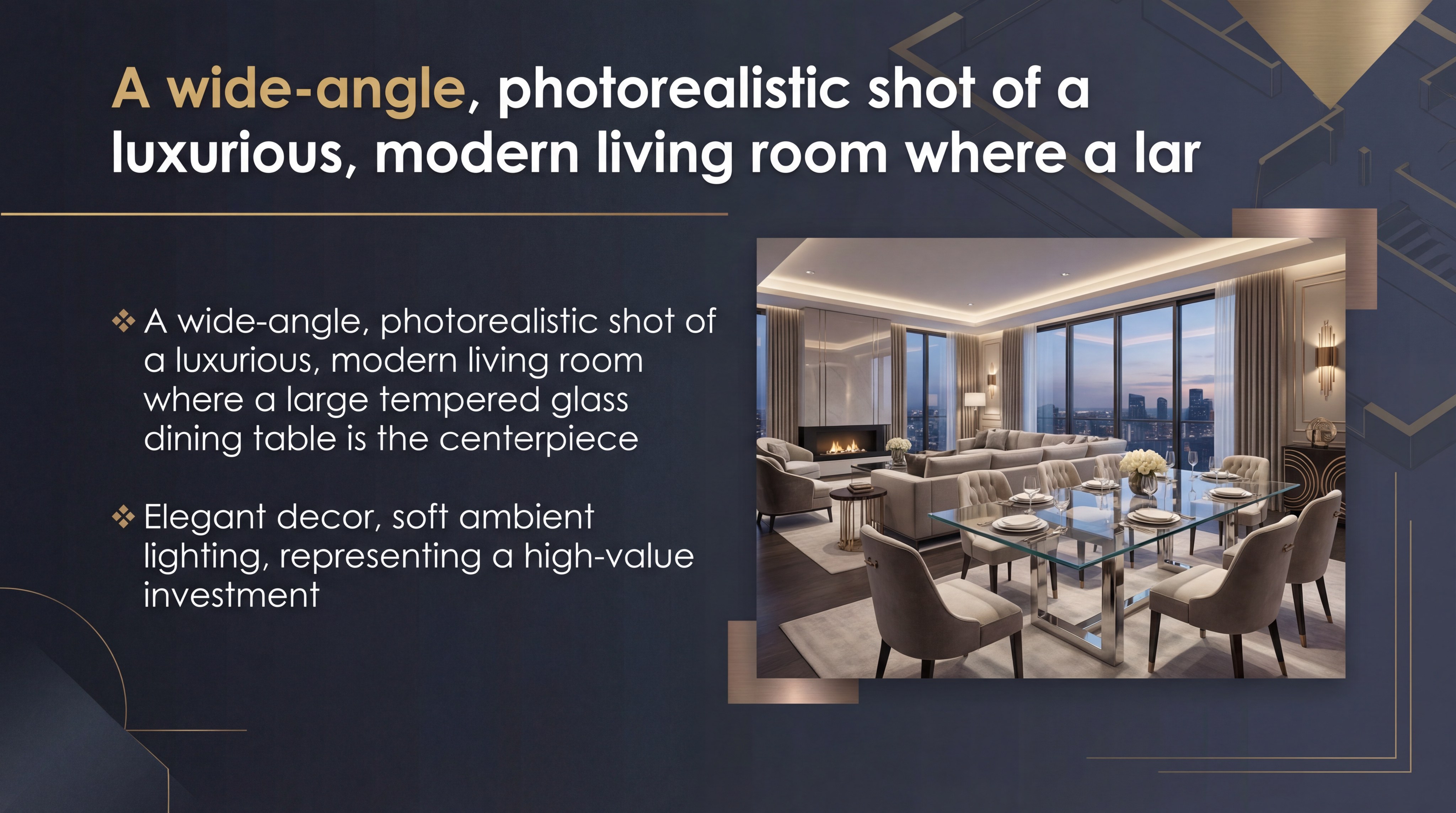
Is a tempered glass table top a good investment?
Investing in a tempered glass table top adds significant long-term value to your furniture by extending its life and preventing the cost of frequent replacements. When you consider the price of replacing a shattered standard glass top and the potential medical costs of an injury, safety glass pays for itself instantly.
Longevity and Resale
High-quality glass keeps its value because it doesn’t degrade like fabric or plastic.
- It remains a timeless design element.
- It is easy to repurpose on new table bases.
- The “safety glass” label increases the resale value of the furniture.
Cost-Effectiveness
Here is why: the initial cost difference between standard and tempered is surprisingly small.
- Tempering typically adds only a fraction to the total price.
- The prevention of one “breakage event” justifies the cost.
- Factory-direct sourcing, like our specialty glass solutions, keeps these prices accessible.
Key Takeaway: Thinking of glass as a structural safety component rather than just a surface reveals its true value as a household investment.
| Value Measure | Standard Glass | Tempered Glass |
|---|---|---|
| Initial Cost | Slightly Lower | Moderate |
| Replacement Frequency | Likely | Rare |
| Total Cost of Ownership | High | Lowest |
The ROI of tempered glass is undeniable when factored over the multi-decade lifespan of quality home furniture.
Conclusion
The decision to temper your glass table top is one of the most practical upgrades you can make for your home. By choosing a tempered glass table top, you choose a material designed for the rigors of modern life—resisting heat, withstanding impacts, and protecting your family with a safe failure mode.
At PrimePro Glass, our stance is uncompromising: safety and precision must lead every manufacturing decision. We believe that professional-grade glass should be accessible to every homeowner and business, ensuring that beauty never comes at the cost of security. As we look toward the future of interior design, the trend toward transparency and durability only grows stronger. If you are ready to secure your furniture with a custom-engineered surface, contact us today for a blueprint-to-product solution that exceeds international safety standards.
FAQ
Can I cut a tempered glass table top to a smaller size?
No. Tempered glass handles internal tension that makes any attempt to cut, drill, or sand it result in the entire sheet shattering into small pebbles. All customization must be performed before the tempering cycle.
What is the best way to clean a tempered glass surface?
Simple is best. Use a soft microfiber cloth with a solution of warm water and a drop of dish soap or a mild vinegar-based glass cleaner. Avoid abrasive sponges which can leave micro-scratches over time.
Is tempered glass heavier than regular glass?
No. The tempering process changes the internal structure and strength of the glass but does not change its density or weight. A 1/2″ thick tempered sheet weighs the same as a 1/2″ thick standard sheet.
How do I know if my glass table top is thick enough?
If the glass is resting on a solid wood surface, 1/4″ is sufficient. If the glass is “floating” on four legs or a pedestal with no support in the middle, you should opt for at least 3/8″ or 1/2″ for safety and stability.
Can tempered glass scratch?
While much harder than standard glass, it can still be scratched by materials higher on the Mohs scale, such as sand (silica), diamonds, or certain hardened ceramics. Always use coasters or felt pads under rough-bottomed decor.