Standard tempered glass is not bullet proof on its own and will shatter upon the first ballistic impact. You might assume that investing in high-strength tempered glass bullet proof solutions from PrimePro Glass automatically guarantees safety from firearms, but physics tells a different story. While tempering increases structural durability, it lacks the energy-absorbing interlayers required to stop a projectile. You need to understand how these materials differ before making a critical decision for your next architectural or security project.
Is tempered glass bullet proof or just safe?
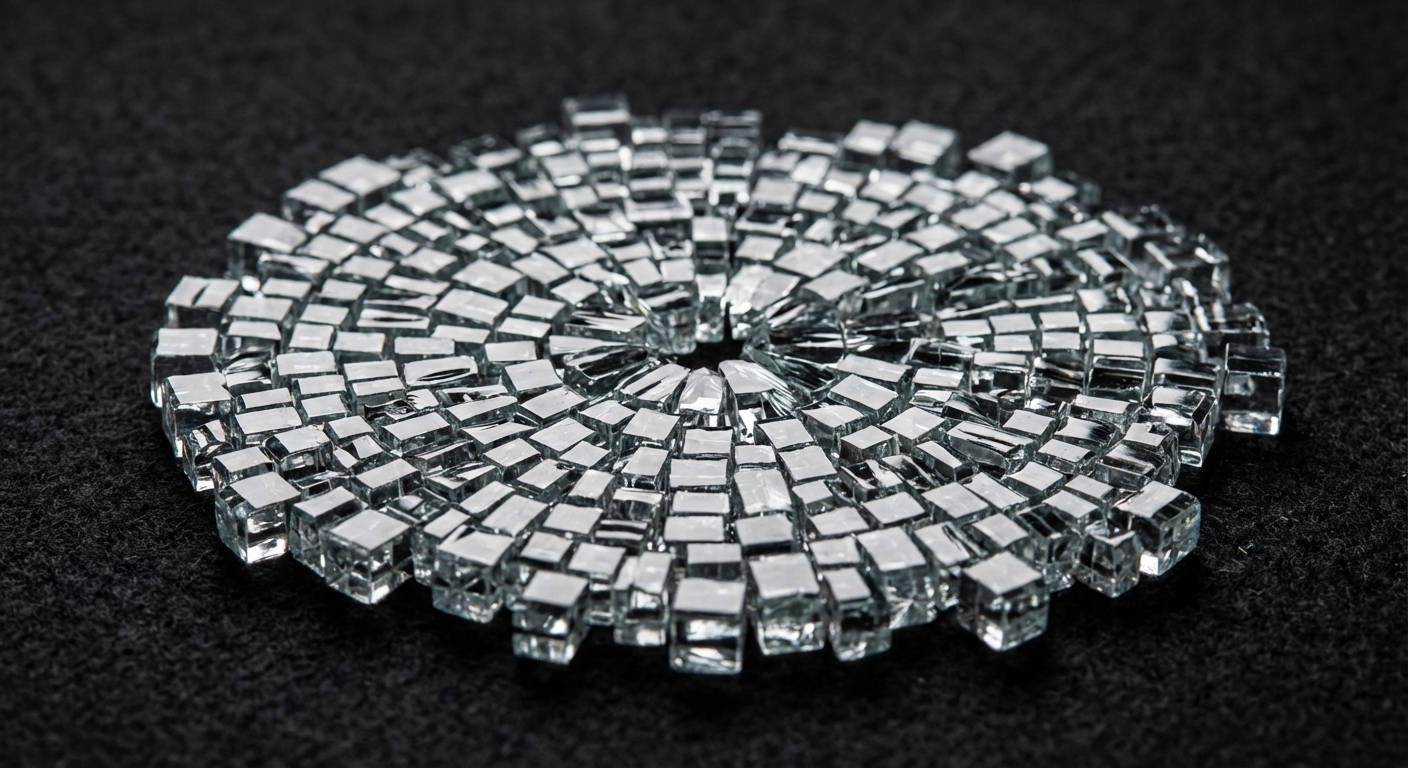
Tempered glass is strictly a safety product designed to fragment into dull pieces rather than stop high-velocity rounds. When you specify a tempered glass bullet proof system, you are typically looking for a laminated composite rather than a single pane. It excels at preventing lacerations during accidents but fails to provide a penetration barrier.
What defines safety glass?
Safety glass is engineered to minimize the risk of injury during a breakage event.
- It must shatter into small, blunt granules.
- It is designed to resist human-weight impacts.
- The material must pass specific safety standards.
Think about it. A product that is “safe” to break is fundamentally different from a product that is designed “not to break” under fire.
How does tempering change glass strength?
The tempering process uses extreme heat and rapid cooling to create surface compression.
- It becomes four to five times stronger than annealed glass.
- It resists thermal shock and high winds.
- The internal tension creates a unique fragmentation pattern.
The truth is, this increased hardness does not translate to ballistic resistance.
Can it survive a direct impact?
A single pane can survive a hammer strike but will fail instantly against a bullet.
- The high-speed impact triggers a total release of internal tension.
- Cracks propagate through the entire sheet at once.
- There is no secondary layer to catch the projectile.
Let’s dive deeper into why this happens.
Key Takeaway
Tempered glass is a safety-first material intended for injury prevention, not a security barrier meant to stop bullets or forced entry.
| Property | Standard Glass | Tempered Glass |
|---|---|---|
| Break Pattern | Sharp Shards | Small Dull Cubes |
| Impact Strength | Low | High (Blunt Force) |
| Ballistic Rating | None | None (Single Pane) |
This comparison shows that while tempering improves strength, it does not change the glass’s fundamental inability to stop a bullet.
Can tempered glass bullet proof layers stop rounds?
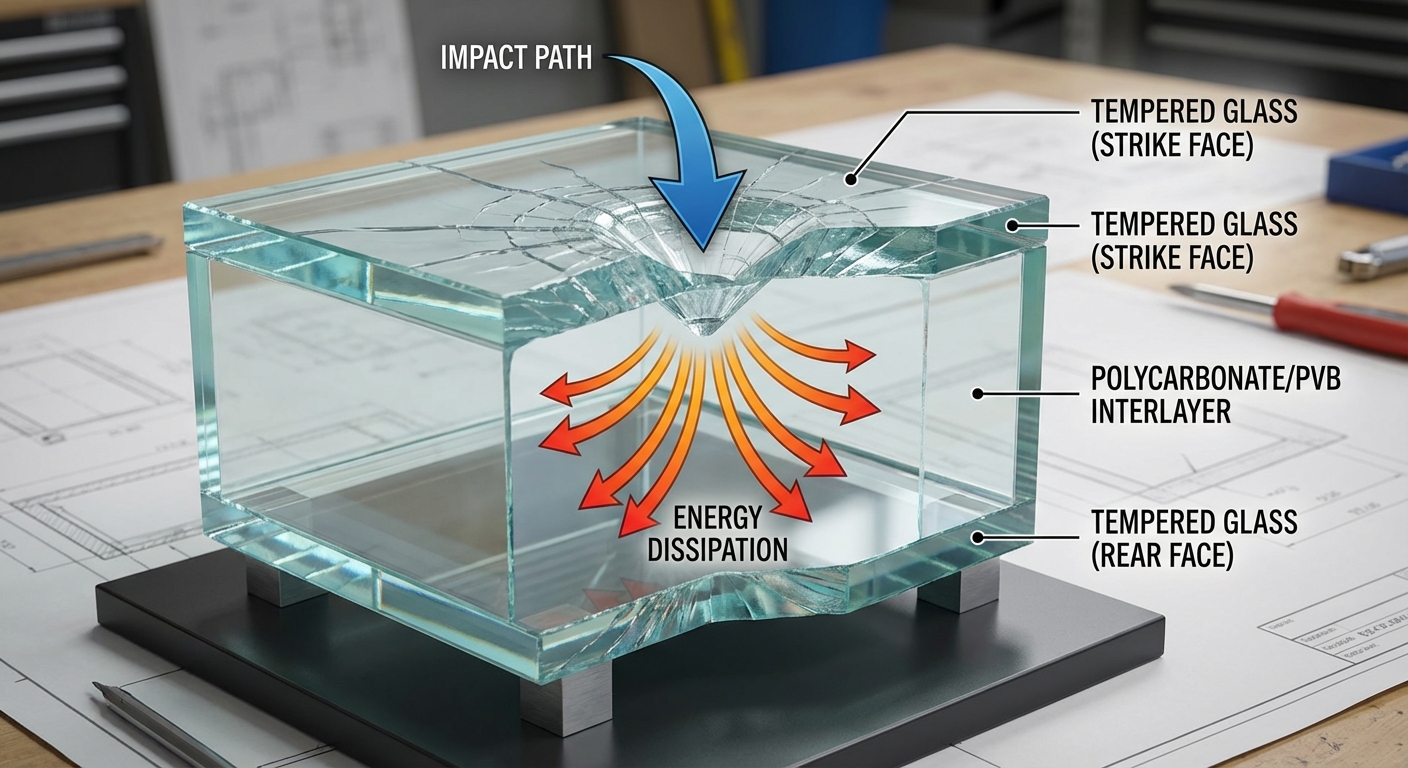
Multiple layers of tempered glass can stop rounds if they are bonded with energy-absorbing polymer interlayers. This composite assembly is often what people mean when they refer to tempered glass bullet proof windows. The glass acts as the hard strike face, while the plastic layers catch the bullet and hold the assembly together.
The role of lamination in security
Lamination is the critical component that transforms safety glass into security glass.
- It uses PVB or SGP interlayers to bond glass sheets.
- It provides a “catch” mechanism for ballistic fragments.
- The polymer stretches to absorb kinetic energy.
The best part? The window remains in the frame even after multiple hits.
How many layers are required?
Stopping a bullet requires a specific number of glass and plastic layers based on the threat level.
- Level 1 protection usually requires two thin layers.
- High-level military glass can have five or more layers.
- Total thickness often exceeds one inch for handguns.
Think about this when you are reviewing your project blueprints.
Is tempered glass bullet proof on its own?
Without a backing layer of polycarbonate or PVB, a single sheet of tempered glass offers zero ballistic protection.
- It lacks the elasticity to slow a projectile.
- The shattering effect removes the barrier instantly.
- One shot creates a complete opening for subsequent rounds.
Here is the deal. You cannot rely on thickness alone without lamination.
Key Takeaway
Ballistic protection is achieved through a “sandwich” effect where tempered glass provides the hard exterior and polymers provide the stopping power.
| Layer Type | Purpose | Material |
|---|---|---|
| Strike Face | Deform the Bullet | Tempered Glass |
| Core Interlayer | Absorb Energy | PVB or SGP |
| Rear Face | Prevent Spalling | Polycarbonate |
Analysis of these layers reveals that the synergy between hard glass and flexible plastic is what creates true ballistic resistance.
Why isn’t standard tempered glass bullet proof?
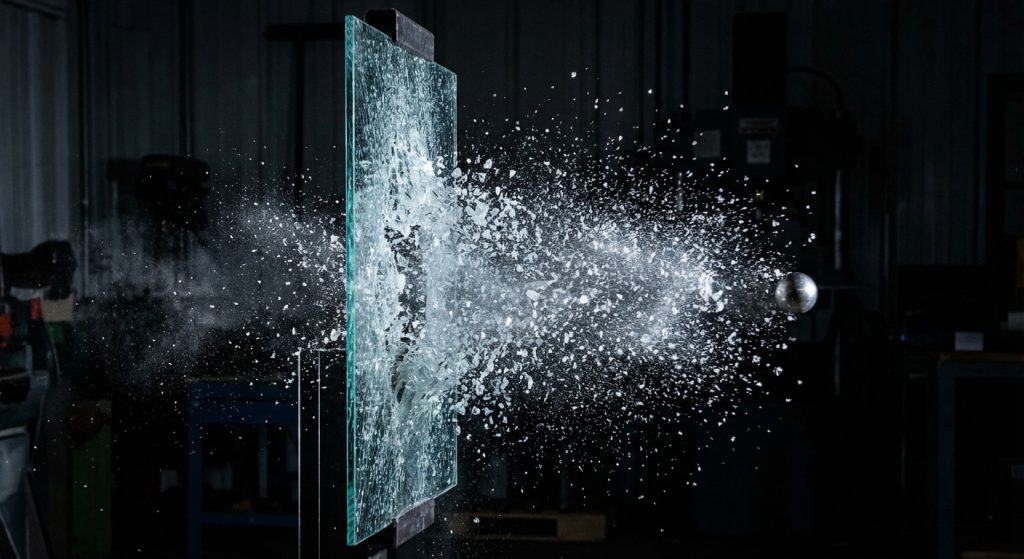
Standard tempered glass is not bullet proof because its internal stress causes the entire pane to disintegrate upon a point-impact. If you are researching tempered glass bullet proof options at PrimePro Glass, you will find that security solutions must mitigate this catastrophic failure. A bullet travels too fast for the tempered surface to distribute the load effectively.
Understanding the physics of impact
When a bullet hits, it delivers a massive amount of energy to a very small surface area.
- This localized pressure exceeds the glass’s elastic limit.
- The shockwave travels through the glass faster than a crack.
- The material fails at a molecular level almost instantly.
The truth is, tempering actually makes the glass more prone to total failure under ballistic conditions.
Why does tempered glass shatter instantly?
Tempering creates a “coiled spring” effect where the glass is under constant internal tension.
- Any breach of the surface compression layer triggers failure.
- The crack spreads to every corner of the pane in milliseconds.
- This results in the characteristic “cloud” of glass fragments.
Think about it. A material that explodes upon impact cannot be a reliable shield.
The limits of surface compression
Surface compression helps against broad impacts, like a person leaning on a window, but not sharp ones.
- A bullet is a high-density, sharp-force projectile.
- It pierces the compression layer with ease.
- Once the outer skin is broken, the core tension takes over.
But wait, there’s more to consider regarding material failure.
Key Takeaway
The very process that makes tempered glass “safe” for bathrooms makes it “weak” for ballistic protection because of its all-or-nothing breaking mechanism.
| Impact Variable | Standard Tempered | Ballistic Composite |
|---|---|---|
| Shock Absorption | Near Zero | High |
| Structural Integrity | 0% After Impact | 80%+ After Impact |
| Energy Release | Explosive | Controlled |
This data confirms that the high-velocity failure point of tempered glass is much lower than that of security-rated composites.
Is tempered glass bullet proof better than laminated?
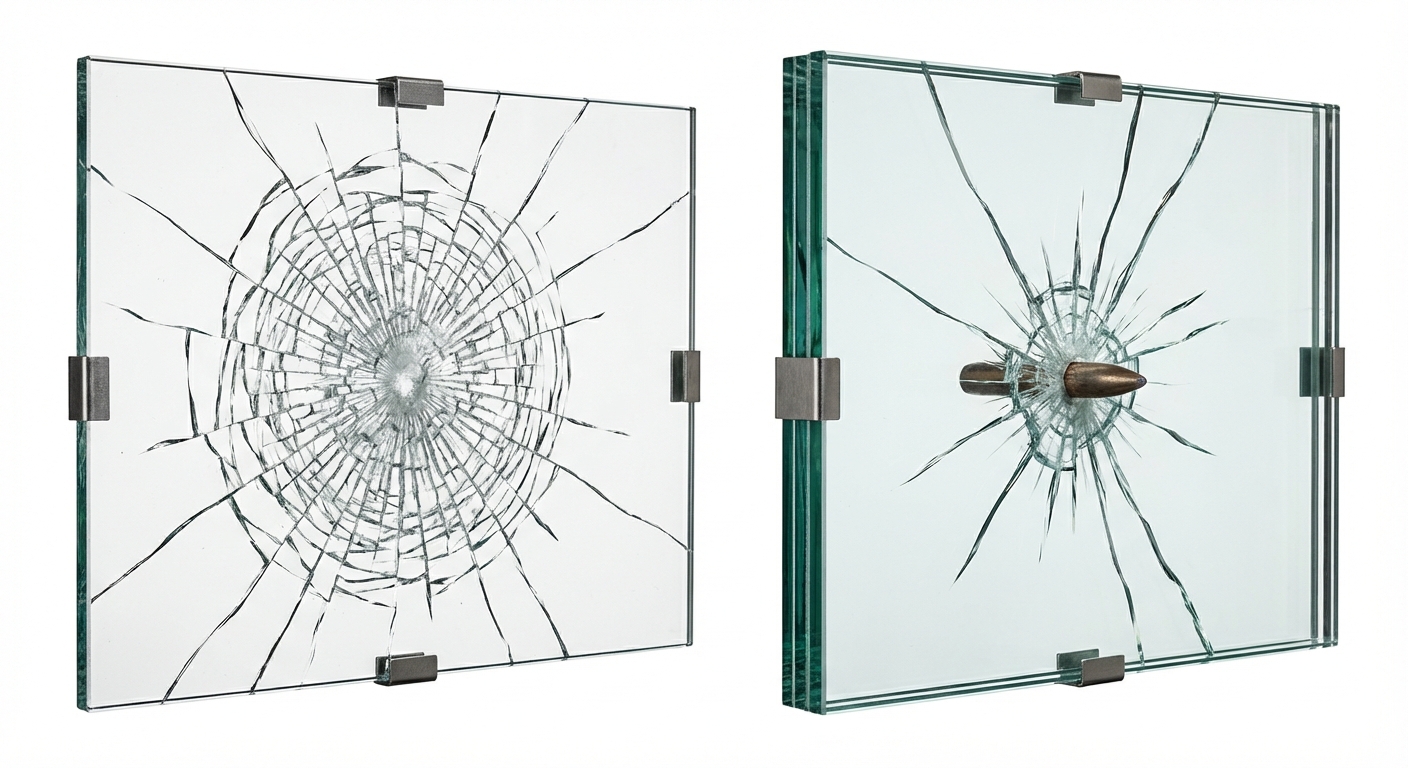
Whether a tempered glass bullet proof composite is better than standard laminated glass depends entirely on your security requirements. Single-pane tempered glass is lighter and cheaper but provides no protection. Laminated glass is heavier and more expensive but is the only option that offers true penetration resistance for your facility.
Security vs. Safety: What do you need?
You must decide if your priority is preventing accidental injury or stopping a criminal threat.
- Tempered glass is for storefronts and shower doors.
- Laminated glass is for jewelry stores and government buildings.
- Ballistic glass is a specialized form of high-performance lamination.
Let’s dive deeper into the trade-offs.
The weight and cost difference
Laminated and ballistic glass are significantly heavier than standard tempered glass.
- Ballistic glass can weigh five times more than safety glass.
- Specialized frames are required to support the extra weight.
- Cost increases exponentially with the level of protection.
It gets better. High-security glass also provides superior acoustic insulation.
Which glass is easier to install?
Tempered glass is easier to handle because it is thinner and lighter.
- Standard contractors can install tempered panes.
- Ballistic glass requires specialized cranes and structural supports.
- Lead times for custom laminated stacks are much longer.
But wait, there’s more. Installation errors can compromise the rating of security glass.
Key Takeaway
Laminated glass is the clear winner for security, whereas tempered glass is the standard choice for general safety and budget-conscious projects.
| Feature | Tempered Glass | Laminated Glass | Ballistic Glass |
|---|---|---|---|
| Bullet Resistance | No | Minor | Yes |
| Weight | Light | Medium | Heavy |
| Price | $ | $$ | $$$ |
The analysis shows that security is a direct investment in material thickness and weight, which tempered glass alone cannot provide.
How thick must tempered glass bullet proof be?
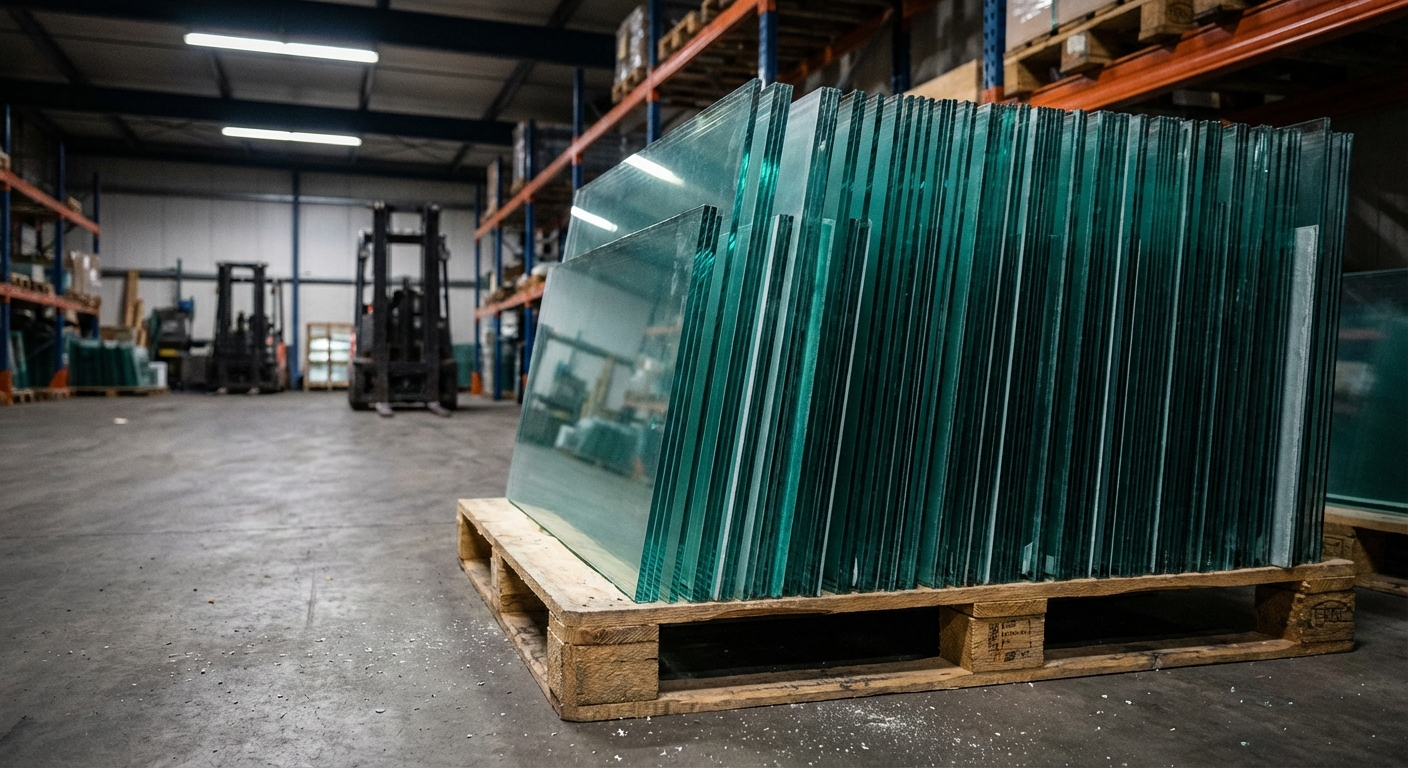
To achieve a ballistic rating, a tempered glass bullet proof assembly must typically be at least 25mm (1 inch) thick. You can find detailed thickness specifications on the product pages at PrimePro Glass. The total thickness is a combination of multiple glass plies and bonding interlayers, not just a single thick piece of glass.
Thickness levels for ballistic ratings
Ballistic glass is categorized by its ability to stop specific calibers of ammunition.
- Level 1 (9mm) is usually 19mm to 22mm thick.
- Level 3 (.44 Magnum) is usually 25mm to 32mm thick.
- Level 8 (7.62mm Rifle) can exceed 75mm in thickness.
You might be wondering. Does more thickness always mean more safety?
Does thickness guarantee protection?
Thickness alone is not enough; the quality of the bonding interlayers is equally important.
- Poor lamination can lead to delamination and failure.
- A thin, high-tech composite can outperform a thick, low-quality one.
- The material must be certified by a laboratory like UL.
Here’s the deal. You need the right recipe, not just a thick pane.
Standard vs. custom thickness options
Most standard commercial projects use 12mm tempered glass, which is not bullet resistant.
- Custom security glass is made to your specific blueprint.
- You can mix glass types to balance weight and protection.
- Engineering teams must verify the weight for the door hinges.
Think about this before ordering.
Key Takeaway
Effective bullet resistance starts at one inch of thickness and requires a multi-layered approach to handle the energy of a projectile.
| Protection Level | Common Thickness | Weapon Type |
|---|---|---|
| UL Level 1 | 21mm | 9mm Handgun |
| UL Level 3 | 32mm | .44 Magnum |
| UL Level 8 | 75mm | High-Power Rifle |
Analysis of these standards indicates that protection increases with thickness, but structural weight becomes a major engineering challenge at higher levels.
Is tempered glass bullet proof for home security?

While not truly bullet proof, tempered glass is an excellent choice for home security because it resists smash-and-grab attempts. A tempered glass bullet proof film can be added to your existing home windows to increase their resistance to intrusion. For most residential risks, a tempered pane is far superior to standard window glass.
Can it stop a forced entry?
Tempered glass can withstand several blows from a baseball bat or a brick.
- It buys you valuable time during a break-in.
- The loud noise of shattering alerts you to the threat.
- Burglars often give up when the glass doesn’t break on the first try.
Look. It’s simple. Time is your best ally in home defense.
Is it worth the investment?
Upgrading your home windows to tempered or laminated glass adds significant value and peace of mind.
- It reduces the risk of accidental injury for children.
- It makes your home much harder to breach than neighbors’.
- Energy efficiency often improves with thicker security panes.
The best part? It looks identical to standard glass.
Alternative security films for glass
If you cannot replace your windows, a security film can provide a “tempered-like” effect.
- The film holds the glass together after it breaks.
- It increases the number of hits required to create a hole.
- It is a cost-effective way to upgrade older homes.
Think about it. A small upgrade can prevent a major loss.
Key Takeaway
Tempered glass provides high forced-entry resistance for homes, but true ballistic protection requires custom laminated window units.
| Threat Type | Tempered Glass | Laminated Glass |
|---|---|---|
| Burglary (Blunt) | High Resistance | Maximum Resistance |
| Firearm (Ballistic) | No Resistance | High Resistance |
| Storm/Debris | Moderate | High |
The analysis shows that tempered glass is the sweet spot for residential safety, balancing cost and security against common domestic threats.
Does tempering make tempered glass bullet proof?
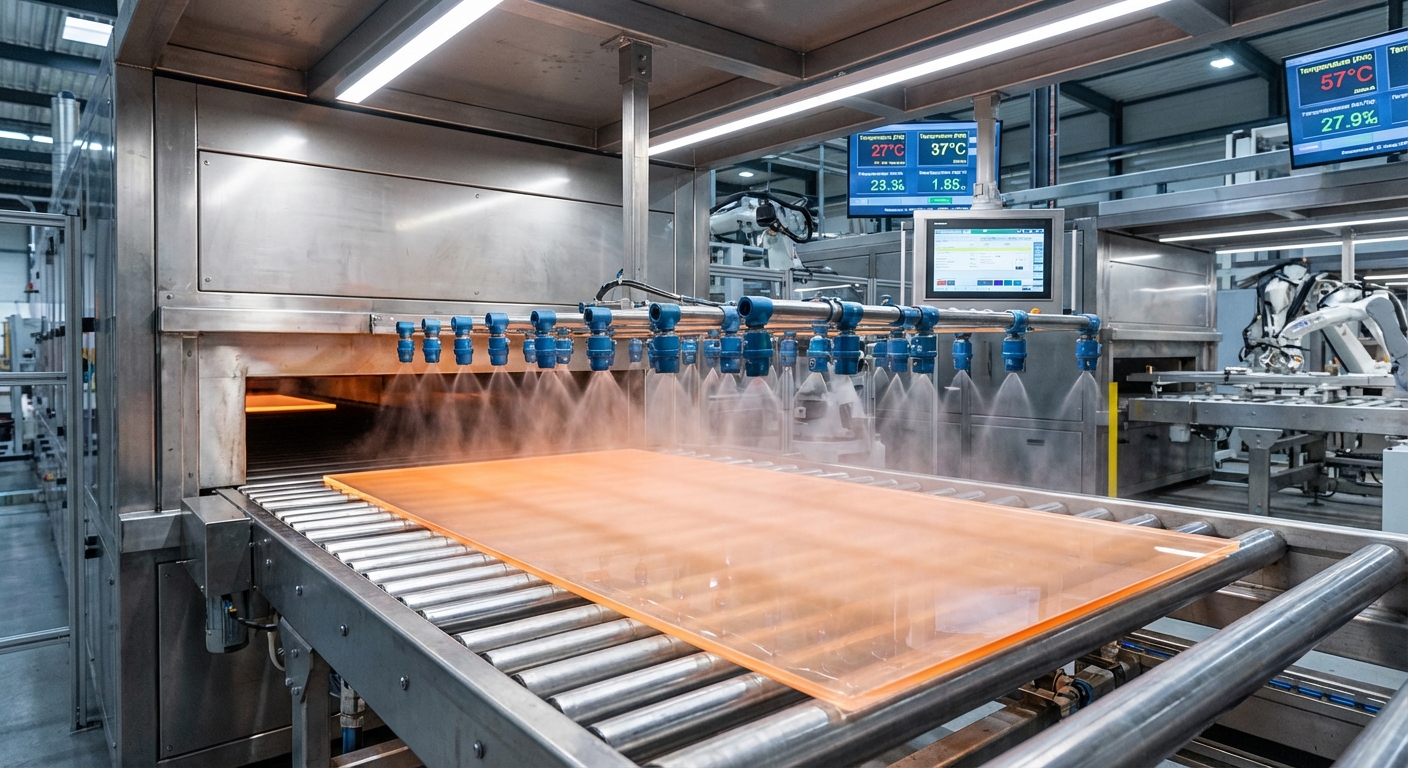
Tempering makes glass stronger but does not inherently make a tempered glass bullet proof product without additional processing. You can learn about our specialized manufacturing techniques for ceramic fritted glass and other high-strength options at PrimePro. The thermal process changes the molecular structure to improve toughness, but it also creates a tension that is vulnerable to bullets.
The heating and cooling process
Glass is heated to 620°C and then hit with high-pressure air nozzles.
- This “quenching” freezes the outer surfaces quickly.
- The inner core cools slowly, pulling the outside inward.
- This creates the massive surface compression that gives it strength.
In other words, the glass is constantly fighting itself to stay strong.
How molecular structure changes
The rapid cooling forces the molecules into a highly organized, stressed state.
- This structure resists bending and surface scratches.
- It prevents small cracks from turning into large ones under normal loads.
- The glass becomes much more flexible than standard panes.
The truth is. This molecular tension is what causes the glass to explode when a bullet hits it.
Is the core of the glass stronger?
The core is actually in a state of extreme tension, which is the “Achilles heel” of tempered glass.
- If a projectile penetrates the outer skin, the core fails.
- The energy stored in the core is what shatters the pane.
- This is why tempered glass cannot be cut or drilled after it is made.
Look. It’s simple. You must do all fabrication before the tempering furnace.
Key Takeaway
Tempering is a thermal treatment that optimizes glass for blunt force and safety, but it makes the material too unstable for ballistic impacts on its own.
| Step | Process | Effect on Strength |
|---|---|---|
| Heating | 620°C Furnace | Softens molecular bonds |
| Quenching | Rapid Air Cooling | Creates surface compression |
| Testing | Fragment Check | Verifies safety pattern |
Thermal processing increases the glass’s ability to handle environmental stress but doesn’t solve the core physics of stopping a bullet.
Can you buy tempered glass bullet proof windows?
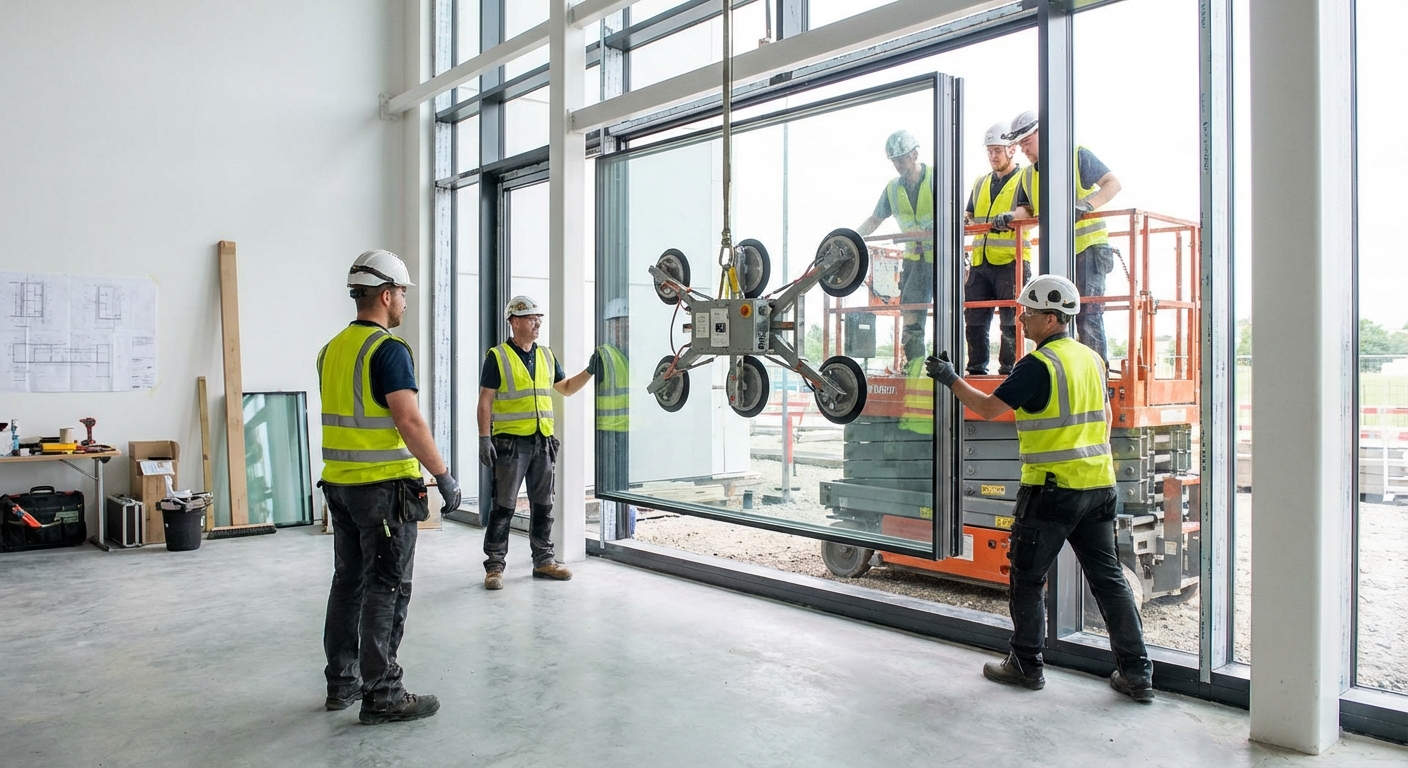
Yes, you can buy windows that use a tempered glass bullet proof composite, but they are specialized products. You will not find these at a standard hardware store; they must be ordered from a security glass manufacturer. You must also ensure that your window frames are rated to hold the weight of ballistic-grade materials.
Where to source ballistic glass?
You should source your security glass directly from a factory to ensure quality control.
- Look for manufacturers with UL 752 certifications.
- Request test reports for the specific thickness you need.
- Verify that the glass is compatible with your climate.
You’ll love this. Buying direct often saves you 30% on project costs.
Customizing for specific frame types
Ballistic glass is much thicker than standard glass, so your frames must be custom-made.
- Standard aluminum frames will buckle under the weight.
- Steel-reinforced frames are usually required for Level 3 and above.
- The “bite” (the depth the glass sits in the frame) must be deeper.
That’s not all. The frame itself must also be bullet resistant.
Installation challenges for thick glass
Installing heavy security glass requires a professional team with specialized equipment.
- Suction cranes are often needed to lift the panels.
- Precise measurements are critical because the glass cannot be trimmed.
- Sealants must be compatible with the laminated interlayers.
Think about this before you start.
Key Takeaway
Purchasing security glass requires a holistic approach where the glass, frame, and installation team all meet ballistic standards.
| Component | Standard | Security Grade |
|---|---|---|
| Glass | 6mm Tempered | 32mm Laminated |
| Frame | Aluminum | Reinforced Steel |
| Hardware | Standard Hinges | Heavy-Duty Pivots |
A brief analysis of this checklist shows that the window unit is only as strong as its weakest link—usually the frame or the hinges.
What tests prove tempered glass bullet proof?
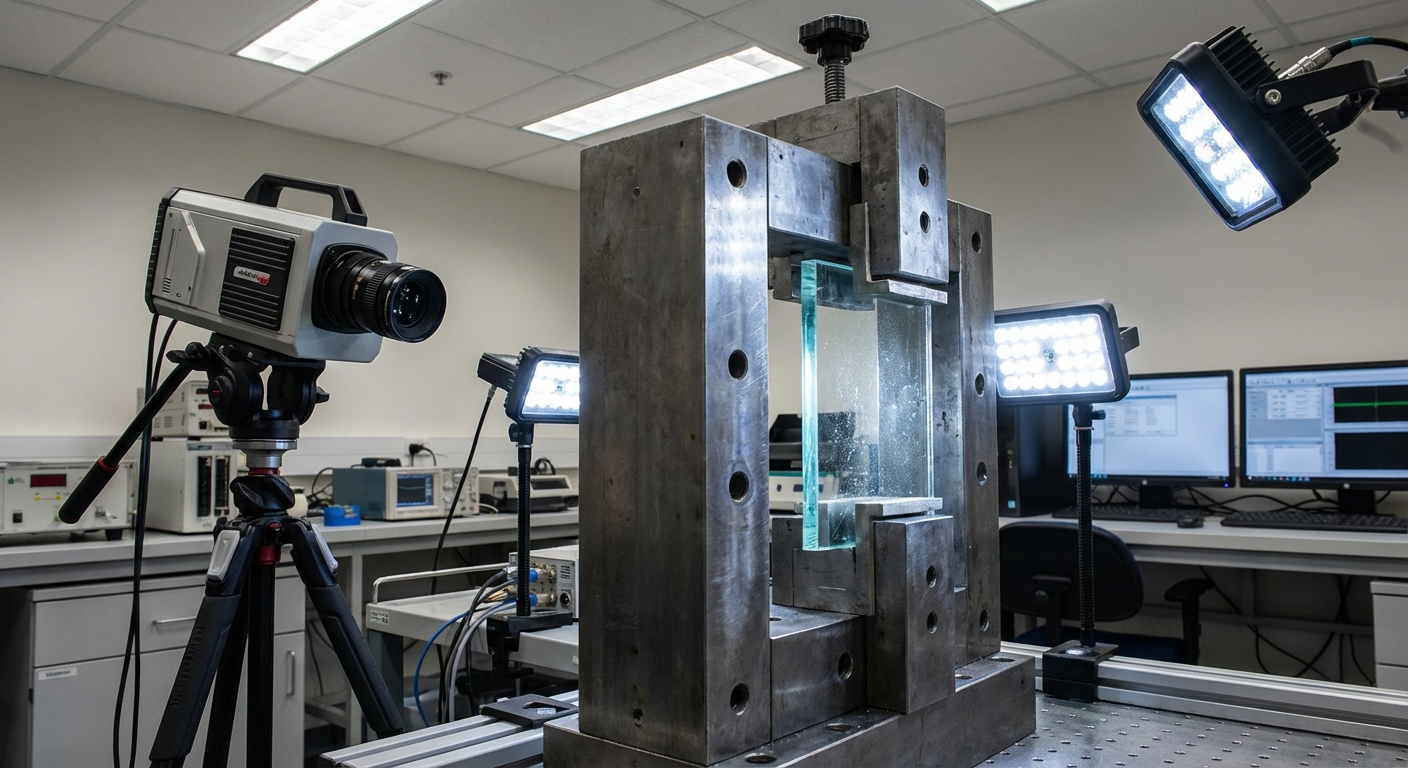
Laboratory testing under the UL 752 standard is the only way to prove a tempered glass bullet proof assembly works. You can view our compliance with international standards like low-E glass and safety certifications on our website. To pass, the glass must stop a specific number of rounds without any penetration or dangerous “spall” (glass shards) flying off the back.
The UL 752 standard explained
UL 752 is the gold standard for bullet-resisting equipment in North America.
- It ranges from Level 1 (handguns) to Level 10 (high-power rifles).
- The test involves firing three shots in a tight triangle.
- The glass must not allow the bullet or any fragments to pass through.
Why does this matter? It’s the only way to guarantee your safety.
How high-speed testing works
Laboratories use high-speed cameras to see exactly how the glass reacts to the impact.
- They measure the velocity of the bullet before and after.
- They check for “spall” on a witness plate behind the glass.
- They test at different temperatures to ensure consistency.
Think about this. Glass behaves very differently in the winter than in the summer.
Real-world vs. lab conditions
Lab tests are controlled, but real-world threats can vary in angle and distance.
- Testing is done at a 90-degree angle for maximum force.
- In the real world, a shallow angle might cause a ricochet.
- Multi-hit capability is the most important factor for survival.
The truth is, certification is your starting point, not the finish line.
Key Takeaway
No glass can be called bullet proof without a certified test report from an accredited ballistic laboratory.
| UL 752 Level | Ammunition | Velocity (fps) |
|---|---|---|
| Level 1 | 9mm Full Metal Copper Jacket | 1175 |
| Level 3 | .44 Magnum Lead Semi-Wadcutter | 1350 |
| Level 6 | 9mm Multi-Shot (5 Rounds) | 1400 |
This table shows that as the level increases, the glass must handle significantly more kinetic energy and multiple impact points.
Where is tempered glass bullet proof used most?

High-security tempered glass bullet proof composites are most commonly used in banks, jewelry stores, and government buildings. We manufacture these specialized solutions for a variety of commercial applications globally. Anywhere that high-value assets or high-risk personnel are located, you will find multi-layered security glass.
Commercial vs. government buildings
Government offices use ballistic glass to protect against targeted attacks and terrorism.
- Embassies require the highest levels of rifle protection.
- Local courthouses use glass to protect judges and staff.
- Schools are increasingly installing entry vestibules with security glass.
Look. It’s a growing necessity in modern architecture.
High-risk retail environments
Jewelry stores and luxury boutiques use security glass to prevent “smash and grab” robberies.
- The glass must be crystal clear to show off the products.
- It must be strong enough to withstand several minutes of heavy hammering.
- Display cases are often made from high-clarity laminated tempered glass.
The best part? You don’t even know it’s there.
Mobile and armored applications
Armored vehicles and cash-in-transit trucks rely on the thickest ballistic glass available.
- These windows must be curved to fit the vehicle’s shape.
- They are often over 100mm thick to stop armor-piercing rounds.
- Weight management is the biggest challenge for these applications.
You might be wondering. How do they keep it so clear?
Key Takeaway
The use of security glass is a strategic choice made by industries that face a real risk of armed robbery or violent intrusion.
| Industry | Primary Glass Type | Security Goal |
|---|---|---|
| Banking | Level 1-3 Laminated | Stop Handguns |
| Luxury Retail | Laminated Tempered | Prevent Smash & Grab |
| Government | Level 8+ Composite | Stop High-Power Rifles |
The analysis of these industries shows that the type of glass used is directly tied to the specific threat profile of the business.
Conclusion: Making the Right Choice for Security
While tempered glass is an incredible safety product, it is not a bullet-proof solution on its own. To achieve true protection, you must use a laminated composite that combines the hardness of tempered glass with the energy-absorbing power of polymer interlayers. Choosing the right thickness and certification is the only way to ensure your facility is safe from ballistic threats.
If you are ready to secure your next project with engineering-grade glass that meets global safety standards, contact us today for a technical review of your blueprints. We can help you navigate the complexities of UL ratings, weight requirements, and custom manufacturing to ensure your project is a success.
Frequently Asked Questions
Can I make my existing tempered glass bullet proof?
No, you cannot. You can add a security film to help hold fragments together, but true ballistic resistance requires a factory-made multi-layered composite.
What’s the best glass for a home safe room?
The best choice is a UL-rated laminated glass assembly. Laminated glass provides the necessary delay against forced entry and can be engineered to stop specific handgun threats.
How do I know if my glass is tempered?
Look for a permanent laser-etched logo, usually in the corner of the pane. This “bug” indicates the manufacturer and the safety standard it meets.
Can bullet proof glass also be energy efficient?
Yes, it can. Many ballistic assemblies include a Low-E coating or are built into an insulated glass unit to provide both security and thermal performance.
How heavy is a bullet proof window?
It is extremely heavy. A typical Level 3 ballistic panel can weigh over 15 pounds per square foot, which is about five times heavier than standard window glass.