Identifying your glass type is a critical safety step, as installing the wrong material in high-traffic areas creates a severe injury risk. Standard glass breaks into large, razor-sharp shards that can cause life-threatening lacerations during a simple household accident. You can gain total peace of mind by learning how to tell if glass is tempered through simple visual and physical inspections.
Can you identify glass by checking for smooth rounded edges?
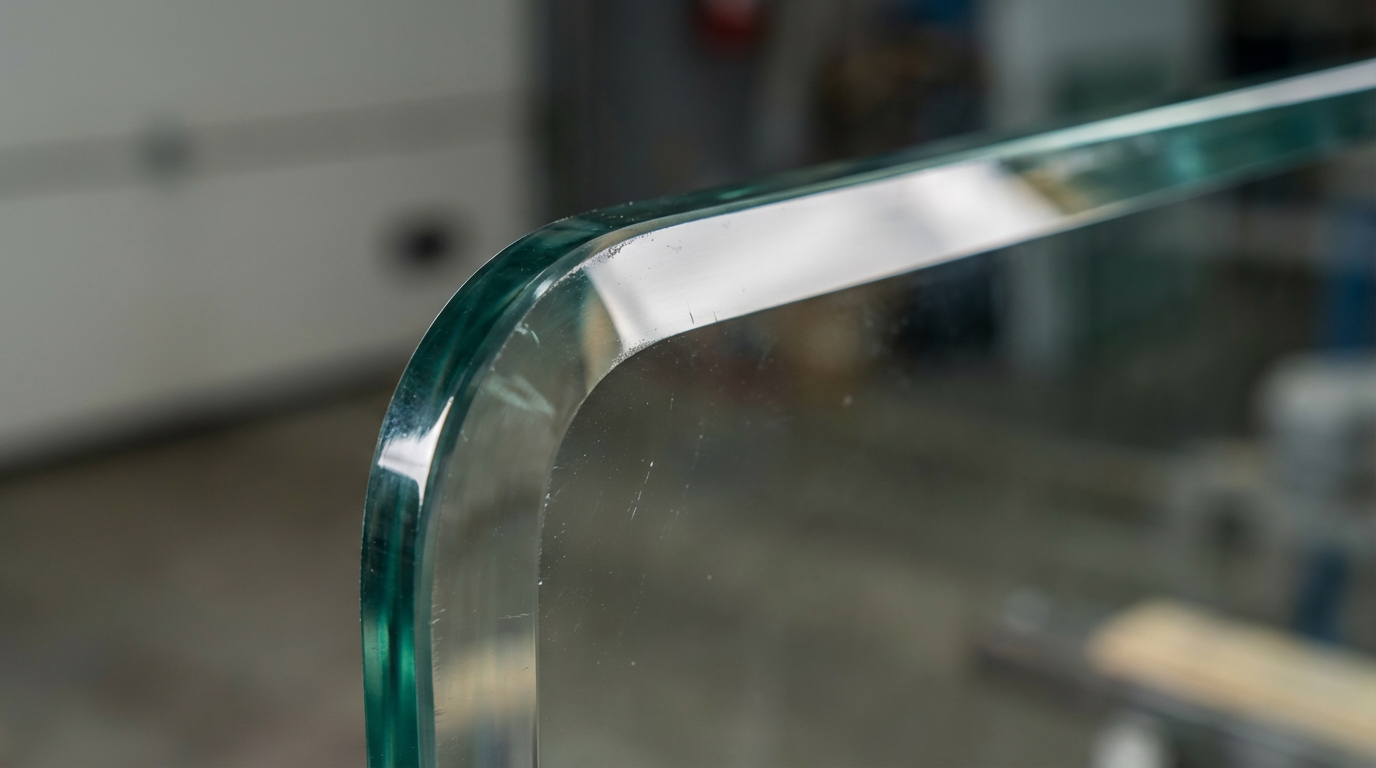
You can identify safety glass by checking the perimeter for a smooth, rounded, or beveled finish that feels even to the touch. Knowing how to tell if glass is tempered starts with understanding that safety glass must be sanded down before the heating process. Unlike standard annealed glass, which features sharp and flat raw edges, treated panels are safe to handle along their borders.
Why do tempered edges feel different?
Wait, there is a technical reason for this specific texture. Because the glass undergoes extreme heat, the edges must be flawlessly polished to prevent the pane from shattering in the furnace.
Look at this:
- Tempered panels undergo intensive machine sanding.
- The resulting “pencil edge” is slightly rounded and translucent.
- Standard glass often retains a “clean-cut” edge that is incredibly sharp.
These edge treatments are permanent and cannot be added after the glass has been heat-treated. This remains one of the fastest ways to verify your glass type before installation.
How do you perform a safe edge inspection?
Think about this: safety should always come first when handling unknown materials. You should only attempt this if the edge of the glass is exposed and not hidden within a frame or window sash.
Here is the deal:
- Always wear protective gloves before touching raw glass edges.
- Run your finger gently along the thickness to feel for a radius.
- Use a magnifying glass to check for a consistent, sanded appearance.
Key Takeaway
- Smooth, rounded edges are a primary indicator of safety glass, whereas sharp, flat edges almost always indicate standard annealed glass.
| Edge Feature | Tempered Glass | Standard Glass | |
|---|---|---|---|
| Texture | Smooth and rounded | Sharp and flat | |
| Shape | Sanded or beveled | Raw or straight-cut | |
| Safety | High (Hard to cut skin) | Low (Extremely sharp) |
You should prioritize an edge check whenever the glass is not yet installed in its final frame.
Where is the manufacturer stamp of authenticity located?

The most reliable identification involves searching for a permanent, etched stamp, often called a “bug,” located in one of the corners. This mark is the gold standard for how to tell if glass is tempered because it signifies compliance with national safety regulations. It is usually sandblasted or printed with ceramic ink, meaning it cannot be scratched off or removed with cleaning chemicals.
Look at this: the stamp contains coded details that prove the material is legitimate safety glass. It typically includes the manufacturer’s name and the specific safety standard code, such as CPSC 16 CFR 1201.
Here is the secret:
- Look for the word “TEMPERED” or “TOUGHENED” clearly printed.
- Check for a specific ANSI or EN certification number.
- Verified stamps will feel slightly textured if you run your nail over them.
If the stamp is missing, it does not always mean the glass is standard. Some custom cuts or framed units might have the mark hidden deep within the glazing channel.
Can you find a stamp on older windows?
Wait, there is more to check if the glass appears older or weathered. On vintage installations, the etching might be faint or located on the reverse side of the pane.
Think about this:
- Use a flashlight at a shallow angle to highlight faint etchings.
- Inspect all four corners from both the interior and exterior sides.
- Clean the corners thoroughly, as dust often masks the manufacturer mark.
Key Takeaway
- A permanent safety stamp is the most definitive proof of tempering, providing a clear trail of manufacturer compliance.
| Mark Detail | Tempered Glass | Standard Glass | |
|---|---|---|---|
| Presence | Usually in one corner | Rarely present | |
| Durability | Permanent (Etched/Ink) | N/A | |
| Content | Safety codes and brand | N/A |
You should rely on the safety stamp as your primary evidence when assessing commercial or residential building code compliance.
How to tell if glass is tempered with polarized lenses?
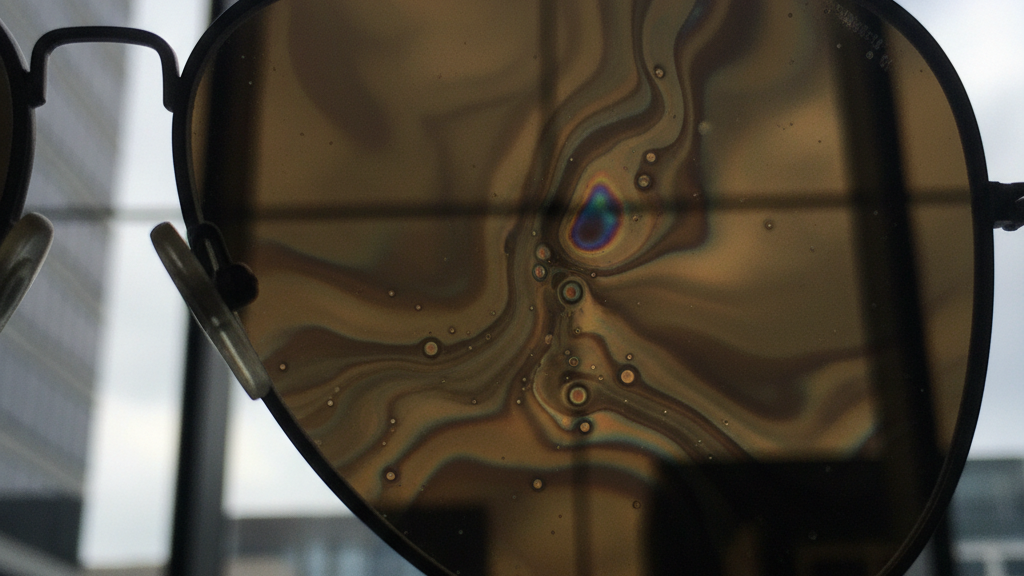
You can reveal the invisible stress patterns within safety glass by simply viewing the pane through a pair of polarized sunglasses. Understanding how to tell if glass is tempered via light refraction is a favorite trick for professional inspectors. When viewed under bright light, tempered glass displays dark, shadowy “leopard spots” or zebra-like stripes that standard glass does not possess.
Why do leopard spots appear under polarized light?
Believe it or not, these spots are actually the physical “fingerprints” of the manufacturing process. They represent the high-tension areas created when the glass was rapidly cooled by air jets in the tempering furnace.
Look at this:
- The quenching process “locks in” internal stress layers.
- Polarized filters detect how light waves bend through these layers.
- These patterns are 100% invisible to the naked human eye.
This method is completely non-destructive and works perfectly for glass that is already installed in a heavy frame. It is the most effective way to check car windows or storefront entries on a sunny day.
Is sunlight necessary for the polarized test?
Here is the deal: while bright sunlight provides the best results, any consistent light source can work. You can even use a computer monitor or a large LED screen as a backlight for smaller glass pieces.
Think about this:
- Hold the glass between your eyes and the light source.
- Tilt your head or rotate the sunglasses 90 degrees.
- Watch for dark patches to shift or intensify as you move.
Key Takeaway
- Dark spots or shadowy patterns visible through polarized lenses are a guaranteed sign of the internal stress required for safety glass.
| Test Variable | Tempered Glass | Standard Glass | |
|---|---|---|---|
| Visual Cue | Dark spots or wavy lines | Clear and uniform | |
| Lens Needed | Polarized Sunglasses | N/A | |
| Reliability | Very High | High |
You should carry a pair of polarized shades whenever you are evaluating the safety of existing glass installations.
Can you find evidence of tempering via surface imperfections?

You may notice tiny surface marks or microscopic scratches that act as evidence of the high-heat manufacturing cycle. While standard glass is often perfectly smooth, identifying these subtle “mechanical fingerprints” is a professional way of knowing how to tell if glass is tempered . These marks are caused by the furnace rollers and are not considered defects but rather signs of proper treatment.
Are surface pits a sign of quality?
Wait, there is a simple explanation for these tiny indentations. During the tempering process, the glass is heated to over 600 degrees Celsius, making it soft enough to pick up microscopic particles from the transport rollers.
Look at this:
- Roller marks appear as tiny, repeating dimples.
- Fused particles may look like permanent dust specks on the surface.
- These imperfections confirm the glass survived a high-heat environment.
Standard glass is typically cooled on a bed of molten tin, which leaves the surface perfectly flat and free of mechanical contact marks. If you see consistent, microscopic pitting, the glass has likely been toughened.
How do you spot these subtle marks?
Think about this: you need the right lighting to catch these invisible textures. You should stand near a bright lamp and look across the glass surface at a very sharp, shallow angle.
Here is the secret:
- Scan the glass slowly to catch reflections of the light source.
- Look for a “washboard” effect or subtle ripples in the texture.
- Use a magnifying glass to distinguish between simple dirt and fused particles.
Key Takeaway
- Microscopic surface pitting and roller marks are telltale signs of the heat-treatment process, whereas standard glass is typically flawless.
| Surface Trait | Tempered Glass | Standard Glass | |
|---|---|---|---|
| Texture | Occasional microscopic pits | Perfectly smooth | |
| Flatness | Slight roller waves | Absolute flat | |
| Cleanliness | Fused particles possible | Clean float surface |
You should examine the surface texture carefully if other visual signs like the safety stamp are missing.
How to tell if glass is tempered using the tap test?
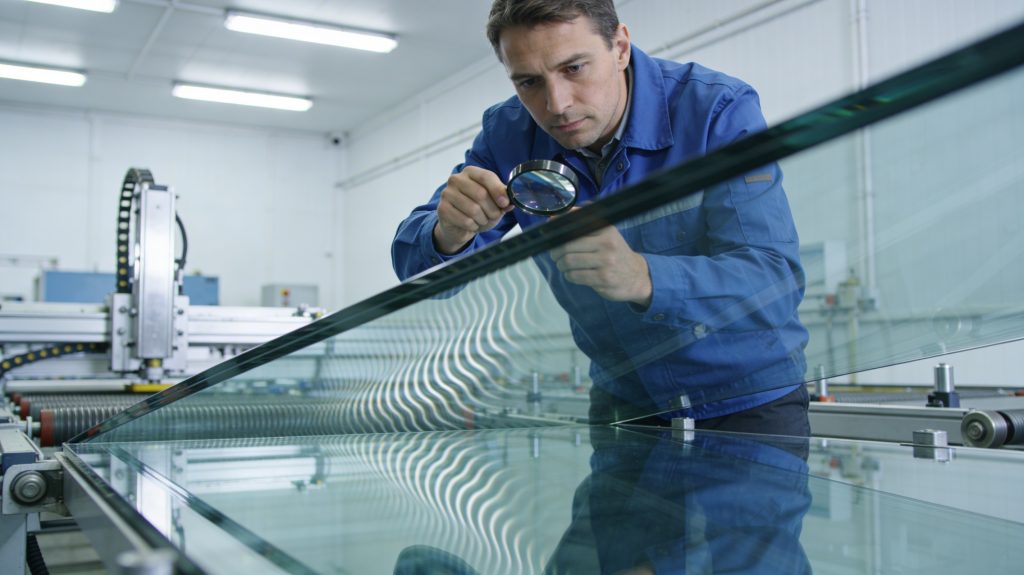
You can use acoustics to determine glass type by listening for the specific ringing sound produced when the pane is lightly tapped. This method is an effective sensory check for how to tell if glass is tempered because of the material’s internal tension. A toughened pane vibrates at a significantly higher frequency than standard glass, which lacks internal stress.
Does safety glass produce a musical ring?
Believe it or not, tempered glass behaves like a tightly tuned drum skin. Because it is under constant compression, a light impact sends vibrations through the pane much faster than in a “relaxed” piece of annealed glass.
Look at this:
- Tempered glass makes a clear, high-pitched “ping” sound.
- Standard glass produces a duller, flatter “thud.”
- The sound difference is most obvious in larger, unmounted panes.
You must be extremely gentle when performing this test. While safety glass is strong, a hard strike with a metal object can still cause it to fail, especially if you hit a weak point near the edge.
Can framing affect the sound of the glass?
Wait, there is a factor that can change your results. When glass is tightly clamped into a window frame or shower door channel, the mounting materials can dampen the vibrations and muffle the sound.
Think about this:
- Tapping near the center of the pane provides the most accurate tone.
- Compare the sound to a known piece of standard glass if possible.
- Listen for the duration of the ring; tempered glass usually rings longer.
Key Takeaway
- A high-frequency, clear ringing sound is a strong acoustic indicator of the high internal tension found in tempered safety glass.
| Action | Sound Result | Likely Glass Type | |
|---|---|---|---|
| Soft Tap | High-pitched “ping” | Tempered | |
| Soft Tap | Low-pitched “thud” | Standard | |
| Vibration | Clear and sustained | High Tension |
You should use the tap test as a secondary confirmation method alongside visual inspections for the best accuracy.
Why do reflections look distorted on toughened surfaces?

You can often spot visual distortions, such as “roller waves,” by viewing the reflection of a straight line at a shallow angle. This is a practical way to learn how to tell if glass is tempered without needing specialized tools. Because the glass becomes pliable in the furnace, it rarely maintains the absolute, mirror-like flatness of standard float glass.
How do you spot the funhouse mirror effect?
Wait, there is a simple reason for this phenomenon. As the hot glass moves across the rollers, it sags slightly between them, creating a subtle wave pattern that becomes permanent after cooling.
Look at this:
- Reflected lines will look slightly bent or “wonky.”
- The distortion is most visible on large panes like patio doors.
- Standard glass provides a perfectly crisp, undistorted reflection.
You can verify this by standing to the side of a window and watching the reflection of a nearby building or a telephone pole. If the reflected line “shimmers” or bends as you move your head, you are looking at heat-treated glass.
Is distortion a sign of low-quality glass?
Here is the deal: visual distortion is an unavoidable side effect of the tempering process. In the glass industry, these slight waves are actually proof that the material has reached the required safety strength.
Think about this:
- Every tempered pane has some degree of roller wave.
- Modern manufacturing aims to minimize these distortions.
- Architects often specify the direction of the wave for building facades.
Key Takeaway
- Bumpy or wavy reflections of straight objects are a classic indicator that a glass pane has undergone the high-heat tempering cycle.
| Visual Check | Tempered Glass | Standard Glass | |
|---|---|---|---|
| Straight Lines | Slightly bent or wavy | Perfectly crisp | |
| Reflection Type | Funhouse mirror effect | True-to-life mirror | |
| Surface Profile | Wavy texture | Perfectly flat |
You should use reflection analysis when inspecting large storefront windows where other tests are difficult to perform.
How to tell if glass is tempered using thickness gauges?
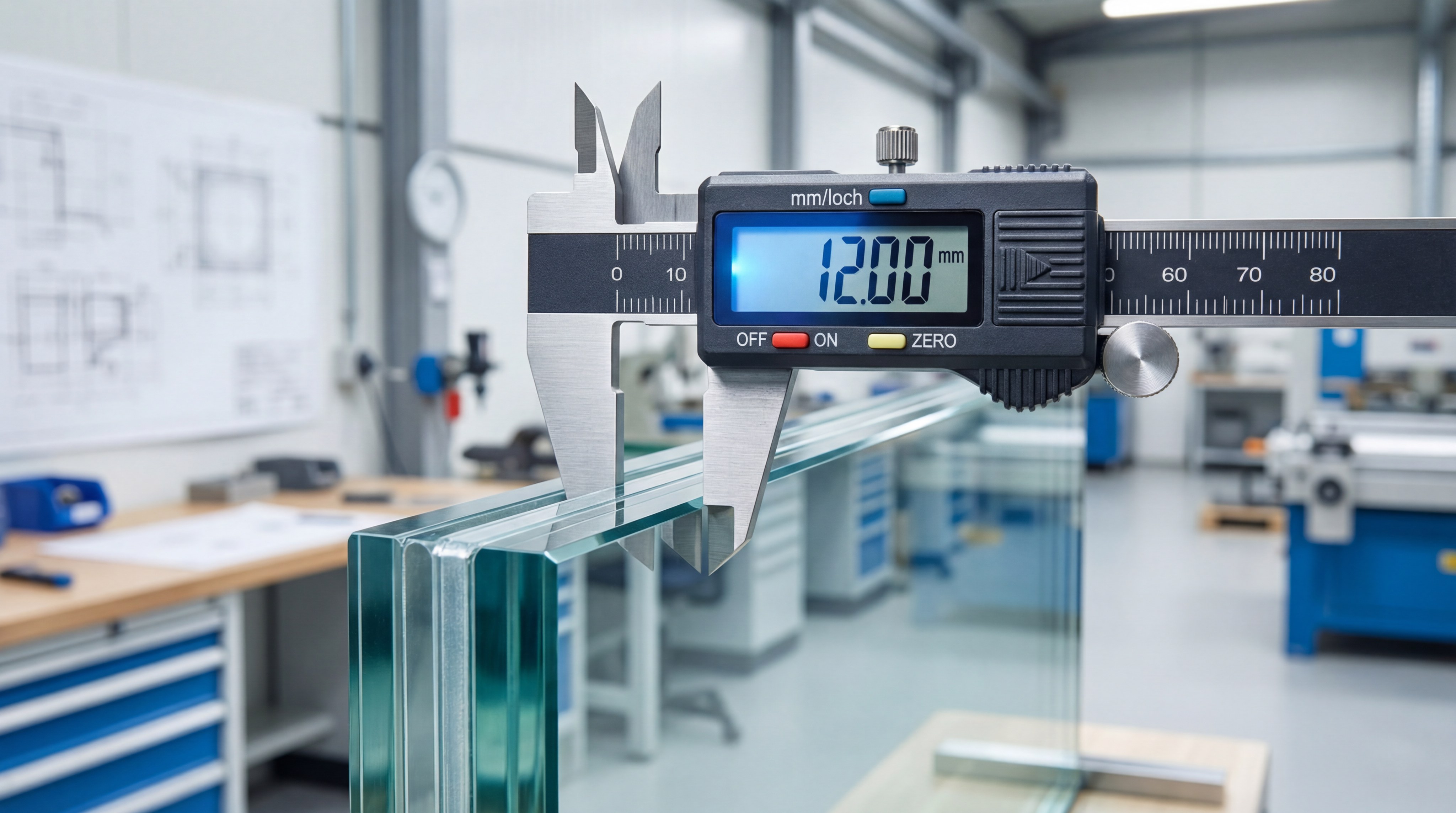
While thickness alone doesn’t prove tempering, you can use safety codes and measurements as strong evidence for how to tell if glass is tempered . Modern building regulations mandate specific thicknesses for toughened glass in hazardous locations. For example, a heavy 10mm or 12mm frameless shower door is almost guaranteed to be tempered due to legal safety requirements.
Are certain thicknesses exclusive to safety glass?
Look at this: the application of the glass often dictates its tempering status. Thin glass used in standard picture frames is rarely tempered, whereas thick glass used for tabletops or railings almost always is.
Here is the deal:
- Heavy glass (10mm+) is typically toughened for structural support.
- Standard residential window glass (3mm-4mm) is often annealed.
- Commercial storefronts usually use 6mm or thicker tempered panels.
If you measure a piece of glass that is exceptionally thick and intended for human contact, the probability of it being tempered is very high. Always cross-reference your measurement with the manufacturer stamp if possible.
How do you measure glass that is already installed?
Think about this: you can use a digital caliper or a specialized glass thickness gauge to get an accurate reading without removing the pane.
Wait, there is more:
- Measure from the edge if the glass is partially exposed.
- Use a laser gauge for double-pane insulated units.
- Compare the thickness to local building code requirements.
Key Takeaway
- Glass thickness is a critical clue; structural or high-impact glass exceeding 6mm is frequently tempered by design and law.
| Application | Common Thickness | Likely Glass Type | |
|---|---|---|---|
| Window Panes | 3mm – 4mm | Annealed | |
| Entry Doors | 5mm – 6mm | Tempered | |
| Shower Doors | 10mm – 12mm | Tempered |
You should treat thickness as a supporting piece of evidence when the intended use of the glass implies a high safety risk.
Can a laser meter provide an instant safety confirmation?
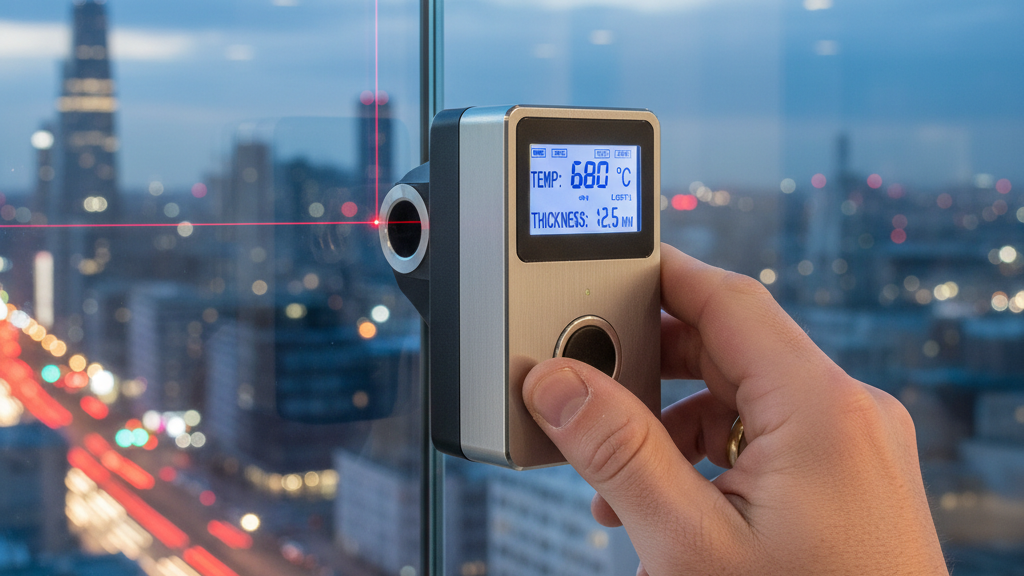
You can obtain an absolute digital confirmation of glass type by using a specialized handheld laser meter. This high-tech approach is the most professional way how to tell if glass is tempered when visual signs are absent. These devices measure the “birefringence” or light-bending properties of the glass, which change significantly when the material is under high internal stress.
How does laser technology detect internal tension?
Believe it or not, lasers can “see” the invisible layers of compression that give safety glass its strength. The device calculates how light speed changes as it passes through the hardened surface versus the tensioned core.
Look at this:
- The meter provides an instant “Tempered” or “Annealed” reading.
- It works on multi-pane units without needing disassembly.
- Professional inspectors use these for large commercial audits.
This is the only 100% reliable non-destructive method that does not rely on human interpretation of shadows or sounds. It is the preferred tool for verifying safety standards in high-rise buildings or schools.
Is a laser meter worth the investment?
Wait, there is a cost-benefit consideration for this technology. While these devices are expensive for a one-time home check, they are essential for contractors or property managers who oversee many glass installations.
Think about this:
- Renting a meter is an option for small-scale verification.
- It eliminates the risk of guessing and potential liability.
- Digital records from these devices can be used for insurance audits.
Key Takeaway
- Laser meters offer the highest level of technical certainty by measuring the physical light-refraction patterns unique to heat-treated safety glass.
| Testing Method | Accuracy | Effort | |
|---|---|---|---|
| Visual Check | Moderate | Low | |
| Polarized Test | High | Low | |
| Laser Meter | Absolute | Moderate |
You should consider professional laser testing for any project where human safety is legally mandated by building codes.
How to tell if glass is tempered by its breakage pattern?
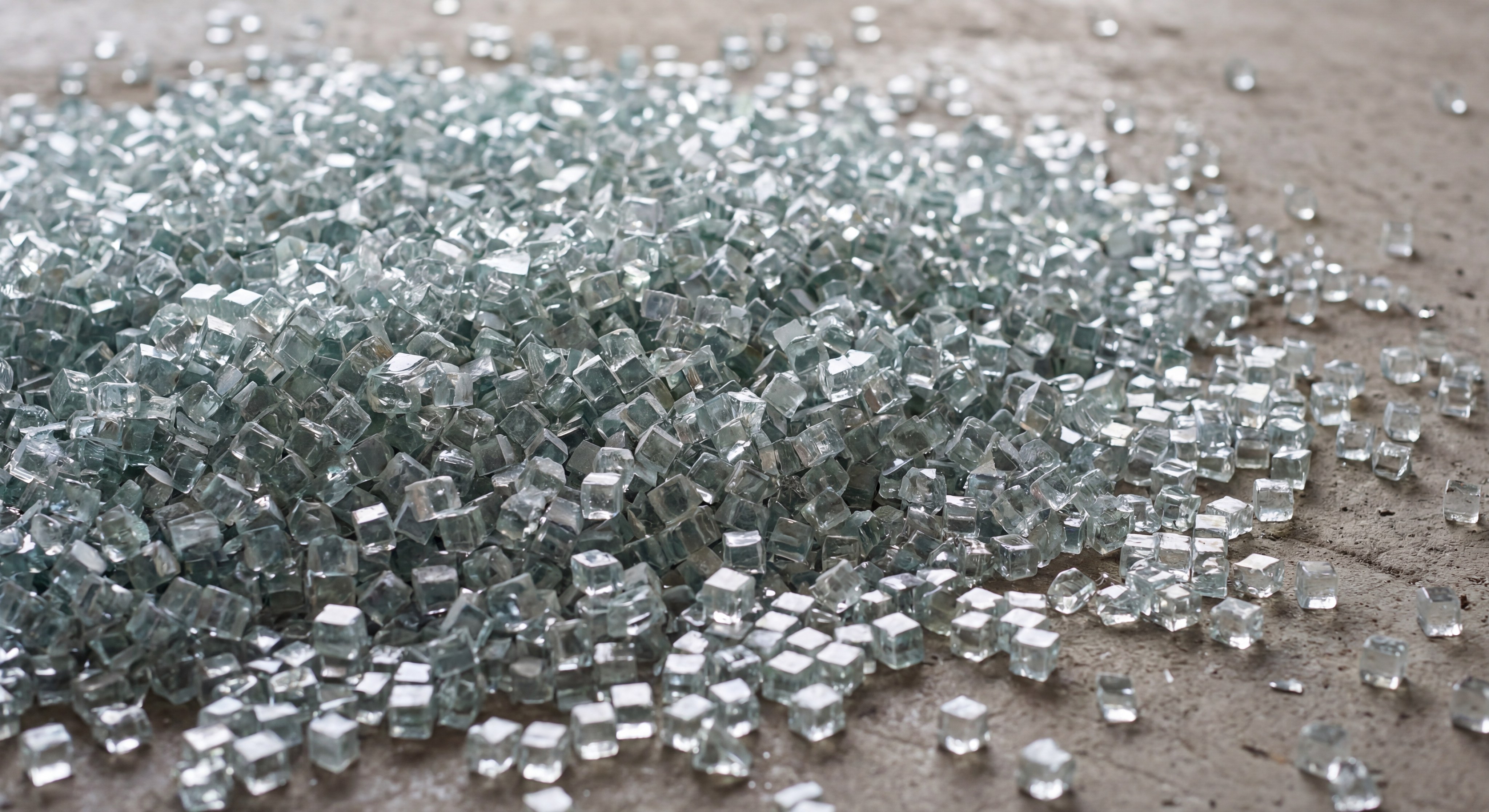
You can definitively identify tempered glass after a failure by observing if it has crumbled into thousands of small, blunt pebbles. This unique “dice” pattern is the core safety feature of how to tell if glass is tempered in post-accident analysis. Unlike standard glass, which produces lethal, razor-sharp spears, safety glass is designed to release all its internal energy simultaneously upon impact.
Why does safety glass crumble into small cubes?
Wait, there is a fascinating engineering reason for this. The internal tension created during the cooling process is so high that any break in the surface tension causes the entire molecular structure to collapse into small fragments.
Look at this:
- Shards are usually between 5mm and 15mm in size.
- The fragments lack the long, pointed edges of standard glass.
- This “webbing” effect happens instantly across the entire pane.
This pattern significantly reduces the risk of deep lacerations or fatal injuries. If you see a pile of glass that looks like rock salt or small ice cubes, it was definitely tempered. Standard annealed glass, by comparison, will stay in a few large, jagged, and very dangerous pieces.
Can you use a score test to verify this safely?
Here is the deal: we do not recommend trying to break or score glass that you plan to continue using. A “score test” involves using a glass cutter to attempt to draw a line across the surface.
Think about this:
- On standard glass, a cutter leaves a clean, white line.
- On tempered glass, the cutter will struggle to “bite” the surface.
- Attempting to snap tempered glass will cause the entire sheet to explode.
Key Takeaway
- The “pebble” breakage pattern is the ultimate safety signature of tempered glass, ensuring that structural failure does not result in lethal sharp edges.
| Breakage Type | Tempered Glass | Standard Glass | |
|---|---|---|---|
| Shape | Small, blunt cubes | Large, jagged spears | |
| Sound | Loud “pop” or explosion | Sharp “crack” | |
| Safety | High (Dull edges) | Extremely Dangerous |
You should always treat glass breakage as a critical indicator of whether your property meets modern safety requirements.
What are the technical differences in glass molecular structure?
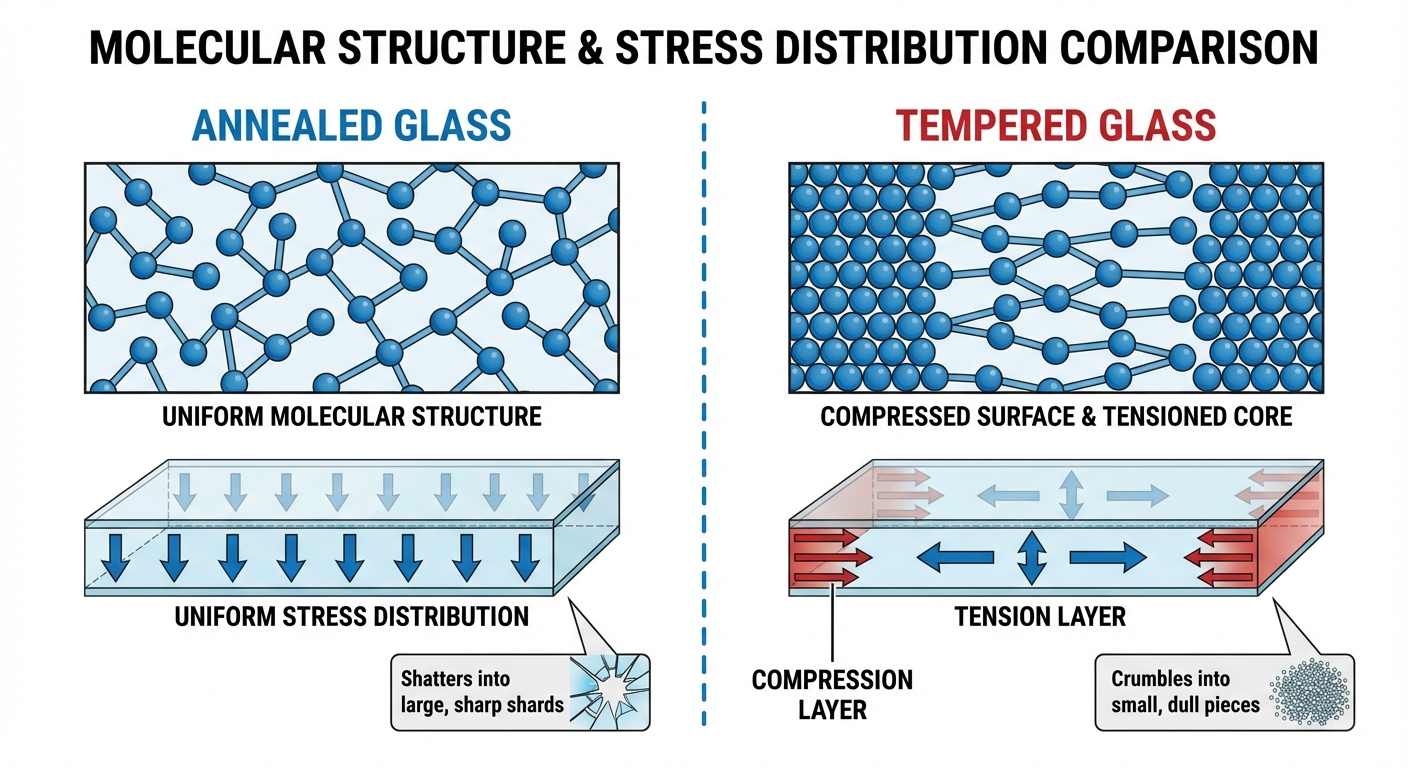
You can understand the fundamental nature of these materials by comparing their molecular stress distribution. Safety glass is not just regular glass with a coating; it is a completely different physical state of the material. This internal transformation is what allows for the specialized identification methods we have discussed throughout this guide.
How does the tension layer provide strength?
Believe it or not, the strength of safety glass comes from a permanent “tug-of-war” between its surface and its core. During quenching, the outer layers freeze first, while the center stays hot. As the center eventually cools and shrinks, it pulls the surface inward, creating intense compression.
Look at this:
- The outer surface is in a state of high compression.
- The inner core is in a state of high tension.
- This balance makes the glass 4-5 times stronger than annealed.
Standard glass has a uniform molecular structure with very little internal stress. This is why it is easy to cut and shape but lacks the impact resistance needed for modern safety applications. You can never “re-cut” tempered glass because breaking that tension balance causes immediate failure.
Why is the core so sensitive to impact?
Wait, there is a specific vulnerability you should know about. While the surface is incredibly tough, the edges of tempered glass are the points of maximum stress and are much easier to break.
Think about this:
- A small chip on the edge can shatter the whole pane.
- Center-point impacts are distributed across the compression layer.
- Edge protectors are critical during transport and installation.
Key Takeaway
- The “compression-tension” molecular balance is what defines tempered glass, providing both its superior strength and its unique safety-fragmentation pattern.
| Physical Property | Tempered Glass | Standard Glass | |
|---|---|---|---|
| Internal Stress | Extremely High | Very Low | |
| Molecular State | Tension-Balanced | Uniform / Relaxed | |
| Impact Limit | 4-5x Higher | Base Strength |
You should review this molecular comparison to understand why non-destructive testing, like polarized light analysis, is so effective.
Ensuring the safety of your property requires technical certainty rather than guesswork. Our brand vision focuses on delivering engineering-grade precision and full QC traceability to ensure every pane meets modern safety standards. By using the identification methods outlined above, you can verify your existing installations and maintain a secure environment for all occupants. If you require expert guidance or a professional glass audit, contact us today to discuss your project requirements.
Frequently Asked Questions
Can I identify tempered glass with a smartphone? Yes, by using a polarized filter app or holding a second polarized screen behind the glass. The “leopard spots” or internal stress patterns will appear clearly on your screen if the glass has been heat-treated.
What’s the best way to check glass that is already installed? The polarized sunglasses test is the most effective. It allows you to see the internal stress patterns without needing to access the edges or look for potentially hidden manufacturer stamps.
How do I know if my shower door is safe? Check the corners for an etched safety stamp or look at the edges for a smooth, rounded finish. Most modern shower doors are tempered by law, but verifying these signs ensures your specific unit meets code.
How do I know if the safety stamp is authentic? A genuine “bug” stamp is permanent and cannot be scraped off with a razor blade or solvent. If the logo or text can be removed, it is likely a fake sticker rather than a permanent factory etch.
How can I tell if glass is tempered without a stamp? If the stamp is missing, look for visual distortions called “roller waves” in the reflection. You can also use the polarized light test or the tap test to listen for high-frequency ringing.