You clean tempered glass windows by using non-abrasive tools and pH-neutral solutions to ensure you lift dirt without causing permanent surface scarring. Maintaining high-clarity facades is a constant challenge for facility managers who deal with the frustration of persistent grime and environmental pollutants. Left unmanaged, these contaminants can bond to the surface, and improper attempts to remove them often lead to costly, irreversible scratches that diminish your property’s value. Our professional methodology allows you to Clean Tempered Glass safely while preserving the structural integrity of your high-performance building envelope.
Why is it important to Clean Tempered Glass correctly?

You must Clean Tempered Glass correctly because the heat-treatment process makes the surface sensitive to “glass fines” that can be dragged across the pane during wiping. If you use aggressive scrubbing techniques, you risk creating microscopic fissures that compromise the safety rating of the material.
Understanding surface tension and strength
Tempered glass is engineered to be significantly stronger than standard annealed panes to meet modern safety codes. But that’s not all… its unique surface tension means that even small particles of grit can act like sandpaper if not properly suspended in a lubricant during the cleaning process. You should always prioritize techniques that lift debris rather than pushing it into the glass.
Why B2B facilities prioritize clarity
Maintaining a professional appearance is essential for your brand identity and tenant satisfaction. According to our about-us mission, providing high-quality glass solutions requires a commitment to longevity through proper maintenance.
- Preserves architectural aesthetics.
- Extends the lifespan of the glass unit.
- Prevents expensive replacement costs.
Key Takeaway: Correct cleaning techniques protect the manufacturing investment by preventing “dragging” scratches that occur when microscopic debris is trapped against the surface.
| Factor | Impact on Maintenance | Professional Recommendation |
|---|---|---|
| Surface Hardness | High impact resistance | Use soft-touch materials only |
| Glass Fines | Risk of surface scarring | Always use a wet cleaning method |
| Clarity Requirements | Essential for B2B branding | Lint-free microfiber finishing |
Effective maintenance starts with understanding that safety glass requires a more delicate touch than standard residential windows.
How can you identify if your windows are tempered?
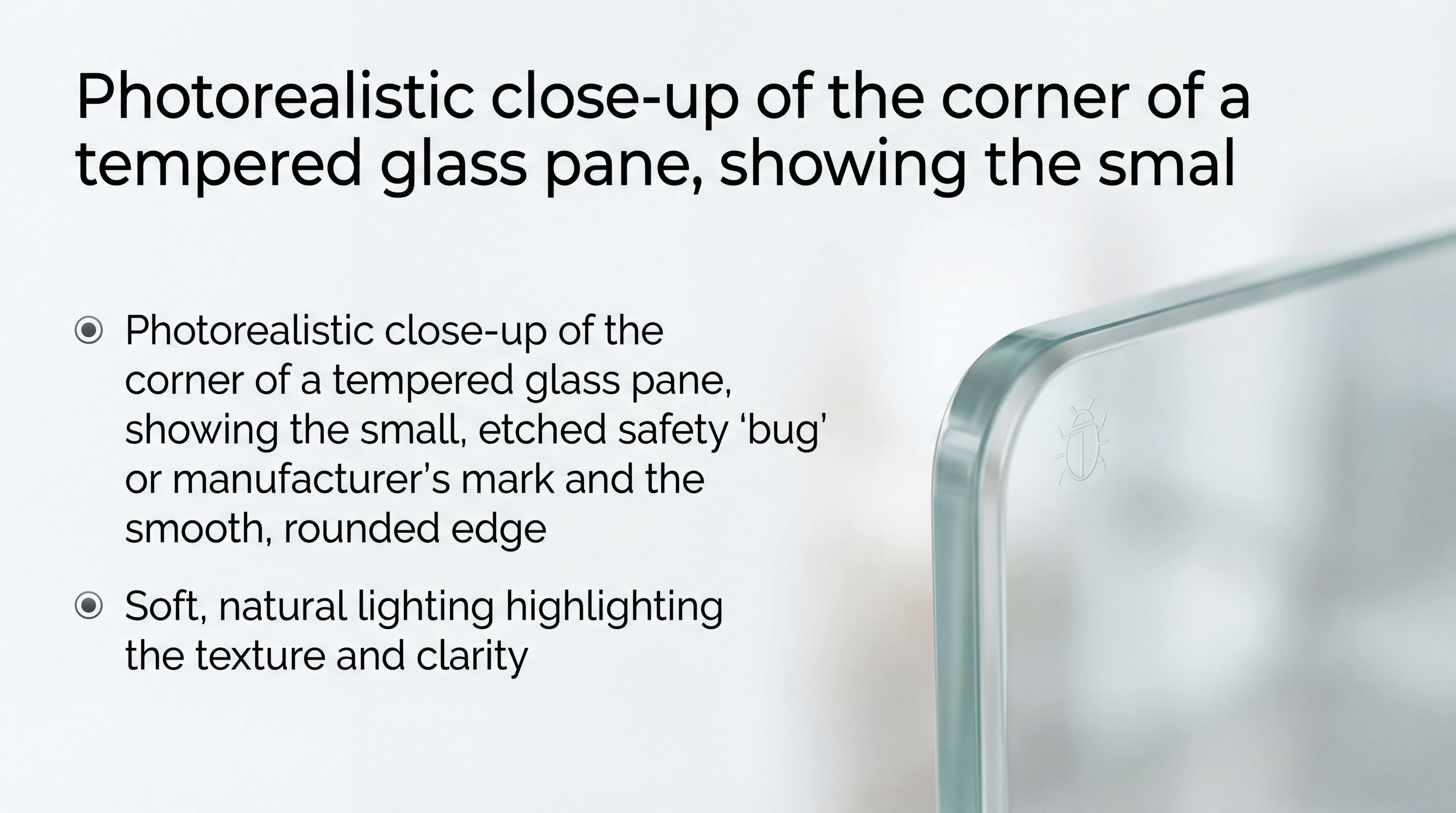
You identify tempered glass by locating the permanent manufacturer’s “bug” or safety stamp, which is typically etched or sandblasted into one of the four corners. This mark is your confirmation that the glass has undergone the rapid heating and cooling process necessary to meet ANSI or CPSC safety standards.
Locating the safety stamp
Before you begin any maintenance project, you need to verify the material type to select the right tools. Here’s the deal: if you cannot find a stamp, look for visual distortions or “quench marks” that appear when viewed through polarized lenses. You may also notice that the edges of the glass are smooth and rounded rather than sharp and clean-cut.
Observing edge and visual characteristics
Tempered units often have distinct visual properties that distinguish them from standard panes. If you are managing a complex project, reviewing our blog for technical guides can help you differentiate between safety types.
- Check for smooth, polished edges.
- Look for the etched safety “bug”.
- Verify via polarized light patterns.
Key Takeaway: Identifying the glass type ensures you apply the correct pressure and tools, preventing the use of high-risk materials on sensitive safety surfaces.
| Identification Method | Visual Indicator | Reliability |
|---|---|---|
| Etched Stamp | Permanent logo in corner | 100% Reliable |
| Edge Profile | Smooth, rounded finish | High Reliability |
| Polarization | Quench patterns/dots | Medium Reliability |
Verifying the substrate is the first critical step in any professional-grade window maintenance checklist.
What are the best tools to Clean Tempered Glass?
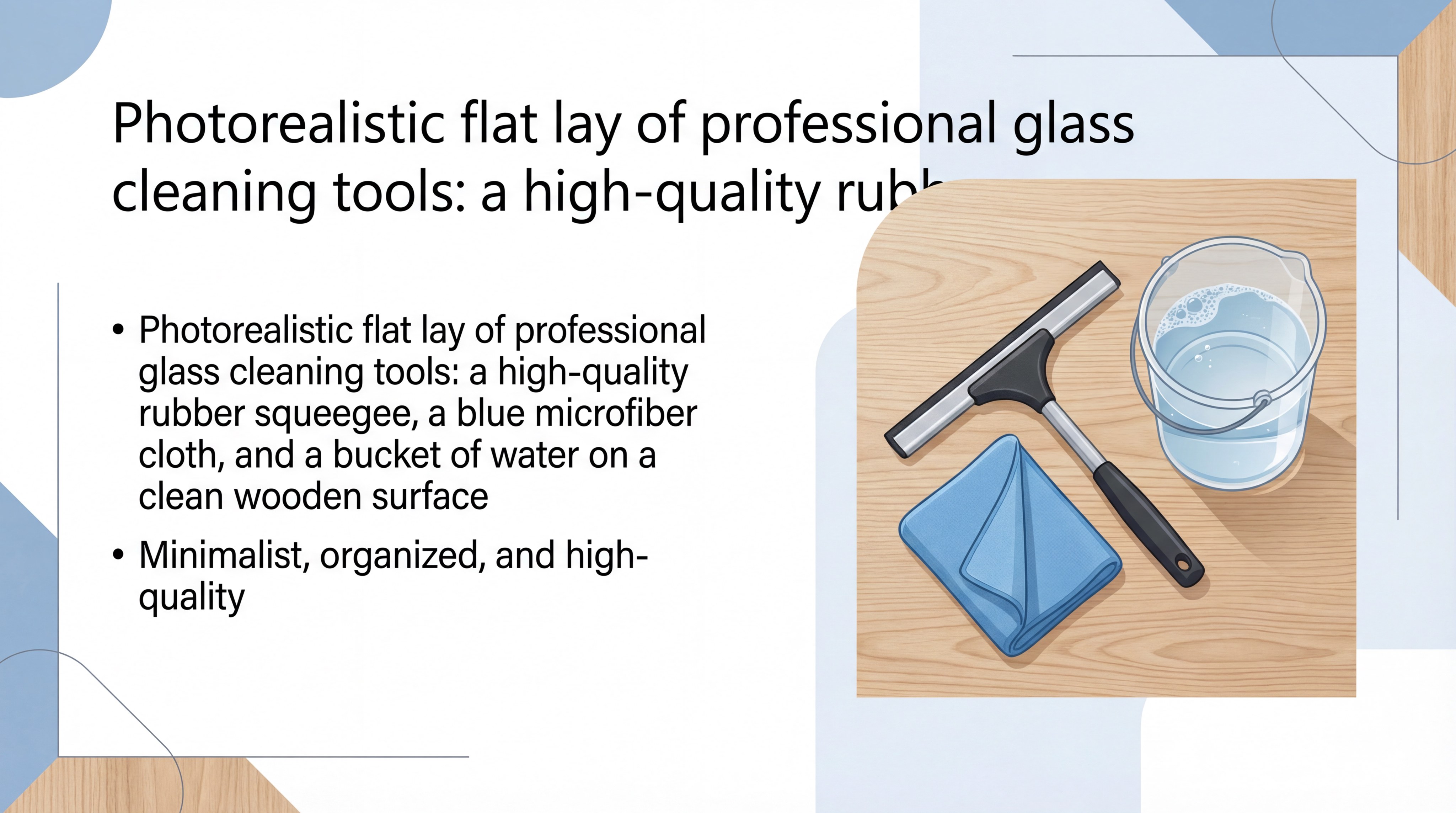
The best tools to Clean Tempered Glass are those that provide maximum dirt suspension without the use of metal or abrasive fibers. Professional kits should center around high-grade microfiber and rubber-edged squeegees to ensure you achieve a streak-free finish without risking physical damage.
Selecting high-grade microfiber
Standard paper towels are often too abrasive and leave behind lint that can obscure your view. But that’s not all… a dedicated microfiber cloth has split fibers that trap dust and oils deep within the fabric rather than spreading them across the pane. You should keep several clean cloths on hand to swap them out as they become saturated with grime.
Why professional squeegees matter
For large Tempered Glass installations, a squeegee is the only way to remove the cleaning solution effectively. Here’s the deal: a fresh rubber blade wipes the surface perfectly dry in one pass, preventing the mineral deposits that occur when water evaporates.
- High-quality rubber prevents streaking.
- Microfiber sleeves apply solution evenly.
- Extendable poles ensure safety on high windows.
Key Takeaway: Professional-grade tools minimize friction and maximize dirt removal, which is the most effective way to prevent the scratches associated with DIY methods.
| Tool Type | Purpose | Best Practice |
|---|---|---|
| Microfiber Cloth | Detailing and oil removal | Use only clean, lint-free cloths |
| Rubber Squeegee | Quick drying and streak removal | Wipe blade after every stroke |
| Synthetic Sponge | Agitating stubborn dirt | Ensure sponge is free of grit |
Investing in the right equipment significantly reduces the labor time required for large-scale commercial cleaning projects.
Which cleaning solutions are safest for high-strength glass?
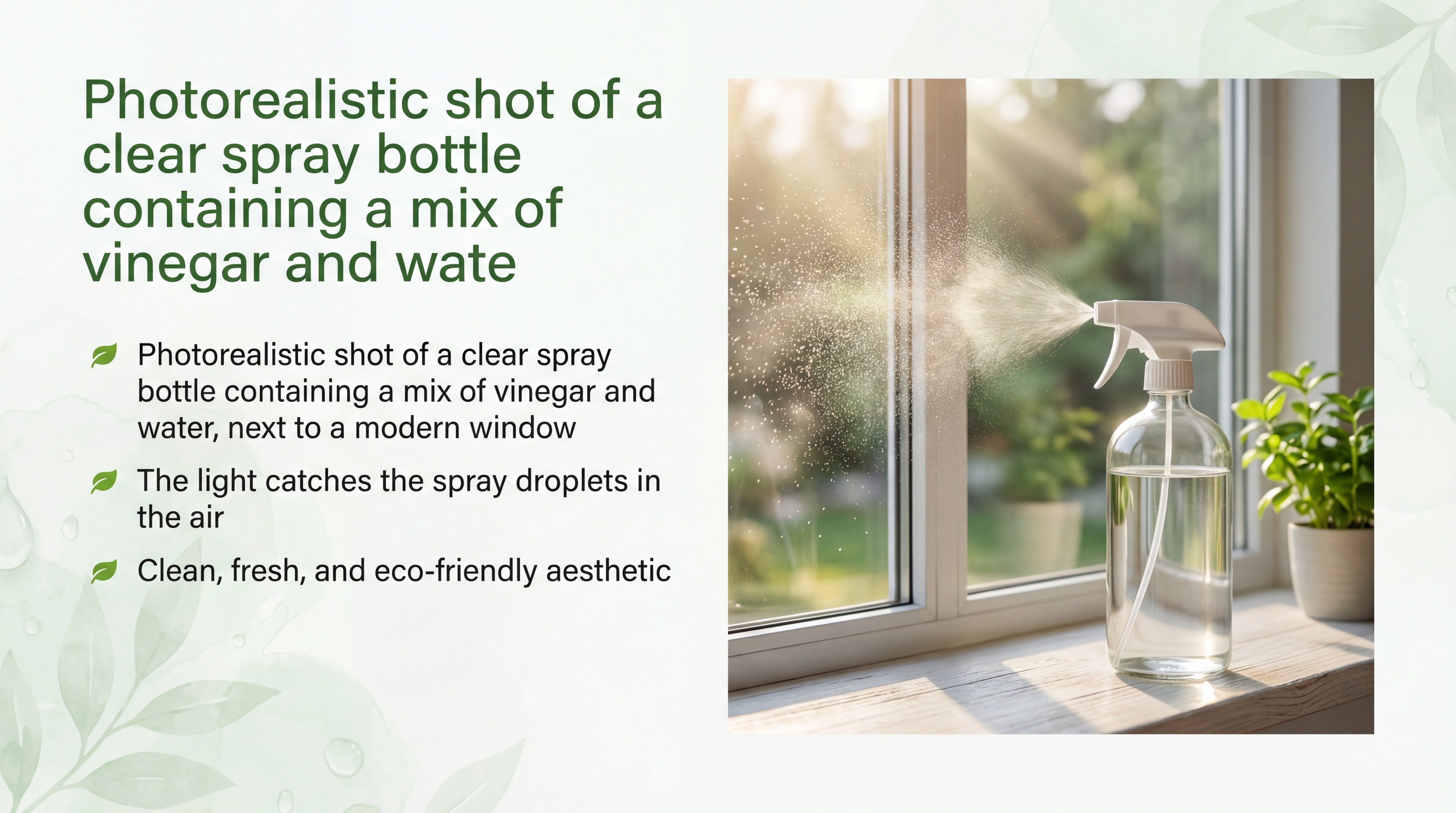
The safest solutions for high-strength glass are ammonia-free commercial cleaners or a simple mixture of distilled water and white vinegar. You must avoid any solution that contains abrasive particles or harsh alkalines, as these can etch the surface or damage the seals of your window frames.
Utilizing non-abrasive commercial cleaners
When you select a commercial product, ensure it is specifically labeled for architectural glass. But that’s not all… many common household cleaners contain chemicals that can react with the coatings on Laminated Glass or other specialty units. You should always test a new solution on a small, inconspicuous corner before applying it to the entire window.
Mixing a professional vinegar solution
A 50/50 mix of white vinegar and distilled water is highly effective for removing organic matter and mineral buildup. Here’s the deal: distilled water is preferred because it lacks the minerals found in tap water that cause spots.
- Fill a spray bottle with distilled water.
- Add an equal amount of white vinegar.
- Mist the surface generously before wiping.
Key Takeaway: pH-neutral and ammonia-free solutions prevent chemical etching and protect the integrity of both the glass surface and the surrounding hardware.
| Solution Component | Benefit | Avoid |
|---|---|---|
| White Vinegar | Dissolves grease and minerals | Ammonia-based cleaners |
| Distilled Water | Prevents hard water spots | Tap water with high mineral content |
| Mild Dish Soap | Suspends heavy dirt and grime | Scouring powders/pastes |
Using the correct chemistry is just as important as using the right tools to maintain long-term clarity and glass health.
What is the step-by-step process to Clean Tempered Glass without streaks?

To Clean Tempered Glass without streaks, you must follow a systematic approach that begins with removing loose grit and ends with a complete dry of the edges. You should work in manageable sections, ensuring the glass remains wet throughout the agitation phase to prevent any particles from scratching the surface.
Pre-dusting to remove loose grit
Never apply liquid to a dry, dusty window without first removing the loose debris. But that’s not all… you can use a dry microfiber duster or even a soft brush to gently flick away sand and dust. Here’s the deal: if you skip this step, the liquid will turn that dust into a slurry that can be pushed across the pane, causing micro-scratches.
Mastering the circular agitation technique
Once the glass is wet, you should use a soft sponge or microfiber applicator in gentle, circular motions. This technique lifts oils and fingerprints more effectively than straight lines.
- Apply solution liberally from top to bottom.
- Agitate in small circles.
- Squeegee in single, overlapping strokes.
- Dry the edges with a fresh cloth.
Key Takeaway: A structured “top-to-bottom” workflow ensures that dirty water does not run down onto already cleaned sections, resulting in a perfect finish.
| Cleaning Phase | Action | Goal |
|---|---|---|
| Preparation | Dry dusting the surface | Removal of abrasive grit |
| Agitation | Circular motion with sponge | Lifting fingerprints and oils |
| Finishing | Squeegee and edge drying | Streak-free and spot-free result |
Consistency in your step-by-step process is the only way to guarantee professional results on large architectural surfaces.
How do you handle stubborn stains or water spots?
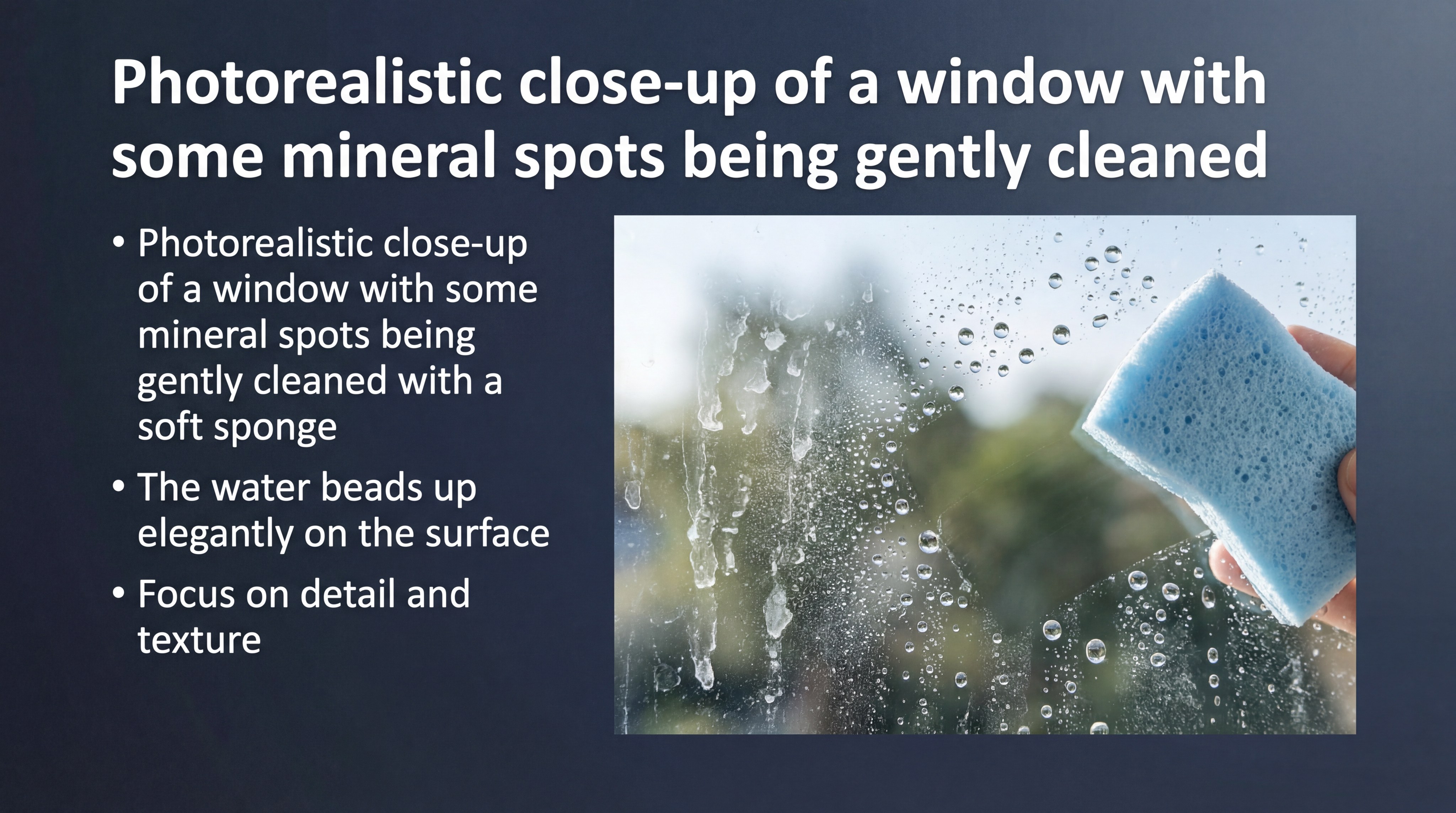
You handle stubborn stains by allowing the cleaning solution time to sit and dissolve the contaminant rather than increasing your scrubbing pressure. For hard water spots or mineral buildup, a concentrated vinegar soak is often the safest and most effective method for your facility.
Dissolving mineral deposits safely
Hard water stains are often the result of irrigation systems or rain runoff from building materials. But that’s not all… you can saturate a microfiber cloth with your vinegar solution and press it against the spots for several minutes. Here’s the deal: this chemical action breaks the bond between the minerals and the glass without any mechanical abrasion.
Dealing with adhesives and paint
If you find stickers or paint overspray, you must resist the urge to use a metal blade. Instead, you should use a plastic scraper and plenty of lubricant to gently lift the edge of the debris.
- Soak the area in warm, soapy water.
- Apply a plastic scraper at a low angle.
- Wipe away residue with a clean cloth.
Key Takeaway: Patience is your best tool when dealing with stubborn stains; let the chemistry do the work to avoid the high risk of physical damage.
| Stain Type | Recommended Method | Tool to Use |
|---|---|---|
| Water Spots | Acidic soak (Vinegar) | Microfiber saturation |
| Adhesives | Solvent soak and lubricant | Plastic scraper |
| Fingerprints | Isopropyl alcohol mist | Clean microfiber |
Stubborn stains require a targeted approach that focuses on chemical dissolution rather than aggressive physical scrubbing.
What are the common mistakes when you Clean Tempered Glass?
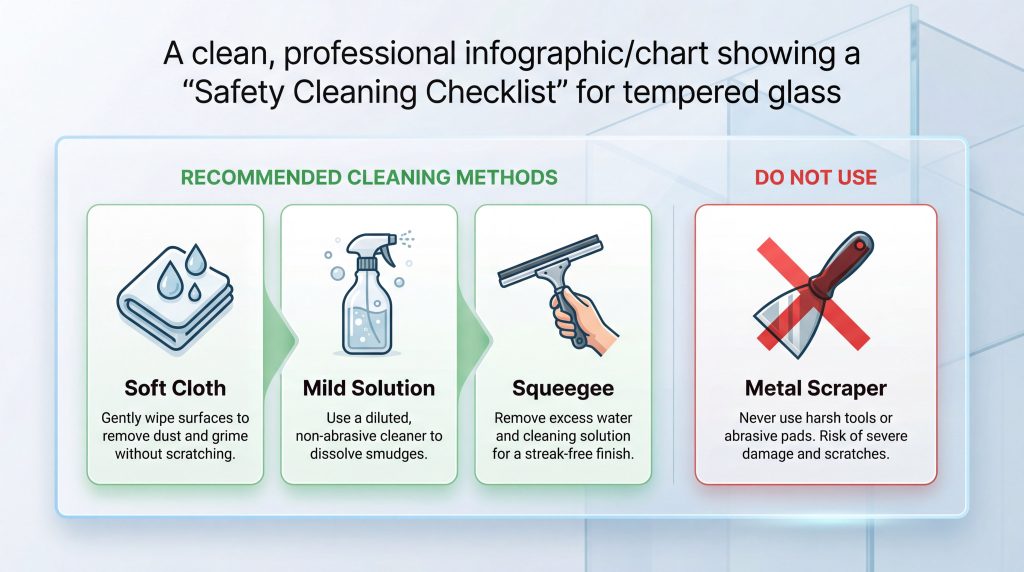
The most common mistake you can make when you Clean Tempered Glass is using a metal razor blade or a steel wool pad to remove debris. While these might seem efficient, they frequently catch on surface imperfections and leave deep, permanent scars that are impossible to buff out of safety glass.
Avoiding abrasive materials
You should never use the green side of a kitchen sponge or any scouring powder on your windows. But that’s not all… even “non-scratch” pads can trap grit from the window itself and turn it into an abrasive. Here’s the deal: you must ensure every tool touching the glass is soft and meticulously clean before each use.
Preventing thermal shock
Another significant risk is applying extremely hot or cold water to a window that is at a different temperature. Sudden thermal changes can cause tempered glass to shatter spontaneously due to internal stress.
- Never clean windows in direct, hot sun.
- Avoid using boiling water on cold glass.
- Use lukewarm water for all cleaning tasks.
Key Takeaway: Avoiding high-risk tools like metal blades and extreme water temperatures prevents the two most common causes of glass failure during maintenance.
| Prohibited Tool/Action | Consequence | Professional Alternative |
|---|---|---|
| Metal Razor Blades | Deep surface scratches | Plastic scrapers |
| Steel Wool | Surface hazing/clouding | Soft microfiber |
| Boiling Water | Spontaneous breakage | Room temperature water |
Education on these common pitfalls is the best defense your maintenance crew has against accidental property damage.
How often should you maintain your tempered windows?

You should maintain your tempered windows with a light cleaning every few weeks and a comprehensive deep clean at least twice a year. For high-traffic commercial environments, the frequency may need to increase to ensure that skin oils and environmental pollutants do not permanently etch the glass surface.
Implementing a weekly maintenance schedule
A quick weekly walkthrough with a dry microfiber cloth can remove dust before it has a chance to bond. But that’s not all… keeping the glass clean prevents the buildup of minerals that eventually require more aggressive, risky cleaning methods. You should focus on interior touchpoints and entryways where fingerprints are most common.
Managing high-traffic commercial environments
In retail or office lobby settings, the glass is constantly exposed to pollutants. Here’s the deal: setting a regular schedule ensures your facility always looks its best for clients and visitors.
- Weekly: Interior fingerprint removal.
- Monthly: Exterior wash for ground floors.
- Bi-Annually: Full facility deep clean.
Key Takeaway: Regular, low-intensity cleaning is far more cost-effective and safer for the glass than infrequent, aggressive restorative cleaning.
| Environment | Frequency | Scope |
|---|---|---|
| Commercial Lobby | Daily/Weekly | Spot cleaning of touchpoints |
| Retail Storefront | Bi-Weekly | Full exterior wash |
| Office High-Rise | Bi-Annually | Scheduled deep maintenance |
A proactive maintenance schedule is the key to preserving the high-end appearance of modern architectural glass installations.
Can Clean Tempered Glass techniques apply to other glass types?
Yes, the soft-touch methods used to Clean Tempered Glass are highly recommended for almost every other type of architectural glass. Whether you are dealing with insulated units or decorative partitions, the principles of using soft materials and mild chemicals will protect your investment.
Protecting Low-E metallic coatings
Low-E (Low Emissivity) glass often has a delicate metallic coating that can be easily scratched by traditional cleaning tools. But that’s not all… if you use the “safe for tempered” method on these windows, you ensure the coating remains intact. Here’s the deal: you should never use vinegar on certain soft-coat Low-E windows, so check your manufacturer’s specs first.
Maintaining laminated safety units
Laminated glass consists of two layers of glass with an interlayer for impact resistance. You should be careful around the edges of these units to prevent moisture from seeping into the interlayer.
- Use minimal liquid near the frames.
- Ensure edges are dried immediately.
- Follow our case studies for specific project maintenance.
Key Takeaway: Soft-touch cleaning is a universal best practice that ensures safety, clarity, and longevity across your entire glass inventory.
| Glass Type | Priority | Cleaning Limitation |
|---|---|---|
| Tempered | Scratch prevention | No metal tools |
| Low-E | Coating protection | No abrasive cleaners |
| Laminated | Edge seal integrity | Avoid excess moisture |
Adopting a high-standard cleaning protocol for all glass types simplifies training for your maintenance staff and reduces error.
When is it time to stop cleaning and start replacing?

You should stop cleaning and consider a professional replacement when you notice signs of structural failure that maintenance cannot resolve. If the glass appears hazy even after a deep clean, or if you see moisture trapped between the panes, the unit has likely reached the end of its functional life.
Identifying seal failure and fogging
Insulated glass units rely on a hermetic seal to provide energy efficiency. But that’s not all… once this seal fails, moisture and dust enter the gap, creating a permanent “fog” that no amount of exterior cleaning can fix. Here’s the deal: you should inspect your windows for this internal condensation during seasonal temperature shifts.
Assessing deep surface scratches
While light scratches can sometimes be polished out by professionals, deep gouges that you can feel with a fingernail weaken the glass. You should evaluate the cost of professional polishing versus a full replacement for safety-critical areas.
- Haze that persists after cleaning.
- Cracks or chips in the edges.
- Permanent internal moisture.
Key Takeaway: Knowing when to replace rather than clean saves your facility from wasting labor on unrecoverable units and ensures the continued safety of the building.
| Indicator | Cause | Solution |
|---|---|---|
| Internal Fogging | Failed IGU Seal | Full Unit Replacement |
| Deep Scratches | Improper cleaning tools | Professional Polishing/Replace |
| Edge Cracking | Impact or thermal stress | Immediate Replacement |
Routine inspections during cleaning are the best way to catch these issues before they become emergency safety hazards.
*
Maintaining the clarity and strength of your architectural assets is a commitment to quality. If you are facing persistent glass clarity issues or need a professional assessment of your building’s windows, do not hesitate to contact us today. Our team is dedicated to providing engineering-grade solutions that redefine expectations in the glass manufacturing and maintenance industry.
Frequently Asked Questions
Can I use a pressure washer to clean my tempered glass windows?
No, you should avoid pressure washers because the high-velocity stream can force water into the seals or damage the frames. Stick to a low-pressure garden hose and manual cleaning.
What’s the best way to clean tempered glass shower doors?
The best way is to use a daily squeegee to prevent hard water spots and a weekly 50/50 vinegar and water spray to dissolve soap scum.
Can I use newspaper to dry my windows?
While a common old trick, you should avoid it because modern inks can smear on frames and the paper fibers can be surprisingly abrasive compared to microfiber.
How do I know if a scratch is too deep to be polished?
If you can catch your fingernail in the scratch, it is generally considered too deep for standard polishing and may require a unit replacement for safety.
Is it safe to use a scouring pad on the exterior side of the window?
No, you should never use a scouring pad on any glass surface as they contain abrasive minerals that will leave a permanent hazy finish.