Choosing the right glass for your education project involves balancing safety requirements with energy efficiency and acoustic performance. Many school facility managers face a difficult choice: they need large windows for natural light, but struggle with solar heat gain and safety risks.
This often leads to classrooms that are uncomfortably hot or high-traffic hallways that pose liability risks due to fragile glazing. You can solve these challenges by specifying high-performance glass for education projects that harmonizes comfort and security.
How to choose glass for education projects?
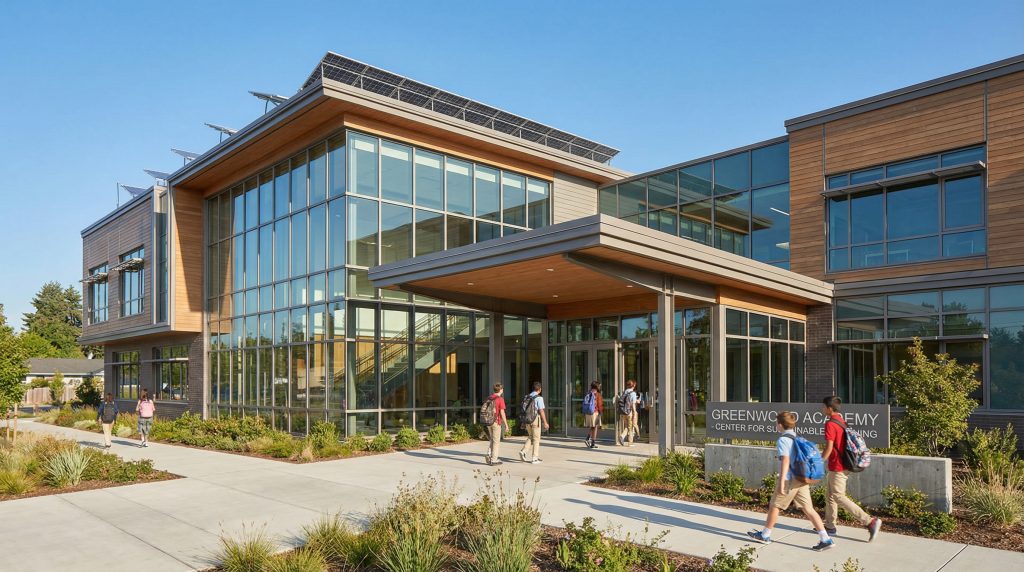
Selecting the right glass for education projects requires a deep understanding of the unique stressors found in school environments. You must consider how durability and light transmission levels will impact student focus throughout the day. Unlike standard commercial buildings, educational facilities require specific coatings to prevent glare on digital whiteboards.
Identifying primary performance goals
You need to define whether your priority is safety, thermal control, or sound reduction before making a purchase. Think about it.
- Determine the student traffic levels in the area.
- Evaluate the proximity to noisy playgrounds or streets.
- Check local building codes for impact resistance requirements.
Here is why. Clear goals prevent expensive retrofitting after the school is already operational.
Considering regional climate zones
Your local weather patterns should dictate the insulation properties of the glazing you select. It gets better.
- Review annual temperature extremes in your area.
- Assess the average hours of direct sunlight.
- Analyze the typical wind loads for the building height.
Make no mistake. Ignoring the local climate leads to massive HVAC energy waste.
Key Takeaway: Defining your goals and climate needs early ensures the glass performs as expected for decades.
| Feature | Consideration | Goal |
|---|---|---|
| Durability | High-traffic zones | Safety |
| Coatings | Classroom glare | Visibility |
| Insulation | Local climate | Energy savings |
Detailed performance goals are the foundation of any successful school glazing strategy.
Why does location affect glass for education projects?
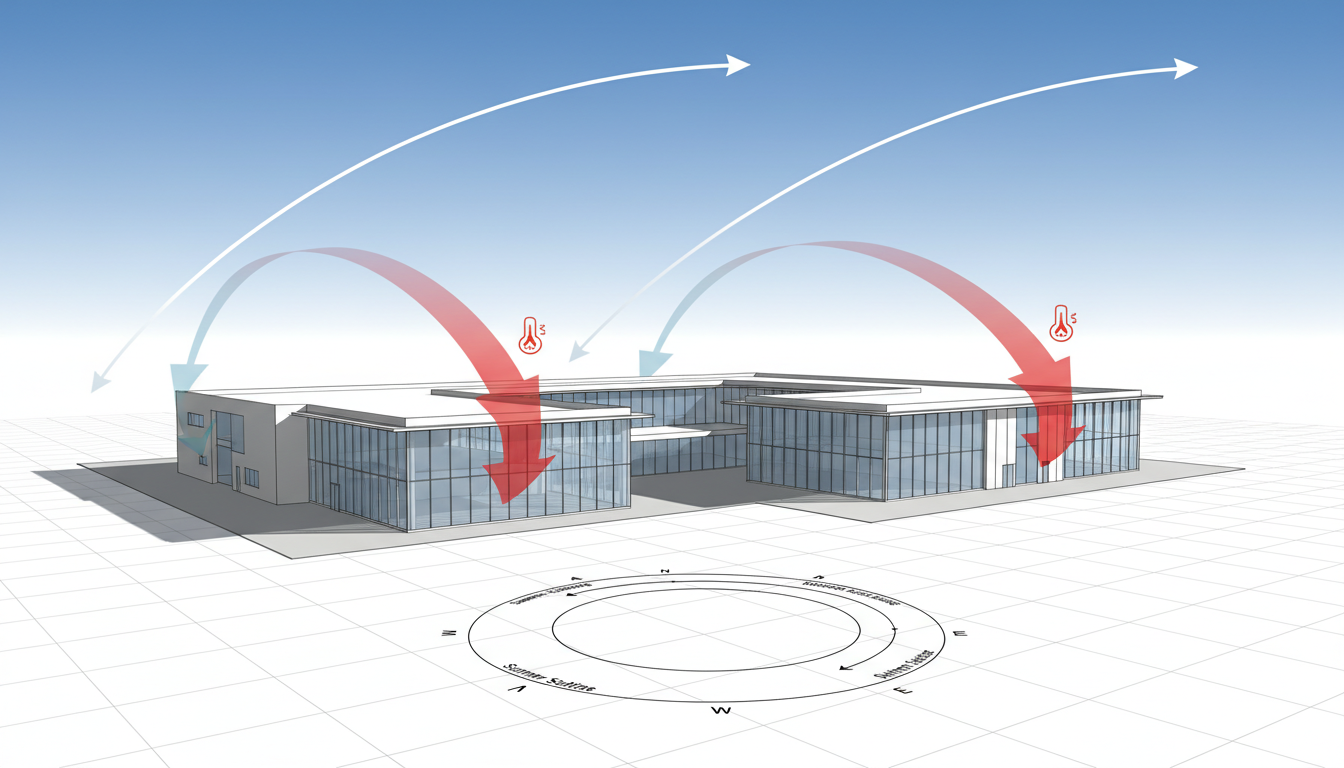
The geographical orientation of a building changes how glass for education projects interacts with solar energy. A school’s position determines if the primary challenge is heat loss during winter or overheating in the summer months. You must analyze the sun path to decide which facades require higher reflectivity or better insulation.
Solar gain and sun path impacts
The angle of the sun at different times of the year significantly affects classroom temperature. Here is the kicker.
- South-facing windows often require solar control coatings.
- East-facing glass must manage morning glare for early sessions.
- West-facing units need heat rejection for afternoon comfort.
The bottom line? Proper orientation analysis can reduce artificial cooling needs by up to thirty percent.
The benefits of northern light
Northern light is often considered the gold standard for art rooms and general classrooms. Believe it or not.
- It provides consistent, diffuse illumination.
- There is minimal solar heat gain compared to other directions.
- It reduces the need for expensive motorized blinds.
Wait, there’s more. Northern exposure allows for larger windows without compromising the thermal envelope.
Key Takeaway: Strategic orientation turns natural sunlight into a tool for learning rather than a source of discomfort.
| Orientation | Primary Need | Best Glass Type |
|---|---|---|
| South | Heat Rejection | Solar Control |
| North | Light Entry | High Transparency |
| East/West | Glare Management | Tinted or Fritted |
Analyzing the building’s position allows you to customize the glazing for every specific facade.
Which glass for education projects improves safety?
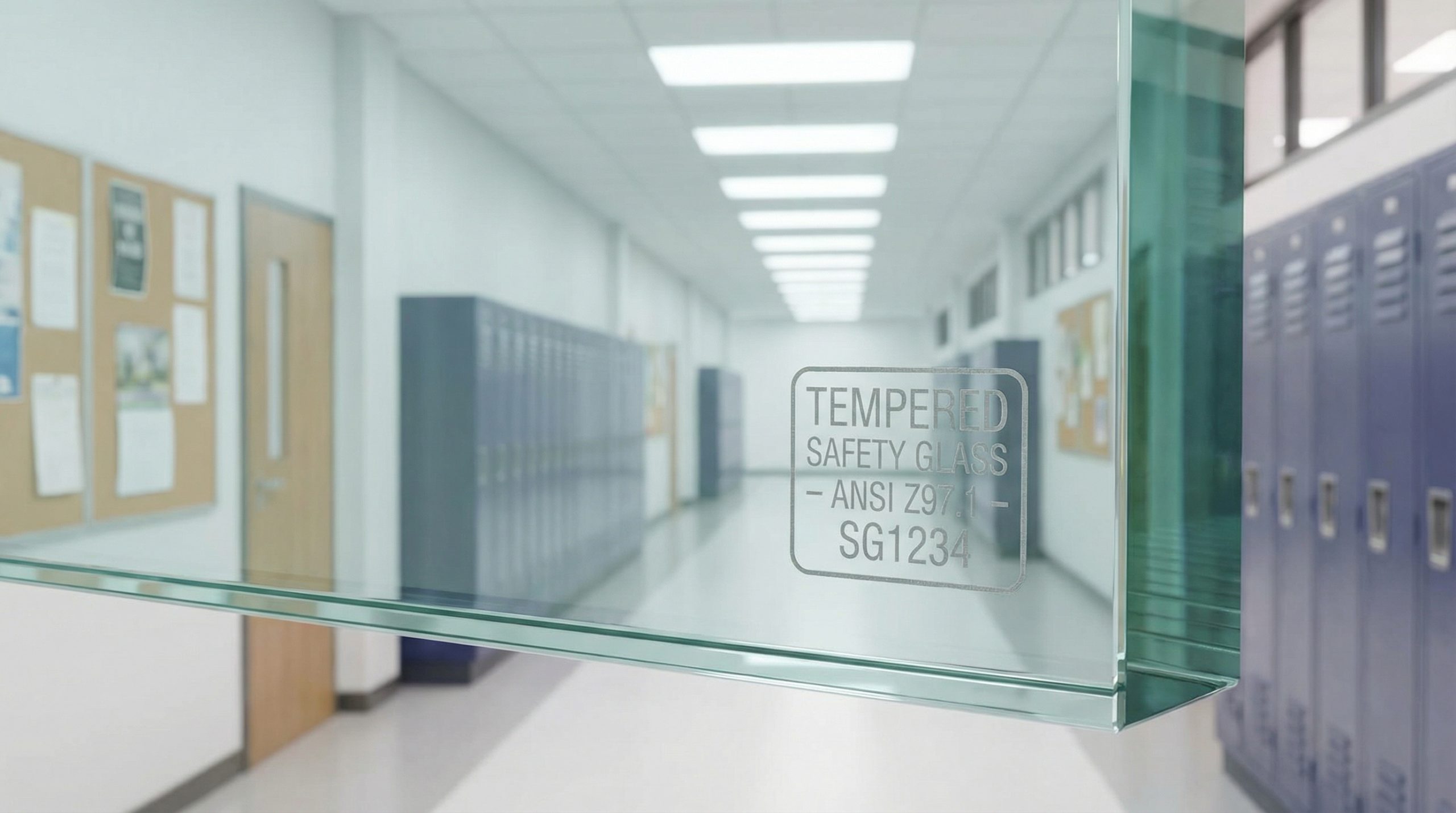
Specifying high-impact glass for education projects is a non-negotiable step to protect students in high-activity zones. In areas like gymnasiums or corridors, using tempered glass is essential to prevent severe injuries from accidental breakage. This type of glass is processed to be significantly stronger than standard annealed options.
Reacting under heavy impact
Safety glass is designed to break into small, blunt pieces rather than sharp shards. Simply put.
- It withstands higher mechanical stress from running students.
- It resists thermal stress in areas with uneven heating.
- It provides a higher level of security against vandalism.
Why does this matter? This reduces the risk of liability and keeps your facility compliant with modern safety codes.
High-risk zone identification
You must identify the specific locations where children are most likely to collide with glass panels. Think about it.
- Low-level windows near hallways are primary safety concerns.
- Entrance doors and sidelites require heavy-duty reinforcement.
- Staircase railings must utilize thick, impact-resistant panels.
Here is why. Pre-identifying these zones ensures you don’t overspend on safety glass where it isn’t required.
Key Takeaway: Safety glass is the most critical investment for protecting students and reducing long-term liability.
| Zone | Hazard | Safety Solution |
|---|---|---|
| Gymnasium | High-velocity impact | Heavy Tempered |
| Hallway | Frequent collisions | Laminated Safety |
| Entrance | High-traffic/Security | Reinforced Glass |
Protecting students requires a targeted approach to glass strength in the most vulnerable campus areas.
How does glass for education projects manage noise?
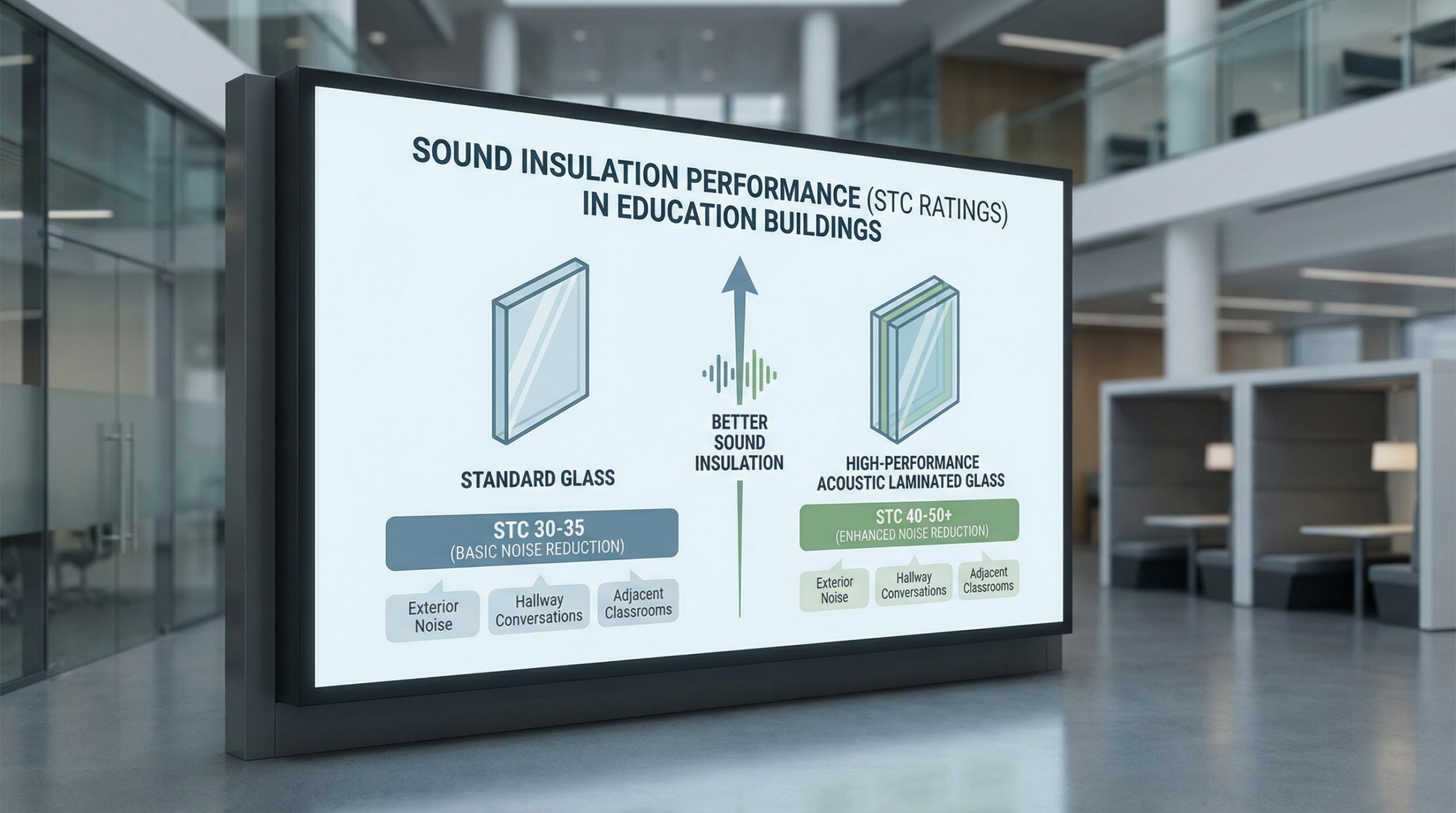
Acoustic comfort is vital for speech intelligibility, making the sound-dampening properties of glass for education projects a top priority. External noise from traffic, sirens, or playgrounds can significantly distract students and hinder the learning process. You can use advanced laminated glass to create a peaceful environment inside the classroom.
The power of acoustic laminated layers
Laminated units use a specialized interlayer that absorbs sound vibrations instead of passing them through. It gets better.
- It blocks high-frequency noise from whistles and children.
- It reduces low-frequency rumble from nearby construction.
- It maintains crystal clear transparency while silencing the outside world.
Make no mistake. Standard single-pane glass provides almost no protection against external auditory distractions.
Understanding STC ratings for schools
The Sound Transmission Class rating tells you exactly how much noise a window will block. Here is the kicker.
- Higher STC numbers indicate better sound isolation.
- Standard windows usually sit between STC twenty-five and thirty.
- Acoustic glass can reach STC ratings above forty-five.
The bottom line? Selecting a high STC rating ensures teachers do not have to compete with outside noise.
Key Takeaway: Acoustic glazing transforms a noisy campus into a quiet space dedicated to academic focus.
| Noise Level | Example | Recommended STC |
|---|---|---|
| Low | Interior partitions | 30 – 35 |
| Moderate | Suburban street | 35 – 40 |
| High | Near airport/Highway | 45+ |
Investing in acoustic performance ensures that every word spoken by the teacher reaches the student clearly.
Can glass for education projects lower energy costs?
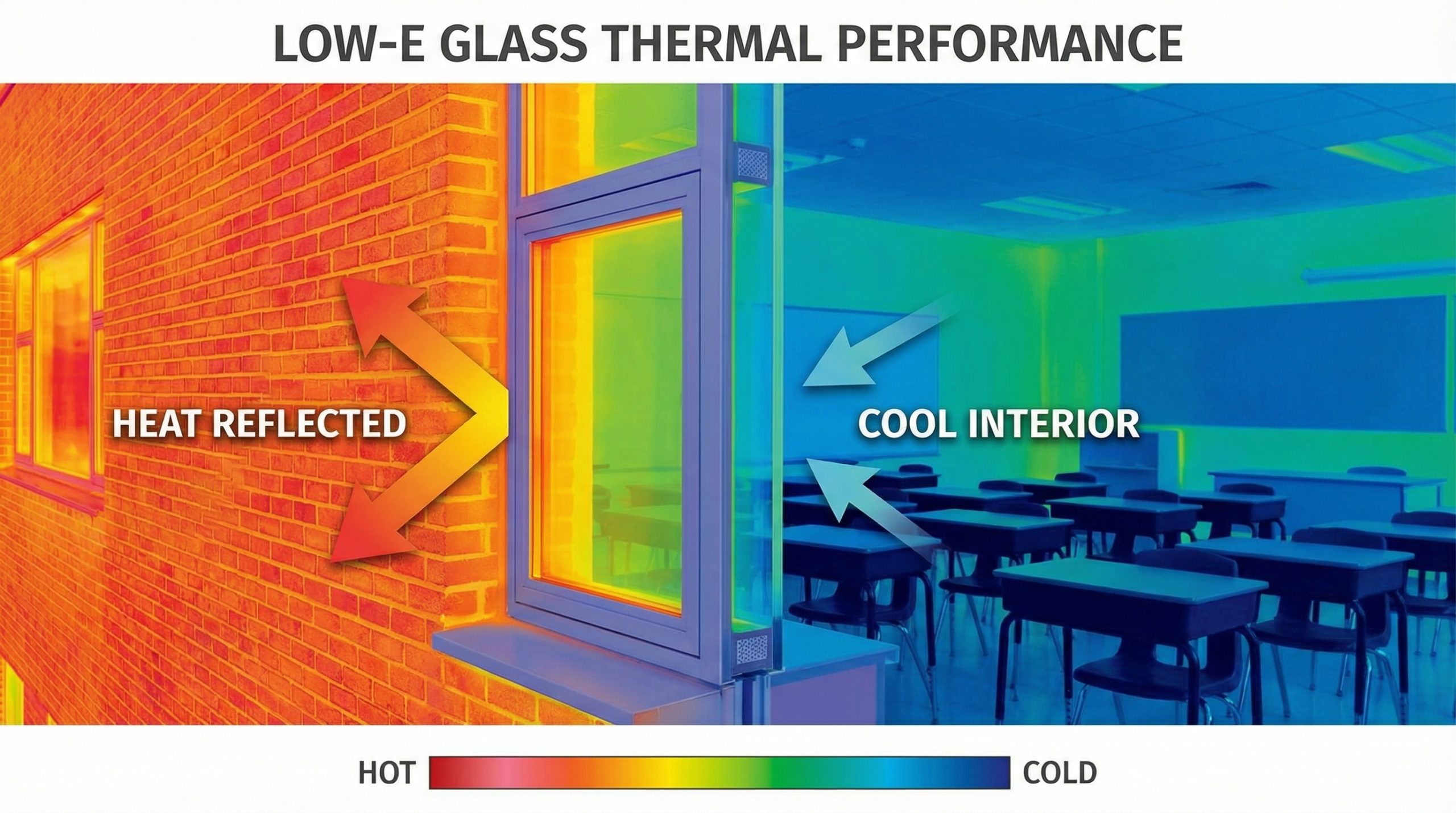
Educational budgets are often limited, so choosing energy-efficient glass for education projects is a smart financial move. High-performance low-E glass coatings are designed to reflect heat back to its source, keeping schools cool in summer and warm in winter. You can significantly reduce the load on your HVAC system by selecting the right coating.
Return on investment for glazing
While high-efficiency glass has a higher initial cost, the long-term energy savings are substantial. Believe it or not.
- It lowers monthly utility bills for the entire building.
- It extends the lifespan of expensive air conditioning units.
- It qualifies many projects for green building tax credits.
Wait, there’s more. Better insulation means you can often install smaller, less expensive HVAC systems during construction.
The impact of U-values on bills
The U-value measures how much heat escapes through the glass surface over time. Simply put.
- Low U-values mean the window is an excellent insulator.
- High-efficiency coatings prevent “cold spots” near classroom windows.
- Dual-pane units with argon gas further enhance these thermal properties.
Why does this matter? Comfortable students are more productive, and lower bills keep school boards happy.
Key Takeaway: Energy-efficient glass pays for itself over time by slashing operational costs and improving student comfort.
| Performance Metric | Meaning | Desired Direction |
|---|---|---|
| U-Value | Heat loss rate | Lower is better |
| SHGC | Solar heat gain | Lower for hot climates |
| VLT | Light transmission | Higher for visibility |
Thermal management through smart glass selection is the most effective way to control a school’s carbon footprint.
Is privacy glass for education projects necessary?
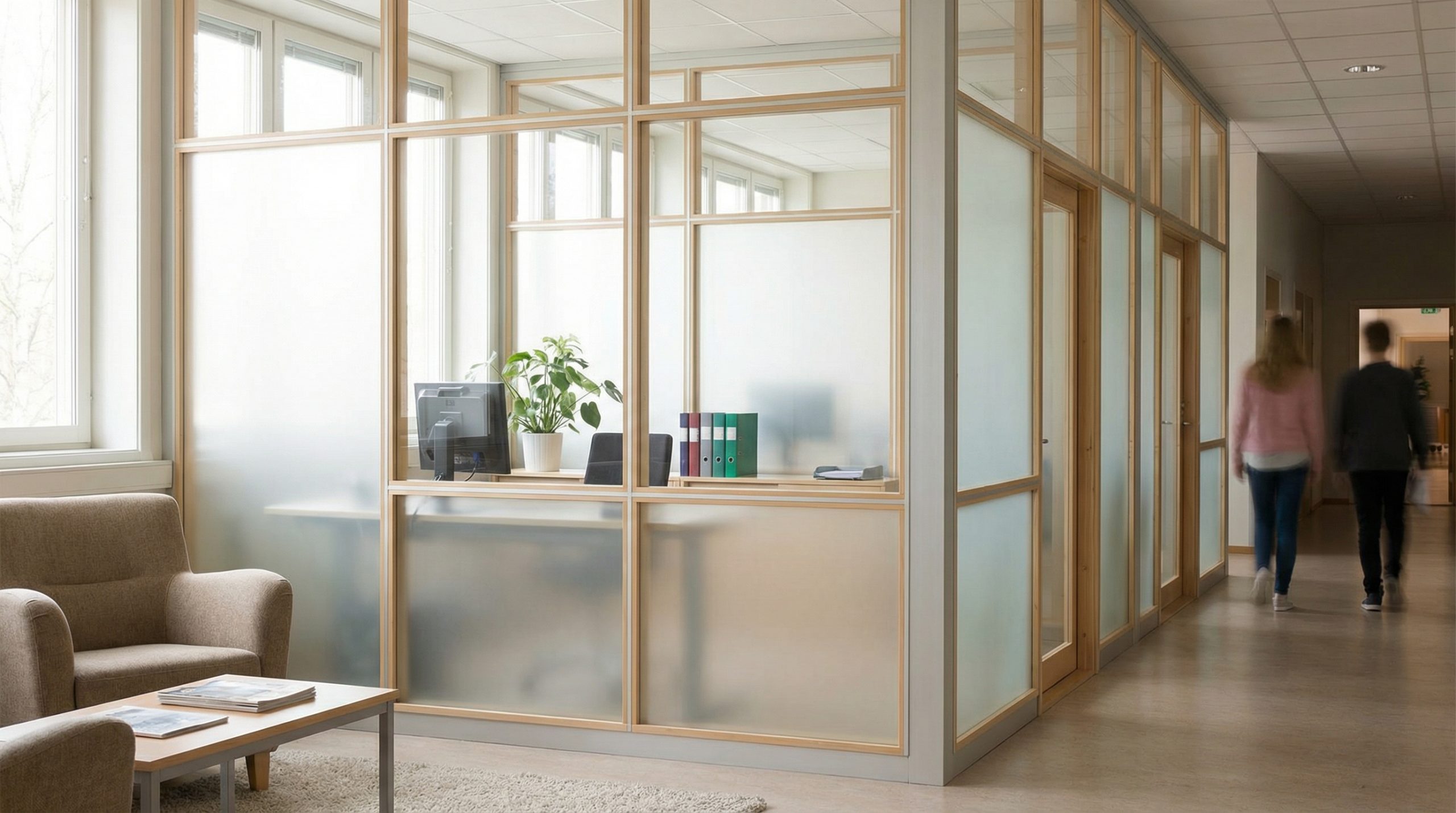
While transparency is usually desired, certain areas require the specialized privacy offered by specific types of glass for education projects. Administrative offices, nurse stations, and internal partitions often need to obscure views while still allowing natural light to pass. You can use hollow glass or frosted options to meet these confidentiality needs.
Using hollow glass for thermal privacy
Hollow glass units provide both excellent insulation and opportunities for internal shading devices. Think about it.
- You can specify integrated blinds that never need cleaning.
- They offer superior sound privacy for sensitive meetings.
- The dual-pane structure resists condensation in humid areas.
Here is why. Integrated privacy solutions are more durable than external curtains in a school setting.
Ceramic fritted glass for shading
Fritted patterns allow you to add privacy and solar shading through decorative glass designs. It gets better.
- You can choose custom patterns like dots or lines.
- It reduces the amount of light that enters specific areas.
- It prevents birds from flying into large glazed facades.
Make no mistake. Frosted or fritted glass provides a modern look without the “closed-off” feel of solid walls.
Key Takeaway: Privacy glass allows you to maintain an open architectural feel while protecting sensitive information and activities.
| Application | Privacy Level | Best Solution |
|---|---|---|
| Nurse Station | High | Frosted / Translucent |
| Main Office | Moderate | Ceramic Fritted |
| Library | Low | Clear / Tinted |
Balancing visibility with confidentiality creates a professional and secure environment for staff and students.
Does glass for education projects enhance aesthetics?
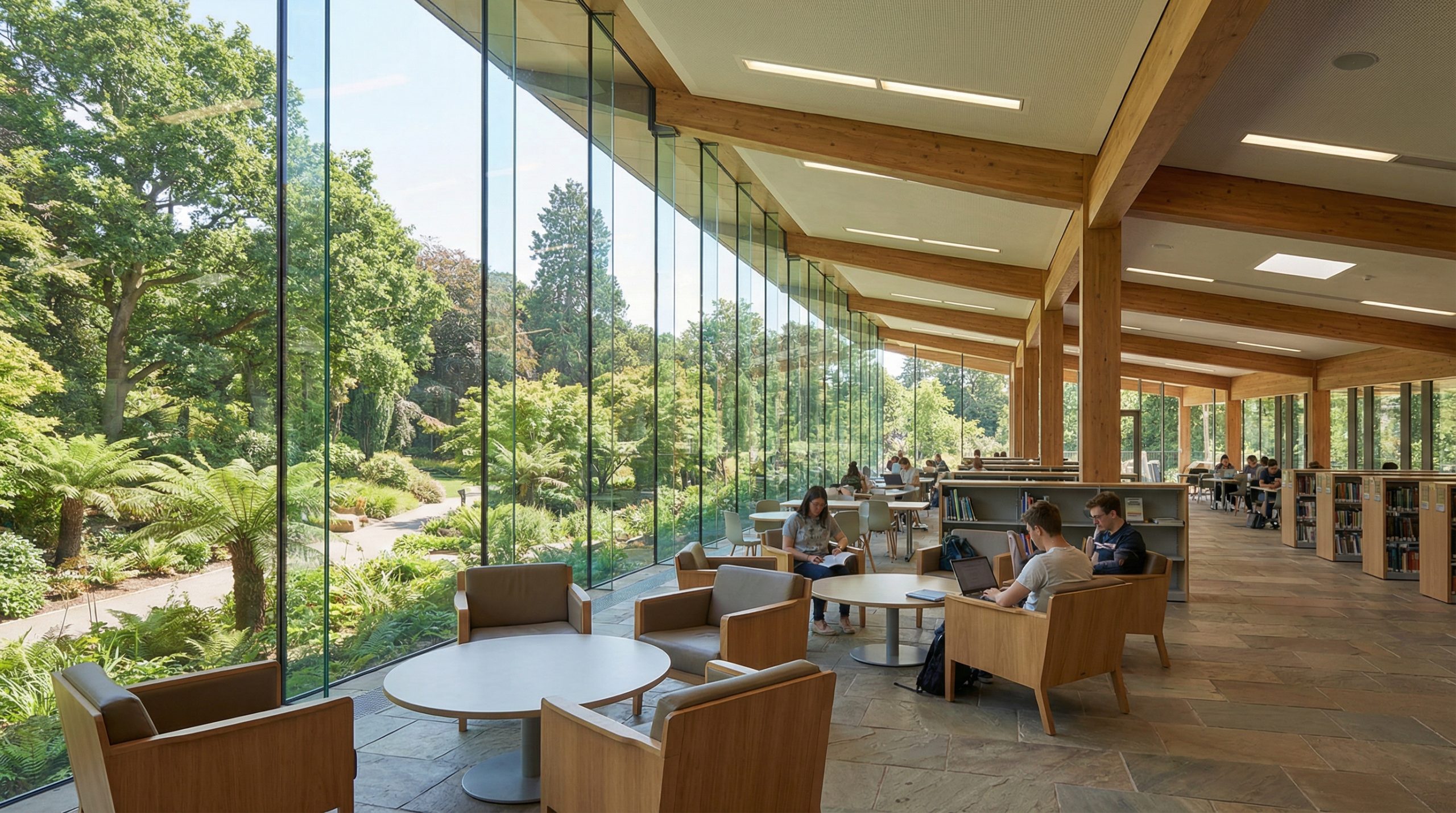
The visual appeal of a facility influences student morale, which is why the aesthetic quality of glass for education projects is so important. Modern schools aim for a neutral, high-transparency look that connects the interior learning spaces with the outside world. You should look for low-iron glass options to avoid the green tint found in standard glass.
The importance of color neutrality
Neutral tones ensure that the colors inside the classroom look natural and vibrant. Here is the kicker.
- It prevents the “greenish” look of thick glass panels.
- It allows for a truer representation of outdoor landscapes.
- It coordinates perfectly with any exterior cladding material.
The bottom line? High-clarity glass makes a building feel more premium and well-designed.
Creating a seamless indoor-outdoor flow
Large glazed areas can make a school feel less like a prison and more like an inspiring campus. Believe it or not.
- Visual access to nature reduces student stress levels.
- It creates a sense of community by showing the activity inside.
- Open views can make small classrooms feel much larger.
Wait, there’s more. Using glass for internal corridors allows natural light to reach the center of the building.
Key Takeaway: Aesthetic glass choices foster an environment that students and teachers are proud to attend every day.
| Design Goal | Glass Property | Visual Result |
|---|---|---|
| High Clarity | Low-Iron Content | No green tint |
| Modern Look | Low Reflectivity | Invisible barriers |
| Dynamic Facade | Reflective Coating | Sky-blending effect |
Thoughtful aesthetic choices prove that a functional school can also be an architectural masterpiece.
How to test glass for education projects on-site?
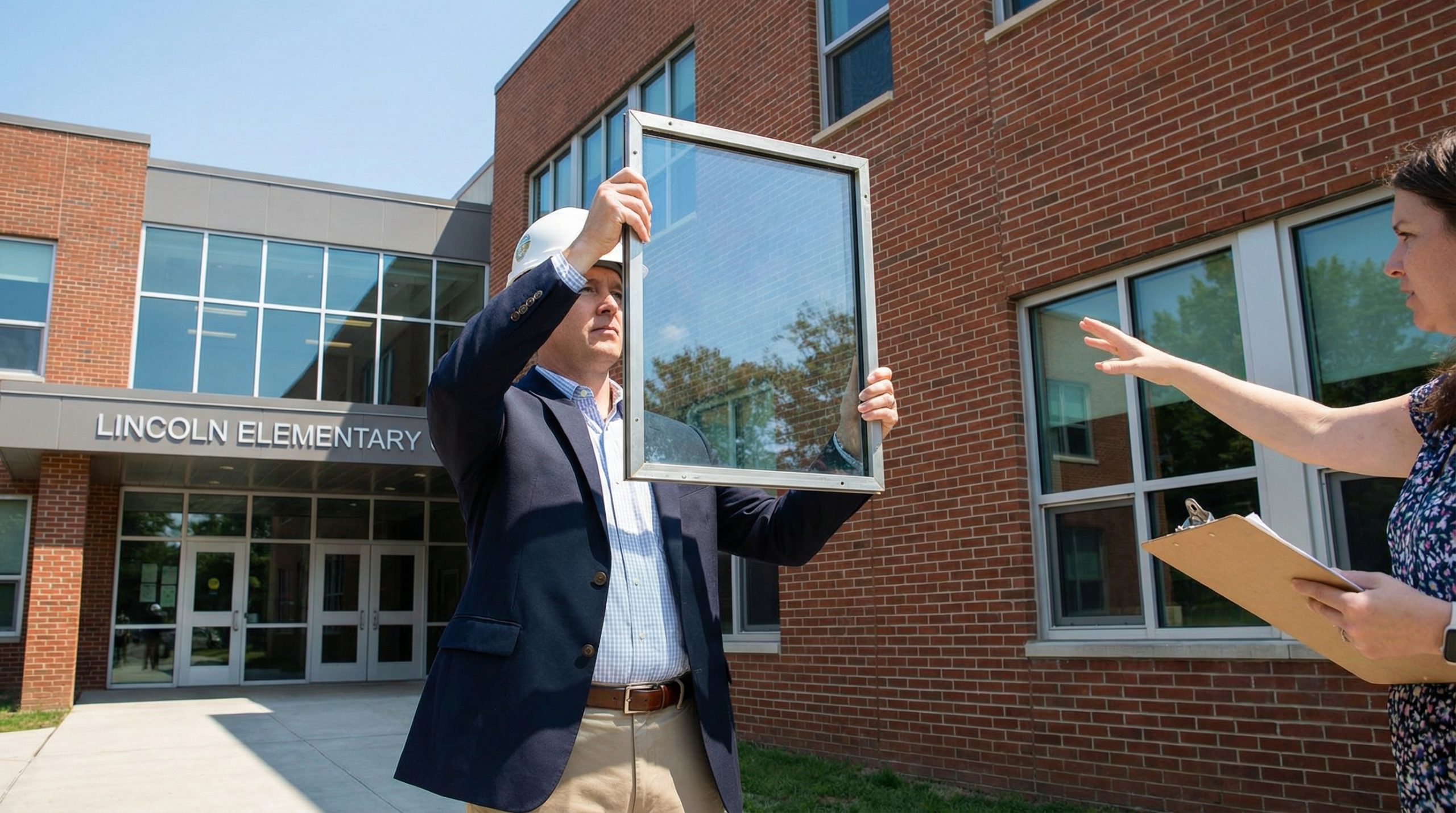
Before final installation, evaluating samples of glass for education projects under real-world conditions is the only way to ensure success. Light changes throughout the day, and viewing samples outdoors provides a more accurate representation of the final look. You should always request a full-size mockup if you are specifying glass for a large facade.
Viewing glass in natural daylight
Artificial showroom lighting can hide the true color and reflectivity of a glass unit. Simply put.
- Hold samples up against the actual building site.
- Check how the glass looks under cloudy and sunny skies.
- Observe the interior view at different times of the day.
Why does this matter? What looks great in a catalog might look too dark or too reflective on your specific site.
Assessing glare during peak hours
You need to know if the sun will create blinding reflections on student desks or screens. Think about it.
- Test the glass when the sun is at its lowest angle.
- Evaluate how much glare is visible from various sitting positions.
- Confirm that the coating doesn’t create unwanted internal reflections.
Here is why. Solving glare issues during the sampling phase is much cheaper than buying new blinds later.
Key Takeaway: On-site testing is the final safety net to ensure your architectural vision matches the reality of the site.
| Testing Step | What to Check | Why it Matters |
|---|---|---|
| Side-by-Side | Color match | Visual consistency |
| Angle Test | Reflectivity | Glare prevention |
| Indoor View | Transparency | Student comfort |
Rigorous on-site evaluation removes the guesswork from complex architectural glass procurement.
Why use durable glass for education projects?
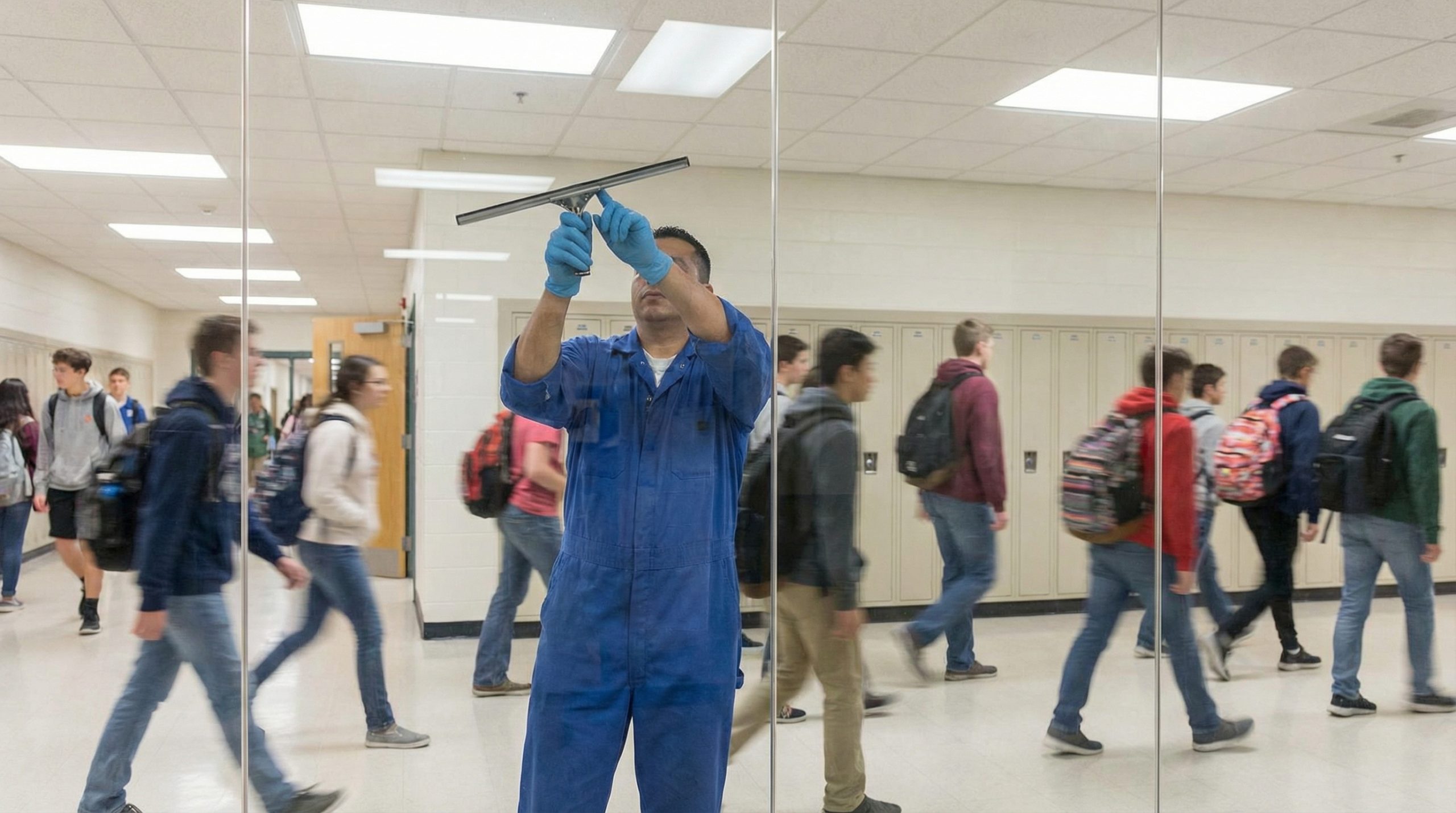
Schools are high-wear environments, necessitating that glass for education projects be resistant to scratches and chemical cleaners. You need a product that stays clear and functional despite being touched by thousands of students every day. Investing in high-quality fabrication ensures the glass doesn’t degrade or cloud over its long service life.
Resistance to frequent cleaning
Janitorial staff often use aggressive chemicals to remove fingerprints and graffiti from school windows. It gets better.
- High-quality coatings are fused into the glass surface.
- They resist “hazing” caused by repeated scrubbing.
- Specialized treatments can make the glass easier to clean.
Make no mistake. Cheap glass will quickly show wear and tear, making the entire school look neglected.
Preventing spontaneous glass breakage
In environments with children, the last thing you want is a window that breaks for no apparent reason. Here is the kicker.
- Heat-soak testing can identify unstable glass units.
- Precision edge grinding reduces the risk of stress cracks.
- Durable frames protect the glass edges from impact.
The bottom line? Durability is not just about looks; it is a core component of facility safety.
Key Takeaway: Durable glass reduces maintenance costs and ensures the school looks new for a generation.
| Durability Factor | Impact on School | Maintenance Benefit |
|---|---|---|
| Scratch Resistance | Clearer views | Less replacement |
| Chemical Stability | Resists hazing | Easy cleaning |
| Edge Strength | Prevents cracks | Long-term safety |
A durable glazing solution is an investment in the long-term integrity of the educational facility.
What is the best glass for education projects?
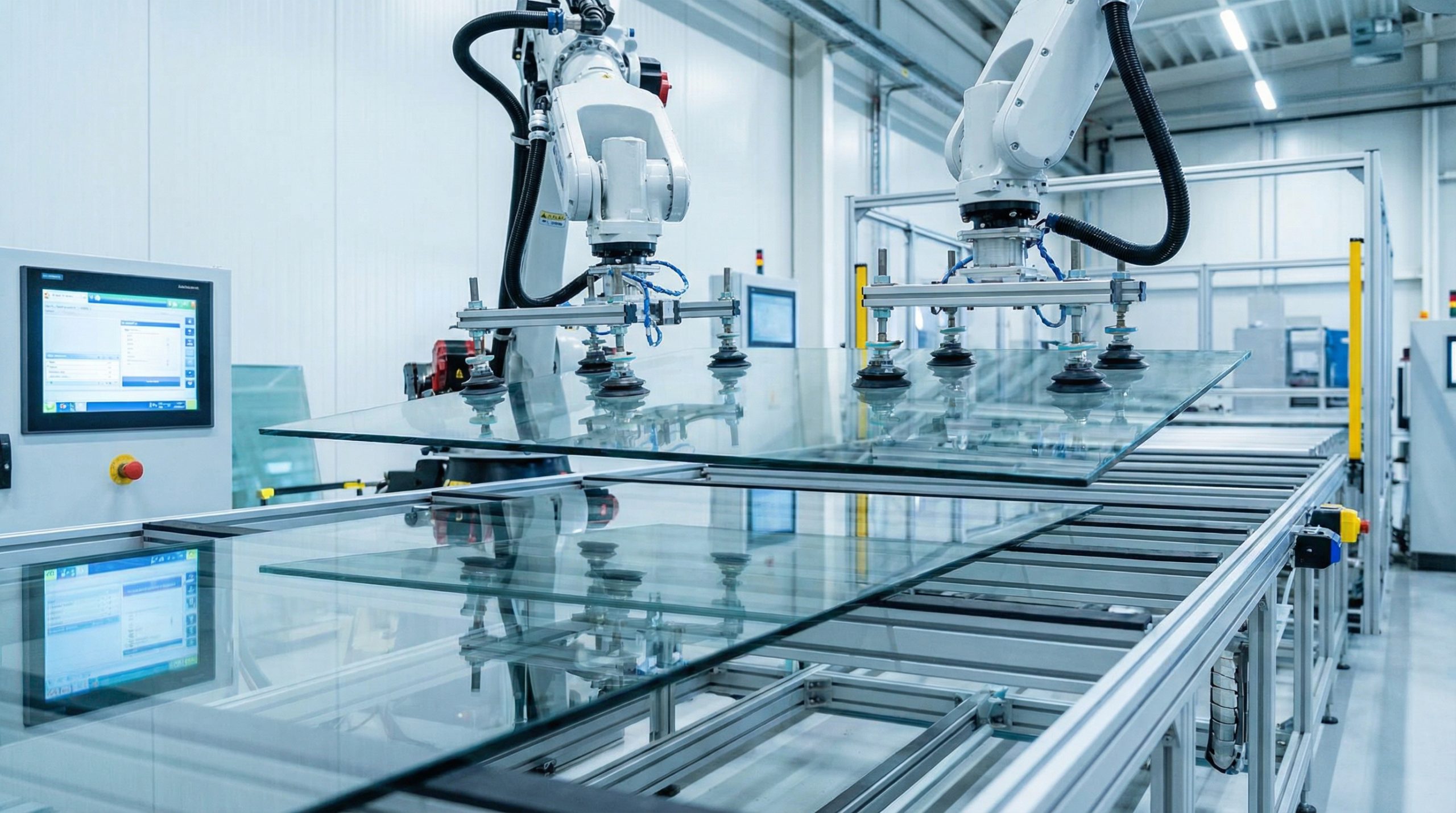
Finding the ultimate solution for glass for education projects involves balancing technical specifications with procurement efficiency. To ensure both quality and fast lead times, you should consider contacting a direct manufacturer who can customize every panel to your blueprint. Working directly with the factory eliminates middleman markups and communication errors.
Sourcing directly from the factory
Direct sourcing gives you better control over the production timeline and quality standards. Believe it or not.
- You get direct access to engineering expertise.
- Production cycles are often cut from eight weeks to four.
- You can verify that all safety standards are met at the source.
Wait, there’s more. Direct manufacturers can provide project-specific testing reports to pass any inspection.
Custom dimensioning and cutting
Every school has unique window sizes and hardware requirements that require precision fabrication. Simply put.
- CNC cutting ensures a perfect fit for every frame.
- Pre-drilled holes for hardware prevent on-site breakage.
- Custom shapes are easily accommodated for modern designs.
Why does this matter? Precision fabrication at the factory means faster installation and zero rework on the job site.
Key Takeaway: Partnering directly with a manufacturer is the fastest way to get high-spec glass that fits your budget.
| Procurement Path | Lead Time | Customization |
|---|---|---|
| Local Distributor | 6 – 10 Weeks | Limited |
| Direct Factory | 3 – 5 Weeks | High / Full |
| Online Retailer | Unreliable | None |
Choosing a direct manufacturing partner ensures your school project stays on schedule and meets every performance metric.
Experience the PrimePro Advantage
At PrimePro Glass, we understand that educational facilities require a unique blend of safety, silence, and savings. Our team is dedicated to providing precision-engineered glass solutions that turn your architectural blueprints into high-performance learning environments.
Whether you need impact-resistant tempered panels or high-STC acoustic glazing, we deliver factory-direct quality with guaranteed lead times to keep your project moving forward.
Contact our expert engineering team today to receive a custom quote and technical review for your upcoming school project.
Frequently Asked Questions
Can I get custom-sized glass for my school project?
Yes, we specialize in custom-to-blueprint manufacturing where every panel is cut to your exact dimensions. Our CNC fabrication process ensures ±0.5mm tolerance control for a perfect fit every time.
What’s the best glass for high-traffic school hallways?
Laminated safety glass or thick tempered glass is the best choice for hallways. These options provide the necessary impact resistance to handle student collisions and prevent sharp shards if breakage occurs.
Can glass help my school achieve green building certifications?
Absolutely, high-performance low-E and insulated glass units are primary contributors to energy efficiency points. They significantly reduce carbon footprints by lowering the energy required for heating and cooling.
What is the typical lead time for a large school order?
Our integrated factory production typically takes 25 to 30 days after drawing confirmation. We also offer expedited scheduling for urgent projects that need to meet strict academic calendar deadlines.
How do I verify the safety standards of the glass?
Every batch of our glass undergoes rigorous quality inspection and complies with international safety standards. We provide full traceability and material certification documents with every shipment we deliver.