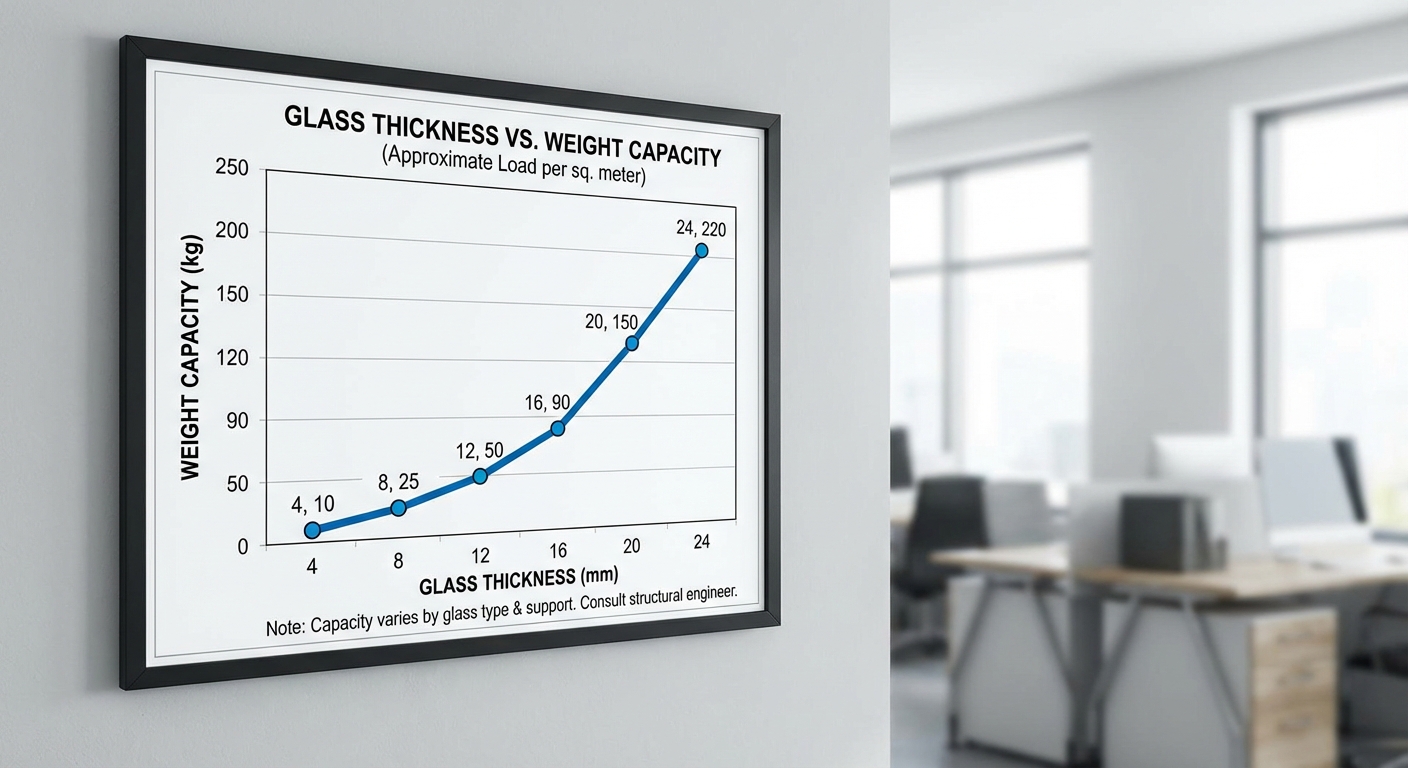
A standard piece of 1/4-inch tempered glass can support approximately 200 to 300 pounds per square foot when properly supported, while thicker panels can handle over 1,000 pounds. You likely worry that your elegant glass surfaces are fragile or prone to sudden failure under pressure. This anxiety often leads to over-engineering projects or avoiding glass altogether, missing out on the aesthetic beauty and light-sharing properties it provides. By understanding the specific tempered glass weight capacity and structural limits, you can confidently integrate glass into your high-load projects without compromising safety or style.
What is the tempered glass weight capacity for shelving?

The tempered glass weight capacity for shelving depends heavily on the width of the span and the thickness of the material used. A typical 24-inch shelf made of 3/8-inch glass can safely support up to 200 pounds of distributed weight.
Distributed vs. Point Loads
- Bucket Brigade: Here is the truth about loading.
- Distributed Load: Spreading items across the shelf maximizes the weight-bearing potential.
- Point Load: Concentrating a heavy object in the center significantly reduces the safe limit.
Standard Shelf Load Limits
- 1/4″ Glass (24″ Span): ~120 lbs.
- 3/8″ Glass (24″ Span): ~200 lbs.
- 1/2″ Glass (48″ Span): ~180 lbs.
Key Takeaway: Always use distributed loading to maximize the safety of your glass shelving.
| Glass Thickness | Span Width | Distributed Weight Limit |
|---|---|---|
| 1/4 inch | 24 inches | 120 lbs |
| 3/8 inch | 24 inches | 200 lbs |
| 1/2 inch | 48 inches | 180 lbs |
Using the correct thickness for your specific span ensures the glass remains rigid and secure under pressure.
How does thickness impact tempered glass weight capacity?
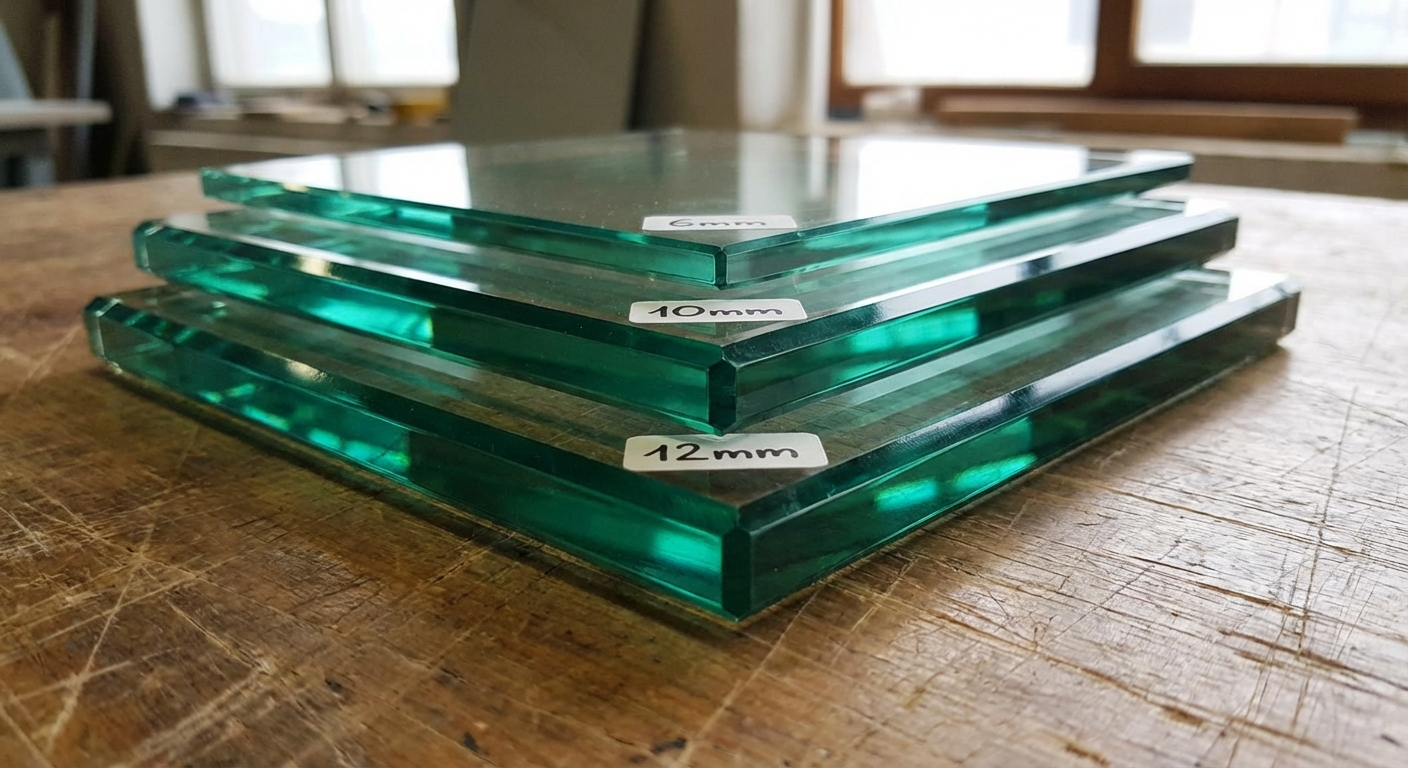
Increasing the thickness of a panel is the most direct way to bolster the tempered glass weight capacity for any architectural application. As thickness increases, the glass becomes exponentially more resistant to bending and tension forces.
6mm vs. 12mm Capacity
- Bucket Brigade: Think about it this way.
- 6mm (1/4″): Ideal for lightweight decor and cabinet doors.
- 12mm (1/2″): Necessary for structural railings and heavy-duty tables.
Why Thickness Matters for Safety
- Thicker glass resists impact better.
- It reduces “flex,” which prevents the glass from slipping out of its mounts.
Key Takeaway: When in doubt, opting for one thickness grade higher provides a significant safety buffer.
| Thickness (mm) | Thickness (inches) | Relative Strength |
|---|---|---|
| 6mm | 1/4″ | Baseline |
| 10mm | 3/8″ | ~2x Baseline |
| 12mm | 1/2″ | ~4x Baseline |
Selecting thicker glass ensures that the material can handle both static weight and unexpected physical impacts.
Does support type change tempered glass weight capacity?
The way a panel is mounted is just as critical as the glass itself when determining the total tempered glass weight capacity. A panel supported on all four sides will always hold significantly more weight than one supported only on two sides or via point-fixings.
Four-Sided vs. Two-Sided Support
- Bucket Brigade: Let’s look at the numbers.
- Four-sided: Allows 100% of the rated load.
- Two-sided: Reduces the safe capacity by approximately 60%.
The Danger of Point Supports
- Hardware like clips or standoffs creates “stress concentrations.”
- Improperly tightened bolts can lead to spontaneous shattering.
Key Takeaway: Full-frame support is the gold standard for high-weight glass applications.
| Support Type | Capacity Multiplier | Best Application |
|---|---|---|
| Full Perimeter | 1.0x | Table tops in frames |
| 2-Sided (End) | 0.4x | Floating shelves |
| Point Fixings | 0.3x-0.5x | Signage and displays |
Maximum safety is achieved when weight is distributed across the entire perimeter of the glass panel.
Is the tempered glass weight capacity safe for table tops?
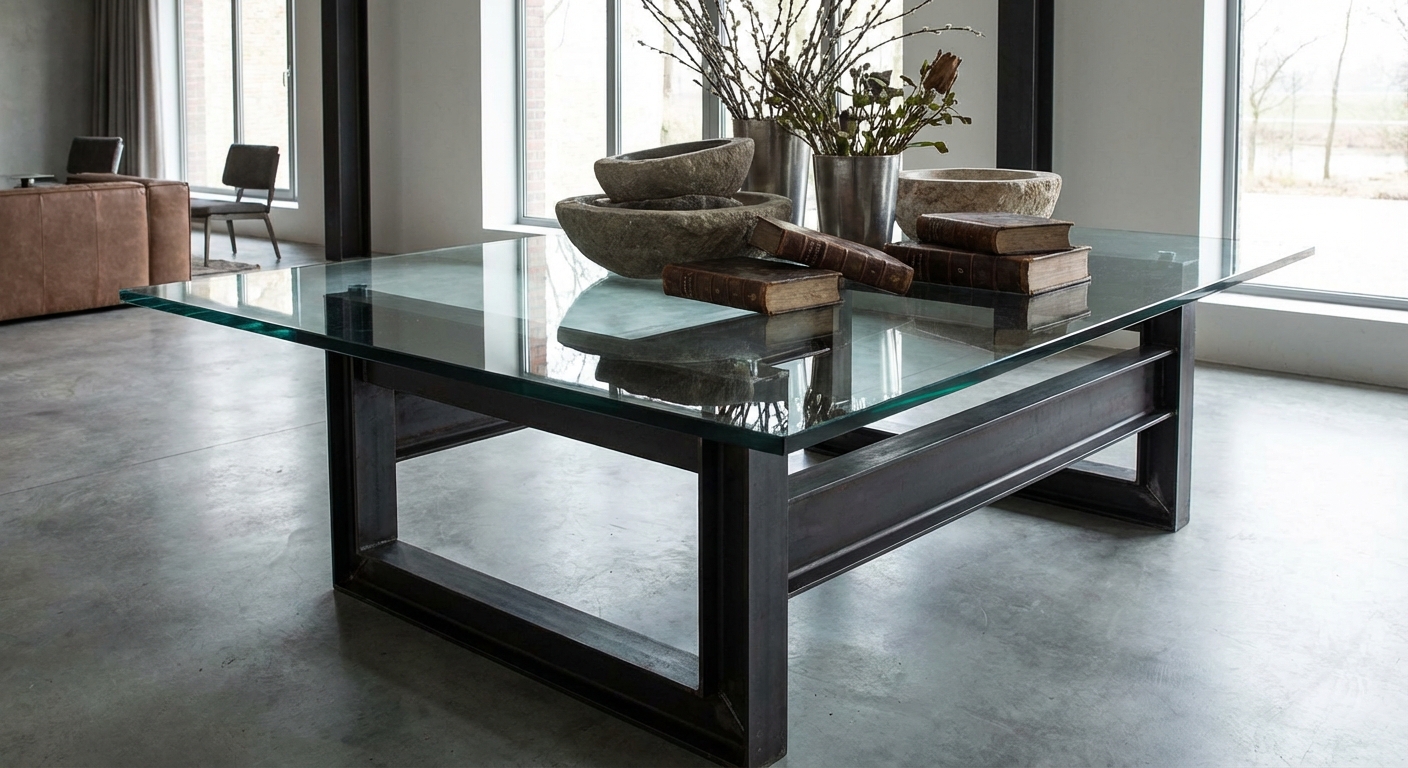
Yes, the tempered glass weight capacity for table tops is specifically designed to handle everything from heavy dinnerware to decorative centerpieces. A 48″ x 30″ dining table top with 3/8-inch thickness can safely manage up to 400 pounds of distributed weight.
Dining Table Standards
- Bucket Brigade: You might be wondering.
- Most dining tables use 3/8″ or 1/2″ glass.
- Tempered glass is 4 to 5 times stronger than annealed glass of the same size.
Can You Sit on a Glass Table?
- Standard glass tables are not designed for dynamic human weight.
- Sudden movements can exceed the capacity even if the static weight is within limits.
Key Takeaway: Glass tables are strong for objects but should never be used as seating or step stools.
| Table Size | Glass Thickness | Max Distributed Load |
|---|---|---|
| 48″ x 30″ | 3/8″ | 400 lbs |
| 60″ x 36″ | 3/8″ | 315 lbs |
| 72″ x 42″ | 1/2″ | 500 lbs |
While table tops are remarkably resilient, they require careful use to avoid exceeding their dynamic load limits.
What determines tempered glass weight capacity in showers?
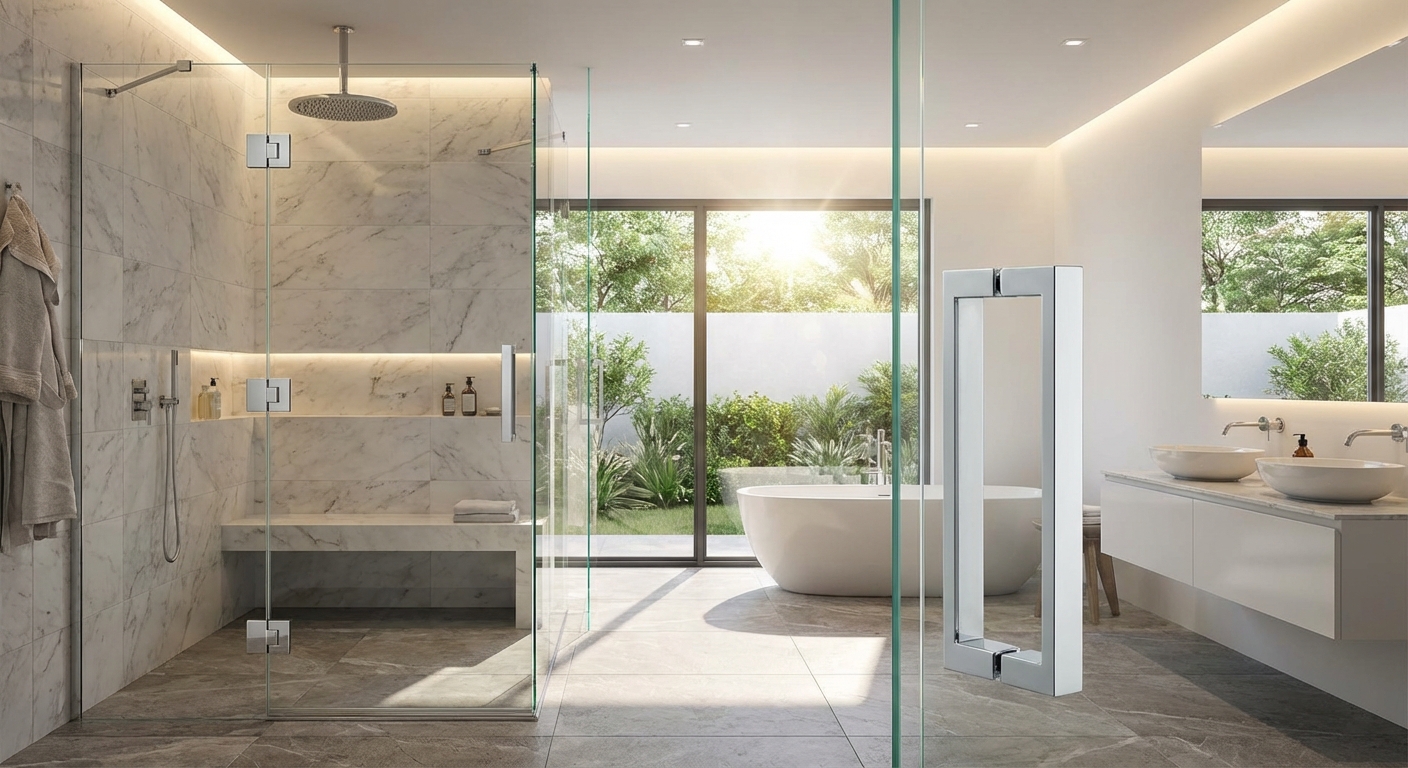
Calculating the tempered glass weight capacity for shower doors is unique because it must account for dynamic loads and the weight of heavy metal hardware. A standard 32-inch wide shower door made of 3/8-inch glass typically weighs around 80 pounds, which is well within the safety limits of high-quality hinges.
Dynamic Load Considerations
- Bucket Brigade: Here is the real challenge.
- Opening and closing creates centrifugal force.
- Hinges must be anchored into wall studs to support the glass weight.
Fixed Panel Stability
- Fixed panels use channels to distribute weight along the floor.
- This setup allows for much heavier and larger glass sections than swinging doors.
Key Takeaway: Ensure your wall structure is reinforced before installing heavy glass shower enclosures.
| Door Width | Glass Thickness | Total Glass Weight |
|---|---|---|
| 28 inches | 3/8″ | ~70 lbs |
| 32 inches | 3/8″ | ~80 lbs |
| 36 inches | 1/2″ | ~110 lbs |
Proper anchoring and hinge selection are vital to ensuring the safety of a heavy glass shower door.
Can span length reduce tempered glass weight capacity?
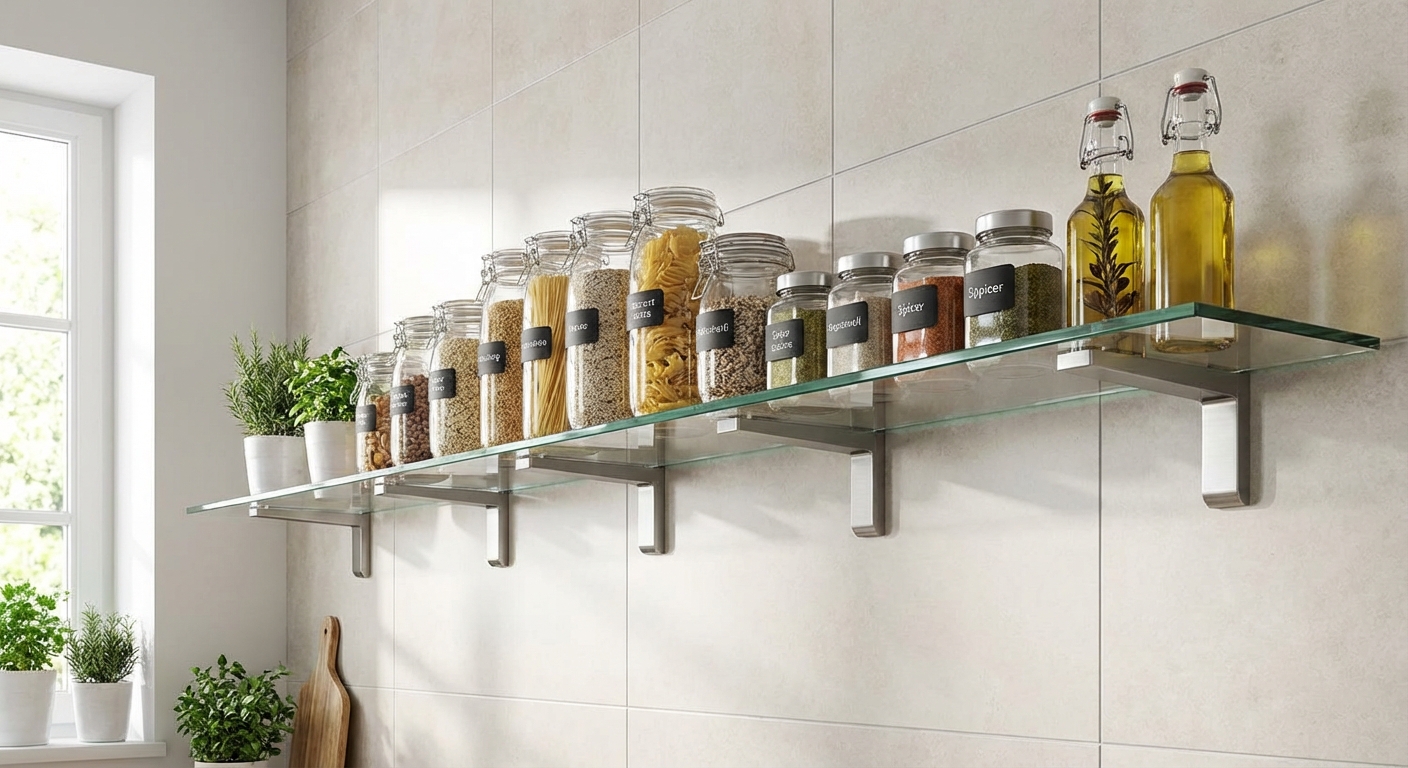
The distance between support brackets, known as the span, has an inverse relationship with the tempered glass weight capacity of the installation. For every few inches added to the span without adding support, the weight the glass can safely hold drops dramatically.
The Physics of Deflection
- Bucket Brigade: Here is why this matters.
- Long spans allow the glass to “bow” or deflect in the center.
- Excessive deflection leads to edge stress and potential failure.
Maximum Safe Spans
- 1/4″ glass should generally not exceed a 24″ span.
- 1/2″ glass can handle spans up to 48″ with moderate loads.
Key Takeaway: Adding a center support bracket can nearly double the effective weight capacity of a long glass shelf.
| Span Length | Thickness | Capacity Reduction |
|---|---|---|
| 24 inches | 3/8″ | 0% (Baseline) |
| 36 inches | 3/8″ | ~30% Reduction |
| 48 inches | 3/8″ | ~55% Reduction |
Managing the span correctly prevents the glass from bending beyond its structural limits.
How does shape affect tempered glass weight capacity?
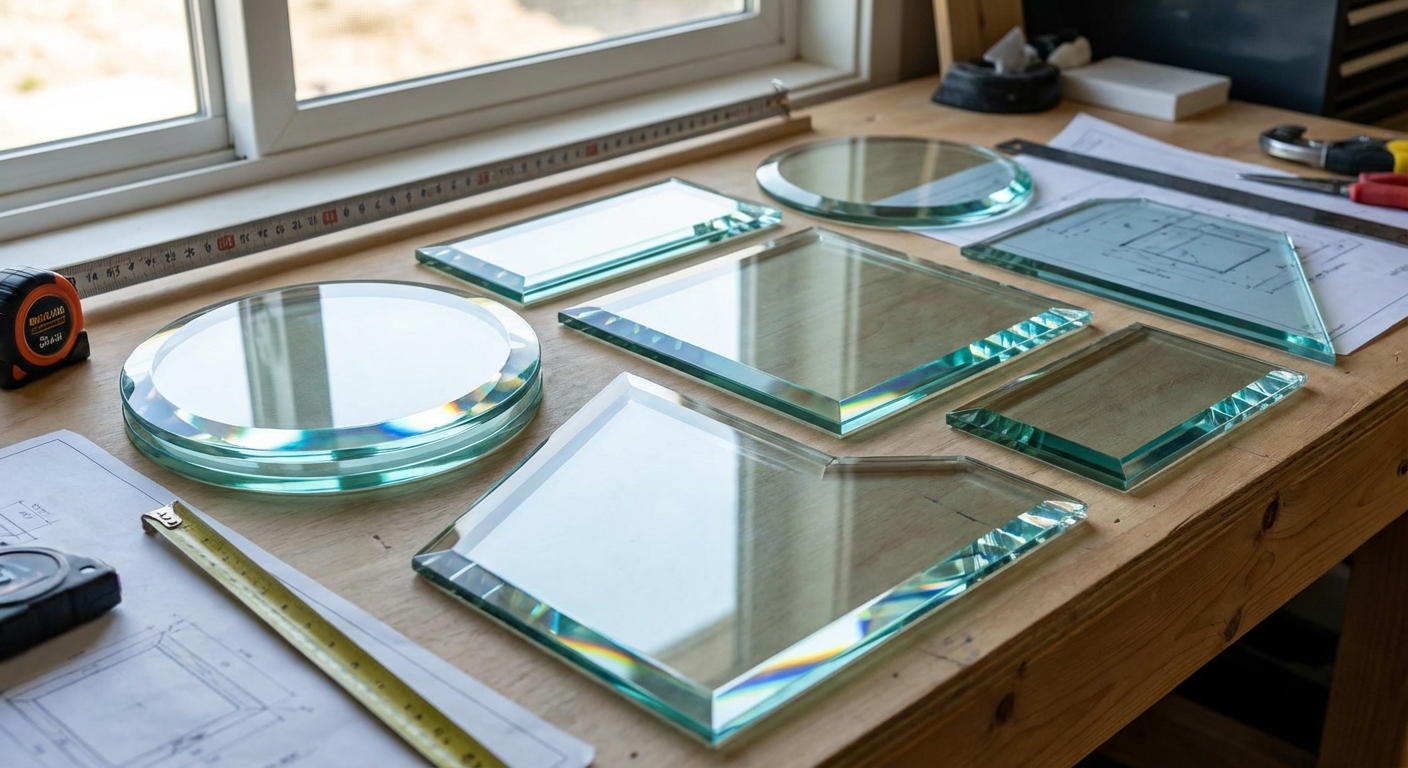
The geometry of a panel dictates how stress travels through the material, which directly alters the tempered glass weight capacity. Rectangular panels are the most efficient at distributing weight, while round or complex shapes have different stress profiles.
Rectangular vs. Round Strength
- Bucket Brigade: Consider the geometry.
- Rectangles distribute weight toward the corners and edges evenly.
- Rounds focus stress toward the center, requiring slightly more thickness for the same load.
Stress Points in Complex Shapes
- Notches or cut-outs create “seed points” for cracks.
- Always use radius (rounded) corners instead of sharp 90-degree internal cuts.
Key Takeaway: Simple geometric shapes are always structurally superior to complex custom cuts.
| Glass Shape | Strength Efficiency | Notes |
|---|---|---|
| Rectangle | 100% | Most stable |
| Circle | 85% | Stress flows to center |
| Triangle | 70% | Weakest at narrow points |
Choosing a simple shape ensures that weight is managed effectively across the entire surface.
Is tempered glass weight capacity better than annealed?
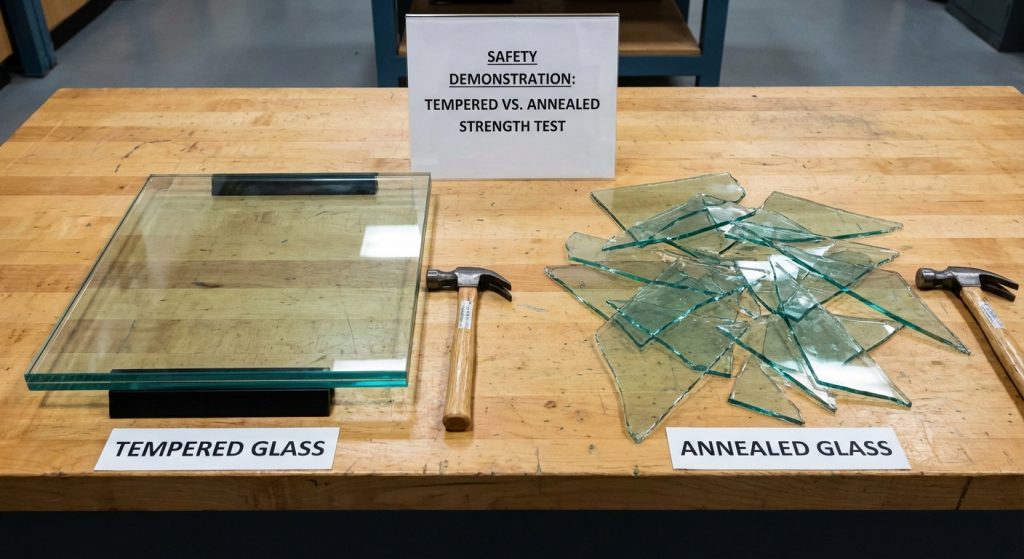
The tempered glass weight capacity is significantly superior to that of annealed (regular) glass due to the thermal tempering process. While annealed glass breaks at low tension, tempered glass is pre-stressed to withstand 400% to 500% more force.
The Tempering Process
- Bucket Brigade: Believe it or not.
- Glass is heated to 1,100°F and rapidly cooled.
- This creates a compressed “skin” that resists breaking.
Safety Breakage Comparison
- Annealed: Breaks into large, sharp, dangerous shards.
- Tempered: Crumbles into small, relatively harmless cubes.
Key Takeaway: For any application where weight or human safety is a factor, tempered glass is the only choice.
| Glass Type | PSI Strength | Multiplier |
|---|---|---|
| Annealed | ~6,000 PSI | 1x |
| Tempered | ~24,000 PSI | 4x – 5x |
Tempered glass provides the necessary strength for architectural loads that annealed glass simply cannot handle.
How do you calculate tempered glass weight capacity?

Professional engineers use a specific formula to determine the tempered glass weight capacity for complex architectural projects. This calculation factors in the base capacity of the glass type, its thickness, the total surface area, and the support configuration.
The Calculation Variables
- Bucket Brigade: Let’s break it down.
- Base Capacity: The starting strength of annealed glass.
- Glass Type Factor: 4.0 for tempered glass.
- Support Factor: 1.0 for four sides, 0.4 for two sides.
Step-by-Step Estimation
- Determine the square footage of your panel.
- Identify the thickness and its corresponding base load.
- Multiply by the tempering factor (4x).
Key Takeaway: While formulas provide estimates, always consult a professional for structural glass installations.
| Variable | Value for Tempered | Impact on Formula |
|---|---|---|
| Type Factor | 4.0 | Quadruples capacity |
| Area Factor | < 8 sq ft = 1.0 | Decreases as size grows |
| Shape Factor | Square = 1.0 | Round = 0.85 |
Accurate calculations ensure that every glass installation meets safety and structural requirements.
Why trust professional tempered glass weight capacity?
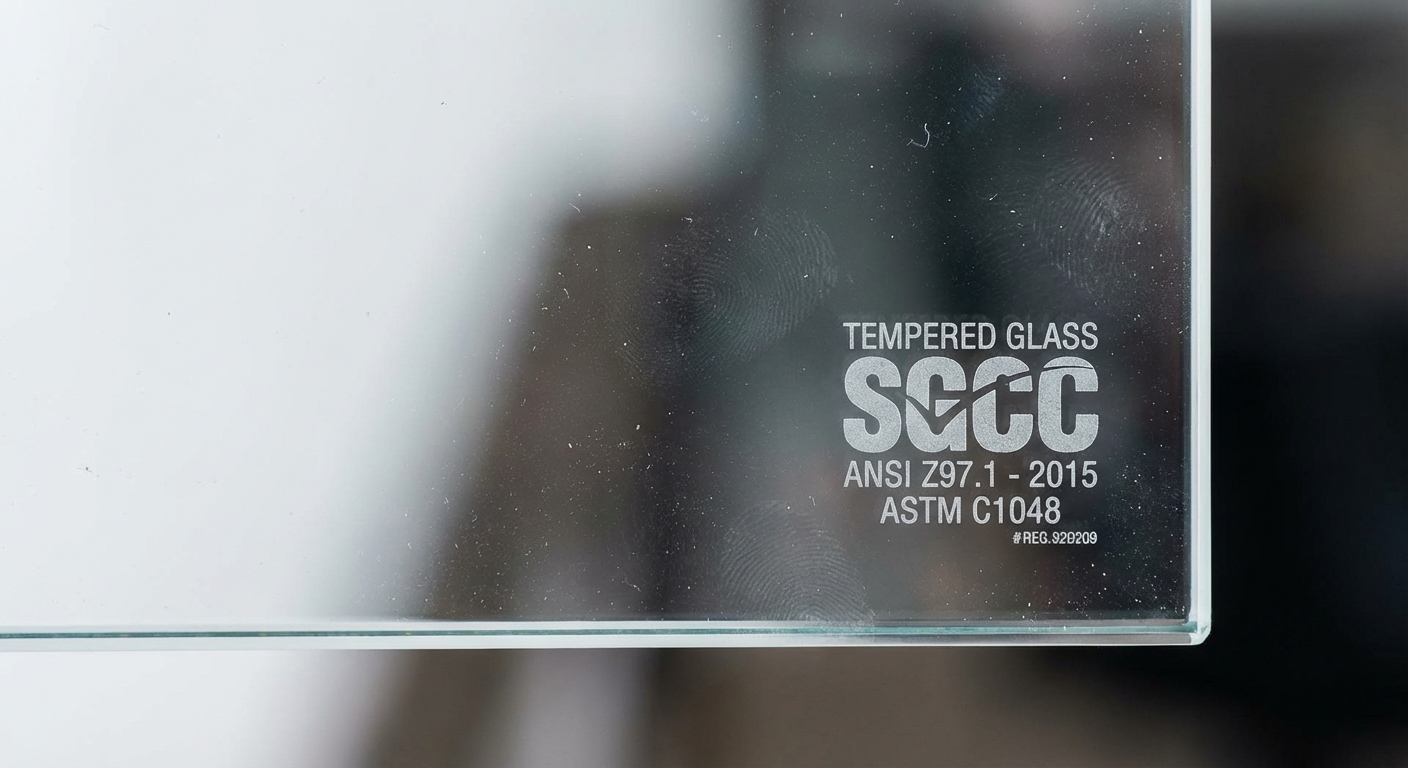
Reliable tempered glass weight capacity ratings are backed by rigorous ASTM standards and industrial testing. These ratings ensure that the glass you install in your home or office meets the highest safety requirements for modern construction.
Manufacturing Standards
- Bucket Brigade: Here is the bottom line.
- Quality glass is tested for “surface compression” levels.
- Impact tests ensure the glass doesn’t shatter under sudden force.
Professional Installation Benefits
- Ensures hardware is rated for the glass weight.
- Prevents glass-to-metal contact, which causes breakage.
- Guarantees the span and support match the expected load.
Key Takeaway: Trusting certified ratings and professional installers eliminates the guesswork from your glass projects.
| Standard | Focus Area | Importance |
|---|---|---|
| ASTM C1048 | Heat-Treated Glass | Strength verification |
| ANSI Z97.1 | Safety Glazing | Impact resistance |
| CPSC 16 CFR | Federal Safety | Mandatory compliance |
Using certified professionals guarantees that your installation will perform safely for years to come.
Conclusion
Understanding how much weight glass can hold is essential for creating spaces that are both beautiful and secure. We have explored how thickness, support, and material type define the limits of structural glass. Whether you are installing heavy-duty shelving, a custom dining table, or a modern shower enclosure, knowing the weight capacity ensures your project stands the test of time.
Our vision is to provide every client with glass solutions that combine uncompromising safety with modern elegance. If you are ready to start your next project with the highest quality materials and expert guidance, contact us today.
FAQ
- Is 1/4 inch glass strong enough for a heavy bookshelf?
Generally, no. For heavy books, 3/8-inch or 1/2-inch glass is recommended to prevent significant bowing and ensure long-term safety. - Can I safely sit on a tempered glass coffee table?
You should avoid sitting on any glass furniture. While it may hold your weight statically, the dynamic force of sitting down can exceed the glass’s capacity and cause a failure. - What happens if I put too much weight on tempered glass?
If the limit is exceeded, the glass will not just crack; it will shatter completely into thousands of small pieces due to the internal tension created during the tempering process. - Does the number of layers in the glass increase its weight limit?
Yes. Laminated glass, which bonds two or more layers together, significantly increases the weight capacity and ensures that the glass remains in place even if one layer breaks. - How do I know if the glass I have is tempered?
Look for a small, permanent “bug” or watermark in the corner of the glass that mentions “Tempered” or a safety standard like ANSI Z97.1. If there is no mark, it is likely annealed.