Yes, tempered glass can scratch, though its surface is significantly more resistant to abrasions than standard annealed glass. Imagine finalizing a high-profile office renovation only to notice a jagged hairline mark across your central glass partition. This single blemish doesn’t just catch the light; it undermines the professional aesthetic and suggests a lack of maintenance. Our engineering-grade solutions ensure you understand how to manage a tempered glass scratch and protect your architectural investments.
Why is it so hard to make a tempered glass scratch?
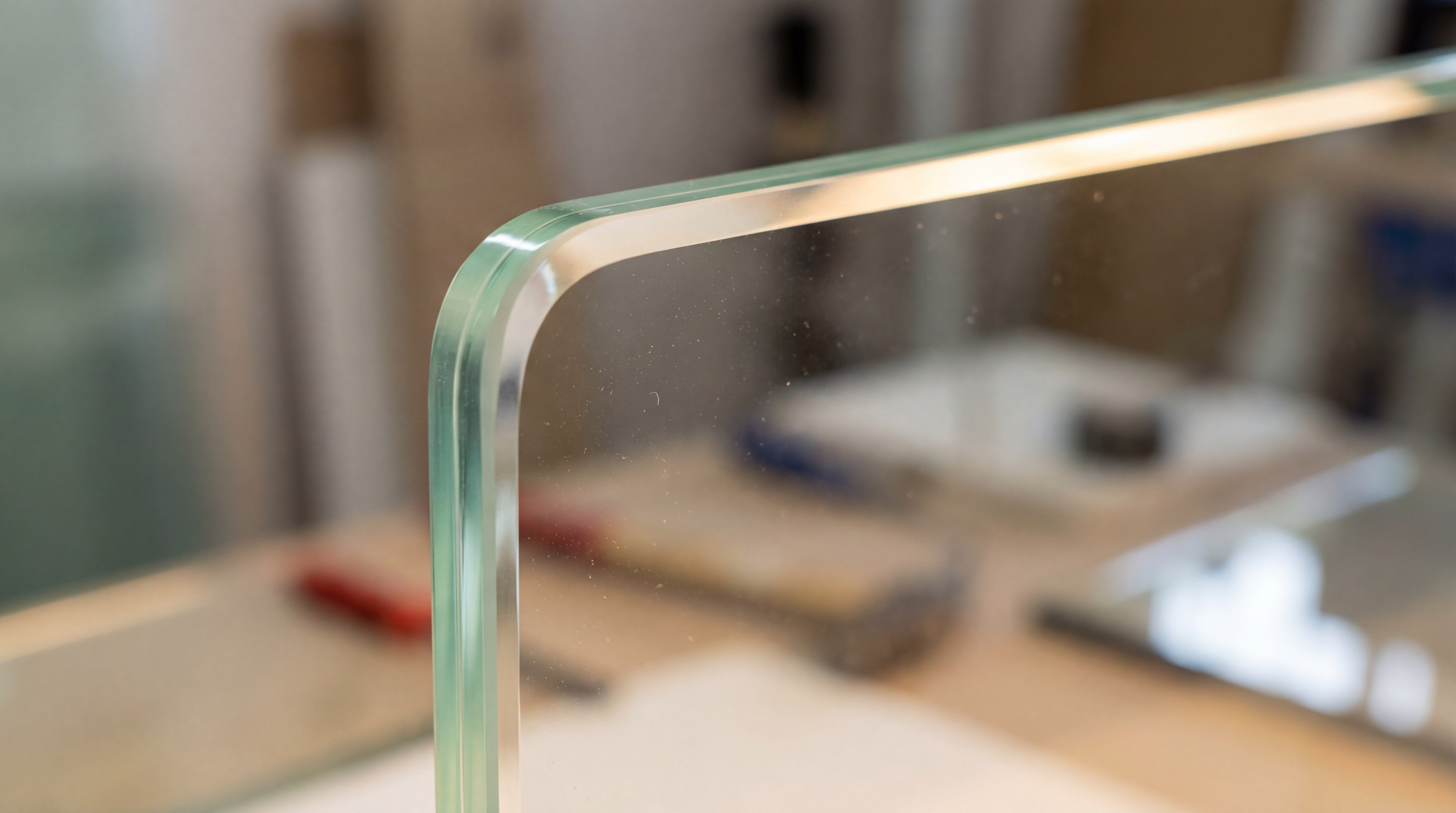
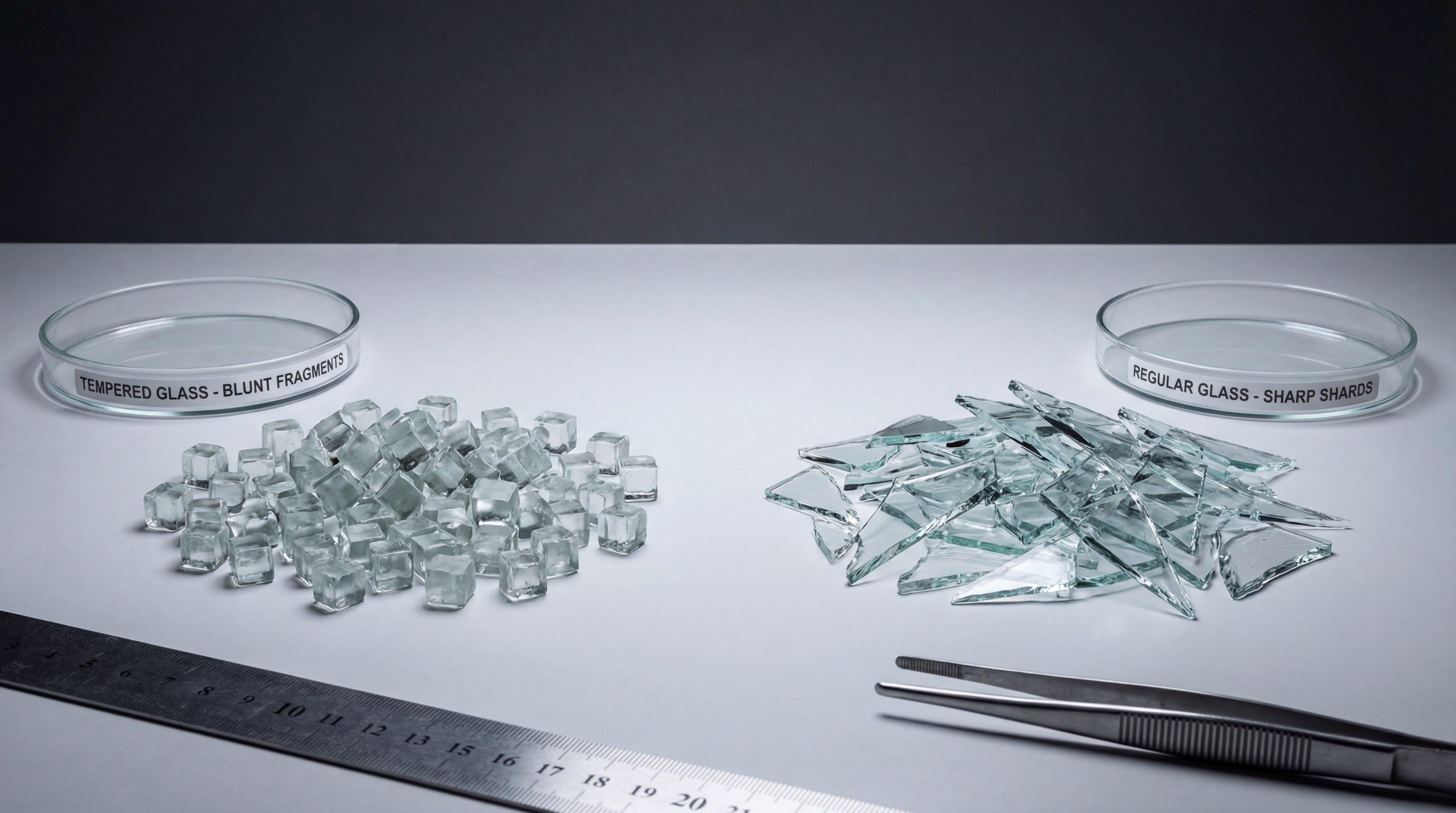
A tempered glass scratch is difficult to inflict because the manufacturing process creates intense surface compression that hardens the material. This thermal treatment involves heating the glass to approximately 620°C followed by rapid cooling. This process forces the outer surfaces into compression while the interior remains in tension.
What is the thermal tempering process?
The tempering process begins with precisely cut glass that enters a specialized furnace for high-heat exposure. Once it reaches the transition point, high-pressure air blasts the surface to cool it instantly. But here is the catch: this rapid cooling creates a “skin” that is much denser than regular glass.
Why does surface compression increase durability?
Think about it: the compressed surface acts like a shield against everyday contact.
- It resists impact significantly better than standard glass.
- Surface tension prevents minor nicks from spreading.
- Densified molecules require higher force for penetration.
Key Takeaway: Understanding the molecular density of tempered glass helps procurement teams justify the initial investment through reduced long-term wear.
| Property | Tempered Glass | Standard Glass |
|---|---|---|
| Surface State | High Compression | Neutral/Low Tension |
| Impact Strength | 4-5x Higher | Baseline |
| Scratch Difficulty | High | Moderate |
This technical comparison highlights how factory-controlled tempering provides a superior barrier against surface degradation.
Is tempered glass scratch resistant or actually proof?
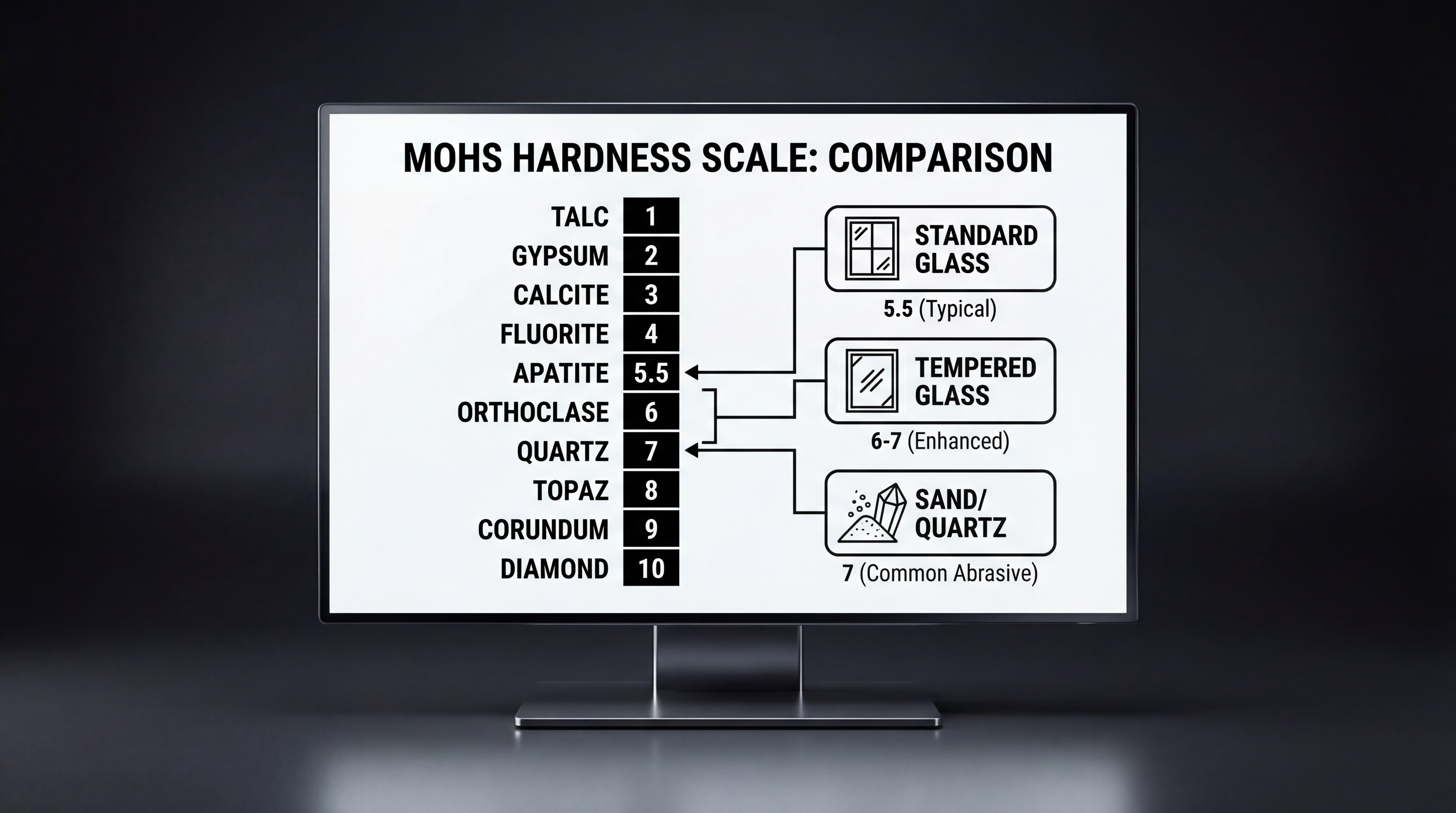
Tempered glass is engineered to be scratch-resistant, but it is technically not scratch-proof if exposed to materials with higher mineral hardness. While it handles everyday contact with ease, specific abrasives can still penetrate the compression layer. Avoiding a tempered glass scratch requires recognizing that no glass surface is entirely invincible.
Understanding the Mohs hardness scale?
The Mohs scale measures the ability of one material to scratch another, with tempered glass typically ranking between 6 and 7. Standard glass usually sits lower at 5.5, making it more vulnerable to common metals. You might be wondering: what happens when a material like quartz (7) meets the glass?
How does tempered glass compare to regular glass?
Regular glass lacks the internal stress required to deflect sharp, localized pressure from debris.
- Regular glass exhibits a Mohs rating of roughly 5.5.
- Tempered panels utilize a “harder” surface profile due to manufacturing.
- Minor abrasions on regular glass often lead to deep cracks.
Key Takeaway: Recognizing that tempered glass sits high on the hardness scale allows you to select appropriate materials for surrounding fixtures.
| Material | Mohs Hardness | Resistance Level |
|---|---|---|
| Acrylic | 3.0 – 4.0 | Low |
| Standard Glass | 5.5 | Moderate |
| Tempered Glass | 6.0 – 7.0 | High |
The data proves that while tempered glass is remarkably tough, it still requires respect for its physical limits.
What specific materials make a tempered glass scratch?

A tempered glass scratch is most commonly caused by quartz-based sand, construction debris, or hardened steel tools. Even though the glass is tough, these materials often possess a higher Mohs rating than the glass itself. In industrial environments, airborne particulates are the most frequent culprits for hazy surface wear.
The reality is this: common sand often contains quartz, which has a hardness of 7.0. When these particles are trapped between a cleaning cloth and the panel, they act like sandpaper.
- Sand particles are harder than the glass surface.
- Wind-blown grit can cause micro-pitting over time.
- Construction dust often contains extremely abrasive minerals.
Can metal tools and fasteners damage the surface?
While many common metals are softer than glass, hardened steel and diamond-tipped tools will cause immediate damage.
- Hardened screws (7.5+) easily carve into the surface.
- Improperly used scrapers can leave permanent gouges.
- Metal-on-glass friction during installation creates edge chips.
Key Takeaway: Identifying abrasive risks early allows site managers to implement protective barriers during active construction phases.
| Abrasive Agent | Hardness Rating | Risk Level |
|---|---|---|
| Aluminum | 2.5 – 3.0 | Low |
| Quartz Sand | 7.0 | High |
| Hardened Steel | 7.5 – 8.0 | Critical |
This hierarchy of hardness illustrates why site cleanliness is the most effective defense against permanent surface damage.
How do you prevent a visible tempered glass scratch?
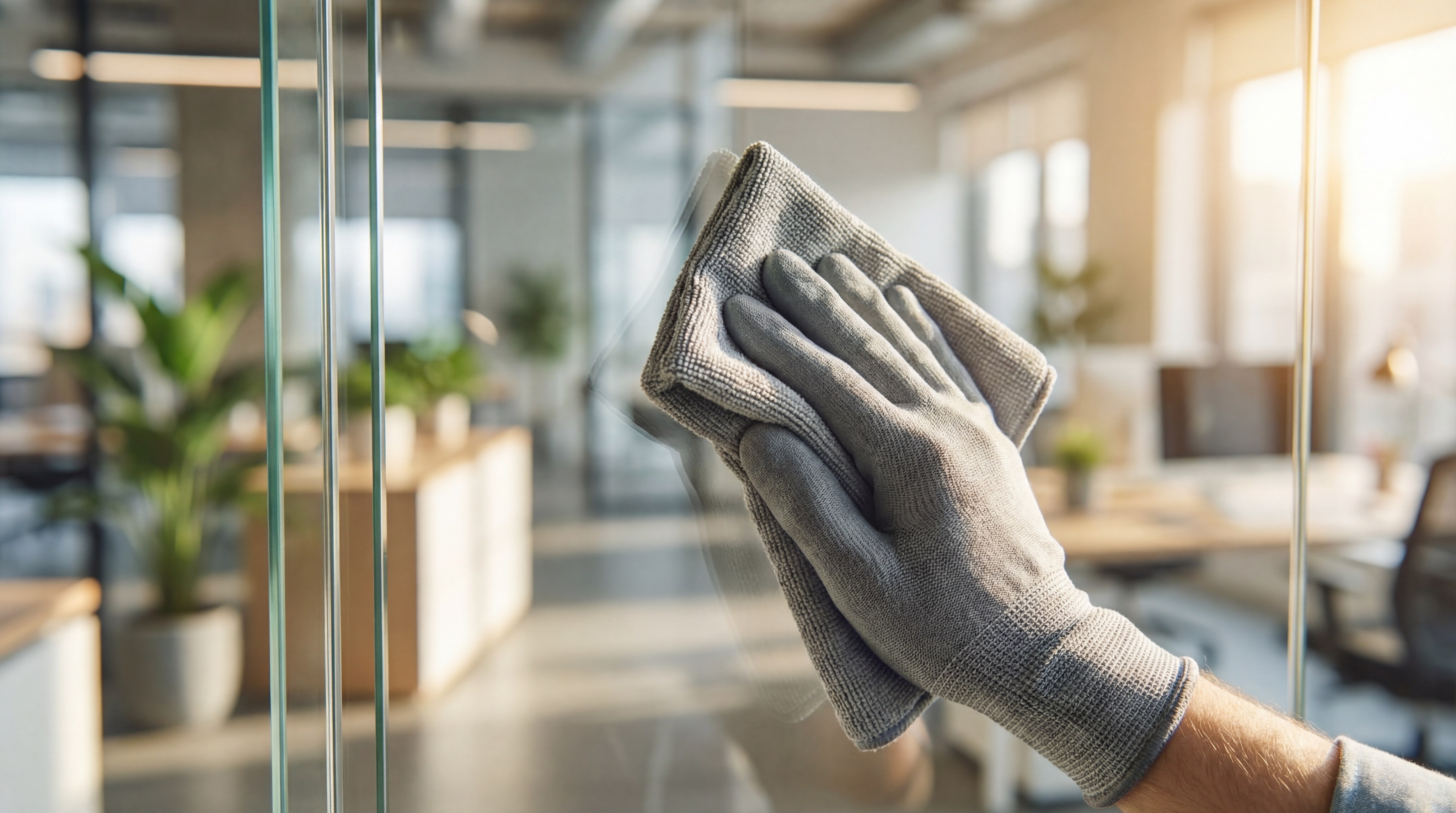
Preventing a visible tempered glass scratch relies heavily on using non-abrasive tools and maintaining a debris-free environment. Consistency in cleaning protocols ensures that microscopic grit does not accumulate and cause long-term hazing. Professional maintenance is the single most important factor in extending the life of your glass installations.
Choosing the right cleaning tools?
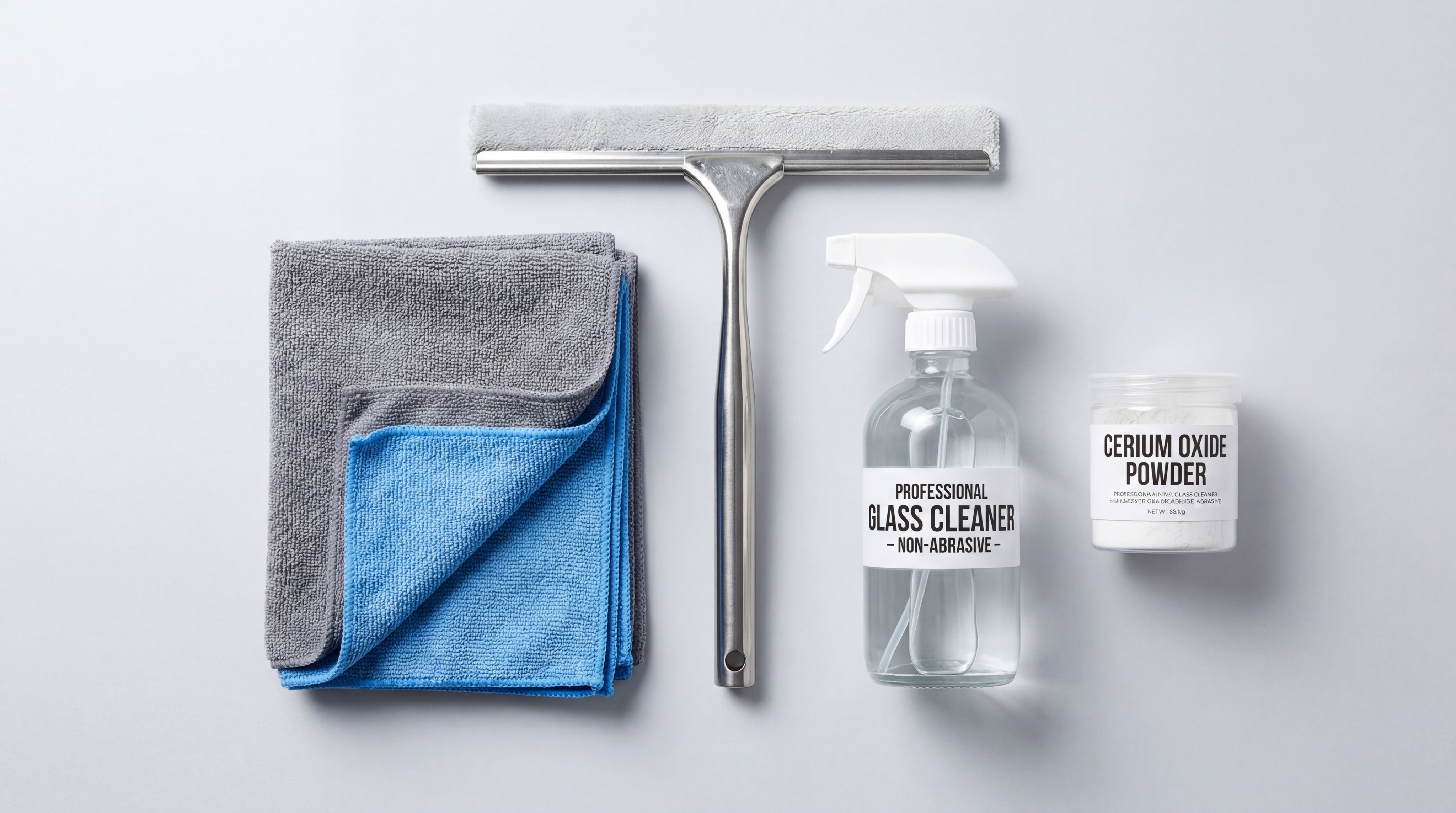
You should always prioritize high-quality microfibre cloths and soft rubber squeegees for daily maintenance. But here is the catch: even a soft cloth can scratch if it has trapped grit from a previous use.
- Use dedicated cloths for glass surfaces only.
- Wash cloths frequently to remove embedded particulates.
- Avoid paper towels, which may contain abrasive wood fibers.
Protecting high-contact zones?
In high-traffic commercial spaces, physical barriers or protective films can mitigate the risk of contact damage.
- Install bumpers on furniture located near glass walls.
- Apply temporary “sacrificial” films during heavy construction.
- Utilize felt pads on any items placed on glass counters.
Key Takeaway: Proactive prevention is significantly more cost-effective than attempting to repair or replace damaged safety glass panels.
| Prevention Step | Tool Required | Frequency |
|---|---|---|
| Dust Removal | Soft Brush / Air | Before Wiping |
| Surface Cleaning | Microfibre / Squeegee | Weekly |
| Protection | Adhesive Film | During Construction |
Establishing a strict maintenance schedule ensures that your glass maintains its “like-new” clarity for decades.
Can you repair or polish a deep tempered glass scratch?
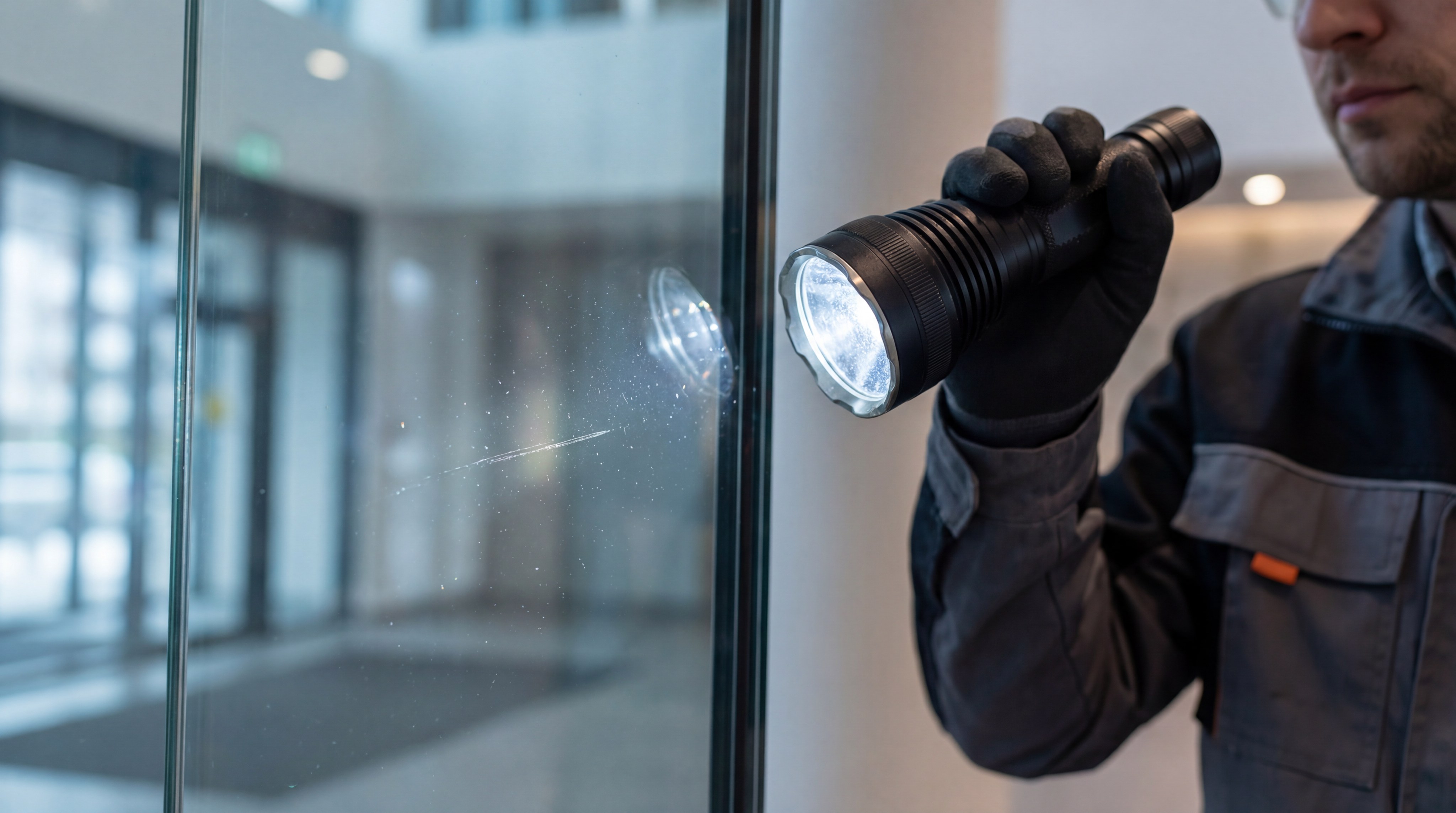
Repairing a deep tempered glass scratch is technically possible through specialized polishing, though results depend on the depth of the damage. Minor surface marks can often be buffed out using cerium oxide compounds and oscillating pads. However, if a scratch is deep enough to catch a fingernail, it may have compromised the compression layer.
When is cerium oxide polishing effective?
Cerium oxide is a rare-earth mineral used by professionals to gently remove thin layers of glass surface. Think about it: this process is effectively “sanding” the glass to match the depth of the scratch.
- It is ideal for removing fine “spider web” scratches.
- Professional machinery is required for a distortion-free finish.
- The process generates heat, which must be carefully managed.
The risks of over-polishing?
The reality is this: removing too much material can weaken the safety properties of the panel.
- Excessive polishing creates optical distortion (the “lens” effect).
- Thinning the compression layer reduces impact resistance.
- Heat from the polisher can cause thermal shock.
Key Takeaway: Understanding the limits of glass repair helps you decide when to call a specialist versus ordering a replacement.
| Damage Type | Repair Method | Success Rate |
|---|---|---|
| Surface Haze | Manual Polishing | High |
| Fine Scratches | Cerium Oxide Machining | Moderate |
| Deep Gouges | Replacement | Recommended |
Always consult a professional technician before attempting to polish structural or safety-critical glass panels.
Does a tempered glass scratch mean it is now unsafe?
A tempered glass scratch does not always render a panel unsafe, but deep damage can act as a stress concentrator. Because tempered glass is under extreme internal tension, a deep penetration can lead to spontaneous breakage. Safety is maintained as long as the scratch remains confined to the outermost surface of the compression layer.
Evaluating structural integrity?
You must determine if the scratch has penetrated deep enough to reach the central tension zone. You might be wondering: how do I know if a scratch is dangerous?
- Deep scratches near the edges are the highest risk.
- Cracks that originate from a scratch indicate immediate failure.
- Any “star” pattern damage is a sign of structural compromise.
When should you opt for replacement?
In commercial environments, brand image and safety liability often dictate a low tolerance for surface damage.
- Replace panels if the scratch creates visible optical distortion.
- Swap out glass that has edge-pitting or deep gouges.
- Modern standards often require replacement for any safety-critical failures.
Key Takeaway: Monitoring the severity of surface damage allows facilities managers to maintain a safe environment without unnecessary replacements.
| Indicator | Low Risk | High Risk |
|---|---|---|
| Scratch Depth | Hairline / Surface | Deep / “Fingernail Catch” |
| Location | Center of Panel | Near Edges / Holes |
| Visual Pattern | Single Line | Branching / Radiating |
This risk assessment helps prioritize maintenance budgets toward the most critical structural issues.
Does frosted texture hide a tempered glass scratch well?
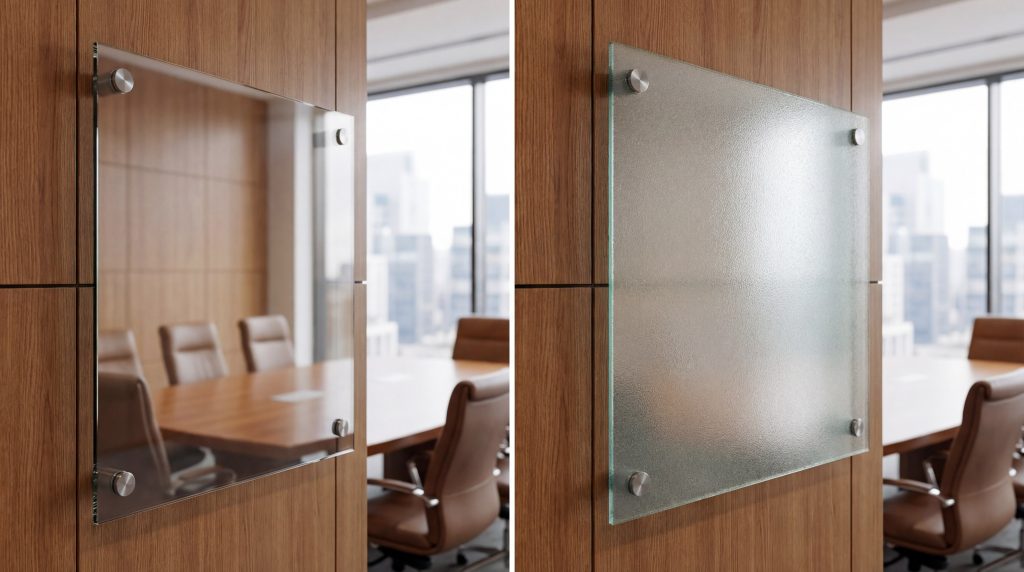
Yes, frosted and textured finishes are excellent at concealing a tempered glass scratch compared to clear, transparent panels. The diffused surface scatters light, making small linear abrasions nearly invisible to the naked eye. This makes textured glass a preferred choice for high-traffic public areas where minor contact is inevitable.
Visibility: Frosted vs. Clear?
The reality is this: clear glass acts like a magnifying glass for surface imperfections when backlit.
- Clear glass shows every fingerprint and micro-abrasion.
- Frosted glass masks the depth of surface pockmarks.
- Textured surfaces break up the reflection of light.
Benefits of opaque glass?
In public restrooms or busy hallways, opaque or frosted glass provides a dual benefit of privacy and durability.
- Opaque coatings can be applied to the non-contact side.
- Acid-etched surfaces are naturally more resilient to cleaning wear.
- Maintenance cycles can be longer without appearing “dirty.”
Key Takeaway: Choosing the right finish during the design phase can significantly reduce the visible impact of daily wear and tear.
| Glass Type | Scratch Visibility | Ideal Environment |
|---|---|---|
| Ultra-Clear | Very High | Showrooms / Facades |
| Tinted | Moderate | Office Partitions |
| Frosted / Etched | Low | Restrooms / High Traffic |
Strategic material selection ensures that your facility remains pristine even under heavy usage conditions.
Does cleaning cause a permanent tempered glass scratch?
Cleaning only causes a permanent tempered glass scratch if improper techniques or abrasive chemicals are utilized during the process. While water itself is harmless, the tools used to move it can trap destructive particles against the glass. Adhering to professional standards is the only way to ensure the clarity of your architectural glass remains intact.
Why are abrasive cleaners dangerous?
But here is the catch: many “industrial” cleaners contain grit or ammonia that can etch the glass over time.
- Ammonia can lead to surface hazing and chemical “fog.”
- Powdered cleansers will immediately abrade the surface.
- Hard water deposits can create a bond that is difficult to remove.
Best practices for microfibre maintenance?
Think about it: the way you store your tools is as important as the tools themselves.
- Always store microfibre cloths in dust-proof containers.
- Shake out cloths before every single use.
- Use a “top-down” cleaning method to avoid dragging floor grit up.
Key Takeaway: Investing in high-quality cleaning supplies prevents the costly mistake of scratching glass during routine maintenance.
| Cleaning Tool | Safe for Glass? | Reason |
|---|---|---|
| Steel Wool | No | Immediate Abrasion |
| Squeegee | Yes | Removes Water Safely |
| Microfibre | Yes | Traps Dust Safely |
Correct technique is the foundation of a long-lasting, clear glass installation.
Is a tempered glass scratch common on industrial panels?

In high-traffic industrial and commercial sectors, a tempered glass scratch is quite common due to constant contact and environmental exposure. Factors like salt air, construction dust, and heavy machinery vibration all contribute to surface degradation. Managing these factors is essential for maintaining the structural and aesthetic standards of a professional facility.
Performance in the commercial sector?
Commercial glass faces unique challenges from public interaction and cleaning machinery.
- Shopping centers deal with frequent metal cart impacts.
- Airports manage massive amounts of luggage-related friction.
- Hotel lobbies face constant chemical exposure from floor cleaners.
Environmental factors and surface wear?
The reality is this: your building’s location can accelerate how quickly glass loses its luster.
- Coastal areas face abrasive salt and sand crystals.
- Urban centers deal with acidic pollution and soot.
- High-altitude sites experience extreme thermal expansion stress.
Key Takeaway: Understanding your specific environment allows for the implementation of tailored glass protection strategies.
| Sector | Primary Risk | Mitigation |
|---|---|---|
| Retail | Impact / Carts | Bollards / Bumpers |
| Construction | Debris / Tools | Protective Coatings |
| Coastal | Salt / Sand | Frequent Rinsing |
Professional site assessments are the best way to identify and neutralize these environmental threats.
Can a coating stop a future tempered glass scratch?
Advanced coatings can significantly reduce the likelihood of a tempered glass scratch by creating a low-friction, protective barrier. These treatments fill in microscopic pores on the glass surface, preventing abrasive particles from “grabbing” the material. While not a permanent armor, these coatings are a vital part of modern glass preservation.
Hydrophobic and oleophobic barriers?
Hydrophobic coatings repel water and minerals, while oleophobic versions resist oils and fingerprints. You might be wondering: how does this help with scratches?
- Smoother surfaces allow debris to slide off without friction.
- Coatings prevent minerals from bonding to the surface.
- Maintenance becomes faster, requiring less aggressive scrubbing.
Longevity of protection layers?
Think about it: a one-time application can provide several years of enhanced protection in a standard office.
- Performance lasts 3-5 years depending on cleaning frequency.
- Re-application is simple and can be done by facility staff.
- The cost is a fraction of the price of a panel replacement.
Key Takeaway: Integrating surface protection into your initial procurement can double the lifespan of high-visibility glass.
| Coating Type | Primary Benefit | Duration |
|---|---|---|
| Nano-Ceramic | Scratch Resistance | 2 – 4 Years |
| Hydrophobic | Easy Clean / Water Repel | 1 – 3 Years |
| Anti-Glare | Visual Clarity | Permanent |
Modern chemical engineering provides the final layer of defense for your architectural glass investments.
Conclusion
Maintaining the pristine condition of your architectural glass requires a blend of technical knowledge and proactive care. We have explored how tempering creates a resilient surface, why specific minerals pose a threat, and how advanced coatings can preserve clarity. By choosing the right materials and following professional maintenance protocols, you can effectively eliminate the risks associated with surface damage.
At PrimePro, we are dedicated to providing engineering-grade glass solutions that stand the test of time. Whether you are in the design phase or managing an existing facility, our team is here to support your vision with precision and expertise. To learn more about our custom manufacturing capabilities or to request a project consultation, contact us today. Let us help you build a future that is as clear as it is durable.
Frequently Asked Questions
Can I use window film to prevent scratches?
Yes, adhesive safety films act as a sacrificial layer that absorbs impact and friction. If the film gets damaged, it can be peeled off and replaced for a fraction of the cost of new glass.
What’s the best way to identify if a scratch is deep?
The most reliable method is the “fingernail test” where you run your nail across the mark. If your nail consistently catches in the groove, the scratch is likely deep enough to require professional polishing or replacement.
Can I clean glass with steel wool if it’s tempered?
No, you should never use steel wool or metal scrapers on tempered glass. Even though the glass is hard, the sharp edges of metal can create micro-fractures that weaken the panel’s integrity.
What’s the best temperature for cleaning glass outdoors?
The ideal time is during a cool, overcast day or early morning when the glass surface is not hot. High temperatures cause cleaning solutions to evaporate too quickly, leading to streaks and the potential for thermal stress.
Can deep scratches cause tempered glass to explode?
Yes, if a scratch penetrates the outer compression layer and reaches the inner tension zone, it can trigger a spontaneous breakage. This is why edge damage is particularly dangerous for tempered panels.