Borosilicate is the best choice for thermal shock and chemical stability, while tempered glass excels in impact resistance and safety glazing. Designing a high-performance facility often feels like a gamble when you don’t know your material limits. Using the wrong glass can lead to expensive shattering, chemical leaks, or total project delays. Choosing correctly between Borosilicate vs Tempered Glass ensures your installation remains safe and functional for decades.
Why does chemical resistance matter?
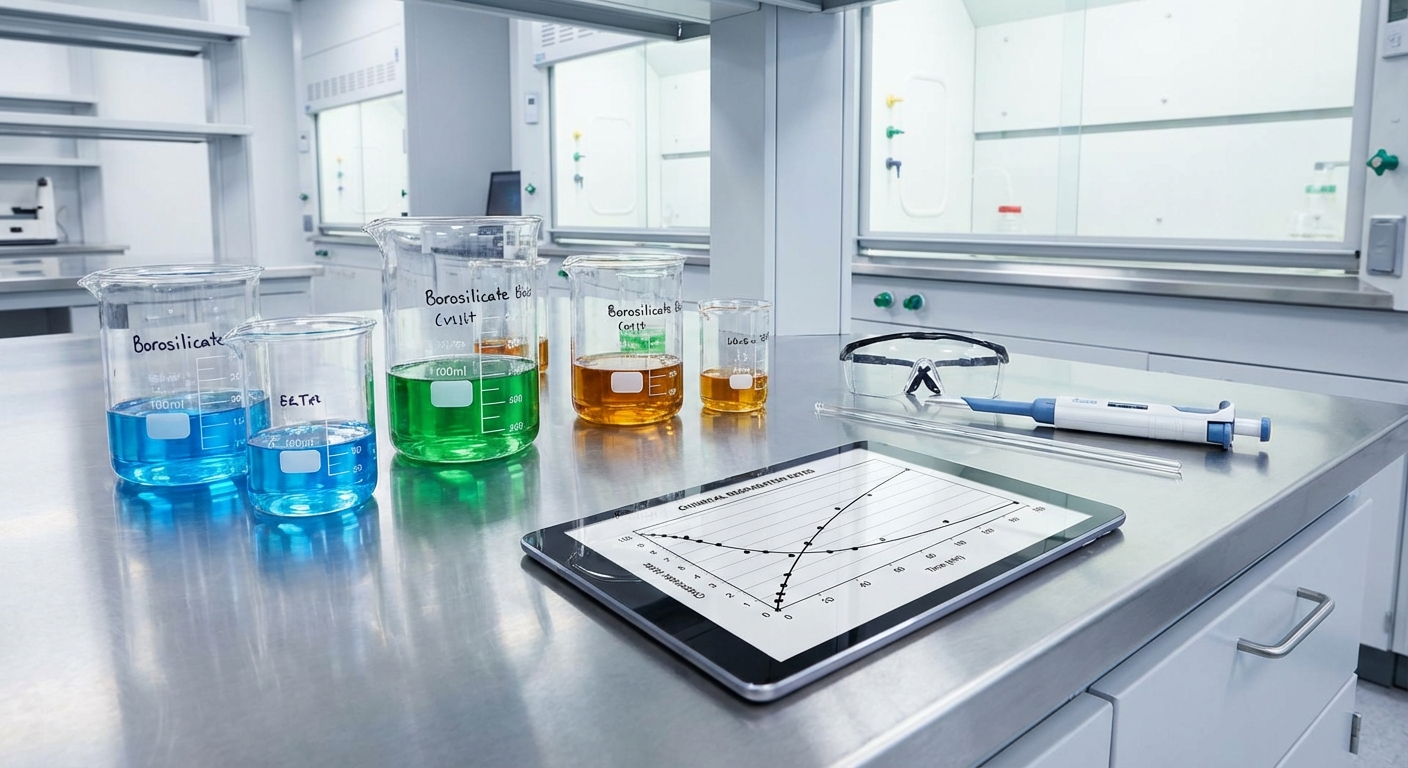
Chemical resistance prevents surface degradation and maintains the purity of materials in contact with the glass. When evaluating Borosilicate vs Tempered Glass, the former is the undisputed leader for laboratory and industrial chemical handling. Borosilicate glass contains boron trioxide, which creates a highly stable surface that resists reaction with almost all reagents.
How do acids affect surface integrity?
The truth is: standard glass can leach alkali ions when exposed to harsh acids over time. Borosilicate glass maintains its smooth surface even after years of exposure to corrosive liquids.
- Resists pitting and clouding.
- Prevents chemical leaching into samples.
- Maintains structural thickness during long-term storage.
Is purity essential for laboratory results?
Think about this. Contamination from the container itself can ruin a million-dollar experiment or medical test. Borosilicate’s inert nature makes it the global standard for beakers, flasks, and storage vials.
- High level of hydrolytic resistance.
- Reliable for sensitive chemical reactions.
- Autoclavable for repeated sterilization.
Key Takeaway: For any application involving acids, alkalis, or high-purity requirements, borosilicate is the only viable option to prevent contamination.
| Feature | Borosilicate Glass | Tempered Glass |
|---|---|---|
| Chemical Inertness | Exceptional | Moderate |
| Longevity in Acid | Very High | Low |
| Purity Rating | Scientific Grade | Industrial Grade |
Analytical Guide: Prioritize borosilicate when surface degradation could lead to structural failure or sample pollution.
Is safety a concern for skyscrapers?
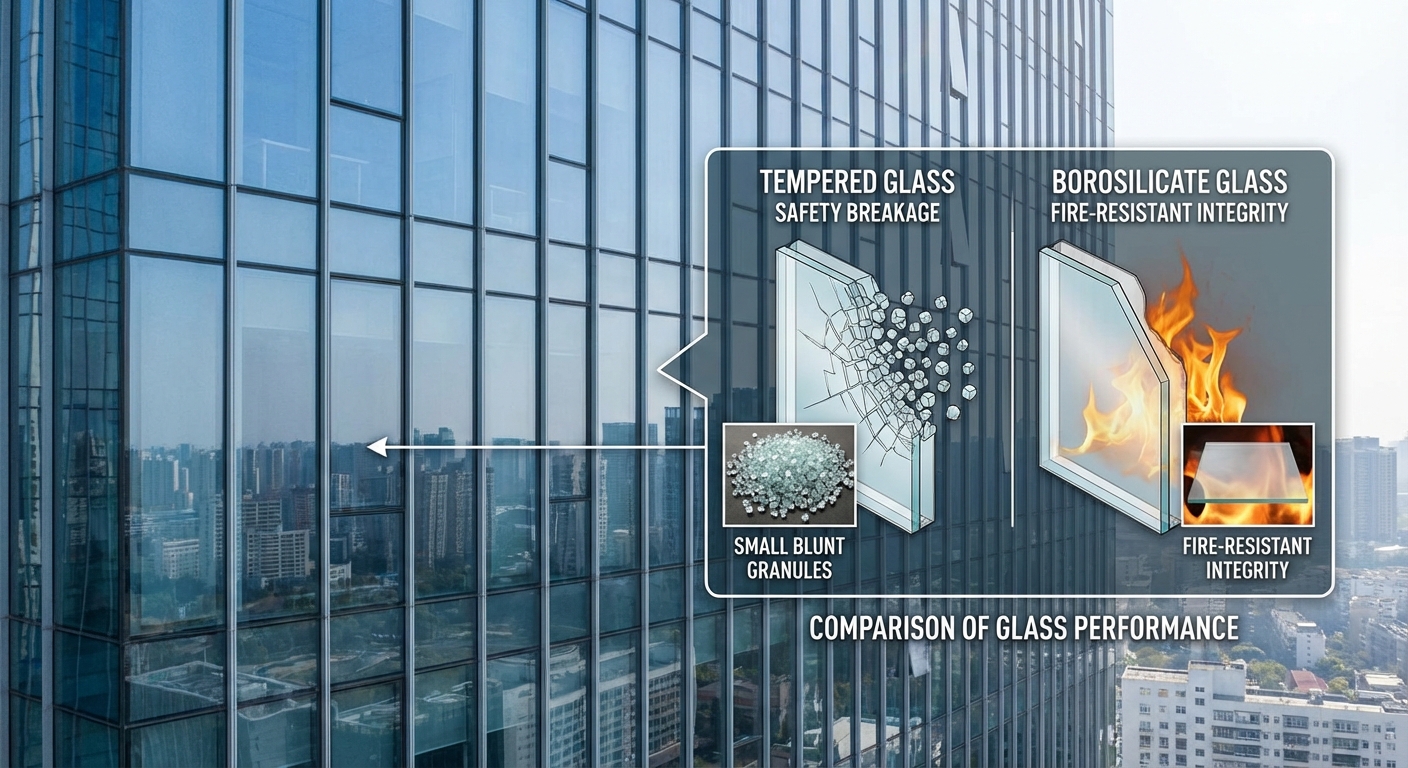
Safety is the primary driver for using toughened materials in high-rise architecture to protect pedestrians and occupants. In the context of Borosilicate vs Tempered Glass, architectural projects almost exclusively rely on tempered varieties for structural glazing. This is because tempered glass is engineered to handle massive wind loads and physical impacts without dangerous failure.
What happens when wind loads peak?
But that is not all. Modern skyscrapers must endure intense pressure changes that would cause standard glass to flex and shatter. Tempered glass possesses high surface compression, allowing it to withstand these forces comfortably.
- High tolerance for wind pressure.
- Resistance to building sway.
- Compatibility with office partitions and facades.
Why is blunt fragmentation a requirement?
Here is why it matters. If a window fails, it must not create large, falling “guillotines” of sharp glass. Tempered glass breaks into small, blunt granules that significantly reduce the risk of serious injury.
- Meets strict building safety codes.
- Minimizes liability in public spaces.
- Easier to clean up after a breakage event.
Key Takeaway: Tempered glass is the mandatory standard for high-rise windows and railings because it combines mechanical strength with a safe failure mode.
| Safety Factor | Borosilicate Glass | Tempered Glass |
|---|---|---|
| Impact Strength | Standard | 4-5x Stronger |
| Failure Pattern | Sharp Shards | Blunt Granules |
| Code Compliance | Specialized | Universal for Safety |
Analytical Guide: Select tempered glass for any structural application where human impact or environmental pressure is a high risk.
How does heat affect electronic displays?
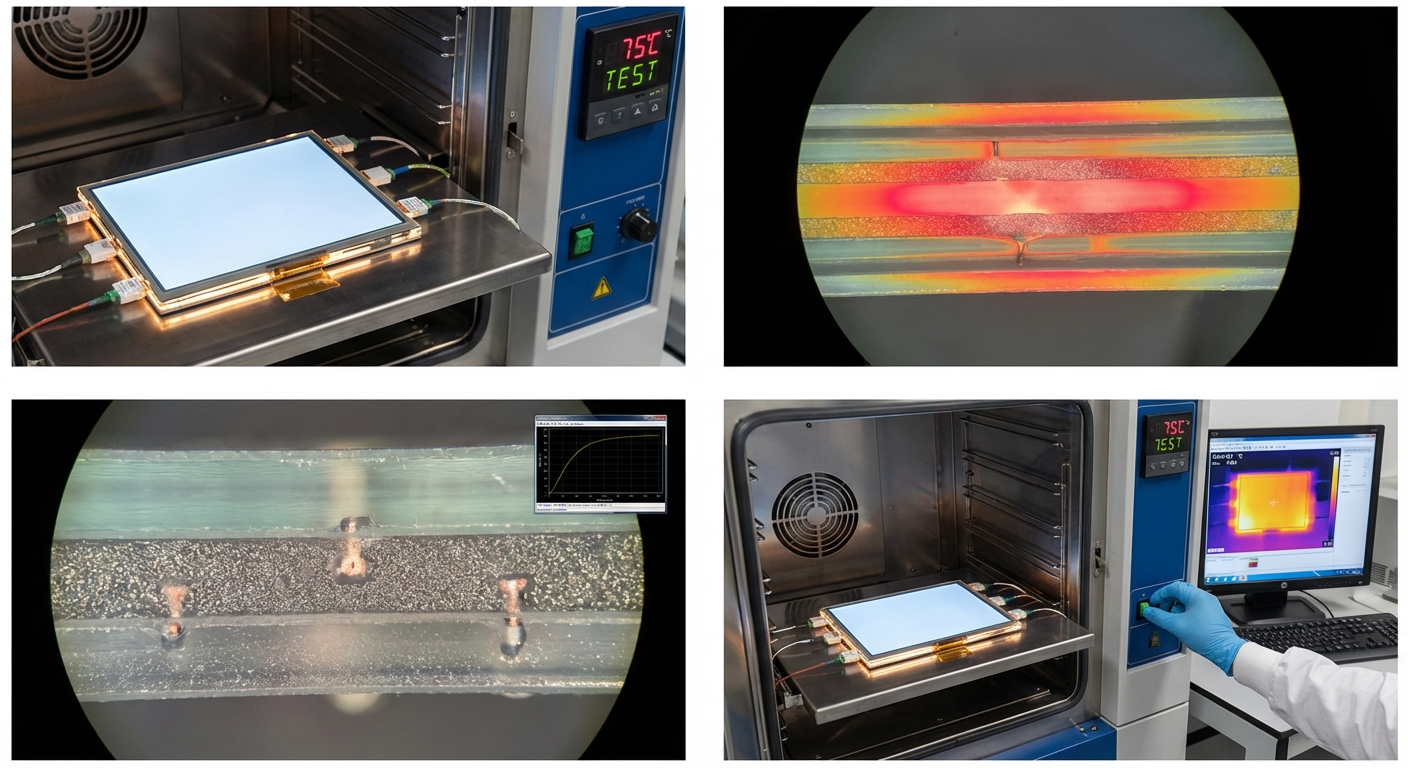
Heat can cause thermal expansion that disrupts delicate electronic components and reduces display longevity. Choosing the right Borosilicate vs Tempered Glass substrate is critical for manufacturing high-tech display assemblies. Borosilicate glass is frequently used as a substrate because its low expansion rate prevents pixels from shifting during temperature spikes.
Can thermal stress cause pixel failure?
You might wonder why some screens develop artifacts or cracks when they get warm. The truth is: if the glass substrate expands too much, it can snap the tiny electrical connections within the display.
- Prevents microscopic structural shifts.
- Maintains perfect alignment of electronic layers.
- Reduces the risk of substrate cracking.
Key Takeaway: Borosilicate glass provides the dimensional stability required for high-precision electronics and displays that generate internal heat.
| Metric | Borosilicate Substrate | Tempered Substrate |
|---|---|---|
| Expansion Stability | High | Low |
| Heat Dissipation | Controlled | Variable |
| Component Safety | Excellent | Risk of Stress |
Analytical Guide: Use borosilicate substrates for precision electronics where even a 1mm expansion could cause device failure.
What makes their molecular structures different?
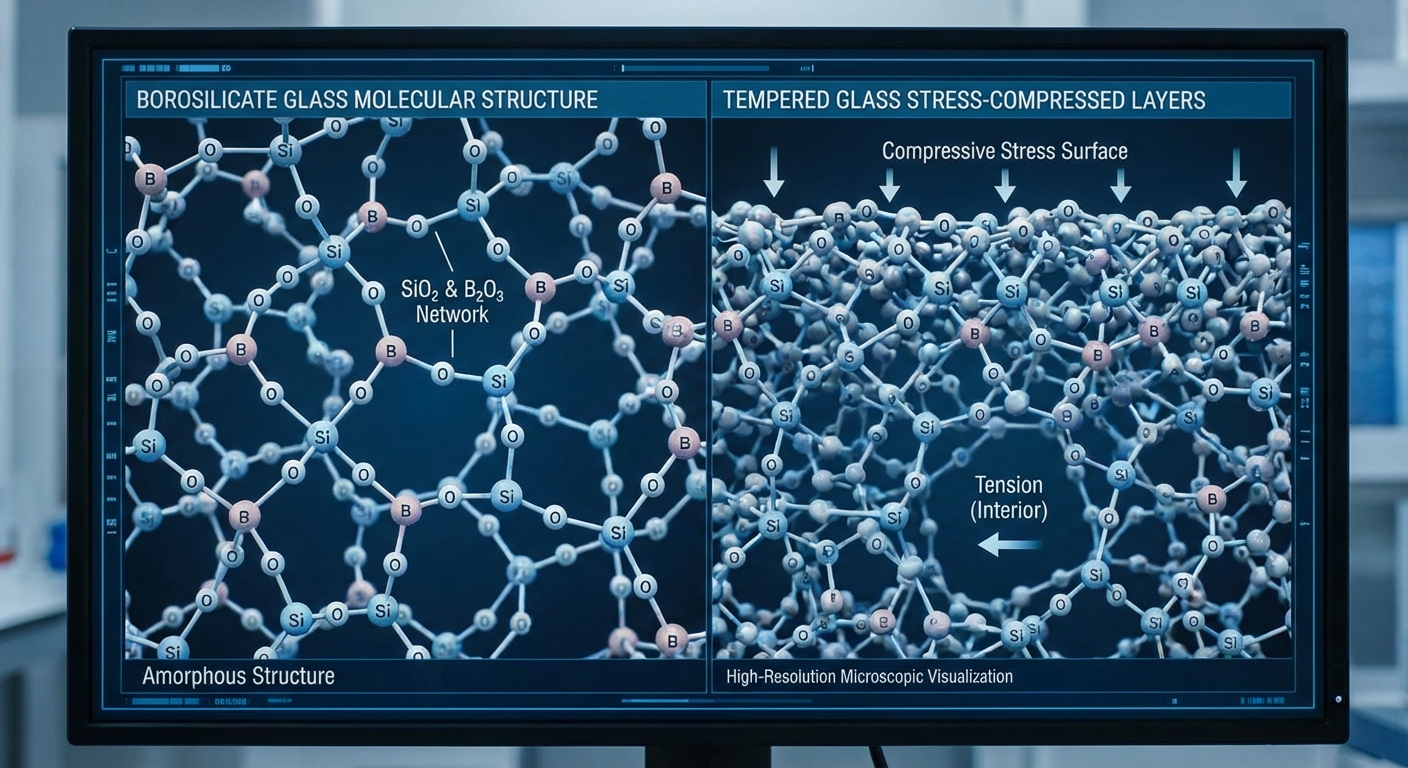
Borosilicate relies on boron trioxide chemistry for strength, while tempered glass utilizes physical surface tension created during cooling. Understanding the molecular differences between Borosilicate vs Tempered Glass helps explain why they behave so differently under stress. Borosilicate is a chemical innovation, whereas tempered glass is a mechanical processing triumph.
Does the cooling rate change the lattice?
Let’s dive deeper. Tempered glass is heated and then rapidly blasted with cold air to “freeze” the outer surface into compression. In contrast, borosilicate’s structure is inherently stable due to the boron-silicate bonds formed during melting.
- Tempered: High internal tension.
- Borosilicate: Natural low-expansion lattice.
- Tempered: Process-driven strength.
Key Takeaway: Borosilicate’s properties are “baked-in” at the atomic level, while tempered glass relies on a fragile balance of internal stresses.
| Attribute | Borosilicate Glass | Tempered Glass |
|---|---|---|
| Lattice Type | Boron-Silicate Network | Compressed Soda-Lime |
| Origin of Strength | Chemical Additives | Thermal Quenching |
| Stress Distribution | Uniform | High Surface Compression |
Analytical Guide: Chemical strength (borosilicate) is more stable over time than mechanical stress (tempered), which can fail if the surface is nicked.
Can your bakeware survive the oven?
Bakeware survival depends on the glass’s ability to handle rapid temperature shifts without fracturing. In the debate of Borosilicate vs Tempered Glass for the kitchen, thermal shock resistance is the most important factor. Borosilicate glass can move from a cold refrigerator to a hot oven with minimal risk of cracking.
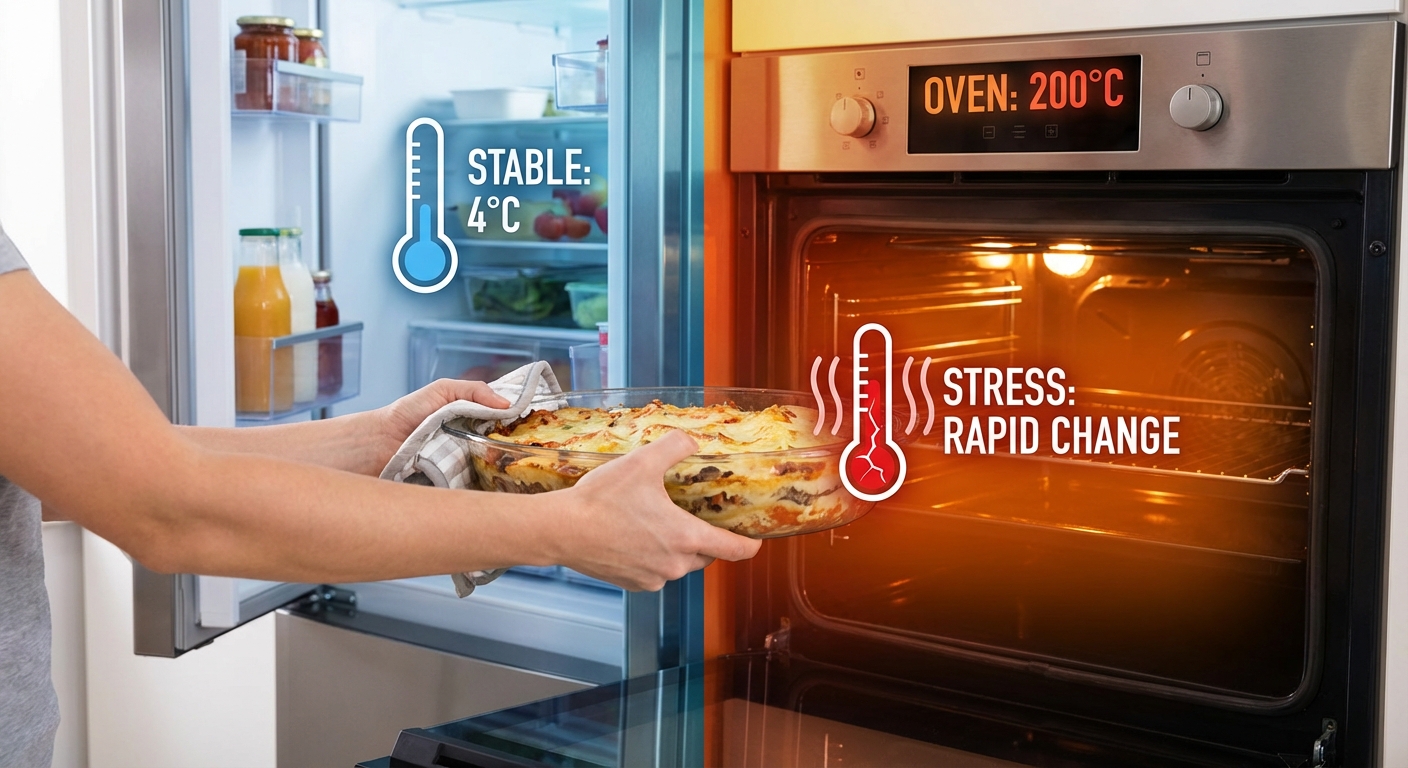
Is “oven-to-ice” transition safe?
It gets better for home cooks. While tempered bakeware is strong against drops, it can explode if it touches a cold counter while hot. Borosilicate remains stable because its low expansion rate prevents the internal tension that leads to these “thermal explosions.”
- Higher thermal shock limit.
- Reliable for daily temperature cycles.
- Lower risk of catastrophic kitchen failure.
Key Takeaway: For versatile kitchen use involving extreme temperature shifts, borosilicate provides the highest level of reliability and user safety.
| Cooking Scenario | Borosilicate Glass | Tempered Glass |
|---|---|---|
| Refrigerator to Oven | Very Safe | Risky |
| Drop Resistance | Moderate | High |
| Heat Limit | ~500°C | ~260°C |
Analytical Guide: Invest in borosilicate bakeware for any cooking method that requires moving dishes between extreme temperatures.
Which should you choose for harsh environments?
Harsh environments require a material that balances chemical inertness with specific mechanical toughness. Selecting between Borosilicate vs Tempered Glass for industrial settings depends on whether heat or impact is the primary threat. In high-heat industrial furnaces, borosilicate is necessary, but for protective machine guards, tempered glass is often superior.
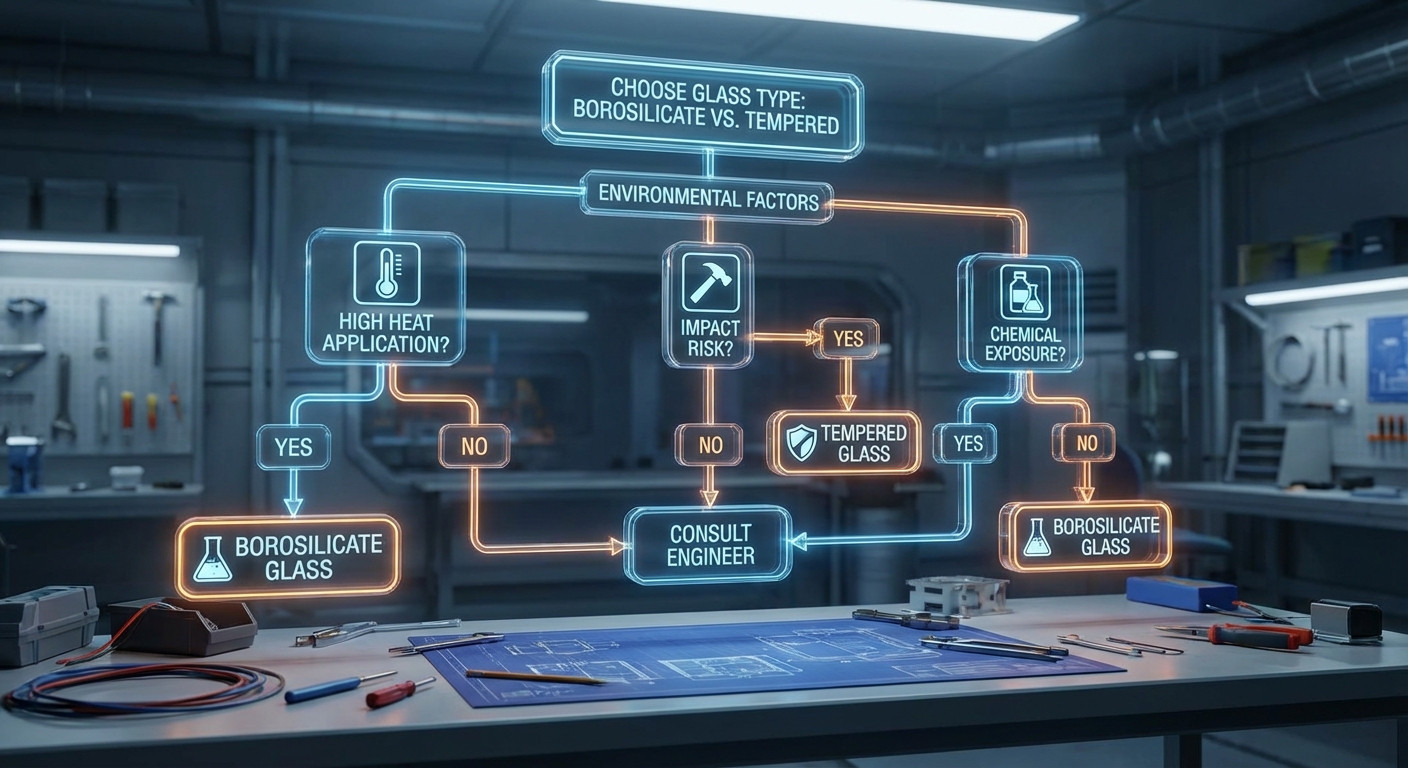
Do industrial fumes corrode glass?
The results speak for themselves. In factories with high moisture or acidic fumes, standard glass can become hazy or weak within months. Borosilicate maintains its clarity and thickness against aggressive environmental factors.
- Resists salt spray and moisture.
- Handles extreme pH levels.
- Prevents surface etching and clouding.
Key Takeaway: Analyze your environment’s primary stressor—if it is chemical or thermal, borosilicate is the winner; if it is flying debris, choose tempered.
| Industrial Need | Borosilicate Glass | Tempered Glass |
|---|---|---|
| Thermal Stability | Best | Moderate |
| Impact Protection | Moderate | Best |
| Chemical Longevity | Highest | Standard |
Analytical Guide: Use the decision tree above to verify if your environmental stressors favor chemical or mechanical defense.
Why is clarity vital for optics?
Optical clarity ensures maximum light transmission and precision in high-end scientific instruments and lenses. When comparing Borosilicate vs Tempered Glass, borosilicate is favored for optics due to its high-purity raw materials. Standard architectural glass often has a green or yellow tint that interferes with light paths.
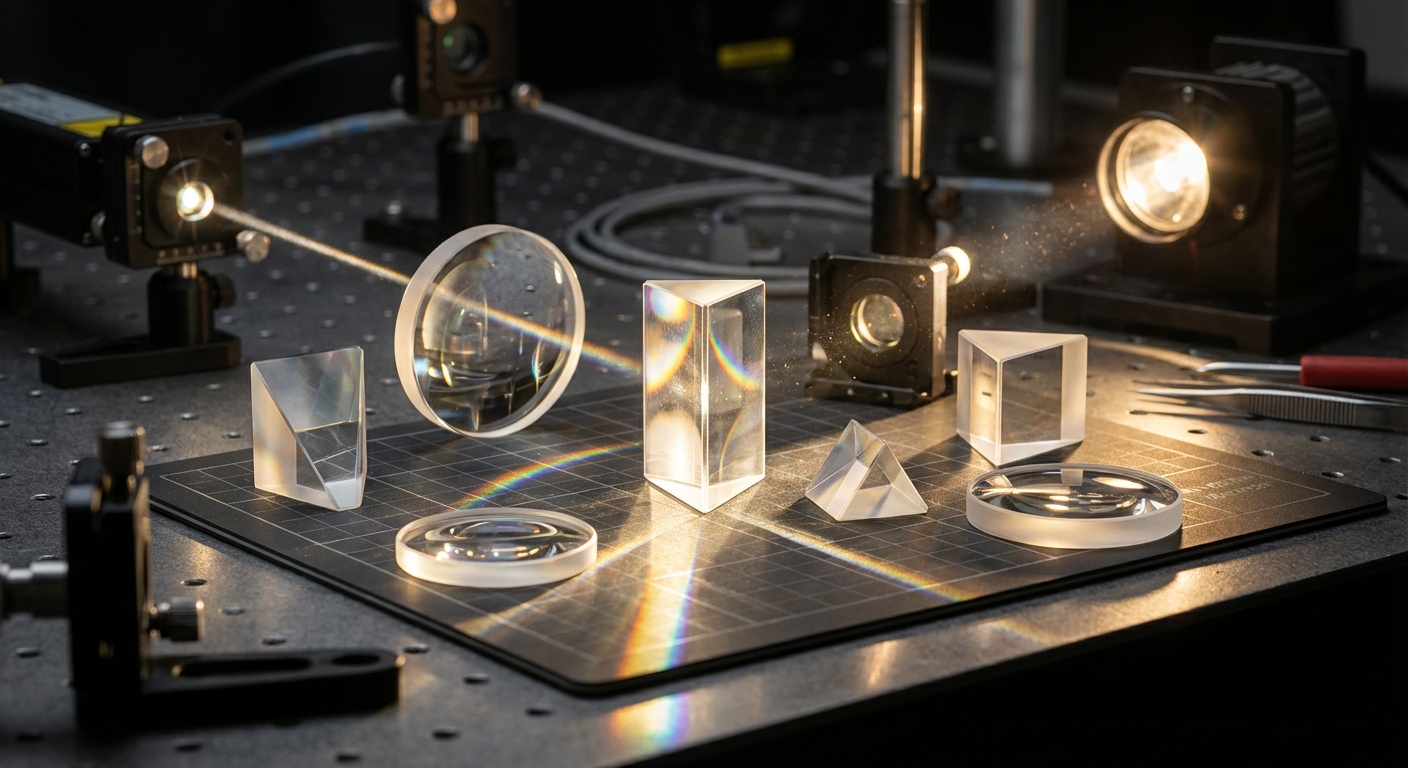
Does impurity cause color tinting?
Don’t overlook this. Even a tiny amount of iron in the glass mix can absorb light and distort colors. Borosilicate glass is manufactured with high-purity silica, resulting in a crystal-clear appearance that is perfect for prisms and lenses.
- Low light absorption rates.
- Stable refractive index.
- Superior transmission of UV light.
Key Takeaway: For any application requiring high-precision light transmission or color accuracy, borosilicate’s purity is an essential requirement.
| Optical Property | Borosilicate Glass | Tempered Glass |
|---|---|---|
| Light Transmission | 90%+ | Variable |
| Color Distortion | Minimal | Moderate (Green Tint) |
| UV Resistance | High | Standard |
Analytical Guide: Specify borosilicate for optical equipment to ensure measurements are not distorted by the glass material itself.
How do expansion rates compare?
Expansion rates determine whether a material will crack when exposed to uneven heating across its surface. In the Borosilicate vs Tempered Glass comparison, the coefficient of thermal expansion (CTE) is the most critical metric. Borosilicate has a CTE that is roughly one-third that of standard glass, making it nearly immune to thermal cracking.
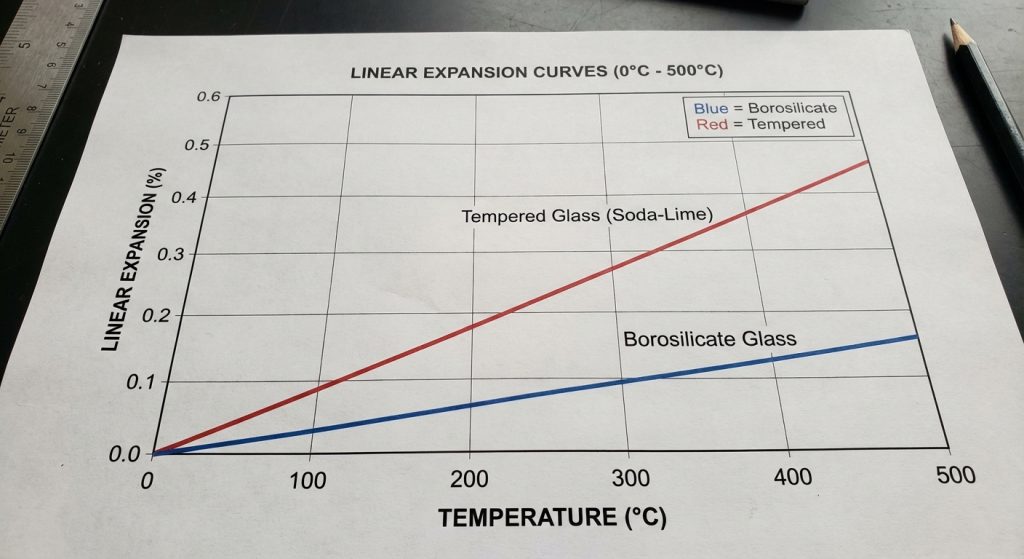
Why is low expansion a superpower?
It’s a game changer for engineering. Low expansion means that if one side of the glass gets hot and the other stays cold, the material won’t pull itself apart. This property is what allows borosilicate to survive beakers over open flames.
- Maintains dimensional stability.
- Prevents internal stress buildup.
- Increases product lifespan in heat.
Key Takeaway: Borosilicate’s low expansion rate makes it the safest choice for any environment experiencing localized or rapid heating.
| Material | Expansion Rate (CTE) | Thermal Shock Limit |
|---|---|---|
| Borosilicate Glass | ~3.3 x 10^-6/K | ~170°C Change |
| Tempered Glass | ~9.0 x 10^-6/K | ~50°C Change |
Analytical Guide: Refer to the expansion chart to understand why borosilicate remains structural while other types fracture under heat.
Can you drill through tempered glass?
No, you cannot drill through tempered glass after the toughening process is complete without causing the entire pane to shatter. When planning your Borosilicate vs Tempered Glass procurement, all modifications must be finalized during the blueprint phase. Attempting to cut or drill tempered glass releases the internal tension that gives it strength.
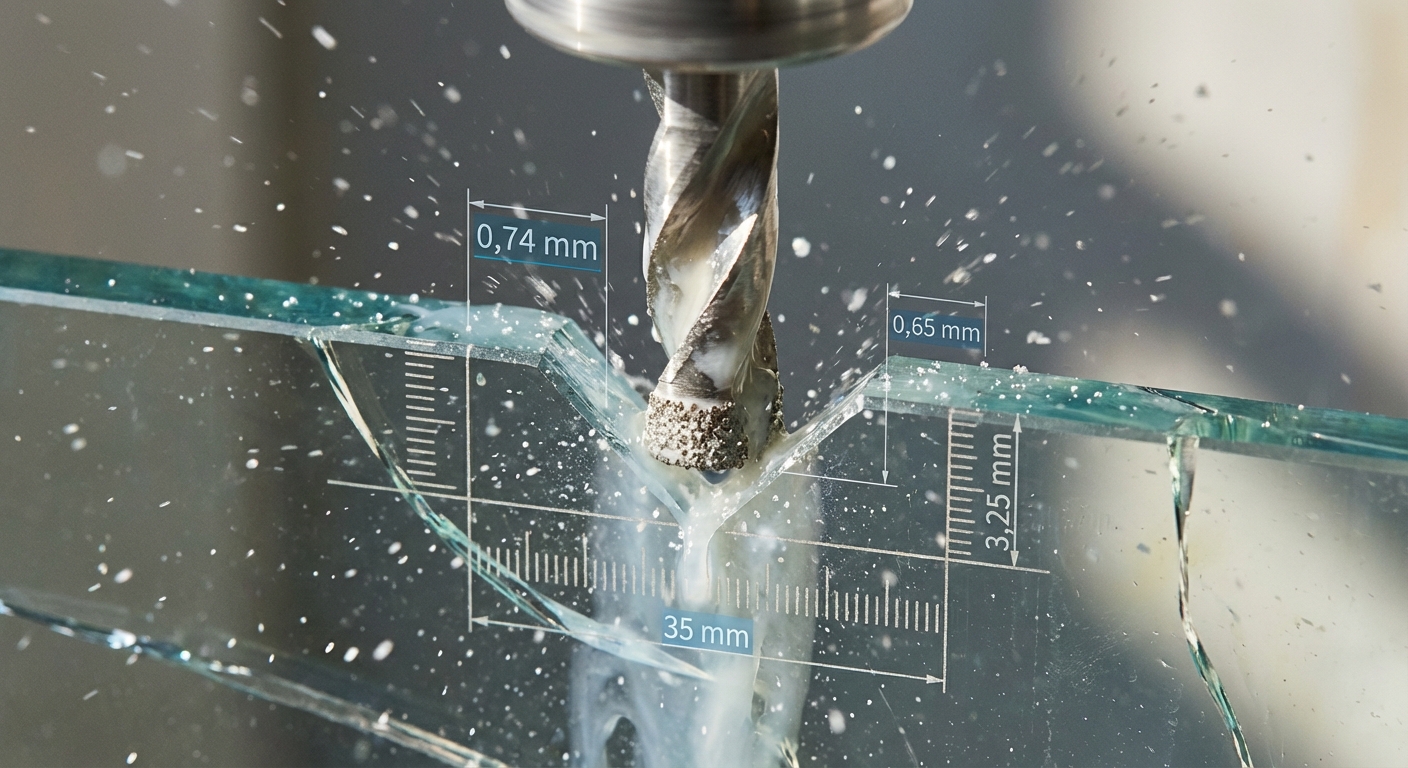
Why does post-production cutting fail?
Think about this like a tightly wound spring. Once you break the surface “skin” of tempered glass, that spring releases all its energy instantly, turning the pane into millions of tiny granules. In contrast, borosilicate can be machined after production with specialized diamond tools.
- Tempered must be cut before heating.
- Requires perfect blueprint validation.
- Borosilicate is more forgiving for custom adjustments.
Key Takeaway: Never attempt to modify tempered glass; ensure your dimensions are 100% accurate before the factory begins processing.
| Capability | Borosilicate Glass | Tempered Glass |
|---|---|---|
| Post-Production Cutting | Possible (Special Tools) | Impossible |
| Drilling Holes | Possible | Impossible |
| Edge Grinding | Possible | Impossible |
Analytical Guide: Always verify your CAD drawings before ordering tempered glass to avoid total project loss from dimensional errors.
How do they handle heavy impacts?
Tempered glass handles heavy impact significantly better than borosilicate due to its high surface compression. When analyzing Borosilicate vs Tempered Glass for mechanical durability, tempered glass is the clear winner for physical protection. It is designed to flex under blunt force and resist breaking even under high-speed impacts from steel objects.
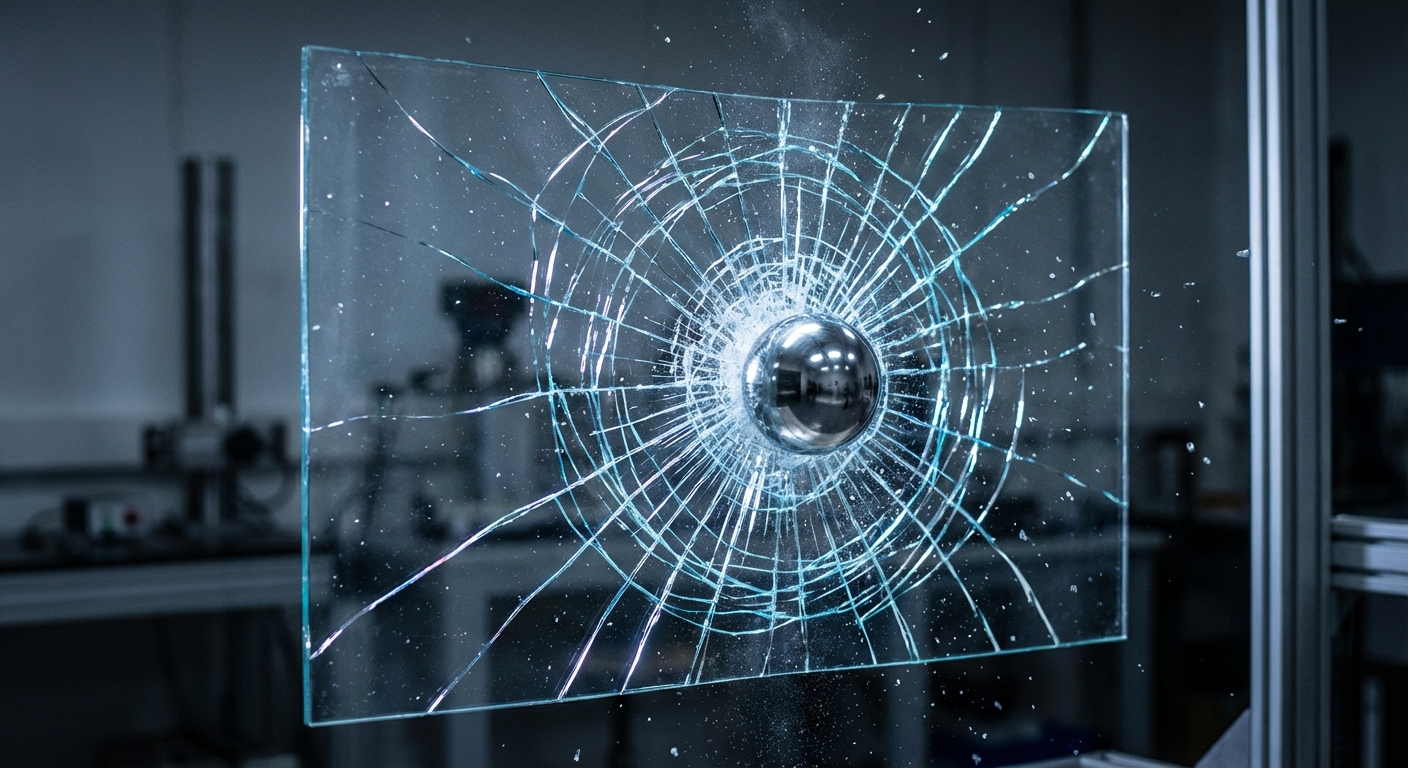
Does compression stop cracks?
The truth is: surface compression acts as a shield. For a crack to start, it must first overcome the massive inward pressure that the tempering process creates. Borosilicate lacks this shield, making it much more brittle if dropped or struck.
- 4-5 times stronger than standard glass.
- Resists scratches and surface damage.
- Ideal for laminated glass assemblies.
Key Takeaway: For any application where falling objects, vandalism, or human contact are risks, tempered glass is the only secure solution.
| Impact Factor | Borosilicate Glass | Tempered Glass |
|---|---|---|
| Surface Compression | Low | 10,000+ psi |
| Blunt Force Resistance | Low | Very High |
| Scratch Resistance | Moderate | High |
Key Takeaway: Choose tempered glass for physical security and borosilicate for thermal or chemical stability.
Analytical Guide: Prioritize mechanical strength with tempered glass to ensure your project meets modern safety and durability standards.
Conclusion
Deciding between borosilicate and tempered glass is a balance of physics and safety. If your project faces rapid temperature changes or corrosive chemicals, borosilicate is your only reliable partner. For everything else requiring structural strength, wind resistance, and safety code compliance, tempered glass is the industry standard.
Stop risking project delays and quality issues. Contact us today for expert guidance and a detailed quote on your next custom glass project. Our engineering-grade solutions are built on a vision of precision, durability, and absolute safety for every client worldwide.
Frequently Asked Questions
Can I use borosilicate for a shower door?
Not recommended. Tempered glass is much safer for showers because it handles impact better and breaks into safe, blunt pieces.
What’s the best glass for a wood stove?
Borosilicate is superior. It can withstand the intense, direct heat and the thermal shock from accidental water splashes.
Is borosilicate glass more expensive?
Yes. Due to the cost of boron and the higher melting temperatures required, borosilicate is significantly more expensive than tempered glass.
Can tempered glass handle Low-E coatings?
Absolutely. Low-E glass treatments are commonly applied to tempered glass for energy-efficient skyscraper facades.
Does borosilicate break easily?
Yes, in terms of impact. While it survives heat perfectly, it is quite brittle and will shatter into sharp shards if dropped on a hard surface.